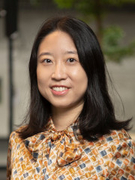
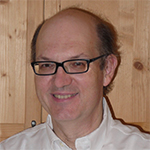
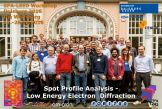
Michael J. Black is a Professor and Honorarprofessor at the University of Tübingen's Faculty of Science, Department of Computer Science, and a founding Director of the Max Planck Institute for Intelligent Systems, leading the Perceiving Systems department. He holds a B.Sc. from the University of British Columbia (1985), M.S. from Stanford (1989), and Ph.D. in Computer Science from Yale (1992). His research focuses on computer vision, 3D human modeling, motion capture, and AI-driven digital humans. Key contributions include the SMPL body model, optical flow algorithms, and datasets like Middlebury Flow and Sintel. He has received major awards such as the PAMI Distinguished Researcher Award, multiple Koenderink and Longuet-Higgins Prizes, and is a member of the German National Academy of Sciences Leopoldina and Royal Swedish Academy of Sciences. His commercial ventures include co-founding Body Labs (acquired by Amazon) and Meshcapade, advancing 3D human generation and interaction technologies. Recent work includes markerless motion capture systems (e.g., MAMMA, PICO), 3D hair and garment synthesis, and AI tools like ChatHuman for 3D human interaction analysis. His research bridges vision, graphics, and robotics, with applications in animation, healthcare, and robotics.
Michael J. Black is a Professor and Director at the Max Planck Institute for Intelligent Systems in Tübingen, Germany, where he leads the Perceiving Systems department and serves as Managing Director . He is also an Honorarprofessor at the University of Tübingen 's Faculty of Science . His career spans roles at Brown University (2000-2010), Xerox PARC, and academic-industry collaborations with Amazon and Meshcapade.
Prof. Dr. Christian Breitsamter is a Professor at the Technische Universität München (TUM), leading the Chair of Aerodynamics and Fluid Mechanics within the TUM School of Engineering and Design. He has held this position since 2007 and has been a member of key committees such as the ICAS Programme Committee and STAB-Programmleitung. His research focuses on aerodynamics of aircraft and rotorcraft configurations, including vortex dynamics, aeroelasticity, and fluid-structure interaction. Education: PhD in Aerodynamics (1997) Master’s in Aerospace Engineering (1989) Research Interests: Prof. Breitsamter’s work spans experimental and numerical studies of high-agility aircraft, helicopter aerodynamics, and advanced wing designs. Key areas include leading-edge vortices, gust load mitigation using flexible wings, and flow control techniques. His group investigates cutting-edge topics like deep learning for buffet prediction and hybrid neural networks for aerodynamic modeling. Awards: Willy Messerschmitt Preis (1999) AIAA Associate Fellow (2007) Advising & Grants: While specific student names are not listed, his research involves collaborative projects with industry partners (e.g., RACER Compound Helicopter) and EU initiatives like the FURADO program. His team contributes to the NFDI4ING infrastructure for engineering data. Labs/Teams: Active in the Aerodynamics Wind Tunnel facilities (Windkanäle A/B/C) and leads the SAGITTA flying wing demonstrator project. His group also explores membrane wings and elasto-flexible morphing technologies.
Prof. Dr. Stefan Luther is a Max Planck Research Group leader (W2, tenured since 2013) at the Max Planck Institute for Dynamics and Self-Organization, Göttingen, and an Honorarprofessor at the Faculty of Physics, University of Göttingen. He holds adjunct roles as Adjunct Associate Professor at Cornell University (2009–2012) and Northeastern University (2016–2018), and serves as DZHK-Professor at the Institute of Pharmacology and Toxicology, University Medical Center Göttingen. His research focuses on nonlinear spatiotemporal dynamics in excitable biological media, particularly cardiac arrhythmias. He pioneered 4D imaging of heart function and developed algorithms for optogenetic and electrical control of arrhythmias. Translational efforts span basic research to preclinical and clinical studies. Education includes a Diplom in Physics (1997) and PhD (2000) from Georg-August-University, Göttingen. Postdoctoral training followed at the University of Twente (2001–2004) and Cornell University’s LASSP (2004–2006). His lab, the Biomedical Physics group, explores electromechanical coupling in cardiac systems and develops novel therapeutic approaches. Collaborations include work on computational modeling, uncertainty quantification in dynamical systems, and fluid dynamics of multiphase flows.
Prof. Margret Keuper is a Professor of Machine Learning at the University of Mannheim's School of Business Informatics and Mathematics, leading the Data and Web Science Group. She is also affiliated with the Max-Planck-Institute for Informatics and ELLIS (fellow since 2024). Her research focuses on robust deep learning, neural architecture search, and computer vision tasks like motion segmentation and adversarial defense. She holds a PhD from the University of Freiburg and previously held positions at the University of Siegen and the University of Mannheim. Her work spans projects funded by DFG and BMBF, including Climate Visions for social media analysis and TrackOpt for motion tracking. She teaches courses on computer vision, generative models, and reinforcement learning. She actively serves on program committees for top conferences like CVPR, ECCV, and NeurIPS, and is an associate editor for IEEE TPAMI and JAIR. Education: PhD in Computer Science from University of Freiburg (advisor: Thomas Brox) Research Projects: Learning to Sense (DFG), Climate Visions (BMBF), TrackOpt (BMBF) Key Roles: Head of Mannheim Master in Data Science Examination Board, Member of MSc Business Informatics Board Her research emphasizes robustness in AI systems, with contributions to adversarial attacks, domain generalization, and efficient solvers for large-scale problems. She advises over 15 PhD students across academic and industry partnerships.
Joachim Weickert is a Professor of Mathematics and Computer Science at Saarland University where he heads the Mathematical Image Analysis Group since 2001. He received his diploma and Ph.D. in mathematics from the University of Kaiserslautern (1991, 1996), and a habilitation degree in computer science from the University of Mannheim (2001). Prior to his current position, he worked as a research assistant at the University of Kaiserslautern, as a post-doctoral researcher at the universities of Utrecht and Copenhagen, and as an assistant professor at the University of Mannheim. His research focuses on image processing, computer vision, and scientific computing, with special emphasis on techniques based on partial differential equations, variational principles, wavelets, morphological and nonlocal methods, as well as neuroexplicit approaches. He has developed mathematical models and efficient numerical algorithms for image restoration, enhancement, segmentation, compression, optic flow computation, stereo reconstruction, shape from shading, and signal processing methods for tensor fields. These ideas have been successfully applied in industry, biomedical image analysis, and other fields. Analysis of his recent publications reveals a strong trend toward combining traditional PDE-based methods with modern deep learning approaches, particularly in the areas of image inpainting and compression. His work increasingly explores the connections between numerical algorithms for partial differential equations and neural network architectures, demonstrating how mathematical foundations can inform cutting-edge AI techniques while maintaining strong theoretical guarantees. Gottfried Wilhelm Leibniz Prize (2010), considered the most important research award in Germany ERC Advanced Grant (2017) for "Inpainting-based Compression of Visual Data" Elected member of Academia Europaea - The Academy of Europe Jan Koenderink Prize for Fundamental Contributions in Computer Vision (2014) Multiple DAGM Prizes and Best Paper Awards throughout his career AAIA Fellow (2021) and Highly Ranked Scholar (2024) distinctions Professor Weickert has supervised over 250 bachelor's and master's theses and initiated the Master Programme in Visual Computing at Saarland University, the first of its kind in Germany taught in English. He has established numerous interdisciplinary collaborations with colleagues from medicine, bioinformatics, pharmacy, physics, mechatronics, and mechanical engineering. As Principal Investigator for Visual Computing within the Multimodal Computing and Interaction Cluster of Excellence, and former dean of the Faculty of Mathematics and Computer Science (2008-2010), he has played a significant leadership role in advancing visual computing research and education. He heads the Mathematical Image Analysis Group, which has been at the forefront of developing mathematical methods for image analysis. The group maintains strong connections with both theoretical mathematics and practical applications, bridging the gap between fundamental research and real-world implementation across various domains including medical imaging, industrial inspection, and multimedia processing.
Prof. Morten Hvitfeldt Iversen is a leading researcher in Polar Biological Oceanography at the Alfred Wegener Institute (AWI). He serves as Section Head of the Polar Biological Oceanography department and leads the bridging group 'SeaPump' collaborating with University of Bremen and MARUM. His work focuses on organic matter production, export, and transformation in oceans, linking small-scale microbial processes to large-scale biogeochemical cycles in high-latitude regions. Iversen pioneers optical techniques to study marine aggregates and their role in the biological carbon pump. Research interests include Arctic and Antarctic carbon dynamics, microbial ecology, and the impact of climate change on ocean systems. He leads projects like the 'SeaPump' initiative and contributes to the 6.3 sub-topic 'The future of the biological pump' under POF IV. His work integrates field observations, mooring data, and satellite measurements to understand carbon fluxes and their climate feedbacks. Recent articles highlight his focus on Arctic carbon sinks, microplastic impacts, and zooplankton roles in the biological pump. Iversen actively participates in expeditions aboard the Polarstern and uses advanced optical tools to study particle dynamics. His contributions bridge experimental and observational science to address global climate challenges.
Dr. Janis Nötzel is a senior researcher at the Chair of Theoretical Information Technology (Technische Universität München) and leads his independent Emmy Noether research group. Previously, he held a postdoctoral position at Universitat Autónoma de Barcelona and contributed to 5G practical implementations at TU Dresden's 5G Lab. His research spans quantum information theory, physical layer security, and machine learning applications. Key focuses include Quantum channel capacities under adversarial conditions Entanglement-assisted communication Quantum software frameworks (QuNetSim, QuReed) Interplay between classical and quantum communication Security analysis for 6G networks Resource optimization in quantum systems Recent publications (2023-2025) showcase innovations in Quantum satellite communication architectures Hybrid quantum-classical clustering algorithms Photonic processor instability modeling Covert capacity of compound channels Quantum key distribution resilience Free-space Bessel beam communication He actively collaborates with 6G-life research hub and contributes to quantum network simulation tools. Grants include funding from DFG (Leibniz Program), BMBF (6G-life, Q.Link.X), and StMWi (6G Zukunftslabor Bayern).
Karin Jacobs is a Professor in the Department of Physics at Saarland University, where she leads the research group for soft matter physics within the Faculty of Natural Sciences and Technology. Her work bridges experimental physics and applied materials science, focusing on interfacial phenomena, thin films, and functional materials. Research Interests: Her group investigates the stability of coatings, properties of simple and complex fluids, and the adhesion of biomolecules on surfaces. Using advanced experimental techniques such as atomic force microscopy (AFM), ellipsometry, surface plasmon resonance spectroscopy, optical microscopy, and ultra-high vacuum (UHV) methods like photoelectron spectroscopy, her team probes nanoscale and microscale interactions at solid-liquid and solid-gas interfaces. The research spans fundamental and applied domains, including the synthesis and characterization of graphene and boronitrene, production of water-in-water vesicles using hydrophobins, and bacterial adhesion studies. These investigations are often linked to industrial applications in the paint, semiconductor, and biomedical sectors. Publication Trends: Over the past 15 years, her publications reflect a consistent focus on surface physics and soft matter. Key themes include graphene synthesis via liquid precursor deposition (including unconventional sources like fingerprints), interfacial rheology, biopolymer adsorption, and quantitative imaging analysis. The interdisciplinary nature of her work is evident in the combination of physics, chemistry, and biological interfaces. Scientific Awards: No specific awards are mentioned in the provided text. Advising and Grants: As head of an active research group, Prof. Jacobs supervises graduate students and postdoctoral researchers, though specific names are not listed. Her collaborations with theoretical groups and external institutions (e.g., University of Augsburg) suggest participation in joint grants and funded projects, particularly in nanomaterials and surface science. The applied orientation of her research indicates engagement with industry partners in coatings and semiconductor technologies. Labs and Teams: The Jacobs Group operates a well-equipped experimental laboratory at Campus E2 9, Saarland University, specializing in surface analysis and soft matter characterization. The team includes researchers working on biofilms, microfluidics, and functional materials, supported by technical and administrative staff.
Dr. Yiting Xia is a tenure-track faculty member at the Max Planck Institute for Informatics (MPI-INF), leading the Network and Cloud Systems research group. She previously worked as a research scientist at Facebook and holds a PhD in Computer Science from Rice University (2018) and a B.S. in Telecommunications Engineering from Beijing University of Posts and Telecommunications and Queen Mary University of London (2011). Her research focuses on high-performance and energy-efficient networking for cloud computing, including reconfigurable data center networks, optical communications, and network protocols. Notable contributions include innovations in transport protocols, time synchronization for optical networks, and failure-resilient network design. Education: PhD in Computer Science, Rice University, 2018 M.S. in Computer Science, Rice University, 2014 B.S. in Telecommunications Engineering, BUPT & QMUL, 2011 Research Interests: Data center networking, optical communications, cloud systems, network protocols, distributed systems, and network security. Her work bridges theoretical contributions with practical implementations, addressing challenges in latency-sensitive flows, traffic engineering, and system reliability. Awards include the Ken Kennedy-Cray Fellowship and the N2Women Rising Star Award (2021). She has co-lectured courses on distributed systems and data networks at Saarland University and previously contributed to teaching at Rice University. Key projects include Aurora (for MoE inference optimization), Lighthouse (an open research framework for optical networks), and Occam (a reliable network management system). Grants & Projects: Focus on deployable optical network architectures and resilient backbone management during pandemic-driven traffic shifts. Labs/Teams: Leads the Network and Cloud Systems group at MPI-INF, collaborating with academia and industry on cutting-edge networking solutions.
Hao Liu is a researcher affiliated with institutions like Chinese Academy of Sciences , Beihang University , and Stanford University . His work spans Computer Science , Artificial Intelligence , and Robotics . Key affiliations: National Space Science Center (Beijing), School of Astronautics (Beihang), Key Laboratory of Pervasive Computing (Tsinghua) Research interests include Machine Learning , Image Processing , Graph Neural Networks , and Wireless Communication Optimization His recent publications focus on: Advanced control systems for fuzzy models Medical imaging via hyperspectral analysis Transformer-based approaches in NLP and vision Quantum-safe and edge computing protocols
Bernard Doudin is a Professor at the University of Strasbourg, working with the Magnetic Objects on the NanoScale (DMONS) group at the Institute of Physics and Chemistry of Materials of Strasbourg (IPCMS). He holds office 1014 and can be contacted at bernard.doudin@ipcms.unistra.fr. Doudin has been actively coordinating several major research initiatives including STnano Coordinator for Innovative Training Networks, Coordinator of the Graduate School Quantum Science and Nanomaterials QMat, and Coordinator of the Interdisciplinary Thematic Institute Quantum Science and Nanomaterials. Doudin's research focuses on nanoscale devices that leverage the spin degree of freedom, with expertise spanning spintronics, 2D electronic detectors, multi-stimuli devices, and magnetic forces at the nanoscale. His work bridges physics, materials science, and chemistry, exploring applications in molecular electronics, nanofluidics, and electrochemistry. He has pioneered original systems and concepts in spintronics, evolving toward multifunctional devices that take advantage of quantum properties at the nanoscale. Analysis of his recent publications (2022-2025) reveals a strong focus on van der Waals heterostructures, magnetic microhydrodynamics, and graphene-based spintronic devices. His research shows a clear trend toward integrating multiple physical phenomena (magnetic, electrical, optical) in single devices, with particular emphasis on neuromorphic computing applications, magnetically controlled fluid dynamics, and photoferroelectric effects. The publications demonstrate interdisciplinary collaboration across physics, materials science, and engineering disciplines. PhD prize of the University of Lausanne (top 2%) NSF Career grant (1998) Adjunct Director of the NSF MRSEC Center (2000) Chaired Professor of the French Ministry (2005) Fellow of the University of Strasbourg International Studies (2014) Fellow of the Institut Universitaire de France (Senior, 2021) Professor Doudin has secured significant research funding and coordinates multiple large-scale projects including the Innovative Training Networks Marie Skodowska-Curie actions and the Graduate School Quantum Science and Nanomaterials. His leadership extends to scientific direction of cleanroom facilities and interdisciplinary research initiatives that bring together approximately 50 principal investigators across various quantum science and nanomaterials projects. Doudin leads research activities at IPCMS, particularly within the DMONS group focusing on magnetic phenomena at the nanoscale. His work integrates experimental approaches across spintronics, nanofabrication, and materials characterization, with strong connections to both fundamental physics and potential applications in next-generation electronic devices.
Peter Awakowicz is a Senior Professor and former head of the Chair of Electrical Engineering and Plasma Technology at the Faculty of Electrical Engineering and Information Technology , Ruhr-Universität Bochum . His work focuses on plasma physics and technology, with applications in surface treatment, sterilization, and diagnostics. He is affiliated with the Department of Applied Electrodynamics and Plasma Technology, where he leads interdisciplinary research combining experimental plasma science with technological innovation. Research Interests: Plasma-assisted surface modification and thin-film deposition Dielectric barrier discharges and atmospheric pressure plasmas Plasma sterilization and biomedical applications Plasma-catalysis for environmental and energy applications Advanced plasma diagnostics and optical emission spectroscopy His recent publications demonstrate a strong focus on volatile organic compound (VOC) conversion , NO dynamics in low-pressure plasmas , microdischarge behavior , and plasma-assisted pyrolysis . These works highlight his expertise in both fundamental plasma physics and applied plasma engineering. Contact & Resources: Email: awakowicz@aept.rub.de Faculty Page: https://etit.ruhr-uni-bochum.de/en/faculty/professorships/prof-dr-ing-peter-awakowicz/ Google Scholar: https://scholar.google.de/citations?user=MPKunGAAAAAJ
Prof. Dr. Michael Horn-von Hoegen is a full professor in the Faculty of Physics at the University of Duisburg-Essen , Germany. His research focuses on ultrafast structural dynamics , surface physics , and 2D materials , particularly using electron diffraction and plasmonic imaging techniques. He leads the Horn-von Hoegen Group , which plays a central role in the Collaborative Research Center CRC 1242 Non-Equilibrium Dynamics of Condensed Matter in the Time Domain , where his team investigates driven phase transitions and phonon systems with sub-femtosecond temporal resolution. Location: Office Window MF260, Faculty of Physics, Lotharstr. 1-21, 47057 Duisburg Contact: Tel. +49 (203) 379 1439 | Fax +49 (203) 379 1555 His research spans ultrafast electron diffraction of photo-induced phase transitions in atomic wires and topological materials , with recent breakthroughs on Kibble-Zurek dynamics in the Si(001) surface and chiral plasmon polaritons . The group’s 15 most recent publications (2025-2022) address phenomena such as negative thermal expansion in 2D materials , electron-phonon coupling in Pb/Si heterostructures , and quantum pathway analysis in Bismuth films . These works are categorized under disciplines like Condensed Matter Physics , Nanooptics , and Ultrafast Dynamics , with subfields including Ising Model Transitions , Plasmon Focusing , and Time-Resolved Diffraction . Prof. Horn-von Hoegen serves as DFG Liaison Officer for the University of Duisburg-Essen, providing guidance on Deutsche Forschungsgemeinschaft (DFG) proposals . His group has mentored notable researchers including Dr. Simon Sindermann (postdoc at IBM), Dr. Anja Hanisch-Blicharski (Leopoldina Fellow), Dr. Hichem Hattab (Leopoldina Fellowship), and Dr. Marin Petrovic (Humboldt Fellow). The group’s laboratory facilities include advanced ultrafast electron diffraction and photoemission microscopy systems, enabling studies of atomic-scale processes such as molecular dynamics simulations of laser-excited surfaces and domain wall motion in Si(553)-Au systems .
Tsun-Ming Tseng is a Professor and principal investigator at the Chair of Electronic Design Automation at the Technical University of Munich (TUM). He leads the Emerging Technology Group and oversees multiple DFG/BMBF-funded research projects in the areas of microfluidic large-scale integration, optical network-on-chip design, and novel microfabrication techniques. Dr. Tseng's research focuses on design automation for emerging technologies, with particular expertise in three main areas: microfluidic large-scale integration, optical network-on-chip systems, and novel microfabrication processes. His work bridges the gap between electronic design automation and cutting-edge applications in bioengineering, photonics, and advanced manufacturing. His research group develops sophisticated algorithms and tools for optimizing design, reliability, and performance in these emerging domains. Analysis of Dr. Tseng's recent publications reveals a strong focus on practical implementation challenges in emerging technologies. His work spans both theoretical algorithm development and practical system implementation, with particular emphasis on reliability, performance optimization, and manufacturing considerations. The research shows increasing integration between different technology domains, particularly the convergence of microfluidics, optical networking, and electronic design automation. Dr. Tseng has been awarded multiple significant research grants including: "DE-TW-CloudWRONoC" (BMBF-NSTC project, PI, 2025-2028, EUR 797.7K) "DE-TW-PI3D" (BMBF-NSTC project, PI, 2024-2027, EUR 391.6K) "Physical Design for Microfluidic Large-Scale Integration" (DFG research grant, PI, 2024-2026, EUR 331.9K) Multiple other DFG and industrial projects totaling over EUR 3 million in funding He has successfully supervised numerous doctoral researchers and postdoctoral fellows, with current group members including Jiahui Peng, Debraj Kundu, Liaoyuan Cheng, and several others. Dr. Tseng leads the Emerging Technology Group at TUM, which focuses on developing design automation methodologies for next-generation technologies. The group maintains strong collaborations with international institutions, including partnerships with researchers in Taiwan and Hong Kong. The team operates state-of-the-art facilities for research in microfluidics, optical networking, and advanced microfabrication techniques.