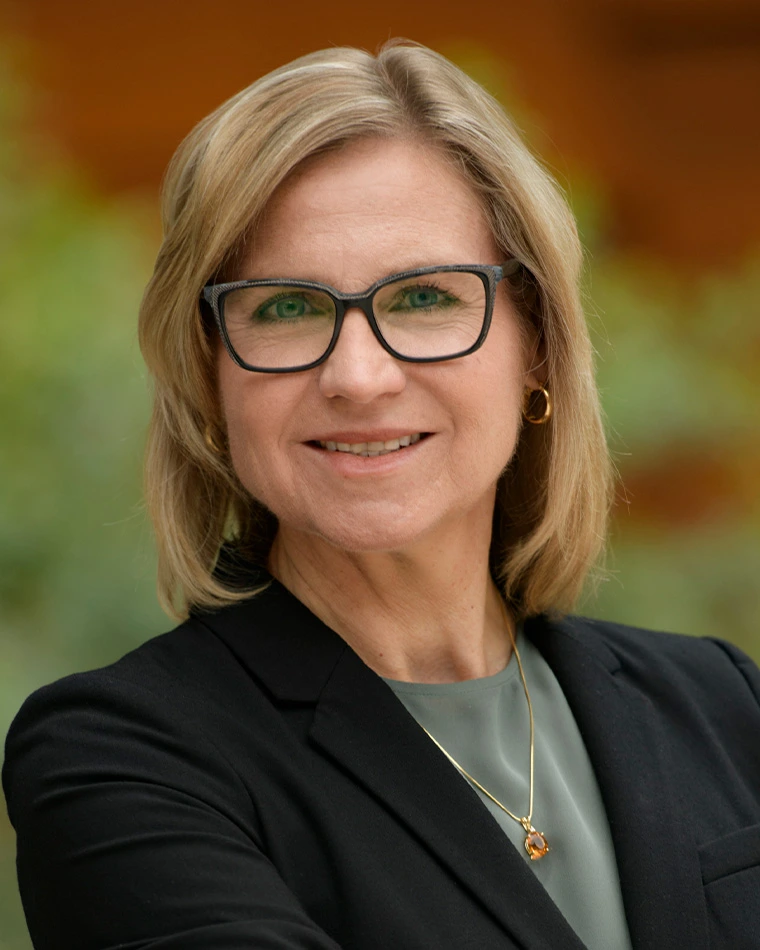
Professor Frederic Gardes is a leading academic in the Department of Electronics and Computer Science within the Faculty of Engineering and Physical Sciences at the University of Southampton. He holds a PhD and serves as Principal Investigator on multiple high-impact photonics research projects funded by EPSRC and the European Union. His research spans critical areas of modern photonics: Silicon photonics for energy-efficient communications Integrated optical circuits using silicon nitride platforms Quantum dot systems for sensing and information processing High-speed electro-optic modulators Nonlinear optical phenomena in integrated waveguides Professor Gardes' recent publications (2024-2025) demonstrate a concentrated focus on advancing silicon nitride photonics, particularly in developing low-loss interfaces, high-speed modulators operating at 100 Gbit/s, and broadband wavelength conversion techniques. His work bridges fundamental nonlinear optics with practical applications in telecommunications and sensing, consistently emphasizing CMOS compatibility and manufacturing feasibility. He actively supervises seven PhD students pursuing cutting-edge research in photonic integration. His leadership extends to major collaborative projects including QUDOS, C-PIC, and Horizon Europe initiatives like DOLORES and PIXEurope, where he works alongside Professors Graham Reed, David Thomson, and Goran Mashanovich. Professor Gardes maintains active industry engagement through speaking roles such as his 2023 presentation on Advanced Silicon Nitride Integration for CMOS Photonic Circuits , demonstrating the translational impact of his research.
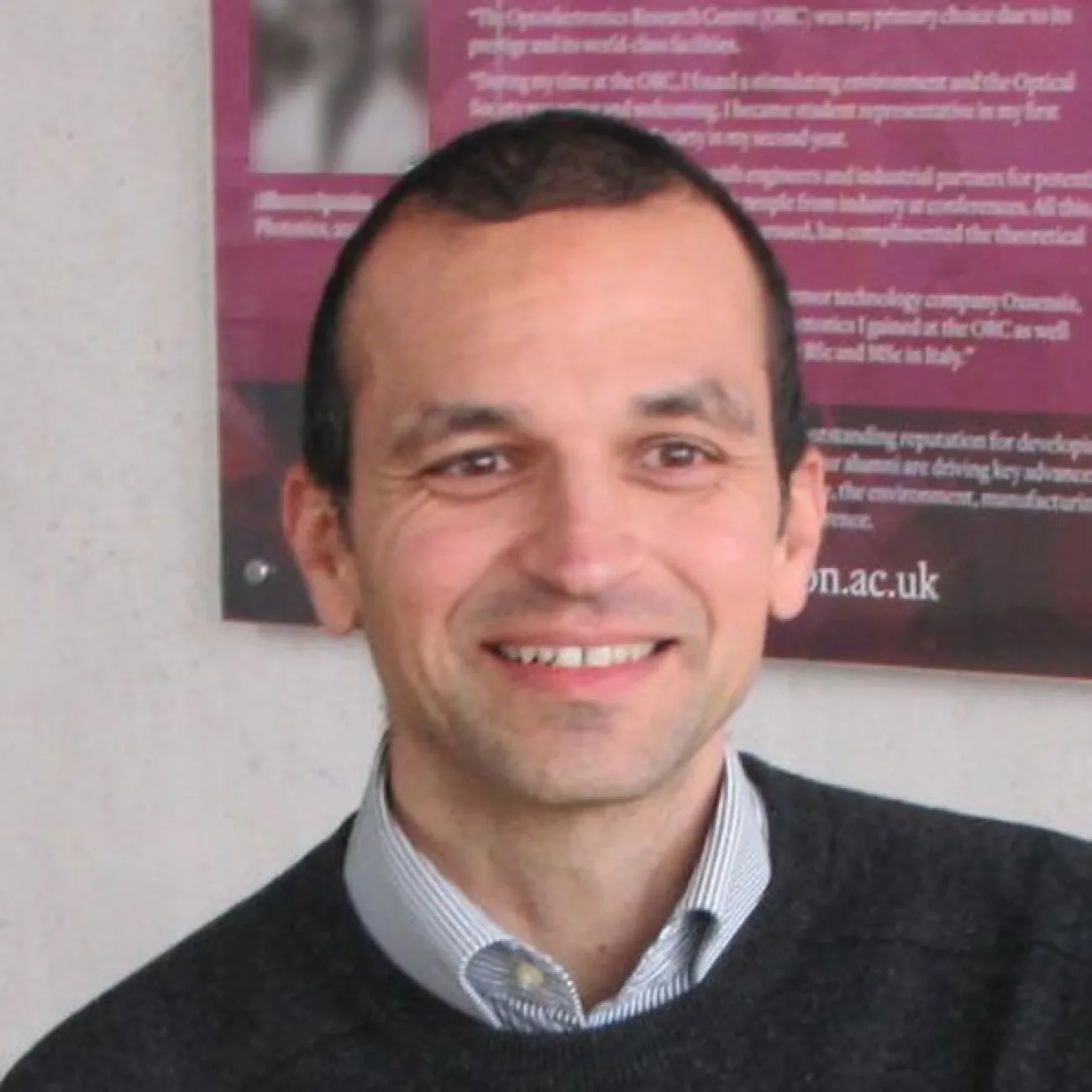
Professor Francesco Poletti is a Professorial Fellow-Research at the University of Southampton's Optoelectronics Research Centre (ORC), specializing in advanced optical fiber technologies. He leads multiple high-impact research projects funded by prestigious organizations including EPSRC, the European Union, Royal Society, and industry partners like Microsoft Corporation. His research focuses on: Hollow Core Optical Fibres design and fabrication Optical Communications for high capacity and low latency systems Novel active and passive optical fibres Applications of hollow core optical fibres Optical fibre guidance mechanisms Professor Poletti's recent publications demonstrate leadership in hollow core fiber technology, with significant advancements in manufacturing techniques, optical performance, and practical applications. His 2024-2025 publications show particular emphasis on improving fiber compatibility with existing infrastructure, developing mid-infrared capabilities, enhancing laser integration, and creating novel sensing applications. His scientific recognition includes a prestigious Royal Society Fellowship. Current major projects include FASTNET (revolutionary hollow core low-latency fibres), research contracts with Microsoft, and EU-funded initiatives like WISDOM and EMPRESS. Professor Poletti actively supervises PhD students and accepts new applications, currently mentoring Rene Andres Reynolds Hamel, Mahmudur Rahman, Amalie Gjelsvik, and Chiang Ping Saw. His research group is a core component of the Hollow Core Fibre and Fibres and Communications research teams at the ORC.
Prof. Dr. Uli Lemmer is a Professor at the Department of Electrical Engineering and Information Technology (ETIT) at the Karlsruhe Institute of Technology (KIT). His research focuses on optoelectronics, thermoelectric materials, and printed electronics, with a strong emphasis on energy harvesting, nanotechnology, and photonics. He leads the Lichttechnisches Institut (LTI) and is affiliated with the Institute of Applied Physics. His work spans innovations in laser systems, flexible electronics, and bio-inspired materials. Office: Building 30.34, Room 223; Phone: +49 721 608-42530; Email: uli.lemmer@kit.edu. Research interests include the development of advanced materials for solar cells, thermoelectric generators, and sensor technologies. He pioneers methods like aerosol-jet printing and inkjet printing for scalable production of electronic devices. His group explores biomimetic structures (e.g., snake scale nanopores) and terahertz systems, pushing boundaries in both fundamental science and applied engineering. Recent publications highlight breakthroughs in printed thermoelectric modules, perovskite-based photovoltaics, and high-frequency antennas. His work integrates cutting-edge fabrication techniques with material science to address challenges in renewable energy, sensor networks, and flexible electronics. Prof. Lemmer collaborates internationally on projects like EU-funded energy initiatives and partners with industry for technology transfer. His lab specializes in additive manufacturing, optical systems, and nanoscale device engineering, aiming to bridge the gap between academic research and industrial applications.
Angelo Cervone is a Professor at Delft University of Technology's Department of Astrodynamics & Space Missions within the Faculty of Aerospace Engineering. His research focuses on advanced propulsion systems, CubeSat technology, additive manufacturing for space applications, and space systems design. He leads projects like LUMIO, a CubeSat mission to monitor lunar meteoroid impacts, and has contributed to the development of green propellants and smart composite structures with embedded sensors. His work integrates cutting-edge manufacturing techniques like laser powder directed energy deposition with propulsion system optimization, emphasizing sustainable and robust space technologies. Cervone has authored over 130 publications and edited the book Adaptive On- and Off-Earth Environments , reflecting his expertise in off-world infrastructure and robotic production systems. He received the Rhizome Award (2021) for advancing autarkic systems in off-Earth habitat development. Key Projects: LUMIO CubeSat mission, Rhizome habitat system development, smart propellant tank design Research Themes: CubeSat propulsion, lunar exploration, additive manufacturing for space, in-situ resource utilization His articles highlight advancements in micro-thrusters, structural health monitoring via fiber optics, and autonomous navigation systems for deep-space CubeSats. Cervone collaborates globally on missions requiring innovative propulsion architectures and materials science breakthroughs.
Christophe Moser is a Full Professor at the Swiss Federal Institute of Technology in Lausanne (EPFL), affiliated with the School of Engineering (STI) and the Institute of Microengineering (IMT). He leads the Laboratory of Applied Photonics Devices (LAPD) and holds additional roles in EPFL's educational programs, including directorship of SMT-GE (General Engineering) and teaching responsibilities in the EDPO, EDAM, and SMT-ENS departments. His work bridges academic research, industrial innovation, and education in photonics and microengineering. His research focuses on applied photonics , laser technology , and microengineering , with applications in telecommunications, sensing, fiber lasers, and micro-machining. Recent publications highlight advancements in volume holographic gratings, tunable lasers, and wavelength-stabilized laser diodes. The articles demonstrate expertise in optical engineering , particularly tunable filters , holographic components , and photonic device integration . Key sub-fields span telecommunications, Raman systems, semiconductor lasers, optical signal processing, and photorefractive materials. As a co-inventor of 24 patents and author of 14 peer-reviewed papers, Moser contributes significantly to industrial photonics . He advises numerous PhD students and teaches courses in additive manufacturing , laser fundamentals , optical computing , and practical venture capital. He is associated with EPFL's Laboratory of Applied Photonics Devices (LAPD), where his team develops advanced photonic solutions. His career combines academic excellence with entrepreneurial success, having co-founded Ondax, Inc., and raised $15 million for holographic component production.
Carolyn Conner Seepersad serves as the J. Mike Walker Professor of Mechanical Engineering at the University of Texas at Austin and directs the Center for Additive Manufacturing and Design Innovation. She holds membership in the U.T. System Academy of Distinguished Teachers and maintains active leadership in the additive manufacturing community through roles such as co-organizer of the Solid Freeform Fabrication Symposium and ASME Design Engineering Division Executive Committee membership. Her academic credentials include: PhD in Mechanical Engineering from Georgia Tech (2004) MA/BA in Philosophy, Politics and Economics from Oxford University (1998, Rhodes Scholar) BS in Mechanical Engineering from West Virginia University (1996) Dr. Seepersad's research centers on computational design methodologies and additive manufacturing innovation , with particular expertise in simulation-based design of complex systems, environmentally conscious product development, and materials engineering. Her work bridges theoretical design frameworks with practical manufacturing applications, emphasizing sustainability and performance optimization across aerospace, automotive, and energy systems. Current projects explore reactive extrusion additive manufacturing, negative stiffness materials, and machine learning integration for process-aware design. Analysis of her 15 most recent publications reveals a dominant focus on process innovation in additive manufacturing (70%), particularly stereolithography and selective laser sintering, with growing emphasis on data-driven design approaches (20%) and sustainable engineering applications (10%). Her work demonstrates consistent progression from fundamental material design toward integrated system optimization and industrial scalability. Her scientific recognition includes: International Outstanding Young Researcher Award in Freeform and Additive Manufacturing (2009) UT System Regents’ Teaching Award (2010) ASME Design Automation Committee Outstanding Young Investigator Award (2010) ASEE Outstanding New Mechanical Engineering Educator Award (2013) Multiple ASME and ASEE best paper awards U.T. System Academy of Distinguished Teachers membership Dr. Seepersad maintains an extensive advising portfolio with 48 graduate students (16 PhD, 24 MS, and 8 current) plus 2 postdoctoral researchers, reflecting sustained research productivity and educational impact. Her Product, Process, and Materials Design Lab fosters interdisciplinary collaboration between mechanical engineering, materials science, and computational design teams.
Dr. Yongmin Jung is a Principal Research Fellow at the Optoelectronics Research Centre (ORC), University of Southampton, specializing in advanced fiber optic technologies. With over 20 years of experience, he leads research on multicore and multimode fiber technology, achieving several world-first innovations including the first multimode erbium-doped fiber amplifier. His research focuses on developing energy-efficient optical amplifiers for telecommunications networks using Space Division Multiplexing technology. This work addresses power consumption challenges in long-haul transmission systems while reducing cost per bit and increasing capacity. Current projects include Power Efficient Multicore Fiber Amplifiers and Smart Fibre-Optic High Power Photonics. He teaches MSc courses on fiber components and optical amplifiers in the Advanced Telecoms program. EU Horizon Prize for Breaking the Optical Communications Barrier (2016) Dean's Award (2015) Guinness World Record (2014) As Principal Research Fellow, Jung mentors PhD students and coordinates international research collaborations. His work contributes to next-generation optical communication systems with applications in telecommunications infrastructure.
LUIS GONZALEZ GUERRERO is an Assistant Professor at the Universidad Carlos III de Madrid, specializing in photonics and telecommunications. His research focuses on integrated photonic circuits for millimeter-wave and terahertz (THz) communication systems, with applications in satellite payloads, wireless fronthaul/backhaul, and space technology. He leads projects in hybrid integrated optical platforms (e.g., InP-Si3N4), laser stability, and high-frequency signal generation. His work bridges photonics with electrical engineering to enable next-generation wireless systems. Research Interests: Dr. Gonzalez Guerrero’s expertise spans integrated photonics, microwave photonics, THz communication links, satellite communication systems, and photonic signal generation. His innovations include low-noise radiometers, optical injection locking for stable local oscillators, and high-purity mm-wave/THz signal transmission. His contributions address challenges in frequency stability, bandwidth efficiency, and phase noise mitigation in high-frequency systems. Publications: His recent work emphasizes hybrid photonic platforms, sub-THz wireless bridges, and phase noise mitigation techniques. Articles highlight advancements in optical signal processing, laser source integration, and applications in space communication. His research trends reflect a strong focus on translating laboratory prototypes into deployable systems for satellite and terrestrial networks. Affiliations: He is affiliated with the Grupo Universitario de Tecnologías de Identificación (GUTI), a research group at UC3M. His work is supported by grants focused on photonic integrated circuits and space communication technologies. He collaborates internationally on projects involving multicore fiber systems, coherent THz transmitters, and optical frequency comb applications.
Jennifer Barton is a Professor at the University of Arizona in the College of Engineering, with appointments in Biomedical Engineering, Electrical and Computer Engineering, Optical Sciences, and Biosystems Engineering. She serves as the Interim Director of the BIO5 Institute and has held leadership roles such as Department Head of Biomedical Engineering and Interim Vice President for Research. BS and MS in Electrical Engineering from the University of Texas at Austin and University of California Irvine PhD in Biomedical Engineering from the University of Texas at Austin (1998) Her research in Biomedical Optics focuses on developing miniature endoscopes combining optical coherence tomography and fluorescence spectroscopy for early ovarian and colon cancer detection . She also explores light-tissue interaction and dynamic optical properties of blood , leading to novel laser therapies for skin disorders. Her publications span optical imaging device design , cancer detection , and multimodal endoscopes . Recent works emphasize machine learning integration for diagnostic accuracy and 3D printed optical components . Women of Impact Research Innovation & Impact, University of Arizona (2022) Thomas R. Brown Distinguished Chair, College of Engineering (2020) Best Campus Collaborator, Tech Launch Arizona (2019) President's Award, SPIE (2016) She mentors students in biomedical engineering and leads the Tissue Optics Lab , an interdisciplinary team building novel imaging devices for healthcare innovation.
Heidi Ottevaere is a Professor at the Faculty of Engineering of the Vrije Universiteit Brussel (VUB) since October 1, 2009. She serves as the head of the Instrumentation and Metrology platform at the Photonics Innovation Center and leads the 'biophotonics' research unit of the Brussels Photonics Team (B-PHOT), which is chaired by Prof. Hugo Thienpont. Her work focuses on the design, fabrication, and characterization of photonic components and systems for diverse applications in medical diagnostics, environmental monitoring, and industrial processes. Dr. Ottevaere earned her Electrotechnical Engineering degree with majors in Photonics from Vrije Universiteit Brussel in 1997 and completed her PhD in Applied Sciences at the same institution in 2003. Her doctoral research focused on 'Refractive microlenses and micro-optical structures for multi-parameter sensing: a touch of micro-photonics.' Professor Ottevaere's research spans multiple cutting-edge areas of photonics with particular emphasis on biophotonics, micro-optics, and optical metrology . Her work bridges fundamental science with practical applications, developing novel photonic components and systems that address real-world challenges. She has pioneered research in miniaturized optical systems for medical diagnostics, environmental monitoring, and industrial applications. Her current research focuses on advancing lab-on-a-chip technologies, microfluidic optical sensors, and novel optical fiber systems for biomedical applications. She has developed microminiaturized, integrated plastic detection units for absorbance and laser-induced fluorescence measurements in microfluidic channels, enabling portable, robust, and disposable diagnostic systems. Her recent publications demonstrate a strong trend toward integrated optical sensing systems with applications in medical diagnostics and environmental monitoring. There's a clear progression from fundamental optical component design to complete system integration, with increasing emphasis on artificial intelligence for data analysis and computational imaging techniques. Her work bridges photonics with biomedical engineering, materials science, and data science, reflecting the interdisciplinary nature of modern photonics research. Dr. Ottevaere has been recognized with several prestigious awards: Best Application award (2008) Educational award - Bronze (2019) MOC09 Contribution Award Winners (2009) As an educator and mentor, Professor Ottevaere has promoted 9 PhD students and supervised numerous master's theses. She has secured substantial research funding from diverse sources including the Fund for Scientific Research Flanders (FWO), the Institute for the Promotion of Innovation by Science and Technology in Flanders (IWT), and multiple European Framework Programs. Her current portfolio includes projects on miniaturized biosensors for drinking water screening, precision manufacturing, and photonics education initiatives in Uzbekistan. She has coordinated multiple strategic research and networking projects with regional, national, and international funding bodies. Professor Ottevaere leads the biophotonics research unit within the Brussels Photonics Team (B-PHOT), one of Europe's leading photonics research groups. Her team includes researchers working on optical metrology, micro-optics fabrication, and biophotonic applications. She collaborates extensively with industry partners including Melexis, Umicore, and Anteryon, as well as academic institutions across Europe through various EU-funded projects. She has been instrumental in developing the interuniversity engineering curriculum 'Master in Photonics' which received the EC Erasmus Mundus quality label in 2006, and continues to be the driving force behind photonics education at VUB.
Prof. Wim Desmet is a full professor at the Faculty of Engineering Science and head of the Department of Mechanical Engineering at KU Leuven . His research focuses on advanced modeling techniques for mechanical systems, including: noise and vibration control in automotive and industrial systems computational acoustics and interval field uncertainty modeling metamaterials for broadband vibroacoustic performance AI-driven diagnostic systems in renewable energy and manufacturing Current research projects address challenges in electric vehicle drivetrains, wind turbine monitoring, and multi-physical digital twin development. He actively contributes to academic governance as: Managing Director of KU Leuven Head of Subdivision HIST Chair of multiple executive committees Member of 15+ academic and administrative councils
Ramses Martinez is an Assistant Professor in the Department of Industrial Engineering and Biomedical Engineering at Purdue University . He holds a B.A. in Applied Physics from Universidad Autonoma de Madrid (2004) and a Ph.D. in Physics and Materials Science from the Spanish National Research Council (CSIC) in 2009. Prior to joining Purdue, he conducted postdoctoral research in the lab of Prof. George M. Whitesides at Harvard University, focusing on nanofabrication, microfluidics, and soft robotics. Education B.A. in Applied Physics, Universidad Autonoma de Madrid (2004) Ph.D. in Physics and Materials Science, Spanish National Research Council (CSIC) (2009) His research bridges soft robotics , flexible electronics , and nanofabrication , with a focus on creating self-powered e-textiles , omniphobic paper-based devices , and programmable mechanical metamaterials . His work has led to over 25 publications and 9 patents, emphasizing practical applications in health monitoring and industrial automation . Notable projects include waterproof electronic decals for biofluid monitoring, smart bandages for chronic wound detection, and laser nanoforming methods for scalable metallic structures. His research has been recognized through the Fulbright Fellowship and the Marie Curie IOF Grant .
Dr. Stefano Signorini is a Postdoctoral Researcher and European Commission Fellow at the Institute of Photonic Sciences (ICFO), specializing in quantum photonics and nonlinear optics. His research focuses on developing advanced photonic technologies using silicon-based platforms, particularly in the areas of heralded single-photon sources and mid-infrared quantum applications. He holds a PhD in Physics from the University of Trento (Italy). Education: PhD in Physics, University of Trento, Italy His research interests include silicon photonics, quantum communication, and nonlinear optical phenomena. He has contributed to breakthroughs in integrated quantum photonic devices and mid-infrared spectroscopy. His work emphasizes practical applications of quantum technologies in sensing, cryptography, and telecommunications. Awards: European Commission Fellow Signorini’s research group at ICFO explores optoelectronics and quantum photonics, aiming to bridge fundamental science with technological innovation. His projects involve collaborations on integrated photonics platforms and novel material synthesis for enhanced optical functionalities.
Professor Periklis Petropoulos is a Deputy Director at the Optoelectronic Research Centre (ORC), University of Southampton . His research focuses on Optical Communications , All-Optical Signal Processing , and Novel Fibre and Waveguide Technologies . He leads the Optical Fibre Communications Research Group and serves as Editor-in-Chief of IET Optoelectronics . Education: BSc in Electrical Engineering and Information Technology from University of Patras MSc in Communications Engineering from University of Manchester Institute of Science and Technology PhD in Optical Telecommunications from University of Southampton's ORC His work spans nonlinear photonics , integrated photonic circuits , and next-generation fiber communication systems . Current projects include EPSRC Programme Grant Airguide Photonics and the UK's National Dark Fibre Facility . Research themes include silicon nitride photonics , power-efficient multicore fiber amplifiers , and all-optical signal processing . His supervised projects demonstrate intermodal four-wave mixing for broadband wavelength conversion, energy-efficient fiber components , and hybrid optical transmission systems (including Power Over Fiber and Radio Over Fiber). He has secured over £33M in research funding from EPSRC , European Union , and industry partners. External roles include: Editor-in-Chief of IET Optoelectronics (2019–present) Speaker at international conferences (2022–2024) on topics like grating couplers , silicon nitride integration , and SDM amplifiers He leads Telecommunications Systems Lab and has published >570 papers across leading journals and conferences like ECOC and OFC . He has supervised 17 PhD students to completion.
Professor Geraint Jewell is affiliated with the University of Sheffield , serving as Director of the Rolls-Royce University Technology Centre in Advanced Electrical Machines (since 2006) and Director of the EPSRC Future Electrical Machines Manufacturing Hub (since 2019). He is a graduate of the university (BEng 1988, PhD 1992) and has held academic roles since 1994. EPSRC Advanced Research Fellowship (2000-2005) Royal Society Industry Fellowship at Rolls-Royce (2006-2008) Former Faculty Director of Research and Innovation (2008-2011) Former Head of Department (2013-2019) His research focuses on power-dense electrical machines for aerospace applications , including permanent magnet machines , switched reluctance machines , and linear actuators . He has supervised ~20 PhD students and led collaborations with Rolls-Royce on high-temperature devices (up to 800°C) and aero-engine starter-generators. Recent publications analyze stator insulation thermal degradation , eddy current control in additively manufactured materials , and magnetic loss prediction in silicon steel. His work spans electromagnetic modeling , core loss calculation , and advanced manufacturing techniques for electrical machines. EPSRC Advanced Research Fellowship (2000-2005) Royal Society Industry Fellowship (2006-2008) He has advised PhD students across topics like consequent-pole PM machines , doubly salient SynRMs , and core loss characterization . His Electrical Machines and Drives Research Group explores modular motor design and magnetic material optimization for aerospace and electric vehicles.