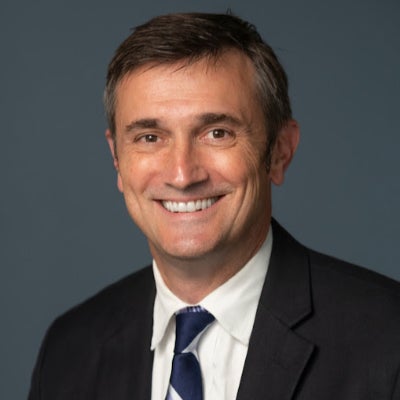
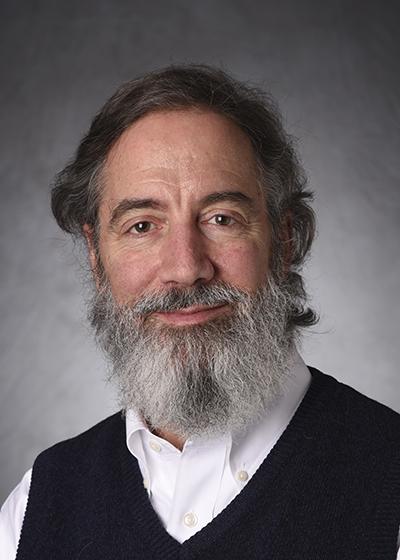
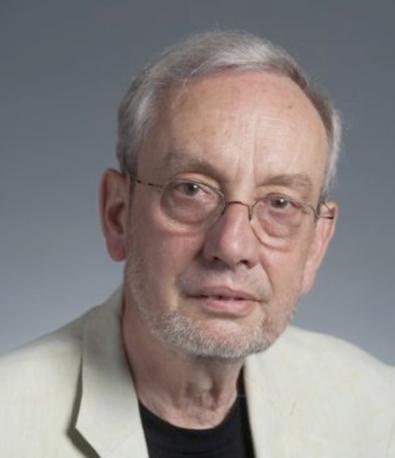
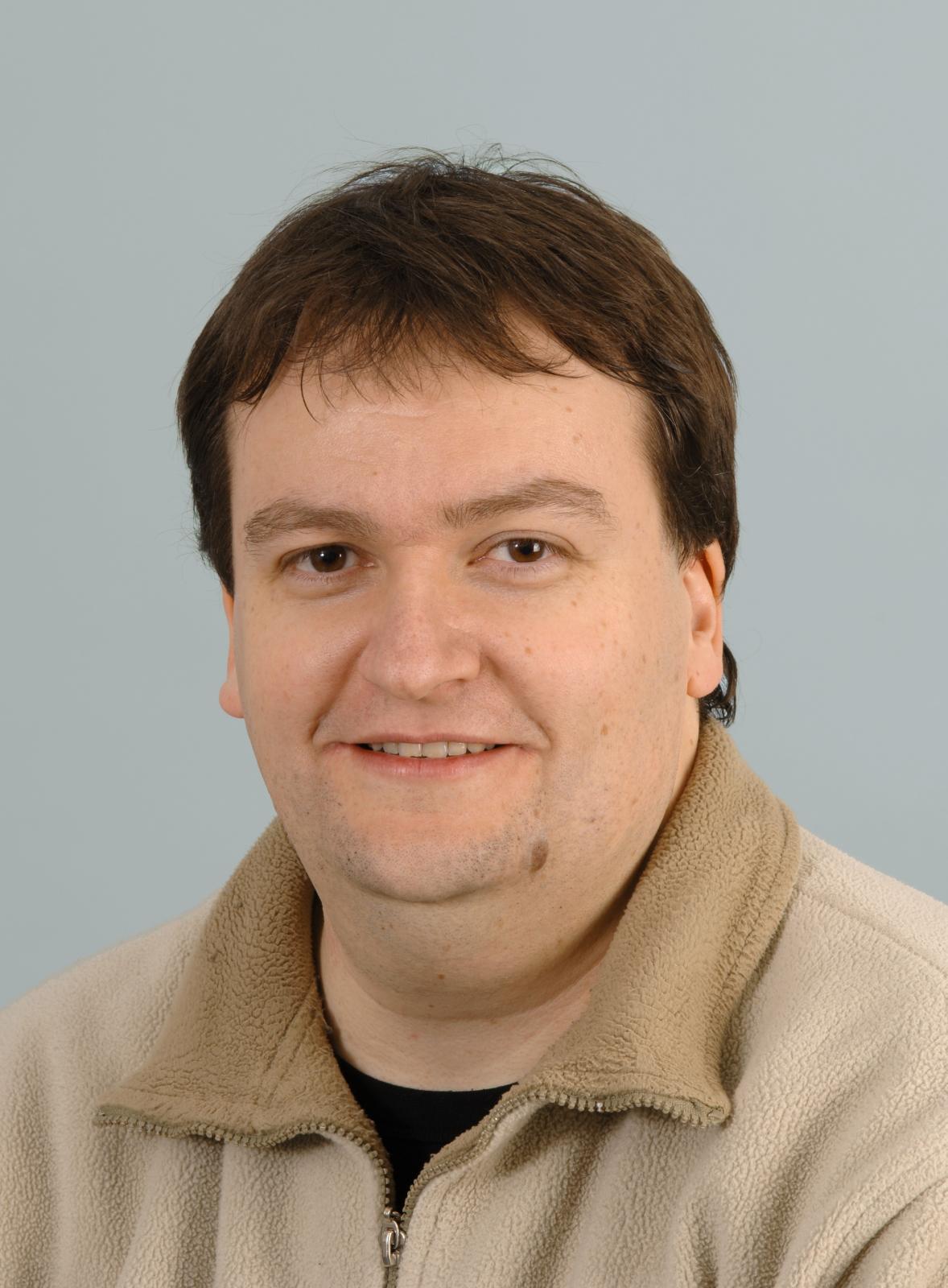
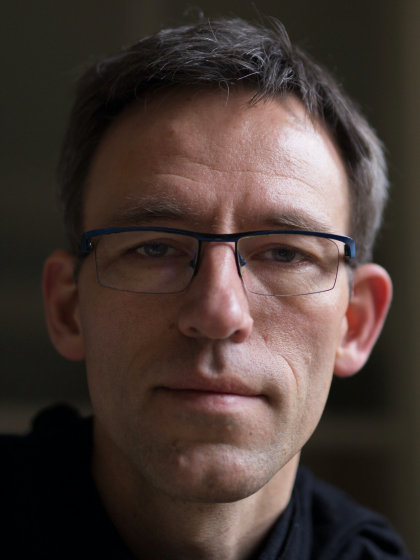
Christopher D.P. Baxter is a Professor and Department Chair of Civil and Environmental Engineering at the College of Engineering, University of Rhode Island , with expertise in geotechnical engineering, offshore wind energy, and coastal resilience. He holds a Ph.D. in Civil Engineering from Virginia Tech (1999), an M.S. from Purdue University (1994), and a B.S. from Tufts University (1990). Research Focus: Geotechnical characterization of marine sediments, liquefaction resistance analysis, fiber-optic sensing for infrastructure monitoring, and coastal protection systems. Recent Publications: 15+ articles (2011–2025) covering topics like shear wave velocity, offshore wind foundation dynamics, and tsunami hazard modeling. Grants: Led projects on offshore wind monitoring (2019–2024) and fiber-optic seismic sensing (2021–2023). Key Collaborations: Work with teams on submarine landslide analysis, coastal dune reinforcement, and Rhode Island infrastructure resilience. His work bridges experimental geomechanics with practical coastal engineering solutions.
David Allcock is an Assistant Professor in the Department of Physics at the University of Oregon, part of the College of Arts and Sciences. His research focuses on ion trapping, quantum computing, and hybrid quantum systems, with an emphasis on manipulating atomic and molecular systems using electric and magnetic fields for quantum information applications. He leads the Ion Trapping Lab at UO, where he develops scalable quantum technologies and open-source control systems like ARTIQ and Sinara. His work bridges experimental physics with engineering, addressing challenges in qubit control, error mitigation, and large-scale quantum computer design. Education: MPhys from the University of Oxford (2007), D.Phil. in Physics from Oxford (2012). Prior to UO, he was a Lindemann Fellow at the National Institute of Standards and Technology (NIST) in Boulder, CO. His research includes innovations in trapped-ion qubit control, including laser-free entangling gates, scalable architectures, and applications in quantum sensing and dark matter detection. Key research themes include metastable qubit systems, photon scattering error mitigation, and the integration of superconducting detectors for state readout. He collaborates on open-source hardware-software stacks for quantum experiments and mentors students in quantum engineering through programs like the Quantum Technology Master’s Internship. Current projects explore hybrid quantum-classical interfaces and ultra-stable ion trap fabrication. His lab’s contributions span theoretical and experimental domains, with recent advances in geometric phase gates, microwave-driven control, and error-resilient qubit operations. The group also engages in interdisciplinary work linking quantum computing with precision measurement, such as SPUD (SPectroscopy for Ultralight Dark matter) and bosonic sensing tools.
Ralph H. Colby serves as Professor of Materials Science and Engineering and Chemical Engineering at Pennsylvania State University's College of Earth and Mineral Sciences, holding the Corning Faculty Fellowship. His research focuses on molecular-level dynamics in complex fluids, particularly polymers, ionomers, and liquid crystalline systems. With over 130 publications and authorship of the textbook Polymer Physics (2003), he directs an active research program examining structure-property relationships in soft matter. B.S. in Materials Science and Engineering, Cornell University (1979) M.S. in Chemical Engineering, Northwestern University (1983) Ph.D. in Chemical Engineering, Northwestern University (1985) Professor Colby's research spans polymer physics, rheology, and materials for energy applications. His group employs mechanical rheology, dielectric spectroscopy, and scattering techniques to investigate ion transport in single-ion conductors for batteries, dynamics of glass-forming liquids, and self-assembly in polyelectrolyte systems. Current work emphasizes structure-property relationships in ionomers, liquid crystalline polymers, and branched architectures. Analysis of recent publications reveals consistent focus on ionomer membranes for energy applications, processing-structure relationships in advanced polymers, and fundamental dynamics of complex fluids. Key trends include increasing integration of computational modeling with experimental characterization, expansion into sustainable materials processing, and growing emphasis on applications in battery technology and biomedical materials. Penn State Faculty Scholar Medal for Outstanding Achievement (2022) Bingham Medal, Society of Rheology (2012) American Chemical Society Fellowship Corning Faculty Fellowship in Materials Science and Engineering Professor Colby leads multiple federally funded projects including NSF's 'Fundamental Studies of Flow-Induced Polymer Crystallization' and DOE's 'Conduction mechanisms and structure of ionomeric single-ion conductors'. His group maintains strong industry partnerships with Corning Incorporated and participates in interdisciplinary initiatives like the Penn State Intercollege Graduate Degree Program in Materials Science and Engineering. Current research includes collaborations on breast cancer adherence interventions in Rwanda and conjugated polymer development for flexible electronics. The Colby Research Group operates specialized facilities for rheological characterization, dielectric spectroscopy, and X-ray scattering at Penn State's Materials Research Institute. The team maintains active collaborations with national laboratories and international research groups, focusing on translating fundamental polymer physics discoveries into practical applications for energy storage and advanced manufacturing.
John Baillieul is Distinguished Professor at Boston University with joint appointments in Mechanical Engineering, Systems Engineering and Electrical & Computer Engineering. He directs experimental laboratories for real-time control of lightweight robotic systems and applies nonlinear control theory to complex multi-body, networked, and bio-inspired systems. Education: Ph.D., Harvard University Research Interests: Baillieul’s work spans robotics, nonlinear control, and networked systems. Early contributions resolved motion-planning for kinematically redundant manipulators; current themes include neuromimetic learning, vision-based navigation, and resilience of infrastructure networks such as power grids. His group couples rigorous geometric control with real-time hardware to create lightweight, high-performance robots and to uncover fundamental information limits in feedback systems. Recent Publication Trends (2021-2025): Over the past five years his output has concentrated on three synergistic directions: (i) neuromimetic and Koopman-based data-driven methods for estimating and controlling nonlinear systems, (ii) vision-based guidance and sparse optical-flow primitives for agile autonomous flight, and (iii) network-theoretic decomposition and information-rate studies for resilient operation of power grids and collective dynamics. Honors & Awards: IEEE Fellow 2025 Roger W. Brockett Control Systems Award Former Editor-in-Chief, IEEE Transactions on Automatic Control Affiliations & Service: He is a member of Boston University’s Center for Information and Systems Engineering (CISE), has served as Editor-in-Chief of IEEE Transactions on Automatic Control, and remains active in editorial and organizational roles across the IEEE control systems community.
Alan Stocker is a Professor in the Department of Psychology at the University of Pennsylvania, affiliated with the Neuroscience Graduate Group, Bioengineering Graduate Group, and Computational Neuroscience Initiative. His research focuses on understanding how prior beliefs and expectations shape visual perception, combining theoretical models with psychophysical and physiological experiments. Key areas include optimal inference frameworks, neural coding efficiency, and decision-making under uncertainty. Education: PhD in Physics (ETH Zurich, 2002); MSc in Biomedical Engineering and Materials Science (ETH Zurich, 1995). Prior appointments include postdoctoral work at New York University and ETH Zurich. Research Interests: Behavioral Neuroscience, Cognitive Neuroscience, Sensation and Perception. Specific projects explore statistical properties of visual environments, subjective expectations from past decisions, and neural computations underlying perception. Advising: Current advisees include Cheng Qiu (Postdoc), Ansh Soni, and Mengting Fang (Graduate Students). Courses taught: Perception, Visual Neuroscience, and Probabilistic Models in Perception and Cognition. Labs/Teams: Leads the Computational Perception and Cognition (CPC) Laboratory, emphasizing theory-driven experimentation. Collaborates widely across disciplines including bioengineering and electrical systems engineering.
Prof. Dr. André Rubbia is a Full Professor of Experimental Physics at ETH Zurich's Department of Physics, holding this position since December 2003 after serving as Associate Professor from 1998. His research spans neutrino physics, astro-particle physics, and dark matter detection through major international collaborations including CERN, Gran Sasso National Laboratory, and Fermilab. He currently serves as Co-Spokesperson for the billion-dollar DUNE neutrino project at Fermilab, managing over 900 scientists. His educational background includes: Diploma in Physics from the University of Geneva (1990), with thesis work on the L3 experiment at CERN's LEP accelerator Ph.D. in Physics from MIT (1993) under Nobel Laureate S.C.C. Ting, focusing on high-energy electron-positron collisions Rubbia's research centers on fundamental particle interactions, particularly neutrino oscillations and physics beyond the Standard Model. He pioneered liquid Argon Time Projection Chamber (LAr TPC) technology and dual-phase detection systems, enabling breakthroughs in neutrino mass measurements and dark matter searches. His work spans underground laboratories (Gran Sasso, Canfranc), the LHC's CMS detector, and neutrino beam experiments like T2K. Recent explorations include antimatter gravity tests, electron-positron bound states, and dark hidden sector searches. His 2025 publications reveal intense focus on neutrino oscillation parameter precision (T2K, Hyper-Kamiokande), FASER's LHC neutrino program, and DarkSide-20k dark matter detector development. Key themes include cross-section measurements, advanced detector technologies (SiPMs, emulsion tracking), and statistical methods for oscillation analysis, reflecting integration of theoretical modeling with cutting-edge instrumentation. Scientific recognition includes: Breakthrough Prize for Fundamental Physics (2016) awarded to the international team for discovering matter-anti-matter asymmetry in neutrino oscillations APS Viewpoint selection for editing the paper announcing first electron neutrino appearance at accelerators Rubbia has supervised over fifty PhD and Master's theses while securing substantial research funding as Principal Investigator for 20+ Swiss National Science Foundation projects and Coordinator of two EU FP7 Design Studies. His DUNE leadership involves complex international grant management across 30+ countries. He leads ETH Zurich's experimental particle physics group across multiple facilities: the ICARUS neutrino detector at Gran Sasso, CMS at CERN, DUNE at Fermilab, and DarkSide-20k for direct dark matter detection. His team developed the first underground ton-scale liquid argon detector and maintains collaborations with Japanese (Super-Kamiokande) and American (Fermilab) institutions.
Prof. dr. Steven Hoekstra is an Associate Professor of Atomic and Molecular Physics at the University of Groningen's Faculty of Science and Engineering, within the Van Swinderen Institute. His research focuses on precision measurements using cold molecules to explore fundamental physics, including Stark deceleration, laser cooling, and searches for physics beyond the Standard Model. He leads the NL-eEDM program at Nikhef, investigating the electron's electric dipole moment. Hoekstra is also involved in educational innovation, having received the Teacher of the Year award (2020) and a Senior Teacher Qualification (2023). He has supervised over 11 PhD theses and currently mentors 5 students. His work combines experimental techniques with theoretical insights, addressing questions like symmetry violations and quantum dynamics. Key projects include manipulating BaF molecules with electrostatic fields and exploring levitated nanoparticles as sensors. Hoekstra has secured major grants, including NWO VICI (2022) and VIDI (2013), and collaborates internationally on projects like the European Strategy for particle physics. Recent articles highlight advancements in molecular beam control, spin-precession methods for EDM searches, and opportunities in radioactive molecules. He actively participates in the Physics Olympiad Netherlands as chair, contributing to science outreach and education.
Prof. Dr. Barbara Kraus is the Chair of Quantum Algorithms and Applications at the Technical University of Munich (TUM), affiliated with the TUM School of Natural Sciences. She previously held academic positions at the University of Innsbruck, where she founded her research group in 2010. Education : Physics and Mathematics at the University of Innsbruck; Post-doctoral work at MPI for Quantum Optics and University of Geneva. Her research focuses on foundational problems in quantum information theory, particularly entanglement in multipartite systems, quantum simulation, and verification of quantum processors. She develops theoretical tools for quantum many-body systems and explores applications in quantum computing, emphasizing error characterization and experimental validation. Recent publications highlight advancements in Hamiltonian learning, symmetry-resolved entanglement detection, and multipartite state transformations. Her work bridges theoretical quantum physics with practical implementations, including Rydberg platforms and quantum metrology. Key Awards : START Prize (2010), Ignaz L. Lieben Award (2013), Boltzmann Prize (2011), Südtiroler Sparkasse Research Prize (2019). She supervises doctoral students and postdocs in quantum information theory, with a focus on stabilizer states, quantum networks, and entanglement measures. Her courses at TUM include Quantum Information , Quantum Algorithms , and workshops on entanglement manipulation.
Sridhar R. Tayur is the Ford Distinguished Research Chair and University Professor of Operations Management at Carnegie Mellon University’s Tepper School of Business. He holds a Ph.D. in Operations Research from Cornell University and a B.Tech. in Mechanical Engineering from IIT Madras. His research focuses on quantum computing applications in operations research, healthcare systems optimization, and supply chain management. He has held visiting roles at MIT, Stanford, and Cornell, and founded companies like SmartOps and OrganJet. His recent work spans quantum-inspired optimization algorithms, healthcare decision support systems, and fair resource allocation policies. He has contributed to over 110 publications, including high-impact papers in Management Science , Operations Research , and IEEE Transactions . Awards include INFORMS Fellow and NAE membership. He teaches courses in quantum integer programming, healthcare operations, and service management at the Tepper School. Education: Ph.D. (Cornell), B.Tech. (IIT Madras) Research Labs: Quantum Technology Group, OrganJet Key Awards: INFORMS Fellow, NAE Member, MSOM Distinguished Fellow Teaching: MBA Operations Management, PhD Quantum Optimization, Healthcare Systems His interdisciplinary work bridges quantum computing, healthcare policy, and logistics, supported by collaborations with industry and government institutions.
Prof. Norbert Lütkenhaus is a Professor and Executive Director of the Institute for Quantum Computing (IQC) at the University of Waterloo, cross-appointed to the Department of Applied Mathematics. He holds affiliations with Perimeter Institute and the Centre for Applied Cryptographic Research. His research focuses on quantum communication theory, particularly quantum key distribution (QKD) and quantum repeaters. He has pioneered methods to bridge abstract quantum protocols with practical optical implementations, emphasizing secure key rate calculations and overcoming quantum channel limitations. Education: PhD (2003) in Physics from University Erlangen-Nürnberg, MSc (1993) and BSc (1990) from Ludwig-Maximilians-Universität München and RWTH Aachen, respectively. Awards include the 2015 American Physical Society Outstanding Referee Award and a 2009 University of Waterloo Excellence Award. Research interests span QKD protocols (e.g., decoy-state BB84, phase-error mitigation), quantum repeater architectures, and entanglement verification. He develops numerical tools for key rate analysis and addresses implementation security loopholes. His work includes theoretical frameworks for long-distance quantum communication and practical QKD system optimizations. Teaching includes courses on quantum information processing (PHYS 768/QIC 890) and mechanics (PHYS 115). He contributes to international standards via ETSI’s QKD-ISG and the QCrypt steering committee. His patents cover QKD system designs and phase-randomization techniques.
Assoc Prof Ng Teng Yong is an Associate Professor at the School of Mechanical & Aerospace Engineering (NTU), specializing in numerical modeling and simulation. With a background as Research Manager at A*STAR Institute of High Performance Computing, his work spans materials science, nanotechnology, and aerospace engineering. Current focus on graphene-based desalination membranes Expertise in molecular dynamics simulations Investigates nanoscale fluid mechanics and structural dynamics Recent publications highlight advancements in energy-efficient electrodialysis, smart robotics, and nonlinear vibration analysis. His interdisciplinary approach integrates computational methods with experimental validation in additive manufacturing and soft material mechanics.
Prof. Dr. Christian Breitsamter is a Professor at the Technische Universität München (TUM), leading the Chair of Aerodynamics and Fluid Mechanics within the TUM School of Engineering and Design. He has held this position since 2007 and has been a member of key committees such as the ICAS Programme Committee and STAB-Programmleitung. His research focuses on aerodynamics of aircraft and rotorcraft configurations, including vortex dynamics, aeroelasticity, and fluid-structure interaction. Education: PhD in Aerodynamics (1997) Master’s in Aerospace Engineering (1989) Research Interests: Prof. Breitsamter’s work spans experimental and numerical studies of high-agility aircraft, helicopter aerodynamics, and advanced wing designs. Key areas include leading-edge vortices, gust load mitigation using flexible wings, and flow control techniques. His group investigates cutting-edge topics like deep learning for buffet prediction and hybrid neural networks for aerodynamic modeling. Awards: Willy Messerschmitt Preis (1999) AIAA Associate Fellow (2007) Advising & Grants: While specific student names are not listed, his research involves collaborative projects with industry partners (e.g., RACER Compound Helicopter) and EU initiatives like the FURADO program. His team contributes to the NFDI4ING infrastructure for engineering data. Labs/Teams: Active in the Aerodynamics Wind Tunnel facilities (Windkanäle A/B/C) and leads the SAGITTA flying wing demonstrator project. His group also explores membrane wings and elasto-flexible morphing technologies.
Professor Petri Kuosmanen is affiliated with Aalto University as a faculty member of the School of Engineering and holds a position in the Department of Energy and Mechanical Engineering and the Mechatronics unit. Doctoral Degree in Engineering and Technology, Helsinki University of Technology (2004) Licentiate Degree in Engineering and Technology, Helsinki University of Technology (1992) Master's Degree in Engineering and Technology, Helsinki University of Technology (1988) His research focuses on Industrial Internet and Rotor Dynamics , with significant contributions to elevator systems , hydraulics , and wastewater treatment plant design . Recent work includes optimizing natural frequencies in rotor systems and developing digital twins for engineering education . Key trends in his 2024 publications include: Rotor dynamics and vibration analysis Smart data validation in industrial IoT networks Cold-climate adaptations for wastewater treatment Automated fiber optics coating mechanisms Energy efficiency in aeration systems As Principal Investigator, he leads projects like DRIVE FORWARD (2024–2027) and GOOD (2021–2024), focusing on electrified mobile machinery. He actively collaborates with networks such as DAAAM International (Chair) and European CLUSTER-university network (Member).
Professor Peter F. Driessen is a faculty member in the Department of Electrical and Computer Engineering at the University of Victoria, with a cross-appointment in the School of Music. He holds a BSc and PhD from the University of Victoria and is a Professional Engineer (PEng). His research focuses on communication systems, signal processing, control, and interdisciplinary projects in computer music and wireless technologies. Key areas include audio/video signal processing, radio propagation, sound recording, and multimedia systems. He leads the University of Victoria Propagation Laboratory, which explores radio wave propagation and Amateur radio integration with engineering education. His work spans theoretical research and applied projects like ECOSat satellite systems, software-defined radio (SDR), and innovative musical instruments such as the Radio Drum. He supervises undergraduate and graduate projects in these domains through ELEC 499 courses. Notable contributions include the APEGBC Editorial Board Award for Best Paper (2002) and patents in wireless networking and signal processing. His teaching includes courses in signal analysis and electromagnetics, and he collaborates on interdisciplinary programs like the Music/Computer Science degree. Education: BSc in Electrical Engineering, University of Victoria PhD in Electrical Engineering, University of Victoria Research Interests: Audio and video signal processing for music and media Software-defined radio and Amateur radio technologies Satellite communication and ground station development Gesture-based interfaces and musical instrument design Error mitigation in streaming audio/video Optical and microwave-photonic systems Labs & Collaborations: Propagation Laboratory (radio wave research) UVic Experimental Radio Group (Amateur radio club) UVic Satellite Design Team (ECOSat projects) UVic Centre for Aerospace Research Grants & Awards: APEGBC Editorial Board Award (2002) Multiple US patents in wireless systems and signal processing
Daniel Grier is an Assistant Professor jointly appointed in the Computer Science and Engineering and Mathematics departments at the University of California, San Diego (UCSD). His research focuses on quantum complexity theory , particularly exploring near-term quantum computing paradigms and proving quantum advantage over classical systems. He holds a Ph.D. from MIT and was previously a postdoctoral fellow at the University of Waterloo’s Institute for Quantum Computing. Education: Ph.D. in Computer Science, MIT B.S. in Computer Science and Mathematics, University of South Carolina Research Interests: Grier’s work bridges theoretical computer science and quantum computing, emphasizing algorithm design, complexity class separations, and foundational questions about quantum supremacy. He studies how low-depth quantum circuits, boson sampling, and other near-term technologies can achieve computational tasks classically deemed intractable. Recent Article Trends: His publications explore efficient quantum state learning (e.g., classical shadows), hardness results for quantum sampling problems (e.g., bipartite Gaussian boson sampling), and circuit lower bounds (e.g., depth-2 QAC circuits). These contributions highlight his focus on rigorously defining quantum computational advantages. Awards: None explicitly listed in the text. Advising & Grants: Advises at least one student, Jackson Morris. His research is supported by grants exploring quantum complexity and algorithm design. Teaches advanced courses on quantum complexity theory, computability, discrete mathematics, and quantum computing fundamentals. Labs/Teams: Maintains an active lab focused on quantum complexity theory, collaborating with colleagues on topics like interactive protocols and shallow quantum circuits.