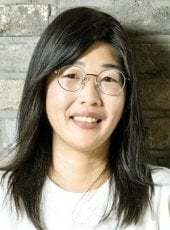
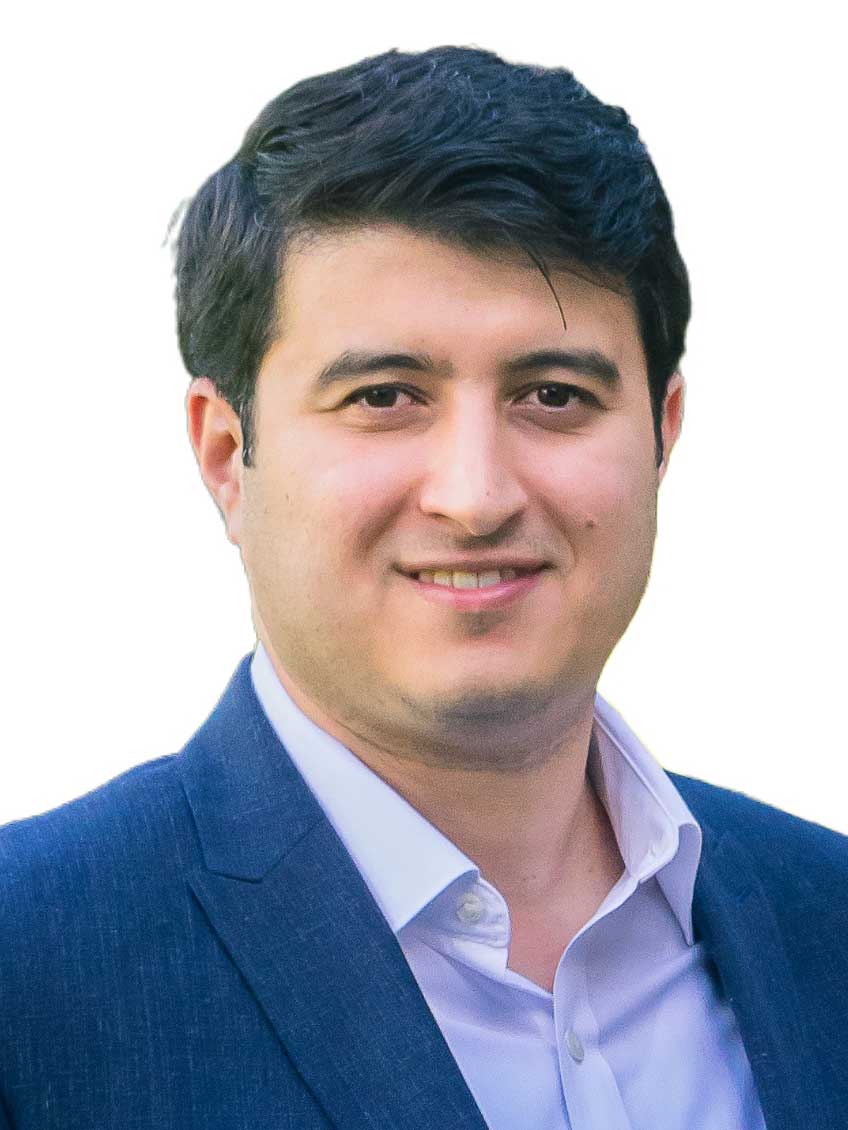
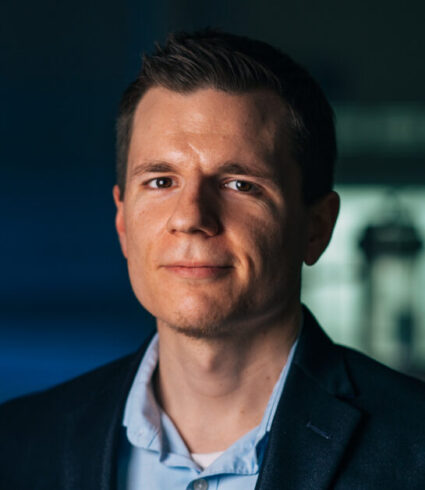
Arslan Mazitov is a Researcher and Doctoral Assistant at the École Polytechnique Fédérale de Lausanne (EPFL) , affiliated with the School of Engineering (STI) and the Institute of Materials (IMX) . He is part of the Computational Science and Modelling Laboratory (COSMO) , focusing on computational materials science with an emphasis on van der Waals materials, optical properties, and machine learning applications. His research explores novel materials for photonics, energy storage, and nanotechnology. Mazitov's work bridges theory and experiment, employing advanced modeling techniques to predict material behavior and design innovative solutions. Key research areas include van der Waals heterostructures , optical anisotropy engineering , and AI-driven materials discovery . He has contributed to studies on semiconductors, 2D materials, and interfacial phenomena. His computational methods address challenges in predicting material stability, optical properties, and surface behavior under various conditions. Active in collaborative projects, Mazitov's work has practical implications for photonic devices, energy storage systems, and nanoscale engineering. His research emphasizes interdisciplinary approaches, combining computational modeling with experimental validation to advance material innovation.
Jung Yun Bae serves as Assistant Professor in Mechanical and Aerospace Engineering at Michigan Technological University with a secondary appointment in Applied Computing within the College of Computing, joining MTU in 2019 after five years as Research Professor at Korea University's Intelligent Systems and Robotics Laboratory. Her academic credentials include: PhD in Mechanical Engineering from Texas A&M University MS in Mechanical Engineering from Hongik University BS in Mechanical Engineering from Hongik University Dr. Bae's research program centers on Robotics with emphasis on Multi-robot systems, particularly Coordination of Heterogeneous Robot Teams and Vehicle Routing Problems. Her work develops operational strategies for multi-agent autonomous vehicle systems through Multi-robot System Control and Optimization techniques, extending to Autonomous Navigation and Operational Research applications. Current investigations focus on underwater robotics coordination and neuroevolution approaches for connected vehicle systems. Analysis of her recent publications reveals consistent focus on workload-balanced task allocation for heterogeneous robot teams across challenging environments. Her underwater robotics research addresses tether management and entanglement avoidance, while neuroevolution applications target autonomous vehicle control at uncontrolled intersections and hybrid powertrain optimization, bridging robotics with operations research and artificial intelligence. Prior to MTU, Dr. Bae maintained affiliation with Korea University's Intelligent Systems and Robotics Laboratory. Her current work at MTU connects with the Great Lakes Research Center context, though specific laboratory details aren't provided in available materials.
Dr. Yiting Xia is a tenure-track faculty member at the Max Planck Institute for Informatics (MPI-INF), leading the Network and Cloud Systems research group. She previously worked as a research scientist at Facebook and holds a PhD in Computer Science from Rice University (2018) and a B.S. in Telecommunications Engineering from Beijing University of Posts and Telecommunications and Queen Mary University of London (2011). Her research focuses on high-performance and energy-efficient networking for cloud computing, including reconfigurable data center networks, optical communications, and network protocols. Notable contributions include innovations in transport protocols, time synchronization for optical networks, and failure-resilient network design. Education: PhD in Computer Science, Rice University, 2018 M.S. in Computer Science, Rice University, 2014 B.S. in Telecommunications Engineering, BUPT & QMUL, 2011 Research Interests: Data center networking, optical communications, cloud systems, network protocols, distributed systems, and network security. Her work bridges theoretical contributions with practical implementations, addressing challenges in latency-sensitive flows, traffic engineering, and system reliability. Awards include the Ken Kennedy-Cray Fellowship and the N2Women Rising Star Award (2021). She has co-lectured courses on distributed systems and data networks at Saarland University and previously contributed to teaching at Rice University. Key projects include Aurora (for MoE inference optimization), Lighthouse (an open research framework for optical networks), and Occam (a reliable network management system). Grants & Projects: Focus on deployable optical network architectures and resilient backbone management during pandemic-driven traffic shifts. Labs/Teams: Leads the Network and Cloud Systems group at MPI-INF, collaborating with academia and industry on cutting-edge networking solutions.
Dr. Penina Axelrad is a University of Colorado Distinguished Professor and Joseph T. Negler Professor of Aerospace Engineering Sciences at the University of Colorado Boulder. She has held academic roles since 1992, serving as Department Chair from 2012–2017. A member of the National Academy of Engineering since 2019, her research focuses on GNSS technology, satellite navigation, and remote sensing applications. She has authored over 223 publications and secured $17.5M in research grants. Education: Ph.D., Aeronautics and Astronautics, Stanford University, 1991 S.M., Aeronautical and Astronautical Engineering, MIT, 1986 S.B., Aeronautical Engineering (Avionics Option), MIT, 1985 Research Interests: Global Navigation Satellite Systems (GNSS), multipath mitigation, GNSS reflectometry, orbital dynamics, and quantum sensing for Earth science. Her work bridges astrodynamics, satellite navigation, and environmental monitoring. Awards: Member, National Academy of Engineering (2019) Women In Aerospace Educator Award (2016) Institute of Navigation Samuel Burka Award (2012) AIAA Summerfield Book Award (2011) Advising & Grants: Advised numerous students (no names listed) and led major grants including NASA Quantum Pathways Institute and Sentinel-6 orbit determination projects. Active in Institute of Navigation leadership roles. Labs/Teams: Colorado Center for Astrodynamics Research (CCAR), Quantum Pathways Institute, and collaborative efforts on CubeSat atomic clock experiments.
Hao Liu is a researcher affiliated with institutions like Chinese Academy of Sciences , Beihang University , and Stanford University . His work spans Computer Science , Artificial Intelligence , and Robotics . Key affiliations: National Space Science Center (Beijing), School of Astronautics (Beihang), Key Laboratory of Pervasive Computing (Tsinghua) Research interests include Machine Learning , Image Processing , Graph Neural Networks , and Wireless Communication Optimization His recent publications focus on: Advanced control systems for fuzzy models Medical imaging via hyperspectral analysis Transformer-based approaches in NLP and vision Quantum-safe and edge computing protocols
Dr. Paul Westerhoff is a Regents' Professor and Fulton Chair of Environmental Engineering at Arizona State University's School of Sustainable Engineering and the Built Environment. He leads major NSF-funded research centers, including the Nanosystems Engineering Research Center for Water Treatment (NEWT) and the Science and Technologies for Phosphorus Sustainability (STEPS) Center. With over 400 journal publications (H-index >100), his work focuses on emerging contaminants, water treatment technologies, and nanomaterial fate. Awards include the 2023 National Academy of Engineering membership, 2020 A.P. Black Award, and 2019 NWRI Clarke Prize. Education: Ph.D., University of Colorado-Boulder (1995); M.S., University of Massachusetts-Amherst (1991); B.S., Lehigh University (1989). Research emphasizes water quality, sustainable engineering, and nanotechnology applications. Key areas include PFAS remediation, biofilm control via UV light, and atmospheric water harvesting. He serves as Associate Editor for Environmental Science & Technology . Recent projects include lithium monitoring in drinking water, semiconductor water use, and space-based UV disinfection systems. Over 80 students have graduated under his mentorship, recognized with ASU's 2015 Outstanding Doctoral Mentor Award. Awards span innovation (Water Research Foundation, 2024), teaching (Daniel Jankowski Legacy Award, 2021), and technical excellence (EPA STAA, 2019).
Benyamin Davaji serves as an Assistant Professor in the Department of Electrical and Computer Engineering at Northeastern University, where he joined in January 2022. He holds additional appointments as a Center Member of The Plastics Center and Core Faculty of the Institute for NanoSystems Innovation (NanoSI). His work bridges microsystems engineering, nanofabrication, and data science to develop next-generation sensing technologies. Dr. Davaji's educational background includes: Postdoctoral Associate in Electrical and Computer Engineering at Cornell University (2016-2021) Ph.D. in Electrical Engineering from Marquette University (2016) His research centers on integrated microsystems with emphasis on mechanical wave-based sensing and computation, ultrasound transducers, bio-interfaces, and microcalorimetry. The Autonomous Integrated Microsystems (AIMS) Laboratory combines physics with AI/ML to invent novel sensors and computational devices through advanced nanofabrication. Key thrusts include power-sustaining architectures and analog/digital computational integration. Recent publications (2024-2025) reveal strong trends in MEMS/NEMS optimization using digital twins, plasmonically enhanced infrared detection, ferroelectric actuators for high-speed scanning, and ultrasound-enabled metrology. His work increasingly integrates machine learning for design automation and process optimization across semiconductor manufacturing and flexible hybrid electronics. Dr. Davaji advises graduate students including Yilmaz Arin Manav (PhD'28), who won the FLEX 2024 Future Student Poster Award. He has secured over $3 million in competitive funding as PI/Co-PI, including a $550k NSF grant for MEMS actuators, $330k NSF grant for quantum detectors, and $2M DARPA grant for inertial sensors. He directs the interdisciplinary AIMS Laboratory focused on MEMS, ultrasound, and calorimetric technologies. The lab collaborates extensively with NanoSI and The Plastics Center, developing autonomous microsystems for biomedical, environmental, and industrial applications through advanced manufacturing techniques.
Soner Sonmezoglu is an Assistant Professor of Electrical and Computer Engineering at Northeastern University's College of Engineering. His research focuses on implantable and wearable medical devices enabled by advanced microelectronics and microfabrication for neurological, diagnostic, and therapeutic applications. He leads the Sonmezoglu Lab and has secured major grants including a $13M ARPA-H award for developing photoacoustic imaging systems for early lung cancer detection. Education: PhD in Electrical and Computer Engineering, UC Davis (2017) BSc and MSc in Electrical Engineering with a minor in Solid-State Physics, Middle East Technical University (2010-2012) Postdoctoral Researcher, UC Berkeley EECS (pre-2022) Research Interests: His work spans integrated circuits, micro/nano electromechanical systems (M/NEMS), neural interfaces, and medical device integration. Key projects include ultrasonic wireless neural interfaces and millimeter-scale oxygen sensors for deep-tissue monitoring. Current initiatives include the PAIL project for lung cancer diagnostics. Awards: UC Davis Graduate Division Fellowship Scientific and Technical Research Council of Turkey Graduate Fellowship Grants & Collaborations: Principal Investigator of ARPA-H's $13M PAIL initiative. Active in the Institute for NanoSystems Innovation, contributing to chip-level technology advancements. Labs/Teams: Directs the Sonmezoglu Lab at Northeastern, focusing on next-generation biomedical device innovation through interdisciplinary microsystems engineering.
Dr. Ben Mills is a Principal Research Fellow at the University of Southampton. His research focuses on the integration of deep learning with laser technologies, including applications in environmental monitoring, materials science, and biomedical imaging. He is a core member of the Smart Lasers and Special Fibres research group and leads projects such as Hearing Light and Lasers that Learn , funded by the EPSRC. His work spans laser beam shaping, material transfer, and diagnostic techniques using AI-driven photonics. Research Interests: Laser-material interactions Deep learning for optical systems Environmental sensing via lasers Biophotonics applications Additive/subtractive manufacturing Publications (2023–2025) highlight innovations in laser cleaning, beam optimization, and pollen imaging using low-cost hardware. His work bridges fundamental optics with applied machine learning solutions. External Contributions: Speaker at international conferences on AI in photonics (2019–2021) Keynote on predictive laser materials processing (2019) Presenter at invited sessions on particle sensing via deep learning (2020) Current Supervision: PhD students Luke Burke (Physics), Fedor Chernikov (ORC), and Yuchen Liu (ORC) work on laser beam control and environmental applications.
Matthias Kuhl is a Professor at the Institute of Microsystems Technology (IMTEK) at the University of Freiburg since April 2022. He leads research projects focused on neural probes, biomedical implants, and integrated microelectronic systems. His work includes developing low-power neural interfaces, stress sensors, and energy-efficient circuits for medical applications. Research Interests Neural probes with electronic depth control Implantable biomedical devices CMOS integrated sensors and actuators Energy harvesting for autonomous systems Microfabrication and 3D-printed electronics Key Projects Advanced EDC: Intracortical neural probes with electronic depth control ComBiNE: Bidirectional neural exchange components SEAM-WiT: Implantable neural probe transceivers Multi-material 3D-printed electronics His recent publications emphasize low-power neural front-ends, stress sensor integration, and biomedical system design. He advises numerous graduate students on topics ranging from CMOS circuit design to biohybrid systems. Labs & Teams He leads the Professur für Mikroelektronik lab, specializing in microelectronic systems for biomedical and industrial applications. Collaborates with orthodontic, neurobiology, and materials science groups.
Joachim Oberhammer is a Professor in Microwave and THz Microsystems at KTH Royal Institute of Technology in Stockholm, Sweden. He leads research in radio-frequency/microwave/terahertz micro-electromechanical systems (MEMS) and has held academic roles since 2005. His work includes pioneering advancements in THz communication, sub-THz radar concepts, and MEMS-based components. Oberhammer has been awarded the 2023 Young Engineer Award by the European Microwave Association and holds multiple grants, including an ERC Consolidator Grant (2013) and SSF framework grants (2014–2025). He has authored over 200 peer-reviewed publications and holds four patents in MEMS and THz technology. Education: M.Sc. in Electrical Engineering (Graz University of Technology, 2000), Ph.D. in Microwave Engineering (KTH, 2004). Postdoctoral research at Nanyang Technological University (2004) and Kyoto University (2008). Guest professorships at Universidad Carlos III de Madrid (2019–2020) and NASA-JPL (2014). Research focuses on MEMS fabrication, THz systems integration, and radar technologies. Key projects include the EU-funded M3TERA and Car2TERA projects, and leadership in SSF framework grants for electronics research. He coordinates the EU RIA projects TeraMeasure and TESLA, advancing terahertz applications. Teaching responsibilities include MSc and PhD courses in MEMS engineering, radar systems, and integrated circuits. His lab develops high-performance THz components, including waveguide switches, antennas, and filters, with applications in communication, sensing, and aerospace.
Karen Hampson is a Senior Lecturer in Optometry at the University of Manchester, serving as the first-year Optics Theme Lead. Her research focuses on adaptive optics systems for vision science, particularly using retinal imaging technology for early diagnosis of neurodegenerative and psychiatric diseases. She is a member of the Consortium for Vision and Oculomics in Psychiatry and co-founder of the European Adaptive Optics Summer School. Education: MPhys (Swansea University, 2000), PhD in Physics (Imperial College London, 2004), Post-Graduate Certificate in Higher Education Practice, and SEDA Professional Development Award. She trained in Transactional Analysis Psychotherapy and mental health first aid. Research interests include adaptive optics applications across vision science, microscopy, and astronomy. She led an EPSRC-funded project on pre-symptomatic disease diagnosis via ocular biomarkers. Key roles include Chair of Optica’s Applications of Visual Science Technical Group (2021–2024) and Associate Editor for Frontiers in Ophthalmology. Teaching contributions include senior laboratory roles at Oxford’s Physics Department and tutorial leadership at Corpus Christie College. Her work aligns with UN SDG targets for health and innovation.
Robert J. Macfarlane is the R.P. Simmons Professor of Materials Science and Engineering at the Massachusetts Institute of Technology (MIT), affiliated with the Department of Materials Science and Engineering (DMSE) within the School of Engineering. His research focuses on designing hierarchically organized materials using concepts from supramolecular chemistry, polymer science, nanotechnology, and self-assembly. His lab develops scalable synthesis and processing methods for nanocomposites with applications in adhesives, sensors, electronics, and energy storage. Education: BA in Biochemistry, Willamette University, 2004 MS in Chemistry, Yale University, 2006 PhD in Chemistry, Northwestern University, 2013 His research interests span the creation of materials with controlled structural features across molecular to macroscopic scales, enabling insights into mechanical, optical, and thermal properties. His work bridges fundamental science and applied technologies, with a focus on nanocomposites and photonic crystals. Key honors include the NSF CAREER Award (2017) and the Unilever Young Investigator Award (2017). He leads the Macfarlane Lab at MIT, which integrates assembly, synthesis, and processing techniques to engineer advanced materials. His contributions have advanced fields like colloids, nanotechnology, and energy storage systems.
Dr. Gary Glover is a Professor of Radiology (Radiological Sciences Lab) at Stanford University , with courtesy appointments in Psychology and Electrical Engineering. His work focuses on the physics and mathematics of MRI, particularly rapid scanning methods using spiral k-space trajectories for functional brain imaging and multimodal neuroimaging (fMRI/EEG/fPET/fNIRS) combined with neuromodulation techniques like TMS and transcranial ultrasound. Academic Appointments: Radiology, Psychology, Electrical Engineering Professional Affiliations: Bio-X, Stanford Cancer Institute, Wu Tsai Neurosciences Institute Research Interests include: Development of blood oxygen level-dependent (BOLD) and viscoelastic contrast in MRI Functional MR Elastography for brain activation mapping Optimization of MR-ARFI for transcranial ultrasound guidance Automated spinal cord segmentation (EPISeg) using machine learning Scientific Awards : National Academy of Engineering (2013) Gold Medal, ISMRM (2000) Steinmetz Award, General Electric (1985) Lauterbur Lecture, ISMRM (2018) Recent Publications analyze: Fast fMRI sampling and spurious signal correction Dissociated patterns in default mode network anti-correlations Neural correlates of collaborative behavior in triadic fMRI Salience network contributions to depression pathophysiology
Professor David Taubman is a distinguished academic serving as Professor and Deputy Head of School (Research) at the School of Electrical Engineering and Telecommunications (EE&T) at the University of New South Wales (UNSW) in Sydney, Australia. He is also co-director of Kakadu Software Pty. Ltd. and its affiliates Kakadu R&D and Kakadu GPU. With a career spanning over three decades, Professor Taubman has made significant contributions to the field of image and video compression, most notably as the author of the EBCOT coding algorithm adopted in the JPEG2000 international standard. Professor Taubman earned his B.Sc. in Mathematics and Computer Science (1986) and B.E. (Medal) in Electrical Engineering (1988) from the University of Sydney, followed by an M.Sc. (1992) and Ph.D. (1994) in Electrical Engineering from the University of California at Berkeley. His professional journey includes engineering work at the Electricity Commission of N.S.W. (1988-1990), research positions at Hewlett-Packard Laboratories in Palo Alto (1994-1998), and an academic career at UNSW where he progressed from Senior Lecturer (1998-2003) to Associate Professor (2004-2009) and finally to Professor (2009-present). He has held various leadership roles including Head of the EE&T Telecommunications Research Group (2003-2014), Head of the EE&T Signal Processing Research Group (2014-present), Director of Research for the School of EE&T (2011-2016), and Deputy Head of School (Research) since 2017. Professor Taubman's research interests center on image and video compression, with particular expertise in JPEG2000 standards and implementations. His work spans signal processing, wavelet transforms, scalable video coding, motion modeling, and multimedia systems. He has pioneered numerous compression algorithms and frameworks, including the EBCOT coding algorithm that became central to the JPEG2000 standard. His recent research focuses on efficient motion modeling with cuboidal partitioning, learned lifting-based transform structures, and high-throughput implementations of JPEG2000 for video applications. His work bridges theoretical foundations with practical implementations, as evidenced by the commercially successful Kakadu Software tools that have garnered around 500 commercial licensees. Analysis of Professor Taubman's recent publications reveals a consistent focus on advancing compression technologies with particular emphasis on scalability, efficiency, and adaptability. His work spans traditional image compression (JPEG2000 extensions), video coding (cuboid-based partitioning for UHD/360-degree video), and emerging applications (nanopore sequencing data compression). A notable trend is the integration of machine learning techniques with traditional compression frameworks, as seen in his work on learned lifting-based transform structures. His research maintains strong connections to real-world applications across diverse domains including medical imaging, astronomical data processing, and genomic sequencing. IEEE Fellow Engineers Australia Fellow (by invitation) Professor Taubman has served as Associate Editor for the IEEE Transactions on Image Processing for two four-year appointments (2003-2005 and 2010-2013). He has been actively involved in numerous research grants focused on image and video compression technologies, particularly those related to the JPEG2000 standard and its extensions. His work has received significant industry support, reflected in his consultancy with various U.S., Japanese, and Australian corporations. He has also contributed to international standards development as a member of Standards Australia Technical Committee MS-065 (mirroring ISO TC42 on Digital Photography) and as a constitutional member of Standards Australia Technical Committee IT-029 (Coded Representation of Picture, Audio and Multimedia/Hypermedia Information). Professor Taubman co-directs Kakadu Software Pty. Ltd. and its research affiliates Kakadu R&D and Kakadu GPU, which have developed the commercially successful Kakadu Software tools for JPEG2000. His research group at UNSW focuses on advanced image and video compression techniques, with particular expertise in wavelet-based methods, scalable coding, and motion modeling. The group maintains strong industry connections and has contributed significantly to the development and standardization of image compression technologies worldwide.