Dr. Rajesh Bera is a Research Fellow at ICFO's Functional Optoelectronic Nanomaterials group specializing in quantum-confined nanostructures. His research examines ultrafast carrier dynamics, excitonic properties, and optoelectronic applications of nanomaterials including quantum dots, nanoplatelets, and hybrid nanostructures. Current investigations focus on intraband transitions in doped nanocrystals, orientation-dependent excitonic behavior in 2D materials, and charge transfer mechanisms in heterostructure devices. Work bridges fundamental photophysics with applications in photodetection, sensing, and energy conversion. Recent publications demonstrate expertise in time-resolved spectroscopy of quantum materials, nanomaterial synthesis via colloidal chemistry, and rational design of optoelectronic devices. Continually develops novel characterization methods to probe ultrafast processes at nanoscale interfaces.
Farhad Rachidi-Haeri is a Titular Professor and Head of the Electromagnetic Compatibility (EMC) Group at EPFL. His expertise spans EMC research, lightning electromagnetics, time reversal techniques, and fault location in power systems. He has led the EMC Group since the 1980s, with funding from the Swiss National Science Foundation, European Union, and private sector collaborations. His work involves international partnerships with institutions like the University of Toronto and KTH. Education: PhD in Electrical Engineering from EPFL (1991), M.S. from EPFL (1986). Roles: President of Swiss National Committee of URSI (2012–2020), Editor-in-Chief of IEEE Transactions on EMC (2013–2015), and member of the Academy of Sciences of Bologna Institute (2019). Research Focus: Lightning interaction with infrastructure, electromagnetic field modeling, time reversal applications for fault detection, and high-frequency transient analysis. His work bridges theoretical physics and engineering, addressing challenges in power systems, lightning protection, and aerospace. Awards: IEEE EMC Technical Achievement Award (2005), Berger Award (2016), and Distinguished Honorary Professor at Tsinghua University (2024). Over 400 peer-reviewed papers and 500 conference contributions reflect his prolific research output. Labs/Teams: Leads the EMC Laboratory at EPFL, focusing on experimental and numerical studies of electromagnetic phenomena. Collaborates with global networks on projects like Laser Lightning Control and structural lightning protection for wind turbines.
Dmitri N. Basov is the Higgins Professor of Physics at Columbia University, with a joint appointment as Professor of Physics at the University of California, San Diego. His research focuses on quantum materials, utilizing nano-optical techniques to investigate electronic phenomena and polaritonic systems. He leads the Basov Group at Columbia and has pioneered methods for imaging quantum materials at nanoscale resolutions. PhD in Physics, Lebedev Physics Institute (1991) Professor, Columbia University (2016–present) Professor, UC San Diego (2001–present) Postdoctoral Research, McMaster University (1992–1996) His work spans plasmonics , terahertz spectroscopy , and van der Waals heterostructures , with recent emphasis on polariton dynamics, superconductivity modulation, and moiré-driven electronic states. He employs cutting-edge tools like quantum scanning near-field optical microscopy (q-SNOM) and resonant inelastic X-ray scattering. Besides leading major grants such as the Gordon and Betty Moore Investigator award and Vannevar Bush Fellowship, Basov has received accolades like the National Academy of Sciences membership (2020), Ken Button Prize (2019), and Frank Isakson Prize (2012). His team explores novel quantum phases in 2D and topological materials.
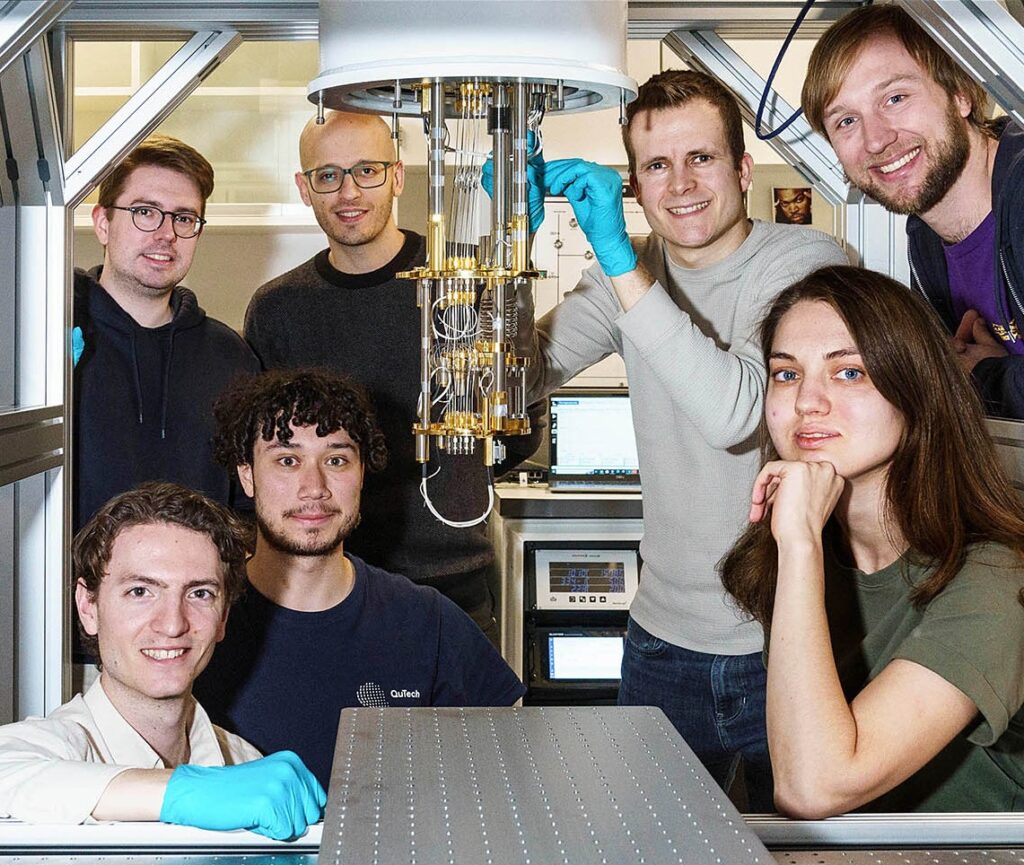
Carlos Errando Herranz serves as an Assistant Professor in the Quantum and Computer Engineering Division at Delft University of Technology's Faculty of Electrical Engineering, Mathematics and Computer Science (EEMCS) and as a Principal Investigator at QuTech. His research focuses on developing scalable quantum photonic integrated circuits using semiconductor fabrication processes compatible with existing infrastructure for quantum internet applications. He received Bachelor's and Master's degrees from Universitat Politècnica de València (2013) and a PhD in Micro and Nanosystems from KTH Royal Institute of Technology (2018), followed by postdoctoral positions at KTH and MIT as a Marie Curie fellow. His lab investigates quantum photonics, integrated photonics, and color centers with emphasis on diamond tin-vacancy systems and silicon-based quantum emitters. Recent publications demonstrate strong expertise in tuning quantum emitters via strain engineering, heterogeneous integration of spin-photon interfaces, and MEMS-enabled reconfigurable photonics. Key advancements include cavity-enhanced quantum memories, superconducting detector integration, and spectral control of solid-state emitters for quantum networks. Dr. Herranz advises seven graduate students including PhD candidates Vicky Dominguez Tubio, Arjan Mejas, Matteo Pirro, Christian Primavera, Jan Riegelmeyer, and Elena Volkova, along with Master student Bram Zijlstra. His team comprises postdocs Lin Jin and Pat Laferriere, and interns Elsa Herranz Valiente and Ernest Staffetti Cruañas. The Errando Herranz Lab operates within QuTech's Quantum Internet Division at Delft University, maintaining specialized facilities for nanofabrication and optical characterization of quantum photonic devices. Current research directions include developing CMOS-compatible quantum memories operating at telecom wavelengths and scalable architectures for quantum repeaters.
Yan Liu is a full professor in the Thomas Lord Department of Computer Science at the University of Southern California (USC), serving as Director of the USC Machine Learning Center within the Viterbi School of Engineering. He holds courtesy appointments in the Ming Hsieh Department of Electrical Engineering and the Quantitative and Computational Biology Department. Before joining USC in 2010, he was a research staff member at IBM's T.J. Watson Research Center. He earned his M.S. and Ph.D. from Carnegie Mellon University. His research focuses on machine learning for time series, physics-informed AI, and interpretable models, with applications in healthcare, sustainability, and social media. Notable projects include developing AI for surgical training, analyzing misinformation on social platforms, and predicting cancer treatment outcomes. He has held leadership roles in top conferences like ICLR and ACM KDD, and serves as Associate Editor-in-Chief of TPAMI and Board Member of ICLR. Education: Ph.D., Carnegie Mellon University Affiliations: USC Machine Learning Center, Viterbi School of Engineering Service: General Chair (ICLR 2023, ACM KDD 2020), Program Chair roles across multiple conferences His lab, the Melady Group, emphasizes foundational ML advancements and interdisciplinary applications. Recent work includes physics-aware neural networks and time-series foundation models.
Professor Stefan Maier holds the position of Head of School in Physics and Astronomy at Monash University. Previously, he served as the Lee Lucas Chair in Experimental Physics at Imperial College London (2007–2018) and built a new chair at Ludwig-Maximilians-Universität München (2019–2022). His research focuses on nanophotonics, plasmonics, and metasurface engineering, with emphasis on optical trapping, nonlinear optics, and novel photonic devices. Education: Bachelor’s degree in Physics, Technical University of Munich M.Sc. and Ph.D. in Applied Physics, California Institute of Technology (Caltech) Research Interests: Development of metamaterials and metasurfaces for light manipulation Applications of nanophotonics in sensing, imaging, and quantum technologies Optical trapping and plasmonic catalysis Nonlinear optical phenomena in nanostructured materials Articles Trends: Recent work emphasizes bound states in the continuum (BICs), 3D nanoprinted optical platforms, and active metasurfaces with tunable properties. Key themes include hybrid nanophotonics, ultra-high-Q resonators, and plasmonic nanomaterials for energy applications. Awards: ISI Highly Cited Researcher (2017–present) Grants/Projects: Chief Investigator in the All-on-chip twisted light modulator project (2022–2025) Leadership in Monash’s nanophotonics research team Labs/Teams: Directs a multidisciplinary lab at Monash focused on integrating 3D nanofabrication with optical physics, including collaborations in metafiber development and plasmonic biosensing.
Farhan Rana is the Joseph P. Ripley Professor of Electrical and Computer Engineering at Cornell University. He earned his BS, MS, and PhD from MIT and leads the Semiconductor Optoelectronics Group at Cornell, focusing on graphene, 2D materials, and semiconductor nanostructures. His research bridges experimental condensed matter physics and optoelectronic device engineering. Current Research Focus Ultrafast Spectroscopy Terahertz Microphotonics Quantum Optics Plasmonics and Nanostructures His group specializes in graphene optoelectronics , terahertz devices , and ultrafast semiconductor lasers . Recent work explores valley-dependent optical phenomena, exciton dynamics, and plasmon-phonon interactions in 2D materials. Key trends in his publications include graphene plasmonics , MoS2 photodetectors , and terahertz spectroscopy . He has contributed to foundational studies on carrier relaxation in graphene and quantum cascade lasers . 3× Michael A. Tien Excellence in Teaching Award (2006, 2010, 2017) NSF Career Award (2004) DARPA Young Faculty Investigator (2008) IEEE 'Most Downloaded Paper' (2008) MRS Best Paper Ribbon (2004) His students have received prestigious fellowships and awards, with alumni like Jared Strait (National Defense Science Fellowship) and Haining Wang (Cornell Best PhD Thesis). The group actively mentors graduate and undergraduate researchers.
Dr. Ling Yin is an Associate Professor in the School of Electrical and Mechanical Engineering at the University of Adelaide, Faculty of Sciences, Engineering and Technology. She joined the University of Adelaide in 2018 as an Associate Professor in manufacturing and served as Faculty Research Theme Leader in Advanced Manufacturing from 2019 to 2022. Dr. Yin leads multi-institutional projects on advanced manufacturing funded by Defence SA (2024-2025) and the National Health and Medical Research Council (NHMRC) (2025-2028). Dr. Yin's educational background includes B.Sc., M.Sc., and Ph.D. degrees in mechanical engineering from Huazhong University of Science & Technology in Wuhan, China. Her academic career spans five countries across three continents, including positions at Tianjin University in China, Kumamoto University in Japan, Kansas State University in the USA, the Australian National University and James Cook University in Australia, the National Institute of Standards & Technology (NIST) in the USA, and A*STAR Singapore Institute of Manufacturing Technology (SIMTech) in Singapore. Dr. Yin's research focuses on manufacturing and mechanical characterization of advanced materials with applications in optics, semiconductors, mechanical structures, dental restorations, osteoporosis/osteoarthritis studies, and marine/animal sciences. Her work involves extensive collaborations across multiple disciplines. Her recent publications demonstrate expertise in ultrasonic vibration-assisted machining of dental ceramics, particularly zirconia and lithium silicate glass-ceramics, as well as advanced characterization techniques like micro-CT and in-situ SEM testing for understanding material behavior at micro and nano scales. JSPS Invitation Fellowship from the Japan Society for the Promotion of Science Japanese Government Scholarship from the Ministry of Education, Culture, Sports, Science and Technology, Japan Supervisor for a PhD Thesis cum laude with a Medal of Excellence awarded by James Cook University in 2017 Supervisor for a Best Honours Project in Mechanical Engineering at Ingenuity awarded by the University of Adelaide in 2023 Dr. Yin is actively involved in supervising higher degree research students and has available PhD projects in 2025 focused on ultrasonic-vibration assisted manufacturing techniques for dental applications. She has successfully led international academic delegations through the New Colombo Plan to manufacturing facilities in Singapore and Japan. Dr. Yin is a senior member of the North American Manufacturing Research Institution (NAMRI) and the Society of Manufacturing Engineers (SME), and also a member of several professional organizations including ASME, OSA, American Ceramic Society, ASM International, and SPIE.
Edoardo Charbon is a Full Professor at École Polytechnique Fédérale de Lausanne (EPFL) in the School of Engineering, where he leads the Advanced Quantum Architecture Lab (AQUA). He also serves on the School Council STI and is Co-Director of STI-SSIQ Administration. Previously, he was a full professor and chair at Delft University of Technology from 2008 to 2016. Charbon received his Elektrotechnik Diploma from ETH Zurich, M.S. from UC San Diego, and Ph.D. from UC Berkeley, all in electrical engineering. His career spans industry experience at Cadence Design Systems and Canesta Inc. before joining EPFL in 2002. His research focuses on ultra high-speed and 3D optical sensors, with applications in LiDAR, FLIM (Fluorescence Lifetime Imaging Microscopy), PET (Positron Emission Tomography), FCS (Fluorescence Correlation Spectroscopy), and NIROT (Near-Infrared Optical Tomography). He has pioneered deep-submicron CMOS SPAD technology, which is now mass-produced and used in smartphones, telemeters, and medical diagnostics. His recent work bridges cryo-CMOS circuits for quantum computing with advanced optical sensing techniques. Analysis of his recent publications reveals a strong trend toward integrating quantum technologies with practical imaging applications. His work spans from fundamental device development (SPAD sensors, cryo-CMOS circuits) to applied systems (LiDAR engines, medical imaging devices), with increasing integration of machine learning techniques for real-time processing. 2023 IISS Pioneering Achievement Award Fellow of the IEEE Distinguished visiting scholar, W. M. Keck Institute for Space at Caltech Fellow, Kavli Institute of Nanoscience Delft Distinguished lecturer, IEEE Photonics Society Professor Charbon has authored or co-authored over 500 papers and two books, and holds 27 patents. His research has been supported by collaborations with organizations including Bosch, X-Fab, Texas Instruments, Maxim, Sony, Agilent, and the Carlyle Group. He has driven significant innovation in CMOS SPAD technology, which is now commercially deployed in various applications. He leads the Advanced Quantum Architecture Lab (AQUA) at EPFL, which focuses on the development of advanced sensor systems combining quantum technologies with conventional electronics. The lab has been instrumental in creating SPAD-based imaging systems that push the boundaries of time-resolved optical detection.
Dr. Daniel J. Preston is an Assistant Professor of Mechanical Engineering at Rice University, leading the Preston Innovation Laboratory (PI Lab). He holds a B.S. from the University of Alabama (2012), M.S. and Ph.D. from MIT (2014, 2017), and postdoctoral training at Harvard University (2017-2019). His research focuses on energy efficiency, soft materials, fluid mechanics, and robotics, with applications in wearable technologies and sustainable systems. Key achievements include the NSF CAREER Award (2022) and pioneering work on necrobotics using biotic materials. The PI Lab collaborates widely, with projects involving biomimetic surfaces, smart textiles, and fluidic control systems. Education: B.S. Mechanical Engineering, University of Alabama (2012) M.S./Ph.D. Mechanical Engineering, MIT (2014/2017) Research Interests: Energy : Thermal management, heat transfer optimization, and waste heat recovery. Materials : Soft actuators, surface coatings, and functional biomaterials. Fluids : Interfacial phenomena, droplet dynamics, and fluid-structure interactions. Notable Publications: Recent work includes advancements in wearable haptic devices ( Science Advances ), necrobotics ( Advanced Science ), and fluidic logic textiles ( PNAS ). Over 50 peer-reviewed articles span multidisciplinary topics from magnetic levitation to virus decontamination. Honors: In addition to the CAREER Award, Dr. Preston has received the NSF Graduate Research Fellowship, Tau Beta Pi Fellowship, and Wunsch Foundation Award. His lab fosters innovation through grants and industry partnerships. Advising & Grants: Supervises ~15 graduate and undergraduate students, including NSF GRFP recipients. Active in mentoring initiatives like the Randall Research Scholars Program and AATCC grants. Labs & Teams: The PI Lab collaborates with MIT’s DRL, Harvard’s Whitesides Group, and institutions globally. Core projects include smart wearables, energy harvesting fabrics, and autonomous soft robots.
Manoj Sachdev is a Professor in the Department of Electrical and Computer Engineering at the University of Waterloo, Faculty of Engineering. His research focuses on semiconductor devices, low-power electronics, and secure hardware systems. He leads projects in flexible electronics, nanotechnology, and radiation-hardened circuits, with applications in displays, memory technologies, and biomedical sensors. His work integrates advanced materials science with circuit design to address challenges in energy efficiency and security. Education: Not explicitly stated in provided text. Research interests span thin-film transistors (TFTs), resistive switching memories, neuromorphic computing, and physically unclonable functions (PUFs). Recent efforts include developing low-power circuits for flexible substrates and secure microprocessors. His contributions to semiconductor device physics and integration techniques have advanced applications in wearable electronics and medical diagnostics. Publications highlight innovations in low-power flip-flops, energy-efficient display drivers, and memristor-based systems. He collaborates on interdisciplinary projects combining photonics, nanoelectronics, and biomedical engineering. Awards: None explicitly listed in provided text. Grants and advising: Advises on semiconductor fabrication, secure hardware design, and radiation effects in electronics. Leads research groups focused on next-generation memory technologies and flexible integrated systems. Labs/Teams: Active in the University of Waterloo's semiconductor and flexible electronics research clusters, contributing to both academic and industry partnerships.
Christopher D.P. Baxter is a Professor and Department Chair of Civil and Environmental Engineering at the College of Engineering, University of Rhode Island , with expertise in geotechnical engineering, offshore wind energy, and coastal resilience. He holds a Ph.D. in Civil Engineering from Virginia Tech (1999), an M.S. from Purdue University (1994), and a B.S. from Tufts University (1990). Research Focus: Geotechnical characterization of marine sediments, liquefaction resistance analysis, fiber-optic sensing for infrastructure monitoring, and coastal protection systems. Recent Publications: 15+ articles (2011–2025) covering topics like shear wave velocity, offshore wind foundation dynamics, and tsunami hazard modeling. Grants: Led projects on offshore wind monitoring (2019–2024) and fiber-optic seismic sensing (2021–2023). Key Collaborations: Work with teams on submarine landslide analysis, coastal dune reinforcement, and Rhode Island infrastructure resilience. His work bridges experimental geomechanics with practical coastal engineering solutions.
Julia R. Greer serves as the Ruben F. and Donna Mettler Professor of Materials Science, Mechanics and Medical Engineering at the California Institute of Technology (Caltech), where she also holds the position of Executive Officer for Applied Physics and Materials Science since 2025. She earned her B.S. from MIT (1997) and M.S./Ph.D. from Stanford University (2000/2005), joining Caltech as Assistant Professor in 2007, promoted to Professor in 2013, and appointed to her current named professorship in 2019. Her research spans mechanics of hierarchical architectures , nanomaterials , and additive manufacturing , with significant contributions to energy storage systems and biomedical materials . Key focus areas include nano-scale mechanical properties, in-situ deformation analysis, and development of novel fabrication techniques for micro-architected materials. Her group pioneered hydrogel infusion additive manufacturing for metals and multiphoton 3D lithography standards. Analysis of recent publications reveals strong emphasis on solid-state battery interfaces (2025), bioresorbable microrobots (2024), and AI-enabled material design (2024), demonstrating cross-disciplinary impact across energy, healthcare, and quantum technologies. Her work consistently bridges fundamental nanomechanics with practical applications in energy storage and medical devices. 2024 ASME Nadai Medal 2024 SES A.C. Eringen Medal Elected to National Academy of Sciences (2025) Fletcher Jones Foundation Director (2019-2025) Professor Greer has advised over 40 PhD students including Seola Lee (2025) and Wenxin Zhang (2025), with research funded by collaborations spanning MIT, UCSF, Purdue, and ETH Zurich. Her group maintains active projects in lightweight nanoarchitected materials for impact absorption, electroactive polymers for braille devices, and 3D interdigitated solid-state batteries. Current leadership includes Editor-in-Chief of the Journal of Applied Physics (2024-) and direction of Caltech's Materials Science department.
Ralph H. Colby serves as Professor of Materials Science and Engineering and Chemical Engineering at Pennsylvania State University's College of Earth and Mineral Sciences, holding the Corning Faculty Fellowship. His research focuses on molecular-level dynamics in complex fluids, particularly polymers, ionomers, and liquid crystalline systems. With over 130 publications and authorship of the textbook Polymer Physics (2003), he directs an active research program examining structure-property relationships in soft matter. B.S. in Materials Science and Engineering, Cornell University (1979) M.S. in Chemical Engineering, Northwestern University (1983) Ph.D. in Chemical Engineering, Northwestern University (1985) Professor Colby's research spans polymer physics, rheology, and materials for energy applications. His group employs mechanical rheology, dielectric spectroscopy, and scattering techniques to investigate ion transport in single-ion conductors for batteries, dynamics of glass-forming liquids, and self-assembly in polyelectrolyte systems. Current work emphasizes structure-property relationships in ionomers, liquid crystalline polymers, and branched architectures. Analysis of recent publications reveals consistent focus on ionomer membranes for energy applications, processing-structure relationships in advanced polymers, and fundamental dynamics of complex fluids. Key trends include increasing integration of computational modeling with experimental characterization, expansion into sustainable materials processing, and growing emphasis on applications in battery technology and biomedical materials. Penn State Faculty Scholar Medal for Outstanding Achievement (2022) Bingham Medal, Society of Rheology (2012) American Chemical Society Fellowship Corning Faculty Fellowship in Materials Science and Engineering Professor Colby leads multiple federally funded projects including NSF's 'Fundamental Studies of Flow-Induced Polymer Crystallization' and DOE's 'Conduction mechanisms and structure of ionomeric single-ion conductors'. His group maintains strong industry partnerships with Corning Incorporated and participates in interdisciplinary initiatives like the Penn State Intercollege Graduate Degree Program in Materials Science and Engineering. Current research includes collaborations on breast cancer adherence interventions in Rwanda and conjugated polymer development for flexible electronics. The Colby Research Group operates specialized facilities for rheological characterization, dielectric spectroscopy, and X-ray scattering at Penn State's Materials Research Institute. The team maintains active collaborations with national laboratories and international research groups, focusing on translating fundamental polymer physics discoveries into practical applications for energy storage and advanced manufacturing.
Prof. Alexander Holleitner leads the Chair of Nanotechnology and Nanomaterials at the Department of Physics, Technical University of Munich , under the Walter Schottky Institute. His research focuses on ultrafast optoelectronics, quantum optoelectronics, and excitonic systems in nanoscale circuits. Research Directions : Ultrafast optoelectronics, quantum optoelectronics, excitonic systems, THz time-domain spectroscopy, and nanofabrication of mixed organic/inorganic systems. Publications : Recent work spans hyperbolic polaritons, interlayer excitons, graphene nano-gap dynamics, and defect engineering in 2D materials. Collaborations include interdisciplinary projects with groups studying semiconductor heterostructures and quantum technologies. His lab welcomes students and researchers interested in experimental physics, quantum electronics, and nanofabrication.