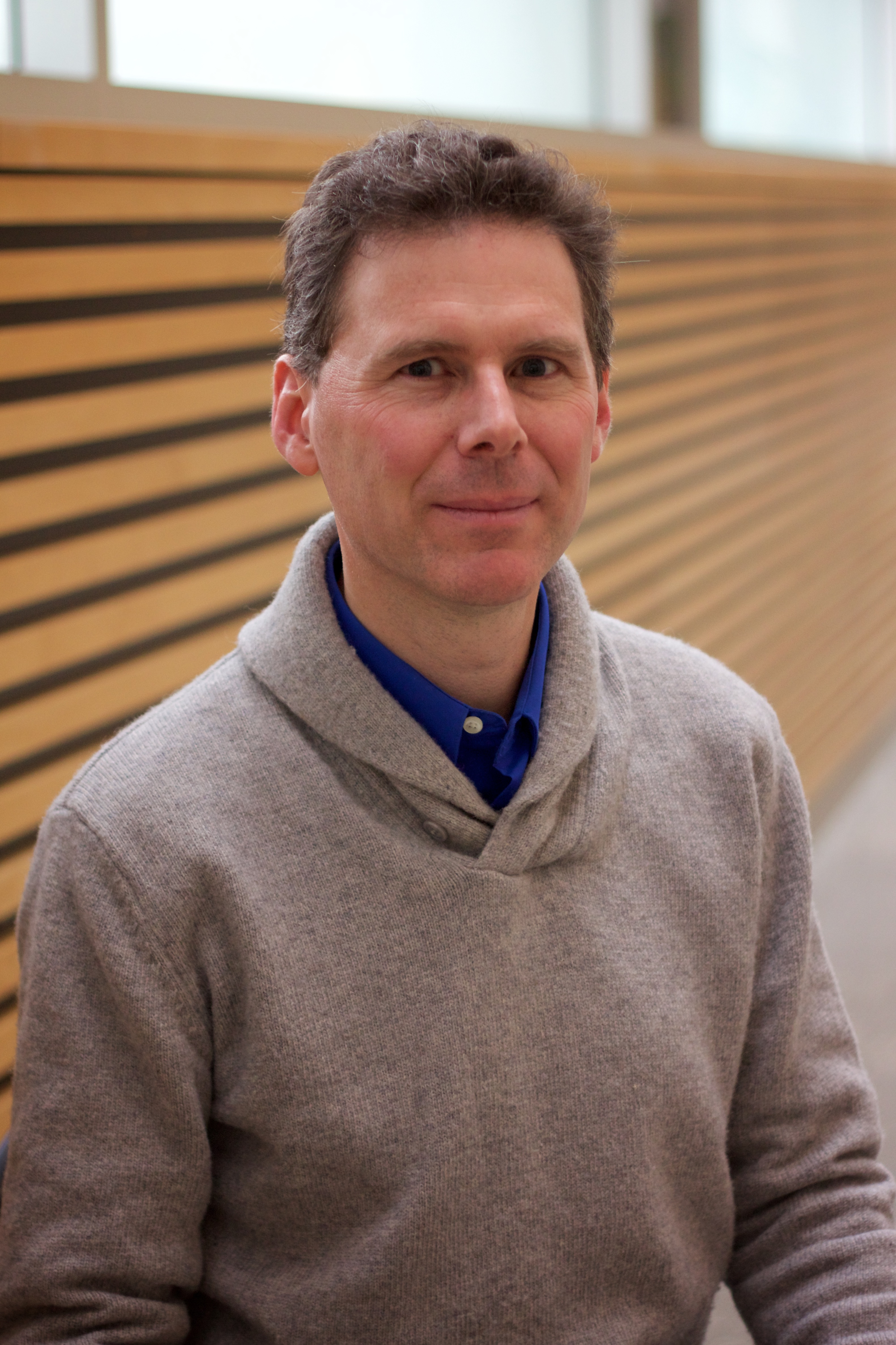
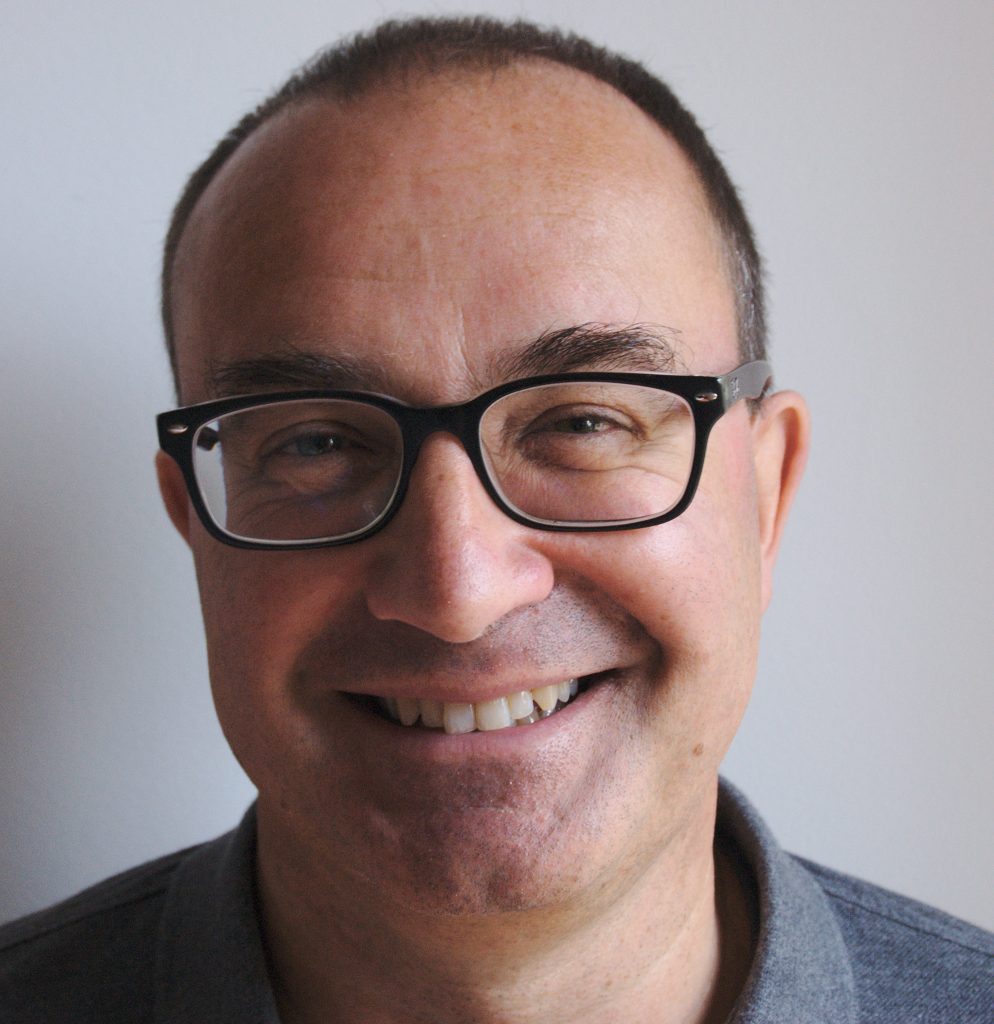
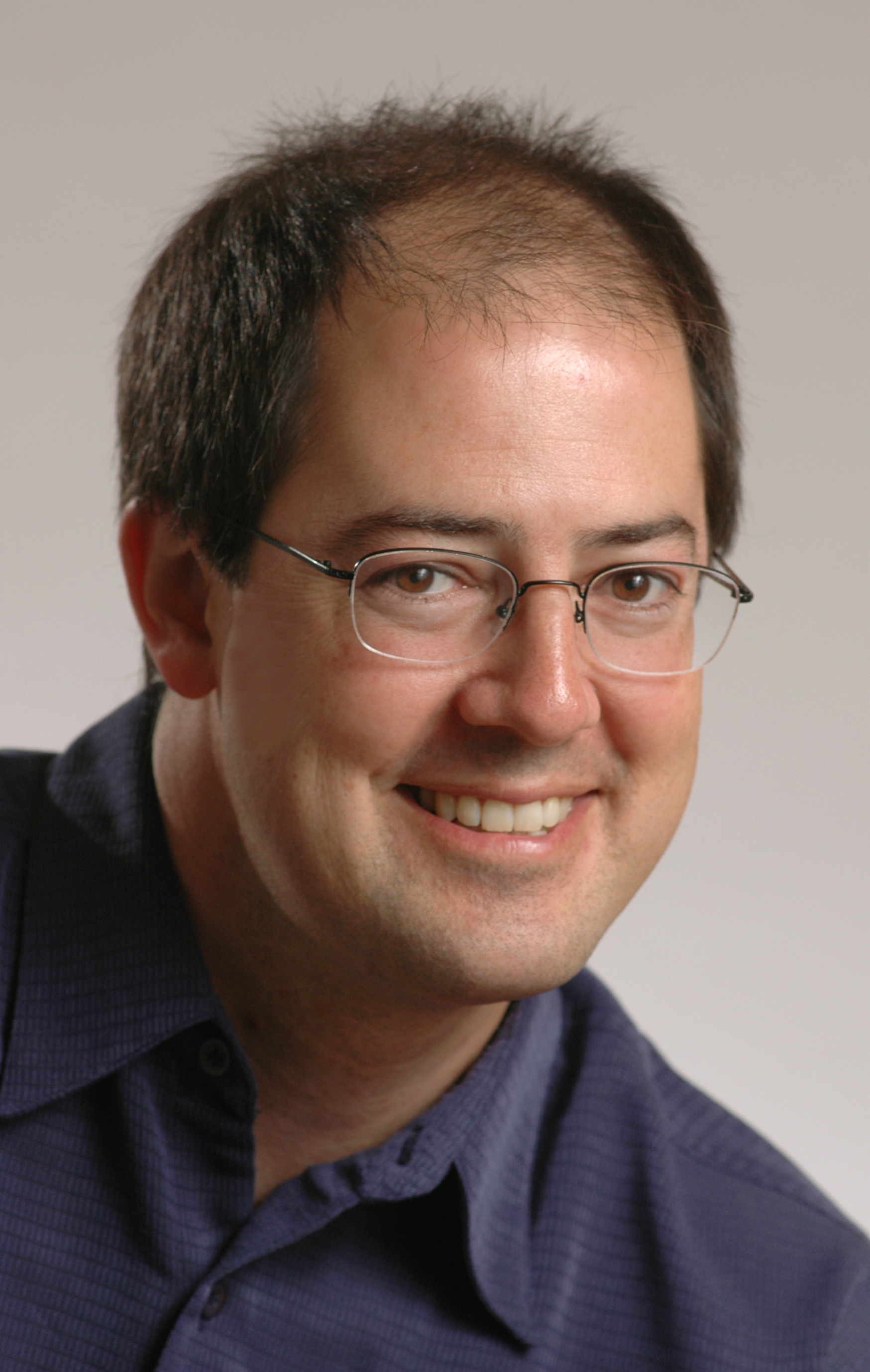
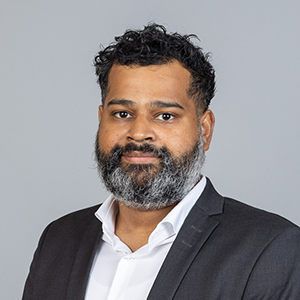
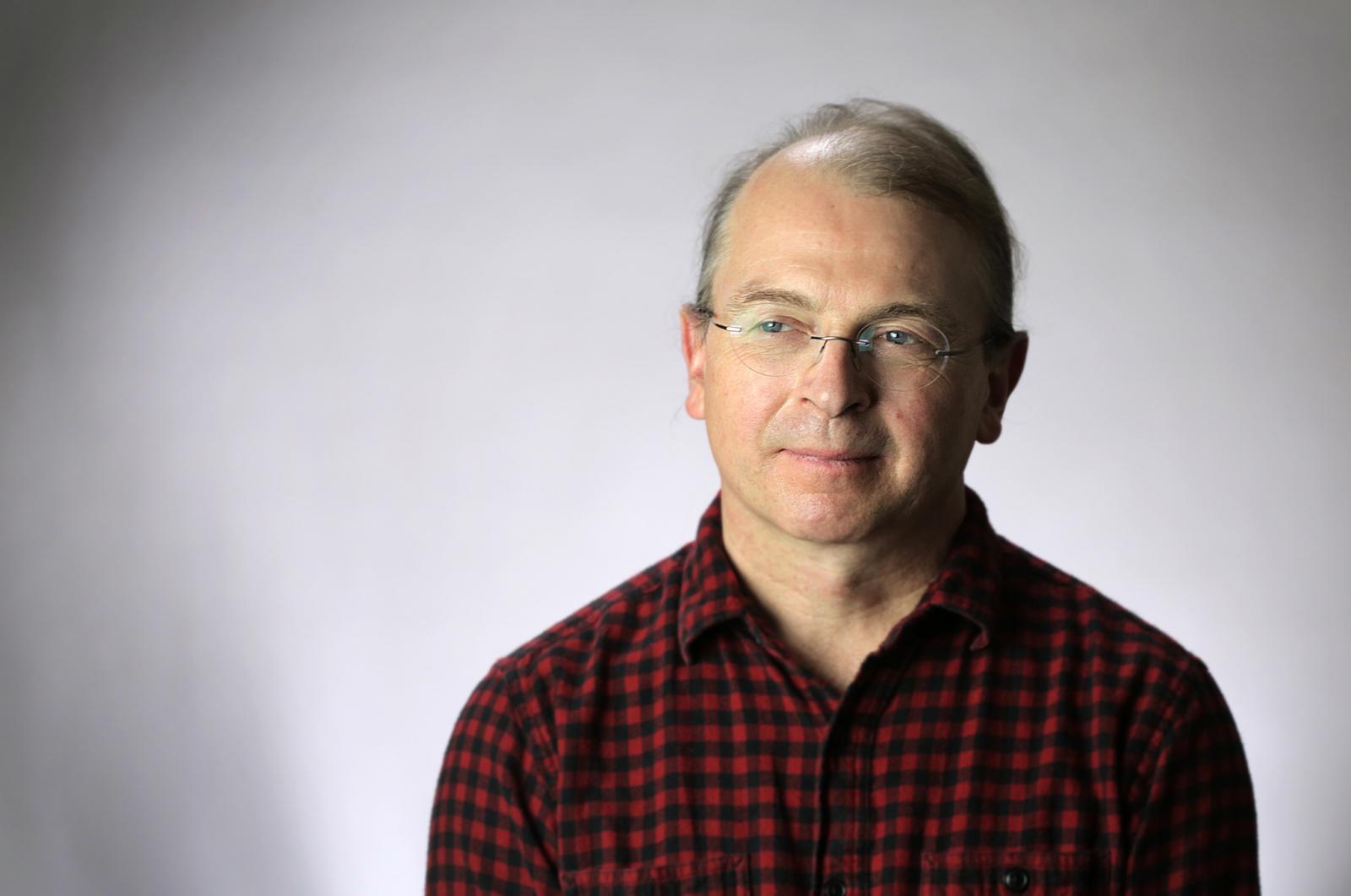
Robert Rohling is a Professor at the University of British Columbia's Faculty of Applied Science, affiliated with the Department of Mechanical Engineering and holding a joint appointment with the Department of Electrical and Computer Engineering. As Director of the Institute of Computing, Information and Cognitive Systems (ICICS), his research focuses on biomedical engineering, medical imaging, robotics, and computational methods. B.A.Sc. (UBC) M.Eng. (McGill) Ph.D. (Cambridge) Rohling's work spans three primary research areas: medical imaging (3D ultrasound, spatial compounding, elasticity reconstruction), medical information systems (radiologist navigation tools for large image datasets), and robotic calibration for surgical applications. His multidisciplinary approach integrates mechanical and electrical engineering principles with clinical needs. Rohling's publications (2020-2022) reveal trends in advanced ultrasound techniques (e.g., shear wave vibro-elastography), AI-driven image processing (cycleGAN translation), and computational optimization for diagnostic accuracy. Keywords across his work include Medical Imaging, Biomedical Engineering, Robotics, and Computational Modeling. As director of the Robotics and Control Laboratory , Rohling leads interdisciplinary collaborations with industry and clinical partners to address practical challenges in medical diagnostics and surgical robotics. His research emphasizes translating engineering innovations into clinical practice.
Daniel W. Bliss is a Professor in the School of Electrical, Computer and Energy Engineering at Arizona State University and Director of ASU's Center for Wireless Information Systems and Computational Architectures (WISCA). With over $50 million in research funding as principal investigator from organizations including DARPA, ONR, Google, and Airbus, his work bridges theoretical foundations with practical implementations across multiple domains of wireless systems. Dr. Bliss received his educational foundation with a B.S.E.E. from Arizona State University (1989), followed by M.S. and Ph.D. degrees in Physics from the University of California-San Diego (1995, 1997). His academic journey includes significant industry experience at General Dynamics (1989-1993) and MIT Lincoln Laboratory (1997-2012) before joining ASU. His research program focuses on advanced wireless systems spanning radar, communications, precision positioning, computational architectures, and medical monitoring applications. Bliss employs information theory, estimation theory, and signal processing to develop novel system concepts with disruptive capabilities. Current research emphasizes RF convergence, integrated sensing and communications, and anticipatory medical analytics using wireless technologies, with particular focus on extracting physiological data from radar signals. Analysis of recent publications reveals a strong trend toward integrated sensing and communications systems, particularly utilizing mmWave and radar technologies for medical monitoring applications. His work increasingly bridges traditional communications and radar domains while expanding into physiological monitoring, demonstrating a clear trajectory toward convergence of wireless technologies for healthcare applications and remote vital sign detection. Dr. Bliss has received significant recognition for his contributions: Fellow of the IEEE (2015) 2021 IEEE Warren D. White Award for Excellence in Radar Engineering 2016-2017 Top 5% Teaching Award at ASU 2017 ASU Fulton Engineering Exemplar Faculty As a dedicated mentor, Dr. Bliss has supervised numerous graduate students through successful dissertation and thesis defenses across both PhD and Master's programs. His research portfolio includes substantial funding from diverse sources with over $50 million secured as principal investigator. Current projects include the $17M DARPA DASH project focused on advanced software-reconfigurable heterogeneous SoCs for next-generation RF systems, and multiple initiatives in contactless vital sign monitoring using radar technologies. Dr. Bliss leads the BLISS Lab and serves as director of WISCA, fostering interdisciplinary research in wireless systems. His team includes researchers working on distributed coherent systems, MIMO radar, RF convergence, and medical monitoring applications, with recent successes including the Making Waves team that tied for first place in the Air Force Spark Tank challenge. He has founded two startup companies: DASH Tech Integrated Circuits Company and the Big Little Sensor Company, focusing on high-performance embedded processing and small-scale radar physiological monitoring, respectively.
Prof. Dr. Thomas Brinkhoff is Chair of the Institute Board and Chair of Geoinformatics at Oldenburg University of Applied Sciences. He leads the Institute for Applied Photogrammetry and Geoinformatics (IAPG) and contributes to institutions like the Association for the Promotion of Geoinformatics in Northern Germany (GiN e.V.) and the Oldenburg Research and Development Institute for Computer Science (OFFIS e.V.). Education: Diploma in Computer Science (Informatik), Universität Bremen (1990) Doctorate in Computer Science (Dr. rer. nat.), Ludwig Maximilian University of Munich (1994) Brinkhoff's research spans geodatabase systems, spatiotemporal data processing, geosensor analytics, and location-based services. His work addresses Volunteered Geographic Information (VGI), web-based geospatial visualization, and mobile data integration, with applications in traffic management and forensic science. Recent projects include ProSaDi (Digital Provenance and Collection Research) and contributions to the Laboratory for optical 3D metrology . He has served on program committees for ACM SIGSPATIAL (2002-2019), AGILE conferences (2010-2025), and editorial boards of journals like GeoInformatica and TGIS. Notable Lectures: 2024: Forensic applications of tachograph data 2023: Geoinformatics in homicide investigations 2022: Spatiotemporal analysis for sustainability projects 2015: Open geodata standards at FOSSGIS 2014: Mobile sensor data processing
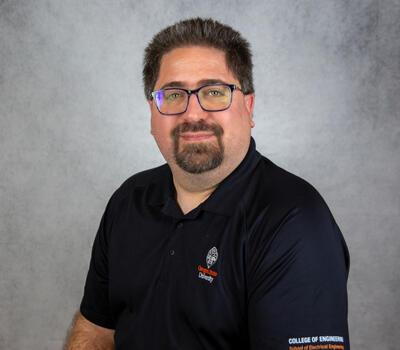
Haitong Li is an Assistant Professor in the School of Electrical and Computer Engineering at Purdue University's College of Engineering, joining the faculty in 2022. His research bridges nanoelectronic devices, integrated circuits, and nanotechnology-inspired AI hardware to address critical challenges in energy-efficient artificial intelligence systems. Education: Ph.D. in Electrical Engineering, Stanford University Research Interests: Dr. Li pioneers emerging memory technologies—particularly Resistive RAM (RRAM)—for in-memory computing and neuromorphic systems. His work focuses on 3D monolithic integration of RRAM and gain cell memory with CMOS to enable edge AI, with recent breakthroughs in hardware acceleration for large language models and sustainable computing. Key innovations include carbon footprint prediction for LLMs and zeroth-order fine-tuning techniques. Publication Trends: Dr. Li's 2023-2025 publications reveal a strategic shift toward sustainable AI hardware, emphasizing carbon-aware LLM inference and edge deployment. His research consistently targets data movement reduction through memory-centric architectures, spanning photonic accelerators, neuro-symbolic computing, and heterogeneous 3D integration. Awards: No scientific awards were documented in the provided sources. Advising and Grants: Current advisees and grant funding details were not specified in the available materials. Labs and Teams: Research group composition and laboratory facilities were not described in the source text.
Michele Zorzi is a Professor of Telecommunications at the School of Engineering, University of Padova, Italy, where he has held a faculty position since 2003. He leads the SIGNET (Signal processing and Networking) Research Group, focusing on cutting-edge wireless networking challenges including mmWave communications and underwater networks. His extensive publication record exceeds 600 papers in top-tier journals and conferences, reflecting significant contributions to the field through both theoretical and experimental work. He received his Laurea Degree (1990) and Ph.D. (1994) in Electrical Engineering from the University of Padova. Prior academic appointments include Politecnico di Milano (1993-1996), University of California San Diego (1995-1998), and University of Ferrara (1998-2003), where he progressed from Associate Professor to full Professor. His educational trajectory demonstrates deep roots in Italian academia with international exposure. Professor Zorzi's research spans wireless communications and networking, with current emphases on mmWave networking for vehicular systems, underwater acoustic/optical communications, non-terrestrial networks, and AI-driven networking solutions. His group conducts experimental validations including at-sea trials for underwater systems and testbeds for vehicular networks. Key projects include PRATA for predictive QoS in autonomous driving and IoT-based environmental monitoring of the Venice Lagoon, demonstrating practical applications of theoretical work. Analysis of his 2022-2025 publications reveals strong trends in applying artificial intelligence to networking challenges across diverse environments. There is significant emphasis on vehicular networks (predictive QoS, teleoperated driving), underwater systems (acoustic/optical communications, AUV swarms), and satellite networks (Starlink integration, NTN security). Experimental validation in real-world scenarios like the Venice Lagoon monitoring project and underwater sea trials characterizes his applied research approach. His scientific accolades include: IEEE Fellow (2007) IEEE Communications Society Best Tutorial Paper Award (2008, 2019) Stephen O. Rice Best Paper Award (2018) Multiple best paper awards at IEEE conferences (2005-2020) As principal investigator for numerous European and US research projects plus 20+ industry-funded initiatives, Professor Zorzi has mentored over 35 PhD students and post-docs. Graduates now hold prominent positions at institutions including Stanford, UCSD, CTTC, and Huawei. His SIGNET group maintains active international collaborations and contributes to open-source networking tools via GitHub, demonstrating commitment to community engagement. The SIGNET Research Group, housed within the Department of Information Engineering, operates specialized experimental facilities for mmWave and underwater communications. Current initiatives include AI-based predictive QoS frameworks for vehicular networks, underwater optical communication systems using ultraviolet light, and large-scale IoT deployments for environmental monitoring. The group's GitHub presence indicates strong open-science practices, while recent sea trials confirm hands-on experimental capabilities beyond theoretical work.
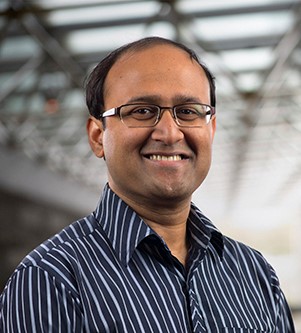
Aditya K. Jagannatham is a Professor in the Department of Electrical Engineering at the Indian Institute of Technology Kanpur (IIT Kanpur). With expertise in wireless communications and signal processing, he has established himself as a leading researcher in 5G/6G technologies, MIMO systems, and cognitive radio networks. His educational background includes: PhD in Electrical and Computer Engineering from UC San Diego (2007) M.S. in Electrical and Computer Engineering from UC San Diego (2004) B.Tech. in Electrical Engineering from IIT Bombay (2001) Professor Jagannatham's research primarily focuses on next-generation wireless communication systems, with special emphasis on 5G and 6G technologies. His work spans OTFS modulation, Terahertz communications, Visible Light Communication (VLC), Intelligent Reflecting Surface (IRS) technology, Massive MIMO, mmWave MIMO, Non-Orthogonal Multiple Access (NOMA), and Filter-Bank Multi-Carrier (FBMC) systems. His research integrates theoretical analysis with practical implementation challenges, addressing critical issues in modern wireless networks. His recent publications demonstrate a strong trend toward advanced signal processing techniques for next-generation wireless systems, particularly focusing on Sparse Bayesian Learning approaches for channel estimation, cooperative communication systems with energy harvesting capabilities, and millimeter wave MIMO technologies. His work bridges theoretical communication theory with practical implementation challenges in emerging wireless standards. Professor Jagannatham has received numerous prestigious awards and fellowships: Arun Kumar Endowed Chair Professorship (2019) Qualcomm Innovation Fellowship (2018) P.K. Kelkar Young Faculty Research Fellowship for excellence in research (2015-2018) IEEE Signal Processing Society travel grant to attend ICASSP 2015 Gopal Das Bhandari Memorial Distinguished Teacher Award (2012-13) Cal(IT)2 fellowship for graduate study at UC San Diego As an educator, Professor Jagannatham has received commendation letters from the Director of IIT Kanpur for excellence in teaching courses including EE624 Information and Coding Theory, EE670 Wireless Communications, and EE320 Principles of Communication Systems. His research has attracted significant funding, though specific grant details are not provided in the available information. He likely supervises graduate students working on cutting-edge wireless communication research. Professor Jagannatham is based in the Advanced Centre for Electronic Systems (ACES) at IIT Kanpur, where he leads research in wireless communications. His work appears to be closely connected with the Center for Developing Intelligent Systems (CDIS) and other research centers at IIT Kanpur focused on next-generation communication technologies.
Prof Christina Lim is a Professor at the Department of Electrical and Electronic Engineering, University of Melbourne, Australia. She serves as the Associate Dean of Research for the Faculty of Engineering and Information Technology (FEIT) and manages the Tucker Lab. Previously, she held roles as Research Group Leader of the Electronics and Photonics System group and Deputy Head of Department (Teaching and Operations) Education: PhD and Bachelors from University of Melbourne Research Interests: Radio-over-Fibre, Optical Wireless Communications, Microwave Photonics, Augmented Reality Displays, Reservoir Computing, Optical Crosshaul Networks Recent publications demonstrate expertise in optical waveguide design for AR, underwater optical wireless communications, photonic switching, and network optimization. Her projects focus on next-generation wireless infrastructure, including Photonics Computing Enabled Ultra-Broadband Wireless Communications (2024-2027, $598k ARC grant) and Additive Manufacturing of Optical Elements (2025). She has secured significant funding, including ARC Discovery Projects and Future Fellowships. Scientific Honors IEEE Fellow (2022) Optica Fellow (2018) ARC Future Fellow (2009-2013) ARC Australian Research Fellow (2004-2008) Professional Service Vice-President of Conferences, IEEE Photonics Society Deputy Editor, IEEE/Optica Journal of Lightwave Technology ARC College of Experts (2014-2016)
Kristofer Pister is a Professor in the Department of Electrical Engineering and Computer Sciences at the University of California, Berkeley. He co-directs the Berkeley Sensor and Actuator Center (BSAC) and the Ubiquitous Swarm Lab. His career spans groundbreaking innovations in Micro/Nano Electro Mechanical Systems (MEMS), Control Systems, and Low-Power Circuits, with a focus on Smart Dust and synthetic insects. Education: Ph.D. and M.S. in EECS from UC Berkeley (1992, 1989); B.A. in Applied Physics from UC San Diego (1986). His research areas include MEMS , Control Systems , Robotics , and Integrated Circuits , with recent work on self-powered micro-sensors, crystal-free radios, and interplanetary swarm networks. Key awards include the ISA Albert F. Sperry Founder Award (2009) , Alexander Schwarzkopf Prize (2006) , and the NSF CAREER Award (1996) . He has authored numerous influential publications in wireless sensor networks and microrobotics. His lab, Ubiquitous Swarm Lab , explores distributed robotics and swarm intelligence. Pister emphasizes open collaboration in research, ethical conduct in academia, and efficient resource utilization for graduate students.
Paul Prucnal is a Professor of Electrical and Computer Engineering at Princeton University, affiliated with the Princeton Materials Institute (PMI). He leads the Lightwave Communications Research Lab, focusing on ultrafast optical techniques for communication networks and neuromorphic photonics. His research spans optical security, CDMA networks, nonlinear signal processing, and photonic neurons. Education: Ph.D., Columbia University (1979) M.Phil., Columbia University (1978) M.S., Electrical Engineering, Columbia University (1976) A.B., Bowdoin College, summa cum laude (1974) Research Interests: Optical Network Security (eavesdropping/jamming countermeasures) Optical CDMA for broadband networks Silicon photonic neuromorphic computing RF interference cancellation in wireless systems Photonic spiking neurons mimicking biological organisms Awards: National Academy of Inventors Fellow (2017) 10+ teaching awards including Princeton's President's Award (2015) OSA/IEEE Fellowships (1992, 1997) Labs/Teams: Leads the Lightwave Communications Lab, collaborating with government/industry partners. Lab alumni like Prof. Bhavin Shastri have achieved international recognition. Grants/Publications: Over 350 journal papers, 22 U.S. patents. Authored/co-authored Neuromorphic Photonics (2017) and edited Optical Code Division Multiple Access (2019). Current projects include photonic tensor processors and real-time RF signal processing.
Ambuj Varshney is an Assistant Professor at the National University of Singapore (NUS) School of Computing , leading the WEISER research group . His work bridges electronics, wireless communication, computer science, and AI with a focus on creating ultra-low-power embedded systems for sustainable IoT deployments. University of California, Berkeley: Postdoctoral Scholar (2020-2022) Uppsala University: PhD in Sustainable Networked Systems NXP Semiconductors: Software Engineer (prior to PhD) Bachelors in Information & Communication Technology Research interests center on overcoming wireless systems' energy asymmetry through tunnel diode oscillators , LiFi-RF hybrid networks , and battery-free communication architectures . His group develops STICORS —sticker-like computers for industrial and medical monitoring. Recent publications demonstrate AudioCast 's FM-band utilization for 130m transmission, TunnelSense 's vital monitoring, and PixelGen 's diffusion model cameras. These works combine IoT sustainability, spectrum efficiency, and hardware innovation . 2024: Google Research Scholar Award 2023: MobiSys Best Demonstration 2021: Berkeley FORM+FUND Fellowship 2019: ABB's $300K Research Award As an educator, he teaches CS4222 Wireless Networking and CS5272 Embedded Software Design . Past students include Wenqing Yan (NUS/UCB PhD), Qiao Yukai , and Kunjun Li . His team collaborates with Prabal Dutta (UCB), Christian Rohner (Uppsala), and Prateek Saxena (NUS).
Professor Athanassios Manikas holds the Chair of Communications & Array Processing in the Department of Electrical & Electronic Engineering at Imperial College London, part of the Faculty of Engineering. He is a Fellow of both the IET and IMA, and has held significant editorial roles including Associate Editor for IEEE Transactions on Aerospace and Electronic Systems. His research focuses on wireless communications, radar systems, antenna array processing, and applied mathematics, with over 50 supervised PhD students and 150+ Masters projects. He leads Imperial's research group in array processing and has extensive industry collaborations, including technical leadership of the University Defence Technology Centre in Signal Processing (2008-2013). Awards include the IEEE PIMRC 2022 Best Paper Award and recognition as an IEEE COMSOC Distinguished Lecturer (2016-2017). His work integrates differential geometry principles with array processing, as detailed in his monograph Differential Geometry in Array Processing . Professor Manikas has served as an expert witness in high-profile cases and contributes to academic governance roles such as the Royal Society's International Fellowship Committee. His research group is affiliated with the Space Lab at Imperial, focusing on innovative applications of array signal processing in aerospace and defense systems.
Scott Kerlin is a Senior Lecturer in the Department of Electrical Engineering and Computer Science at Oregon State University's College of Engineering. He holds an M.S. and B.S. in Computer Science from the University of North Dakota. Prior to academia, he worked at the Mayo Clinic on medical software systems and IBM as a build master for enterprise products. His career spans roles including network administrator, lab manager, and Undergraduate Director at UND. Dr. Kerlin's research focuses on bridging industry experience with academic curriculum, particularly in computer science education, project-based learning, and cybersecurity. He emphasizes practical applications of theoretical concepts, such as integrating 3D printing and scanning technologies with security systems for small satellites. His work also explores student efficacy in AI courses and scalable software project management methodologies. He has taught at multiple institutions, including the University of Minnesota and Augsburg University, and held roles at Michigan Tech as Senior Security Engineer. His 2024 Engineering+ Outstanding Teaching Award highlights his commitment to pedagogical innovation. Current projects include in-space 3D printing, solar energy systems, and cryptographic solutions for satellite communications. Key areas of contribution include: 3D printing/Scanning: Material characterization, key replication, and aerospace applications Cybersecurity: Intrusion detection, satellite communications security, and chaotic cryptosystems Educational Innovation: Active learning frameworks, PBL implementation, and student performance modeling His interdisciplinary approach connects computer science fundamentals with real-world engineering challenges, emphasizing sustainability and industry relevance in curricula.
Seth Lloyd is a Professor in the Department of Mechanical Engineering at the Massachusetts Institute of Technology (MIT), with adjunct appointments at the Santa Fe Institute since 1988 and as a Fellow at the Institute for Scientific Interchange since 2000. His research spans quantum information science, quantum control theory, and complex systems analysis. His educational background includes: B.A. from Harvard University (1982) M. from the University of Cambridge (1984) Ph.D. from Rockefeller University (1988) Lloyd's work focuses on quantum computation, quantum communications, and quantum limits to control and sensing. He has pioneered research in quantum algorithms, quantum metrology, and applications of quantum information to complex biological and physical systems. His research bridges theoretical physics, computer science, and engineering, with over 200 publications and two patents in quantum information processing. Analysis of his recent publications reveals dominant trends in quantum machine learning, quantum metrology, and quantum communication protocols, with increasing interdisciplinary applications in quantum biology and quantum gravity. His work consistently explores fundamental limits of quantum information processing. His scientific awards include: Lindbergh Fellow (1994) Finmeccanica Professorship (1996) Edgerton Prize (2001) Fellow of the American Physical Society (2007) Quantum Communication, Measurement, and Computation Prize (2012) Lloyd serves on the editorial board of Quantum Information Processing and holds significant MIT service roles including Course 2 Undergraduate Committee coordinator and membership on the Institute Foreign Scholarships Committee. He teaches advanced courses in quantum information, dynamics, and computational methods, shaping the next generation of quantum scientists and engineers. As a member of the American Physical Society, he maintains active research collaborations across quantum information science, with ongoing work in quantum algorithms and quantum-enhanced sensing technologies.
David Schuster is an Associate Professor of Physics at the University of Chicago. His primary research focuses on experimental condensed matter physics, with a particular emphasis on circuit quantum electrodynamics (cQED), superconducting qubits, and quantum information science. He leads the Schuster Lab, which explores quantum systems, hybrid quantum technologies, and topological materials. Education: Ph.D. in Physics from Yale University (2007), advised by Robert Schoelkopf. His doctoral work pioneered advancements in circuit QED, demonstrating strong coupling between superconducting qubits and microwave resonators. Research Interests: The lab investigates superconducting quantum circuits, topological photonics, quantum sensors for dark matter, and scalable quantum computing architectures. Projects include developing fluxonium qubits, autonomous error correction, and hybrid systems involving trapped electrons on helium. Key Contributions: Published in Nature , Science , and Physical Review Letters on topics like topological circuits, photon blockade, and dark matter detection using superconducting cavities. Collaborates with groups at Stanford, Purdue, and other institutions on quantum technologies. Students and Collaborators: Advises numerous graduate and undergraduate students, including prominent alumni who have transitioned to postdocs and industry roles. Lab members present at major conferences like the APS March Meeting. Labs: Schuster Lab at the University of Chicago, with access to state-of-the-art facilities like the Pritzker NanoFabrication Facility. Collaborates with the Awschalom, Cleland, and Houck groups on hybrid quantum systems and materials science.
K. Rajibul Islam is an Associate Professor at the University of Waterloo, affiliated with the Institute for Quantum Computing (IQC) and the Department of Physics and Astronomy. He holds a joint appointment with the Perimeter Institute for Theoretical Physics and co-founded Open Quantum Design and Lightflow Optics Inc. His research focuses on quantum information processing, quantum simulation, and trapped ion systems, with applications in quantum computing and entanglement studies. Education: Ph.D. in Physics (2012, University of Maryland), M.Sc. in Physics (2007, Tata Institute of Fundamental Research), B.Sc. in Physics (2005, Jadavpur University). Postdoctoral research at Harvard University (2012–2015) and MIT (2015–2016). Research Interests : Quantum simulation of spin models, quantum computing with trapped ions, entanglement measurement, frustrated spin systems, and quantum materials. His lab, QITI (Quantum Information with Trapped Ions), develops scalable quantum simulators and open-access quantum computers like 'QuantumIon.' Awards : Fellow of the American Physical Society (2024), VAIBHAV Fellowship (2024), Excellence in Teaching Award (2024), Early Researcher Award (2019), and Distinguished PhD Dissertation Award (2012–13). Teaching : Courses include PHYS 701 (Graduate Quantum Physics), PHYS 234 (Quantum Physics I), PHYS 393 (Physical Optics), and PHYS 256 (Geometrical and Physical Optics). He emphasizes outreach via initiatives like Bigyan.org.in , a Bengali-language science platform. Lab and Collaborations : Active in developing trapped-ion quantum hardware, including ion trap designs, optical addressing systems, and holographic control methods. Collaborates on quantum algorithms, machine learning for quantum systems, and experimental quantum thermodynamics.