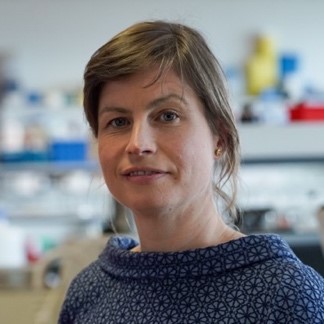
Kalle Kotilahti is a Visiting Professor at the Department of Neuroscience and Biomedical Engineering , Aalto University, with over two decades of research activity in biomedical optics , neuroimaging , and pediatric brain development . His work focuses on optical tomography , near-infrared spectroscopy (NIRS) , and instrument development for non-invasive brain studies . Education Tech. Dr., Technical Physics and Medical Technology, Aalto University (2015) Dipl. Eng., Information Technology, Helsinki University of Technology (2004) Key Research Areas Biomedical Engineering Neuroscience Optical Tomography Near-Infrared Spectroscopy Infant Brain Development Maternal Mental Health Publication Trends Developing and validating NIRS/DOT instruments for neonatal brain imaging Studying hemodynamic responses to emotional stimuli in infants Investigating maternal-infant neurodevelopmental links Advancing frequency-domain data analysis and motion artifact correction Activities Contributor, World Congress on Medical Physics and Biomedical Engineering (2012) Visiting Researcher, External Institution (2003)
Professor Shuichi Iwata is a distinguished faculty member at Nagoya Institute of Technology, where he serves in the Department of Life and Applied Chemistry within the Graduate School of Engineering. His research focuses on fluid dynamics, rheology, and polymer processing, with particular expertise in bubble dynamics in non-Newtonian fluids and pressure-oscillation defoaming techniques. He has established himself as a leading researcher in transport phenomena and unit operations within chemical engineering. Dr. Iwata's educational background includes: Doctor of Engineering from Kyoto University Master of Engineering from Nagoya Institute of Technology Bachelor's degree from Nagoya Institute of Technology, Faculty of Engineering, Department of Applied Chemistry Professor Iwata's research interests span multiple domains of chemical and mechanical engineering with a strong emphasis on practical applications. His primary focus is on fluid engineering and rheology , particularly examining bubble dynamics in viscoelastic and shear-thinning fluids. He has pioneered innovative pressure-oscillation defoaming techniques for non-Newtonian fluids, addressing significant industrial challenges in polymer processing and chemical manufacturing. His work bridges fundamental fluid mechanics with practical engineering solutions, with applications in environmental load reduction and remediation. Recent research has expanded into biomaterials science , particularly examining polymer-water interactions for CO 2 capture membranes and antifouling surfaces. Analysis of Professor Iwata's publication record reveals a consistent research trajectory focused on fluid dynamics in complex systems. His work demonstrates a progression from fundamental numerical methods for viscoelastic fluid flow to increasingly sophisticated experimental and computational approaches examining bubble behavior under various conditions. A significant portion of his research involves molecular dynamics simulations to understand polymer-surface interactions at the microscopic level, while maintaining strong connections to industrial applications in chemical processing, membrane technology, and biomedical engineering. His interdisciplinary approach connects chemical engineering principles with materials science, biophysics, and environmental engineering. Professor Iwata has received numerous prestigious awards recognizing his contributions to engineering science: Japan Society of Rheology Paper Award (2021) Nagoya Institute of Technology Faculty Evaluation Outstanding Award (multiple years: 2010-2018) 28th Nagai Academic Prize (2011) Society of Chemical Engineering of Japan Frontier Award (2009) As an active researcher, Professor Iwata has secured substantial competitive funding, including multiple Japanese Ministry of Education, Culture, Sports, Science and Technology (MEXT) Grants-in-Aid for Scientific Research. His current projects focus on pressure-oscillation techniques for bubble removal in complex fluids, with applications spanning chemical processing, biomedical engineering, and environmental technology. He has successfully translated research into practical applications, evidenced by multiple patents related to continuous bubble removal methods and devices. Professor Iwata actively contributes to the academic community through editorial roles, including as Editor of the Journal of Chemical Engineering of Japan, and regularly organizes sessions at major conferences on non-Newtonian fluid dynamics. Professor Iwata leads a dynamic research group at Nagoya Institute of Technology focused on advanced fluid mechanics and transport phenomena. His laboratory combines experimental, computational, and theoretical approaches to study complex fluid behaviors, with particular emphasis on bubble dynamics in non-Newtonian systems. The research team collaborates extensively with both academic institutions and industry partners, applying fundamental fluid mechanics principles to solve practical engineering challenges in chemical processing, polymer manufacturing, and environmental technology.
Chunhui Zhan is a doctoral researcher at the International Max Planck Research School for Global Biogeochemical Cycles (IMPRS-gBGC), affiliated with the Department of Biogeochemical Integration (BGI) at the Max Planck Institute for Biogeochemistry. Her work focuses on understanding the complex interactions between atmospheric CO2 concentrations and terrestrial ecosystems, particularly through Atmosphere-Biosphere Coupling and Hydrology-Biosphere-Climate Interactions . MSc: Nanjing University (2017-2020), thesis: 3D Distribution of Canopy Sun-induced Chlorophyll Fluorescence Based on LiDAR and in-situ Data BSc: Beijing Normal University (2013-2017), thesis: Assessing the response of satellite sun-induced chlorophyll fluorescence to the 2015-2016 Inner-Mongolia drought Her research explores the CO2 fertilization effect on vegetation productivity and water-use efficiency, land-atmosphere interactions, and drought transitions using flux-tower observations and remote sensing techniques. Key findings include quantifying global shifts from energy-limited to water-limited ecosystems and analyzing physiological responses to elevated CO2. Recent publications (2020-2025) demonstrate her expertise in carbon-water cycle coupling , vegetation monitoring , and climate-ecosystem interactions . She employs advanced methodologies like LiDAR, hyperspectral imaging, and eddy covariance analysis to study ecosystem responses to environmental changes.
Giuseppe Casalino is a Full Professor in the Department of Mechanics, Mathematics and Management at Polytechnic University of Bari, Italy. His research focuses on advanced manufacturing technologies including additive manufacturing, laser materials processing, and welding systems. Based at Viale Japigia 182 in Bari, he can be contacted at giuseppe.casalino@poliba.it. His research spans critical areas in modern manufacturing: Additive Manufacturing (Wire Arc, Laser Powder Bed Fusion) Laser Materials Processing (Welding, Marking, Surface Treatment) Friction Stir Welding and Dissimilar Material Joining Statistical Process Optimization and Numerical Simulation Industry 4.0 Integration (IoT, Deep Learning, Business Intelligence) Material Characterization and Microstructure Control Analysis of recent publications reveals strong emphasis on experimental-statistical-numerical triad approaches for process optimization. Key trends include WAAM parameter refinement for metals, non-destructive thermographic evaluation of welds, and sustainable manufacturing through energy consumption analysis. His work bridges mechanical engineering, materials science, and computational methods with applications in automotive, aerospace, and marine industries. No scientific awards or student advisement information was provided in available materials. Research infrastructure details and grant funding information were not specified in the source documentation.
Philip O'Herron, PhD, is an Assistant Professor at Augusta University's Medical College of Georgia, Department of Physiology. His work bridges neurovascular coupling and visual processing, focusing on the interdependence between cortical neural activity and hemodynamic responses. Education: PhD in Neuroscience (2009, Johns Hopkins University), BA in Chemistry (2002, George Mason University), BA in Philosophy (2000, Christendom College) Research Themes: Dr. O'Herron's lab investigates functional hyperemia's physiological role using optogenetic vascular control. Current projects examine Alzheimer's disease vascular interactions , 3D optogenetic vessel manipulation , and vasculo-glia-neuronal coupling through collaborations with Dr. Jessica Filosa and Dr. Felipe Barros. Article Trends: Recent publications span neurovascular modeling , metabolic adaptation studies , and in vivo optical manipulation techniques , reflecting his work on vascular cognitive impairment and cortical depth-dependent processing. Scientific Awards: First prize MUSC research day (2012) Johns Hopkins neuroscience poster award (2008) Advising & Grants: Leads NIH-funded projects on Alzheimer's blood flow mechanisms (NIA R01) and neurovascular coding (NINDS R01). Mentors postdoctoral fellows in vascular neuroscience and develops models for cortical blood flow regulation.
Joost C. Lötters is a Full Professor at the Integrated Devices and Systems department of the University of Twente, with a research career spanning over three decades since 1994. His work focuses on flow sensor engineering, sensor chemistry, and mass flow measurement, particularly through microfluidic and MEMS technologies. Research output includes over 213 publications, with recent contributions in thermal flow sensors and Coriolis mass flow meters. Active in organizing conferences like the 3rd Conference on MicroFluidic Handling Systems (2017) and presenting at events such as the 2015 Smallest Hand Force Sensor seminar. Research Interests: Specializing in flow sensor design, detection physics, and fabrication engineering, Lötters’ work bridges microfluidics, thermal conductivity measurement, and MEMS development. His recent projects explore organs-on-chips integration and microchannel fabrication. Recent Publications: Highlights include a 2025 article on gas-compensated thermal flow sensors and a 2024 study on compact Coriolis mass-flow meters. His research consistently addresses flow measurement precision, sensor stability, and microfabrication innovations.
Ben L. Feringa is a Professor of Organic Chemistry at the University of Groningen, holding the Jacobus H. van 't Hoff Distinguished Professorship of Molecular Sciences. He is affiliated with the Faculty of Science and Engineering, where he leads the Synthetic Organic Chemistry research group. Feringa has been a full professor at the University of Groningen since 1988, after working as a research scientist for Shell. Professor Feringa obtained his PhD at the University of Groningen under the supervision of Professor Hans Wynberg. His academic journey includes positions as a research chemist at Shell Laboratories in Amsterdam and the Shell Biosciences Centre in the UK before returning to academia. Feringa's research program focuses on synthetic organic chemistry with particular emphasis on molecular nanoscience, asymmetric catalysis, and biohybrid systems. His work is inspired by nature's principles of molecular assembly, recognition, transport, motion, and catalysis. A major breakthrough was the discovery of the first light-driven unidirectional molecular rotary motor in 1999, which contributed significantly to his Nobel Prize in Chemistry in 2016. His research spans four main areas: Molecular Nanoscience (focusing on molecular switches and motors), Synthesis and Catalysis (developing new asymmetric catalytic methods), Biohybrid Systems (including photopharmacology), and Sustainable Chemistry (green synthesis methods). The research has strong multidisciplinary character, bridging chemistry, physics, biology, and materials science. Analysis of Feringa's recent publications (2023-2025) reveals a continued focus on molecular motors and switches, with increasing applications in biological systems and sustainable chemistry. His work shows progression from fundamental molecular design to practical applications in drug delivery, medical imaging, and sustainable materials. The research increasingly involves interdisciplinary collaborations, particularly with biologists and materials scientists, demonstrating the growing impact of molecular nanotechnology across scientific disciplines. Nobel Prize in Chemistry (2016) Spinoza Award (2004) Tetrahedron Prize (2016) August Wilhelm von Hofmann Medal (2016) Commandeur in de Orde van de Nederlandse Leeuw (2016) Prelog Gold Medal (2005) Chirality Medal (2009) Humboldt Award (2012) Professor Feringa has supervised numerous students and researchers throughout his career, with 178 supervised works documented. His research has been supported by major funding agencies including the European Research Council (ERC), the Advanced Research Center Chemical Building Blocks Consortium (ARC CBBC), and collaborations with industry partners such as AkzoNobel, Nouryon, Shell, and BASF. He serves as program director of the Groningen hub of ARC CBBC, focusing on homogeneous catalysis, organic synthesis, materials, and coatings. Feringa leads the Center for Systems Chemistry at the University of Groningen, which includes multiple research teams working across the four subprograms: Molecular Nanoscience, Synthesis and Catalysis, Biohybrid Systems, and Sustainable Chemistry. His group maintains strong collaborations with the Zernike Institute for Advanced Materials, the Stratingh Institute for Chemistry, and UMCG (University Medical Center Groningen), creating a vibrant interdisciplinary research environment.
Dr. Thomas Sweijen is an Assistant Professor in Environmental Hydrogeology at the Department of Earth Sciences, Utrecht University . His work focuses on sustainable subsurface utilization through numerical modeling, experiments, and field testing. Key research areas include: Transport phenomena and coupled processes in porous media Reactive transport and hydromechanical coupling Pore-scale to field-scale upscaling Grouting and subsurface energy systems Recent publications highlight his interdisciplinary approach: Combining geomechanics with numerical pore-scale modeling in silicate grouting erosion studies Developing analytical methods for coastal aquifer dynamics Investigating DNAPL infiltration in heterogeneous media His methodological toolkit spans: Discrete Element Method for granular materials Multi-sphere approximation in particle modeling Field testing of subsurface systems
Dr. Ke Li is a Visiting Researcher at the School of Engineering, Lancaster University. Their research focuses on perception, cognitive neuroscience, and virtual reality applications. Contact: k.li16@lancaster.ac.uk
Xijie Wang is a Professor at the University of Duisburg-Essen, affiliated with Collaborative Research Centre 1242. His research focuses on Ultrafast structural dynamics in nanomaterials Laser-induced phase transitions X-ray diffraction techniques He investigates atomic-scale relaxation processes, non-equilibrium energy flows, and femtosecond laser interactions with thin films and nanoparticles. Recent publications highlight his work on Ultrafast melting pathways in polycrystalline materials Quantum carrier dynamics in Bismuth Terahertz birefringence in anisotropic semimetals His team employs advanced x-ray spectroscopy and simulation methods to study nanoscale phenomena. Collaborations span institutions including Stanford University (via co-author affiliations) and research centers specializing in ultrafast x-ray sources. Ongoing projects examine structural decomposition in laser-ablated materials and element-specific lattice dynamics in magnetic nanoparticles.
Tess Homan is an Assistant Professor at the Power & Flow group within the Department of Mechanical Engineering at Eindhoven University of Technology (TU/e). Her research focuses on fundamental fluid dynamics , with an emphasis on data analysis and experimental techniques to study fluid-particle flows , bubbly flows , and biological systems . She is also involved in the Complex Multiphase Flows theme at TU/e. Research Trends: Articles span microfluidic mixing , metal particle combustion , and deep learning applications in fluid dynamics. Key subfields include artificial cilia dynamics , hyperspectral thermometry , and hydrogen-based metal regeneration . Scientific Contributions: Developed low-cost deep learning segmentation for bubble detection in industrial processes Advanced high-speed imaging techniques to analyze metal dust flames Investigated metachronal wave programming for fluid control in artificial cilia systems Education & Outreach: Teaches Experimentation for Mechanical Engineering and MATLAB Homologatie at TU/e.
Knud Erik Meyer is an Associate Professor at the Department of Civil and Mechanical Engineering (Technical University of Denmark). His work focuses on experimental fluid mechanics , particularly optical methods such as Laser Doppler Anemometry (LDA) and Particle Image Velocimetry (PIV) , with applications in turbulent flow , heat transfer , and industrial systems . Education : PhD in Turbulent Flow and Heat Transfer (DTU, 1991-1993); MSc in Civil Engineering (DTU, 1983-1988) Academic History : Associate Professor (DTU, 2000-...), Assistant Professor (DTU, 1996-1999), Assistant Research Professor (DTU, 1994-1996) Meyer's research spans turbulent jets in cross-flow , swirling flow dynamics , microplastic settling , and personalized ventilation systems . He employs advanced optical diagnostics and computational modeling (CFD) to study complex flows in two-stroke diesel engines , wind turbines , and environmental fluid dynamics . His publications (108 total) emphasize flow structure identification , PIV data analysis , and thermal transport , with recent work on non-spherical particle tracking and microplastic dynamics . Notable projects include Sorting plastic by sedimentation and Axial fans and ventilation systems . Scientific Awards : Best Paper Award, International Symposium on Energy, Informatics, and Cybernetics (2009) Supervision : Mentored PhD students including S. Eberhard, B. A. K. Hartz, M. Rønne, and W. Situ on topics ranging from microplastic settling to combustion flow analysis . Collaborates extensively with international institutions and industry partners.
Muhammed Kotan is an Assistant Professor at the Department of Information Systems Engineering , Sakarya University , where he has served since 2022. His academic career includes roles as a Research Assistant (2011–2022) at Sakarya University and Afyon Kocatepe University. He holds a PhD in Computer and Information Engineering (2020), an MSc in Computer and Information Engineering (2014), and a BSc in Computer Engineering (2011) from Sakarya University. Research Interests : Artificial Intelligence, Computer Software, Image Processing, Machine Learning, Computer Vision, Medical Imaging, Energy Efficiency Optimization, Natural Language Processing, Sentiment Analysis, Feature Selection, 3D Reconstruction, Industrial Machine Detection, Optimization Algorithms, Real-Time Systems, User Reviews Analysis, E-Commerce Analytics. Key Contributions : Developed hybrid methods for 3D reconstruction and industrial machine defect detection, optimized tow train routing in manufacturing, and applied Marine Predators Algorithm for mental health screening. Scientific Recognition : Awarded the Eğitim Öğretimde Üstün Başarı Ödülü by Sakarya University (2024). Served as editor for the Sakarya University Journal of Computer and Information Sciences (2023–2024) and peer reviewer for journals like Signal, Image and Video Processing and Gazi Üniversitesi Mühendislik Mimarlık Fakültesi Dergisi . Advising : Co-advisor for TÜBİTAK projects (2022–2024) and supervised student research on topics like cosmetic product recognition, natural language processing, and sentiment analysis. Designed courses in Digital Image Processing, Text Mining, and Advanced Information Systems.
Gordana Đukanović is an Associate Professor at the Faculty of Forestry, University of Belgrade, where she has been employed since October 1, 1994. She currently teaches courses in geometry, engineering graphics, and related subjects across multiple academic programs including Basic Academic Studies, Master's programs, and Vocational Studies. Education: Graduated from the "Vuk Karadžić" High School (mathematics department - programmer) in Loznica Graduated from the Faculty of Civil Engineering in Belgrade (Construction department) on March 7, 1988 Defended her master's thesis from the Faculty of Architecture in Belgrade on December 26, 2000 Defended her doctoral dissertation from the Faculty of Architecture, University of Belgrade on November 2, 2012 Professor Đukanović specializes in the geometry of architectural form with research focusing on descriptive geometry, relativistic geometry, engineering graphics, and photogrammetry. Her work bridges architectural theory with practical applications in forest engineering and building design. She has published 49 papers including more than 5 peer-reviewed scientific papers in journals, 35 papers presented at congresses and symposia, one practical guide, and numerous studies and projects for wood processing companies. Her recent publications demonstrate a strong interdisciplinary approach connecting geometry with environmental science, architecture, and engineering. The research spans from theoretical mathematical explorations to practical applications in air pollution analysis, flood management, structural integrity assessment, and renewable energy systems design. Scientific Awards and Recognition: University Scholarship as one of the three students with the best grade point average during the first two years of university Certified court expert in the field of building valuation Professor Đukanović serves as a member of the Serbian Society for Geometry and Graphics (SUGIG) and the International Society for Geometry and Graphics (ISGG). She has passed the professional exam in civil engineering at the Association of Engineers and Technicians of Serbia. Her teaching responsibilities include courses in descriptive geometry with engineering graphics for Ecological Engineering in Land and Water Resources Protection, Furniture and Wood Products Construction, and Technology of Wood House Production.
Dr. Aoife Morrin is an Associate Professor at the School of Chemical Sciences, Dublin City University (DCU), and Director of the National Centre for Sensor Research (NCSR) at DCU. She leads the 'Sample & Sense' research strand within the Insight Centre for Data Analytics, focusing on biochemical sensor platform development. Her work integrates electrochemical and optical transduction mechanisms with soft responsive materials to create wearable sensors for skin surface applications. She has published over 60 peer-reviewed papers (H-index 29, 4000+ citations), edited a book, and contributed to three book chapters. Dr. Morrin’s research spans wearable sensor formats, skin volatile emission profiling for disease biomarker discovery, and educational technology innovations in chemical education. Her recent publications highlight advancements in mobile phone-based sensors, volatilomic analysis of infections, and green chemistry approaches to sensor fabrication. She actively explores the intersection of analytical chemistry, biomedical diagnostics, and environmental monitoring through printed electronics and flexible sensor platforms. Her work also addresses the integration of digital tools like virtual laboratories and micro-skill badging for chemical sciences education. Dr. Morrin collaborates across disciplines to develop non-invasive diagnostic technologies, including for diabetic foot ulcer infections and skin pH monitoring. She contributes to environmental sensor development for pollutants like PFAS and cooking oil VOCs, as well as emerging applications in honey characterization and aging research via skin volatiles.