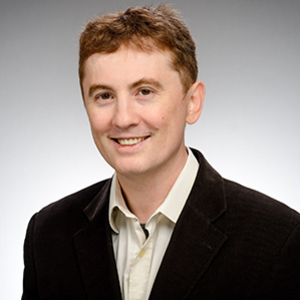
Olivia Constantin is an Associate Professor in the Department of Mathematics at the Faculty of Mathematics. She has been actively publishing since 2008, with research contributions in functional analysis, complex analysis, and mathematical fluid dynamics. PhD in Mathematics (implied by academic position and research output) Her research primarily focuses on operator theory on function spaces, especially Fock and Bergman spaces, and the application of complex analysis to fluid flows. Key areas include Hankel operators, integral operators, embedding theorems, and the analysis of water waves and oceanic gyres. Her work combines deep analytical techniques with applications in fluid mechanics. Recent publications show a strong trend toward using complex-analytic methods to study irrotational flows, traveling water waves, and gyre dynamics, indicating an interdisciplinary approach bridging pure and applied mathematics. Her 2025 paper on velocity extrema in ocean gyre flows highlights ongoing contributions to geophysical fluid dynamics. She has led two research projects: Operatorenklassen (2012–2016) and Analysis of Operators on Spaces of Holomorphic Functions (2017–2019), demonstrating sustained research leadership. Active speaker at academic conferences, with 18 recorded scientific activities including talks from 2008 to 2023 Olivia Constantin collaborates with prominent mathematicians such as A. Aleman, J. A. Peláez, A.-M. Persson, and D. Kalaj. She has not received any explicitly mentioned scientific awards. There is no information about her advising students or managing labs or research teams.
Maxim Kontsevich is a permanent professor at the Institut des Hautes Études Scientifiques (IHÉS), holding the AXA Chair for Mathematics since 1995 and a visiting chair at Rutgers University (one month annually since 1997). Born in 1964 in Khimki, USSR, he earned his PhD from Bonn University in 1992. His career includes visiting positions at Harvard, the Institute for Advanced Study, and Berkeley, where he was a professor from 1993 to 1995. His research spans mathematical physics, algebraic geometry, and non-commutative geometry. Notable contributions include deformation quantization, mirror symmetry, and motivic integration. His work bridges algebraic structures with geometric and physical concepts, influencing areas like topological field theories, string theory, and integrable systems. Awardees of Fields Medal (1998), Crafoord Prize (2008), and Breakthrough Prize (2014), he also holds editorial roles at Compositio Mathematica and Publications Mathématiques IHÉS. His over 50 publications explore advanced topics such as quantum cohomology, Hodge theory, and categorical structures in geometry.
Ana Maria Alonso Rodriguez is a Full Professor of Numerical Analysis at the Department of Mathematics, University of Trento. She holds a PhD in Applied Mathematics from Universidad Complutense de Madrid (1993) and has held academic positions across Italy and Spain since 1990. Her research focuses on numerical methods for partial differential equations, computational electromagnetism, finite element methods, and domain decomposition techniques. She has organized international workshops and minisymposia, including the 2022 Oberwolfach workshop on Hilbert Complexes and the 2018 ICOSAHOM conference session on high-order methods. Her work bridges numerical analysis, topology, and applied electromagnetism, with recent contributions to Whitney finite elements and discrete potential theory. Education: PhD in Applied Mathematics, Universidad Complutense de Madrid (1988-1993) Licenciatura en Ciencias Matematicas, same institution (1982-1987) Research emphasizes high-order discretizations for electromagnetic problems, leveraging finite element exterior calculus and graph-based decomposition techniques. Recent work (2024) advances tree-cotree methods for curl operator spectra and Whitney form interpolation. She actively collaborates with international institutions like the CI2MA in Chile and the Laboratoire J. A. Dieudonné in France. Teaching includes courses on numerical PDEs, finite elements, computational electromagnetism, and MATLAB-based numerical analysis at both undergraduate and PhD levels. She has supervised numerous courses in Italy and Spain since 2000, integrating practical software tools like FreeFem and MODULEF into instruction.
Anthony Man-Cho So is a Professor in the Department of Systems Engineering and Engineering Management at The Chinese University of Hong Kong (CUHK). He currently serves as Dean of the Graduate School and Deputy Master of Morningside College . With a BSE from Princeton University and a PhD in Computer Science from Stanford University, his career at CUHK began in 2007. Academic Leadership: Dean, Graduate School (2023–present); Deputy Master, Morningside College (2019–present) Education: BSE (Princeton), MSc/PhD (Stanford) His research focuses on optimization theory and its interdisciplinary applications in computational geometry, machine learning, signal processing, and statistics. Key projects include non-convex optimization for wireless networks, robust graph learning, and decentralized learning algorithms. His publications span high-impact journals like Mathematical Programming , SIAM Journal on Optimization , and conferences such as NeurIPS and ICML . Recent work emphasizes dynamic regret analysis , low-rank matrix recovery , and stochastic beamforming . He has authored over 50 refereed papers and a monograph on semidefinite programming. Awards include IEEE Fellow (2023), CUHK Research Excellence Award (2016–17), and multiple IEEE/INFORMS best paper and teaching accolades. He has served on editorial boards of journals like Mathematical Programming and SIAM Journal on Optimization , and as Lead Guest Editor for IEEE Signal Processing Magazine . Teaching roles include courses on optimization, discrete mathematics, and machine learning. Scientific Awards IEEE Fellow (2023) CUHK Outstanding Fellow (2019) Multiple IEEE/INFORMS Best Paper Awards (2010–2022) IEEE/UGC Teaching Awards (2008–2022) His methodology integrates theoretical rigor with practical applications, particularly in wireless communication systems, sensor networks, and financial engineering. Collaborations span institutions in Hong Kong, mainland China, and the U.S., reflecting a global academic influence.
Svitlana Mayboroda is a Professor of Mathematics at ETH Zurich and the McKnight Presidential Professor at the University of Minnesota. Her research focuses on partial differential equations, harmonic analysis, and wave localization phenomena. University of Minnesota: School of Mathematics, 127 Vincent Hall, Minneapolis, MN ETH Zurich: Department of Mathematics, Ramistrasse 101, Zurich Research Interests: Analysis and partial differential equations Wave localization and Anderson localization Elliptic theory on non-smooth and lower-dimensional domains Harmonic measure and geometric measure theory Applications to quantum mechanics and semiconductor physics Recent Publications: Her 2023-2022 works investigate Anderson mobility edges, landscape functions in spectral theory, regularity problems for elliptic operators, and Green function estimates. Key themes include localization landscape theory, uniformly rectifiable domains, and spectral analysis of disordered systems. Grants & Collaborations: Simons Collaboration on Localization of Waves (Director, 2018–2025, $14M) NSF RAISE–TAQS grant ($1M) Academic Leadership: She has organized numerous conferences and workshops, including annual meetings of the Simons Collaboration on Wave Localization (2020–2024) and programs at MSRI and PCMI. Her mentorship includes postdocs and PhD students working on elliptic theory, spectral problems, and applied mathematical physics.
WANG Qinghai is an Associate Professor (Educator Track) at the National University of Singapore (NUS), specializing in Non-Hermitian PT-symmetric quantum mechanics, quantum field theory, and mathematical physics. His research explores the stability of non-Hermitian systems through periodic driving, time-dependent PT-symmetric frameworks, and applications of 2×2 matrices in quantum dynamics. Recent publications focus on advanced topics in quantum mechanics, thermodynamics, and cosmological instantons, reflecting his interdisciplinary expertise. While no formal student lists or scientific awards are documented in the provided texts, his work bridges theoretical physics and applied mathematics.
Peer Christian Kunstmann is an Adjunct Professor at the Institute of Analysis, Karlsruhe Institute of Technology (KIT). He teaches advanced mathematics courses for physics, electrical engineering, and mathematics students, including Analysis 4 (2025) and Höhere Mathematik II (2025). His research focuses on functional analysis, partial differential equations, and harmonic analysis. Key topics: Spectral theory, Navier-Stokes equations, and nonlinear Schrödinger equations Co-organized conferences: Parabolic Evolution Equations (2019), Evolution Equations (2010) Recent work explores maximal regularity for parabolic equations, modulation spaces in NLS analysis, and seismic imaging via Radon transforms. Publications span 2015-2023, with collaborations on topics like Banach algebras and inverse problems.
Dr Alex Sherman is a Lecturer at UNSW Sydney in the School of Mathematics & Statistics . He previously held postdoctoral positions at the University of Sydney with Kevin Coulembier and at Ben-Gurion University of the Negev with Inna Entova-Aizenbud. His research focuses on representation theory and supergeometry , with applications to Lie superalgebras , modular representation theory , and tensor categories . He has published extensively on topics such as ghost distributions, Duflo-Serganova functors, and the geometry of spherical supervarieties. Email: alex.sherman@unsw.edu.au Location: Room 4111, The Red Centre, UNSW Sydney, NSW 2052 In 2025 , he will lecture the Linear Algebra stream of MATH1241. He organizes the UNSW Pure Maths Seminar and Algebra Seminar , and has co-organized courses on Kazhdan-Lusztig equivalences and tensor categories.
Nina Balcan is the Cadence Design Systems Professor of Computer Science at Carnegie Mellon University's School of Computer Science, with affiliations in both the Machine Learning Department (MLD) and Computer Science Department (CSD). She maintains her office in Gates Hillman Center (GHC) 8205 and is a prominent figure in theoretical machine learning and algorithmic game theory. Her research spans multiple critical areas in computer science, with a strong focus on the theoretical foundations of machine learning, algorithm design and analysis, and computational approaches to game theory and economics. Balcan has made significant contributions to developing principled algorithms for deep learning, learning with limited supervision, representation learning, and life-long learning. Her work uniquely bridges theoretical computer science with practical applications, particularly in the analysis of complex objects and processes, including algorithmic learning and multi-agent systems. Analysis of her recent publications reveals a strong trend toward data-driven algorithm design, with particular emphasis on learning to optimize combinatorial algorithms, revenue-maximizing mechanisms, and robust learning frameworks. Her work consistently demonstrates how theoretical guarantees can inform practical algorithm development across diverse domains from optimization to economics. Major Awards and Honors: ACM Fellow AAAI Fellow Simons Investigator 2019 ACM Grace Murray Hopper Award (awarded to the outstanding young computer professional of the year) Winner of Outstanding Student Paper Award at UAI 2024 Winner of Exemplary Artificial Intelligence Track Paper Award at ACM EC 2019 Runner Up Best Paper Award at COLT 2012 Professor Balcan has served as Program Committee Co-chair for major conferences including NeurIPS 2020, ICML 2016, and COLT 2014, demonstrating her leadership in the machine learning community. Her teaching portfolio at CMU includes foundational courses such as 10-701 Machine Learning, 10-315 Machine Learning, and 10-715 Advanced Introduction to Machine Learning, where she has mentored numerous students in both theoretical and applied aspects of the field. Her research group focuses on developing theoretically sound yet practically applicable machine learning algorithms, with particular attention to algorithm configuration, data-driven optimization, and learning in strategic environments. Current projects involve learning to improve combinatorial algorithms, designing revenue-maximizing mechanisms, and developing robust learning frameworks that can operate effectively in challenging environments.
Andrei Jorza is an Associate Professor of the Practice in the Department of Mathematics at the University of Notre Dame. His research focuses on the interplay between number theory and algebraic geometry, including topics such as modular forms, Galois representations, p-adic Hodge theory, and arithmetic geometry. He holds an A.B. from Harvard University (2005) and a Ph.D. from Princeton University (2010), advised by Andrew Wiles. Prior to his current position, he was a Taussky-Todd Instructor at Caltech and a member of the Institute for Advanced Study (IAS). Dr. Jorza has taught advanced courses on p-adic Hodge theory, global class field theory applications, algebraic number theory, and graduate algebra. His work includes significant contributions to computational verification of the Birch and Swinnerton-Dyer conjecture and studies on Galois representations for Siegel modular forms. His research also extends to topics like Lagrangian hyperplanes in holomorphic symplectic varieties and eigenvarieties in automorphic forms. He is affiliated with Notre Dame's Department of Mathematics, located in 275 Hurley Hall, and actively participates in seminars on algebraic geometry and commutative algebra. His lecture notes and courses reflect a deep engagement with foundational topics in number theory and algebra, emphasizing adelic methods and applications of class field theory.
Venkatesan Guruswami is a Chancellor's Professor in the Department of EECS and a Senior Scientist at the Simons Institute for the Theory of Computing at UC Berkeley . He also holds a Professor position in the Department of Mathematics . His academic journey began with a B.Tech in Computer Science from the Indian Institute of Technology, Madras (1997) , followed by a Ph.D. in Computer Science from the Massachusetts Institute of Technology (2001) . After a Miller Research Fellowship at UC Berkeley (2001–02), he held faculty roles at the University of Washington and Carnegie Mellon University before returning to UC Berkeley in January 2022. Education : B.Tech, IIT Madras (1997) Ph.D., MIT (2001) Professional Affiliations : Chancellor's Professor, UC Berkeley (EECS) Senior Scientist & Interim Director, Simons Institute Professor, UC Berkeley (Mathematics) Guruswami's research spans multiple domains within Theoretical Computer Science , focusing on Error-Correcting Codes , Approximation Algorithms , Randomness in Computing , Probabilistically Checkable Proofs , and Computational Complexity . His groundbreaking work in List Decoding has enabled codes with minimal redundancy for correcting worst-case errors, while recent advancements include Polar Codes , Deletion-Correcting Codes , and Constraint Satisfaction Problems . He has also contributed to Quantum Coding Theory , Locally Recoverable Codes , and Approximation Hardness in various computational contexts. His publications reflect a deep engagement with interdisciplinary topics. Key trends include: Quantum Information Theory : Quantum LDPC codes, transversal gates, and quantum storage. Algebraic Coding : Reed-Solomon codes, AG codes, and polynomial-based constructions. Computational Complexity : Hardness of approximation, CSPs, and parameterized intractability. Data Transmission : Polar codes, deletion channels, and feedback mechanisms. Algorithmic Techniques : Spectral methods, semirandom models, and Lasserre hierarchy applications. Guruswami has received numerous accolades, including the Simons Investigator Award , Presburger Award , Packard Fellowship , Sloan Research Fellowship , ACM Doctoral Dissertation Award , and the IEEE Information Theory Society Paper Award . He is an ACM Fellow (2017) and IEEE Fellow (2019) , with recent honors like the Guggenheim Fellowship (2023) and AMS Fellow (2023) . As an advisor, he has mentored over 25 PhD and postdoctoral researchers , including Atri Rudra , Prasad Raghavendra , and Peter Manohar , whose work has won awards like the Edmund M. Clarke Doctoral Dissertation Award and CRA Outstanding Undergraduate Researcher Award . His research is supported by grants from the National Science Foundation , Packard Foundation , and Sloan Foundation . He also serves as Editor-in-Chief of the Journal of the ACM and holds leadership roles in IEEE and arXiv moderation. Guruswami is actively involved in Simons Institute programs and co-organized workshops on Coded Computation and Information Theory . His work bridges theoretical advancements with practical applications in Cloud Storage , Quantum Computing , and Group Testing , including pandemic-era contributions like AC-DC: Amplification Curve Diagnostics for SARS-CoV-2 .
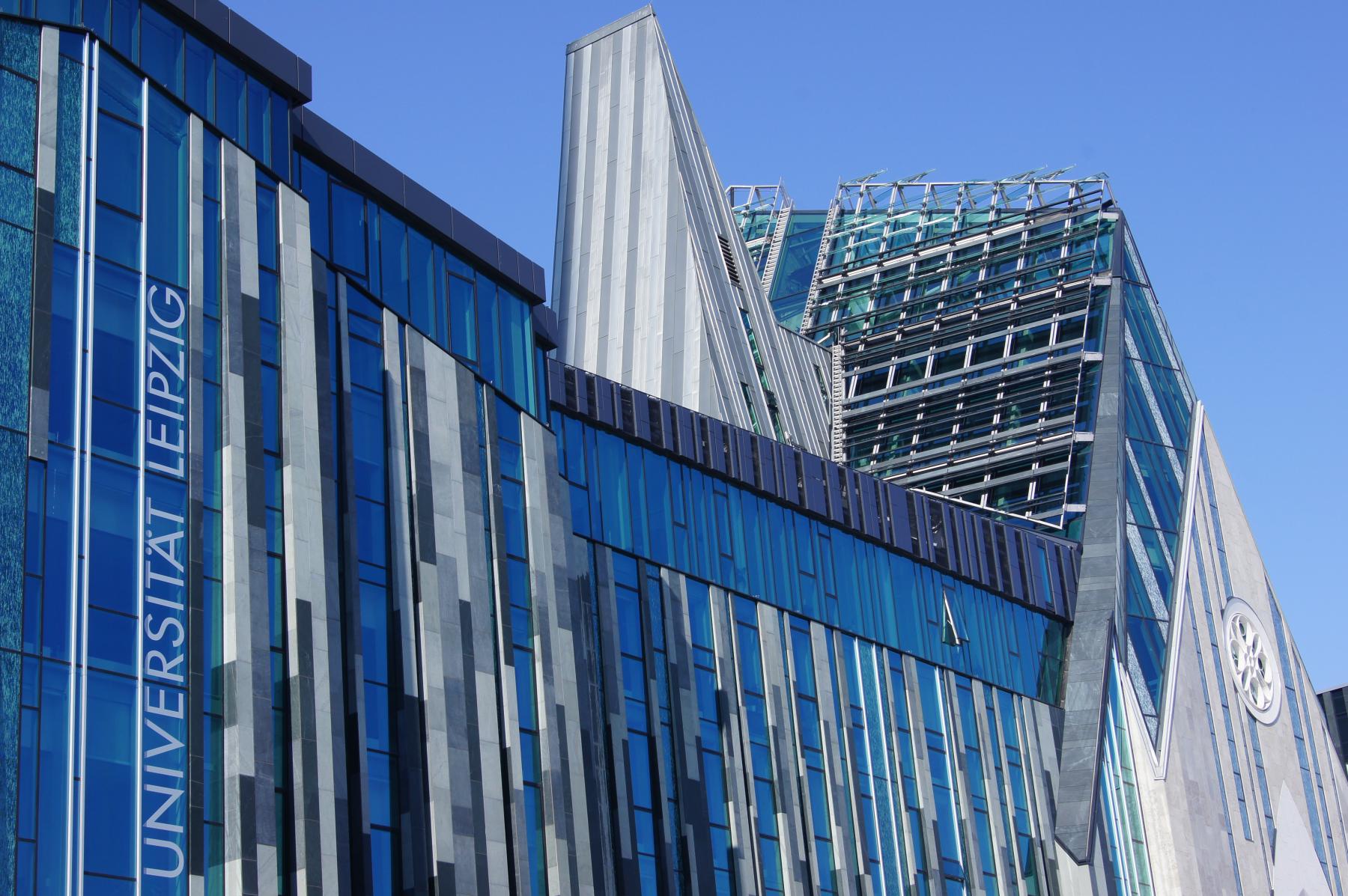
Hans-Bert Rademacher is a Professor of Differential Geometry at the University of Leipzig's Faculty of Mathematics and Computer Science, where he has held the chair since 1995. He completed his Habilitation in 1991 and earned his PhD (Dr.rer.nat., summa cum laude) in 1986 from Universität Bonn, following a Diploma in Mathematics (1983) from the same institution. Research Interests: His work focuses on differential geometry, including pseudo-Riemannian geometry, Finsler geometry, conformal geometry, Dirac operators and twistor spinors, Morse theory and closed geodesics, topology of free loop spaces, and discrete curve shortening. His research bridges geometric analysis and topology, particularly in the study of geodesic systems and curvature properties. Publication Trends: Recent articles center on closed geodesics in various geometric settings (spheres, Finsler manifolds, 3-manifolds), solitons in geometric flows, homology of loop spaces, and conformal geometry. His work frequently applies Morse theory to solve problems in global analysis and topology. Awards and Honors: University Medal (2021) Full Member, Saxon Academy of Sciences and Humanities (since 2010) Heisenberg Fellowship (1992-1995) Felix Hausdorff Memorial Prize (1985) National Mathematics Competition Winner (1978) Academic Service: He has supervised 12 PhD students and served as Dean (2011-2014) and Vice-Dean (2005-2008) of his faculty. He coordinated the Research Training Group "Analysis, Geometry and their interaction with the sciences" (2000-2010) and serves on editorial boards for several mathematics journals.
Prof. Dr. Rainer Nagel is affiliated with the University of Tübingen as a faculty member in the Faculty of Mathematics and Natural Sciences , specifically within the Department of Mathematics . He leads the Tübingen Functional Analysis Group (AGFA) and the AGFA-TRI-TEAM, focusing on functional analysis and its applications. Editorial roles: Journal of Evolution Equations , Semigroup Forum , Positivity , and others. Research interests: Functional analysis, operator theory, evolution equations, ergodic theory, and mathematical physics. Publications span topics like semigroups, nonautonomous Cauchy problems, and boundary feedback systems.
Fatih Ecevit is Full Professor of Mathematics at Boğaziçi University, serving as Vice Chair of the Mathematics Department. Former research associate at Max-Planck-Institut für Mathematik in den Naturwissenschaften, Leipzig (2005-2007). Research develops computational methods for high-frequency scattering problems, including: Boundary element methods for wave propagation Asymptotic analysis of scattering phenomena Galerkin formulations for integral equations Lattice sum evaluations in graph theory Principal investigator for TÜBİTAK-funded project: 'Hybrid integral equation methods for high-frequency scattering problems' (2017-2020). Teaches graduate and undergraduate courses in numerical analysis, partial differential equations, and real analysis.
Florence d'Alché-Buc is a Professor at Télécom Paris (Institut Polytechnique de Paris), holding an Isaac Newton Institute Simons Chair (2025) and leading the Data Science and Artificial Intelligence for Digitalized Industry & Services (DSAI) Chair. She heads the Image, Data, and Signal Department and is part of the Signal, Statistics, and Learning (S2A) team at the LTCI laboratory. Her research focuses on machine learning, bioinformatics, and industrial applications, emphasizing kernel methods, structured prediction, and reliable AI. Education: Previously a professor at Université d’Evry and deputy director of the IBISC lab. Co-director of the Paris-Saclay Data Science Master and creator of specialized AI programs (e.g., Certificate of Specialized Studies in AI). Research highlights include contributions to operator-valued kernel methods, graph prediction, and frugal AI. She actively collaborates with institutions like Inria, École Polytechnique, and industry partners (Airbus, Engie, etc.). Notable roles: Scientific director of Digicosme Labex, Ellis Fellow, and board member of IVADO (Montreal). Her recent work addresses AI explainability, robustness, and sustainability, including projects on interpretable networks and energy-efficient models.

.jpg)