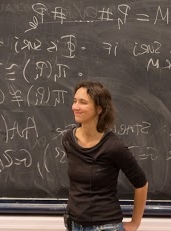
Maxim Kontsevich is a permanent professor at the Institut des Hautes Études Scientifiques (IHÉS), holding the AXA Chair for Mathematics since 1995 and a visiting chair at Rutgers University (one month annually since 1997). Born in 1964 in Khimki, USSR, he earned his PhD from Bonn University in 1992. His career includes visiting positions at Harvard, the Institute for Advanced Study, and Berkeley, where he was a professor from 1993 to 1995. His research spans mathematical physics, algebraic geometry, and non-commutative geometry. Notable contributions include deformation quantization, mirror symmetry, and motivic integration. His work bridges algebraic structures with geometric and physical concepts, influencing areas like topological field theories, string theory, and integrable systems. Awardees of Fields Medal (1998), Crafoord Prize (2008), and Breakthrough Prize (2014), he also holds editorial roles at Compositio Mathematica and Publications Mathématiques IHÉS. His over 50 publications explore advanced topics such as quantum cohomology, Hodge theory, and categorical structures in geometry.
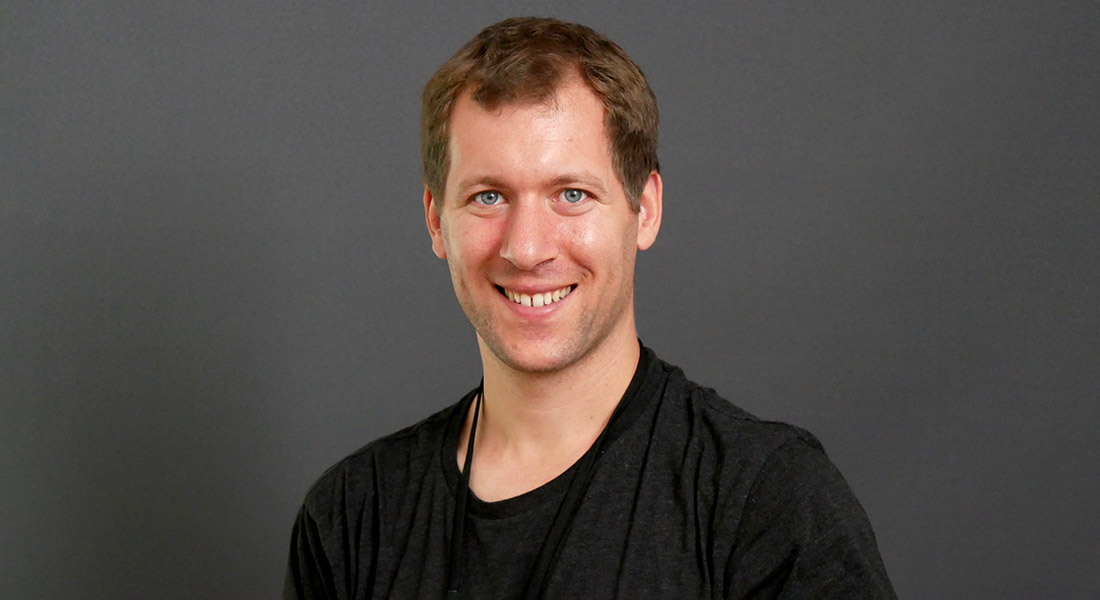
Philip Bille is a Professor and Head of the Algorithms, Logic and Graphs section at the Department of Applied Mathematics and Computer Science, Technical University of Denmark (DTU), College of Engineering. His research centers on the design and analysis of efficient algorithms, particularly for string processing, compressed data, and data structures. His research interests lie at the intersection of theoretical computer science and practical applications. He focuses on algorithms , data structures , string indexing , pattern matching , and compressed computation . His work enables efficient querying and processing of large-scale, repetitive data, with applications in bioinformatics, intrusion detection, and green computing. The recent publications reflect a strong trend in developing space-efficient and fast algorithms for modern computational challenges. Key themes include compressed data structures , sliding window indexing , finite automata compression , and energy-aware matrix operations . These works demonstrate expertise in balancing theoretical rigor with practical performance. Philip Bille actively supervises multiple PhD students and leads several research projects. He contributes to advancing sustainable computing aligned with UN SDGs. His work integrates algorithmic theory with real-world efficiency. Supervises PhD projects on hierarchical compression, adaptive computation, and vector processor algorithms. Involved in research on green computing, compressed formats, and efficient data models. He is affiliated with the Algorithms, Logic and Graphs group at DTU, a hub for theoretical and applied algorithmic research. The team explores fundamental problems in data representation and processing, pushing the boundaries of what is computationally feasible in terms of time and space.
Nathalie Wahl is a Professor at the Department of Mathematical Sciences, University of Copenhagen, and serves as the Center Director for the Copenhagen Centre for Geometry and Topology (GeoTop). Her research focuses on algebraic topology, particularly mapping class groups of surfaces and 3-manifolds, homological stability, topological field theory, and loop spaces. PhD from Oxford University (2001) Current leadership of GeoTop (since 2020) Her recent work explores homological stability across automorphism groups, string topology, and structured algebras. Key collaborations include Allen Hatcher, Craig Westerland, and Nancy Hingston. She has received prestigious awards such as the ERC Consolidator Grant and the Young Elite Researcher Award. ERC Consolidator Grant (2018-2023) Female Research Leader Scholarship (2009-2013) Marie Curie European Fellowship (2003-2004)
Søren Galatius is a Visiting Professor at the Department of Mathematical Sciences, University of Copenhagen. His research focuses on algebraic topology with an emphasis on moduli spaces, homology spheres, K-theory, and cobordism categories. He holds a PhD and has established himself as a leading figure in geometric topology and algebraic structures in mathematics. Recent research has explored topics such as general linear groups over finite fields, Pontryagin classes, and tropical geometry applications to moduli spaces. His work bridges pure algebraic topology with geometric and combinatorial methods, contributing foundational insights into modern mathematical frameworks. Key collaborations include projects with Oscar Randal-Williams and Martin Hairer, advancing understanding of cobordism categories and topological field theories. His articles consistently appear in top-tier journals like Annales Scientifiques de l'Ecole Normale Superieure and Inventiones Mathematicae . No scientific awards or grants are explicitly listed in the provided materials, though his publication record speaks to significant academic contributions. No advisee students are documented here.
Mie Kano Glückstad serves as a Lecturer in the Department of Mathematical Sciences within the Faculty of Science at the University of Copenhagen, located at Universitetsparken 5, 2100 København Ø. Her academic focus spans core mathematical disciplines, with primary engagement in: Mathematics as a foundational field Pure Mathematics exploring abstract structures Applied Mathematics addressing real-world problems Specialized study in Algebra, Analysis, and Geometry She maintains active academic operations through her departmental affiliation and research activities in mathematical sciences.
Konstantin Zarembo serves as a Professor within the Theoretical high energy, astroparticle and gravitational physics group at the Niels Bohr Institute, University of Copenhagen, focusing on fundamental theoretical physics research. His research program centers on String Theory and Quantum Field Theory , with particular emphasis on integrable structures in supersymmetric gauge theories. Key contributions include groundbreaking work on AdS/CFT correspondence, where he explores exact solutions through Bethe ansatz techniques, domain walls in ABJM theory, and boundary states in holographic dualities. His methodology combines advanced mathematical physics with quantum integrability to address non-perturbative phenomena in high-energy systems. Analysis of his 2021-2025 publications reveals a cohesive research trajectory centered on integrability applications across quantum field theory and string theory, with significant focus on 't Hooft loops, Gross-Neveu models, and eigenvalue systems. These works consistently appear in premier journals like Journal of High Energy Physics and Physical Review Letters, demonstrating sustained impact in theoretical physics. No scientific awards were documented in the source materials. Information regarding student supervision, grant funding, or collaborative projects beyond co-authorship was not provided in the available texts. Professor Zarembo operates within the Theoretical high energy, astroparticle and gravitational physics research group at the Niels Bohr Institute, contributing to Copenhagen's prominence in fundamental theoretical physics through his specialized expertise in integrable systems and holographic dualities.
Konstantin Wernli is an Assistant Professor in the Department of Mathematics and Computer Science at the University of Southern Denmark, affiliated with the Quantum Mathematics research group. His research focuses on quantum field theory, geometric quantization, and mathematical physics, with a particular emphasis on topological field theories and perturbative methods. He has contributed to foundational work in Chern-Simons theories, BV-BFV formalisms, and geometric analysis. His research interests include quantum field theories, algebraic geometry, and the intersection of topology with physics. Notably, he explores combinatorial approaches to quantum field theory, geometric quantization frameworks, and the application of advanced mathematical tools to solve problems in theoretical physics. Recent work includes studies on partition functions, constrained dynamical systems, and the globalization of sigma models. His articles often bridge abstract mathematics with physical applications, such as analyzing heat kernels, theta invariants, and entanglement polytopes. Wernli is a project participant in the Sapere Aude grant 'FROM PERTURBATIVE TO NON-PERTURBATIVE QUANTUM FIELD THEORY BY CUTTING AND GLUING' (2024–2028), which aims to advance non-perturbative QFT techniques. He has advised on research projects involving heat kernel analysis and geometric quantization, though no formal student advisees are listed.
Shachar Carmeli is a researcher in the Department of Mathematics at the Weizmann Institute of Science. He previously held a postdoctoral position at the University of Copenhagen's Department of Mathematical Sciences, working with the Copenhagen Centre for Geometry and Topology. Carmeli earned his PhD from the Weizmann Institute under the supervision of Professor Dmitry Gourevitch, focusing on advanced topics in algebraic topology and representation theory. His research interests span homotopy theory, chromatic homotopy theory, algebraic geometry, and representation theory, with a current emphasis on higher semiadditivity in chromatic homotopy theory and its connections to algebraic K-theory. He also explores Nash stacks and geometric representation-theoretic frameworks. Notable collaborations include work with Tomer M. Schlank, Lior Yanovski, and Allen Yuan on cyclotomic extensions, redshift phenomena, and categorified trace constructions. Carmeli's recent publications highlight contributions to topics like chromatic Fourier transforms, descent in algebraic K-theory, and the topology of crystalline materials. His work bridges abstract algebraic structures with geometric and topological applications, often leveraging tools from higher category theory and spectral algebraic geometry.
Søren Eilers is a Professor at the Department of Mathematical Sciences , University of Copenhagen. His research focuses on Operator Algebras , particularly the classification of C*-algebras related to discrete and low-dimensional structures. He is a member of the FNU network 'Automorphisms and Invariants for Operator Algebras' and advocates for experimental mathematics using computational methods in pure mathematics. Education: MS in Mathematics and Computer Science, University of Copenhagen (1993) PhD in Mathematics, University of Copenhagen (1995) Research Interests: Operator Algebras K-theory Symbolic Dynamics Discrete Mathematics Experimental Mathematics Recent Publications (2016-2024) demonstrate expertise in graph C*-algebras , symbolic dynamics , and computational approaches to pure mathematics, with key collaborations in Denmark, Japan, Canada, and the U.S. Scientific Leadership: President, Danish Mathematical Society (2006-2008) Principal Investigator, Villum Fonden (2012-2016) Main Organizer, Mittag-Leffler Institute Program (2016) Advisory Roles: Supervised 28 master's theses and mentored 9 PhD students/postdocs (2003-2022) across institutions in Denmark, Canada, Japan, and the U.S.
Asger Dag Törnquist is an Associate Professor at the Department of Mathematical Sciences, University of Copenhagen . His research focuses on Descriptive Set Theory , Infinite Combinatorics , and Forcing , with applications to Operator Algebra and Ergodic Theory . He received his Ph.D. in Mathematics from the University of California at Los Angeles in 2005. Research Highlights: His work explores the Borel complexity of orbit equivalence and von Neumann equivalence, with recent contributions to the interplay between set theory and cognitive psychology models. Key topics include projective witnesses , maximal almost disjoint families , and unitarizability in Polish groups. Publications: Törnquist has published extensively in top-tier journals such as the Annals of Pure and Applied Logic , Journal of Mathematical Logic , and Proceedings of the National Academy of Sciences , often addressing foundational questions in set theory and its applications.
Joachim Kock is an Associate Professor at the Department of Mathematical Sciences, University of Copenhagen, with research focusing on category theory, homotopy theory, combinatorics, and algebraic geometry. His work explores intersections with probability theory, mathematical physics, and computer science, particularly through decomposition spaces, operads, and categorical structures. Education: Not explicitly mentioned External Employment: Professor Titular at Autonomous University of Barcelona Research Areas: Category theory and higher structures Homotopy-theoretic combinatorics Decomposition spaces and incidence algebras Applications in computer science and mathematical physics Recent Publications: 2024: ∞-operads as symmetric monoidal ∞-categories 2022: Tracelet Hopf Algebras and Decomposition Spaces 2022: Infinity-Operads as Analytic Monads 2021: Every 2-Segal space is unital 2021: Operadic categories and decalage Editorial Activities: Editor, Theory and Applications of Categories (since 2017) Editor, Higher Structures (2016–2022) Editor, Compositionality (since 2018)
Søren Eilers is a Professor at the Department of Mathematical Sciences, University of Copenhagen, affiliated with both the QA (Analysis & Quantum) and AG (Algebra & Geometry) sections. He holds editorial roles at Journal of Mathematical Analysis and Applications and contributed to Springer's Operator Algebra and Dynamics proceedings. Education : M.S. (1993), PhD (1995) in Mathematics from the University of Copenhagen. Positions : Assistant Professor (1996–1999), Associate Professor (1999–2008), Professor (2008–present). Research Interests : Focus on operator algebras, particularly C*-algebras associated with discrete structures. Active in symbolic dynamics, K-theory, and experimental mathematics. His work bridges algebraic structures and dynamical systems, with notable contributions to the classification of graph C*-algebras and the LEGO counting problem. Recent efforts emphasize computer-aided methods in mathematical research. Key Contributions : Pioneered geometric classification of graph C*-algebras, explored flow equivalence of shift spaces, and authored Introduction to Experimental Mathematics (2017). His research has been supported by grants such as the Villum Fonden's Experimental Mathematics initiative (2012–2016). Teaching & Mentorship : Supervised 28 PhD theses and numerous projects in analysis, discrete mathematics, and experimental mathematics. Taught courses in functional analysis, dynamical systems, and experimental methods. Scientific Leadership : Organized major programs like the 2016 Mittag-Leffler Institute's classification of operator algebras. Served as President of the Danish Mathematical Society (2006–2008) and led NordForsk's Operator Algebras and Dynamics network (2009–2012). International Collaboration : Extensive visiting appointments at institutions like MSRI (Berkeley), Fields Institute (Toronto), and Institut Mittag-Leffler (Stockholm). Maintains global research networks in operator algebras and dynamics.
Magdalena E. Musat is a Professor at the Department of Mathematical Sciences, University of Copenhagen, within the Faculty of Science. She holds a Ph.D. from the University of Illinois at Urbana-Champaign (2002) and has extensive teaching experience across institutions including the University of Copenhagen, University of Southern Denmark, and UC San Diego. Her research focuses on Functional Analysis, Operator Algebras, and their intersections with noncommutative probability, quantum information theory, and group theory. She has organized major conferences like the Harald Bohr Lectures and the ICM Satellite conference on Operator Algebras. Her academic contributions include over 15 publications in top journals such as Inventiones Mathematicae and Communications in Mathematical Physics. She has supervised numerous Ph.D. and Master’s students, including current advisee Rasmus Kløvgaard Stavenuiter. Her work explores topics like quantum channel factorization, Connes embedding problem, and non-commutative L_p-spaces. Musat serves as Head of Studies for the Master’s Program in Mathematics and co-organizes the Department Colloquium. Her teaching spans advanced courses on Functional Analysis, Operator Algebras, and Measure Theory. Professional activities include organizing masterclasses on Sofic Groups and Approximation Properties for Operator Algebras.
Kasper Green Larsen is a Professor in the Department of Computer Science at Aarhus University. His research focuses on theoretical computer science, machine learning, algorithms, and data structures. He has made significant contributions to boosting algorithms, PAC learning theory, and computational geometry. His work often bridges algorithm design with complexity theory, addressing challenges in optimization, memory efficiency, and lower bounds analysis. Key research areas include: Algorithmic Learning Theory (e.g., boosting, bagging, and PAC learners) Data Structure Design (e.g., invertible Bloom tables, succinct representations) Computational Complexity (e.g., lower bounds for dynamic and oblivious algorithms) Geometric Algorithms (e.g., hierarchical searching, range queries) Recent publications emphasize foundational advancements in learning theory (e.g., optimal weak-to-strong learning) and data efficiency (e.g., memory-reduced Bloom filters). His work frequently appears in top conferences like IJCAI, ICALP, and SODA, reflecting rigorous theoretical contributions with practical implications.
Kevin Aguyar Brix is a mathematician at the University of Southern Denmark (Odense, Denmark), where he holds a Reintegration Fellowship from the Carlsberg Foundation (CF23-1328). Previously, he worked as a postdoc at Lund University (Sweden), the University of Glasgow (Scotland), and the University of Wollongong (Australia), funded by grants from the Swedish Research Council, the Independent Research Fund Denmark, and the Carlsberg Foundation. PhD in Mathematics (2019) from University of Copenhagen, Denmark Member of the Centre for Symmetry and Deformation Supervised by Søren Eilers Kevin's research focuses on the intersection of pure mathematics, particularly exploring the connections between topological dynamical systems, operator algebras, and group theory. He specializes in symbolic dynamical systems and their encoding into C*-algebras, investigating how much dynamical structure is preserved or lost in this process. His work often employs operator algebraic tools to derive properties of the original dynamical systems, with specific emphasis on shift equivalence, covers of dynamical systems, and ideal structures of C*-algebras. Kevin's publications reveal a consistent focus on the interplay between dynamical systems and operator algebras. His work spans symbolic dynamics, groupoids, C*-algebras, and their ideal structures. Recent papers explore unital shift equivalence, Hausdorff covers for non-Hausdorff groupoids, and maximal ideals of reduced group C*-algebras. His research often involves collaborations with leading mathematicians worldwide, addressing fundamental questions about the relationship between algebraic structures and dynamical properties. Carlsberg Foundation Reintegration Fellowship (CF23-1328) Swedish Research Council Starting Grant (2024-2028) for "Dynamics, Groups, and C*-algebras: from one to many dimensions" Swedish Research Council Starting Grant (previous) Independent Research Fund Denmark International postdoctoral grant Carlsberg Foundation Internationalisation Fellowship Though specific details about Kevin's advisees are not provided in the available information, his extensive publication record suggests active mentorship of junior researchers. His research is supported by prestigious grants including the Carlsberg Foundation Reintegration Fellowship and a Swedish Research Council Starting Grant. These grants fund his work on "Dynamics, Groups, and C*-algebras: from one to many dimensions," indicating significant recognition of his research potential and contributions to the field. Kevin's collaborative approach is evident in his numerous co-authored papers with established and emerging researchers in operator algebras and dynamical systems. Kevin is actively involved in the international mathematical community, participating in workshops and collaborations across Europe and Australia. He co-organized the Glasgow Late August Symbolic dynamics, Groups, and Operators Workshop in 2022, which aimed to include young mathematicians in the interactions between group theory, dynamical systems, and operator algebras. His research network includes prominent mathematicians from institutions worldwide, reflecting his position within a vibrant interdisciplinary research community. He has presented his work at numerous conferences including IWOTA in Kent, seminars in Florianopolis, and workshops in Oberwolfach, demonstrating his active engagement with the global mathematics community.

.jpg)