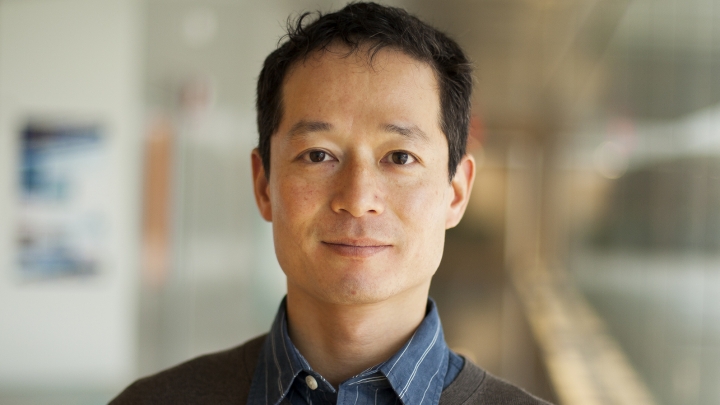
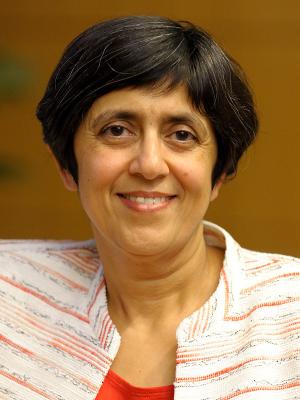
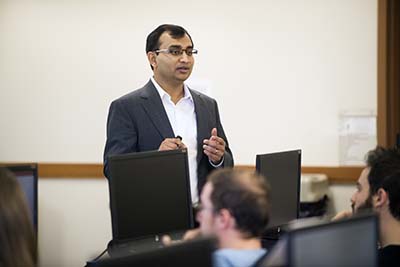
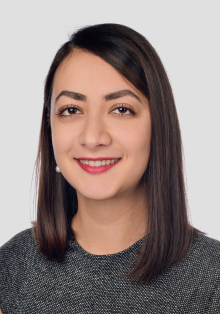
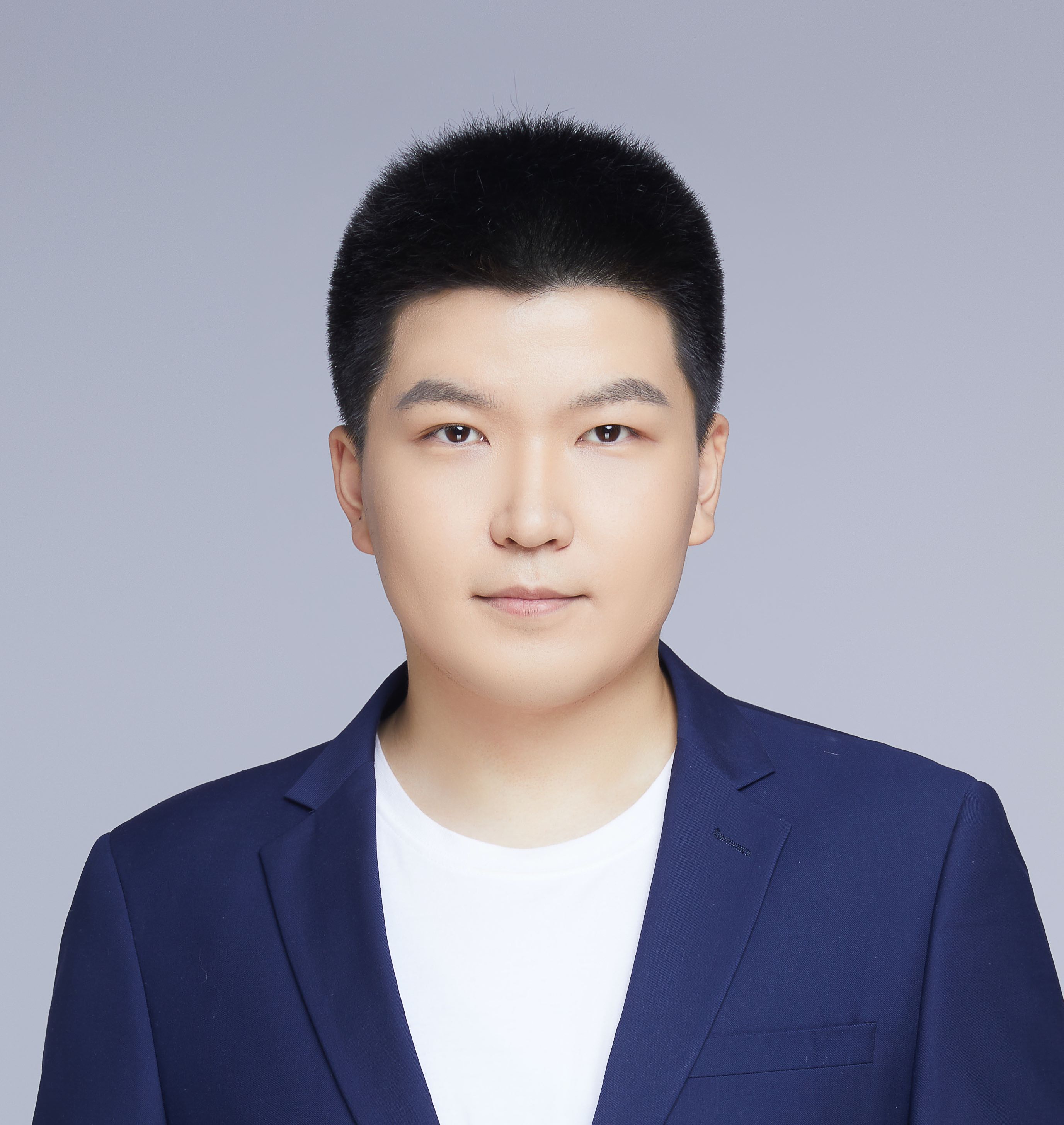
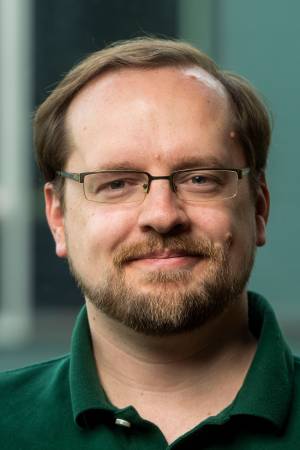
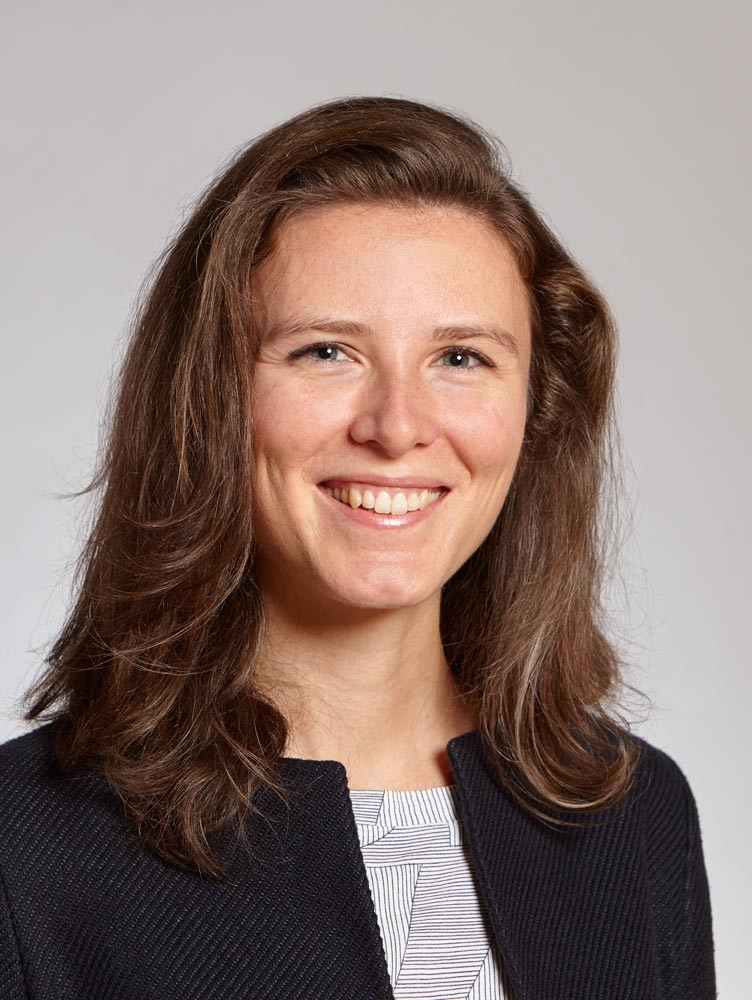
Aishwarya Agrawal is an Assistant Professor at Université de Montréal in the Department of Computer Science and Operations Research (DIRO), affiliated with Mila – Quebec Institute of Artificial Intelligence and a Canada CIFAR AI Chair. She also serves as a research scientist at Google DeepMind, spending one day weekly there. Education: B.E. in Electrical Engineering (IIT Gandhinagar, 2014), Ph.D. in Computer Science (Georgia Tech, 2019). Her research focuses on multimodal learning , deep learning , natural language processing , and computer vision , particularly in developing AI systems that 'see' and 'communicate' effectively. Grants & Awards: Canada CIFAR AI Chair, 2020 Sigma Xi Best PhD Thesis Award, NVIDIA Fellowship (2018–2019), and multiple fellowships from Google and Facebook. She leads projects like Advancing Multimodal Vision-Language Learning (CRSNG-funded) and StarDoc: Document Structure Extraction (MITACS). Research Contributions: Pioneered benchmarks like CulturalVQA and UI-Vision , and frameworks such as PROGRESS for efficient VLM training. Her work emphasizes cross-modal alignment, robust evaluation, and cultural understanding in AI systems. Labs/Teams: Active in Mila’s core academic group and collaborates with Google DeepMind on multimodal and vision-language research. Supervises a dynamic team of PhD and master’s students in Montreal.
Priyanka Raina is an Assistant Professor of Electrical Engineering at Stanford University, with a courtesy appointment in Computer Science. She leads the Stanford Accelerate research group, focusing on domain-specific hardware architectures and agile hardware-software co-design. Her work emphasizes high-performance, energy-efficient accelerators for emerging technologies. Education: B.Tech. from IIT Delhi (2011), M.S. and Ph.D. from MIT (2013/2018). Postdoctoral experience includes NVIDIA Research (2018) and Amazon Visiting Academic (2023–present). Awards include the Sloan Research Fellowship (2024), NSF CAREER Award (2023), and Terman Faculty Fellowship (2018). Research Interests: Domain-specific architectures, near-memory computing, design productivity, and machine learning acceleration. Her group develops frameworks like AHA (Agile Hardware) for efficient accelerator design and compilers. Awards: Over 10 major awards, including best paper recognitions at VLSI, MICRO, and JSSC. Active roles as Associate Editor for IEEE JSSC and Program Chair for IEEE Hot Chips (2020). Advising & Teaching: Supervises multiple PhD and MS students in hardware design, CGRAs, and ML accelerators. Teaches VLSI design courses (EE271/272/372) and oversees independent studies in embedded systems and chip design. Labs & Collaborations: Affiliated with Stanford PORTAL Center, AHA Center, and SystemX Alliance. Projects include MINOTAUR (edge AI accelerator), Amber (CGRA-based SoC), and EMBER (RRAM macros).
Kazuhiro Saitou is a Professor of Mechanical Engineering at the University of Michigan, affiliated with the College of Engineering. His research focuses on computational design synthesis, topology optimization, and manufacturing process integration. He leads the Algorithmic Synthesis Laboratory (ASL), advancing algorithms for automated design and optimization of mechanical systems. Education: Ph.D. (1996), MIT; M.S. (1992), MIT; B.Eng. (1990), University of Tokyo. He has held tenured positions since 1997, including roles as Founding CEO of Comnext, Inc. (2007–2012) and visiting professorships at École Centrale Paris and Donghua University. Research interests include multi-material topology optimization (M^3 TO), AI-driven design, and sustainable manufacturing. Key projects address additive manufacturing, composite structures, and energy-efficient production systems. He has pioneered methods for manufacturability-driven design and assembly optimization. Notable awards include IEEE Fellow (2018), ASME Kos-Ishii Award (2015), and NSF CAREER Award (1999). He serves as Editor-in-Chief for IEEE Transactions on Automation Science and Engineering and holds leadership roles in ASME and IEEE societies. Teaching includes courses on design optimization, CAD, and global product development. His lab has advised over 30 students, with alumni in academia and industry. Current research explores biomechanical modeling, traffic flow optimization, and medical image registration algorithms.
Marlon Dumas is a Professor of Information Systems at the University of Tartu's Faculty of Science and Technology, with a 20-year academic career spanning Estonia and Australia. He holds a PhD in Computer Science from the University of Grenoble 1, France, and has served as Head of Chair and Programme Director in Software Engineering programs. Specializes in Business Process Management (BPM) and Process Mining Current research focuses on prescriptive process monitoring, simulation modeling, and data privacy Recipient of 25+ scientific awards, including multiple Test of Time Awards and the Estonian National Research Award in Technical Sciences Editorial leadership: Area Editor for Information Systems (Elsevier) and ERC Starting Grant Panel Chair His work bridges theoretical advancements in BPM with practical applications in financial services and anti-money laundering. He has developed tools like SIMOD, Kronos, and Kairos for process optimization and analysis. His research integrates AI/ML techniques (reinforcement learning, causal inference) with traditional process modeling. Key trends in his recent publications include: Prescriptive monitoring systems combining causal inference and machine learning Privacy-preserving process mining techniques (differential privacy, anonymization) Resource availability modeling and multi-objective process optimization LLM applications for process analysis and intervention policies Scientific honors include: 2024 BPM Best Paper & Prototype Awards 2023 ICPM Best Prototype Award 2019 ERC Advanced Grantee 2017 Estonian National Research Award in Technical Sciences 2019 MODELS Test of Time Award 2017 BPM Best Prototype Award He has mentored PhD candidates as thesis examiner and contributed to 30+ conference program committees, including General Co-Chair roles at ESEC-FSE 2019 and CAiSE 2018. His work has been supported by European Research Council grants and Estonian Science Foundation projects.
Dr Rod Thornton is a Senior Lecturer in Russian Defence and Security Studies at King’s College London, affiliated with the Defence Studies Department and School of Security Studies. He specializes in the Russian military's kinetic and sub-threshold warfare, with a focus on cyber capabilities, space warfare, and UK homeland resilience. His research includes recent British Academy-funded work on UK civil defense capacity during the pandemic, advocating for dedicated civil defense organizations. He has published extensively on Russian military tactics in Ukraine, AI-cyber integration, and space-based deterrence. Russian military cyber operations Space warfare dynamics UK resilience capacity gaps Scientific awards include a British Academy grant (2020). His students focus on asymmetric warfare, AI, cyber, and regional security issues. He teaches at the UK Defence Academy and has collaborated with institutions in Finland, South Korea, and the Freeman Air and Space Institute.
Zaid Harchaoui is an Adjunct Professor in the Department of Statistics at the University of Washington. His research focuses on machine learning, generative AI, and algorithmic optimization, with applications spanning ecology, neuroscience, and artificial intelligence. He explores learning under distributional shifts and develops tools for scalable generative models in language and vision domains. University: University of Washington Department: Statistics Research Focus: Learning from data with computational, inferential, and mathematical rigor; distributional shift adaptation; generative model scaling Email: zaid@uw.edu His recent work emphasizes generative AI applications in ecology and neuroscience, stochastic optimization for robustness, and algorithmic efficiency in large-scale learning. Key contributions include techniques for distributionally robust optimization, interpretable authorship obfuscation, and uncertainty quantification in behavior classification. Scientific awards and honors are not explicitly mentioned in the provided text. Collaborative efforts often intersect with nonlinear control algorithms, spectral analysis, and privacy-preserving machine learning frameworks.
Sarita V Adve is the Richard T. Cheng Professor of Computer Science at the University of Illinois at Urbana-Champaign, where she conducts research spanning hardware, programming languages, operating systems, and applications with a focus on domain-specific systems. Her work bridges theoretical foundations and practical implementations, particularly in extended reality and heterogeneous computing. Her educational background includes a Ph.D. and M.S. in Computer Science from the University of Wisconsin-Madison (1993, 1989) and a B.Tech in Electrical Engineering from the Indian Institute of Technology Bombay (1987). Prior to joining Illinois, she served on the faculty at Rice University from 1993 to 1999. Adve's research centers on generalizable and scalable specialization for domain-specific systems, with current emphasis on extended reality (XR) systems including virtual, augmented, and mixed reality. She chairs the ILLIXR consortium to democratize XR research and developed the first fully open-source XR system (ILLIXR). Her foundational contributions include memory consistency models for C++ and Java programming languages, the Spandex coherence framework for heterogeneous systems, and software-driven approaches for hardware reliability. Her work spans hardware reliability (SWAT and RAMP projects), power management (GRACE system), and instruction-level parallelism. Recent publications reveal a strong focus on energy-efficient XR systems, hardware-software co-design for AI workloads, and resilience analysis. Her team explores rendering offload, visual-inertial odometry optimization, and compositional error injection frameworks, often targeting tradeoffs between energy, latency, and accuracy in mobile and edge environments. Fellow of the American Academy of Arts and Sciences Fellow of the ACM and IEEE ACM/IEEE-CS Ken Kennedy Award Anita Borg Institute Woman of Vision in Innovation Award ACM SIGARCH Maurice Wilkes Award Alfred P. Sloan Research Fellowship UIUC University Scholar University of Illinois Campus Award for Excellence in Graduate Student Mentoring Adve actively mentors students and has received multiple teaching awards. She co-founded the CARES movement to address discrimination in CS research events and chairs CS@Illinois CARES. Her service includes leadership roles in ACM SIGARCH (2015-2019), DARPA/ISAT study group, ACM Council, and Computing Research Association. She has secured significant funding including DARPA initiatives and Google Faculty Research Awards. She leads the ILLIXR consortium and has established collaborative research programs such as the $8.3M DARPA Joint University Microelectronics Program. Her lab focuses on open-source XR development, heterogeneous system architectures, and reliability-aware designs, with strong industry and government partnerships.
Mohammad Saifur Rahman is the Daniels School Chair in Management and a Professor of Management Information Systems at the Mitch Daniels School of Business, Purdue University. Previously, he was an Associate Professor at the Haskayne School of Business, University of Calgary. His academic journey includes significant leadership roles such as co-chairing the Conference on Information Systems and Technology (CIST) in 2013 and serving as president of the INFORMS eBusiness Society in 2014. Currently, he serves as an associate editor for both Management Science and Information Systems Research (ISR). Ph.D. in Management Information Systems, Krannert School of Management, Purdue University (2008) MBA in Management Information Systems, Southern Illinois University (2004) BS in Computer Science, Southern Illinois University (2002) Rahman's research primarily focuses on the economic implications of digital transformations. His work examines how digitization affects consumer behavior, market structures, and business strategies across various industries. He investigates the value of digital traces in driving consumer behavior and improving decision-making, particularly in omnichannel retail environments. His research on the sharing economy has revealed important insights about economic disparities, showing how platforms like Airbnb provide economic benefits to predominantly white neighborhoods while failing to generate similar spillover effects in predominantly Black or Hispanic neighborhoods. His recent publications reveal a consistent focus on the intersection of technology, economics, and social impact. Rahman's work frequently examines how local market structures interact with digital platforms to create or exacerbate economic inequalities. His research spans multiple disciplines including information systems, economics, marketing, and operations management, with a particular emphasis on empirical studies using real-world data from major companies like Walmart and Cisco. CICP Faculty Commercialization Award (2020) INFORMS Sandy Slaughter Early Career Award (2018) World's Top 40 Business School Professors Under 40 by Poets and Quants (2017) Jay N. Ross Young Faculty Scholar Award (2015) Dean's Award for Outstanding Research Achievement (University of Calgary, 2014) Rahman has secured substantial research funding from organizations including Social Sciences and Humanities Research Council (SSHRC), Adobe Systems ($50,000 grants in 2017 and 2020), Trask Innovation Fund ($21,218), and NSF I-Corps ($50,000). He has advised numerous PhD students and collaborated with industry partners to translate research into practical applications. Rahman co-founded RightFit Analytics, a precision health analytics solution that utilizes AI to learn success patterns in healthcare. He has organized significant academic events including the Krannert-Walmart Data Dive (believed to be the first data dive on a college campus) and the Dawn or Doom Data Dive in cooperation with Cisco. Rahman actively engages with industry through consulting and collaborative research projects. His work with Walmart, Cisco, and other major corporations demonstrates his ability to bridge academic research with practical business applications. He has been particularly active in studying how AI and big data analytics can be leveraged to improve business decision-making while addressing potential negative consequences like algorithmic bias and economic inequality.
Bahar Asgari is an Assistant Professor in the Department of Computer Science at the University of Maryland, College Park. She holds appointments in CS, UMIACS, and ECE, and directs the Computer Architecture and Systems Lab (CASL). Her research focuses on domain-specific architecture design, near memory processing, and reconfigurable computing. Before joining UMD, she worked at Google, contributing to system optimization and memory utilization strategies. Education: Ph.D., Georgia Institute of Technology, 2021. Research Interests: Developing energy-efficient architectures for sparse problems, scientific computing acceleration, FPGA optimizations, and reconfigurable hardware systems. Her work addresses challenges in memory efficiency, parallelization, and hardware-software co-design across domains like machine learning and IoT. Key Awards: 2024 UMD Excellence in Teaching Award 2023 DOE Early Career Award Advising & Grants: Supervises 9 graduate students and leads projects sponsored by NSF, DOE, and industry partnerships. Her lab explores systolic arrays, near-data processing, and fault-tolerant computing. Labs/Teams: Directs CASL, which builds next-generation computing systems through hardware innovation and algorithm-architecture co-design.
Xupeng Miao is a Visiting Assistant Professor in the Department of Computer Science at Purdue University, holding the Kevin C. and Suzanne L. Kahn New Frontiers Assistant Professorship. Previously, he was a Postdoctoral Fellow at Carnegie Mellon University's Catalyst Group under Professors Zhihao Jia and Tianqi Chen. He earned his Ph.D. in Computer Science from Peking University (2022) and a Bachelor’s degree from Northeastern University. His research focuses on machine learning systems, distributed computing, and data management, with notable contributions to systems like Hetu (a distributed deep learning framework) and innovations in large language model (LLM) serving (e.g., SpotServe, SpecInfer). He has received awards including the 2024 WAIC Yunfan Award and an Outstanding Paper Award at ACL 2024. Current projects emphasize efficient systems for generative AI, including optimizing LLM training and inference on heterogeneous hardware, fault-tolerant distributed training, and scalable graph-based machine learning. He teaches CS 59200-MLS: Machine Learning Systems at Purdue and actively mentors students in PhD/MS programs and internships. Key achievements include NVIDIA Academic Awards, IEEE Micro Top Picks recognition, and leadership in international conference roles (e.g., Artifact Evaluation Co-Chair for KDD 2025 and MLSys 2025). His work bridges system design, algorithmic innovation, and hardware-aware optimizations to advance scalable AI infrastructure.
Oliver Kroemer is an Associate Professor at Carnegie Mellon University's Robotics Institute (RI), affiliated with the Intelligent Autonomous Manipulation (IAM) Lab. His research focuses on enabling robots to learn versatile manipulation skills through lifelong frameworks, with applications in elder care, environmental maintenance, and hazardous operations. Developed methods for robot learning via physical interaction and reinforcement learning Created representations for contact states and motor primitives to improve skill generalization Research Interests: Spanning robot learning, tactile sensing, force-velocity control, and lifelong skill acquisition. Projects include Agile and Dynamic Interactions for Mobile Manipulation and Integrated Planning and Learning (Pillar project). Scientific Awards: Finalist, Georges Giralt Ph.D. Award (2015) Education: Masters & Bachelors in Engineering, University of Cambridge (2008) Ph.D., Technische Universitaet Darmstadt (2014) Students & Affiliates: Current PhD: Mark Lee, Sarvesh Patil, Saumya Saxena, Yunus Seker, Zilin Si Past PhD: Alex LaGrassa, Tabitha Lee, Qiao Liang, Shivam Vats, Kevin Zhang
Eytan Adar is a Professor of Information and Computer Science at the University of Michigan, holding dual appointments in the School of Information and the College of Engineering's Electrical Engineering and Computer Science department. His work sits at the intersection of human-computer interaction and artificial intelligence, focusing on large-scale systems analysis and novel interface design. Adar's research spans multiple domains including social media analysis (Twitter, Reddit), academic citation networks, meme propagation, information extraction, and political networks. His methodological expertise includes data mining, data visualization, and graph-based network analysis. His work often operates at internet scale, examining language, creativity, social network dynamics, and text production. His recent publications reveal a strong focus on AI-human collaboration, with particular attention to generative AI interfaces, visualization techniques for complex data, and ethical considerations in AI systems. His work shows a consistent pattern of bridging theoretical insights with practical system implementations. Best Paper Award at ProtoAI: Model-Informed Prototyping for AI-Powered Interfaces, IUI'21 Honorable Mention Award at CHI'24 for feminist interaction techniques research Best Paper Award at ICWSM'18 for Wikipedia language edition analysis Best Paper Award at ICML 2016 Workshop for neural language model visualization Best Student Paper at WSDM'09 for web dynamics research Best of CHI at CHI 2008 for web revisitation patterns analysis Adar has advised numerous PhD students who have gone on to prominent positions at organizations including Google, Apple, RAND, Northwestern University, and Stanford. His research is generously supported by the NSF, IARPA, NIH, the Education Department, and major technology companies including Adobe, Microsoft, Facebook, Google, and Yahoo. He is also a founder of the International Conference on Web and Social Media (ICWSM) and has served as Co-General Chair for WSDM and Co-Program Chair for UIST.
Ana Klimovic is an Assistant Professor at the Department of Computer Science, ETH Zürich, and Deputy Head of the Institute for Computing Platforms. She leads the Efficient Architectures and Systems Lab (EASL) and focuses on optimizing cloud computing performance and resource efficiency. Education: Ph.D. in Electrical Engineering (Stanford University), M.S. in Electrical Engineering (Stanford), B.A.Sc. in Engineering Science (University of Toronto) Previous Roles: Research Scientist at Google Brain Her research spans cloud computing, operating systems, distributed systems, and their intersection with machine learning. Key areas include cloud-native programming models, elastic storage, GPU sharing, and data pipeline optimization. The 2025-2024 articles highlight trends in serverless computing, large language model (LLM) serving, GPU optimization, and data-centric ML systems. Themes include elasticity, resource multiplexing, heterogeneous computing, and infrastructure for AI/ML workloads. Scientific Awards: Microsoft Research PhD Fellowship, Stanford Graduate Fellowship She has led research projects on ephemeral storage, distributed training automation, and cost-efficient ML preprocessing, with grants from Microsoft Research and Stanford.
Franz Heukamp is the Director General of IESE Business School at the University of Navarra and Professor in the Department of Decision Analysis. He holds the Antonio Valero Chair of Business Administration since 2016 and previously served as Vice Dean of the MBA program and Secretary General of IESE. His academic background includes a Ph.D. in Engineering from the Massachusetts Institute of Technology, an Ingénieur Civil des Ponts et Chaussées from Ecole Nationale des Ponts et Chaussées in Paris, and a Diplom-Ingenieur from Technische Universität München. Professor Heukamp's research focuses on behavioral decision-making with a special interest in neuroeconomics, examining how people make decisions under uncertainty, particularly regarding time-probability trade-offs. His work bridges business decision theory with neuroscience, as evidenced by his publications in journals like Management Science , European Neuropsychopharmacology , and British Journal of Pharmacology . In recent years, he has expanded his research interests to include artificial intelligence applications in management and sustainability. His recent scholarly output shows a progression from fundamental decision theory research to practical applications of AI in business leadership and management education. He has published extensively on risk preferences, intuition in decision making, and the neurological basis of economic choices, with increasing focus on how digital transformation and AI are reshaping management practices. As Director General, Heukamp has championed several strategic initiatives including internationalization efforts across North America, Latin America, and Central Europe, development of new degree programs like the Master in Management and Munich Executive MBA, and integration of digital learning technologies while maintaining the school's commitment to in-person educational excellence. Professor Heukamp is an active member of both the Institute for Operations Research and the Management Sciences and the Neuroeconomics Society, reflecting his interdisciplinary approach to business education and research. His leadership prioritizes supporting faculty research, advancing lifelong learning solutions for executives, and maintaining IESE's mission of service to society through academic innovation.
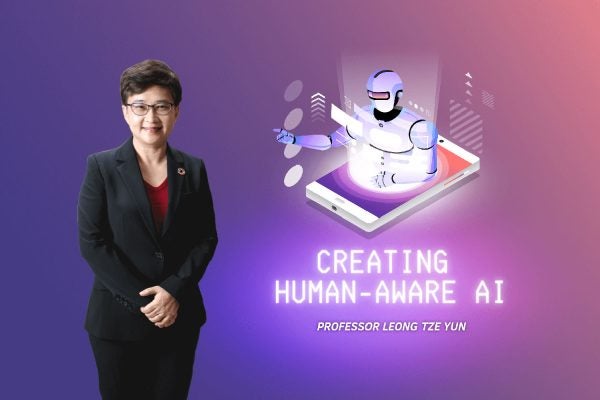
LEONG Tze Yun is a Professor in the Department of Computer Science at the School of Computing, National University of Singapore (NUS). She holds S.B., S.M., and Ph.D. degrees in Computer Science from the Massachusetts Institute of Technology (MIT). Her academic career spans both research and industry experience, with significant contributions to the fields of artificial intelligence and health informatics. Dr. Leong's educational background includes: Ph.D. in Electrical Engineering & Computer Science, Massachusetts Institute of Technology S.M. in Electrical Engineering & Computer Science, Massachusetts Institute of Technology S.B. in Computer Science & Engineering, Massachusetts Institute of Technology Her primary research interests focus on responsible AI, dynamic decision-making, neurocognitive modeling, reinforcement learning, artificial general intelligence, and biomedical and health informatics. Her work bridges the gap between theoretical AI development and practical healthcare applications, with an emphasis on ethical considerations and human-centered design. She directs the Medical Computing Laboratory at NUS, a multidisciplinary research program exploring human-aware decision modeling in complex environments. Analysis of her recent publications reveals a strong trend toward responsible AI development, with significant contributions to reinforcement learning techniques, causal inference methods, and applications of AI in healthcare. Her work increasingly integrates ethical considerations with technical AI development, particularly evident in her 2024 publications on medical AI and human values. Her scientific recognition includes: Fellow of the American College of Medical Informatics (ACMI) Founding Fellow of the International Academy of Health Sciences Informatics (IAHSI) Member of Eta Kappa Nu (Honor Society for Electrical Engineers) Dr. Leong has supervised numerous doctoral and master's students throughout her career, many of whom have gone on to prominent positions at institutions like Google, Netflix, Mayo Clinic, and academic institutions worldwide. Her advisory work extends to significant policy development, including contributions to WHO guidance on ethics and governance of AI for health. She currently serves on the World Health Organization (WHO) Expert Group on Ethics and Governance of AI for Health, the World Economic Forum (WEF) AI Governance Alliance, and the Advisory Council on AI in Uzbekistan. Her laboratory work focuses on developing adaptive systems that evolve with changing technical functionalities, system infrastructures, usage patterns, and operational contexts, with applications spanning prediction and decision analytics, human-aware robotics, game artificial intelligence, personalized education, and assistive care for elderly with neurocognitive disorders.