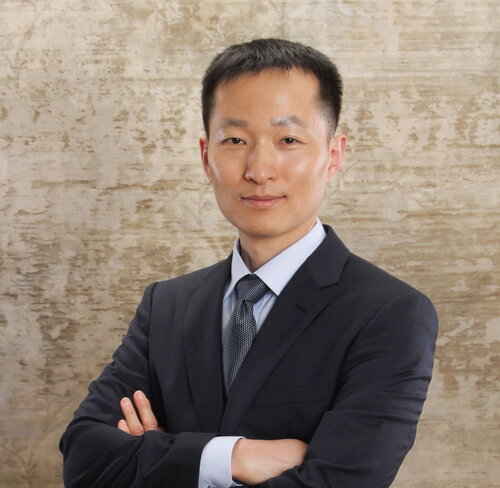
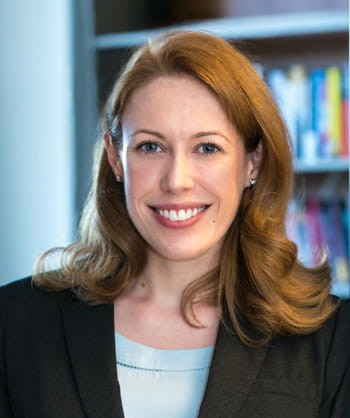
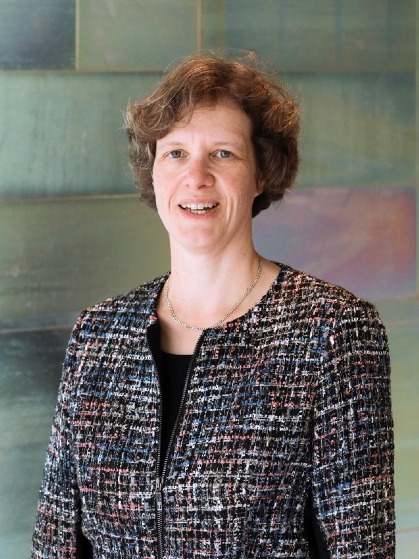
Herman Bruyninckx is a Part-Time Full Professor at Eindhoven University of Technology (TU/e) in the Mechanical Engineering department, specifically within the Control Systems Technology group and EAISI High Tech Systems initiative. He also serves as a professor (Hoogleraar) at KU Leuven in Belgium. Academic focus on robotics, control systems, and multi-agent coordination Active research in model predictive control , semantic mapping , and dynamic constraint algorithms Recent publications address industrial automation , agro-food robotics , and haptic technology Research Highlights : Developed hybrid decision-making frameworks for multi-agent navigation Innovated swing-free control methods for robotic pick-and-place operations Formulated constrained dynamics algorithms with LQR-Gauss principle integration Created ExoTen-Glove for haptic feedback in virtual environments Collaborative Projects : Coordinated with researchers like René van de Molengraft , Elena Torta , and Koen de Vos Contributed to NWO/TTW FlexCRAFT project for cognitive robotics in agro-food technology
Mark Fagan is a Lecturer in Public Policy at Harvard Kennedy School, with affiliations to the Mossavar-Rahmani Center for Business and Government, Taubman Center for State and Local Government, and Center for Public Leadership. He teaches courses on operations management, policy design, and supply chain management. Previously, he was a Lecturer in Law at Boston University School of Law and a consultant at Norbridge, Inc. Education: MA in City and Regional Planning from Harvard University (199X), BA from Bucknell University (19XX). Research focuses on regulatory policy in competitive markets, autonomous vehicles, transportation systems, and energy markets. Key initiatives include leading the Autonomous Vehicle Policy Scrums initiative and publishing Supply Chain Management: A Public Sector Perspective (2024). His work examines how public policy can optimize supply chains while addressing geopolitical, environmental, and equity challenges. Teaching materials include digital courses on lobbying and advocacy, operations management case studies, and the Architect, Pilot, Scale, Improve policy implementation framework. Professional activities include advising governments on cross-sector policy design and consulting for private-sector clients in transportation, utilities, and telecommunications industries.
Seung-Hyun Hong is an Associate Professor and Associate Head of the Department of Economics at the University of Illinois, affiliated with the College of Liberal Arts & Sciences. His research focuses on industrial organization, real estate economics, and digital technology impacts. He has contributed to understanding housing market dynamics, real estate brokerage practices, and the effects of digital platforms on industries like music and postal services. Key works include analyzing financing risks in housing markets and the influence of Napster on music sales. His research bridges theoretical frameworks with empirical applications, addressing issues of market efficiency, consumer behavior, and regulatory implications. Notable publications include studies on housing finance risks (2024), real estate agent influence (2022), and Napster's economic impact (2004–2013). His work often employs difference-in-differences approaches and explores strategic behaviors in markets. Hong's research spans multiple disciplines, including urban economics, consumer behavior, and technological adoption patterns. He maintains an active academic profile with collaborations across institutions. His advising and grants are not explicitly listed, but his extensive publication record indicates sustained research activity. Hong is based at the David Kinley Hall campus in Urbana, Illinois.
Tridas Mukhopadhyay is the Deloitte Consulting Professor of e-Business at Carnegie Mellon University's Tepper School of Business, where he has served on the faculty since 1986. His academic journey at CMU progressed from Instructor of Information Systems (1986-1987) to Assistant Professor (1987-1993), Associate Professor (1993-1997), Professor (1998-present), and Deloitte Consulting Professor of e-Business (2000-present). He also served as Director of the MS in Electronic Commerce program from 1999-2004. Ph.D. in Computer and Information Systems, University of Michigan–Ann Arbor, 1987 M.B.A. in Computer and Information Systems, Indian Institute of Management Calcutta, 1981 B. Tech. in Electrical Engineering, Indian Institute of Technology Kharagpur, 1978 Professor Mukhopadhyay's research spans multiple critical areas in information systems and technology management. His work on strategic IT use examines how organizations derive business value from information technology investments. He has conducted extensive research on business-to-business commerce, particularly focusing on e-procurement systems, web-based marketplaces, and electronic intermediation models. His cybersecurity research investigates the economic aspects of cyber security, including liability mechanisms and patch release strategies. In software engineering, he has studied productivity, quality metrics, and offshore software development contracts. His most recent publications reveal several key trends in his research trajectory. There's a growing focus on digital platform economics, examining advertising models, virtual currency systems in gaming, and sharing economy dynamics. His work increasingly incorporates behavioral aspects, studying how users respond to personalized content and how backers exert control in crowdfunded projects. Methodologically, his research employs sophisticated analytical approaches including hierarchical Bayesian models, structural equation modeling, and natural experiment designs. CART Research Frontier Award, Carnegie Mellon, 2005 Distinguished Ph.D. Alum, Michigan Business School, 2004 Best Paper, International Conference on Information Systems, 2001 Best Paper, MIS Quarterly, 1995 Xerox Research Chair, Tepper School of Business, 1988-1989 Information Systems Society Distinguished Fellow, 2012 Professor Mukhopadhyay has served on numerous editorial boards including Information Systems Research (1994-2003), Management Science (1999-2003), and MIS Quarterly (1997-1999), demonstrating his significant contributions to the field. His consulting work with major organizations including Alcoa, Chrysler, Ford, General Motors, IBM, and governmental agencies like the United States Post Office and Pennsylvania Turnpike has provided practical insights that inform his academic research. He has been actively involved in university governance through committee service including the Business Technology Faculty Search Committee and the CMU Faculty Senate. His research has been supported through various industry partnerships and academic grants, though specific grant details aren't provided in the source material. His teaching focuses on Business Computing and Strategic IT courses, reflecting his expertise in both foundational information systems concepts and strategic applications of technology in business contexts.
Sreedhar Bharath is the Richard C. Kraemer Professor of Finance at Arizona State University's W. P. Carey School of Business, where he has been since 2010. He holds a Ph.D. from New York University, an MBA from the Indian Institute of Management Ahmedabad, and a B.Tech. from the Indian Institute of Technology Madras. His research focuses on Corporate Finance, Banking, and Credit Risk, with publications in leading journals like the Journal of Finance and Review of Financial Studies. Notable works include analyses of corporate bond liquidity risk, private equity exits, and creditor recoveries during industry distress. Awards: LECG Best Paper Award (2007), Journal of Financial Economics Best Paper (2007), Crowell Memorial Prize (2012). Teaching: Courses include Risk Management in Banks, AI in Finance, and Corporate Finance. Research Activity: Explores banking relationships, debt structure, and governance impacts on corporate finance decisions.
Dr Yanan Song serves as Senior Lecturer (Associate Professor) in Global Politics at SOAS University of London, where she also holds the position of Co-Director of Distance Learning Programmes within the Department of Politics and International Studies. Prior to her current appointment, she was a Lecturer in International Relations at the University of Exeter. PhD in Politics, Durham University MSc in International Public Policy, University College London Dr Song's research centers on US foreign policy with particular emphasis on America's commitment to NATO in the post-Cold War era. Her work examines military operations in Kosovo, Afghanistan, Libya, and Ukraine through the lens of foreign policy analysis, with special attention to intra-administration bureaucratic politics. She is currently investigating US-China relations, focusing on how misperceptions and misinterpretations of each other's policies shape bilateral strategy, with specific interest in the reconfiguration of the relationship within the context of the One Belt One Road initiative. Analysis of Dr Song's publication record reveals a consistent scholarly trajectory examining US foreign policy commitments, NATO dynamics, and evolving US-China relations. Her recent work addresses contemporary challenges including the Ukraine crisis impact on transatlantic relations, trilateral dynamics in a multipolar world, and the reconfiguration of US-China relations in the post-pandemic era. Her scholarship consistently employs foreign policy analysis methodology to investigate how strategic misperceptions influence international relations and policy formulation. Dr Song actively supervises PhD students at SOAS and contributes to academic leadership through her role as Co-Director of Distance Learning Programmes. Her research appears to be supported by academic grants focused on international relations, US foreign policy, and China studies, though specific grant details are not publicly enumerated in her profile.
Huazhen Fang is an Associate Professor in the Department of Mechanical Engineering at the University of Kansas School of Engineering, where he joined in 2014. He leads the Information & Smart Systems Laboratory (ISSL) and holds a courtesy appointment in the Department of Electrical Engineering & Computer Science. His research focuses on enabling intelligence for complex systems through information-driven approaches. Dr. Fang received his Ph.D. in Mechanical Engineering from the University of California, San Diego in 2014, following an M.Sc. from the University of Saskatchewan and a B.Sc. in Computer Science & Technology from Northwestern Polytechnic University in China. He was a Visiting Faculty Fellow at Mitsubishi Electric Research Laboratories in 2022. His research interests span Systems and Control, Advanced Battery Management, Energy Storage Systems, and Robotics, with particular focus on system modeling, estimation, control design, machine learning and numerical optimization. Dr. Fang's work has significant applications in energy management, cooperative robotics, and environmental observing systems. His research has been supported by the National Science Foundation, Department of Energy, Army Research Laboratory, and Mitsubishi Electric Research Laboratories. His extensive publication record shows a clear trend toward increasingly sophisticated integration of physics-based modeling with machine learning approaches, particularly in battery management systems and autonomous vehicle control. Recent work demonstrates a growing emphasis on Bayesian inference methods, distributed control architectures, and safety-critical applications of intelligent control systems. Faculty Early Career Award from National Science Foundation (2019) University Scholarly Achievement Award (2024) Miller Professional Development Award (2022) Miller Faculty Scholar Award (2018, 2019, 2023) Wesley G. Cramer Outstanding Mechanical Engineering Faculty Award (2016) Big XII Faculty Fellowship (2015) IEEE Transactions on Transportation Electrification Prize Paper Award (2024) Dr. Fang has successfully mentored numerous graduate students through the Information & Smart Systems Laboratory, with many receiving awards for their research. His research has attracted significant funding from prestigious organizations including the National Science Foundation, Department of Energy, Army Research Laboratory, and Mitsubishi Electric Research Laboratories. He currently serves as an Associate Editor for multiple prestigious journals including Information Sciences, IEEE Transactions on Industrial Electronics, and IEEE Control Systems Letters. The Information & Smart Systems Laboratory (ISSL) under Dr. Fang's leadership has established itself as a center for cutting-edge research in information-driven smart systems. The lab focuses on pushing the frontiers of information extraction, analysis and exploitation for dynamic systems to deal with system complexity and enable system intelligence. The lab actively collaborates with industry partners and local communities, emphasizing research that serves societal needs.
Lindsey O'Rourke is an Associate Professor of Political Science at Boston College's Morrissey College of Arts and Sciences. Her research examines U.S. foreign policy, international security, and covert regime change operations. Her work analyzes the causes, conduct, and consequences of U.S.-orchestrated covert interventions during the Cold War, gender dynamics in terrorism, and the strategic implications of regime change. Her book 'Covert Regime Change: America's Secret Cold War' received significant scholarly recognition. She teaches courses on U.S. foreign policy since 1945, the World Wars, and foreign-imposed regime change. Publications demonstrate three interconnected research streams: 50% on covert operations and regime change, 30% on gender dimensions of political violence, and 20% on contemporary security challenges. Her work combines historical analysis with contemporary policy implications.
Sibel Alumur Alev is an Associate Professor and Associate Chair of Graduate Studies at the University of Waterloo. Her research focuses on logistics network design, hub location optimization, and sustainable transportation systems. She actively contributes to the fields of operations research and supply chain management, with a strong emphasis on addressing uncertainty in network design and strategic infrastructure planning. Her work spans applications in autonomous mobility systems, electric vehicle charging infrastructure, healthcare logistics, and pandemic response. She has published extensively on hub-and-spoke network models, reverse logistics for environmental sustainability, and multi-period resource allocation strategies. Notable areas of interest include the integration of stochastic and robust optimization methodologies into real-world logistics challenges. Dr. Alev’s research also bridges academic and industrial needs, addressing practical problems such as optimal testing center locations during pandemics and strategic freight hub expansions. Her contributions have been featured in peer-reviewed journals and conference proceedings, reflecting her commitment to advancing both theoretical and applied aspects of logistics and operations research.
Dr. Adnan Rajib is an Assistant Professor of Civil Engineering at The University of Texas at Arlington, leading the H2I Lab (Hydrology & Hydroinformatics Innovation Lab). His research focuses on large-scale hydrology, water quality modeling, and integrating artificial intelligence with remote sensing data to address climate change impacts on water resources. He actively advises doctoral, master's, and undergraduate students in projects related to flood resilience, wildfire hydrology, and nature-based solutions. Dr. Rajib has secured significant grants from NASA, NSF, and USDA, totaling over $4 million, including a major NASA initiative to predict wildfire effects on freshwater supplies and a DOE-funded Coastal Bend Climate Resilience Center. His work spans collaborations with international organizations like the United Nations University and The Nature Conservancy. Key contributions include global studies on floodplain alterations, wetland-mediated nitrate reductions, and the development of cyberinfrastructure tools for open science. He serves on the editorial board of environmental journals and professional committees, including the American Society of Civil Engineers' Wetland Hydrology Technical Committee. His teaching emphasizes advanced topics in civil engineering and research mentorship, with courses like 'Topics in Civil Engineering' and dissertation advisement. Dr. Rajib's lab integrates cutting-edge hydroinformatics to advance climate resilience strategies for vulnerable communities.
Jann Spiess is an Associate Professor of Operations, Information & Technology at Stanford University's Graduate School of Business and holds a courtesy appointment as Associate Professor of Economics in the School of Humanities and Sciences. He is also a Center Fellow at the Stanford Institute for Economic Policy Research and a Faculty Affiliate of the Golub Capital Social Impact Lab. PhD in Economics (Harvard University, 2018) AM in Economics (Harvard University, 2015) MPP in Public Policy (Harvard University, 2013) MASt in Mathematics (University of Cambridge, 2011) BSc in Mathematics (Technical University of Munich, 2010) Jann's research integrates machine learning with econometric methods to advance causal inference and data-driven decision-making . He explores high-dimensional and robust causal inference, synthetic control methods, and algorithmic fairness, while addressing challenges in human-AI collaboration and policy design. His publications span econometrics, behavioral economics, and data science, focusing on experimental design, robust statistical techniques, and applications of machine learning to public policy. Key themes include replicable inferences from big data, human-AI interaction, and ethical algorithmic design. Philip F. Maritz Faculty Scholar, 2021–22 David A. Wells Prize for best dissertation, Harvard Economics, 2018 Restud Tour, 2018 Jann's work bridges microeconometric methods , statistical decision theory , and mechanism design to enhance analytical frameworks for data-driven policy. He has contributed to robust inference in panel data and synthetic control methods, alongside studies on nudges for vaccination and financial aid renewals. As Faculty Affiliate at the Golub Capital Social Impact Lab, Jann collaborates on projects applying data science to social policy challenges, merging technical rigor with societal impact.
Shuaishuai Wang is a Lecturer in Digital Media and Culture at the University of Manchester, specializing in platform studies, critical algorithm studies, and queer media. His research explores queer communities' digital presence across platforms like Douyin, TikTok, and Blued, with a focus on algorithmic governance, data-driven social media operations, and geopolitical-economic contexts. He holds a PhD in Media Studies from the University of Amsterdam and previously served as Assistant Professor at Xi’an Jiaotong-Liverpool University and Lecturer at the University of Amsterdam. Shuaishuai leads two university-funded projects: 'Douyin Data Economies' (100,000 CNY) and 'Algorithmic Configurations of Sexuality' (30,000 Euros). His work appears in journals like Big Data & Society , Television & New Media , and Social Media + Society , and he contributes to media outlets including The Conversation and Sixth Tone. His research interests emphasize the interplay between algorithms, queer identities, and platform economies. Recent studies analyze Douyin's shift to e-commerce, LGBTQ+ visibility challenges in algorithmic systems, and the political dimensions of TikTok. He has also examined business models of LGBTQ platforms and the impact of censorship on digital queer spaces. Key grants include projects investigating data economies and algorithmic configurations of sexuality, reflecting his commitment to understanding technology's societal implications. Collaborations span global institutions, with notable work on misinformation, playful political performances, and transgressive digital cultures.
Pardis Pishdad is an Associate Professor and Graduate Program Director in the School of Building Construction at Georgia Institute of Technology’s College of Design. She directs the Smart Built Environment Eco-System (Smart Bees) Laboratory, focusing on integrating cyber-physical systems, digital twins, and innovative project delivery methods (e.g., IPD, Flash Tracking) for sustainable built environments. Her research bridges technology adoption, trust-building in construction contracts, and supply chain optimization. Education: PhD, Environmental Design and Planning (Virginia Tech) Master’s Degrees: Civil Engineering (Virginia Tech), Design Studies in Project Management (Harvard), Architecture (University of Tehran) Bachelor’s in Architectural Engineering (Azad University of Shiraz) Research Interests: Her work emphasizes sustainable construction practices using IoT, BIM, and blockchain. Key areas include lifecycle cost analysis, lean construction, and smart building technologies. She explores trust dynamics and collaboration in construction projects through game theory and process optimization. Recognition: 2018 ENR Top 20 Under 40 Professionals 2016 CII National Outstanding Researcher Award 2020-2022 Georgia Tech Provost Teaching Learning Fellow Advisory Roles: Academic Advisor for CII’s Supply Chain Management Community, Vice Chair of BuildingSMART’s BIM Forum 5D Taskforce. Formerly advised the Construction Management Association of America’s Board (2016–2018). Industry Collaboration: Partnerships with Turner Construction, GDOT, and VDOT. Research on Flash Tracking and blockchain has been integrated into industry practices. Labs & Teams: The Smart Bees Lab pioneers cyber-physical systems for smart buildings, exploring AI-driven solutions and sustainable construction frameworks.
Dr. Joseph Moore is an Assistant Professor in the Department of Mechanical Engineering at Johns Hopkins University (JHU), serving as Director of the Agile and Intelligent Robotics (AIRO) Laboratory. He is affiliated with the Laboratory for Computational Sensing and Robotics (LCSR), the Institute for Assured Autonomy (IAA), and holds a Bridging Faculty appointment in the Research and Exploratory Development Department (REDD) at JHU/APL. His research focuses on computational control, machine learning, and robotics to enable agile systems operating in complex environments. Dr. Moore previously served as Robotics Group Chief Scientist at JHU/APL, leading projects on hybrid unmanned aerial-aquatic vehicles and aerobatic fixed-wing systems. He has secured funding as Principal Investigator (PI) for ONR, DARPA, and ARL programs, particularly in post-stall maneuvering control and multi-robot coordination. His work emphasizes robust control strategies for autonomous systems in constrained environments. Research interests include aerial robotics, optimization, and learning-based control. Notable contributions involve NMPC-based systems, UAV navigation, and adaptive control for uncertain environments. His recent articles highlight advancements in swarm coordination, morphing-wing UAVs, and PAC-NMPC frameworks. Dr. Moore advises students such as Mark Gonzales and Adam Polevoy. Key grants include ONR/DARPA-funded projects on post-stall flight control and Army-funded multi-robot coordination efforts. His lab (AIRO) and collaborations (LCSR, IAA) drive applied and theoretical robotics research.
Prof. Iris F.A. Vis is a Professor of Industrial Engineering at the University of Groningen's Faculty of Economics and Business. She specializes in logistics and operations management, focusing on optimizing processes through quantitative and qualitative methods. Her work intersects logistics with sectors like healthcare, education, and energy. She leads major projects such as SMiLES (sustainable mobility-logistics integration) and designs logistics solutions for personalized learning systems in schools. She has advised over a dozen PhD students and collaborates with industry partners globally. Awards include Fellowship in the Netherlands Academy of Engineering. Education: M.Sc. Mathematics (Leiden University), PhD in Operations Management (Erasmus University Rotterdam) Roles: Captain of Science for Topsector Logistics, Member of multiple national advisory boards Research interests span sustainable transportation networks, port optimization, healthcare logistics, and educational logistics. Key projects include LNG supply chain design, offshore wind farm maintenance planning, and synchromodal transport networks. Over 45 peer-reviewed publications and 18 media engagements highlight her impactful contributions. Teaching includes courses on supply chain network design, technology-enabled innovation, and operations management at all academic levels. She advises on industrial partnerships and digital transformation initiatives in the Northern Netherlands region.