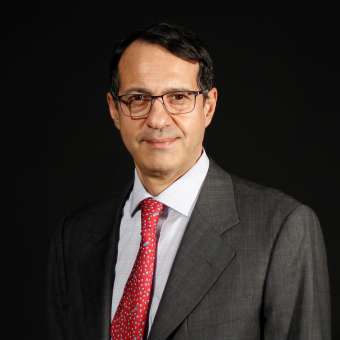
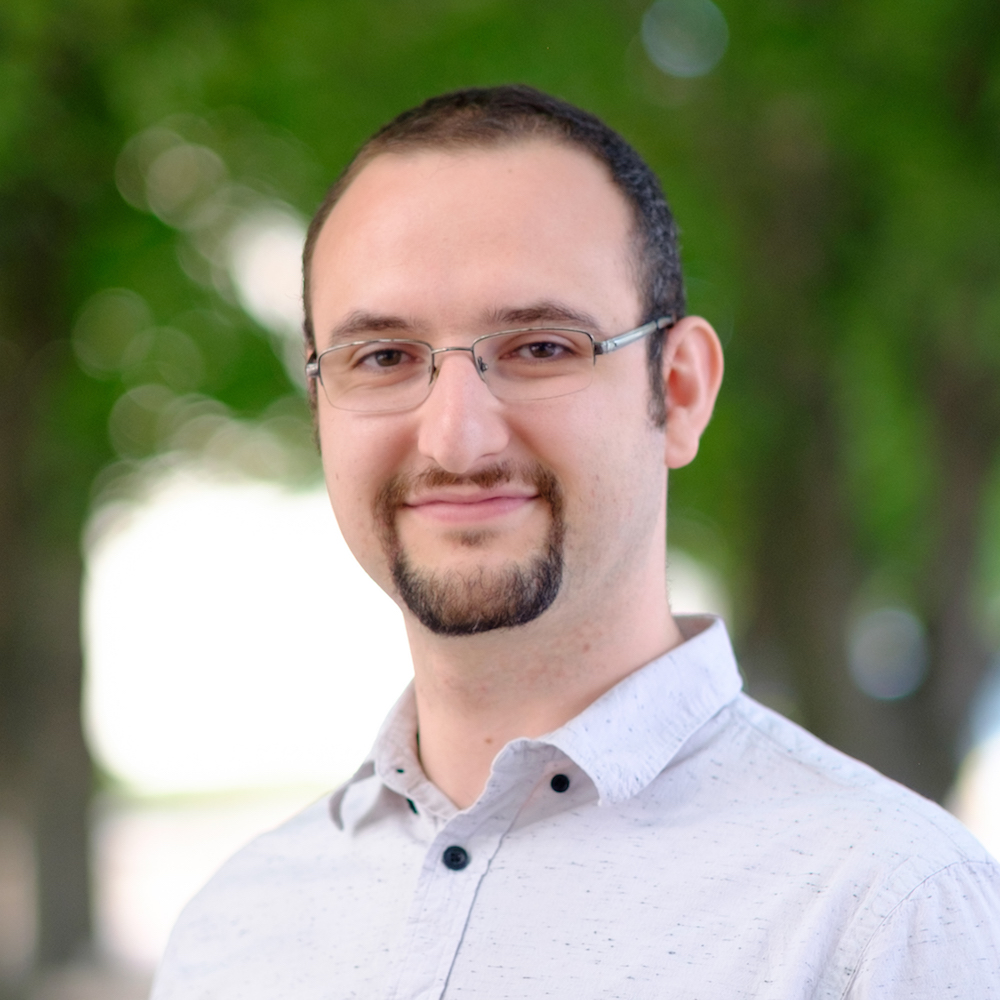
Sıtkı Egeli is an Associate Professor at the Department of Political Science and International Relations at İzmir University of Economics since 2015. With a PhD in International Relations from Bilkent University, an MA in Security Studies from University of Chicago, and a BA in Political Science from Boğaziçi University, he specializes in defense policy, security studies, and military technology. PhD: Bilkent University, International Relations (1993-1999) MA: University of Chicago, Security Studies (1988-1991) BA: Boğaziçi University, Political Science (1983-1988) His research focuses on weapons of mass destruction proliferation , air and missile defense , nuclear deterrence , space security , and disruptive military technologies . His publications analyze Turkish defense industrialization, Arctic geopolitics, and strategic stability in aerospace warfare contexts. Recent collaborative work (2017-2025) spans: • Balancing defense autarky (2025) • Arctic region involvement (2022) • Historical air power development (2021) • Military space operations (2021) • Turkish missile defense (2019) • Ballistic missile programs (2017)
Gizem Kayişoğlu is an Assistant Professor in the Department of Maritime Transportation and Management Engineering at Istanbul Technical University. Her research focuses on cybersecurity challenges in maritime systems, human error probability, and risk assessment methodologies. She actively explores vulnerabilities in shipboard systems such as ECDIS, VDR, and radar while emphasizing regulatory compliance and maritime safety standards. Her work integrates frameworks like CORAS, Fuzzy FUCOM, and SLIM to address cybersecurity dynamics and human factors in maritime operations. Key collaborations involve analyzing ransomware threats, AIS system vulnerabilities, and port infrastructure protection through interdisciplinary approaches. Her articles highlight trends in maritime cybersecurity, including ransomware mitigation, cyber hygiene practices, and critical infrastructure protection. She has contributed to developing risk assessment tools and checklists tailored for maritime environments, emphasizing both technological and human aspects of safety. No scientific awards have been explicitly mentioned. She has not listed formal advisees, and her professional activities focus on advancing maritime cybersecurity through academic and applied research.
Professor Tolga Akçura is a distinguished faculty member at Özyeğin University's Faculty of Business, Department of Business Administration. With over 25 years of academic experience, he has developed and taught courses on marketing strategy, marketing analytics, and marketing research at prestigious institutions including Carnegie Mellon University, Purdue University, and Long Island University. At Özyeğin University, he teaches Marketing Strategy, Integrated Marketing Communication Strategies, Innovation, Business Model Development, and Advanced Topics in Marketing for undergraduate, graduate, and executive students. Professor Akçura holds a B.Sc. in Industrial Engineering from Boğaziçi University (1990), an MA in Business Administration from Boğaziçi University (1996), an MBA from Carnegie Mellon University (1998), and a Ph.D. in Quantitative Marketing from Carnegie Mellon University (2000). Before joining academia, he worked for Procter & Gamble across multiple European locations including Brussels, London, Manchester, and Istanbul. His research focuses on the intersection of Information Technology and Marketing, Brand Valuation, Consumer Learning Behavior, Structural Choice Models, Brand Equity dynamics, and Competitive Pricing Strategies. Professor Akçura has made significant contributions to marketing science through his extensive publication record in top-tier journals. His recent scholarly work demonstrates a strong trend toward digital marketing, AI applications in marketing analytics, healthcare marketing, and the strategic implications of data-driven decision making. His publications span from foundational work on brand equity to cutting-edge research on patient-generated health data and deep learning applications in campaign participation prediction. William W. Cooper Award (awarded twice for publications in Management Science and Marketing Science) Professor Akçura has successfully bridged academic research with practical business applications through his role as founder of eBrandValue A.Ş. and as a Y-Combinator alum (YCW15). He is an active member of professional organizations including the Institute for Operations Research and Management Science, American Marketing Association, and Direct Marketing Institute. His industry experience complements his academic work, providing students with valuable real-world insights into marketing strategy and implementation.
Vedat AKGİRAY is a Professor at Bogazici University's Department of Management. His academic journey began with a PhD from Syracuse University, and he has been a prominent figure in financial markets and mathematical finance research. Teaching Areas : Derivatives, Portfolio Management, Probability Research Focus : Financial Markets, Mathematical Finance, Corporate Governance, Emerging Markets Finance His work spans empirical finance, capital markets regulation, and institutional investment strategies. Recent publications analyze pension funds, bond risk premia, and corporate governance frameworks in emerging economies. Key trends in his publications include: Term structure estimation in developed/emerging markets Role of institutional investors in financial stability Policy implications for capital markets in Southeast Europe Responsible investment models via PPP frameworks Behavioral risk management in financial institutions Comparative analysis of pension fund systems
Onur Varol is an Assistant Professor at Sabanci University's Computer Science Department and leads the VIRAL Lab, which focuses on computational social science, network science, and machine learning. He has affiliations with the Center of Excellence for Data Analytics. His research spans social bot detection, misinformation analysis, and online behavior modeling.
Prof. Dr. Seyhan ÖZTÜRK is an Associate Professor at Kafkas University's Faculty of Economics and Administrative Sciences, Department of Accounting. She has held full-time academic positions since 2010, progressing from Research Assistant to Associate Professor (2019–present). She also serves as the Head of the Accounting Department. Education: PhD in Accounting and Finance, Atatürk University (2011–2015) Master's in Business Administration, Istanbul University (2005–2011) Bachelor's in Business Administration, Istanbul University (2005–2009) Research Interests: Her work centers on Accounting Ethics, Forensic Accounting, and Internal Control, with applications in sustainability, corporate governance, and digital transformation. She explores ethical dilemmas in accounting, fraud detection methodologies, and the impact of regulatory frameworks on financial transparency. Publications: Her recent articles (2020–2025) emphasize sustainability accounting, financial performance analysis, and technology's role in accounting education. Themes include ESG metrics, bibliometric studies on climate accounting, and ethical challenges in SME financial reporting. Advising & Grants: She has supervised 16+ graduate students (PhD/Master’s) in topics like accounting ethics and financial modeling. She led a research project (2019–2021) testing bankruptcy prediction models on the Borsa Istanbul exchange.
Can ÖZCAN is an Assistant Professor and Head of the Industrial Design Department at İzmir University of Economics (IUE) since 2006. He holds a PhD in Semiotics from Dokuz Eylül University and is the Director of EKOTAM Design Research and Application Center. His academic career includes roles at Izmir Institute of Technology and Yeditepe University, where he contributed to department establishment and curriculum development. Education: B.ID (Middle East Technical University), MSc/PhD (Dokuz Eylül University, Semiotics) Research focuses on Design Project Management, History of Industrial Design, Design Education, and Semiotics. He explores design's role in crime prevention, cultural industries, and food packaging through projects like 'Secure Urban Environments by Design' and 'Menemen Pottery Development Model'. Administratively, he led EKOTAM (2011–present) and managed industry collaborations in product/service design, brand development, and franchising. His courses include advanced topics in design management, semiotics, and design history. Notable projects include EU-funded urban security frameworks and brand identity studies for Turkish agricultural products. He has advised over a dozen graduate theses on topics ranging from yacht design to sustainability in cities.
Assoc. Prof. Dr. Osman Kaan Erol is affiliated with Istanbul Technical University , where he serves in the Department of Control and Automation Engineering . His primary research focuses on optimization algorithms and their applications in engineering systems. Doctorate in Control and Computer Engineering Teaching and research at Istanbul Technical University since 2003 Industry experience at BEKO Electronics (2000-2003) and ABC CEDETAŞ (1995-2000) Research Interests include: Big Bang-Big Crunch optimization algorithm Differential Evolution methods Heuristic and metaheuristic approaches Applications in structural engineering, control systems, and transportation Search space reduction techniques Hybrid algorithm design Publication Trends show a consistent focus on optimization algorithms ( Big Bang-Big Crunch , Differential Evolution ), with applications spanning airport operations , structural design , and preventive control . His work emphasizes algorithm hybridization and convergence improvements. Project Leadership includes: Industrial data collection systems AI-assisted service systems for concrete plants Hydrophore control systems under ERP regulations Electrically heated underwear design
Mustafa ÇAVUŞOĞLU serves as Assistant Professor in the Department of Islamic History and Arts at Kastamonu University's Faculty of Theology since 2024, holding concurrent administrative roles as Department Head, Commission President, and Department Deputy Head. His academic trajectory spans from vocational teaching at Imam Hatip High Schools (1996-2024) to specialized scholarship in early Islamic history following doctoral completion in 2023. His educational background includes: PhD in Islamic History, Necmettin Erbakan University (2019-2023) Master's in Islamic History, Necmettin Erbakan University (2012-2014) BA in Theology, Uludağ University (1991-1996) ÇAVUŞOĞLU's research centers on Islamic History with distinctive focus on maritime expeditions, Sahaba biographies, and historical coexistence models. His work bridges religious studies and historical analysis through examination of naval technology, trade networks, and socio-political structures in formative Islamic periods. Methodologically, he integrates primary source criticism with contextual historical interpretation, contributing to nuanced understandings of Islamic civilization's development. Analysis of his 12 publications (2014-2025) reveals consistent thematic concentration on early Islamic maritime activities (42% of output), Sahaba biographies (25%), and historical coexistence frameworks (17%). His scholarship demonstrates chronological progression from biographical studies toward complex naval history analyses, with increasing methodological sophistication evident in post-2022 works. The publications span journal articles (50%), conference papers (33%), and monographs (17%), primarily engaging Turkish academic discourse while incorporating international scholarly references. No scientific awards or major recognitions are documented in available records. Current teaching responsibilities include undergraduate courses in Islamic History I-II, Islamic Civilization History, and Siyer, alongside graduate seminars on Islamic Historical Methodology and Contemporary Siyer Research. No information exists regarding student supervision or research grant acquisition. Professional engagement centers on symposium participation as session chair, keynote speaker, and scientific committee member, particularly within Kastamonu University's international conferences on Islamic history and culture. His work operates within standard university research frameworks without dedicated laboratory or specialized research team infrastructure.
Associate Professor Ahmet Şensoy specializes in Finance at Bilkent University's Faculty of Business Administration. He holds a PhD in Mathematics from Bilkent (2013) and has professional experience at Borsa Istanbul's Research and Business Development Department (2012–2017), with visiting research stints at Nasdaq OMX (2014–2015). His research focuses on Asset Pricing, Market Microstructure, Sustainability, and Corporate Finance. He has received the TÜBİTAK Incentive Award (2018) and TÜBA Young Scientist Award (2020). He serves as an associate editor for journals like International Review of Financial Analysis and a guest editor for Annals of Operations Research . His teaching includes Advanced Empirical Finance and Risk Management. Research Interests: - Asset Pricing Mechanisms - Cryptocurrency Market Dynamics - ESG Integration in Corporate Strategy - Behavioral Finance and Investor Behavior - Regulatory Impact on Corporate Productivity Publications highlight interdisciplinary themes such as pandemic economics (Production and Operations Management), green credit policies (Technological Forecasting and Social Change), and cryptocurrency market structures (Journal of Financial Research). His work bridges theoretical finance with real-world applications in emerging markets and sustainability. Editorial Roles: International Review of Financial Analysis International Review of Economics and Finance Research in International Business and Finance Emerging Markets Finance and Trade Grants and Advising: While specific grants aren't listed, his extensive publication record across top-tier journals indicates substantial research engagement. He collaborates with institutions like the TÜBİTAK and TÜBA.
Prof. Selim YAZICI is a Professor at the Department of Business Administration, Faculty of Political Sciences, Istanbul University. He has been actively involved in academic and managerial roles since 1993, including multiple terms as Head of Department and Deputy Head of Department , and serves on ethics committees and academic boards. Education: PhD (1999) and Master's (1994) in Business Administration from Istanbul University; BSc (1992) in Mechanical Engineering from Yildiz Technical University. Research Interests span Entrepreneurship , FinTech , Business Ethics , Organizational Behavior , Project Management , and Healthcare Management , with a focus on cultural and cognitive factors influencing organizational resilience and technological adoption. Recent Publications highlight trends in FinTech ecosystems , organizational governance , and design thinking applications for business models. His studies often integrate cross-sectoral analysis, especially in healthcare and financial services. Thesis Advisory includes mentoring 18 doctoral and 21 non-thesis Master's students on topics ranging from project culture to entrepreneurial potential . He has contributed to Technopark research projects and scientific consultancies for institutions like TARSİM . International Collaborations include Erasmus lecturing at Universität Hamburg (2007) and conference presentations in Turkey, Sweden, and the USA.
Prof. Şule Itır Satoğlu is a faculty member in the Department of Industrial Engineering at Istanbul Technical University, holding the rank of Professor since 2019. She has held multiple administrative roles, including Head of Department (2025–present), Vice Rector (2020–2024), and Vice Dean (2018–2020). Her research focuses on supply chain management, optimization, sustainable operations, and disaster response systems. She has a PhD in Industrial Engineering from Istanbul Technical University (2008), an MSc in Engineering Management (2002), and a BSc in Mechanical Engineering (2000). Her work emphasizes practical applications of optimization techniques in logistics, healthcare, and disaster management. Notable contributions include developing models for blood supply chains under uncertainty, UAV-based waste detection, and sustainable urban transport fleet electrification. She has collaborated on projects funded by public and private sectors, addressing issues like lean manufacturing integration with Industry 4.0 and RFID-enabled maintenance systems. Her publications span over two decades, with recent focus on multi-objective optimization in humanitarian logistics, smart waste collection systems, and energy-efficient drone surveillance. She is a member of the TMMOB Chamber of Mechanical Engineers and actively contributes to national technology initiatives through academic leadership roles.
Res.Asst.Dr. Samet ÖZDEMİR is a faculty member at the Department of Human Resources Management within Sakarya University's Faculty of Business Administration. He holds a Researcher academic rank and teaches courses such as Social Entrepreneurship, Career Planning, Human Resources Management, and Graduation Project supervision. His research focuses on reverse mentoring, HR risk assessment, workplace discrimination, leadership competencies, and sustainable career development. He has published extensively in national and international journals, contributing to organizational behavior and management science domains. Education & Academic Background: While specific educational details are not explicitly stated, his titles (Res.Asst.Dr.) indicate doctoral-level qualifications in a relevant field such as Business Administration or Human Resources Management. His academic contributions include co-authoring book chapters on topics like digital HR management and sustainable entrepreneurship. Research Interests: His work bridges theoretical frameworks with practical HR applications, emphasizing reverse mentoring case studies (e.g., research assistants-advisors dynamics), ethical recruitment practices, and leveraging digital tools for leadership development. He also explores cross-cultural career perceptions and the role of lifelong learning in managerial roles, as seen in his analysis of historical business figures like Madam C.J. Walker. Publication Trends: Recent works (2022-2023) highlight digital transformation in HR practices, entrepreneurship competency frameworks, and LinkedIn-based executive leadership analysis. Earlier studies (2015-2017) addressed blue-collar workforce underrepresentation in academic research and discrimination in HR job advertisements. Teaching & Supervision: He manages various theses and oversees vocational training programs, integrating practical workplace experiences into academic curricula. Courses like 'Vocational Training in Business' and 'Career Planning' reflect his commitment to bridging educational theory with professional readiness. Awards & Grants: No specific awards are mentioned, though his active publication record suggests contributions meriting academic recognition. Grant details are not provided in the text. Labs & Teams: While no specific labs are noted, his collaborative publications indicate involvement in academic teams focusing on human resources innovation, organizational behavior, and sustainable development initiatives.
Prof. Ayşegül Aksoy is a faculty member in the Department of Environmental Engineering at Middle East Technical University (METU) since 2002. She holds a Ph.D. in Civil Engineering from the University of Virginia (2000) and has held visiting roles at Stanford University (2015-2016) and the University of California Davis (2001). Her academic leadership includes Vice Chair roles in METU's Environmental Engineering Department (2012-2015 and 2006-2009), and she co-developed UN courses on Black Sea environmental management. Her research focuses on environmental systems engineering, integrated waste management, water quality modeling, and remote sensing applications. Notable projects include developing autonomous systems for lake turnover monitoring, optimizing landfill leachate management, and evaluating solar sludge drying alternatives. She has directed over 20 graduate theses and contributed to research funded by TÜBİTAK, Newton Fund, and EU programs. Key awards include the AQUA 360 Best Paper Award (2021) and TÜBİTAK Fellowships. Her work spans 120+ peer-reviewed publications, with recent focus areas including anaerobic digestion optimization, GIS-based waste routing, and pollutant fate modeling in heterogeneous aquifers. She advises on national environmental policies and manages projects like the 'Turnover Response System Development' (2020-2023) and 'Chlorophyll-a Modeling in Lake Eymir' (2009-2010).
Prof. Cengiz Kahraman is a Professor in the Department of Industrial Engineering at Istanbul Technical University (ITU). He holds a PhD in Industrial Engineering from ITU and has held numerous academic and administrative roles, including Head of Department (2010–2013) and Vice Dean (2004–2008). His research focuses on fuzzy logic, multi-criteria decision making, engineering economics, and statistical analysis. He has supervised over 60 theses and led projects funded by TUBITAK and private institutions, including studies on fuzzy decision support systems, warranty cost analysis, and performance evaluation systems. Education: PhD in Industrial Engineering, Istanbul Technical University (1992–1996) MSc in Industrial Engineering, Istanbul Technical University (1988–1990) BSc in Industrial Engineering, Istanbul Technical University (1984–1988) Research Interests: Fuzzy logic extensions (e.g., spherical, Pythagorean, neutrosophic sets) Multi-criteria decision-making methodologies (AHP, TOPSIS, VIKOR) Applications in supply chain management, sustainability, and engineering economics Key Awards: Applied Soft Computing Journal Best Paper Award (2024) ITU Engineering Science Award (2023) TUBITAK Science Award (2018) Memorial Da Ruan Award (2014) Recent Projects: Intelligent multi-criteria legal tracking systems Fuzzy inference techniques for debt collection optimization Social innovation platforms for education volunteers Warranty cost modeling for Arçelik products Grants & Advising: Recipient of multiple TUBITAK Publication Incentives (2011–2015) Advisor to over 60 graduate students in fuzzy decision-making and engineering Directed projects totaling over ₺1.2 million in funding Labs/Teams: Leads research groups focusing on fuzzy decision systems and sustainable engineering solutions.