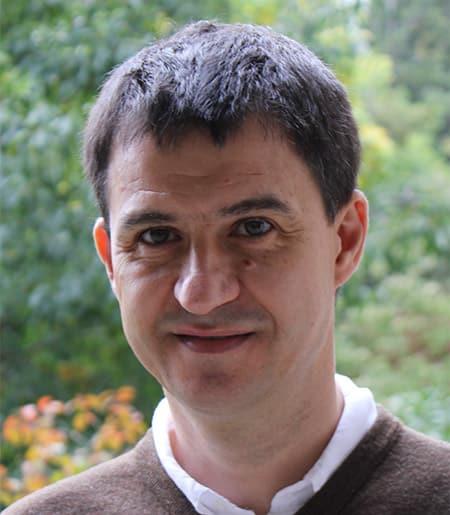
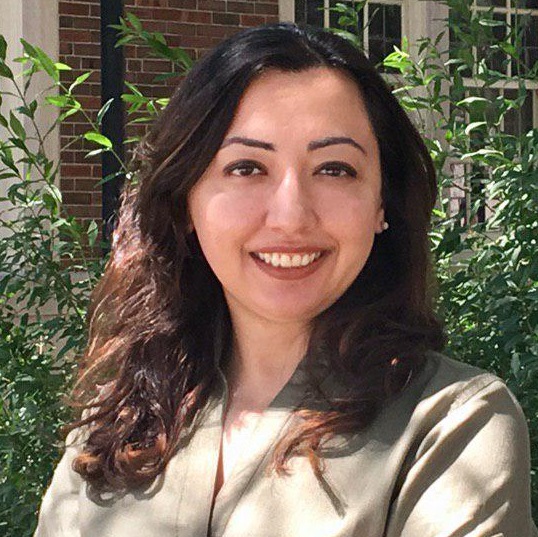
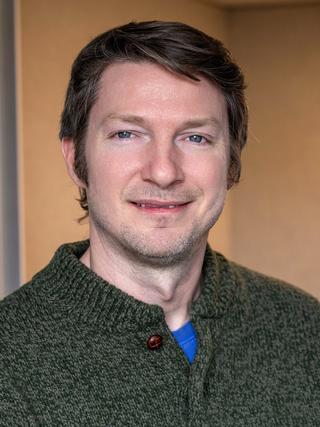
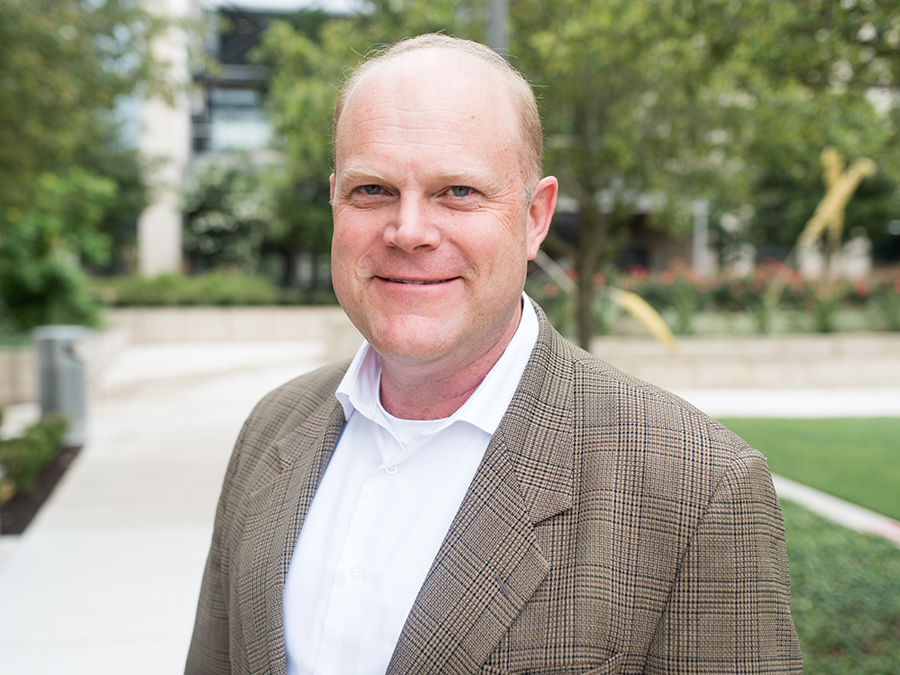
Camil Muscalu is a Professor of Mathematics at Cornell University, affiliated with the College of Arts and Sciences. His research focuses on harmonic analysis and partial differential equations, particularly exploring the interplay between Fourier series, singular integrals, and their applications in physics and number theory. He has authored influential works such as Classical and Multilinear Harmonic Analysis with Wilhelm Schlag. Education: Ph.D. in Mathematics from Brown University (2000). Research Interests: Harmonic Analysis Partial Differential Equations Fourier Analysis Operator Theory Functional Analysis Recent Articles: Highlighting contributions to multilinear operators, sparse domination techniques, and the helicoidal method, with applications to estimates for Schrödinger equations and Fourier restriction problems. Collaborations include work with Terence Tao, Christoph Thiele, and Cristina Benea. Advising: Supervised 10+ Ph.D. students, including notable alumni Eyvindur Palsson, Cristina Benea, and Itamar Oliveira. Editorial roles at Communications on Pure and Applied Analysis , Journal of Functional Analysis , and Mathematische Zeitschrift . Labs/Teams: Active in Cornell’s Analysis Seminar and Oliver Club, fostering collaborative research in harmonic analysis and related fields.
Wendy Balliet is an Assistant Professor at the Medical University of South Carolina (MUSC), affiliated with the College of Medicine and the Department of Psychiatry and Behavioral Sciences. She earned her PhD in counseling psychology with a health psychology concentration from Virginia Commonwealth University, completed a pre-doctoral internship at the University of Florida Health Science Center (Medical Psychology rotation), and a postdoctoral fellowship in behavioral medicine at MUSC. Key Roles: Associate Co-Director of Clinical Operations for the Division of Bio-behavioral Medicine Supervisor for interns in the Behavioral Medicine Clinic (Charleston Consortium Psychology Internship Program) Researcher and clinical provider in psycho-oncology and transplant behavioral health Her research focuses on behavioral medicine , psycho-oncology , and transplant/living donation psychology. She investigates body image distress in cancer survivors , mental health in transplant populations , and telemedicine-based cognitive behavioral therapy (CBT) . Her work includes the BRIGHT trial for tele-CBT in head and neck cancer survivors and studies on caregiver burden, peer mentoring programs (TRIO), and psychosocial factors in organ transplantation. Her clinical efforts span patient care, committee service (Grand Rounds, hospital-wide initiatives), and training for postdoctoral fellows and medical students. She emphasizes integrating psychosocial interventions with medical outcomes , particularly in cancer and transplant settings, and has developed educational resources like the Organ Transplant Caregiver Toolkit.
Mihaela van der Schaar is the John Humphrey Plummer Professor of Machine Learning, Artificial Intelligence, and Medicine at the University of Cambridge, leading the van der Schaar Lab. She holds dual affiliations with the Department of Applied Mathematics and Theoretical Physics (DAMTP) and the Centre for Mathematical Imaging in Healthcare. Her research focuses on healthcare AI, machine learning, and operations research. She has authored over 250 journal articles and 275 conference papers, with notable contributions to synthetic data for privacy, causal inference, and clinical decision-making. Her work has led to 35 U.S. patents, including foundational innovations in streaming video compression (MPEG-4 standards). Awards include the Oon Prize (2018), IEEE Fellow (2009), and recognition as the UK's most-cited female AI researcher (2019). Leadership roles include Director of the Cambridge Centre for AI in Medicine and Co-Director of the European Laboratory for Learning and Intelligent Systems. She has mentored global academic leaders and pioneered initiatives like the Inspiration Exchange for early-career researchers. Key projects include predictive models for hospital resource allocation during pandemics and AI tools for personalized medicine. Publications span machine learning theory, healthcare applications, and interdisciplinary fields like network science. Her lab's impact includes tools like AutoPrognosis (automated ML for clinical prediction) and SynthCity (synthetic healthcare data generation).
Zohreh Sharafi is an Assistant Professor of Software Engineering in the Department of Computer and Software Engineering (GIGL) at Polytechnique Montréal. Previously, she served as a Senior Research Fellow in the Department of Electrical and Computer Engineering at the University of Michigan, Ann Arbor, where she worked with Dr. Westley Weimer and was awarded the prestigious NSERC Postdoctoral Fellowship. Prior to her academic career, she worked as a software engineer at Morgan Stanley, contributing to the firm's electronic trading platform and serving as principal architect of SURF, a market data simulator. Her educational background includes a Ph.D. in Computer Engineering from École polytechnique de Montréal under the supervision of Dr. Giuliano Antoniol and Dr. Yann-Gaël Guéhéneuc, a Master of Applied Science in Software Engineering from Concordia University, and a Bachelor of Computer Engineering from the University of Tehran. Dr. Sharafi leads the SENSE Lab, a multidisciplinary software engineering research laboratory focused on understanding problem-solving strategies developers use during software development, with particular attention to human factors such as gender and native language. Her research combines human-centric design with experimental methodologies, investigating cognitive processes involved in software development using biometric measures including eye tracking and neuroimaging. Current active projects include evaluating trustworthiness perceptions of software artifacts and studying the role of creativity in software engineering tasks. She has made significant contributions to understanding how gender influences program comprehension and code review processes. Her publication record demonstrates a strong focus on empirical methods in software engineering, particularly eye tracking and neuroimaging techniques to study developer cognition. Her work spans program comprehension, code review, requirements engineering, and the impact of human factors on software development processes. She has developed methodological frameworks for conducting eye tracking studies in software engineering and has made notable contributions to understanding how visualization techniques affect software development tasks. NSERC Postdoctoral Fellowship NSERC Discovery Grant Program and Launch Supplements (Sep 2024-Sep 2029) IVADO Startup & Operation Fund (Jan 2022-Jan 2023) Scholarship for Doctoral Studies from Fonds de Recherche du Quebec Distinguished Reviewer Awards from IEEE ICPC 2020 and ACM FSE 2024 Dr. Sharafi actively mentors students including Mahta Amini (PhD Candidate, IVADO Scientifique en résidence 2024 Laureate), Cameron Cherif (PhD Candidate), Sara Yabesi (Master's Student), and Anthonia Njoku (Graduate research intern). She serves on numerous conference organizing committees including as Local Arrangement Chair for SANER 2025, Program Co-chair for SEMLA 2024, and as a reviewer for top-tier journals including IEEE Transactions on Software Engineering and ACM Computing Surveys. Her research is supported by multiple grants focused on understanding human factors in software engineering through empirical methods. At Polytechnique Montréal, Dr. Sharafi directs the SENSE Lab which brings together computer scientists, cognitive scientists, and software engineering researchers to investigate the cognitive aspects of software development. The lab employs advanced methodologies including eye tracking, functional near-infrared spectroscopy (fNIRS), and functional magnetic resonance imaging (fMRI) to study how developers comprehend, navigate, and modify software systems. Current projects examine trustworthiness perceptions in code review, the role of creativity in software engineering tasks, and gender differences in software development processes.
Dr. Kenneth S. Henry is an Associate Professor at the University of Rochester Medical Center (SMD) with joint appointments in the Departments of Otolaryngology, Biomedical Engineering, and Neuroscience. His research focuses on auditory neuroscience, cochlear synaptopathy, and neural mechanisms of hearing, using behavioral, neurophysiological, and histological approaches. Department of Otolaryngology Department of Biomedical Engineering Department of Neuroscience Research Interests: His lab investigates auditory nerve loss, hidden hearing loss, and neural bases of masked amplitude-modulation perception. Using avian and mammalian models, his work explores how cochlear neurodegeneration impacts behavioral and neural sensitivity to complex sounds in noise. Publications Trends: Recent research examines auditory nerve encoding, envelope processing in hearing loss, cochlear fluid dynamics, and neural mechanisms of speech-in-noise perception using avian models. Lab Members: Current researchers include graduate students Leslie Gonzales (Neuroscience) and Yingxuan Wang (Biomedical Engineering). Alumni include John Wilson (PhD student) and Steph Wong (ENT resident). Contact: Email kenneth_henry@urmc.rochester.edu or call (585) 275-4851 for collaboration/postdoc opportunities.
Ke Xu is a Professor in the Department of Computer Science at Tsinghua University's School of Information Science and Technology. With extensive research contributions in network security, privacy-preserving technologies, and machine learning applications for networking, Professor Xu has established himself as a leading researcher in computer science. Professor Xu's research interests span network security, privacy-preserving technologies, machine learning for networking, federated learning, internet protocols, encrypted traffic analysis, blockchain applications, and AI in networking. His work bridges theoretical foundations with practical implementations, focusing on real-world security challenges and network optimization problems. He has developed novel frameworks for secure network operations, privacy-preserving data sharing, and efficient AI deployment in distributed environments. Professor Xu's publication record shows a clear trend toward integrating artificial intelligence with traditional networking challenges. His recent work explores federated learning security, encrypted traffic analysis using deep learning, and novel approaches to network security that leverage machine learning techniques. The interdisciplinary nature of his research spans computer networking, security, privacy, and artificial intelligence. Professor Xu has received recognition for his contributions to network security and privacy-preserving technologies through publications in top-tier venues including IEEE journals, ACM conferences, and security symposia. His work has appeared in IEEE Transactions on Dependable and Secure Computing, IEEE/ACM Transactions on Networking, and security conferences like CCS and NDSS. Professor Xu actively collaborates with researchers across institutions, supervising students and junior researchers in exploring cutting-edge problems in network security and AI. His research has been supported by significant grants focusing on network security, privacy, and intelligent networking infrastructure. He leads projects that address fundamental challenges in secure communication, privacy-preserving data analysis, and intelligent network management. Professor Xu is involved with research laboratories focusing on network security and intelligent systems at Tsinghua University. His team works on developing practical security solutions, privacy frameworks, and AI-enhanced networking protocols that address real-world challenges in today's increasingly connected world.
Fabio Sigrist is a Professor of Applied Statistics and Data Science at the Institute of Financial Services Zug (IFZ) , part of the Lucerne University of Applied Sciences and Arts . He also holds a Senior Scientist and Lecturer position at the Seminar for Statistics, ETH Zurich . His career spans academic research, industry consulting, and project leadership in finance and data science. PhD in Statistics (2013), ETH Zurich MSc in Mathematics with distinction (2008), ETH Zurich MEd in Mathematics Education (2008), ETH Zurich Sigrist’s research focuses on integrating Machine Learning with Spatial Statistics for applications in Financial Econometrics and Credit Risk . His work includes developing novel algorithms like GPBoost and KTBoost , advancing spatio-temporal modeling , and applying tree-based boosting to financial problems. Projects such as CreHos (credit risk in hospitality) and NISMO (interpretable real estate modeling) highlight his interdisciplinary approach. His publications address challenges in large-scale spatial data , loss given default modeling , and stock volatility prediction . He contributes to software development with tools like spate (R package) and varycoef (spatially varying coefficients).
Kamal Sarabandi is the Rufus S. Teesdale and Fawwaz T. Ulaby Distinguished University Professor of Electrical Engineering and Computer Science at the University of Michigan. He leads the Radiation Laboratory, renowned for research in applied electromagnetics, radar remote sensing, and antenna technology. His academic rank is Professor, and he holds affiliations with the College of Engineering. His research spans radar systems for environmental monitoring (e.g., soil moisture, snowpack), automotive radar for autonomous vehicles, metamaterials for antenna miniaturization, and security applications like concealed weapons detection. He has advised over 60 PhD students, many of whom hold academic or industry leadership roles globally. Awards and Recognition: National Academy of Engineering member, IEEE Picard Medal, Humboldt Award, Ellis Island Medal of Honor, and Stephen S. Attwood Award. His work bridges fundamental science with practical innovations, including NASA collaborations and military/defense applications. Labs and Teams: Directs the Radiation Laboratory, a hub for applied electromagnetics and radar innovation. Collaborates with industry (e.g., Qualcomm, SAIC) and government agencies (NASA, Army Research Lab) on projects like the COMBAT center for autonomous systems. Education: Earned his PhD in Electrical Engineering from the University of Michigan (1989). Alumni of his lab include professors at UW-Madison, Purdue, and international institutions.
Dr. Majid Pahlevani is an Assistant Professor at the Department of Electrical and Computer Engineering, Queen's University, affiliated with the Smith School of Engineering. He holds a Ph.D. from Queen's University (2012) and has prior roles as an Assistant Professor at the University of Calgary (2016–2019) and Chief R&D Engineer/VP of Technology at SPARQ Systems, Inc. (2011–2016). His research focuses on power electronics, renewable energy systems, smart grids, and energy storage, with a lab environment emphasizing interdisciplinary collaboration. He has authored over 130 publications, holds 50 U.S. patents, and serves as an Associate Editor for the IEEE Journal of Emerging and Selected Topics in Power Electronics. Education: Ph.D. (2012) – Queen's University; B.Sc./M.Sc. (2002) – Isfahan University of Technology. Research Interests: Power Electronics Technology, Renewable Energy Systems, Micro-Grids, Smart-Grids, Electric Vehicles, Energy Storage Systems, Solar Technology, LED Technology. His lab, ePOWER Lab, engages in industrial projects across these domains, fostering teamwork and cross-disciplinary innovation. Scientific Awards: Includes the Early Research Excellence Award (Alberta), Research Achievement Award (University of Calgary), Teaching Achievement Award, and IEEE Canada's Research Excellence Award. Current Supervision: Postdoctoral Fellows Laleh Saleh Ghadimi, Sergey Dayneko, and Pavel Linkov (2022). He leads the ePOWER Lab, collaborating with industry partners like Freescale Semiconductor and SPARQ Systems. Affiliations: Member of the IEEE Power Electronics Society and the Queen's Centre for Energy and Power Electronics Research.
Inga Kristina Trauthig is a dual-affiliation academic serving as a Research Professor at Florida International University’s Jack D. Gordon Institute for Public Policy and a Visiting Fellow at King’s College London’s Institute of Middle Eastern Studies (IMES). She holds a PhD in War Studies from King’s College London, focusing on Libya, and an MLitt in Middle East Security from the University of St Andrews. Her research spans terrorism, disinformation, emerging technologies, and Middle Eastern political dynamics, with particular expertise in Salafism and security sector analysis. She has authored over 80 peer-reviewed publications and policy-focused articles, including work in Conflict, Security & Development and Political Research Quarterly . Her consulting work addresses causes of war and insecurity for UN bodies, governments, NGOs, and private firms. She has provided oral evidence to the UK Parliament and appeared on platforms like BBC’s Digital Human and Lawfare Blog . Trauthig convenes King’s MENA Research Group within IMES and has held student representation roles across faculty levels. Her research highlights include analyzing generative AI’s political risks, disinformation strategies in MENA, and the role of messaging apps in authoritarian governance.
Günter Rote is a Professor in the Department of Computer Science at Freie Universität Berlin, specifically within the Theoretical Computer Science group (Arbeitsgruppe Theoretische Informatik). He holds a formal academic title of Professor Dr. and is affiliated with the Faculty of Mathematics and Computer Science. His research focuses on theoretical computer science, computational geometry, algorithms, and discrete mathematics. Key research interests include geometric algorithms, optimization problems (e.g., shortest paths, traveling salesman problems), and algorithm design for parallel computing systems. His work spans topics such as systolic arrays, convex hulls, and combinatorial optimization. Rote’s contributions include foundational studies on computational geometry problems, algorithmic complexity, and practical applications in energy equity and infrastructure design. Publications highlight contributions to solving extremal equations, polygon transformations, and the quadratic assignment problem. He has been active in academic leadership, mentoring students, and contributing to computational science communities. His email is rote@inf.fu-berlin.de, and his office is located at Takustraße 9 in Berlin.
Dr. Otto Koppius is an Assistant Professor at the Rotterdam School of Management , Department of Technology and Operations Management. His research focuses on sports analytics , predictive analytics , and complex networks , emphasizing data-driven decision-making in organizations. He explores applications ranging from talent identification in sports using sensor data to sustainability in supply chains. Key research interests include: Methodological advances in predictive analytics, including feature engineering and algorithmic bias detection. Integration of predictive analytics into organizational practices. Smart cargo sensor data for optimizing supply chain networks. Past work includes studies on social influence in networks, closed-loop supply chains, and knowledge transfer within firms. His articles analyze topics like network interventions, innovation dynamics, and digital ecosystem orchestration. No scientific awards were explicitly mentioned in the provided text. He has supervised 6 academic works, though specific student names are not listed. Research extends to themes like sustainability, business strategy, and organizational behavior, with a focus on translating technical methods to real-world business challenges.
Prof. Dr. Beata Dunin-Borkowska is a full professor (Universitätsprofessorin) specializing in the Physics of Photonic Materials at Forschungszentrum Jülich GmbH, specifically within PGI-9 (Institute for Quantum Control), located in Jülich, Germany. Her research focuses on advanced materials for photonic applications, operating at the intersection of quantum physics, materials science, and photonics. This interdisciplinary work contributes to the development of novel quantum technologies and photonic devices. No recent publications or scientific awards were listed in the provided text. She is actively involved in research and teaching, though specific details about advisees, grants, or educational background are not available. Her work is situated within a leading German research center, suggesting strong institutional support and collaborative opportunities.
Carlos Guestrin is the Fortinet Founders Professor of Computer Science at Stanford University and serves as Director of the Stanford AI Lab (SAIL) and Senior Fellow at the Institute for Human-Centered AI (HAI). He holds dual roles as Chief Scientist at Visual Layer and Virtue AI. His research focuses on machine learning methods, explainability, fairness, and ethics of AI, alongside systems for scalable AI deployment. Education details are not explicitly provided, but his work spans foundational contributions to machine learning systems (e.g., XGBoost) and explainable AI frameworks like Anchors and LIME. He emphasizes ethical AI through projects like CheckList for model testing and Model Equality Testing for API transparency. His scientific contributions include advancing optimization techniques (AdaScale SGD, TVM compiler) and ethical benchmarks for generative AI. He has been recognized as a Member of the National Academy of Engineering for his transformative impact on AI systems and their societal applications. Guestrin leads interdisciplinary initiatives at SAIL and HAI, fostering collaboration between technical innovation and human-centered design. His work bridges theory and practice, addressing challenges in healthcare (diabetes management systems) and AI security.
J. Eric Bickel is a Professor at The University of Texas at Austin, serving as Director of the Operations Research & Industrial Engineering (ORIE) and Engineering Management programs. He holds a courtesy appointment in the Department of Petroleum and Geosystems Engineering and directs the Center for Engineering & Decision Analytics (CEDA). His academic background includes a PhD and MS in Engineering-Economic Systems from Stanford University and a BS in Mechanical Engineering from New Mexico State University. His research focuses on decision analysis under uncertainty, addressing topics like probabilistic modeling, climate engineering, risk management, and applications in sports and energy sectors. His work has been featured in major media including The New York Times and Wall Street Journal , and his climate engineering research was endorsed by Nobel Laureates as a top climate change response strategy. Professor Bickel has extensive industry experience, having previously served as Senior Engagement Manager and Co-Director of Client Education at Strategic Decisions Group (SDG), where he remains on the Board of Directors. His consulting spans oil/gas, energy trading, and financial services sectors. He has received recognition as a Fellow of the Society of Decision Professionals and contributed to the Copenhagen Consensus on Climate Project. His teaching extends to executive education through Texas Executive Education and McCombs School of Business. Research highlights include novel methods for probabilistic dependence modeling, value-of-information analysis in shale reservoirs, and critiques of risk assessment tools like heat maps. His climate engineering work emphasizes economically viable solar radiation management strategies.