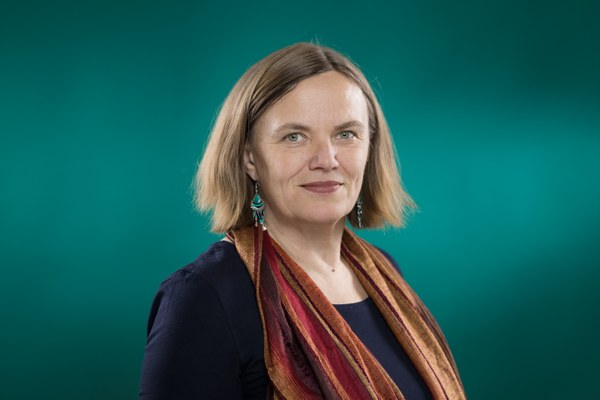
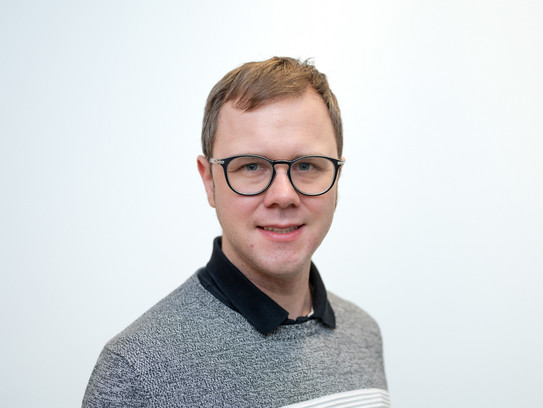
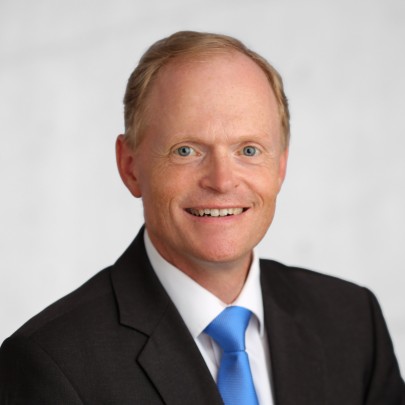
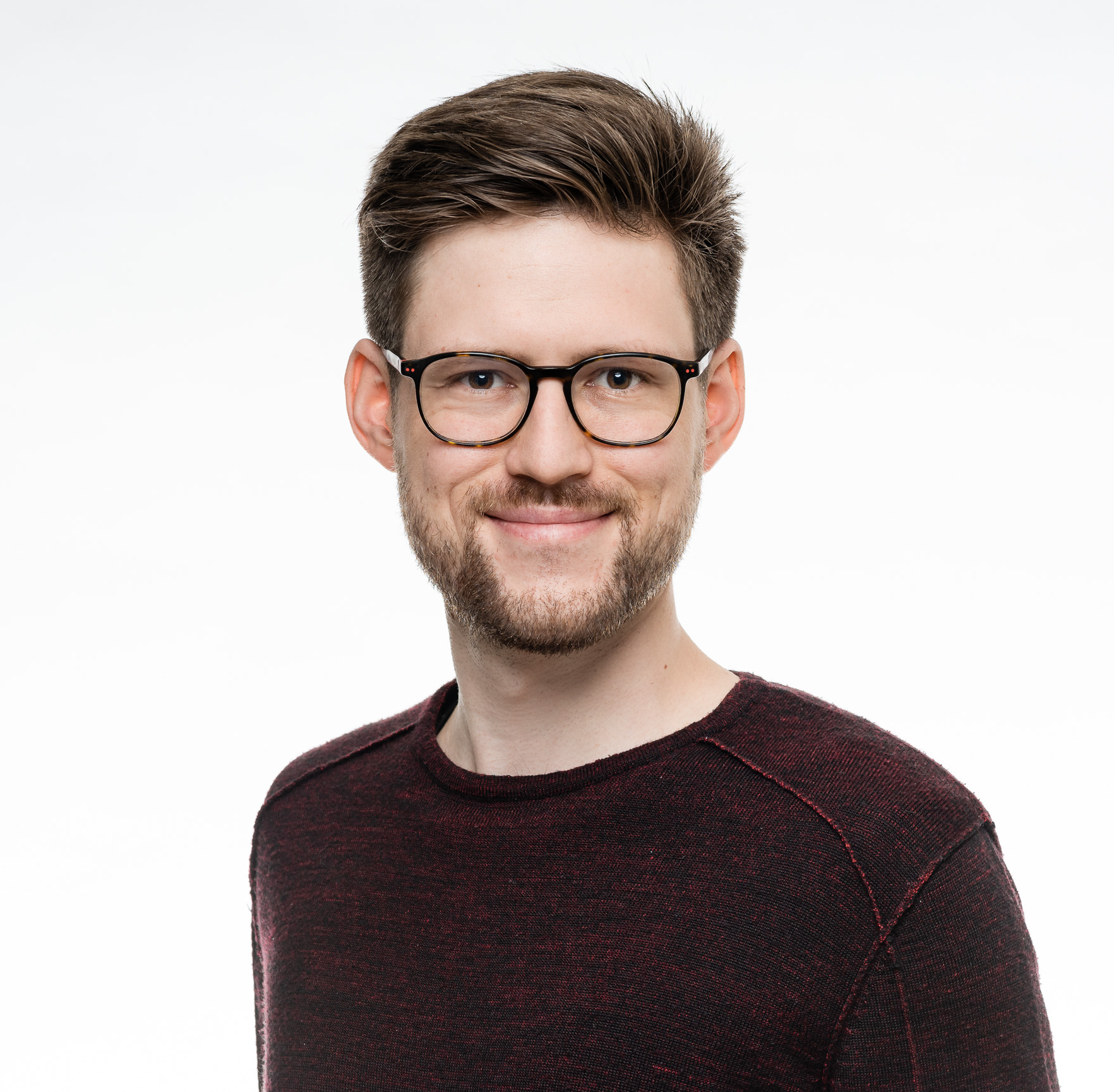
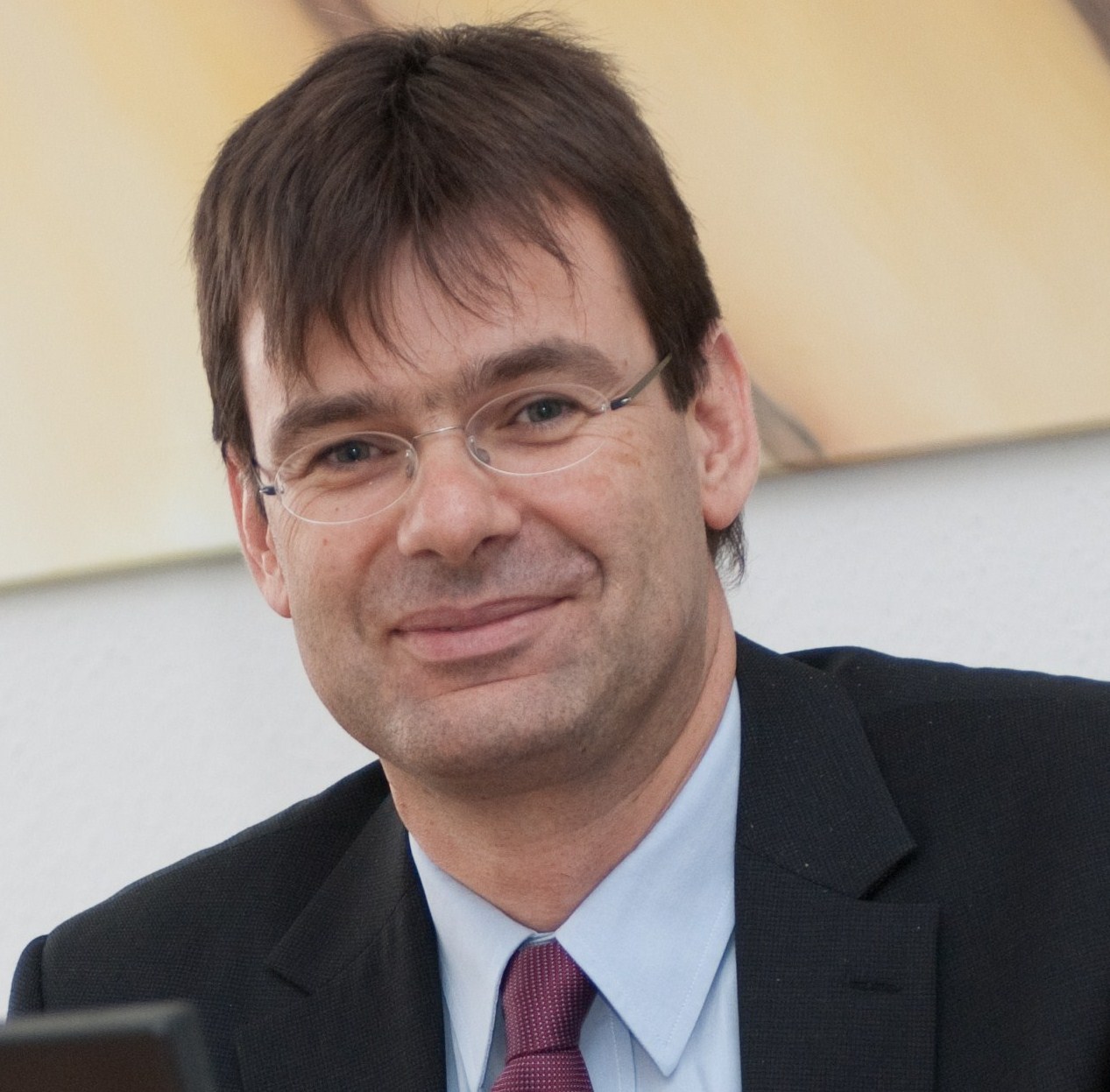
Martin Schmidt is a Full Professor (W3) for Nonlinear Optimization at the Department of Mathematics, Trier University, since 2019. He has held leadership roles in research training groups and international committees, focusing on mathematical modeling and optimization of energy systems, gas networks, and market equilibria. His work bridges mixed-integer nonlinear optimization , bilevel optimization , and robust methods with applications to real-world energy challenges. Education: PhD in Mathematics (2013), Diplom in Mathematics (2008), both from Leibniz University Hannover. Editorial Roles: Editorial Board member of Journal of Optimization Theory and Applications and Optimization Letters , Associate Editor for OR Spectrum and EURO Journal on Computational Optimization . His research integrates complex physical systems (e.g., gas transmission networks) with game-theoretic models to analyze energy markets. Recent publications emphasize robust optimization , decomposition techniques , and machine learning integration in bilevel frameworks. Awards highlight his contributions to gas market feasibility , linear bilevel optimization , and practical applications in energy systems. Collaborations span institutions like Universidad Zaragoza, Sapienza University, and Forschungszentrum Jülich.
Andrea Walther is a Professor of Mathematical Optimization at the Humboldt University of Berlin, holding a position within the Faculty of Mathematics and Natural Sciences. She leads the Mathematical Optimization research group at the Institute of Mathematics, focusing on algorithmic differentiation, nonlinear optimization, and applied mathematics. Her academic journey includes a Diploma in Business Mathematics (1996, University of Bayreuth), a PhD (1999, TU Dresden), and habilitation (2008, TU Dresden). She has held roles such as Junior Professor at TU Dresden (2007–2008) and Professor at the University of Paderborn (2009–2019) before joining Humboldt in 2019 as a MATH+ Professor. Education : 1991–1996: Studies in Business Mathematics, University of Bayreuth 1996: Diploma in Business Mathematics, University of Bayreuth 1999: PhD in Mathematics, TU Dresden 2008: Habilitation, TU Dresden Her research interests center on optimization methods, particularly algorithmic differentiation (e.g., ADOL-C software), nonsmooth optimization, and applications in engineering and machine learning. She leads initiatives like the Cluster of Excellence MATH+ and contributes to projects such as the Transregio 154. Key Projects: Co-PI of DFG Project 'Mixed-integer non-smooth optimization for gas market problems' (2020–2022) Principal Investigator in MATH+ Projects (EF3-7, AA2-7) Co-developer of ADOL-C, a widely used tool for algorithmic differentiation Notable awards include being a SIAM Fellow. Her work bridges theoretical advancements and practical applications, with contributions to energy sector optimization, inverse problems, and computational frameworks for solving complex systems.
Matthias Becker is a Professor at the Institute for Practical Computer Science within the Faculty of Electrical Engineering and Computer Science at Leibniz University Hannover, where he has been a core member of the Human-Computer Interaction group since 2019. He serves as Internship Coordinator for Computer Science and Computer Engineering and holds key roles in the Computer Science Examination Board and Selection Committee, actively shaping academic governance and student development. His academic journey began with PhD studies at the University of Bremen (1996-2000) supported by a DFG grant, followed by a postdoctoral permanent position at Leibniz University Hannover (2000-2019), an Associated Assistant Professor role at École des Mines de Nantes (2000), and a Habilitation in Computer Science in 2013. This foundation enabled his transition to a full professorship in 2019. Becker's research spans Human-Computer Interaction, Simulation and Modeling, and Bio-inspired Computing, with applications in agriculture, renewable energy, and manufacturing. His work integrates distributed systems, optimization algorithms, and wireless sensor networks to solve complex real-world problems, such as greenhouse monitoring, wind farm logistics, and tire noise reduction. Recent publications reveal a strategic focus on practical validation of simulation models and cross-domain applications of nature-inspired algorithms. His 15 most recent publications (2018-2024) demonstrate consistent innovation in applying simulation techniques to offshore wind farm installation, agricultural pest management, and sports science. These works emphasize real-world validation, collaborative problem-solving, and the development of domain-specific optimization frameworks that bridge theoretical algorithms and industrial implementation. As Internship Coordinator, Becker facilitates critical industry-academia connections for students, while his examination board responsibilities ensure rigorous academic standards. His leadership in the Human-Computer Interaction group drives research on interactive systems for agriculture, energy, and health, with particular emphasis on user-centered design in complex operational environments like wind farm logistics and greenhouse automation.
Timm Oertel is a Professor in the Department of Data Science at Friedrich Alexander University Erlangen-Nuremberg (FAU), holding the Chair of Analytics & Mixed-Integer Optimization. His office is located in Room 03.344 at Cauerstraße 11, Erlangen, and he can be contacted via email at timm.oertel@fau.de or phone at +49 9131 85-67313. His research focuses on mixed-integer optimization, combinatorial optimization, and discrete mathematics, with significant contributions to sparse solutions in lattices and semigroups, integer Carathéodory rank, knapsack polyhedra, and parametric integer optimization. His work bridges theoretical computer science, operations research, and discrete geometry, emphasizing structural properties of integer solutions and algorithmic efficiency. Professor Oertel's publication record (2013-2025) reveals consistent trends in theoretical integer programming, with recent work (2020-2025) concentrating on sparsity patterns, approximation in algebraic structures, and complexity bounds. He frequently collaborates with leading researchers including Iskander Aliev, Robert Weismantel, and Joseph Paat, publishing in top venues like Mathematical Programming and SIAM Journal on Optimization. His research demonstrates deep connections between combinatorial geometry and optimization theory.
Rainer Kolisch is a Professor of Operations Management at the TUM School of Management, Technical University of Munich , where he has held a chair since 2002. He currently serves as Head of the Operations & Technology Department (since 2024) and previously as Dean of the QTEM Masters Network (2016–present) and Vice Dean of International Affairs (2007–2020). His career includes academic roles at Technical Universities of Dresden (Full Professor, 2002) and Darmstadt (Associate Professor, 1999–2002). Affiliations: TUM School of Management, Technical University of Munich Editorial Roles: Editor-in-Chief of OR Spectrum (2014–2020), Member of editorial boards for journals like International Journal of Production Research Research Interests focus on Airport Operations Management , Health Care Operations Management , Project Management and Scheduling , and Engineer-to-Order Manufacturing . His work addresses dynamic scheduling, resource allocation, and robust optimization in transportation and healthcare systems, with recent studies on electric vehicle charging networks and agile project management. Scientific Awards include: Best Teaching Award (2022) Excellence in Reviewing (2022) OMEGA Best Paper Award (2021) Handelsblatt Research Recognition (2005) DFG Habilitation Fellowship Advising spans numerous PhD and Master’s students , including Christopher Bersch, Robert Brachmann, and Giacomo Dall'Olio. His grants likely include DFG funding, though specifics are not detailed here.
Ahmet Cürebal is an External Doctoral Researcher at the Institute of Information Systems, part of the Business School at the University of Hamburg. He holds B.S. and M.S. degrees in Industrial Engineering from Kirikkale University, Turkey, and is currently pursuing his Ph.D. His research focuses on Operations Research with specializations in Linear Programming (LP), Mixed-Integer Programming (MIP), Combinatorial Optimization, Scheduling, Assignment, and Routing problems within Supply Chain contexts. Key research interests include solving real-world optimization challenges such as staff scheduling in retail sectors, driver workload balancing in logistics firms, and pandemic-era security personnel allocation. His work often involves applying metaheuristic methods like Variable Neighborhood Search (VNS) and Fixed Set Search (FSS) to complex operational problems. Notable publications explore applications such as straddle carrier routing in container terminals, bus route optimization for high-speed rail integration, and competency-based scheduling during crises. His methodologies frequently integrate Goal Programming and Analytical Network Process (ANP) for multi-criteria decision-making scenarios. Cürebal’s research demonstrates a strong emphasis on practical implementations across diverse industries, including healthcare, logistics, and retail, with a focus on balancing efficiency and real-world constraints through advanced mathematical modeling and algorithmic approaches.
Paul Manns is an Assistant Professor of Optimization at TU Dortmund University's Department of Mathematics, appointed in 2021. His research specializes in mathematical optimization involving partial differential equations and integer constraints, with emphasis on regularization techniques and trust-region algorithms. Education includes: Ph.D. in Mathematics, TU Braunschweig (2019) Computational Engineering studies, TU Darmstadt Prior research experience includes positions at Heidelberg University, TU Braunschweig, and Argonne National Laboratory (USA), including a James H Wilkinson Fellowship. Recent publications develop novel methods for mixed-integer control problems, domain decomposition, and convergence analysis in non-convex optimization spaces.
Stephan Rinderknecht is a Professor for Mechatronic Systems in Mechanical Engineering at Technische Universität Darmstadt since 2009. His research focuses on Vehicle Systems Energy Systems Vibration Systems Robotics Finite Element Method (FEM) Multi-body Simulation (MBS) Hybrid and Electric Drives Rotor Dynamics Active Magnetic Bearings .
Matthew J. Realff is a Professor in the School of Chemical and Biomolecular Engineering at the Georgia Institute of Technology. With an extensive publication record spanning over three decades, his work focuses on the intersection of chemical engineering, process systems engineering, and advanced computational methods. His research has made significant contributions to optimization techniques, supply chain management, and sustainable engineering practices. Dr. Realff's research interests span a broad range of topics in process systems engineering, with particular emphasis on optimization under uncertainty, supply chain modeling, and sustainable engineering practices. His work combines rigorous mathematical approaches with practical engineering applications, particularly in the areas of biorefinery systems, carbon capture technologies, and renewable energy integration. He has pioneered methodologies that bridge traditional chemical engineering with modern computational techniques including machine learning and Bayesian statistics. Analysis of his recent publications reveals a consistent focus on addressing complex engineering challenges through advanced computational methods. His work demonstrates a strong trajectory toward integrating data-driven approaches with traditional process engineering, particularly evident in his recent papers on Bayesian experimental design, uncertainty quantification, and machine learning applications in chemical processes. The interdisciplinary nature of his research connects chemical engineering with operations research, environmental science, and computer science. Throughout his career, Dr. Realff has maintained a productive research program with consistent publication output in top-tier chemical engineering and operations research journals. His collaborations span multiple institutions and disciplines, reflecting the interdisciplinary nature of modern engineering research. He has supervised numerous graduate students and contributed significantly to the education and training of future engineers through his academic appointments and research mentorship.
Wotao Yin is a Professor of Mathematics at the University of California, Los Angeles, with a distinguished research career spanning over two decades in optimization theory and its applications. His work bridges theoretical mathematics with practical applications in machine learning, image processing, and signal analysis. As a leading researcher in optimization algorithms, he has made significant contributions to the development of methods like ADMM (Alternating Direction Method of Multipliers), proximal algorithms, and decentralized optimization techniques. Department: Department of Mathematics School: College of Letters and Science University: University of California, Los Angeles Yin's research focuses on developing efficient algorithms for large-scale optimization problems, with particular expertise in convex and nonconvex optimization, distributed and decentralized optimization, and mathematical foundations of machine learning. His work has profound implications for image reconstruction, signal processing, and modern machine learning systems. He has pioneered methods for handling sparse data, non-smooth objectives, and constrained optimization problems that arise in real-world applications. An analysis of his recent publications reveals a strong trend toward addressing optimization challenges in machine learning, particularly in federated learning, attention mechanisms, and nonconvex problem structures. His work demonstrates a consistent pattern of bridging theoretical optimization with practical machine learning applications, developing algorithms that balance computational efficiency with theoretical guarantees. Recent papers show increasing focus on heterogeneous data settings, large language model optimization, and fundamental limitations of optimization methods in complex learning scenarios. Throughout his career, Professor Yin has mentored numerous PhD students and postdoctoral researchers who have gone on to successful careers in academia and industry. His collaborative network spans multiple institutions worldwide, with particularly strong connections to researchers in China and across the United States. His work has been supported by various funding agencies recognizing the fundamental importance of optimization theory for advancing computational science. Professor Yin leads a vibrant research group focused on mathematical optimization and its applications, where students and collaborators work on cutting-edge problems at the intersection of mathematics, computer science, and engineering. The group maintains strong connections with both theoretical and applied research communities, participating in major conferences across optimization, machine learning, and computational mathematics.
Prof. Dr. Steffen Goebbels is a Professor of Mathematics and Computer Science at Niederrhein University of Applied Sciences, Faculty of Electrical Engineering and Computer Science in Krefeld, Germany. He maintains an office in room F 202 and is actively involved in teaching and research. His academic work spans multiple disciplines with a strong focus on applied mathematics and computer science. His research interests center around 3D city modeling, mathematical optimization, and computer graphics. He has made significant contributions to the field of CityGML data processing and has developed algorithms for calculating 3D building models from land registry data and laser scan data. His work with the iPattern Institute has led to practical applications in cities like Krefeld, Leverkusen, and Dortmund. He has also contributed to neural network approximation theory and various optimization problems. Prof. Goebbels has published extensively in recent years, with publications spanning computer graphics, mathematical optimization, and machine learning. His research shows a consistent pattern of applying mathematical techniques to solve practical problems in 3D modeling and computer vision. He has also co-authored several influential textbooks on mathematics for computer science students. He has received recognition for his work through publications in reputable journals and conference proceedings, though specific awards are not mentioned in the available information. His research has practical applications in urban planning, architectural visualization, and manufacturing processes. Prof. Goebbels is actively involved in teaching mathematics courses (Mathematics 1-3), Numerical Analysis, Logic Programming, Functional Programming, and Scientific Computing. He has developed teaching materials including online courses and textbooks that are widely used in his institution.
Lukas Gosch is a PhD student at the Technical University of Munich , affiliated with the TUM School of Computation, Information and Technology and the Department of Computer Science . He is part of the DAML research group under the supervision of Prof. Stephan Günnemann and the relAI graduate school . Research Focus : Robustness in machine learning, graph neural networks (GNNs), combinatorial optimization, adversarial verification, and efficient ML. Education : M.Sc. in Computational Science (2018-2021, University of Vienna), B.Sc. in Physics (2013-2017, Vienna University of Technology). His work investigates how to certify and improve the robustness of neural networks, particularly against label/data poisoning and backdoor attacks. He leverages techniques like neural tangent kernels and mixed-integer programming to derive theoretical guarantees on model behavior. Recent papers analyze robustness plateaus and semantic-aware adversarial examples. Recent Scientific Recognition : Best Paper Award @ NeurIPS 2024 AdvML Frontiers Workshop Selected Oral Talk @ NeurIPS TSRML 2022 Best Master's Thesis Award @ Austrian Society for Operations Research 2021 Performance Scholarship @ University of Vienna 2020
Alberto De Marchi is a Research Associate at the Institute of Applied Mathematics and Scientific Computing at Universität der Bundeswehr München (UniBw M) in Germany. He holds a doctoral degree (Dr.rer.nat.) in Applied Mathematics from UniBw M (2021), an M.Sc. in Mechatronics Engineering (2016), and a B.Sc. in Industrial Engineering (2014) from the University of Trento (UniTn) in Italy. In Fall 2022, he was a Visiting Research Associate with Ryan Loxton at Curtin University, Australia. Education Dr.rer.nat., Applied Mathematics, UniBw M (2021) M.Sc., Mechatronics Engineering, UniTn (2016) B.Sc., Industrial Engineering, UniTn (2014) His research spans computational optimization, mathematical modeling, numerical analysis, and control systems, with a focus on developing robust numerical optimization tools. Recent work includes applications in IoT digital twins, blockchain-based anonymity frameworks, and hybrid optimal control methods. His 2025–2023 publications emphasize nonlinear and mixed-integer optimization techniques, constrained composite optimization, and advanced algorithms for control systems. These works explore topics like augmented Lagrangian methods, proximal gradient approaches, collision avoidance, and blockchain ethics. Scientific Awards COAP 2022 Best Paper Prize Alberto collaborates internationally and is intellectually curious about interdisciplinary topics, including the philosophy of mind and literature.
Prof. Paul Wentges is a Professor and Director of the Institut für Controlling at the University of Ulm's Faculty of Mathematics and Economics. He holds a Diplom in Wirtschaftsmathematik from Ulm University (1991), an M.Sc. in Mathematics from Syracuse University (1988), and a Dr. oec. from the University of St. Gallen (1994). His career includes roles as a researcher at the University of St. Gallen, financial consultant at Westdeutsche Landesbank, and academic leadership positions at the University of Ulm and University of Vienna. His research focuses on Management Control Systems, Performance Management, Family Businesses, and Corporate Governance. Notable contributions include work on organizational social capital's impact on control systems and stakeholder theory applications in corporate finance. He has served as Dean of the Faculty of Mathematics and Economics (2011–2013) and holds leadership roles in academic associations like the European Accounting Association. Education: 1984–1991: Diplom in Wirtschaftsmathematik (Ulm University) 1987–1988: M.Sc. Mathematics (Syracuse University) 1991–1994: Dr. oec. (St. Gallen University) 1996–2002: Habilitation (Ulm University) Awards: Amicitia-Preis (1994) SVOR/ASRO Prize (1997) Key Research Themes: Strategic performance measurement Risk management in corporate finance Family business governance Stakeholder-oriented corporate control His publications span management accounting, operations research, and corporate governance, with a focus on bridging theoretical concepts with practical managerial challenges. He actively contributes to academic communities through editorial roles and association memberships.
Prof. Dr.-Ing. Frank Alsmeyer is a faculty member in the Department of Mechanical and Process Engineering at Niederrhein University of Applied Sciences, where he leads research in Energy and Process Systems Engineering. He is affiliated with the Institute for Energy Technology and Energy Management (SWK E²) and supervises a wide range of student projects and theses focused on sustainable energy systems, optimization, and process engineering. His research interests include: Sustainable energy system technology Climate-friendly restructuring of energy supply Sector coupling across buildings, industry, transport, and commerce Non-fossil energy sources such as hydrogen and biogenic substances Computer-aided simulation and optimization using MILP and phenomenological models Improving process sustainability, quality, and cost-effectiveness His recent publications and research projects (e.g., Bilinear Optimization of Energy Systems, Green Heat for Krefeld) reflect a strong focus on modeling, simulation, and optimization of integrated energy systems, particularly in urban and industrial contexts. The work spans thermodynamics, energy cadastres, waste-to-energy integration, and digital education tools for engineering. There is a clear trend toward applied research with real-world implementation, especially in Krefeld and surrounding regions. Scientific awards include: Best FB04 Bachelor Project 2016/17 for the 'Energiebaukasten' interactive energy visualization tool Prof. Alsmeyer actively supervises numerous student theses and projects, covering topics such as energy efficiency, heat integration, hydrogen systems, and process optimization in industrial settings. He is involved in multiple funded research initiatives, including Bilinear Optimization of Energy Systems (2023–2026), Herzogenrath Energy Park, and OK!Thermo, an open educational resource for thermodynamics. His work bridges engineering fundamentals with practical applications in sustainability and digitalization. He leads the development of digital tools for energy analysis and education, such as interactive touch tables and online learning platforms. He is associated with the following labs and research groups: Institute for Energy Technology and Energy Management (SWK E²) Research group on Computer-Aided Analysis, Simulation and Optimization of Energy and Process Systems Team developing OK!Thermo and other OER materials for engineering education