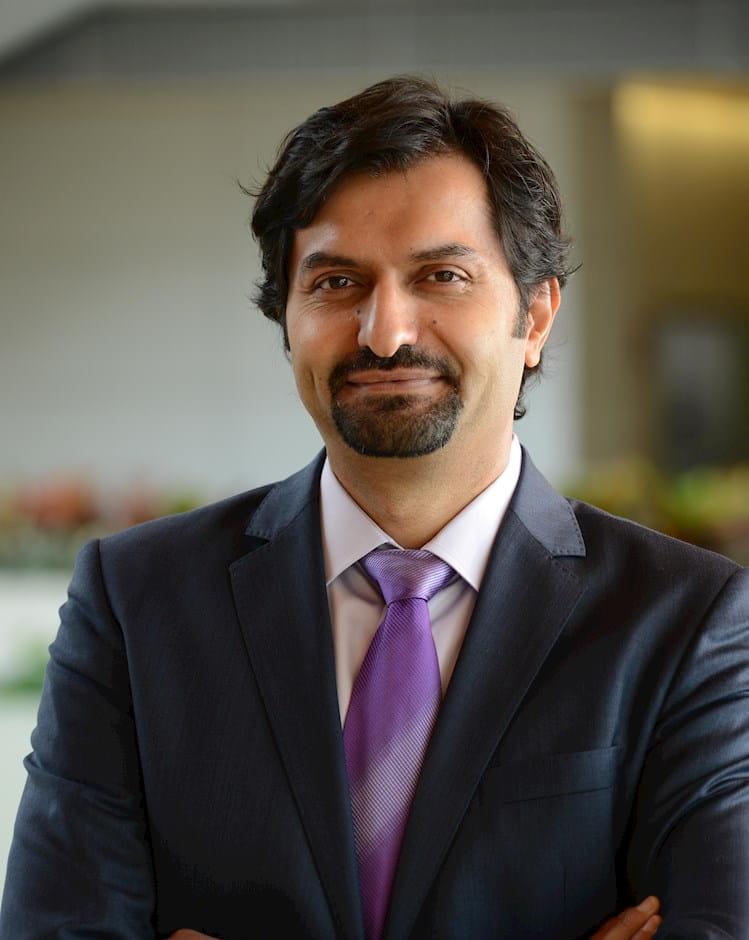
Sergio Bermudo Navarrete is a Professor at the Department of Economics, Quantitative Methods and Economic History, Universidad Pablo de Olavide. His research spans combinatorics, graph theory, and operator theory. Education: PhD in Mathematics (2003, University of Seville) with thesis on functional models of operators in Hilbert spaces. Research Interests: Focus on graph theory, domination problems, topological indices, and operator theory. Publication Trends: Recent work includes vertex-degree-based indices for oriented graphs, domination parameters in product graphs, and differential analysis of line graphs. Keywords span Computer Science , Mathematical Chemistry , and Operations Research . Collaborations: Frequent co-authors: José María Sigarreta Almira, José Manuel Rodríguez García, Juan Alberto Rodríguez-Velazquez. Contact: Email sbernav@upo.es .
Carlos Alvarez Martinez is a faculty member at the Universitat Politècnica de Catalunya (UPC), affiliated with the Department of Computer Architecture at the Barcelona School of Informatics (FIB). He is a key member of the Programming Models (PM) research group and collaborates closely with the Barcelona Supercomputing Center (BSC). His research focuses on high-performance computing, FPGA acceleration, task-based programming models like OmpSs, and hardware-software co-design for heterogeneous systems. His research interests center on advancing parallel computing through innovative programming models and hardware acceleration. He investigates efficient task scheduling, resource management in multicore and FPGA-based systems, and runtime support for dataflow models. His work enables high-performance execution of complex applications in domains such as scientific computing and cyber-physical systems. He actively contributes to European initiatives like TEXTAROSSA and AXIOM, aiming to develop next-generation exascale supercomputing technologies. The trend in his recent publications shows a strong focus on leveraging FPGAs for HPC, optimizing SpMV operations, improving task scheduling with hardware support, and developing frameworks for multi-FPGA clusters. His work consistently bridges theoretical models with practical implementations, emphasizing performance, scalability, and energy efficiency in heterogeneous computing environments. Scientific Awards: Premi UPC al Compromís Social 2019 Premi Disseny per al Reciclatge 2013 Alvarez Martinez has advised or collaborated with several doctoral students, including Jaume Bosch, Xubin Tan, and Fahimeh Yazdanpanah. He has been involved in numerous competitive R&D projects, often related to high-performance computing and parallel programming models. His work includes significant contributions to educational innovation, particularly in active learning methodologies and formative assessment using interactive systems. He leads and participates in research labs and teams focused on programming models and computer architecture, notably the PM group at UPC/BSC. These teams develop runtime systems, compilers, and hardware accelerators to push the boundaries of parallel computing efficiency and programmability.
Michalis Vazirgiannis is a Professor at LIX, École Polytechnique (France) leading the Data Science and Mining (DaSciM) group. With academic backgrounds in Physics (Athens University), AI (Heriot-Watt University), and Informatics (Athens University), he has conducted research at Fraunhofer, Max Planck MPI, and INRIA/FUTURS while teaching at institutions across Greece, France, China, and Spain. His research spans Machine/Deep Learning for Graphs (GNNs, graph kernels, embeddings) Text Mining & NLP (Graph-of-Words, biomedical text analysis) Combinatorial Optimization for pandemic forecasting and energy systems Event/Anomaly Detection in time series and sensory data Industrial collaborations with Airbus, Google, Tencent, and BNP . He has supervised 29 completed PhD theses, published over 250 papers, and received prestigious awards including Marie Curie and Tencent Rhino-Bird Fellowships. His team leads the ANR-HELAS Chair (2020-2025) focusing on heterogeneous data deep learning.
Jordi Perelló Muntan is an Associate Professor in the Department of Computer Architecture at the Universitat Politècnica de Catalunya (UPC), Barcelona, Spain, where he is also affiliated with the Escola Tècnica Superior d'Enginyeria de Telecomunicació de Barcelona (ETSETB). He is a member of the Broadband Communications Systems and Architectures (CBA) and IDEAI-UPC research groups, focusing on advanced optical and future internet networking technologies. Research Interests: His research spans telecommunications networks, optical fiber and optical networking, resource optimization, network architectures, and the Future Internet. He investigates performance optimization in 5G transport networks, Spatial Division Multiplexing (SDM), Recursive Inter-Network Architecture (RINA), elastic optical networks, and cognitive networking. His work integrates SDN, network virtualization, and green networking principles for scalable and efficient infrastructures. Publication Trends: His recent publications focus on probabilistic constellation shaping in multicore fiber networks, cognitive strategies for optical margin reduction, RINA-based QoS assurance, and migration planning toward spectrally-spatially flexible optical networks. These reflect a strong trend toward intelligent, adaptive, and energy-efficient network design for future communication systems. Scientific Awards: Co-recipient of the 2020 Fabio Neri Best Paper Award Runner-up (Elsevier Journal of Optical Switching and Networking) Co-recipient of the ONDM 2021 Best Paper Award Co-recipient of the 2019 IEEE Communications Society Charles Kao Award Co-recipient of the ONDM 2012 Best Student Paper Award Advising and Grants: He has advised multiple PhD students on topics including RINA, optical network planning, and virtual provisioning. He has led or participated in major European (H2020, FP7) and national (PID, TEC) research projects such as SLICENET, PRISTINE, TRAINER, and ALLIANCE, focusing on 5G, RINA, and sustainable network infrastructures. Labs and Teams: He is an active member of the CBA research group at UPC, contributing to experimental and theoretical advancements in optical and programmable networks. His team collaborates internationally on testbed development and standardization efforts in next-generation networking.
Albert Atserias is a Professor in the Department of Computer Science at the Universitat Politècnica de Catalunya (UPC), affiliated with the Faculty of Informatics of Barcelona (FIB) and the ALBCOM research group (Algorithms, Bioinformatics, Complexity, and Formal Methods). He is also associated with the Institut de Matemàtiques de la UPC-BarcelonaTech. His research is central to theoretical computer science, with a strong emphasis on logic and complexity. Atserias's research interests span Computational Complexity, Logic in Computer Science, Finite Model Theory, Proof Complexity, and Constraint Satisfaction Problems . His work explores the fundamental limits of computation, the expressive power of logical languages over finite structures, and the complexity of proving mathematical statements. He investigates the algebraic and combinatorial properties of proof systems, the limits of efficient algorithms for constraint solving, and the theoretical foundations of databases. His research often bridges logic, algebra, and combinatorics to provide deep insights into computational phenomena. The trends in his recent publications show a sustained focus on the logical and algebraic underpinnings of computational problems. Key themes include the consistency and complexity of database queries , the power and limitations of proof systems (like resolution and sum-of-squares), and the expressive power of homomorphism counts in graph theory. His work on the hardness of automating resolution and the development of circular proof systems are particularly significant contributions to proof complexity. The 2024 PODS Best Paper Award for work on relational consistency underscores the impact and timeliness of his research. Among his notable scientific awards are the prestigious ICREA Acadèmia , the PODS 2024 Best Paper Award , the Premi Extraordinari de Doctorat (Extraordinary Doctoral Prize), and the Kleene Award for Best Student Paper . These accolades reflect both the excellence of his early work and his continued leadership in the field. Atserias has been a principal investigator on numerous competitive research projects, including funding from the European Research Council (ERC) and the Spanish Ministry of Science. He has advised doctoral students, such as Toni Hakoniemi, whose thesis on proof complexity he supervised. His extensive collaborative network includes leading researchers like Phokion Kolaitis, Anuj Dawar, and Victor Dalmau. He has also served on the scientific committees of major conferences, contributing to the academic community. He is a core member of the ALBCOM research group , a leading team at UPC focused on theoretical aspects of computer science, which provides a vibrant environment for research in algorithms, complexity, and formal methods. His work is also connected to the broader Institut de Matemàtiques de la UPC, fostering interdisciplinary collaboration between computer science and mathematics.
Seth Blumsack is a Professor at the Pennsylvania State University in the Department of Energy and Mineral Engineering and serves as Director of the Center for Energy Law and Policy . He holds an Adjunct Research Professor position at the Carnegie Mellon Electricity Industry Center and is affiliated with the Santa Fe Institute as an External Faculty member. His research spans energy economics , power grid reliability , and complex infrastructure networks . Key projects include: Interdependent natural gas and electricity systems analysis Governance of regional transmission organizations Smart grid consumer behavior studies Power grid reliability tools development He has secured funding from the U.S. National Science Foundation , Department of Energy , Environmental Protection Agency , and private industry. His Best paper award at Hawai’i International Conference on System Sciences (2011) and John T. Ryan, Jr. Fellowship (2011-17) highlight his scientific recognition. Publications emphasize electricity market deregulation , energy infrastructure resilience , and consumer response to smart grid technologies . His work has been cited in major media outlets like The New York Times and The Los Angeles Times , and he has consulted for National Renewable Energy Laboratory , U.S. Department of Energy , and other industry stakeholders.
Baris Ata is the Sigmund E. Edelstone Distinguished Service Professor of Operations Management at the University of Chicago Booth School of Business. His work bridges theoretical operations management with practical applications, focusing on dynamic decision-making under uncertainty. Research Interests Ata’s research spans stochastic networks, manufacturing/service operations, healthcare delivery, and social sector innovation. Recent projects address high-dimensional stochastic control, xenotransplantation candidate selection, criminal justice logistics, and last-mile delivery challenges in Africa. Scientific Awards Best Paper in Service Science Award, INFORMS (2009) William Pierskalla Best Paper Award, INFORMS (2015) Wickham Skinner Best Paper Award, POMS (2019) Manufacturing and Service Operations Management Young Scholar Prize, INFORMS (2015) Emory Williams MBA Teaching Award (2021) Recent Publications Ata’s recent work includes topics in dynamic pricing, stochastic control, and healthcare logistics. His papers examine congestion-based pricing strategies, equilibrium analysis in queues, and policy design for organ transplantation. Broad disciplines include operations management, stochastic modeling, and healthcare analytics.
Karina Gibert is a Full Professor at Universitat Politècnica de Catalunya (UPC), specifically at the Faculty of Computer Science of Barcelona (FIB) in the Department of Statistics and Operations Research. With a permanent teaching position since 1990, she contributes to research and education with a focus on Data Science, Artificial Intelligence, Explainable AI, and Ethics in AI. Full Professor, UPC (since 1990) PhD in Informatics Engineering Postgraduate in Higher Education Teaching Director and co-founder of IDEAI research center Dean of the Official Professional College on Informatics Engineering of Catalonia Active in bridging the gender gap in STEAM through multiple initiatives Her research focuses on extracting strategic knowledge from data and intelligent systems with ethical and explainable perspectives. She has led various projects including Diet4You for personalized diets, INSESS-COVID19 for social vulnerability analysis, Top Rosies Talent for female AI development, and ciutadanIA for AI culture promotion. Her work spans health, environment, sustainability, tourism, and social technology applications. As an editor of Environmental Modeling and Software journal and active academic, she contributes to international conferences, working groups, and research collaborations. Her service includes membership on various ethics and AI strategy committees and advisory boards. Women Tech Award 2023 National Informatics Engineering Award in Digital Dissemination 2022 Ada Byron Award 2022 Honorific Mention of Creu Casas award 2021 donaTIC 2018 Award Finalist at AMETIC Awards 2021 Finalist of European Social Services Awards 2021
Yuan Zhong is an Associate Professor of Operations Management at the University of Chicago Booth School of Business . He previously held positions as an Assistant Professor at Columbia University’s Department of Industrial Engineering and Operations Research and was a Postdoctoral Scholar at UC Berkeley’s Computer Science Department. Education: PhD in Operations Research, MIT (2012) MA in Mathematics, Caltech (2008) BA in Mathematics, University of Cambridge (2006) His research focuses on applied probability and stochastic system design , with applications in cloud computing , supply chain management , and e-commerce logistics . Recent work explores multi-period production systems and dynamic resource allocation in data centers and healthcare operations . Recent publications analyze cloud value chains , sparse graph design for delivery networks, and process flexibility in manufacturing. He has contributed to journals like Operations Research , Annals of Applied Probability , and Stochastic Systems . Scientific Awards: 2012 Kenneth C. Sevcik Outstanding Student Paper Award Best Student Paper Award at ACM Sigmetrics (2012) He teaches courses in business process fundamentals and queueing theory , with a future schedule including Operations Management: Business Process Fundamentals (2025–2026). No explicit student advising list was provided.
Alan Briones Delgado is a researcher at the La Salle School of Engineering , Universitat Ramon Llull , with a focus on Internet of Things , Cybersecurity , and Transport Protocols . His work spans projects funded by the European Commission and national grants, including EXCEL4HOUSING4.0 , WeB-Nimbus , and NG-SOC , addressing challenges in cloud computing education, ecological monitoring, and security operations. His research integrates Artificial Intelligence and Wireless Sensor Networks for sustainable solutions. Key research areas include Quality of Service in heterogeneous networks, Environmental Conservation via IoT, and Teaching and Learning strategies for Big Data. Projects like EcoSentinel and BTL-COP highlight his commitment to Environmental Monitoring and Community Policing applications. His collaborations extend to institutions in the UK , Albania , and Western Balkans . Contact: alan.briones@salle.url.edu
ARNALTES GOMEZ SANTIAGO is a Full Professor at the Department of Electrical Engineering, Universidad Carlos III de Madrid. His research focuses on Power Systems Control, Renewable Energy Integration, HVDC Systems, and Grid-Forming Converters. He leads projects funded by institutions like Red Eléctrica de España and the Community of Madrid. His work addresses challenges in offshore wind farm integration, energy storage systems, and converter-based grid stability. He has authored over 50 publications, including studies on grid-forming control strategies, low-frequency oscillation damping, and battery degradation modeling. He holds 4 patents related to power system control and renewable energy. Recent projects include contributions to digital power networks, green hydrogen integration, and black-start capabilities for renewable plants. His research emphasizes practical applications, such as HVDC interconnections and smart grid technologies.
Günter J. Hitsch is the Kilts Family Professor of Marketing at the University of Chicago Booth School of Business, where he has been a faculty member since 2001. His academic leadership extends to editorial roles as Co-Editor of the Journal of Quantitative Marketing and Economics and Associate Editor at Marketing Science and Management Science. Hitsch's educational journey includes an undergraduate degree from the University of Vienna (1995), followed by master's degrees in economics (1997, 1998), and a PhD in economics from Yale University (2001). This strong foundation in economics informs his approach to marketing research. His research program focuses on quantitative marketing and industrial organization, with particular emphasis on dynamic models of firm and consumer decision-making. Key areas include advertising effectiveness, pricing strategies, sequential learning and experimentation, and intertemporal consumer choice. Hitsch is pioneering in applying causal inference and machine learning to solve practical marketing problems such as optimal customer targeting. His work on dating and marriage markets demonstrates innovative application of economic theory to social phenomena. Hitsch's publication trajectory shows evolution from foundational work on consumer choice and switching costs to more recent applications of machine learning in marketing contexts. His research spans theoretical development and practical application, examining everything from private label demand during economic recessions to television advertising effectiveness across hundreds of brands. Co-Editor, Journal of Quantitative Marketing and Economics Associate Editor, Marketing Science Associate Editor, Management Science Hitsch's editorial leadership has significantly shaped the direction of quantitative marketing research. His commitment to methodological rigor and generalizable results ensures his work provides reliable inputs for both marketing practitioners and academic researchers. As an educator, Hitsch teaches advanced courses in quantitative marketing and business analytics, with scheduled courses for 2024-2026. He emphasizes that 'good marketing isn't fluffy,' challenging students to develop analytical approaches to marketing problems. His research philosophy prioritizes providing generalizable results that apply beyond specific case studies, serving as inputs for both practitioner decision-making and academic advancement.
David Soler Soneira is a Professor in the Department of Electrical Engineering and Systems at the School of Engineering (ICAI) of Comillas Pontifical University, where he has been teaching since 1994. He is also a Visiting Researcher at the Institute for Research in Technology (IIT), focusing on electric power systems. His academic and professional work is deeply rooted in the technical and economic aspects of modern power systems. Research Interests: His primary research areas include ancillary services, operation and planning of electric power systems, and electricity market economics. He specializes in voltage control, reactive power management, and regulatory models for grid services. His work bridges engineering and market design, contributing to the efficient and stable operation of power networks. Publications and Research Trends: His most recent publications, primarily in IEEE journals, focus on voltage regulation, secondary reserve markets, and reactive power markets. These works emphasize market mechanisms, economic valuation, and operational strategies for ancillary services in competitive electricity environments. His research consistently addresses real-world challenges faced by transmission and distribution operators. Scientific Awards: Director of prizewinning work in Honorary Distinction to the best Doctoral Thesis on Engineering «Modelo regulatorio del control de tensiones en los sistemas eléctricos de potencia» by Pablo Frías Marín, Universidad Pontificia Comillas, Jan 2009 Advising and Grants: He has supervised at least one doctoral thesis and has led or participated in numerous research and consulting projects funded by major energy companies such as Iberdrola, Unión Fenosa, Duro Felguera Energía, and REE (Red Eléctrica de España). These projects have focused on voltage control strategies, automation of power plants, and regulatory modeling. Labs and Teams: He is affiliated with the Institute for Research in Technology (IIT), a leading research center in energy systems at Comillas Pontifical University, where he contributes to advanced research in power systems and energy policy.
Carolina Luis Bassa is a Research Professor at the Universitat Pompeu Fabra Barcelona School of Management (UPF-BSM), serving as Academic Director and leading the Department of Business and Strategic Management. She directs multiple master’s programs and heads the Mercadona UPF-BSM Chair of Circular Economy. Her expertise spans Marketing, Sustainability, and Technology applied to business strategy, with a focus on digital transformation and circular economy practices in industries like agri-food distribution. Her academic journey includes roles as Vice-Dean of Teaching Staff and Academic Director, reflecting her commitment to educational innovation. Research interests emphasize sustainable consumer behavior, data-driven business models, and the integration of technology in CRM and customer experience management. Over 35 years, she has advised students and professionals on strategic applications of marketing and technology. Research Trends: Recent publications highlight circular economy adoption in agriculture, transparency in sharing economies, and data-driven strategies in customer-centric models. She bridges academic insights with industry challenges, particularly in leveraging technology for sustainable business practices. Awards & Grants: No specific awards are listed, but her leadership roles and chair position indicate significant institutional recognition. Grants and partnerships likely stem from her involvement with initiatives like the Mercadona Chair. Labs & Teams: Leads the Mercadona UPF-BSM Chair, focusing on circular economy research and collaboration with industry partners.
Frank NIELSEN is a Professor at École Polytechnique with expertise in information geometry, data science, and machine learning. He holds a PhD (1996) and HDR (2006) in computer science and has established himself as a leading researcher in geometric approaches to information science. His educational background includes a PhD in computer science (1996) followed by a Habilitation à Diriger des Recherches (HDR) in 2006, the highest academic qualification in France that qualifies one to supervise doctoral candidates. Dr. NIELSEN's research focuses on the Geometric Science of Information , where he develops theoretical frameworks for understanding data through geometric and information-theoretic lenses. His work bridges Computational information geometry Statistical manifold theory Bregman divergences and their applications Machine learning with geometric foundations High-dimensional data analysis He aims to address the challenge of inappropriate data representation in current Data Science by building a theory of Computational Information Geometry to enable Intrinsic Data Science with principled distances. His extensive publication record shows a clear trend toward developing geometric frameworks for understanding statistical divergences, with recent work focusing on Bregman geometry, Fisher-Rao metrics, and their applications in machine learning. His research spans theoretical developments in information geometry to practical implementations like the pyBregMan Python library, demonstrating both theoretical depth and practical relevance. Dr. NIELSEN has made significant contributions through his teaching and publications. He has taught courses at École Polytechnique including INF442, INF517, and INF591. His authored textbooks include Introduction to HPC with MPI for Data Science (2016), A Concise and Practical Introduction to Programming Algorithms in Java (2009), and Visual Computing: Geometry, Graphics, and Vision (2005). He has also edited influential volumes such as Computational Information Geometry for Image and Signal Processing (2016) and Geometric Theory of Information (2014). He actively organizes and participates in academic events, serving on program committees for major conferences including GSI (Geometric Science of Information), CVPR, and ICCV. His work has established him as a key figure in the growing field of geometric approaches to information science.