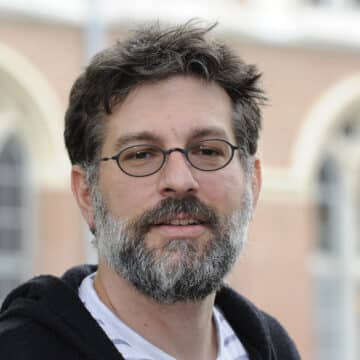
Einar Broch Johnsen is a Professor at the Department of Informatics , University of Oslo . His research focuses on formal methods , distributed systems , and digital twins , with applications in cloud computing , robotics , and healthcare . Leadership: Strategy Director of SIRIUS (2015-2023), Coordinator of EU projects Envisage and HyVar . Community Roles: Board member of Formal Methods Europe , editorial board member of Formal Aspects of Computing , and chair of conferences like FM 2015 and FASE 2022 . His recent work explores symbolic execution , probabilistic logic , and self-adaptive systems , as reflected in his 15 most recent publications . He teaches courses such as IN2031 – Project in Programming and IN5170: Models of Concurrency .
Emanuele D'Osualdo is a Tenure-Track Professor of Formal Methods for Software Engineering at the University of Konstanz, Department of Computer and Information Science. Previously, he was a Postdoctoral Researcher at Max Planck Institute for Software Systems (MPI-SWS) in Saarbrücken until April 2024, working with Derek Dreyer on verification of concurrent software. Before that, until September 2020, he was a Marie Curie Fellow at Imperial College London, working with Prof. P. Gardner. From 2015 to 2017, he was a PostDoc in the Concurrency Theory Group at the University of Kaiserslautern, working with Prof. Roland Meyer. His educational background includes: PhD (DPhil) in Computer Science from the University of Oxford (2015), supervised by Prof. C.-H. Luke Ong Undergraduate and master's studies at the University of Udine, Italy, graduating with honors and supported by the Scuola Superiore scholarship Emanuele D'Osualdo's research focuses on Formal Methods for the verification of software, with particular emphasis on two main approaches: automatic verification methods using static analysis and infinite-state model checking; and compositional methods, focusing on program logics for properties beyond safety. His work spans several areas including Programming Languages, Verification, Security, Concurrency Theory, Probabilistic Programs, Types, Static Analysis, Process Algebra, and Model Checking. His research has led to the development of tools such as Soter for automatic safety verification of Erlang programs and James Bound for analyzing π-calculus. His recent publications demonstrate a strong focus on advanced verification techniques for concurrent and distributed systems, with particular attention to linearizability, session types, security protocols, and probabilistic reasoning. His work bridges theoretical foundations with practical applications in software verification, showing a progression from foundational work on π-calculus to more applied verification of concurrent data structures and probabilistic systems. He has received notable recognition for his work, including: Winner of the 2016 CPHC/BCS Distinguished Dissertation award Marie Curie Fellow Emanuele actively supervises students and leads research in formal methods. He is involved in several research projects related to software verification and has presented his work at top-tier conferences including POPL, OOPSLA, ESOP, and CAV. He is scheduled to give a keynote at HYPER'25 in Zagreb and will be attending POPL'25. His research group appears to focus on developing theoretically sound yet practical verification techniques for modern concurrent and distributed software systems.
Mirco Stern is a researcher at the Institute of Information Management (IPD Böhm) at Karlsruhe Institute of Technology. His work focuses on sensor networks, database systems, and service composition technologies. Key research areas include distributed query processing, data quality guarantees, and optimization of join operations in resource-constrained environments. Role : Researcher, Institute of Information Management Location : Karlsruhe, Germany Research trends highlight his expertise in sensor network optimization (join processing, wavelet transforms) and service composition (semantic matchmaking, automated integration). Publications span ACM SIGMOD, VLDB, and ECOWS conferences, emphasizing algorithm design and system efficiency.
Dr. Merel Semeijn is a researcher in Theoretical Philosophy at the Faculty of Philosophy, University of Groningen. Her academic profile centers on semantics, philosophy of language, and philosophy of fiction, with a focus on fictional truth and common ground mechanisms. Her research explores fictional truth extraction from unreliable sources, metafictional anaphora , and the cognitive foundations of pretend play in theory of mind acquisition . Key frameworks include workspace accounts of common ground and Stalnakerian analyses of metafictive statements, addressing puzzles in abstract object predication and parafictional tense. Her recent publications reveal strong trends in dynamic semantic frameworks applied to fictional contexts, with increasing interdisciplinary connections to cognitive science. Major contributions include resolving the 'Wrong Kind of Object' problem with Zalta and analyzing how unreliable narrators impact truth attribution in fiction. Descartes Excellence fellowship (2018) DIA-Stipendium (2015) GUF-100 award (2015) Dr. Semeijn actively collaborates with prominent scholars like Emar Maier and Edward Zalta, presenting at major venues including the Amsterdam Colloquium and ESSLLI conferences. Her work bridges formal semantics with cognitive psychology, particularly in how children acquire theory of mind through fictional engagement. Current research examines make-believe dynamics and common belief structures in fictional worlds.
Julia Gluesing is a business and organizational anthropologist who serves as Research Professor in the Department of Industrial and Systems Engineering at Wayne State University and as Adjunct Faculty in the Global Executive Track Ph.D. Program. She is also Adjunct Professor of Anthropology and has held leadership roles such as Associate Director of the Institute for Information Technology and Culture (IITC) and Co-Director of the Global Executive Track Ph.D. in Industrial and Systems Engineering. Education: Ph.D. in Cultural Anthropology, Wayne State University, 1995 M.A. in Communication, Michigan State University, 1985 B.A. in French and Russian, University of California, Davis, 1971 (Phi Beta Kappa) Diplôme de Français Avancé, Université de Montpelier, France Research Interests: Her scholarship centers on culture and identity, global collaboration and networks, innovation diffusion, and qualitative methodology. She integrates insights from anthropology, international business, economics, finance, and political science to understand how engineering organizations operate across cultures and geographies. Publication Trends: Across more than 60 peer-reviewed works, Julia’s research has evolved from foundational ethnographic studies of global virtual teams to cutting-edge analytics combining text mining, social network analysis, and anthropological theory. Recent themes include innovation governance, environmental decision-making, and ethical challenges in globally networked organizations. Awards & Honors: Best Paper Award, International Management Division, Academy of Management (2010) Most Innovative Session Award, Organizational Behavior Division, Academy of Management (2000) Election to Phi Kappa Phi and Phi Beta Kappa honor societies Grants & Sponsored Research: Julia has served as Principal Investigator or Co-PI on six NSF grants totaling well over $2 million, including the flagship “Digital Diffusion Dashboard” project ($426k, 2005–2010) and the Michigan Alliance for Clinical and Translational Science evaluation ($1.8 million segment; total $20 million). Industry partners have included Ford, GM, Chrysler, Visteon, Motorola, Procter & Gamble, Bosch, and many others. Teaching & Advising: She teaches doctoral courses such as Qualitative Research Design and Methods, Global Leadership of Technical Organizations, and Management of Technology Change, and advises leadership projects in the Ford Engineering Management Master’s Program (EMMP). While specific advisee names are not listed, she mentors executives in both the Global Executive Track Ph.D. and EMMP cohorts. Labs & Teams: Julia founded Cultural Connections, Inc. , a global research and consulting firm, and co-founded the Collaborative Innovation Networks (COINs) Conference series, serving as local organizer for COINsDetroit 2017. She maintains active affiliations with the American Anthropological Association, EPIC, ION, and the Society for Applied Anthropology.
Talip Tolga Sarı is a Research Assistant at the Department of Computer Engineering , Istanbul Technical University , where he has been affiliated since 2019. He holds a PhD in Computer Engineering (2021), a Master's in Computer Engineering (2018), and dual Bachelor's degrees in Computer Engineering and Electronics & Communication Engineering (2015). Education PhD in Computer Engineering, Istanbul Technical University (2021) Master's in Computer Engineering (2018) Bachelor's in Computer Engineering (2015) Bachelor's in Electronics & Communication Engineering (2015) Research interests span Computer Networks , Wireless Communication , and Unmanned Aerial Vehicles (UAVs) , with a focus on semantic communication , UWB localization , and topology control for resilient networks. His recent publications address UAV swarm coordination , smart campus frameworks , and assisted localization systems , reflecting interdisciplinary applications of computer science in real-world problems. Key trends in his 15 most recent articles include decentralized UAV networks, semantic communication architectures, and UWB-based indoor positioning. His work combines machine learning, cross-layer routing, and software-defined networking paradigms, with citations spanning Computer Science , Robotics , and Network Security . Awards : Highest Performance Award, Istanbul Technical University (2025)
Gerhard Brewka is a Professor at the Intelligent Systems Department of Leipzig University , where he has held the chair for Intelligent Systems since September 1996. He was previously a Full Professor for Knowledge-Based Systems at the Technical University of Vienna (1995-1996) and a visiting researcher at the International Computer Science Institute in Berkeley (1991-1992). Research Focus: Nonmonotonic reasoning, answer set programming, preference handling, computational models of argumentation, multi-context systems, and qualitative decision making. Leadership: Served as President of ECCAI (now EurAI) and KR Inc., and as General Chair of IJCAI 2016 and ECAI 2006. His recent publications emphasize formal argumentation , nonmonotonic reasoning , and multi-context systems , reflecting his work on integrating heterogeneous knowledge bases and extending abstract dialectical frameworks. He was named an ECCAI Fellow in 2002 and has contributed to foundational texts in knowledge representation and logic programming. Scientific Contributions : 2014: Generalizations of Dung frameworks for argumentation, GRAPPA framework for graph-based argument processing, and multi-context systems in dynamic environments. 2013: Expanding argumentation frameworks, prioritized nonmonotonic systems, and reactive multi-context models. 2012-2011: Studies on splitting theorems, managed multi-context systems, and answer set optimization. Scientific Awards : ECCAI Fellow (2002) Laboratory: His research group is located on the 8th floor of the Paulinum at Leipzig University, focusing on AI and knowledge representation.
Giorgio Levi is a Full Professor in the Department of Computer Science at the University of Pisa, Italy. He works on theoretical aspects of programming languages and formal methods. Research includes interpreter design and abstract interpretation Teaches courses on Abstract Interpretation in Declarative Languages Contributed to projects like FIRB - Model B - Pisa Research Interests : His work focuses on abstract interpretation, programming language semantics, and code analysis. He has developed interpreters for functional languages, denotational semantics, operational semantics, and type inference systems. Teaching : He teaches a course on abstract interpretation in declarative languages, with materials including denotational interpreters, operational semantics, and run-time structures. Projects : Involved in the FIRB - Model B - Pisa research initiative, which relates to interpreter refinements and semantic evaluation functions.
Philippe Bonditti serves as a Lecturer in Political Science at the School of Political Science and Management (ESPOL) within the Catholic University of Lille, France. His academic profile integrates historical semantics with contemporary security challenges, positioning him at the intersection of political theory, international relations, and critical security studies through interdisciplinary research and teaching. His scholarly focus spans five interconnected domains: Conceptual History : Application of Koselleckian methodologies to deconstruct evolving political concepts like 'terrorism' and 'equilibrium' within international systems Climate Security : Critical analysis of climate-defense-security discourses in European policy frameworks, particularly examining French strategic positioning Critical Terrorism Studies : Archaeological investigations into terrorism as a modern category of violence and its historical conceptual transformations European Border Politics : Examination of border dynamics, political community formation, and integration challenges in contemporary Europe Peace Studies : Theoretical problematizations of peace within international relations discourse and practice Analysis of Bonditti's recent publications (2019-2023) reveals a methodological convergence where historical semantics increasingly informs security studies. His climate-security research demonstrates how 'equilibrium' discourse operates within French defense policy, while his European border studies expose tensions between territorial control and political community formation. The 2023 peace studies cluster indicates growing scholarly engagement with multipolar conflict resolution frameworks amid geopolitical realignments. No scientific awards were documented in available sources. Information regarding graduate student supervision, research funding mechanisms, laboratory affiliations, or collaborative research teams was not provided in source materials, though co-authorship patterns suggest active collaboration with scholars including Sofia Kabbej, Thomas Hippler, and Laura Lema Silva.
Francesco Zanichelli is an Associate Professor at the Department of Engineering and Architecture, University of Parma, where he teaches Information Systems for Master's in Computer Engineering and Operating Systems for Bachelor's in Computer, Electronics, and Telecommunications Engineering. He also teaches Industrial Software Development Technologies in Information Systems Engineering. PhD in Information Technology (University of Parma, thesis: Programming Autonomous Robots) Industrial Robotics experience (IBM Fellow) Mobile Robotics research (University of Florida) His research spans: Intelligent robotic systems: software architectures, sensor-based interaction, real-time scheduling algorithms Distributed systems: peer-to-peer middleware, cloud-IoT integration, predictive maintenance Location-based services: blockchain-secured privacy, network-aware distribution Performance evaluation via simulation, PlanetLab testbed, and prototyping He leads the DSG distributed systems research group and participates in national/international projects (FP7, NATO, CNIT). He co-founded spin-offs for vehicle multimedia systems (Etheria Srl) and digital payment solutions (Simplycity Srl).
Dylan Glynn is a Professor of Linguistics at Paris 8 University, affiliated with the LeCSeL (Empirical Linguistics: Cognition, Society and Language) laboratory and the research unit UR TranCrit. His work bridges Cognitive Linguistics, Corpus Linguistics, and Functional Linguistics, focusing on the multidimensional nature of language structure from prosody to culture. Research: Cognitive Linguistics, Corpus-Driven Analysis, Lexical-Semantic Networks, Metaphor/Metonymy Teaching: Sociolinguistics, Corpus Methods, Multivariate Statistics, Discourse Analysis His methodological innovations include applying multivariate categorical statistics to usage-based linguistic modeling. Publications emphasize quantifying polysemy, operationalizing construal, and socio-cultural conceptualization. He advocates for empirical rigor in Cognitive Semantics, integrating statistical methods with cognitive theory. Labs: LeCSeL, UR TranCrit Contact: dsg.up8@gmail.com
Nada Amin is an Assistant Professor of Computer Science at Harvard University's John A. Paulson School of Engineering and Applied Sciences (SEAS). She previously served as a University Lecturer in Programming Languages at the University of Cambridge and was a key contributor to the Scala programming language at EPFL during her PhD. Her research at the Metareflection Lab focuses on neurosymbolic systems that integrate programming languages (PL) and artificial intelligence (AI) to enable correct-by-construction software in domains like program synthesis and precision medicine. Her work emphasizes three pillars: Safer systems via formal verification and type theory; Faster development through generative programming and multi-stage interpreters; Easier access by bridging neural (learnable) and symbolic (interpretable) representations. She has contributed to the POPL, ICFP, PLDI, and OOPSLA conferences, with recent work on Dafny proof assistants and Persimmon's polymorphism techniques. Scientific awards include: Fellow of Jesus College (Cambridge, 2017-2019); Michigan Cambridge Research Initiative Grant (2018); Teaching Assistant Team Award (EPFL, 2015); 6.170 Letter of Commendation (MIT, 2005); ArsDigita Prize Finalist (1999). She has advised committees at ICFP, PLDI, POPL, and SPLASH , and taught courses like Neurosymbolic Programming (2025) and Advanced Semantics of Programming Languages (2022). Her lab explores language design through projects like Persimmon , LURK , and DafnyBench .
Lukas Gosch is a PhD student at the Technical University of Munich , affiliated with the TUM School of Computation, Information and Technology and the Department of Computer Science . He is part of the DAML research group under the supervision of Prof. Stephan Günnemann and the relAI graduate school . Research Focus : Robustness in machine learning, graph neural networks (GNNs), combinatorial optimization, adversarial verification, and efficient ML. Education : M.Sc. in Computational Science (2018-2021, University of Vienna), B.Sc. in Physics (2013-2017, Vienna University of Technology). His work investigates how to certify and improve the robustness of neural networks, particularly against label/data poisoning and backdoor attacks. He leverages techniques like neural tangent kernels and mixed-integer programming to derive theoretical guarantees on model behavior. Recent papers analyze robustness plateaus and semantic-aware adversarial examples. Recent Scientific Recognition : Best Paper Award @ NeurIPS 2024 AdvML Frontiers Workshop Selected Oral Talk @ NeurIPS TSRML 2022 Best Master's Thesis Award @ Austrian Society for Operations Research 2021 Performance Scholarship @ University of Vienna 2020
Tinko Velichkov Tinchev is a Professor and Researcher at the Faculty of Mathematics and Informatics (FMI), Sofia University "St. Kliment Ohridski". His research focuses on Modal Logic , Dynamic Logic , and Formal Methods , particularly in applications to spatial reasoning and theoretical computer science. Email: tinko@fmi.uni-sofia.bg Office Hours: Thursday 11-12, Friday 13:30-15:30 His work spans geometric reasoning , equivalence relations , and knowledge representation . Publications include collaborations on region-based theories of space , affine reasoning , and modal operators for logical systems.
Daphne Odekerken is a Researcher at the AI & Data Science department of Utrecht University , with a focus on Responsible AI . She works at the National Police Lab AI , a collaborative initiative between the Dutch National Police, Utrecht University, and TU Delft, where she implements argumentation-based AI systems for law enforcement applications. Research Areas: Computational Argumentation, Human-in-the-Loop Decision Support, Legal AI, Algorithmic Complexity, and Music Information Retrieval Her publications (2022-2024) explore stability/relevance detection in incomplete argumentation frameworks, ASPIC+ reasoning under uncertainty, and the development of the PyArg visualization tool. Key contributions include efficient algorithms for high-complexity problems and their application in police case analysis. Recent work includes Groundbreaking analysis of justification status in precedent models (2024) Complexity classifications for ASPIC+ reasoning (2024) Interactive IAF visualization systems (2024) These reflect trends in transparent AI for critical decision-making environments. Scientific recognition includes the Donald Berman Best Student Paper Award (2023) . She has developed several open-source tools: PyArg for argumentation visualization DECIBEL for audio chord estimation ForgettingWeb for knowledge base simplification and maintains a web interface for public demonstrations.