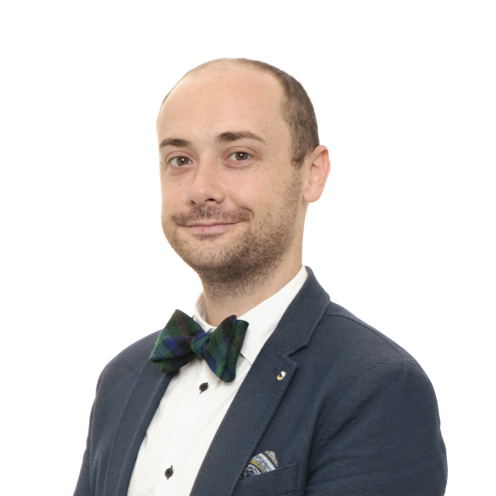
Dr. Paul Harvey is a Lecturer in Low Carbon and Sustainable Computing at the School of Computing Science, University of Glasgow. He specializes in autonomous systems, focusing on safe and meaningful fully-autonomous technologies for design and operation. His roles include co-chair of the UN’s ITU-T Focus Group on Autonomous Networks and visiting researcher at the University of Strathclyde. Industrial experience includes co-founding Rakuten Mobile Innovation Studio, emphasizing open and collaborative research. Research interests span autonomous networks, digital twins, federated learning, and edge computing. Recent work includes digital twin generation for network testing and task offloading strategies in edge-based systems. He actively contributes to standards development (e.g., OntoCommons) and blockchain-based trust frameworks for autonomous systems. His advising includes student Shijia Dong on software modularization using LLMs. Grants and collaborations are managed via his institutional profile. His lab focuses on cross-disciplinary projects at the intersection of networking, AI, and sustainability.
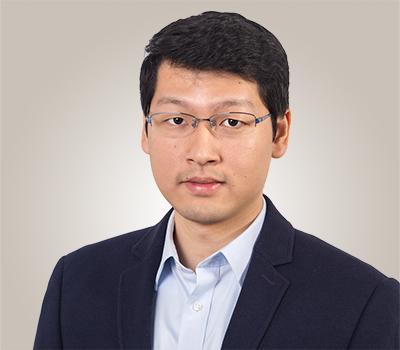
Lizhong Chen is a Professor in the School of Electrical Engineering and Computer Science at Oregon State University and a core AI faculty member in the Collaborative Robotics and Intelligent Systems (CoRIS) Institute. He leads the STAR Lab which focuses on computing systems and AI applications with emphasis on computing efficiency across various computing platforms from embedded devices to supercomputers. Ph.D., Computer Engineering, University of Southern California, 2014 M.S., Electrical Engineering, University of Southern California, 2011 B.S., Electrical Engineering, Zhejiang University, 2009 Chen's research focuses on efficient computer systems (GPUs, accelerators, HPCs, IoT devices) and their applications in machine learning and natural language processing, especially large language models. His work spans machine learning accelerators, GPU architecture, AI-assisted design for computer architecture, and energy-efficient computing systems. He has made significant contributions to NoC (Network-on-Chip) power-gating research and developed the Agate simulator for simulating NoC power-gating. His recent publications (2023-2025) show a strong focus on large language models, particularly for simultaneous translation tasks, Kolmogorov-Arnold networks, and efficient model architectures. His work bridges computer architecture design with AI applications, creating synergies between hardware efficiency and machine learning performance. Scientific Awards: NSF CRII Award (2016) NSF CAREER Award (2018) Best Paper Nomination at IEEE NAS (2018) Best Paper Runner-up Award at HPCA (2020) Chu Kochen Award from Zhejiang University IEEE HPCA Hall of Fame (2020) Chen has served as an Associate Editor of IEEE Transactions on Computers and as program committee member for top computer system and machine learning conferences. He is the founder and organizer of the Annual International Workshop on AIDArc (AI-assisted Design for Architecture). His research is supported by multiple grants from NSF, NIH, Department of Energy, and the Northwest-AI-Hub supported by the CHIPS and Science Act. He teaches courses in computer architecture, high-performance computing, and specialized topics in AI accelerators and GPU architecture. As director of the STAR Lab, Chen leads research on computing efficiency across the spectrum from embedded and mobile devices to supercomputers and data centers. The lab's recent focuses include machine learning accelerators, GPU architecture, applications of AI in architecture designs, and improving the computing efficiency of machine learning and natural language processing models.
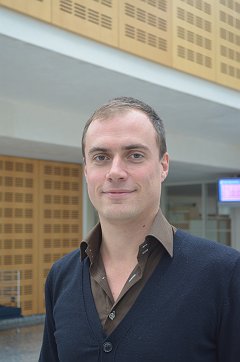
Dr. Murat Tunç is a tenured Assistant Professor of Information Systems at Tilburg University's Tilburg School of Economics and Management (TiSEM), within the Department of Information Systems and Operations Management (ISOM). He holds a Ph.D. in Information Systems from the University of Texas at Dallas (2020) and degrees from Sabanci University, Istanbul (MSc Industrial Engineering, 2015; BSc Industrial Engineering, 2013). His research focuses on FinTech, open-source software, and artificial intelligence, employing methodologies in game theory and econometrics. Notable work includes studies on NFT marketplaces, resale royalties, platform strategies, and open-source sponsorship dynamics. His papers have been published in top journals like MIS Quarterly and Information Systems Research, and presented at leading conferences such as WISE, ICIS, and INFORMS. He teaches courses on data science research methods and AI in business at the graduate level. As founder and chair of the Workshop on Digital Markets, he actively promotes interdisciplinary research in digital economies. Currently advising two PhD students, his research explores the intersection of technology, markets, and societal impact. His recent work examines strategic generosity in NFT charity, platform subsidies' effects on creation, and sponsorship models for open-source sustainability. He collaborates with industry partners like Payback and has contributed to policy discussions on digital markets.
Osku Torro is a Postdoctoral Research Fellow at Tampere University's Faculty of Built Environment, specializing in Civil Engineering. His research explores the organizational adoption of virtual reality (VR) and avatar-based interactions, with a focus on social VR applications for team collaboration and cohesion. Current affiliation: Tampere University Academic rank: Research Fellow Research Focus: Torro investigates how VR transforms workplace dynamics, particularly in social exchange and communication. His work bridges information systems science with practical applications in knowledge management and digitalization. Primary areas: VR in organizations, social interaction in immersive environments Secondary areas: Generative AI, IFC/GS1 standards, digital twins in building systems Article Trends: Recent publications highlight VR's role in collaboration platforms, digitalization challenges in real estate, and AI-driven data enrichment in building systems. Topics span from technical implementations (e.g., IFC/GS1) to behavioral studies (e.g., team cohesion in VR).
Maria Papadopoulou serves as an Associated Researcher at the LISTIC laboratory of University Savoie Mont Blanc, France, specializing in the intersection of philological traditions and computational methods. Her work bridges Classics, Linguistics, and Digital Humanities through innovative applications of Semantic Web technologies for cultural heritage documentation. Her research focuses on ontology and terminology development for material culture studies, particularly ancient Greek dress and Chinese ceramics. She pioneers humanist-centered approaches to knowledge representation, creating tools like Tedi for multilingual terminology ontologization. Her methodology emphasizes accessibility for non-technical scholars while maintaining computational rigor in semantic modeling. Analysis of her publication trends reveals consistent innovation in domain-specific ontologies, with increasing emphasis on cross-cultural applications (Greek/Chinese) and pedagogical frameworks for digital humanities. Her work demonstrates how formal ontologies can resolve ambiguities in historical terminology while preserving cultural context. Scientific recognition includes: Best paper award at SEMAPRO 2018 for advancing multilingual terminology platforms Papadopoulou actively mentors through post-graduate instruction across international institutions including University Savoie Mont Blanc, Liaocheng University, and Nanjing University NUAA. Her teaching materials integrate AI applications with classical philology, reflecting her commitment to training next-generation digital humanists. She operates within the LISTIC laboratory's interdisciplinary framework, collaborating with computer scientists and domain experts to develop the TAO CI project for cultural heritage terminology. Her current work focuses on scaling ontology-based dictionaries for global humanities research while addressing challenges of semantic interoperability across linguistic traditions.
Dr. Stuart Barnes is a Lecturer in Computational Intelligence and Data Analytics at Cranfield University , where he also serves as Course Director for the MSc Computational & Software Techniques in Engineering program. His academic background combines Physics (BSc, MSc from University of Kent) and Computer Vision (PhD, MSc from Cranfield University). Research focuses on Vision-Based Computing with applications in - Human-Computer Interaction (HCI) and Gesture Recognition - Surveillance and Security systems - Autonomous Vehicle Operations Recent publications highlight his work in semantic segmentation (2025), autonomous refueling systems (2023-2024), and historical contributions to laser shearography (2004-2006). His technical expertise spans algorithm development, machine learning models, and industrial software deployment across aerospace and automotive sectors. Key Collaborations : • Jaguar Land Rover Ltd • Airbus SE • Saab UK Ltd (BlueBear) • Thales SA
Nicolas Tabareau is a researcher at Inria, France, and leads the Gallinette team ( http://gallinette.inria.fr/ ). His work focuses on enhancing tools for formal proof verification in computer science and mathematics. Research Interests : Proof Assistants, Homotopy Type Theory, Semantics of Programming Languages, Category Theory Tabareau's publications span type theory, gradual typing, and formal verification using Coq. His recent work (2025) explores gradual typing extensions and proof-irrelevant type systems. Earlier contributions (2024–2015) address OCaml extraction correctness, inductive types, and computational assumptions in proof assistants. He actively participates in conference program committees (CPP, ICFP, POPL) and has presented at workshops (CoqPL, PriSC) and symposia (LAFI, PADL). No scientific awards or part-time affiliations are mentioned in the provided data.
Elsa Gunter is a Research Professor at the Department of Computer Science , University of Illinois at Urbana-Champaign . Her work bridges formal methods , programming languages , and human-computer interaction with a focus on verification and security. Education: Ph.D. in Mathematics, University of Wisconsin-Madison (1987) M.A. in Mathematics, University of Wisconsin-Madison (1981) B.A. in Mathematics, University of Chicago (1979) Her research interests include formal verification , type theory , and secure system design . She has developed tools like VeriF-OPT for parallel program optimization and Tutela for modeling human-computer protection envelopes. Her recent publications focus on concurrent systems , compiler verification , and security protocols . Notable awards include the Most Influential 10-Year Paper Award at RE 2010 and the EASST Best Paper at ETAPS 2001 . She has advised students like Dennis Griffith and Liyi Li , while collaborating on projects such as DSILL (distributed functional language) and PTRANS (program transformation semantics).
Jingmei Hu is an Applied Scientist at Amazon since 2022, with a Ph.D. in Computer Science from Harvard University (2022) under Prof. Margo Seltzer and Prof. Stephen Chong. Her research spans program synthesis and verification for systems, focusing on low-level OS development, human-computer interaction, and parallel computing. Ph.D. in Computer Science, Harvard University, 2022 M.S. in Computer Science, Harvard University, 2018 B.S. in Computer Science, Shanghai Jiao Tong University, 2016 Her work combines program synthesis with human-computer interaction and parallelism to improve usability and scalability, particularly for assembly-level code generation. She has also explored provenance tracking to enhance data scientist workflows and developed secure authentication methods for mobile devices. Her recent publications address assembly synthesis efficiency, OS porting, and provenance-driven debugging tools. Key themes include formal methods, domain-specific languages, and automated reasoning. ACM-W Scholarship (2020) National Scholarship (China), Top 1% at SJTU (2013) She has served on review committees for conferences like OOPSLA, PLDI, and POPL, and her technical expertise includes Python, OCaml, C/C++, and AWS cloud services.
Christopher Was is a Professor at the Department of Psychological Sciences, Kent State University. His research focuses on working memory models, particularly the interplay between attention-driven storage capacity and procedural memory facilitation in complex cognitive processes like comprehension. He also explores metacognition and student self-regulated learning through in-class experiments. Research Trends: His recent publications analyze procedural memory's role in intelligence, priming effects in memory retention, and interventions to improve knowledge monitoring. Methodologically, he employs quantitative approaches such as multivariate statistics, factor analysis, and latent growth curve modeling. Labs: Procedural Cognition and Learning Lab
Wojciech Thomas is a Lecturer at the Department of Applied Informatics, Faculty of Information and Communication Technology, Wrocław University of Science and Technology. He teaches courses including Technologies Supporting Software Development (DevOps) , Cloud Computing , and Script Languages . Since 2016, he has directed the postgraduate program Computer Network Administration , designed for professionals seeking advanced knowledge in network/server management. His research focuses on DevOps, cloud technologies (AWS/Azure), automation of complex IT environments, web applications, and software engineering. He has published on topics ranging from task scheduling algorithms to trends in software engineering education. His publications (2000–2021) reflect interdisciplinary work in computer science, operations research, and educational methodology. Common themes include optimization algorithms, cloud infrastructure, and academic curriculum development.
FRANCISCO MARIA RIBEIRO DA COSTA SILVA PINTO is an Assistant Professor at Lusofona University , affiliated with the Faculty of Engineering and the RCM2+ research center. His work bridges infrastructure governance and resource efficiency in critical socio-environmental contexts. University: Lusofona University School: Faculty of Engineering Department: RCM2+ His research focuses on water supply systems , wastewater management , and waste infrastructure , integrating numerical modeling and analytical frameworks to address socioeconomic inequalities (SDG 10) and environmental challenges. Recent work explores feedback loops in urban water systems and algorithmic approaches for SME sustainability. Key trends in his 15 most recent publications include cross-sectoral water governance , affordability frameworks , and Python-based optimization in industrial settings, with a strong emphasis on Portugal case studies and European Commission-funded projects like BIOFIN. Honoris Causa distinction (2023) from Lusófona University Active researcher in water-socioeconomic feedback mechanisms Collaborator on EU-funded BIOFIN project (2024–2026) While no specific student names are listed, his supervised work includes a 2024 chapter on water and SDG 10. Media coverage highlights his contributions to water tariff policy debates and resource governance frameworks .
Dorota Jarecka is a Research Scientist at the McGovern Institute for Brain Research at the Massachusetts Institute of Technology (MIT). Her work focuses on developing open-source software tools and frameworks to enhance reproducibility and scalability in neuroimaging research. She is a core contributor to initiatives like BIDS Apps, NiMARE, and Pydra, which aim to standardize and streamline neuroimaging data analysis workflows. Her research interests span neuroinformatics, reproducible research practices, computational neuroscience, and the development of scalable data management solutions. She actively contributes to consortia such as the NMIND consortium and the BRAIN Initiative Cell Census Network, promoting collaborative approaches to neuroimaging challenges. Jarecka’s publications highlight her expertise in large-scale neuroimaging analysis, meta-analysis techniques, and the integration of open science tools like DataLad and Datalad. She emphasizes the importance of human-in-the-loop systems and agentic frameworks (e.g., STRUCTSENSE) to improve structured information extraction in scientific workflows. Her work has advanced reproducibility through ontologies and provenance tracking (e.g., NIDM Experiment) and has addressed technical challenges such as software variability across operating systems. She is also involved in educational efforts, including Software Carpentry workshops on version control with Git. Jarecka’s contributions bridge computational methods with neuroscience, fostering collaboration between researchers, developers, and institutions to tackle complex neuroimaging and atmospheric science problems.
George Kousiouris is an Associate Professor at the Department of Informatics and Telematics , Harokopio University of Athens . He holds a Ph.D. in Cloud Computing from the National Technical University of Athens (2012) and a Dipl. Eng. in Electrical and Computer Engineering from the University of Patras (2005). His research focuses on Cloud Platforms , Serverless Computing (FaaS) , IoT Infrastructure , and Performance Engineering . He has led major EU-funded projects such as H2020 PHYSICS (lead architect), BigDataStack , and CloudPerfect , contributing to cloud service benchmarking, FaaS frameworks, and edge-cloud collaboration. His work emphasizes practical applications in healthcare, smart agriculture, and urban network analysis. Over 70 publications highlight his expertise in cloud resource optimization , service-level agreements , and data-driven infrastructure management . His recent work explores sustainable computing , human-AI collaboration , and conversational AI for MLOps . Key Projects: PHYSICS, BigDataStack, CloudPerfect, SLALOM, COSMOS Research Highlights: FaaS performance benchmarking, IoT event processing, hybrid-cloud workflows Awards/Grants: Multiple EU H2020 and FP7 project leadership roles He advises on cloud migration methodologies (e.g., ARTIST framework) and contributes to regulatory compliance frameworks like GDPR via semantic ontologies.
Guillaume Tochon is an Assistant Professor at EPITA since 2016 and an Invited Researcher at the Institut de Mécanique Céleste et de Calcul des Éphémérides (IMCCE, Observatoire de Paris) since 2022. He holds a M.Sc. and Ph.D. in electrical engineering and signal/image processing from Grenoble Institute of Technology and Université Grenoble Alpes, with postdoctoral experience at Carnegie Institution for Science and UCLA. His research focuses on mathematical morphology, statistical signal processing, and machine/deep learning, applied to space imagery (e.g., astrometry) and satellite data analysis. He leads projects on morphological neural networks, Sentinel-2 time series dynamics, and meteor/satellite detection using 1-second exposure imagery. Education: M.Sc. in Electrical Engineering, Grenoble Institute of Technology (2012) Ph.D. in Signal and Image Processing, Université Grenoble Alpes (2015) Visiting Scholar, UCLA Department of Mathematics (2013) Research Interests: Combines mathematical morphology with machine learning to address challenges in remote sensing and space imagery. Key areas include hierarchical representations, noise analysis, and applications in astrometry and hyperspectral unmixing. Current projects involve neural Koopman operators for forecasting, Sentinel-2 time-series assimilation, and meteor detection in night-sky imagery. Teaching: At EPITA, he teaches Mathematics for Signal Processing, Data Compression, Image Processing, Convex Optimization, Machine Learning, and Constrained Optimization across undergraduate and graduate levels. Collaborations: Works with researchers at IMCCE (e.g., V. Lainey, J. Vaubaillon), IMT-Atlantique, and Grenoble-INP. Supervises PhD students in topics such as noise estimation, spectral dynamics, and Cassini image analysis. Labs/Teams: Active in EPITA Research Laboratory's Image Processing and Pattern Recognition team and IMCCE's PEGASE team.