Kathleen M. Carley is a full professor at Carnegie Mellon University's School of Computer Science with courtesy appointments in Engineering and Public Policy, Heinz School, and Electrical and Computer Engineering. As director of the Center for Computational Analysis of Social and Organizational Systems (CASOS) and the Center for Informed Democracy and Social-Cybersecurity (IDeaS) , she leads interdisciplinary research at the intersection of network science, cognitive modeling, and cybersecurity. Ph.D. in Sociology from Harvard University SB degrees in Economics and Political Science from MIT Her research focuses on Dynamic Network Analysis (DNA) and Social-Cybersecurity (SC) , developing tools like ORA (network analysis), AutoMap (semantic mining), Construct (influence simulation), and BotHunter (bot detection). She has over 400 publications and 15+ active research projects addressing disinformation, cognitive security, and organizational resilience. Recent work examines LLM-powered bots , multi-platform misinformation dynamics , and public health analytics . As an IEEE Fellow, she contributes to standards in computational social science while teaching courses on network analysis and complex socio-technical systems.
Albert Atserias is a Professor in the Department of Computer Science at the Universitat Politècnica de Catalunya (UPC), affiliated with the Faculty of Informatics of Barcelona (FIB) and the ALBCOM research group (Algorithms, Bioinformatics, Complexity, and Formal Methods). He is also associated with the Institut de Matemàtiques de la UPC-BarcelonaTech. His research is central to theoretical computer science, with a strong emphasis on logic and complexity. Atserias's research interests span Computational Complexity, Logic in Computer Science, Finite Model Theory, Proof Complexity, and Constraint Satisfaction Problems . His work explores the fundamental limits of computation, the expressive power of logical languages over finite structures, and the complexity of proving mathematical statements. He investigates the algebraic and combinatorial properties of proof systems, the limits of efficient algorithms for constraint solving, and the theoretical foundations of databases. His research often bridges logic, algebra, and combinatorics to provide deep insights into computational phenomena. The trends in his recent publications show a sustained focus on the logical and algebraic underpinnings of computational problems. Key themes include the consistency and complexity of database queries , the power and limitations of proof systems (like resolution and sum-of-squares), and the expressive power of homomorphism counts in graph theory. His work on the hardness of automating resolution and the development of circular proof systems are particularly significant contributions to proof complexity. The 2024 PODS Best Paper Award for work on relational consistency underscores the impact and timeliness of his research. Among his notable scientific awards are the prestigious ICREA Acadèmia , the PODS 2024 Best Paper Award , the Premi Extraordinari de Doctorat (Extraordinary Doctoral Prize), and the Kleene Award for Best Student Paper . These accolades reflect both the excellence of his early work and his continued leadership in the field. Atserias has been a principal investigator on numerous competitive research projects, including funding from the European Research Council (ERC) and the Spanish Ministry of Science. He has advised doctoral students, such as Toni Hakoniemi, whose thesis on proof complexity he supervised. His extensive collaborative network includes leading researchers like Phokion Kolaitis, Anuj Dawar, and Victor Dalmau. He has also served on the scientific committees of major conferences, contributing to the academic community. He is a core member of the ALBCOM research group , a leading team at UPC focused on theoretical aspects of computer science, which provides a vibrant environment for research in algorithms, complexity, and formal methods. His work is also connected to the broader Institut de Matemàtiques de la UPC, fostering interdisciplinary collaboration between computer science and mathematics.
Stéphane Marchand-Maillet is an Associate Professor at the University of Geneva's Faculty of Science, Department of Computer Science, leading the VIPER research group since 2000. His work focuses on high-dimensional data analysis, modeling, and indexing, with applications in Medicine (flow cytometry, imaging, patient records) and Digital Humanities. He co-directs a SNF-funded project on semantic multilingual editions of Geneva Council registers (1545-1550) and collaborates with HUG (Geneva University Hospitals). Education : PhD in Applied Mathematics and Operational Research from Imperial College London (1997) Postdoctoral stay at EURECOM Institute (France) Research Interests : Analysis of high-dimensional data spaces, medical data applications, multimodal information management, and digital humanities. His work intersects machine learning, data mining, and information retrieval. Leadership & Collaborations : Vice-President of the Foundation Board of Idiap Research Institute (Martigny) Member of the Steering Committee Collaboration with Fondation de l'Encyclopédie de Genève and SNF-funded projects
Andrea Tapia is an Associate Professor of Information Sciences and Technology at Pennsylvania State University. She holds a Ph.D. in Sociology from the University of New Mexico (2000). Her research focuses on the intersection of social theory, ICT, and crisis response, with a particular emphasis on leveraging social media for disaster resilience and humanitarian action. She has secured over $3.7 million in external funding, supervised 16 graduate committees (including 10 PhDs and 6 master’s theses), and authored over 40 journal articles, 60 conference papers, and 12 book chapters. Tapia is an elected leader in the American Sociological Association and the International Association for Information Systems for Crisis Response and Management. Her work directly influences UN policy, international relief organizations, and U.S. governmental initiatives. She has pioneered platforms like Aurorasaurus and contributed to frameworks for social media integration in emergency dispatch systems. Her research spans crisis informatics, crowdsourced early warning systems, and inter-organizational collaboration in humanitarian contexts. Notable achievements include developing methodologies for trust detection in social media data and analyzing disaster response coordination networks. Tapia has presented at 73 conferences, including 31 invited talks, and her scholarship emphasizes actionable insights for policymakers and practitioners. Tapia teaches 12 courses across undergraduate, Honors, and graduate levels, reflecting her commitment to education. Her current focus includes refining frameworks for social media data adoption in public safety answering points and advancing resilience analytics for cyber-physical-social systems. She leads interdisciplinary teams addressing challenges in disaster response, digital volunteering, and technology-mediated collaboration.
Affiliations & Roles Professor of Computer and Information Science at University of Pennsylvania Faculty in Graduate Groups: Bioengineering (School of Engineering) Genomics & Computational Biology (School of Medicine) Operations, Information & Decisions (Wharton School) Psychology (School of Arts & Sciences) Research Affiliations: Annenberg Public Policy Center (Distinguished Fellow) Center for Cognitive Neuroscience Institute for Translational Medicine Research Interests Focuses on explainable AI, natural language processing (NLP), and machine learning applications in psychology and medicine. Key areas include: Language analysis for well-being and mental health Spectral methods for NLP (e.g., Eigenwords) Forecasting and decision-making models Bioinformatics and genomics Teaching Teaches advanced courses in Machine Learning, Deep Learning, and AI ethics, including: CIS 5200: Machine Learning CIS 5220: Deep Learning CIS 6200: Advanced Topics in Deep Learning Key Collaborations Works with interdisciplinary teams on projects like the Good Judgment Project (forecasting) and WWBP (Well-Being and Language). Collaborators include Martin Seligman (positive psychology), Dean Foster (statistics), and Michael Collins (NLP).
Alastair F. Donaldson is a Professor and Director of Research in the Department of Computing at Imperial College London, where he leads the FastPL research group. His work bridges formal methods, software testing, and programming languages, with a focus on enhancing the reliability of high-performance and parallel software systems. He has held key roles including Director of Research (since 2023) and previously served as Lecturer (2011–2014), Senior Lecturer (2014–2017), and Reader (2017–2020) before being promoted to Professor in 2020. His research interests include formal verification, compiler testing, GPU programming, concurrency, and fuzzing. He has made significant contributions to the verification of GPU kernels, metamorphic testing of graphics drivers, and the development of tools like GPUVerify and GraphicsFuzz. His work combines theoretical rigor with practical impact, demonstrated by the acquisition of his startup GraphicsFuzz by Google in 2018 and his subsequent roles as Senior Software Engineer and Visiting Researcher at Google. His recent publications reflect a sustained focus on compiler and system reliability, with trends in fuzzing, formal specification, and automated testing of complex systems such as WebGPU, CXL cache coherence, and large language models for code generation. His work increasingly integrates empirical validation with formal techniques to uncover subtle bugs in real-world systems. Scientific awards and recognitions include: 2017 BCS Roger Needham Award EPSRC Early Career Fellowship Fellow of the British Computer Society Best Paper awards at EuroSys 2024, MET 2021, IISWC 2019, IWOCL 2019, and ICST 2016 Best Industry Paper at ICST 2024 ACM SIGSOFT Distinguished Paper at ISSTA 2023 ACM SIGPLAN Most Influential OOPSLA Paper Award (2012 paper), awarded in 2022 Best Student Paper at PPoPP 2014 He has advised numerous PhD students and leads a vibrant research group. He has secured significant research funding and collaborates extensively with industry and academia. His service includes leadership roles such as General Chair of PLDI 2020, PC Chair of ECOOP 2019, and Steering Committee Chair of PLDI (2022–2025). He also serves on the advisory board of PACM-PL and on program committees for top venues including POPL, OOPSLA, PLDI, ICSE, and ISSTA. He leads the FastPL research group, which focuses on the design and implementation of programming tools and techniques for reliable software. The group conducts cutting-edge research in compiler testing, formal methods, and high-performance systems, fostering collaboration across academia and industry.
Salem Lahlou is an Assistant Professor in the Machine Learning Department at the Mohamed bin Zayed University of Artificial Intelligence (MBZUAI), having joined in September 2024. He previously served as a Senior Researcher at the Technology Innovation Institute (TII) in 2024. His academic background includes a PhD from Mila and Université de Montréal (UdeM) under Yoshua Bengio (2023), with prior studies in applied mathematics at École Polytechnique and statistical learning at École Normale Supérieure Paris-Saclay. His research focuses on developing more capable and reliable AI systems through three interconnected pillars: Novel Method Development : Core contributions to Generative Flow Networks (GFlowNets), uncertainty estimation techniques (DEUP), and curriculum learning frameworks Large Language Model Advancement : Enhancing reasoning capabilities and alignment through preference optimization and trace-based learning Community Tooling : Creation of torchgfn library for GFlowNets and benchmarks including BabyAI, FinChain, and LLM-BabyBench Core research areas span Machine Learning, GFlowNets, Uncertainty Estimation, LLM Reasoning, Reinforcement Learning, and AI for Science. Recent publications (2023-2025) demonstrate strong emphasis on GFlowNet theory/improvements (8+ papers), LLM reasoning evaluation (FinChain, LLM-BabyBench), uncertainty quantification, and societal AI impacts. Key application domains include mathematical reasoning, financial systems, privacy preservation, and cognitive science. He currently advises graduate students including Junyi (privacy risks in SNNs) and Abhijith (LLM reasoning). His group collaborates with MBZUAI faculty (Nils Lukas, Alham Fikri, Mingming Gong, Martin Takac) and industry partners on projects involving Conversational AI, Personalization, and Affective AI.
Clément Mallet is a Senior Researcher and Director of the LASTIG laboratory at Université Gustave Eiffel, IGN, and École Nationale des Sciences Géographiques (ENSG) in Champs-sur-Marne, France. He leads research in geospatial computer vision, focusing on the intersection of remote sensing, computer vision, and machine learning. His responsibilities include overseeing 75 laboratory members and directing the STRUDEL research team focused on spatio-temporal information modeling. Education: Habilitation (HDR) in Geographical Information Science, Université Paris-Est (2016) PhD in Image and Signal Processing, Télécom ParisTech (2010) Engineering Degree in Geographical Information Science, ENSG (2005) Master's in Remote Sensing, Université Paris 6 (2005) Research Interests: Dr. Mallet specializes in multi-modal land-cover mapping, change detection, geohistorical image analysis, and airborne lidar processing. His work integrates deep learning with geospatial data analysis to solve complex problems in environmental monitoring, urban studies, and historical geography. Current research explores foundation models for earth observation and semantic change detection using hybrid data generation techniques. Publication Trends: Mallet's recent articles (2021-2025) demonstrate strong focus on deep learning applications for geospatial challenges: 40% address land-cover mapping innovations, 30% develop novel change detection methodologies, 20% advance lidar data processing, and 10% explore historical map analysis. His work consistently bridges computer vision theory with operational remote sensing applications. Awards and Recognition: Schwidefsky Medal from ISPRS (2016) 5x Outstanding Reviewer awards (CVPR/ECCV/ICCV 2017-2024) Best Paper Awards at GEOBIA 2016 and ISPRS 2014 Young Researcher Award from GDR ISIS (2010) EuroSDR Best PhD Thesis supervision (2020) Research Leadership: Directs multiple national and international projects including MAESTRIA (ANR-funded multi-modal EO analysis) and HIATUS (historical image analysis). Supervised 14+ PhD students in geospatial AI topics. Secured funding from ANR, CNES, EU H2020 (VOLTA, LandSense), and industrial partners. Leads the STRUDEL team developing cutting-edge methods for territory dynamics analysis. Professional Service: Editor-in-Chief of ISPRS Journal of Photogrammetry and Remote Sensing (2021-present). Organized major conferences including ISPRS Congress (2020-2022 Program Chair) and JURSE events. Active in ISPRS working groups since 2008, currently leading initiatives in large-scale machine learning applications for geospatial data.
Michael Stonebraker is a renowned computer scientist and Adjunct Professor of Computer Science at MIT's CSAIL. He is a pioneer in database technology, having developed foundational systems like INGRES and POSTGRES at UC Berkeley. His work spans database management, distributed systems, and data integration. He has founded multiple startups to commercialize his research and holds numerous awards, including the ACM Turing Award (2014) and IEEE John von Neumann Medal (2005). He earned his Ph.D. from the University of Michigan and undergraduate degrees from Princeton and Michigan. His research focuses on advancing database systems, operating systems, and big data analytics. Recent work includes contributions to video data management, cloud computing optimization, and data discovery systems. Education: Ph.D., Computer, Information and Control Engineering, University of Michigan (1971) M.S.E., Electrical Engineering, University of Michigan (1966) B.S.E., Electrical Engineering, Princeton University (1965) Research Interests: Database Technology, Distributed Systems, Data Integration, and Big Data Analytics. His work bridges theory and practice, emphasizing scalable architectures and real-world applications. Awards & Recognition: ACM Turing Award (2014) ACM SIGMOD Systems Award (2015) MIT Tech Review TR7 (2016) C&C Prize (2020) Grants & Labs: His research is supported by grants from NSF, DARPA, and industry collaborations. He leads MIT's efforts in database systems and is affiliated with CSAIL labs focused on data management and high-performance computing.
Dr. Bo Liu is an Associate Professor in the School of Computer Science at the University of Technology Sydney (UTS), where he serves as a core member and director of the AI Security and Privacy (AISP) Research Lab at the Australian Artificial Intelligence Institute (AAII). With expertise spanning cybersecurity, privacy protection, AI and machine learning, and wireless communications, Dr. Liu has established himself as a leading researcher in the field of AI security and privacy. Dr. Liu earned his PhD from the Department of Electronic Engineering at Shanghai Jiao Tong University in 2010. His academic journey at UTS has progressed from Senior Lecturer (November 2019-December 2022) to his current position as Associate Professor (January 2023-present). Dr. Liu's research focuses on the critical intersection of artificial intelligence and security, particularly addressing emerging threats in the age of advanced AI systems. His work spans multiple dimensions of security and privacy, including deepfake detection, privacy-preserving data synthesis, AI model security, and fair machine learning. He has pioneered approaches to detect AI-generated content, protect visual privacy through de-identification techniques, and address the complex relationship between algorithmic fairness and privacy preservation. His publication record demonstrates significant contributions across multiple cutting-edge research areas, with particular emphasis on detecting and mitigating threats from generative AI systems. His recent work reveals a strong focus on deepfake detection across multiple modalities (images, video, and audio), privacy-preserving techniques for sensitive data, and the security implications of emerging AI architectures like Retrieval-Augmented Generation systems. Dr. Liu has secured substantial research funding, including as Lead Chief Investigator on multiple ARC Discovery and Linkage Projects, totaling over $3.5 million AUD. His industry collaborations include partnerships with the NSW Department of Planning and the Reserve Bank of Australia, demonstrating the practical applicability of his research. As an academic leader, Dr. Liu serves as Associate Editor for IEEE Transactions on Broadcasting and actively contributes to the academic community through conference organization, peer review for top-tier venues, and assessment for ARC grant schemes. He also teaches courses including Penetration Testing, Ethical Hacking and Offensive Security, and supervises Masters and PhD students in cybersecurity and privacy research.
Muhammad Ali Gulzar is an Assistant Professor in the Computer Science Department at Virginia Tech and an Amazon Scholar at Amazon Web Services. His research focuses on improving developer productivity through automated debugging and testing for applications in emerging domains, including data-intensive software such as dataflow programs, ML/AI applications, and computational notebooks. Education Ph.D. in Computer Science from University of California, Los Angeles (Google Ph.D. Fellow 2017-2020) Research Interests Gulzar's research spans three primary areas: (1) automated tracking-code localization techniques in web applications, (2) re-engineering testing and debugging for data-intensive applications, and (3) advancing current testing and debugging practices in Federated Learning Applications. His work addresses the challenges of debugging in complex systems where traditional approaches fail due to the scale and distributed nature of modern applications. His research has significant implications for improving software quality, developer productivity, and accessibility in web applications. Research Trends Recent publications demonstrate a strong focus on debugging and testing challenges in emerging application domains. His work bridges traditional software engineering with machine learning, data-intensive systems, and web technologies. Notably, he has made significant contributions to Federated Learning debugging (FedDebug), accessibility challenges in ad-driven web applications, and semantic caching for Large Language Models. His approach often combines novel algorithmic insights with practical implementations that address real-world challenges in software development and maintenance. Scientific Awards Google Ph.D. Fellow (2017-2020) $1.1 million NSF award for Federated Learning research ACM CCS 2024 Distinguished Artifact Award Advising and Grants Gulzar leads a productive research group with multiple students contributing to publications in top-tier venues. His NSF-funded research on Federated Learning demonstrates his ability to secure competitive funding for innovative projects. His advising style appears to emphasize practical impact alongside theoretical contributions, with students often taking lead roles in publications. Current research directions include debugging techniques for Large Language Models, accessibility challenges in modern web applications, and novel testing approaches for distributed data processing systems.
Professor Nir Oren is a faculty member at the School of Natural and Computing Sciences , University of Aberdeen. His research focuses on multi-agent systems , formal argumentation , computational trust theory , and norm-based reasoning . He currently supervises PhD students in Computing Science and serves as Dean for Research Performance. Research Specialisms: Artificial Intelligence, Operational Research Contact: n.oren@abdn.ac.uk Research Trends (2022–2025): Nir Oren's publications span argumentation theory , BDI agent modeling , resilience in autonomous systems , and human-machine collaboration . His recent work addresses responsibility-aware AI , medical explainability , and environmental sensor networks . Key methods include probabilistic reasoning , game theory , and logical formalisms .
Danel Ahman is an Associate Professor at the Institute of Computer Science , University of Tartu , Estonia, specializing in programming language theory . His research focuses on dependent/refinement types , computational effects , and verified software . Education PhD in Theoretical Computer Science (University of Edinburgh, 2017) MPhil in Advanced Computer Science (University of Cambridge, 2012) BSc in Informatics (Tallinn University of Technology, 2010) Research Interests : Danel investigates programming languages with algebraic effects and effect handlers for verified software, exploring denotational/operational semantics and fibrational approaches to effects. His work bridges theoretical computer science with practical formal verification. Scientific Awards : Estonian Research Council grant (2025) Marie Skłodowska-Curie Fellowship (2019) PhD dissertation prize (2018) Google/Citrix dissertation awards (2012) Teaching & Supervision : He teaches courses like Logic in Computer Science and Functional Programming at the University of Tartu, and supervised BSc/MSc theses on topics including asynchronous effects and formal verification. Danel also organizes research seminars and guest lectures on F*.
Christopher G. Healey is the Goodnight Distinguished Professor of Analytics in the Institute for Advanced Analytics and a Professor in the Department of Computer Science at North Carolina State University. His research spans visualization, data analytics, text analytics, sentiment analysis, machine learning, cognitive psychology, computer graphics, and social media analytics. He has graduated 15 Ph.D. and 26 master's students and secured over $6 million in research funding from agencies including the National Science Foundation, Department of Defense, National Security Agency, Army Research Office, and various industry partners. He has published over 100 peer-reviewed articles and is a senior member of both IEEE and ACM, as well as a member of the NC State Academy of Outstanding Teachers. His research focuses on developing visualization techniques that leverage visual perception to support rapid, accurate, and effective analysis of large, complex datasets. More recently, he has been investigating machine learning for natural language processing and text analytics. His work includes projects on visualizing election results, sentiment estimation for social media, and wildfire narratives using large-scale social media data. His publications demonstrate a strong trend toward integrating machine learning with visualization, particularly for text analytics and social media analysis. He has made significant contributions to visualizing deep neural networks, cyber situation awareness, and pandemic response analytics, showing how visualization can enhance understanding of complex systems and large datasets across multiple domains. IBM Faculty Award (2007, 2008, 2010, 2011, 2012) Senior member, Association of Computing Machinery (ACM) (2007) Senior member, Institute of Electrical and Electronics Engineers (IEEE) (2007) NC State Academy of Outstanding Teachers inductee (2003) National Science Foundation Faculty Early CAREER Award (2001) He has successfully mentored numerous graduate students and secured significant research funding across multiple projects. His work with the Laboratory for Analytic Sciences, National Science Foundation, and Department of Defense demonstrates strong industry and government partnerships. His recent projects focus on visualizing social media narratives, deep neural networks for text understanding, and predictive analytics for large document collections. He leads research groups focused on visualization and analytics, working with teams to develop innovative approaches for data exploration and analysis. His current work continues to push the boundaries of how visualization can be used to enhance understanding of complex data across domains including public health, cybersecurity, and social media analysis.
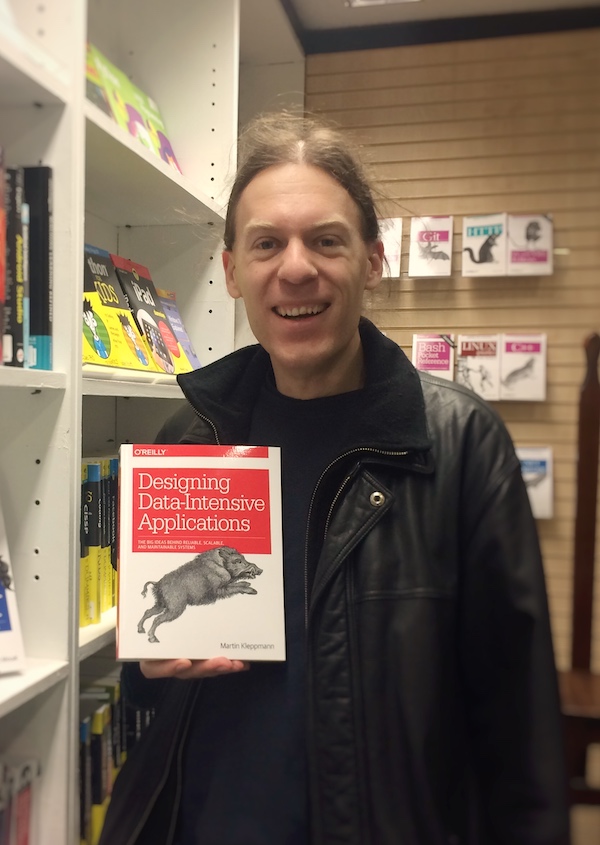
Dr. Martin Kleppmann is an Associate Professor at the University of Cambridge, specializing in local-first software and security protocols . He leads research in distributed systems, focusing on decentralized architectures, collaborative editing tools, and cryptographic methods. As a key contributor to the Automerge open-source project, he bridges academic innovation with real-world applications. Formerly a research fellow at TU Munich (2022–2023) and Cambridge (2015–2022), he has also worked as a software engineer and startup founder, including LinkedIn (acquired 2012). Research Interests span Distributed Systems Security , Conflict-Free Replicated Data Types (CRDTs) , Collaborative Software , and Cryptography . His work addresses challenges in decentralized social networks, privacy-preserving protocols, and efficient data synchronization. Recent projects include Kintsugi (end-to-end encrypted key recovery) and Pudding (private user discovery for anonymity networks). Publications emphasize Collaborative text editing (2025: Eg-walker, 2023: The Art of the Fugue) CRDTs for JSON and trees (2021, 2017) Privacy in decentralized systems (2024: Pudding, 2025: Emission Impossible) Scientific Awards include Gilles Muller Best Artifact Award (EuroSys 2025) Distinguished Paper & Artifact Awards (OOPSLA 2017) Best Presentation Awards (Security Protocols Workshop 2018, PaPoC 2025)