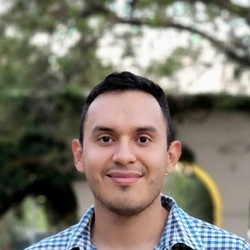
Raul Astudillo Marban is a Postdoctoral Scholar Research Associate in the Department of Computing and Mathematical Sciences at Caltech, hosted by Professor Yisong Yue. He will join MBZUAI as a tenure-track Assistant Professor in August 2025. His research focuses on adaptive learning and decision-making in complex, data-intensive environments, with applications in personalized healthcare, engineering design, and scientific discovery. He earned his Ph.D. in Operations Research and Information Engineering from Cornell University under Professor Peter Frazier and holds an undergraduate degree in Mathematics from the University of Guanajuato and the Center for Research in Mathematics. His work integrates Bayesian optimization and machine learning to address real-world challenges such as protein engineering, plant breeding, and computational biology. Key contributions include steering generative models with experimental data, preferential multi-objective optimization, and cost-aware Bayesian strategies. He has received recognition as a Rising Star in Management Science and Engineering (Stanford) and a Rising Star in Data Science (University of Chicago/UCSD). Recent research highlights include optimizing protein fitness through generative models, active learning in directed evolution, and Bayesian optimization for budget allocation in agriculture. His publications span top venues like NeurIPS, Nature Communications, and TMLR. He actively recruits students/researchers for projects in machine learning and optimization.
Allan Larsen is a Professor and Deputy Head of Division at the Department of Technology, Management and Economics (DTU Management) at the Technical University of Denmark. He heads the Operations and Supply Chain Management Section. His academic background includes an MSc in Applied Mathematics and a PhD in Operations Research, both from DTU. He teaches courses in Operations Management and Simulation at both undergraduate and graduate levels. Research Focus: His work applies operations research methodologies to complex planning problems in supply chain management, logistics, healthcare operations, and public transport. Key areas include urban freight transport, healthcare supply chains, and optimization of public transport resources like crew and fleets. Collaborations with industries, especially in freight transport, have been extensive. He previously co-directed the Transport DTU research center and co-chaired Denmark’s Transport Innovation Network. Education: MSc in Applied Mathematics (1989–1995), PhD in Operations Research (1997–1999), both from DTU. Recognition: Recipient of the Hedorf’s transportpris award in 2022 for contributions to transport research. Research Projects: Supervises multiple PhD students (e.g., on electric freight transport, healthcare resource optimization, and Industry 4.0 applications). Active in projects like 'Pioneering Electric Heavy-Duty Freight Transport' and 'Resource optimization in healthcare.' Labs/Teams: Leads the Operations and Supply Chain Management research group and collaborates in initiatives like the Transport Innovation Network, focusing on sustainable transport solutions.
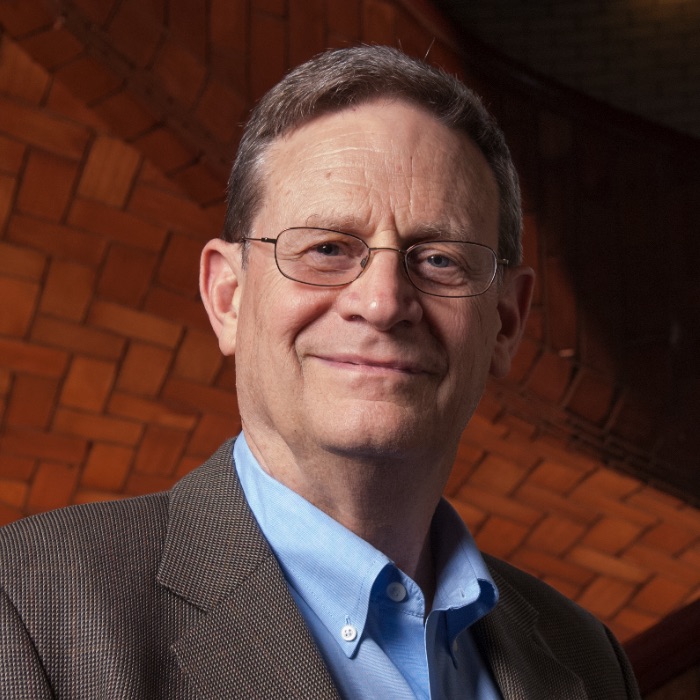
Dr. Herb Lin is the Hank J. Holland Fellow in Cyber Policy and Security at the Hoover Institution and Senior Research Scholar for Cyber Policy and Security at the Center for International Security and Cooperation (CISAC), both at Stanford University. He also serves as Chief Scientist, Emeritus for the Computer Science and Telecommunications Board of the National Academies, where he worked from 1990 to 2014, and as Adjunct Senior Research Scholar and Senior Fellow in Cybersecurity at Columbia University's Saltzman Institute for War and Peace Studies. Dr. Lin received his doctorate in physics from MIT, providing him with a strong technical foundation that informs his policy work at the intersection of technology and national security. His academic background bridges the gap between deep technical understanding and policy application in the cybersecurity domain. Dr. Lin's research focuses on the policy dimensions of cybersecurity and cyberspace, with particular emphasis on offensive cyber operations as instruments of national policy, information warfare, and influence operations affecting national security. His work addresses critical challenges at the intersection of emerging technologies like artificial intelligence, quantum computing, and their implications for nuclear security, election integrity, and democratic processes. He has been instrumental in analyzing how cyber capabilities are transforming traditional security paradigms and how policy frameworks must adapt to these changes. His extensive publication record reveals a consistent focus on the evolving relationship between cyber capabilities and national security strategy. Lin's work demonstrates increasing attention to the implications of artificial intelligence for warfare, the vulnerabilities created by quantum computing for current cryptographic systems, and the growing threat of cyber-enabled information warfare to democratic institutions. His research trajectory shows a progression from traditional cybersecurity issues toward the broader implications of digital technologies for national and international security. Member of Science and Security Board of Bulletin of the Atomic Scientists Served on President Obama's Commission on Enhancing National Cybersecurity (2016) Regular congressional testimony on cybersecurity matters Contributor to Stanford Emerging Technology Review As a mentor and collaborator, Dr. Lin works extensively with policymakers, military officials, and technology experts to translate complex cybersecurity concepts into actionable policy recommendations. His approach emphasizes practical solutions to emerging threats while recognizing the technical limitations and policy constraints that shape real-world security outcomes. Dr. Lin is associated with multiple research initiatives including Stanford's Center for International Security and Cooperation and the Stanford Emerging Technology Review, which aim to connect technological advances with policy considerations for national security decision-makers.
Bernhard J. Berger is a Lecturer in the Department of Computer Engineering at the Institute of Embedded Systems, Hamburg University of Technology (TUHH). His research focuses on software security, static code analysis, machine learning, optimization, and research data management. He has held significant roles such as Program Committee member for ICPC 2025 and MSR 2025, and has received awards including the Best Reviewer Award (ICPC 2023) and Best Engineering Paper Award (SCAM 2019). His work spans interdisciplinary applications including maritime systems security, GPU-accelerated AI, and evolutionary algorithms. Recent studies emphasize AI-driven security tools (e.g., ML-SAST) and domain-specific language approaches to optimization (EvoAl). He has contributed to over 30 peer-reviewed publications, with notable work in IEEE Transactions on Software Engineering and Science of Computer Programming. Berger collaborates closely with industry through DAAD review committees and serves on artifact evaluation boards for ISSTA and ARES conferences. Education: Doctoral Thesis (2022), Diploma in Computer Science (2007) Key Projects: ArchSec tool suite, Threat Modeling Frameworks, Bauhaus static analysis methodology Lab Affiliation: Embedded Systems Design Group His advisory roles include Deputy of TUHH's Election Verification Committee and Session Chair at IEEE Congress on Evolutionary Computation 2023. Current research trends integrate machine learning with static analysis for automated vulnerability detection, while also exploring explainable AI techniques for neural network optimization.
Ian Frigaard is a Professor in the Department of Mechanical Engineering at the University of British Columbia (UBC), affiliated with the Faculty of Applied Science. He also holds an appointment in the Department of Mathematics. His research group operates in UBC's Complex Fluids Lab, focusing on interdisciplinary studies combining mathematical, experimental, and computational approaches. Education: B.Sc. (University of Wales) M.Sc. (University of Oxford) D.Phil. (University of Oxford) C.Math. (Certificate in Mathematics) Research Interests: Professor Frigaard specializes in non-Newtonian fluid mechanics, particularly the mechanics of visco-plastic (yield stress) fluids. His work addresses industrial challenges in petroleum engineering, including well cementing, leakage prevention, and abandonment techniques related to GHG emission control and environmental protection. Research methodologies span theoretical modeling, experimental validation, and computational simulations. Publication Trends: Recent work (2021–2023) emphasizes bubble dynamics in complex fluids, displacement flows in annular geometries, wellbore integrity modeling, and stochastic risk assessment for oil/gas operations. Publications frequently appear in top-tier journals like the Journal of Fluid Mechanics and Journal of Non-Newtonian Fluid Mechanics . Awards & Honors: CSME Fluid Mechanics Medal (2024) Stanley G. Mason Award, Canadian Society of Rheology (2022) Killam Research Prize, UBC (2019) Academic Leadership: Leads a research group of 10+ graduate students and postdocs. Provides summer internships and collaborates extensively with the petroleum industry. Research is supported by industrial partnerships and institutional grants. Facilities: Conducts experiments in UBC's Complex Fluids Lab, equipped for advanced rheological measurements and flow visualization.
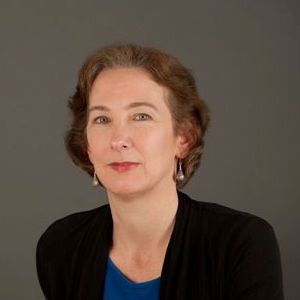
M. Granger Morgan is the Hamerschlag University Professor of Engineering at Carnegie Mellon University , with appointments in the Department of Engineering and Public Policy , Department of Electrical and Computer Engineering , and H. John Heinz III College . He co-directs the NSF Center for Climate and Energy Decision Making and the Electricity Industry Center at CMU. Education: Ph.D., Applied Physics and Information Science, University of California, San Diego (1969) M.S., Astronomy and Space Science, Cornell University (1965) B.A., Physics, Harvard College (1963) His research spans science, technology, and public policy with focus areas in energy systems , climate change mitigation , electric grid resilience , and uncertainty characterization in policy analysis . Recent publications analyze hydrogen market barriers , carbon sequestration timelines , and interdependent energy infrastructure risks . Scientific leadership includes: Member, National Academy of Sciences Member, American Academy of Arts and Sciences Co-chair, NAS Report Review Committee Board member, International Risk Governance Council Foundation Advisory Board, E.ON Energy Research Center, RWTH Aachen DOE Electricity Advisory Committee member Former EPA Science Advisory Board Chair Fellow of AAAS, IEEE, and Society for Risk Analysis Contact: Office 5220 Wean Hall, Phone 412-268-2672, Email granger.morgan@andrew.cmu.edu
Professor Shoon Murray is a distinguished faculty member at American University's School of International Service, specializing in American foreign policy and civil-military relations. Holding a PhD in political science from Yale University, she teaches foundational courses including Analysis of US Foreign Policy (SISU-230) and Foreign Policy: Theory and Decision Making (SIS-689). Education: PhD in Political Science, Yale University Research Focus: Dr. Murray's scholarship critically examines war powers, decision-making theory, and the interplay between public opinion, media, and foreign policy formation. Her work analyzes how political leaders navigate security crises, congressional-authority tensions in military actions, and institutional shifts in diplomatic practices amid global power diffusion. She investigates enduring phenomena like the “rally ‘round the flag’” effect while documenting the post-9/11 militarization of U.S. strategic approaches. Publication Trends: Recent research centers on the evolution of the 2001 AUMF, combatant commanders' diplomatic roles, and State Department-DoD institutional competition. Her scholarship reveals how military actors increasingly shape foreign policy narratives while traditional diplomatic channels erode, with implications for democratic accountability and strategic coherence in counterterrorism operations.
Raissa M. D'Souza is a Professor and Associate Dean of Research in the College of Engineering at the University of California, Davis. She holds joint appointments in the Department of Computer Science, Department of Mechanical and Aerospace Engineering, Graduate Group in Applied Mathematics, and Graduate Group in Physics. Her research focuses on complex networks, percolation theory, cascades, and interdependent systems, with applications to social, biological, and technological networks. She leads the Networks and Control research group and is a Founding Lead Editor of Physical Review Research . Her work spans interdisciplinary collaborations, including with the Santa Fe Institute and the Complexity Sciences Hub Vienna. Key awards include Fellowships from AAAS (2024), APS (2016), and the Network Science Society (2019), as well as the Euler Award for her contributions to network science. Dr. D'Souza has advised over 10 PhD students and has secured grants from agencies including the NSF. Her lab explores topics like explosive percolation, synchronization in oscillator networks, and network controllability. Notable recent work includes studies on exotic synchronization patterns and strategies for mitigating cascading failures in interdependent systems.
Dr. Kenan Arifoglu is an Associate Professor at the UCL School of Management. He previously held a postdoctoral position at the Ross Business School, University of Michigan (2008–2012). His education includes a PhD in Industrial Engineering and Management Sciences from Northwestern University (2012), two MSc degrees from Northwestern University (2008) and Koç University (2007), and a BSc from Koç University (2005). His research focuses on behavioral motivations in healthcare, supply chains, pricing, and entrepreneurial operations. Key projects include analyzing inefficiencies in flu vaccine supply chains and developing frameworks for high-growth startups. His work bridges operations management with practical challenges in healthcare, retail, and entrepreneurship. Recent publications address topics such as luxury brand licensing dynamics, incentive programs in healthcare systems, and the theoretical foundations of lean startup methodologies. These contributions span disciplines like marketing, operations research, and public health, emphasizing cross-sectoral applications. Dr. Arifoglu’s advising and grant activities are not detailed here. He is affiliated with the UCL School of Management and actively contributes to academic discourse through his research and teaching roles.
Dr. Jérôme Verny is an Associate Professor specializing in transport, logistics, and supply chain management. He is the founder and director of the research institute in innovative transport and logistics, as well as the co-founder of the DISC Master's program (Digital & Innovative Supply Chain) in Paris and the Mobility Accelerator. His expertise spans digitalization in logistics, blockchain applications, and sustainable development. Educated at the University of Lille Nord de France (PhD in Economics and Management) and engineering schools like École Nationale des Ponts et Chaussées, he advises both public institutions (OECD, EU) and private enterprises on transportation strategies. Research Interests: Dr. Verny focuses on supply chain innovation, digital transformation, and strategic logistics. His work integrates blockchain technology for supply chain transparency, optimizes last-mile delivery in urban environments, and analyzes the impact of geopolitical actors like China on global trade networks. He also explores sustainable practices in transportation, including CO2 reduction strategies and pandemic response logistics. Awards: Recipient of the 2009 OECD-FIT Young Researcher Prize in Transport. His contributions bridge academic research with practical applications in industry, policy, and international trade. Key Activities: Co-founded the DISC Master’s program and leads research initiatives on blockchain adoption, Arctic shipping routes, and Mediterranean trade dynamics. He actively contributes to conferences such as the International Association of Maritime Economists (IAME) and publishes in journals like Structural Change and Economic Dynamics and International Journal of Shipping and Transport Logistics . Labs/Teams: Directs the Institut de Recherche en Transport et Logistique Innovante and collaborates with institutions like the OECD and European Commission on transport policy. His interdisciplinary approach involves engineering, economics, and data science to address global supply chain challenges.
Konstantinos Drakos is a Professor at the Department of Accounting and Finance, Athens University of Economics and Business (AUEB). Previously, he served as Assistant Professor at AUEB (2009–2012), Assistant Professor at the University of Patras (2003–2008), and Lecturer at the University of Essex (2001–2002). He holds a PhD in Economics from the University of Essex, preceded by an MSc and undergraduate studies in Economics at the University of Athens. His research focuses on Applied Financial Economics and the Economics of Security, with recent work analyzing hedge fund leverage, geopolitical risk impacts, cryptocurrency markets, and green banking. Teaching responsibilities include Macroeconomic Theory, Finance for Banking, and Risk Management at both undergraduate and postgraduate levels. Drakos' publications span over two decades, addressing topics such as terrorism's economic effects, bank lending behavior, and investment under uncertainty. His recent articles (2022–2025) emphasize cryptocurrency dynamics, geopolitical risk interactions, and financial stability in green banking. Notable themes include market volatility, capital allocation under uncertainty, and policy responses to systemic risks. No scientific awards are listed in the provided materials. His research has explored structural shifts in financial risk, macroeconomic sentiment, and cross-market linkages following major global events like 9/11 and the 2008 crisis. Drakos has advised on policy-related topics related to financial markets and regulatory frameworks, though specific grants or lab affiliations are not detailed here.
Richard E. Turner is a Professor of Machine Learning at the University of Cambridge's Department of Engineering and Research Lead for AI for Weather Prediction at the Alan Turing Institute. He serves as Cambridge Lead for the EPSRC Probabilistic AI Hub and previously held roles including Visiting Researcher at Microsoft Research, Co-Director of the AI4ER CDT, and Course Director for the Machine Learning and Machine Intelligence MPhil program. Current research focuses on probabilistic machine learning fundamentals, environmental prediction (weather/climate), and spatio-temporal modeling combining deep learning with Bayesian methods Supervised 26 PhD students (13 graduated) and 7 research assistants/associates Secured over £30M in research funding from EPSRC, Microsoft, Toyota, Google, DeepMind, Amazon, and Improbable Featured in BBC Radio 5 Live's The Naked Scientist, BBC World Service's Click, and Wired Magazine His recent publications demonstrate expertise in diffusion models for PDE simulations, Gaussian Processes for environmental applications, and Bayesian methods for spatio-temporal forecasting. Key trends include climate modeling using ML, neural PDE solvers, and scalable probabilistic inference. Awards : Cambridge Students' Union Teaching Award for Lecturing; supervised Qualcomm Innovation Fellowship winner Collaborations : Microsoft Research (AI4Science), Alan Turing Institute, EPSRC Probabilistic AI Hub Turner leads the Turner Group within Cambridge's Machine Learning Group, focusing on uncertainty-aware ML for scientific applications. Current research assistants work on topics like meta-learning, Bayesian inference, and climate science applications.
Arno De Caigny is an Associate Professor at IÉSEG School of Management in France, specializing in Marketing Analytics. He holds a Ph.D. in Sales and Marketing from the University of Lille and Masters in Economics/Mathematics and Finance from Ghent University. His professional experience includes work as a Business Analyst at Deloitte. His primary research interests include customer churn prediction, AI applications in marketing, explainable AI for business, and life event-based marketing. He develops advanced machine learning models for customer behavior prediction and retention strategies. De Caigny's recent publications demonstrate strong focus on developing interpretable machine learning models for business applications, particularly in customer churn prediction and financial decision support. His work increasingly incorporates deep learning and natural language processing techniques.
Prof. Dr. Mirko Kremer is a Professor of Supply Chain Management at the Frankfurt School of Finance & Management since July 2014. Prior to this, he was an Assistant Professor at Pennsylvania State University (2008-2014) and held visiting roles at London Business School, Kellogg School of Management, and INSEAD. He earned a Ph.D. in Business Administration from the University of Mannheim (2008), with prior studies in Business Administration at Mannheim (1999-2003) and Economics at Ruhr-Universität Bochum (1997-1999). Research Focus: Micro-behavioral foundations of supply chains, inventory management, sales forecasting, and service systems. Editorial Roles: Department Editor for Production and Operations Management , Associate Editor for Operations Research . Teaching: Courses in Operations Management, Supply Chain Strategy, and quantitative decision modeling at Frankfurt School, INSEAD, London Business School, and Kellogg School of Management. Research Trends: His work bridges behavioral economics with supply chain operations, emphasizing how human decision-making (e.g., managerial biases, consumer behavior) impacts inventory systems, pricing strategies, and forecasting accuracy. Recent articles focus on diagnostic errors under congestion, strategic sourcing biases, and dynamic pricing experiments.
Daniel Adelman is the Charles I. Clough, Jr. Professor of Operations Management at the University of Chicago Booth School of Business. He joined the faculty in 1997 after completing his PhD in industrial engineering and operations research at Georgia Tech. Adelman is a leading expert in Business Analytics and Management Analytics, helping companies deploy data and decision analysis to build world-class strategic and tactical management capabilities. Adelman received his PhD in industrial engineering and operations research in 1997, along with a bachelor's degree in industrial engineering and a master's degree in operations research, all from the School of Industrial and Systems Engineering at the Georgia Institute of Technology. Daniel Adelman's research focuses on applying analytical models to solve complex business problems across multiple industries. He has worked with firms from diverse sectors including internet services, chemical distribution, airlines, third party logistics, fiber-optics manufacturing, semiconductor manufacturing, oil, and healthcare. His research integrates real-world data with analytical models to bring structure and discipline to decision and control processes, enabling firms to achieve higher profits with lower risk. Adelman's recent work has concentrated heavily on healthcare analytics, where he leads the Healthcare Analytics Laboratory at Chicago Booth. This lab works with teams of doctoral and MBA students on projects with major healthcare institutions to optimize clinical, operational, and financial outcomes. His research spans foundational operations research including approximate dynamic programming, inventory theory/supply chain management, and revenue management/pricing optimization, as well as examining the linkage between operational performance metrics and financial performance of firms. Adelman's publications show a clear trend toward increasing focus on healthcare applications while maintaining strong theoretical foundations in operations research. His earlier work focused more on general operations management problems like inventory control and supply chain optimization, while his recent publications demonstrate a strategic shift toward healthcare analytics, particularly examining surgical team dynamics, hospital performance metrics, and resource allocation during public health emergencies like the COVID-19 pandemic. George B. Dantzig Prize (1998) for the best dissertation in operations research and management sciences that is innovative and relevant to practice Adelman regularly advises doctoral and MBA students through the Healthcare Analytics Laboratory at Chicago Booth. He has served as Associate Editor for Management Science, currently serves as Associate Editor for Manufacturing and Service Operations Management, and is the Area Editor for Operations and Supply Chain at Operations Research. His industry collaborations include significant projects with Akamai on internet pricing, with GE Global Research Labs on the electricity smart grid, with BP on gasoline supply contract portfolio optimization, and with Symantec on software release planning. Adelman leads the Healthcare Analytics Laboratory at Chicago Booth, which brings together interdisciplinary teams of doctoral and MBA students to work on a portfolio of projects with major healthcare institutions. The lab focuses on optimizing clinical, operational, and financial outcomes through advanced analytics and decision modeling.