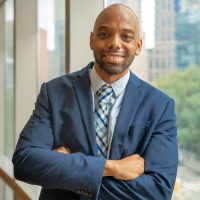
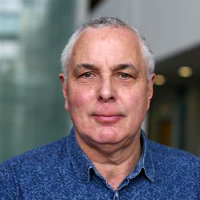
Jared M. Trujillo is an Associate Professor of Law at the CUNY School of Law. He teaches Constitutional Law, legal writing, and courses focused on the criminal and juvenile legal systems. Previously, he served as Senior Policy Counsel at the New York Civil Liberties Union, President of the Association of Legal Aid Attorneys, and as a criminal defense attorney at the Legal Aid Society NYC. He also taught as an adjunct professor at Hofstra University School of Law from 2016 through 2021. CUNY School of Law - Associate Professor New York Civil Liberties Union - Senior Policy Counsel Legal Aid Society NYC - Juvenile Defense Attorney Hofstra University School of Law - Adjunct Professor His research and advocacy focus on sentencing reform , bail policy , solitary confinement , policing of LGBTQ+ communities , Communications Decency Act Section 230 , foster care , and decriminalization of sex work . His publications analyze legislative impacts, systemic inequalities, and policy advocacy within criminal and juvenile legal systems. Jared's recent law review article on sentencing reform (2023) explores multigenerational poverty reduction through legal system changes. His 2022-2023 essays address solitary confinement ethics, policing reform, and bail system critiques, reflecting ongoing engagement with media and policy debates.
Emily D. Gottfried, PhD, is an Associate Professor at the Medical University of South Carolina (MUSC) in the Department of Psychiatry and Behavioral Sciences, College of Medicine. She serves as Director of the MUSC Sexual Behaviors Clinic and Lab (SBCL) and CPSPD Student Education & Research, conducting forensic evaluations, physiological sexual arousal assessments, and mentoring students. She is licensed in South Carolina and Georgia, and a National Register Health Service Psychologist. Bachelor’s in Psychology, San Diego State University Master’s in Psychology, Teachers College, Columbia University PhD in Clinical Psychology, Florida State University Her research focuses on sex offender risk assessment , malingering detection (PPG/VPP technology), female offender psychology , and forensic evaluation validity . Recent work includes dimensional personality models and QAnon-related threat analysis . She has published extensively on psychopathy , penile/vaginal plethysmography , and mental health court outcomes . Notable publication trends include Forensic validity of symptom detection tools Psychopathy in female offenders Technology's role in sexual behavior assessment Telehealth adaptation during pandemics MMPI-2-RF applications in correctional settings Psychological factors in civil commitment She leads ongoing funded studies on female sexual arousal and police officer behavioral outcomes , operating at the intersection of forensic science and clinical psychology .
Professor Philip Birch is a distinguished academic in Criminology at the University of Technology Sydney (UTS), Faculty of Design & Society, School of International Studies & Education. With over 15 years of academic experience across British, American, and Australian university systems, he has established himself as a leading expert in policing, community safety, and criminal justice. His extensive practical background in criminology, including roles as a Specialist Crime Team Manager, Community Safety Research Manager, and Through Care Worker in UK correctional facilities, informs his applied research approach. Professor Birch's educational background includes a BSocSci. (Hons) in Social Policy (Crime & Justice) from the University of Manchester, multiple postgraduate qualifications from the Open University (including an MSc. in Social & Criminological Research Methods), a Post Graduate Certificate in Higher Education Practice from the University of Huddersfield, and a PhD in Criminology from the University of New South Wales. He also holds a Fellowship with the Higher Education Academy. His research centers on six key areas: Police & Policing; Community Safety & Crime Prevention; Prisons, Probation & Parole Policy & Practice; Assessment, Treatment & Management of Offenders; Gender & sexuality inclusive Domestic and Family Violence; and Sex Work, Sex Workers and Procurement. His work emphasizes the practical application of criminological research to real-world justice issues, with strong industry engagement across law enforcement and correctional services. Recent publications reveal a clear trend toward police mental health, aging in policing, hate crime identification, trauma-informed policing approaches, and digital community safety initiatives. His research employs diverse methodologies including qualitative case studies, Delphi methods, rapid evidence assessments, and comparative analyses across multiple jurisdictions. Teaching award (2019) from Australian College of Educators for outstanding contribution to education Literati Award (2019) for published work Fellowship of the Higher Education Academy Professor Birch has supervised numerous Honours, Masters by Coursework, Masters by Research and PhD students in Criminology, Criminal Justice and Policing, with several completions to date. He has secured over $1.3 million in research funding, including an ARC Linkage grant, and has acted as an external assessor for domestic and international funding bodies. His research projects address critical issues in criminology and policing, often with direct policy implications. He established the Crime & Security Science (CaSS) Research Group at UTS in 2022, a cross-faculty initiative connecting academia with industry to advance evidence-based criminology, criminal justice, policing, and community safety research. This group serves as a hub for collaborative projects addressing contemporary security challenges through translational research.
Laura Albert is a Professor of Industrial & Systems Engineering at the University of Wisconsin-Madison and former David H. Gustafson Department Chair (2021-24). She serves as a Fellow of AAAS and IISE, and previously held the INFORMS presidency. Her research focuses on optimizing public-sector systems, with applications in critical infrastructure protection, emergency response, and cybersecurity. She advocates for public engagement through op-eds and blogs like 'Punk Rock Operations Research.' Education: PhD in Industrial Engineering, University of Illinois at Urbana-Champaign (2006) MS in Industrial Engineering, University of Illinois at Urbana-Champaign (2001) BS in Industrial Engineering, University of Illinois at Urbana-Champaign (2000) Research Interests: Dr. Albert’s work bridges operations research and public policy, addressing challenges in emergency medical services, voting system security, law enforcement strategies, and opioid treatment diversion programs. She employs mathematical optimization, game theory, and stochastic modeling to design resilient systems. Awards: INFORMS Impact Prize (2018) NSF CAREER Award (2011) Fulbright Award (2020) AAAS Fellow (2020) Advising & Grants: While explicit student names aren’t listed, her research has been supported by grants from the NSF, Army Research Office, and other agencies. She advises on interdisciplinary projects involving public health, cybersecurity, and disaster management. Labs/Teams: Engaged in collaborative efforts across the College of Engineering, including affiliations with the Electrical & Computer Engineering department. Leads initiatives on resilient infrastructure and emergency response systems.
Kevin O'Brien is the Jack M. Forcey Professor of Political Science at the University of California, Berkeley. He specializes in Chinese politics, particularly focusing on contentious politics, protest dynamics, and state-society relations in rural China. His research examines mechanisms of protest control, authoritarian governance, and institutional reforms. O'Brien holds a B.A. from Grinnell College (1979) and a Ph.D. from Yale University (1987). Education: B.A., Grinnell College; Ph.D., Yale University Affiliations: Institute of East Asian Studies, UC Berkeley Research interests include rightful resistance, relational repression, and adaptation strategies under autocratic regimes. He has authored/co-authored influential books such as Rightful Resistance in Rural China and edited volumes on popular protest and grassroots elections in China. Books: Reform Without Liberalization , Popular Protest in China , Grassroots Elections in China Awards include the Sage Award for Best Paper in Comparative Politics (2004). His work integrates fieldwork insights with theoretical frameworks, addressing topics like land expropriation, migrant worker rights, and NGO operational challenges in China's evolving political landscape.
Prof. Gjalt de Graaf is a Full Professor in the Department of Political Science and Public Administration at Vrije Universiteit Amsterdam, leading the New Public Governance (NPG) research group. He holds dual appointments in the Faculty of Social Sciences and Humanities, specializing in public governance quality, integrity, and value conflicts. His work addresses how social media, academic education, and whistleblowing impact governance practices. Research focuses on resolving public value conflicts, particularly in academia and public institutions. He explores governance through lenses like art’s role in policy-making and administrative traditions’ influence on professional ethics. Notable contributions include studies on Dutch justice policy under pressure and cross-national comparisons of academic integrity. Awarded the Best Article Award 2017 Public Integrity and the VU Faculty of Social Sciences Research Prize (2008) , his work aligns with UN SDGs on peace, justice, and strong institutions. He advises 4 PhD theses and leads projects like Veerkrachtige en zinvolle samenlevingen , addressing societal resilience and youth participation. Teaching includes courses on good governance, public administration ethics, and leadership in dynamic environments. He actively engages in media commentary on integrity issues and organizes conferences on anti-corruption and ethical leadership.
Ágnes Deák is a Professor at the Department of Modern Hungarian History, Faculty of Humanities and Social Sciences, University of Szeged. She has held key academic leadership roles including Head of Department (2019-2022) and Vice-Chairperson of the Historical Committee at the Hungarian Academy of Sciences. Her research focuses on 19th-century Habsburg Monarchy, Hungarian nationalism, and state police systems. Education: BA/MA in History and Literature from József Attila University (1979-1985), PhD (2000), DSc (2014) from Eötvös Loránd University and Hungarian Academy of Sciences. Research interests include the political career of Ferenc Deák, secret police operations, and press policies. She has led major research projects on topics like the Protestant Patent Movement (2021–2024) and political press dynamics (2016–2021). Awards include Soros Foundation scholarships and multiple Hungarian research grants. Editorial roles: Editor-in-Chief of Aetas historical journal since 1991.
Alfred W. McCoy is the Harrington Professor of History at the University of Wisconsin-Madison. His work spans modern empires, Philippine political history, global drug trafficking, and CIA covert operations. He holds a Ph.D. from Yale University, alongside an M.A. from the University of California-Berkeley and a B.A. from Columbia College. His research has produced seminal works such as The Politics of Heroin (1972), which exposed CIA complicity in drug trafficking, and To Govern the Globe (2021), analyzing imperial systems from the Black Death to climate crisis. His investigations into torture, surveillance, and Philippine military culture have won major awards, including the Wilbur Cross Medal (2012) and the Association for Asian Studies’ Kahin Prize (2011). McCoy has advised students like Christopher Hulshof and Daniel Jackson. His teaching focuses on Southeast Asian history, U.S. foreign policy, and imperial studies. Courses include The Vietnam Wars and CIA Covert Warfare . His contributions include exposing Marcos’s 'fake medals' in the New York Times and co-editing award-winning volumes on Philippine historiography. He currently holds the J.R.W. Smail Chair in History and has received the Hilldale Award for Arts & Humanities.
Robert A. Sanders is an Associate Professor in the National Security Department/Homeland Security within the Henry C. Lee College of Criminal Justice & Forensic Sciences at the University of New Haven. A retired U.S. Navy Judge Advocate General's Corps Captain, Dr. Sanders brings over two decades of experience in legal and national security matters to his academic role. Dr. Sanders holds an impressive educational background including an LP.D in Law and Policy from Northeastern University (2013), an LLM from the U.S. Army Judge Advocate General's School (1995), a JD from Catholic University's Columbus School of Law (1988), an MS in Strategic Intelligence from the National Intelligence University (2007), an MA in National Security and Strategic Studies from the U.S. Naval War College (2002), an MS in International Relations from Troy State University (1997), and a BS in Electrical Engineering from Northeastern University (1983). His research focuses on National Security, International Law, Law of Armed Conflict, Human Rights, African American/African Diaspora History, American History, Government/Political Affairs, Armed Conflict Analysis/History, and International Military Education and Training. Dr. Sanders frequently contributes expert commentary on national security matters to major media outlets including Fox News, NBC, CNN, and others, where he has provided analysis on topics ranging from the Israel-Hamas conflict to U.S. domestic security issues and international relations. His scholarly work demonstrates consistent engagement with critical international security challenges, particularly in the areas of territorial disputes, UN peacekeeping operations, comparative policing approaches between nations, and human rights frameworks. The publications reflect his expertise in translating complex legal and military concepts for broader audiences while maintaining academic rigor. Fellow (National Security), MIT Seminar XXI, 2010 Topical Research Intern (African-American Diaspora), DEOMI TRIP, 1999 Dr. Sanders has served in numerous significant roles including as a U.S. Naval War College Military Law and Operations Professor (2014-2019), Director of the U.S. Department of Defense's Defense Institute of International Legal Studies (2011-2014), and Commanding Officer of the U.S. Naval Legal Service Office. He has also served on the Blue Cross Blue Shield of Rhode Island Board of Directors since September 2016 and previously served on the Rhode Island Black Heritage Society Board and the U.S. Secretary of Defense's Recovering, Wounded, Ill and Injured Members of the Armed Forces Task Force.
Jordi Perelló Muntan is an Associate Professor in the Department of Computer Architecture at the Universitat Politècnica de Catalunya (UPC), Barcelona, Spain, where he is also affiliated with the Escola Tècnica Superior d'Enginyeria de Telecomunicació de Barcelona (ETSETB). He is a member of the Broadband Communications Systems and Architectures (CBA) and IDEAI-UPC research groups, focusing on advanced optical and future internet networking technologies. Research Interests: His research spans telecommunications networks, optical fiber and optical networking, resource optimization, network architectures, and the Future Internet. He investigates performance optimization in 5G transport networks, Spatial Division Multiplexing (SDM), Recursive Inter-Network Architecture (RINA), elastic optical networks, and cognitive networking. His work integrates SDN, network virtualization, and green networking principles for scalable and efficient infrastructures. Publication Trends: His recent publications focus on probabilistic constellation shaping in multicore fiber networks, cognitive strategies for optical margin reduction, RINA-based QoS assurance, and migration planning toward spectrally-spatially flexible optical networks. These reflect a strong trend toward intelligent, adaptive, and energy-efficient network design for future communication systems. Scientific Awards: Co-recipient of the 2020 Fabio Neri Best Paper Award Runner-up (Elsevier Journal of Optical Switching and Networking) Co-recipient of the ONDM 2021 Best Paper Award Co-recipient of the 2019 IEEE Communications Society Charles Kao Award Co-recipient of the ONDM 2012 Best Student Paper Award Advising and Grants: He has advised multiple PhD students on topics including RINA, optical network planning, and virtual provisioning. He has led or participated in major European (H2020, FP7) and national (PID, TEC) research projects such as SLICENET, PRISTINE, TRAINER, and ALLIANCE, focusing on 5G, RINA, and sustainable network infrastructures. Labs and Teams: He is an active member of the CBA research group at UPC, contributing to experimental and theoretical advancements in optical and programmable networks. His team collaborates internationally on testbed development and standardization efforts in next-generation networking.
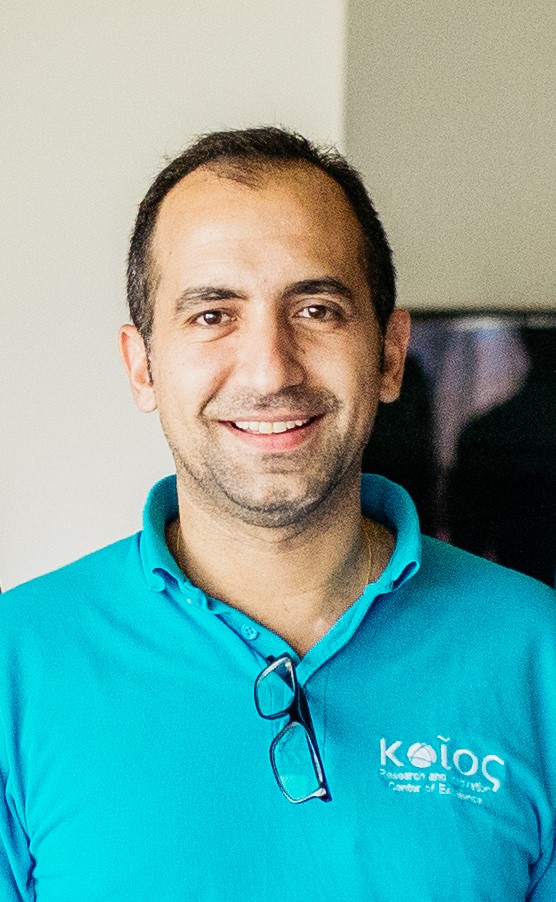
Panayiotis Kolios is an Assistant Professor at the Department of Computer Science, University of Cyprus (UCY). Previously, he served as a Research Assistant Professor at the KIOS Research and Innovation Centre of Excellence (2013–2024) and a Visiting Lecturer at UCY. He holds a BEng and PhD in Telecommunications Engineering from King’s College London (2008 and 2012, respectively). His research focuses on networked intelligent systems, emergency management using AI and UAV technologies, and cyber-physical systems. Education: BEng in Telecommunications Engineering, King’s College London, 2008 PhD in Telecommunications Engineering, King’s College London, 2012 Research Interests: His work centers on autonomous systems, intelligent transportation, and emergency management. Key areas include AI-driven disaster response, UAV-based surveillance, and algorithmic optimization for critical infrastructure. He develops solutions for real-time situational awareness and decision-support in emergencies. Recent work trends show a focus on multi-UAV coordination, disaster management platforms (like AIDERS), and AI applications in emergency response. His team’s 2023 win in the Cooperative Aerial Robots Inspection Challenge highlights advancements in UAV inspection algorithms. Scientific Awards: First Prize in Cooperative Aerial Robots Inspection Challenge (CDC 2023) Grants and Advising: He has secured over €40 million in EU and industrial grants, leading projects like PREDICATE, SWIFTERS, and AIDERS. His team advises on emergency response strategies and has trained first responders through EU-funded programs such as the Exchange of Experts training. Labs and Teams: He leads the Security and Emergency Response Group at KIOS CoE and established the Cyprus Civil Defence Aerial Observation Unit. His team collaborates with institutions like the Cyprus Police and Fire Service to operationalize UAV technologies in disaster scenarios.
Dr. XiaoYue Cathy Liu is an Associate Professor in the Department of Civil & Environmental Engineering at the University of Utah. She holds a PhD in Transportation Engineering from the University of Washington and advanced degrees in Transportation Planning and Electronics Engineering. Her research focuses on sustainable transportation systems, shared mobility, public transit optimization, managed lanes, and intelligent transportation systems. She actively serves on committees including the Transportation Research Board's Highway Capacity Quality of Service (HCQS) Committee and chairs its Technology Transfer Subcommittee. She also advises the Utah Model Advisory Committee and previously served on Salt Lake City’s Transportation Advisory Board. Dr. Liu is a licensed professional engineer in Utah. Education: PhD, Transportation Engineering, University of Washington (2013) MA, Transportation Planning & Management, Texas Southern University BS, Electronics & Electrical Engineering, Beijing Jiaotong University Graduate Certificate, Global Trade & Logistics, University of Washington (2011) Research Interests: Electric vehicle infrastructure and charging networks Smart transportation systems and agent-based modeling GIS-based asset management for transportation infrastructure Snowplowing operations optimization and winter maintenance Managed lanes and high-occupancy toll (HOT) lane analysis Public transit equity and accessibility Her recent publications emphasize data-driven approaches to transportation challenges, including EV demand forecasting, drone delivery networks, and resilience in interdependent transit systems. She collaborates on projects addressing Utah’s unique transportation needs, such as optimizing snowplow routes and integrating renewable energy into public transport systems. Professional Contributions: Board member, Utah Model Advisory Committee Former Chair, Salt Lake City Transportation Advisory Board (2013-2016) TRB Managed Lane Committee member TRB Transit Capacity & Quality of Service (TCQS) Committee member (2016-2019) Dr. Liu’s work bridges transportation engineering with computational methods, focusing on equity, sustainability, and operational efficiency. She leads research initiatives involving large-scale modeling, geospatial analytics, and interdisciplinary solutions for modern mobility challenges.
Dr Paul Lashmar is a Reader in Journalism at the Department of Journalism , City, University of London , within the College of Arts and Social Sciences . He previously served as Head of Department (2019–2021) and has extensive experience as a national journalist, having worked for The Observer , The Independent , World in Action , BBC, and Channel 4. His academic and professional background is detailed through the following areas: Education: PhD, Brunel University London, 2015 PDAP (PGSHE Equivalent), Brunel University London, 2011 His research interests center on investigative journalism, media and intelligence agencies, propaganda, slavery and colonial history, and policing. His current research includes the legacy of British landed gentry in colonial slavery, Cold War covert propaganda via the Foreign Office’s Information Research Department (1947–1977), and police-media relations. His recent publications reflect a strong trend in historical and political journalism, with a focus on uncovering hidden power structures, intelligence operations, and colonial injustices. His work spans books, peer-reviewed articles, and public commentary in outlets like The Conversation , The Guardian , and The Observer . Key themes include media ethics, source protection in the digital age, and the role of journalism in democratic accountability. Scientific awards and honors are not explicitly mentioned in the provided text. In terms of advising and grants : Successfully secured a City internal HEIF grant (£4,825) for the Journalism Archive Project, a collaboration with London Metropolitan Archives. Adviser to the AHRC-funded project ‘Writers in Intelligence’ (£415,000). Supervised PhD students including Natricia Duncan, Lin Pan, and Dr Sawsun Tah. He has played a significant role in public engagement, organizing a conference on organ trafficking with the Metropolitan Police and speaking at high-profile events such as the US Embassy’s MP CSCC Training Day. He also led media training within his department and contributed to numerous television documentaries and radio programs on intelligence and crime. He is a founder of the Bureau of Investigative Journalism and has advised The Centre for Investigative Journalism, underscoring his leadership in advancing investigative journalism standards.
Aaron J. Chalfin serves as Associate Professor and Graduate Chair of Criminology within the Department of Criminology at the University of Pennsylvania's College of Liberal and Professional Studies. He maintains significant external affiliations as a Senior Fellow at the Niskanen Center, faculty research fellow at the National Bureau of Economic Research, and research affiliate at the University of Chicago Crime Lab. His academic foundation includes: PhD in Public Policy, University of California, Berkeley (2013) MA in International and Development Economics, Yale University (2004) BS in Industrial & Labor Relations, Cornell University (2003) Chalfin's research program centers on policing economics, officer behavioral preferences, place-based crime prevention strategies, and victimization determinants. He concurrently advances methodological rigor in social science through innovations in measurement error correction, spatial crime concentration metrics, and administrative data linkage techniques. His empirical approach consistently bridges theoretical criminology with practical policy evaluation. Recent publications reveal evolving research trajectories across bias-motivated violence measurement during pandemics, low-cost gun violence interventions, racial disparities in traffic fatalities, and methodological improvements for policy analysis. This body of work demonstrates sustained commitment to evidence-based criminal justice solutions through experimental and quasi-experimental designs. His ongoing collaboration with the University of Chicago Crime Lab exemplifies integration between academic research and real-world crime laboratory operations, focusing on scalable public safety innovations.
Dr. Kris Stoddart is an Associate Professor of Cyber Threats at Swansea University's School of Social Sciences, affiliated with the Hillary Rodham Clinton School of Law and the Cyber Threats Research Center (CYTREC). He previously served as a Reader at Aberystwyth University and Deputy Director of the Center for Intelligence and International Security Studies. His research focuses on cybersecurity, cyber warfare, nuclear weapons, and international security. Notable projects include a £1.2M study on cybersecurity lifecycles (2014–2017) and EU-funded work on hybrid warfare resilience. He is a Fellow of the Royal Society of Arts and has advised UK policing ethics panels. His recent publications include works on Russia's cyber campaigns in Ukraine and cyber threats to critical infrastructure. Research interests span cyber espionage, cyber terrorism, and the intersection of technology with global security. He has authored/co-authored five books and over 25 articles, including Cyberwarfare: Threats to Critical Infrastructure (2022). Media engagements include BBC Radio and NATO cybersecurity forums. Awards include recognition from the Higher Education Academy and Royal Historical Society. Current supervision includes PhD candidates exploring crypto-crimes and humanitarian intelligence analysis. Grants include EU Jean Monnet funding (€30K) and leadership in SCADA cybersecurity projects.