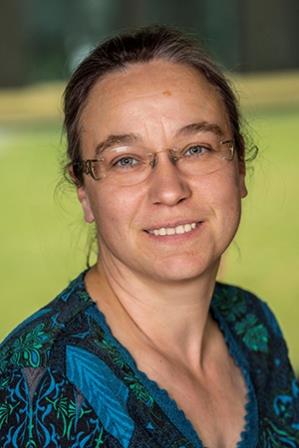
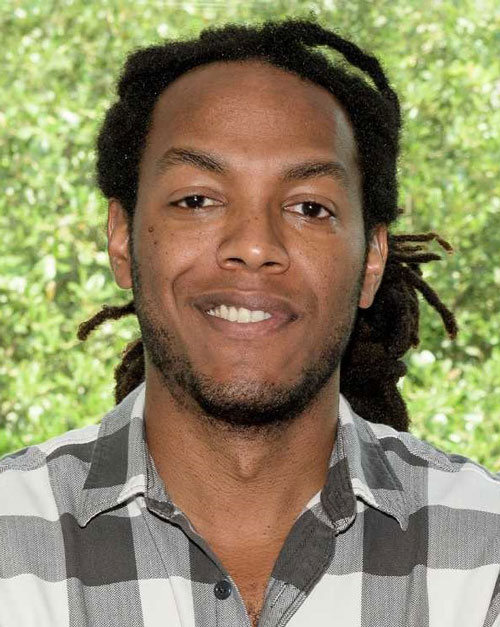
Oliver Höftberger is affiliated with TU Wien's Institut für Technische Informatik , part of the Faculty of Informatics. His research focuses on Cyber-Physical Systems , Real-Time Systems , Embedded Systems , and Resilient Systems-of-Systems . He has contributed to frameworks for self-healing cyber-physical systems and resilient master clocks, emphasizing fault tolerance and dynamic reconfiguration. Publications highlight work on emergence phenomena in systems-of-systems, ontology-based runtime adaptation, and multi-core processor architectures like the ACROSS MPSoC for safety-critical applications. He has advised multiple PhD and Master’s students, including Denise Ratasich, Nazir Alakhras, and Julian Grahsl. Key projects include the universAAL platform for Ambient Assisted Living and sensor fusion packages for robotics (ROS). His research bridges theoretical systems modeling with practical implementations in complex, safety-critical domains.
Stefano Bonzio is an Associate Professor of Mathematical Logic at the Department of Mathematics and Computer Science, University of Cagliari, where he previously served as Assistant Professor (2021-2024). He held a Marie Curie Fellowship at the Artificial Intelligence Research Institute of the CSIC (Spanish National Research Council) and conducted postdoctoral research at the University of Turin, Polytechnic University of the Marche, Czech Academy of Sciences, and University of Cagliari. His educational background includes: PhD in Logic, University of Cagliari Master in "Logic, History and Philosophy of Science", University of Florence Bonzio's research centers on non-classical logics—particularly Kleene logics—and their algebraic foundations, with significant contributions to Algebraic Logic and Universal algebra (specializing in Plonka sums). His work bridges theoretical frameworks with practical applications in computer science, focusing on logical systems that handle partiality, inconsistency, and ignorance. This interdisciplinary approach connects mathematical structures with computational reasoning and philosophical inquiry. His recent publications (2023-2025) reveal a concentrated exploration of variable inclusion logics, residuated structures, and algebraic semantics for non-classical systems. Key themes include the structural analysis of Bochvar and McCarthy algebras, numerical semigroups, and formal models of ignorance, demonstrating consistent innovation in logical frameworks for computational and philosophical problems. Scientific recognition includes: Marie Curie Fellowship While no formal advisees are documented in available sources, Bonzio's academic trajectory indicates active mentorship through his postdoctoral collaborations. His research has been supported by prestigious European frameworks like the Marie Curie program, though specific grant details beyond this fellowship remain unreported. No dedicated laboratories or structured research teams are mentioned in current documentation, though his affiliations with multiple international institutions suggest collaborative network-based research practices.
Dr. Patricia König serves as Laboratory Head at the Institute of Diagnostic Virology (IVD) within the Friedrich-Loeffler-Institut (FLI) in Greifswald, Germany. She holds formal recognition as a Veterinarian Specialist in Virology by the German veterinary chamber. Her research focuses on veterinary virology and diagnostic methodologies for high-consequence animal pathogens. The IVD functions as Germany's National Reference Laboratory (NRL) for Measles Virus (MV), Equine Infectious Anemia (EIA), Equine Viral Arteritis (EVA), and Bovine Herpesvirus-1 (BHV-1), while also serving as a WOAH (World Organisation for Animal Health) reference laboratory. This dual role positions her work at the intersection of national disease surveillance and international animal health standards. As Laboratory Head, she oversees diagnostic operations for notifiable animal diseases, contributes to reference laboratory protocols, and supports epidemiological investigations through virological analysis. Her team maintains critical infrastructure for pathogen characterization and diagnostic validation within the FLI's island-based high-containment facility on Riems.
Beniamino Accattoli is a Researcher in Computer Science at Inria , where he has been a member of the PARTOUT team since January 2015. His work centers on higher-order computation, particularly the lambda calculus, connecting theoretical mathematics with practical implementations of functional languages. Current Projects : CANofGAS (2022–2025), COCA HOLA (2016–2021). Recent Events : Program Committee member for LSFA 2025, ICFP 2024, and FSCD 2024; lecturer at MPRI 2023–24. Research Themes : Internal : Developing mathematical theories of sharing in lambda calculus to enhance efficiency in functional language implementations. External : Establishing reasonable cost models for time and space in lambda calculus, resolving long-standing open problems in computational complexity. Scientific Awards : Distinguished Paper Award at ICFP 2022. Best Paper Award at RTA 2013. Academic Contributions : Co-inventor of the Linear Substitution Calculus , a canonical framework for higher-order computation with sharing. Proved polynomial equivalence between lambda calculus and Turing machines for time complexity with Ugo Dal Lago. Refuted token-machine conjectures and introduced environment-based machines for space complexity with Ugo Dal Lago and Gabriele Vanoni.
Elena B. Spasova is the Dean of Henley Business School and Professor of International Business at the University of Reading. She joined Henley in 2009, bringing over a decade of corporate strategy consulting experience from PricewaterhouseCoopers in Canada, where she worked with organizations across Europe and North America. In her leadership roles, she has spearheaded major change management, education innovation, and the development of executive and work-based programs internationally. Research Interests: Elena's research centers on strategic challenges faced by firms in international markets, particularly SMEs and multinational enterprises. Her work explores the drivers of international competitiveness and performance, with a focus on exports, dynamic capabilities, governance in cross-border operations, and the impact of economic disintegration such as Brexit. She applies frameworks like the Resource-Based View (RBV) to understand firm-specific advantages in global contexts. Publication Trends: Her recent publications span top-tier journals in international business and management, consistently focusing on export performance, firm capabilities, and strategic internationalization. The research combines empirical analysis with theoretical development, often using UK and California-based data, and increasingly addresses institutional and regional influences on MNE behavior. Scientific Awards: Not specified in the provided text. Advising and Grants: While no formal list of students or grants is provided, her extensive publication record with co-authors and leadership in research-focused programs suggest active mentorship and likely grant involvement. She has led major educational innovation projects and institutional growth initiatives, indicating substantial leadership in academic development and team-based research. Labs and Teams: Although specific lab affiliations are not mentioned, as Dean and Professor, she leads and collaborates with research groups within Henley Business School focused on international business, strategy, and performance. Her work is embedded in a collaborative academic environment involving faculty across international business, management, and global strategy disciplines.
Bruce McComiskey serves as Professor of Rhetoric and Writing within the Department of English at Virginia Polytechnic Institute and State University (Virginia Tech), operating under the College of Liberal Arts and Human Sciences in Blacksburg, Virginia. His faculty position includes responsibilities in teaching, research, and service within the university's English studies framework. McComiskey's research program critically examines rhetoric across historical and contemporary contexts, with primary emphases on ancient and modern rhetorical traditions , composition theory and its historical development , and institutional dynamics within English studies . His scholarly approach bridges theoretical frameworks with practical applications, particularly in analyzing how rhetoric functions in cultural, political, and educational settings including post-truth discourse and social dimensions of writing instruction. Analysis of his nine major publications from 2000-2022 reveals consistent scholarly engagement with rhetoric's evolving role across time periods and cultural contexts. Key patterns include sustained exploration of classical rhetorical foundations (particularly Sophistic traditions), innovative applications of rhetorical theory to contemporary issues like post-truth politics, and methodical examination of composition studies' historical trajectory through microhistorical approaches. His editorial work further demonstrates leadership in shaping disciplinary conversations within English studies. While specific grant funding details and formal student advisement records aren't provided in available materials, McComiskey's extensive editorial projects and authorship of multiple scholarly volumes indicate significant mentorship activity and academic leadership within rhetoric and composition communities. His work's translation into Chinese, Korean, and Polish underscores international scholarly recognition.
Rabake Nana is a Lecturer in the Department of Management at Huddersfield Business School, University of Huddersfield, where she has been teaching since January 2021. She previously served as an Associate Lecturer from 2017 to 2020. Her academic affiliations are solely with the University of Huddersfield, and she is actively engaged in teaching and research in management disciplines. Her research interests focus on social entrepreneurship, sustainability, corporate social responsibility, and business operations in developing and institutionally fragile contexts. She investigates how firms, especially multinational corporations and SMEs, navigate complex environments in countries like Burkina Faso, with particular attention to non-market strategies, community development, and institutional arrangements. Her work contributes to several UN Sustainable Development Goals, particularly those related to sustainable economic growth and reduced inequalities. The most recent articles show a shift towards integrating digital transformation topics such as AI in education and cyber resilience in SMEs, while maintaining a strong grounding in sustainability and institutional challenges in developing economies. Her research combines theoretical depth with practical implications for policy and business strategy. She plays a leadership role as the Personal Academic Tutor (PAT) Coordinator, supporting student advising and engagement. Although no formal scientific awards are listed, her work has been cited in Scopus and picked up by news outlets and blogs, indicating academic and public impact. Rabake Nana holds a PhD and MSc in International Business Management. Her doctoral research examined corporate community involvement by multinationals in least developed countries, advocating for innovative and sustainable development solutions. She is currently accepting PhD students and has supervised at least one research project.
Joshua D. Fetterman is an Associate Professor of Psychology and Chair of the Center for Natural and Behavioral Sciences at Chestnut Hill College in Philadelphia, Pennsylvania. He teaches across both undergraduate and graduate psychology programs and serves as a statistical consultant for graduate research. B.S. in Psychology, York College of Pennsylvania M.S. in Psychology (Social Psychology), University of Pittsburgh Ph.D. in Psychology (Social Psychology), University of Pittsburgh His research focuses on power and motivation , group dynamics , transactive memory , and pedagogical innovation in psychology education. He investigates how feelings of power influence motivation and how information is shared and retained in small groups. His work in teaching includes developing creative classroom demonstrations that make abstract psychological concepts tangible and engaging. His recent publications and presentations emphasize innovative teaching methods, often using food-based or interactive classroom activities to illustrate principles like informational social influence , operational definitions , and diffusion of responsibility . These works reflect a strong commitment to evidence-based pedagogy and experiential learning in psychology. He has presented at prominent teaching conferences including the Society for the Teaching of Psychology’s Annual Conference on Teaching, the Mid-Atlantic Teachers of Psychology Conference, and Temple University’s Faculty Conference on Teaching Excellence. Presented on classroom demonstrations involving social influence, aggression, and statistical reasoning Published in teaching compendia such as Teaching Tips and E-xcellence in Teaching Dr. Fetterman advises on research methods and statistics within the graduate psychology program and plays a leadership role in shaping the curriculum and research culture in the Department of Psychology. Though no formal grants are listed, his active conference participation and publication record suggest ongoing scholarly engagement. He is involved in collaborative research teams focused on group behavior and educational methods.
Michael J. Mazarr is a Senior Political Scientist and Professor of Policy Analysis at the RAND School of Public Policy, part of the RAND Corporation. He holds a Ph.D. in Public Policy from the University of Maryland. Previously, he served at the U.S. National War College as a professor and associate dean, and held roles at the Henry L. Stimson Center, Center for Strategic and International Studies, and the Joint Chiefs of Staff. His research focuses on U.S. defense policy, nuclear deterrence, East Asian security, disinformation, and decisionmaking under uncertainty . He has authored numerous studies on military strategy, great power competition, and international diplomacy, with recent emphasis on Indo-Pacific alliances, AI governance, and integrated deterrence frameworks. Key publications include analyses of Sustaining U.S. Army Operations in the Indo-Pacific (2025), Understanding Escalation (2025), and Comparative Analysis of U.S. and PRC Military Technology (2024). His work bridges academic rigor and policy relevance, addressing contemporary challenges like U.S.-China tech rivalry and Russian-Ukrainian conflicts. He engages actively in public discourse via media commentary and podcasts, such as discussions on the U.S.-Russia relationship and North Korean nuclear negotiations. No formal awards are listed, but his contributions are recognized through his extensive policy analysis and advisory roles.
Liselotte Odgaard is a nonresident senior fellow at Hudson Institute and a research fellow at the Norwegian Institute for Defense Studies in Oslo. Her expertise focuses on US-China-Europe relations with particular emphasis on NATO-China dynamics, Chinese foreign and security policy, Indo-Pacific security architecture, and Arctic geopolitics. She frequently contributes to policy discussions on great power competition and strategic alignment in international security contexts. Dr. Odgaard earned her bachelor's, master's, and PhD in political science from Aarhus University in Denmark, complemented by a master's degree in international studies from the University of Warwick in the UK. Her academic foundation has informed her rigorous analysis of international security dynamics. Her research examines how China navigates international security architecture while avoiding formal military alliances, preferring flexible strategic partnerships that serve Chinese interests without creating binding security commitments. She has developed a significant body of work analyzing China's growing presence in the Arctic, its approach to NATO, and European security dynamics in an era of strategic competition with the United States. Her scholarship consistently explores the intersection of sovereignty concepts, strategic interests, and institutional engagement. Dr. Odgaard's publications demonstrate a clear trend toward analyzing how traditional Western security institutions like NATO are adapting to Chinese strategic behavior across multiple regions, particularly the Arctic and Indo-Pacific. Her work reveals how China's strategic thinking about alliances and partnerships differs fundamentally from Western approaches, with implications for global security architecture. She regularly participates in high-level policy dialogues including the Arctic Circle Assembly in Iceland and the Xiangshan Forum in Beijing. Dr. Odgaard has moderated significant panels on NATO-Asia-Pacific cooperation and maritime security, demonstrating her role as a bridge between academic analysis and policy implementation. As a frequent media commentator, she provides expert analysis on Chinese foreign and security policy, particularly regarding China's strategic interests in regions beyond its traditional sphere of influence. Her scholarly contributions continue to shape understanding of evolving great power dynamics in the 21st century.
Johannes Habel is an Associate Professor in the Department of Marketing & Entrepreneurship at the C. T. Bauer College of Business, University of Houston, where he holds the Michael J. Cemo Associate Professorship of Marketing. He has previously served as a Professor at Warwick Business School (UK) and Associate Professor at ESMT Berlin (Germany), reflecting a strong international academic background. His research focuses on the psychology of personal selling , digital transformation in sales , and sales force effectiveness . His work explores behavioral aspects of sales, including personality traits (e.g., introversion, neuroticism), ethical challenges, and the integration of predictive analytics and AI in sales processes. He examines how digital tools reshape customer interactions, negotiation strategies, and sales performance. The recent publications highlight a strong trend toward data-driven sales , behavioral insights in B2B and retail contexts , and ethical considerations in digital selling . His studies frequently appear in top-tier journals such as the Journal of Marketing , Journal of the Academy of Marketing Science , and Journal of Retailing , demonstrating consistent scholarly impact across marketing, operations, and organizational behavior domains. Recognized as one of the top-3 most productive sales scholars by ScholarGPS Johannes Habel is actively involved in mentoring and collaborative research, evidenced by frequent co-authorship with scholars like Sascha Alavi, Nathaniel Hartmann, and Nawar Chaker. While formal PhD advisees are not listed, his leadership in research teams and editorial roles suggests strong advisory and grant-related activities. He has developed executive education programs for major organizations and has taught at elite institutions including Stanford, Yale, and Darden, indicating significant engagement beyond traditional academia. He serves as Senior Editor of the Journal of Personal Selling & Sales Management and is a member of the editorial review boards of the Journal of Marketing , Journal of the Academy of Marketing Science , and Journal of Retailing . These roles reflect his influence in shaping the direction of sales and marketing scholarship.
Sean W. Richards is an Adjunct Professor at the C. T. Bauer College of Business, University of Houston, where he contributes expertise in brand strategy and sports management. His industry experience bridges academia and professional practice in the sports and marketing sectors. B.S. in Radio-TV-Film, Texas Christian University M.S. in Sports Management, Texas A&M University M.B.A., Texas Christian University His research and professional interests focus on brand strategy , consumer insights , and digital transformation within the sports industry. He has worked extensively with collegiate athletic programs and global sport brands, providing strategic consulting through his firm, Four Four Flat, and previously at FusionSports Group. His work spans strategic branding for organizations such as the Bundesliga, University of Nebraska, Auburn University, Texas A&M, TCU, Maryland, Adidas, and Nike. He emphasizes inclusive leadership and community impact, currently serving as Board Chairman for CoolxDad, a nonprofit supporting fathers of color. Sean Richards has not published scientific articles or received formal academic awards listed in the provided text. However, his advisory and leadership roles reflect applied scholarship in marketing and sports business. He is actively involved in executive education and professional development, bringing real-world insights into the academic environment. His collaborations include high-profile brands and institutions in collegiate and international sports. He operates without a public website and can be contacted via email at swrichards2@uh.edu or by phone at 713-743-4555.
Gyunam Park is a Research Group Lead and Process and Data Scientist at Fraunhofer FIT and a Scientific Assistant at the Chair of Process and Data Science at RWTH Aachen University, a leading institution in computer science and engineering. He is actively involved in both research and teaching, contributing to the advancement of process mining, data science, and artificial intelligence. His work bridges academic research and industrial applications, particularly in SAP ERP systems and digital twins of organizations. Research Interests: Gyunam Park’s research focuses on Action-Oriented Process Mining (AOPM) , Object-Centric Process Analysis , and Responsible Machine Learning . He aims to transform process mining insights into actionable management decisions, ensuring transparency, fairness, and compliance. His work enables organizations to monitor operational constraints, generate corrective actions, and assess their impact using data-driven methods. Publication Trends: His recent publications emphasize object-centric approaches to process mining, predictive monitoring, constraint checking, and integration with AI planning. There is a strong trend toward preserving structural information in event logs, improving machine learning performance, and applying these techniques to real-world systems like SAP ERP and after-sales service processes. Scientific Awards: No awards are explicitly mentioned in the provided text. Advising and Grants: While no formal students are listed, Gyunam Park leads research projects and collaborates with industry partners such as Samsung Electronics and SAP. His projects involve root cause analysis, resource optimization, and educational data mining. He has developed open-source tools like ProAct and OCPA , indicating active grant or institutional support for software development and research dissemination. Labs and Teams: He is a core member of the Process and Data Science (PADS) group led by Prof. Wil van der Aalst at RWTH Aachen University and leads a research group at Fraunhofer FIT. These teams focus on cutting-edge research in process mining, data science, and AI, with strong industry collaborations and regular contributions to top conferences and journals.
Frank Seddigh is a Lecturer in the Accounting area at the Paul Merage School of Business, University of California, Irvine. He brings extensive industry experience as a General Counsel and business advisor, focusing on legal and financial aspects of corporate operations. His expertise spans SEC compliance, mergers and acquisitions, financing, real estate, and multinational labor issues. His professional background includes public accounting with a focus on cross-border M&A, followed by senior in-house legal roles in major corporations, reporting directly to C-suite executives. He later served as General Counsel and Chief of Operations across consumer goods, fashion, media, hospitality, and technology sectors. He founded a specialized firm to provide strategic legal support for emerging global enterprises. His teaching integrates practical insights in corporate legal affairs, financial risk, and strategic decision-making. Though no formal research or publications are listed, his professional experience enriches the academic environment. He is actively engaged in the school as a lecturer and mentor, contributing to the development of future business leaders. Scientific Awards: None listed. Advising and Grants: No information available about student advising or research grants. However, his role as a lecturer suggests mentorship in professional and legal aspects of business. His career includes leadership in corporate legal strategy and operations, but no academic grants are mentioned. Labs and Teams: No specific research labs or academic teams are associated with Frank Seddigh. His contributions are primarily through teaching and industry engagement at the Merage School.
Nicholas Economides is a Professor of Economics at the Leonard N. Stern School of Business, New York University, where he has been a faculty member since 1990. He is internationally recognized for his work in network economics, antitrust, telecommunications, and digital platforms. He serves as Executive Director of the NET Institute, a global research center focused on network industries and high-technology innovation. Education: Ph.D. in Economics, University of California, Berkeley (1981) M.A. in Economics, University of California, Berkeley (1979) B.Sc. in Mathematical Economics (First Class Honors), London School of Economics (1976) His research interests center on network economics , including network effects, technical compatibility, standardization, and the economics of digital platforms. He also specializes in industrial organization , antitrust policy , telecommunications regulation , and the structure of financial markets . His work has significant implications for public policy, particularly in regulating high-tech industries and ensuring fair competition. His recent publications and media commentary reflect a strong focus on contemporary economic challenges, including net neutrality, inflation, 5G network development, digital antitrust, and the economic impact of geopolitical events. The trends in his recent work demonstrate a consistent emphasis on the intersection of technology, regulation, and market dynamics, with a global outlook on economic policy. Scientific Awards and Recognitions: His website on the Economics of Networks ranked among the top four economics sites worldwide by The Economist . Regularly invited for congressional and parliamentary testimony on net neutrality and digital regulation. Editorial leadership in top journals such as Information Economics and Policy , Netnomics , and Journal of Network Industries . Grants and Advising: He has secured major research funding, including a $750,000 National Science Foundation grant for 5G/mmWave network research. He has advised the U.S. Federal Trade Commission, the New York State Attorney General, central banks (including the Federal Reserve and Bank of Greece), governments of Greece, Ireland, New Zealand, and Portugal, and major telecommunications and financial firms. While no formal list of students is provided, his role as a Ph.D.-level faculty member suggests he has advised numerous graduate students. His editorial and advisory roles indicate active mentorship and academic leadership. Labs and Research Centers: He is the Executive Director of the NET Institute (http://www.NETinst.org), a leading global research network focused on the economics of digital and network industries. The institute supports interdisciplinary research, hosts conferences, and disseminates policy-relevant findings through working papers and collaborations with industry and government.