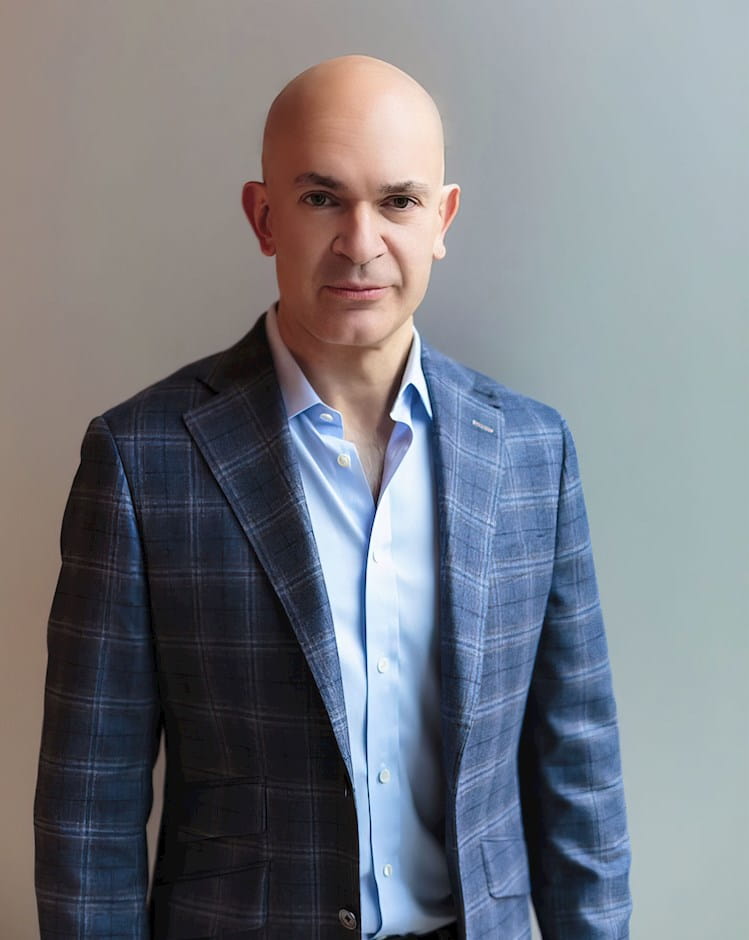
Associate Professor at the University of Klagenfurt , affiliated with the Department of Management Control and Strategic Management under the Faculty of Economics and Law . Research focuses on agent-based modeling applied to organizational dynamics , complex systems , and managerial economics . Holds a doctoral degree in Social Sciences and Economics (2012) and venia docendi in Business Economics (2018) . Core faculty member in the Self-Organizing Systems research cluster Academic editor for PLoS ONE and editorial board member for multiple journals Recipient of the 2021 Advancement Award (Humanities/Social Sciences) from Carinthian government Research integrates computational simulation with organizational theory , examining phenomena like decentralized task allocation , incentive mechanisms , and reproducibility in social sciences . Teaching portfolio includes business analytics , management control , and scientific modeling at undergraduate and graduate levels. Recent publications explore organizational resilience , team coordination dynamics , and financial modeling using agent-based simulation techniques. Active participant in international conferences like Social Simulation Conference and European Conference on Operational Research .
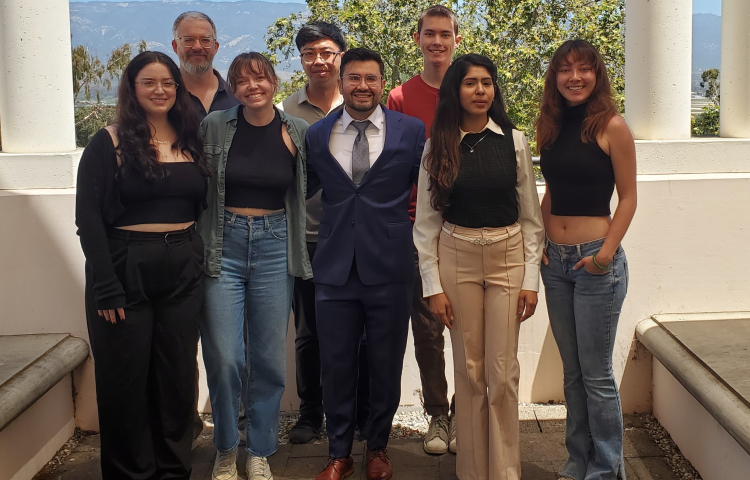
Professor Trevor W. Hayton is a faculty member in the Department of Chemistry and Biochemistry at the University of California, Santa Barbara. He leads the Hayton Research Group, which focuses on solving problems in energy science, nanochemistry, and nuclear fuel clean-up through the synthesis and characterization of transition metal, lanthanide, and actinide complexes, as well as metal nanoclusters. Dr. Hayton's research spans several key areas in inorganic and organometallic chemistry: Actinide chemistry, particularly uranium and thorium complexes Synthesis of transition metal nanoclusters Molecular activation of small molecules Investigation of metal-ligand bonding and covalency Energy-related materials and processes Analysis of Professor Hayton's recent publications (2023-2025) reveals a strong focus on actinide chemistry, particularly uranium and thorium complexes with various ligands. His group has made significant contributions to understanding actinide-ligand bonding, especially through NMR spectroscopy. They also continue to advance the field of transition metal nanoclusters, with recent work on nickel, copper, and iron systems. A notable trend is the increasing use of advanced spectroscopic and computational methods to probe electronic structure. Professor Hayton mentors numerous graduate students and postdoctoral researchers, as evidenced by successful PhD defenses and award-winning research presentations. His group members learn advanced synthetic techniques including air-free procedures, and various spectroscopic and analytical methods. The Hayton Research Group operates state-of-the-art laboratories at UCSB, with dedicated spaces for air-sensitive synthesis and characterization. Group meetings are held weekly to discuss ongoing research and foster collaboration among members.
Professor Rita Henderson is a Professor in the School of Chemical Engineering at UNSW and Deputy Dean (Societal Impact & Translation) at UNSW Engineering. Her research focuses on water quality and treatment, algal biotechnology, and sustainable engineering solutions. She leads the Algal and Organic Matter (AOM) Lab, collaborating closely with the Australian water industry to address challenges in algal blooms, membrane fouling, and cyanobacteria management. She serves as Editor for Water Research and AWWA Water Science , and chairs UNSW’s Sustainable Development Goal (SDG) Steering Committee. Education: PhD in Water Sciences (Cranfield University, 2008), MSc in Water Pollution Control Technology (2004), and MChem in Environmental Chemistry (University of Edinburgh, 2002). Her work integrates advanced analytical techniques, machine learning, and innovative separation methods to improve water treatment efficiency. Research interests include organic matter characterization, membrane technology optimization, and real-time monitoring of cyanobacterial blooms. Her contributions span algal harvesting via PosiDAF flotation systems, disinfection by-product formation, and sustainable wastewater pond technologies. She actively promotes equity, diversity, and inclusion in engineering education. Grants and collaborations highlight her industry partnerships, particularly in developing scalable solutions for water security. Her lab’s innovations aim to bridge gaps between research and practical applications, ensuring robust water treatment strategies for global challenges.
Margherita Pagani is a Full Professor and Director of the SKEMA Centre for Artificial Intelligence at SKEMA Business School in Paris. She holds a Ph.D. in Management and an HDR (Habilitation à Diriger des Recherches). Her roles include Research Affiliate at UC Berkeley’s APEC Study Center and Advisor to the European Economic Social Committee (EESC) on virtual worlds and the Metaverse. Previously, she founded and led the MSc in Digital Marketing & Data Science and the AIM Research Center at emlyon business school. She has held visiting roles at MIT, UCLA, Georgetown, NUS, and Redlands University. Education: Ph.D. (2015, Lyon), HDR (2016, Évry), MSc (1995, Bocconi), MIT Certifications (2005-2006). Research: Focuses on AI in consumer engagement, digital ecosystems, robotics in services, and metaverse applications. Over 130 publications in journals like MIS Quarterly, MIT Sloan Management Review, and Harvard Business Review. Awards: 2023 International Marketing Trends Award, 2022/2023 Top 2% Cited Scientist (Elsevier), 2009 Mobile Marketing Academic of the Year. Her work bridges AI and marketing creativity, emphasizing human-centric systems. She leads initiatives like the SKEMA AI School and organizes conferences on ethics, AI in education, and service recovery. Active in editorial roles for journals like Micro & Macro Marketing and Industrial Marketing Management . Key affiliations include the Association Française de Marketing and involvement in policy initiatives. Supervised over a dozen PhD students, focusing on AI applications in marketing and entrepreneurship.
VENKATESH Mani is an Associate Professor at Montpellier Business School, specializing in strategic supply chain management and operations. His research bridges digital transformation with social sustainability in emerging economies. University: Montpellier Business School Department: Operations, Information, & Decisions Academic Rank: Associate Professor Research Interests include: Social sustainability in supply chains Industry 4.0 digital capabilities Agri-food supply chain resilience Blockchain and digital twin applications Carbon neutrality strategies Recent Publications span topics from pandemic-related supply chain disruptions to data-driven sustainability frameworks, with a focus on empirical studies in Indian and cross-sector contexts. Scientific Awards : Erasmus scholarship (European Union) Teaching Areas cover logistics, operations management, analytics, and research methodology, reflecting his expertise in modern supply chain dynamics.
Heikki Peura is an Associate Professor in the Department of Information and Service Management at Aalto University School of Business. Previously, he served as an Assistant Professor at Imperial College Business School, Imperial College London. His educational background includes: PhD in Management Science and Operations from London Business School (awarded June 30, 2016) MSc in Engineering Physics and Mathematics from Aalto University, specializing in Systems and Operations Research (awarded April 27, 2010) Professor Peura specializes in analytics methods for understanding and improving firms' operational decisions . His research spans several interconnected domains including revenue management, sustainable energy generation, and supply chain management. He applies advanced analytical techniques to solve complex business problems, particularly focusing on optimization methods and decision-making under uncertainty. His work bridges theoretical operations research with practical business applications, making significant contributions to both academic knowledge and industry practice. Analysis of his recent publications reveals a consistent focus on operational decision-making with applications across multiple sectors. His work demonstrates strong methodological rigor in optimization techniques while addressing practical business challenges in energy markets, supply chain dynamics, and revenue management systems. There's a clear evolution in his research from foundational work in pricing and optimization toward more complex applications involving sustainability, risk management, and strategic decision-making in competitive environments. Professor Peura has been actively involved in teaching operations and supply chain analytics as well as revenue management courses at Aalto University. At Imperial College, he taught courses including Data Structures and Algorithms, and contributed to various Master's programs in Business Analytics and Financial Engineering. His research has established significant connections with industry applications, particularly in energy markets and platform businesses. Professor Peura maintains an active research agenda with several working papers addressing contemporary challenges in non-profit fundraising, decarbonization pathways, and healthcare financing.
Associate Professor Ida Asadi Someh is affiliated with the UQ Business School at The University of Queensland and serves as a research affiliate at the Centre for Information Systems Research (CISR) , MIT Sloan School of Management. She completed her PhD at The University of Melbourne in 2015, receiving the best PhD thesis award from the Melbourne School of Engineering and the Vice Chancellor’s PhD Prize . Her research spans business analytics , artificial intelligence , and data governance , focusing on the organizational and societal impacts of data and AI. Key areas include ethics of AI , privacy , accountability , and synergy in analytics systems . Recent publications highlight generative AI in business transformation, algorithmic fairness in public welfare systems, and data governance frameworks for ethical AI. Her work addresses digital transformation in both corporate and public sectors. Scientific awards include the best PhD thesis and Vice Chancellor’s PhD Prize at The University of Melbourne. She supervises PhD and Master’s students in data-driven organizations , privacy-preserving AI , and sepsis management through data .
Professor Klaus McDonald-Maier is a full Professor in the School of Computer Science and Electronic Engineering (CSEE) at the University of Essex , where he leads the Embedded and Intelligent Systems (EIS) Research Laboratory and heads the Intelligent Embedded Systems and Environments Research Group . He is also Director of Impact , Visiting Professor at the University of Kent, and Visiting Research Affiliate at NASA Jet Propulsion Laboratory, California Institute of Technology. Education PhD in High-Performance Parallel Neural Network Architectures, Friedrich-Schiller-University Jena (Germany, 1999) Electronic Engineering studies, University of Ulm (Germany) Electronic Engineering studies, Cardiff University (Wales) Electronic Engineering studies, École Supérieur de Chimie Physique Électronique de Lyon (CPE-Lyon) (France) Research Interests Professor McDonald-Maier’s research integrates embedded systems , System-on-Chip (SoC) architectures , and AI-driven robotics . He pioneers visual place recognition techniques that remain robust under severe appearance and viewpoint changes, develops cybersecurity frameworks based on ICMetrics for autonomous vehicles and IoT, and designs approximate real-time computing solutions for energy-constrained multicore and FPGA platforms. His work on radiation-tolerant systems supports space and nuclear applications, while his bio-inspired algorithms enable lightweight, neuromorphic perception on resource-limited robots. Publication Trends Between 2022 and 2025 his output converges on FPGA-accelerated AI , secure edge intelligence , visual navigation for autonomous systems , and healthcare analytics . He repeatedly couples rigorous algorithmic innovation with practical hardware deployment, yielding energy-efficient, real-time systems validated in domains ranging from autonomous driving to post-stroke rehabilitation. Scientific Awards & Recognition Best Paper Award – IEEE Transactions on Sustainable Computing (2024) Best Paper Award – IEEE/ACM DATE (2024) Best Paper Award – IEEE Systems Journal (2022) Best Paper Award – IEEE Sensors Journal (2021) Best Paper Award – IEEE Access (2020) Research Grants & Industrial Collaboration He has secured major funding from EPSRC , EU Horizon 2020 , Innovate UK , and industry partners. Current projects span trustworthy autonomy, radiation-hardened edge AI, and AI-enhanced rehabilitation technologies. He is Chief Scientist of UltraSoC Technologies Ltd and CEO of Metrarc Ltd , commercialising University research in semiconductor debug and cybersecurity respectively. Laboratory & Team Leadership As Director of the Embedded and Intelligent Systems Laboratory (EIS Lab) , he oversees a multidisciplinary team of researchers and PhD students, providing state-of-the-art FPGA, robotics, and embedded-systems facilities. The lab collaborates closely with NASA JPL, UK Atomic Energy Authority, and leading semiconductor firms to translate fundamental research into high-impact industrial solutions.
Prof. Walter Schwaiger is a Full Professor at TU Wien’s Faculty of Mechanical and Industrial Engineering, leading the Institute of Management Science. His academic roles include serving as Head of the Faculty Council since 2010 and holding various curriculum committee positions. He teaches critical courses such as Financial Management, Enterprise Risk Management, and IT-based Management across bachelor’s and master’s programs. His research focuses on three core areas: Financial Enterprise Management (stochastic NPV modeling for renewable energy investments), Enterprise Risk Management (risk maturity assessments via ERMMA studies), and IT-based Management (ontology-driven accounting frameworks like OntoREA). Recent work includes predictive analytics applications in credit risk scoring and pandemic-driven default prediction studies. Prof. Schwaiger has authored influential textbooks like IFRS-Finanzmanagement series and pioneered the REA-based ERP-Control system. He actively contributes to management control research, publishing in venues like Controlling and WingBusiness , and collaborates with institutions like Funk Stiftung on large-scale ERM maturity studies. His professional service includes leading faculty strategy groups and quality management initiatives at TU Wien, reflecting his commitment to institutional governance and academic excellence.
Tayfun Günel is a Professor in the Department of Electronics and Communication Engineering at Istanbul Technical University (ITU) , Faculty of Electrical and Electronics Engineering. He holds a PhD (1993), MSc (1988), and BSc (1986), all from ITU. His research spans microwave circuits, radar systems, antennas, and optimization using genetic algorithms and soft computing. His research interests include Microwave Circuits , Radar and Antennas , Optimization , and Genetic Algorithms . His work focuses on impedance matching, microstrip antennas, noise modeling, and metamaterial-based microwave components. He has taught courses such as Electromagnetic Fields, Radar Systems, and Satellite Communication Systems. The recent publications reflect a strong trend in microwave circuit design , antenna miniaturization , and the application of evolutionary algorithms (genetic algorithms, PSO) and machine learning (neural networks, SVR) in electromagnetic design and optimization. There is a consistent focus on practical microwave components like transmission lines, patches, and amplifiers, often using nanomaterials (e.g., carbon nanotubes) and metamaterials . His work bridges theoretical modeling with computational optimization for real-world RF and radar applications. Email: gunelmur@itu.edu.tr Professor Günel has supervised 2 completed PhD theses, 2 ongoing PhD theses, 23 completed master's theses, and 1 ongoing master's thesis, demonstrating a significant contribution to student mentoring. There are no specific grants or funding sources mentioned in the provided text. He is affiliated with research in microwave systems and antenna design , likely operating within the broader research ecosystem of the Electronics and Communication Engineering Department at ITU, which includes labs such as the Microwave Systems and Antennas Laboratory and the Radar and Microwave Technologies Research Laboratory.
Günter J. Hitsch is the Kilts Family Professor of Marketing at the University of Chicago Booth School of Business, where he has been a faculty member since 2001. His academic leadership extends to editorial roles as Co-Editor of the Journal of Quantitative Marketing and Economics and Associate Editor at Marketing Science and Management Science. Hitsch's educational journey includes an undergraduate degree from the University of Vienna (1995), followed by master's degrees in economics (1997, 1998), and a PhD in economics from Yale University (2001). This strong foundation in economics informs his approach to marketing research. His research program focuses on quantitative marketing and industrial organization, with particular emphasis on dynamic models of firm and consumer decision-making. Key areas include advertising effectiveness, pricing strategies, sequential learning and experimentation, and intertemporal consumer choice. Hitsch is pioneering in applying causal inference and machine learning to solve practical marketing problems such as optimal customer targeting. His work on dating and marriage markets demonstrates innovative application of economic theory to social phenomena. Hitsch's publication trajectory shows evolution from foundational work on consumer choice and switching costs to more recent applications of machine learning in marketing contexts. His research spans theoretical development and practical application, examining everything from private label demand during economic recessions to television advertising effectiveness across hundreds of brands. Co-Editor, Journal of Quantitative Marketing and Economics Associate Editor, Marketing Science Associate Editor, Management Science Hitsch's editorial leadership has significantly shaped the direction of quantitative marketing research. His commitment to methodological rigor and generalizable results ensures his work provides reliable inputs for both marketing practitioners and academic researchers. As an educator, Hitsch teaches advanced courses in quantitative marketing and business analytics, with scheduled courses for 2024-2026. He emphasizes that 'good marketing isn't fluffy,' challenging students to develop analytical approaches to marketing problems. His research philosophy prioritizes providing generalizable results that apply beyond specific case studies, serving as inputs for both practitioner decision-making and academic advancement.
Drew Illingworth is an Adjunct Professor at the Anisfield School of Business (ASB) at Ramapo College of New Jersey since 2019. He teaches Corporate Finance I and brings extensive industry experience from roles in business solutions and demand planning. His academic background includes an MBA in Business Analytics from Binghamton University and a BS in Business Administration (Finance) from Ramapo College. Education : MBA (Business Analytics) - Binghamton University; BS (Business Administration, Finance) - Ramapo College of New Jersey His expertise spans finance, business analytics, and retail operations, informed by his professional roles at PVH Corp. and Sabert Corp. in demand planning and material data analysis. Research interests focus on financial modeling, data-driven business strategy, and retail management. Professor Illingworth currently serves as Director of eCommerce Business Solutions at PVH Corp. (2019–Present), previously holding senior managerial roles there since 2016. He has also worked at Sabert Corp. as Manager and Analyst in demand planning from 2014–2016.
Giovanni Pantuso is an Associate Professor at the Department of Mathematical Sciences, University of Copenhagen, specializing in stochastic programming and optimization under uncertainty . His work bridges mathematical methods with practical applications in transportation, logistics, and production planning. Education : PhD in Operations Analysis from the Norwegian University of Science and Technology (Feb 2014) Research Focus : Developing mathematical frameworks for decision-making under risk, with applications to maritime fleet renewal, car-sharing systems, and ride-sharing logistics. Teaching : Courses in Advanced Operations Research: Stochastic Programming, Risk Optimization, and Introduction to Numerical Analysis. His methodological contributions include novel algorithms for stochastic programming and decomposition methods, while applied work spans electric car-sharing systems, first-mile transportation challenges, and production planning under uncertainty. Current research explores dynamic fleet management and cost-service tradeoffs in shared mobility.
Dr. Ahmed F. Abdelghany is the Associate Dean for Research and Professor of Operations Management at the David O'Maley College of Business, Embry-Riddle Aeronautical University, since January 2006. He specializes in commercial airlines, airports, big data cloud computing, business analytics, and operations research models. Prior to his academic career, Dr. Abdelghany worked in enterprise optimization at United Airlines, Chicago. Education: Ph.D. in Civil Engineering (Transportation Systems) from the University of Texas at Austin (2001) Dr. Abdelghany’s research focuses on airline network planning, flight scheduling, simulation of complex transportation systems, and NextGen air traffic management. He has authored two influential books: Modeling Applications in the Airline Industry (Routledge 2010) and Airline Network Planning and Scheduling (Wiley 2018). His publications analyze airline operations, competitive dynamics, and crowd management in transportation facilities. He teaches courses like Airline Management (BA 315) and Airline Operations & Mgmnt (BA 609), and participates in industry short courses. Dr. Abdelghany contributes to research projects such as NextGen air traffic implementation, integrated airport initiatives, and benefit-cost analysis of arrival management systems. His work bridges academic theory with real-world airline and transportation challenges.
Taiwo Amoo is an Assistant Professor of Business and Quantitative Methods at Brooklyn College, CUNY , where he has been employed since 1999. His academic career spans institutions including Baruch College (substitute and adjunct roles, 1993-1999) and Kaduna Polytechnic, Nigeria (1987-1988). With a PhD in Operations Research (University of Exeter, 1992) and a BSc in Statistics (University of Ibadan, 1986), Amoo specializes in operations management, statistical analysis, and educational innovation. Current position: Assistant Professor (Brooklyn College, CUNY) Key expertise: Operations Management, Queueing Theory, Rating Scale Methodology Technological proficiency: SAS, SPSS, Oracle Database Systems His research focuses on optimizing rating scale design , integrating technology in education , and interdisciplinary approaches to business programs . Publications from 2000-2002 examine biases in survey construction, humor as an educational tool, and the relevance of traditional disciplinary structures in modern academia. Notable awards include PSC CUNY Grants and recognition as the Best Statistics Student at the University of Ibadan. Current affiliations: Brooklyn College (CUNY) Past affiliations: Baruch College (CUNY), University of Exeter, Kaduna Polytechnic