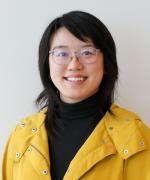
Swati Aggarwal is a Professor in Artificial Intelligence at the Faculty of Logistics, Molde University College (HiMolde). Her research focuses on AI applications in healthcare, ethics, cognitive development, and neural networks. She holds a PhD in Neutrosophic Neural Networks, a Master's in Information Technology, and a Bachelor's in Computer Science and Engineering. Previously, she was a Marie Curie Postdoc Fellow at NTNU, working on AI models for cognitive assessment in infants (AIM_COACH project). Research Interests - AI in Health/Medicine - Ethics in AI and Societal Impact - EEG/BCI for Cognitive Assessment - Machine Learning and Deep Learning Publications Her recent work spans AI ethics, BCI applications, adversarial attacks, and healthcare diagnostics. Notable contributions include EEG-based infant perceptual monitoring (2025) and malaria detection via EfficientNet (2023). She also explores cross-lingual adversarial robustness and blockchain in hospitality systems. Labs/Teams - ABC-AI: Applied, Basic, and Conscientious AI Group - Virtual Technologies and Learning Research Group
Jochen Wirtz is the Vice Dean of MBA Programmes and Professor of Marketing at the National University of Singapore (NUS Business School). He holds a Ph.D. in services marketing from the London Business School and has held leadership roles, including founding director of the UCLA–NUS Executive MBA Programme and member of the NUS Teaching Academy. His research focuses on service management, intelligent automation, AI, and corporate digital responsibility. A globally recognized authority, he has authored over 20 books, including Services Marketing: People, Technology, Strategy (9th ed.) and Intelligent Automation , with translations in 26+ languages. His awards include the Christopher Lovelock Career Contributions Award (AMA) and the Academy of Marketing Science’s Outstanding Marketing Teacher Award. He advises international firms like Accenture and KPMG and is involved in start-ups such as Dataswyft and TranscribeMe. His work emphasizes ethical AI, service robots, and cost-effective excellence, contributing to both academic research and industry practice. Wirtz’s research spans service robots, platform economies, and luxury services. His recent studies explore generative AI’s impact on service encounters, corporate digital responsibility, and B2B customer experience strategies. He actively engages with industry through consulting, keynote speaking, and executive education.
Christophe VIGNAT is a Professor at CentraleSupélec, affiliated with the Laboratoire des Signaux et Systèmes (L2S). His research focuses on number theory, special functions, probability, and their applications in signal processing and control systems. He has held visiting professorships at École Polytechnique Fédérale de Lausanne (EPFL) and Tulane University. VIGNAT's work bridges pure mathematics and applied fields, with notable contributions to Bernoulli/Euler polynomials, multiple zeta values, and probabilistic methods in number theory. His recent publications explore topics like partition functions, theta functions, and Ramanujan-type identities. He has delivered talks at international conferences and collaborates widely with researchers in mathematics and physics. Research Interests: Number theory, special functions (Bessel, orthogonal polynomials), probability theory, signal processing, control systems, analytic combinatorics, and their interconnections. His work often employs symbolic computation and probabilistic approaches to uncover identities and structures in mathematical analysis. Publications Trends: Recent articles emphasize partition theory, zeta functions, and integrals related to classical polynomials. His collaborations highlight interdisciplinary efforts between pure mathematics and applied sciences. Over 150 refereed papers and conference contributions demonstrate his prolific output across diverse mathematical domains. Education: While specific academic history isn’t detailed, his roles and publications suggest advanced training in mathematics and engineering, typical for a full professor in systems and control.
Professor Michael Milford is a robotics and computer vision expert at Queensland University of Technology (QUT), serving as Joint Director of QUT's Centre for Robotics. His research bridges robotics, neuroscience, and computer vision, focusing on biologically inspired navigation systems for autonomous vehicles and drones. He has pioneered projects like SeqSLAM and RatSLAM, emphasizing the synergy between biological intelligence and robotic systems. Research Interests: Milford explores navigation algorithms inspired by animal behavior, energy-efficient neural networks, and autonomous systems. His work aims to create robots capable of operating in dynamic environments through interdisciplinary collaboration with institutions like MIT, Harvard, and NASA's Jet Propulsion Laboratory. Awards & Recognition: Awarded the 2019 Batterham Medal and a $2.7M Australian Laureate Fellowship for his project on GPS-independent positioning systems. His work has produced highly cited papers in robotics and computer vision, including breakthroughs in visual SLAM and place recognition under varying conditions. Teaching & Collaboration: Milford mentors students in robotics and AI, launching initiatives like the STEM Storybook to inspire youth. He collaborates globally, emphasizing cross-disciplinary research to bridge gaps between fundamental and applied sciences. Labs & Projects: Leads QUT's Centre for Robotics, advancing technologies for autonomous systems. His projects explore neuromorphic computing, SLAM systems, and bio-inspired navigation, with applications in defense, transport, and environmental monitoring.
Calin Belta is the Brendan Iribe Endowed Professor of Electrical and Computer Engineering and Computer Science at the University of Maryland, College Park. He is affiliated with the Institute of Systems Research (ISR) and the Maryland Robotics Center (MRC), and holds a Research Professor position at Boston University's College of Engineering. His work bridges control theory, formal methods, and machine learning to ensure safety in cyber-physical and data-driven systems, with applications in robotics, autonomous driving, and systems biology. Research Interests: Focus on dynamics and control theory, formal methods for verification and control synthesis, robotics, autonomous systems, and synthetic biology. Recent projects include PROGENIC (collaborating with MIT, UChicago, and UDelaware) and safety-critical control for heterogeneous robotic teams. Key Achievements: General Chair of the 2025 MRC Symposium, recipient of AFOSR Young Investigator Award (2008), NSF CAREER Award (2005), and IEEE Fellow. His work on formal methods for autonomous systems has led to impactful tools for safety assurance in robotics and AI. Grants: NSF EFRI PROGENIC grant (2024), multiple industry partnerships. Advising: Mentored students like Wenliang Liu (PhD 2024, now at Amazon), and collaborator Marius Kloetzer (shared HSCC Test of Time Award 2025). Labs/Teams: Maryland Robotics Center, Institute for Systems Research, and Boston University collaborations.
Dr. Vishal Sharma is a Senior Lecturer in the School of Electronics, Electrical Engineering and Computer Science at Queen's University Belfast. His research focuses on Cyber-Physical Systems (CPS), 5G/6G Security, Unmanned Aerial Vehicles (UAVs), Blockchain, and Digital Twins. He has held roles at institutions like Singapore University of Technology and Design (SUTD) and Soonchunhyang University, South Korea. Notable achievements include Best Paper Awards at ICCMIT 2017, IEEE SITE 2024, and HUCAPP/VISIGRAPP 2025. He leads the Innovation-by-Design Lab and is a Fellow of the Higher Education Academy (FHEA). Research Interests: Cyber Defence, UAV Security, Secure Computing, Network Security, and Sustainable Edge Computing. He has collaborated on projects like RapidRANDefender (QRICSec) and Traceable Procurement for Net-Zero Processes. Awards include the Royal Society International Exchanges Committee appointment (2025) and QUB's Individual Performance Award (2024). Grants and Projects: Principal Investigator for projects such as Exploring Operational Capabilities of Arm Morello for UAV Security (2023) and TUDOR: Ubiquitous 3D Open Resilient Network (2023). Active in editorial roles for IEEE Communications Magazine and IET Networks. His work aligns with UN Sustainable Development Goals (SDGs) related to climate action and innovation. Publications span 150+ articles in top journals/conferences, with a focus on secure communication, edge computing, and UAV networks. Supervises PhD students in cyber defence, AI security, and distributed ledger technologies.
Melanie Weber is an Assistant Professor of Applied Mathematics and Computer Science at Harvard University's John A. Paulson School of Engineering and Applied Sciences (SEAS), leading the Geometric Machine Learning Group. Her research focuses on leveraging geometric structures in data for designing efficient machine learning and optimization algorithms with theoretical guarantees. She holds a PhD from Princeton University (2021) and has held fellowships at the Mathematical Institute of Oxford, Brasenose College, and the Simons Institute. Her work bridges geometry, optimization, and machine learning, with funding from NSF, Sloan Foundation, and Harvard initiatives. Education : PhD in Applied Mathematics, Princeton University (2021) BSc/MSc in Mathematics and Physics, University of Leipzig (2016) Research Interests : Dr. Weber's research integrates geometric principles into machine learning and optimization, focusing on non-Euclidean spaces, graph structures, and manifold-based methods. Key areas include optimization on Riemannian manifolds, curvature-based analysis (e.g., Ricci curvature), and developing algorithms resilient to data geometry challenges like over-smoothing in graph neural networks. Her work emphasizes theoretical foundations while addressing practical scalability in high-dimensional data. Awards & Recognition : 2024 Sloan Research Fellowship 2023 Leslie Fox Prize in Numerical Analysis 2023 NSF Grant for Geometric Optimization Grants & Funding : Supported by National Science Foundation (NSF), Alfred P. Sloan Foundation, Aramont Foundation, Harvard Dean’s Fund, and Harvard Data Science Initiative. Labs & Collaborations : Leads the Geometric Machine Learning Group at SEAS, collaborating with institutions like MIT, Max Planck Institute, and industry labs (Facebook, Google, Microsoft). Active in organizing workshops on geometric methods and curvature analysis.
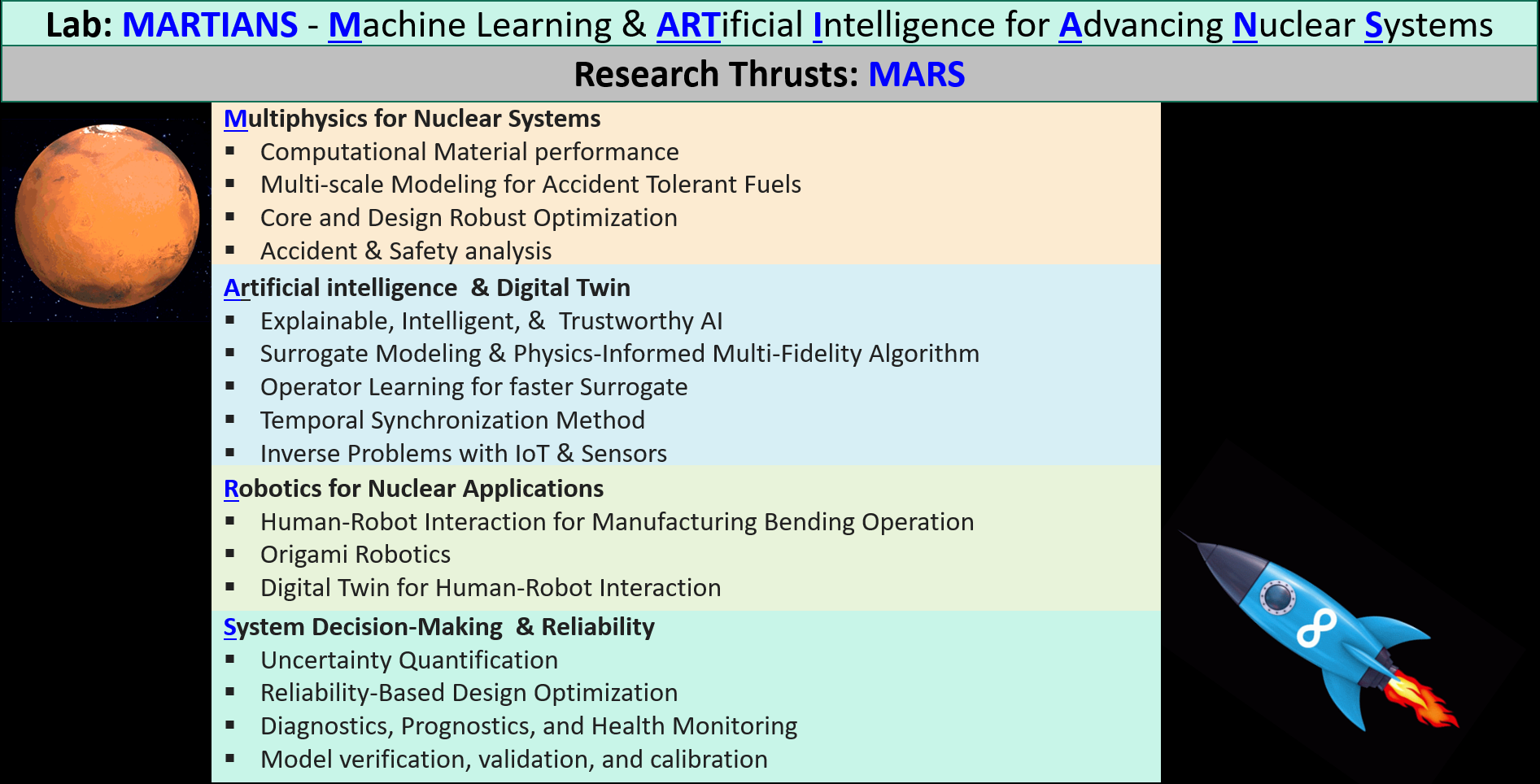
Syed Bahauddin Alam is an Assistant Professor at the University of Illinois Urbana-Champaign (UIUC) in the Nuclear, Plasma & Radiological Engineering department. He holds appointments in the Grainger College of Engineering and the National Center for Supercomputing Applications (NCSA). His research focuses on AI-driven digital twins, uncertainty quantification, and cybersecurity for nuclear systems. Education: B.Sc. in Electrical and Electronics Engineering, Bangladesh University of Engineering and Technology (BUET), 2011 MPhil in Nuclear Energy, University of Cambridge, 2013 PhD in Nuclear Engineering, University of Cambridge, 2018 Research Interests: AI and Digital Twins for Nuclear Energy Multiscale Modeling with Uncertainty Quantification Cybersecurity for Nuclear Systems Sensors and Instrumentation for Reactor Monitoring His work emphasizes explainable AI (XAI), physics-informed machine learning, and robust design optimization. Key contributions include AI-powered digital twins for nuclear systems, which received global media coverage and top 5% Altmetric scores. Awards & Honors: 2025 Dean’s Award for Excellence in Research (UIUC) 2024 Illinois Innovation Award Finalist 2022-2021 Outstanding Teaching Award (Missouri S&T) 2017 Cambridge Philosophical Society Research Studentship Award Grants & Funding: $700,000 U.S. Nuclear Regulatory Commission (NRC) Distinguished Faculty Development Award (2024) $2 million DOE grant for nuclear fuel storage solutions (2023) $500,000 NRC R&D Grant (2024) Labs & Teams: Leads the MARTIANS Lab (Machine Learning and ARTificial Intelligence for Advancing Nuclear Systems), focusing on hybrid data-physics-driven AI and explainable machine learning for nuclear engineering challenges.
Debdeep Jena is the David E. Burr Professor of Engineering at Cornell University, holding appointments in the Departments of Electrical and Computer Engineering and Materials Science and Engineering, and serving as a field member in Applied and Engineering Physics. He joined Cornell in 2015 after twelve years on the faculty at the University of Notre Dame. Professor Jena's research focuses on the quantum physics of semiconductors and electronic/photonic devices based on quantized semiconductor structures. His work spans Nitrides, Oxides, and 2D Materials, with applications in energy-efficient transistors, LEDs, RF and power electronics, and quantum computation. His group explores the fundamental limits of computation, memory, and communications by exploiting new physics in semiconductor devices, particularly investigating ultrahigh-speed GaN and AlN transistors, ultra-wide bandgap semiconductors for power electronics, deep-UV LEDs and lasers, and novel materials for quantum computing. His recent publications demonstrate a consistent trajectory toward integrating semiconductors with superconductors, ferroelectrics, and magnets to create hybrid quantum systems. This research direction aims to overcome classical device limits while dramatically improving energy efficiency across computing, communications, and power management applications from the chip to the grid level. Art Gossard MBE Innovator Award, North American Conference on Molecular Beam Epitaxy (NAMBE) 2024 Intel Outstanding Researcher Award 2020 David Burr Chair Professor of Engineering 2020 Fellow, American Physical Society 2016 MBE Young Scientist Award 2014 IBM Faculty Award 2012 Professor Jena leads a $34 million research center focused on energy-efficient semiconductor materials and technologies. His research group actively engages in materials synthesis using Molecular Beam Epitaxy (MBE) while collaborating with theoretical physicists to develop comprehensive understanding of electron transport, light-matter interactions, and correlated electron physics. In 2022, he published the textbook 'Quantum Physics of Semiconductor Materials and Devices' through Oxford University Press, which has become a top seller in solid-state physics and electromagnetism categories. The Jena research group operates at the intersection of multiple advanced materials systems, maintaining expertise in Nitride Electronics, Oxide Electronics, UV Lasers/Photonics, 2D Materials, Ultrapolar/Ferro Semiconductors, and Super/Semi Electronics. Their work spans fundamental materials science to device engineering, with strong connections to energy systems, advanced materials processing, and quantum information science applications.
Clyde Kruskal is an Associate Professor in the Department of Computer Science at the University of Maryland, College Park. His research focuses on parallel architectures, models, and algorithms. He earned a Ph.D. from New York University in 1981 and a bachelor’s degree from Brandeis University in 1976. His work includes foundational contributions to parallel computing, such as the read–modify–write concept in distributed systems. Kruskal’s research spans topics like interconnection networks, synchronization mechanisms, and algorithm design for parallel systems. Education: Bachelor’s Degree: Brandeis University, 1976 Master’s Degree: New York University (Courant Institute), 1978 Ph.D.: New York University (Courant Institute), 1981 Research Interests: Parallel computing architectures, parallel algorithms design, multiprocessor synchronization, interconnection networks, and computational geometry problems like graph coloring and visibility analysis. His work emphasizes theoretical foundations and practical implementations in parallel systems. Notable Contributions: Kruskal co-authored the book Problems With A Point: Exploring Math And Computer Science (2019), and his research includes foundational papers on parallel prefix operations, sparse matrix algorithms, and synchronization protocols. His publications span over three decades, reflecting sustained contributions to parallel computing theory and practice. Advising & Outreach: He has mentored students through programs like the Summer Combinatorial Algorithms REU at UMD, fostering undergraduate research in algorithm design and parallel computing.
Dr. Kamran Sedig serves as a Professor in the Department of Computer Science and the Faculty of Information and Media Studies at Western University, where he directs the Insight Lab. His research focuses on designing interactive technologies to enhance human cognitive activities involving data and information, including decision making, problem solving, and learning across domains like healthcare, finance, and scientific discovery. His academic credentials include: Ph.D. in Computer Science (Human-Computer Interaction) from The University of British Columbia under Prof. Maria Klawe, with dissertation nominated for the Governor General’s Gold Medal M.Sc. in Computer Science (Artificial Intelligence) from McGill University under Prof. Renato De Mori B.Sc. in Computer Engineering and Science from Concordia University as Valedictorian with The Most Great Distinction Sedig’s research synthesizes computer science, information science, cognition theory, and game studies to develop frameworks for interactive visual tools (IVTs). He investigates human-data interaction, visual reasoning, and interactivity design to support complex cognitive tasks like medical diagnosis, financial analysis, and scientific exploration. His human-centered approach emphasizes how computational tools and humans form coordinated cognitive systems for optimal task execution. Analysis of his recent publications reveals dominant trends in health informatics applications (drug safety analytics, electronic health records) and foundational work on human-information interaction frameworks. His visual analytics systems consistently bridge theoretical models with practical tools for ontology exploration, document triage, and explainable AI, demonstrating strong interdisciplinary collaboration across medical and computational domains. Key recognitions include: Governor General’s Gold Medal nomination for doctoral research Valedictorian honors at Concordia University As Insight Lab director, Sedig mentors graduate students through courses like Human-Computer Interaction, Information Visualization, and Design of Digital Cognitive Games. His teaching philosophy emphasizes how cognitive technologies mediate human thinking processes in professional and private contexts. While specific grant details aren’t provided, his lab’s sustained output in health analytics and visual interfaces indicates robust research funding. The Insight Lab operates as a collaborative hub for developing and evaluating IVTs, with current projects including VICTORIOUS for document scoping reviews and VISEMURE for multimorbidity analysis. Sedig’s team prioritizes empirical validation of how interaction design affects cognitive load and task efficiency in real-world data-intensive environments.
Stefano Galelli is a tenured Associate Professor in the School of Civil and Environmental Engineering at Cornell University, where he leads the Critical Infrastructure Systems Lab. He also holds an adjunct position as a Research Scientist at the Lamont-Doherty Earth Observatory, Columbia University. His career spans roles in Singapore, including a Postdoctoral Research Fellow at NUS (2011–2013) and faculty at the Singapore University of Technology and Design (2013–2023). Dr. Galelli earned his B.Sc. (2004), M.Sc. (2007), and Ph.D. (2011) in Environmental and Land Planning Engineering and Information Technology from Politecnico di Milano, Italy. His research focuses on the interactions between critical infrastructure systems and natural environments, emphasizing adaptive management solutions for water-energy systems. Techniques include process-based modeling, climatology, statistical learning, control theory, and optimization. He explores topics like hydro-climatic variability impacts, dam re-operation for environmental flows, and cyber-physical security in infrastructure. His contributions to journals such as Nature Sustainability, Earth’s Future, and Environmental Modelling & Software have earned him multiple awards, including the Early Career Research Excellence Award (2014) and SUTD Excellence in Research Award (2017). He has served as an editor for several journals and is recognized for advancing interdisciplinary approaches to water-energy nexus challenges. Teaching highlights include foundational mathematics courses and advanced topics in data analytics, optimization, and water-energy management. He is developing new courses on data-driven control of coupled human-natural systems and risk management for interconnected systems.
Giancarlo Ferrari Trecate is an Adjunct Professor at the Swiss Federal Institute of Technology Lausanne (EPFL) , affiliated with the School of Engineering and the SCI-STI-GFT department. He is also involved in teaching and research through the STI-SGM and EDRS-ENS programs. Research Interests : Automatic control, state estimation, system identification, machine learning, distributed control, hybrid systems, microgrids, biochemical networks, voltage and frequency stabilization in AC/DC microgrids. Publications Trends : His recent work focuses on integrating Neural ODEs and Hamiltonian structures for stable control systems, regret minimization in distributed control, and robust state estimation under uncertainty. Applications include autonomous mobility-on-demand , power grid optimization , and secure microgrid control against cyber-attacks. Scientific Awards : No specific awards mentioned in the provided data. Teaching & Advising : He supervises PhD students in mechanical engineering and teaches courses on Multivariable control and Networked control systems . His lab, DECODE , specializes in Dependable Control and Decision systems.
Helen Xu is an Assistant Professor at Georgia Tech's School of Computational Science and Engineering (College of Computing). She holds a Ph.D. from MIT (2022) under Charles E. Leiserson and was a Grace Hopper Postdoctoral Fellow at Lawrence Berkeley National Lab (2022). Her research focuses on parallel algorithms, cache-efficient data structures, and high-performance computing. Xu has interned at Microsoft Research, NVIDIA Research, and Sandia National Laboratories, and her work has been supported by prestigious fellowships including the National Physical Sciences Consortium and Chateaubriand awards. **Education**: Ph.D., Computer Science, MIT, 2022 Postdoctoral Research, Lawrence Berkeley National Lab (2022) **Research Interests**: Parallel and cache-friendly algorithms Dynamic graph and data structure optimization Algorithm performance engineering Sparse matrix/tensor operations **Awards**: Grace Hopper Postdoctoral Scholar (2022), Best Artifact Award (PPoPP 2024), National Physical Sciences Consortium Fellowship, Chateaubriand Fellowship. **Advising & Teaching**: Advises PhD/M.S. students in parallel computing and high-performance systems. Teaches courses like CSE 6220 (Introduction to HPC) and CSE 6230 (HPC Tools). Supervised MIT M.Eng. projects on BP-Trees and parallel prefix sums. **Labs/Teams**: Active in Georgia Tech's High-Performance Computing community, collaborating with researchers like Aydın Buluç and Prashant Pandey on graph containers and dynamic data structures.
Prof. Ivo J.B.F. Adan is a Full Professor at Eindhoven University of Technology (TU/e), holding chairs in both Industrial Engineering & Innovation Sciences and Mechanical Engineering. His research focuses on stochastic operations research, queueing models, and manufacturing systems design. He has held visiting positions at the University of North Carolina and was part-time professor at the University of Amsterdam (2008–2011). Education: MSc and PhD in Mathematics from TU/e Affiliations: Eurandom Senior Fellow, Beta Research Director, editorial roles at Queueing Systems and Probability in Engineering and Informational Sciences His work addresses warehouse optimization, transportation logistics, and semiconductor manufacturing. Notable achievements include: Developed analytical models for zone picking systems and conveyor networks Advanced understanding of FCFS infinite bipartite matching systems Recipient of multiple best paper awards including the IE&IS Valorization Prize (2023) Current projects include the DigiTwop digital twin-based warehouse optimization initiative and modular construction research. He teaches courses on stochastic modeling, manufacturing systems, and smart industry applications.