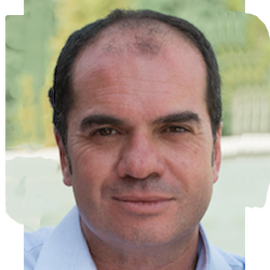
ARNALTES GOMEZ SANTIAGO is a Full Professor at the Department of Electrical Engineering, Universidad Carlos III de Madrid. His research focuses on Power Systems Control, Renewable Energy Integration, HVDC Systems, and Grid-Forming Converters. He leads projects funded by institutions like Red Eléctrica de España and the Community of Madrid. His work addresses challenges in offshore wind farm integration, energy storage systems, and converter-based grid stability. He has authored over 50 publications, including studies on grid-forming control strategies, low-frequency oscillation damping, and battery degradation modeling. He holds 4 patents related to power system control and renewable energy. Recent projects include contributions to digital power networks, green hydrogen integration, and black-start capabilities for renewable plants. His research emphasizes practical applications, such as HVDC interconnections and smart grid technologies.
Alexandre Thomas Guillaume Quesney is an Assistant Professor in the Mathematics Applied to Information and Communication Technologies department at the Technical University of Madrid's School of Computer Engineering. He is actively affiliated with the Geometry and its Applications research group and maintains academic operations at the Montegancedo Campus in Boadilla del Monte, Madrid. His research focuses on advanced mathematical structures with primary expertise in homotopy theory, particularly operad theory. His work extends into combinatorial algebras and non-commutative geometry, exploring foundational connections between algebraic systems and topological spaces. Key research themes include: Algebraic structures in homotopy theory Operadic compositions and deformations Non-commutative geometric models Combinatorial methods in algebra Quesney contributes to academic discourse through the UPM seminar series and collaborates within the Geometry and its Applications research framework. His scholarly presence is marked by consistent engagement in mathematical publications as evidenced by Mendeley readership metrics across multiple works. Professional activities include: Active research group membership since November 2022 Faculty appointment since March 2022 Regular seminar participation
Fernando Sánchez-Figueroa is a Full Professor at the University of Extremadura's Department of Computer Systems Engineering and Telematics. He is a co-founder of Homeria Open Solutions, a spin-off engaged in R&D projects under EU frameworks. His research focuses on Software Engineering, Machine Learning, Data Visualization, and Ambient Intelligence. He has authored over 50 scientific articles and led numerous R&D contracts with public and private entities. Key roles include: Academic: Full Professor at University of Extremadura Entrepreneur: Co-founder of Homeria Open Solutions Research: Participation in EU-funded projects and development of AI-driven solutions for healthcare, smart cities, and education Research Interests: Machine Learning applications in healthcare, predictive analytics for education, and sustainable smart city technologies. His work bridges theoretical advancements with practical implementations, such as medical image segmentation using SAM models and cost-efficient UAV systems. Publications: Recent works include decision support systems for employability analysis, zero-shot learning in medical imaging, and recommender systems for education. He emphasizes data-driven approaches and model-driven engineering in software development. Impact: Developed tools like CompareML for preliminary data analysis and LiveSankey for advanced web visualization. His contributions span academia and industry, addressing challenges in healthcare, urban sustainability, and educational technology.
Katherine Villa is a Group Leader at the Institute of Chemical Research of Catalonia (ICIQ), where she leads cutting-edge research in light-driven systems for energy, health, and environmental applications. Her work bridges chemistry, materials science, and nanotechnology, focusing on nanostructured photocatalysts and self-propelled micro/nanorobots. PhD in Chemistry from Autonomous University of Barcelona Former senior scientist at Center for Advanced Functional Nanorobots, Prague Current research group leader at ICIQ, Tarragona, Spain Her research interests center on photocatalysis, nanomaterials, renewable energy, and environmental remediation . She designs nanostructured materials for solar fuel generation and develops photoactive micromotors for water purification and biomedical applications. Her work aligns with EU Sustainable Development Goals, particularly in clean energy and environmental protection. The recent publications highlight a strong trend in functional micro/nanorobots , gas-phase CO2 conversion , and advanced photocatalytic systems . These works span from fundamental charge transport studies to real-world applications in pollution removal and green hydrogen production. Scientific awards and honors include: ERC Starting Grant (2022) BBVA Leonardo Grant in Basic Sciences (2023) RSEQ Young Investigator Award – Group Leader (2023) Member, Young Academy of Spain (2023) BIST Mother of Science Award (2021) Member, Early Career Editorial Board, Applied Catalysis B She actively mentors a diverse team of PhD and master's students , and her group receives substantial funding from the European Research Council (ERC) , Horizon Europe , Marie Skłodowska-Curie Actions , and Spanish national programs such as Juan de la Cierva and FPI . She is also involved in outreach, training workshops for grant applications, and public science communication. Her research group operates within a collaborative ecosystem at ICIQ, leveraging advanced scientific core facilities for material characterization, synthesis, and analysis. Projects like PhotoSwim , TherMotors , and PhotoClean reflect the interdisciplinary and innovative nature of her lab.
David Soler Soneira is a Professor in the Department of Electrical Engineering and Systems at the School of Engineering (ICAI) of Comillas Pontifical University, where he has been teaching since 1994. He is also a Visiting Researcher at the Institute for Research in Technology (IIT), focusing on electric power systems. His academic and professional work is deeply rooted in the technical and economic aspects of modern power systems. Research Interests: His primary research areas include ancillary services, operation and planning of electric power systems, and electricity market economics. He specializes in voltage control, reactive power management, and regulatory models for grid services. His work bridges engineering and market design, contributing to the efficient and stable operation of power networks. Publications and Research Trends: His most recent publications, primarily in IEEE journals, focus on voltage regulation, secondary reserve markets, and reactive power markets. These works emphasize market mechanisms, economic valuation, and operational strategies for ancillary services in competitive electricity environments. His research consistently addresses real-world challenges faced by transmission and distribution operators. Scientific Awards: Director of prizewinning work in Honorary Distinction to the best Doctoral Thesis on Engineering «Modelo regulatorio del control de tensiones en los sistemas eléctricos de potencia» by Pablo Frías Marín, Universidad Pontificia Comillas, Jan 2009 Advising and Grants: He has supervised at least one doctoral thesis and has led or participated in numerous research and consulting projects funded by major energy companies such as Iberdrola, Unión Fenosa, Duro Felguera Energía, and REE (Red Eléctrica de España). These projects have focused on voltage control strategies, automation of power plants, and regulatory modeling. Labs and Teams: He is affiliated with the Institute for Research in Technology (IIT), a leading research center in energy systems at Comillas Pontifical University, where he contributes to advanced research in power systems and energy policy.
Carolina Luis Bassa is a Research Professor at the Universitat Pompeu Fabra Barcelona School of Management (UPF-BSM), serving as Academic Director and leading the Department of Business and Strategic Management. She directs multiple master’s programs and heads the Mercadona UPF-BSM Chair of Circular Economy. Her expertise spans Marketing, Sustainability, and Technology applied to business strategy, with a focus on digital transformation and circular economy practices in industries like agri-food distribution. Her academic journey includes roles as Vice-Dean of Teaching Staff and Academic Director, reflecting her commitment to educational innovation. Research interests emphasize sustainable consumer behavior, data-driven business models, and the integration of technology in CRM and customer experience management. Over 35 years, she has advised students and professionals on strategic applications of marketing and technology. Research Trends: Recent publications highlight circular economy adoption in agriculture, transparency in sharing economies, and data-driven strategies in customer-centric models. She bridges academic insights with industry challenges, particularly in leveraging technology for sustainable business practices. Awards & Grants: No specific awards are listed, but her leadership roles and chair position indicate significant institutional recognition. Grants and partnerships likely stem from her involvement with initiatives like the Mercadona Chair. Labs & Teams: Leads the Mercadona UPF-BSM Chair, focusing on circular economy research and collaboration with industry partners.
Josep Llach is a Senior Lecturer at the Barcelona School of Management, Universitat Pompeu Fabra, and a part-time Professor Agregat in the Department of Business Administration, Management and Product Design at the University of Girona. He is an active researcher in innovation management, organizational innovation, sustainability, and operations, with extensive involvement in European and national research projects. University: University of Girona Department: Department of Business Administration, Management and Product Design Secondary Affiliation: Barcelona School of Management, Universitat Pompeu Fabra Academic Rank: Senior Lecturer Part-Time: Yes His research focuses on the intersection of innovation, quality, and sustainability in manufacturing and service firms. He studies how lean practices, digital transformation, circular economy strategies, and green technologies impact firm performance. His work often employs advanced statistical methods such as structural equation modelling and fuzzy-set qualitative comparative analysis. The recent publications highlight a strong trend toward sustainability, digital transformation, and methodological robustness in empirical models. His work spans industries including manufacturing, hospitality, and education, with a methodological emphasis on survey-based research and configurational analysis. Scientific Awards: Emerald Literati Awards – Most Outstanding Paper in 2018 for 'Creating value through the balanced scorecard: how does it work?' Top Downloaded Paper 2018–2019: 'Socially responsible companies: Are they the best workplace for millennials?' Josep Llach has directed five doctoral theses and actively mentors PhD students. He collaborates with the Catalan University Quality Assurance Agency (AQU) as a methodological secretary in accreditation processes. His research is supported by multiple national and European grants, particularly through participation in the European Manufacturing Survey. He is a member of the Grup de Recerca Avançada sobre Dinàmica Empresarial i Impacte de les Noves Tecnologies a les Organitzacions (GRADIENT), a research group focused on organizational dynamics and the impact of new technologies.
Luis Merino Cabañas is a Professor at the Universidad Pablo de Olavide , affiliated with the Deporte e Informática department and leading the SRL Service Robotics Laboratory . His research focuses on robotics, systems engineering, and automation, with a specialization in human-robot interaction and path planning. Education : PhD in Systems Engineering from the Universidad de Sevilla (2007), where his thesis explored cooperative perception techniques for multiple unmanned aerial vehicles in forest fire detection. Research Trends : Recent work (2023–2025) emphasizes 3D path planning, sensor fusion (LiDAR, radar, inertial systems), neural distance fields for safe navigation, and socially aware robotics. His studies integrate AI, genetic programming, and multi-modal perception for applications in construction, healthcare, and GNSS-denied environments. Labs & Teams : He leads the SRL Service Robotics Laboratory , contributing to projects like the Skyeye team and BIM2ROS integration for construction robotics.
Veredas Coleto is a Research Fellow at the Centre for Research in Agricultural Genomics (CRAG), hosted on the campus of the Autonomous University of Barcelona (UAB) in Cerdanyola, Barcelona, Spain. CRAG operates as a joint research institute between UAB, CSIC, IRTA, and UPC, with Coleto embedded in the Plant and Animal Genomics Research Group. Research Interests: Coleto's work centers on Plant Genomics and Animal Genomics, supported by expertise in Genetics and Genomics. The research group's focus suggests genomic analysis of agricultural and biological systems, though the text's reference to "rosacea" appears inconsistent with plant/animal genomics and is likely a typographical error for "rosaceae" (a plant family). No publication trends can be assessed from the provided text. Scientific Awards: No awards, fellowships, or medals were documented in the source material. Advising and Grants: There is no evidence of student supervision, grant funding, or advisory roles in the scraped content. Labs and Teams: Coleto utilizes laboratory facilities in room 2.07 and office space in room 3.01 of the CRAG Building, with direct telephone access via UAB campus extensions 3237 (lab) and 3361 (office).
Mahmoud Khalifa Abdelhamid Khalifa is a Researcher at the Institute for Research in Technology (IIT) of Comillas Pontifical University, affiliated with the Higher Technical School of Engineering (ICAI). He holds a B.Sc. (2019, first class honors) and M.Sc. (2023) in Electrical Engineering from Minia University, Egypt. His current role involves predoctoral research in electrical systems, focusing on battery energy storage systems and their impact on low-inertia power systems stability. Education: B.Sc. Electrical Engineering, Minia University (2019), ranked first in class M.Sc. Electrical Engineering, Minia University (2023) Research Interests: Mahmoud’s work centers on modeling, control, and stability analysis of energy storage systems, particularly in the context of renewable energy integration. His expertise includes doubly-fed induction generators (DFIG), grid stability, and advanced control algorithms for wind and solar systems. Publications & Contributions: He has authored/co-authored peer-reviewed journal articles, conference papers, and a book on DFIG control systems. His work emphasizes optimizing dynamic performance in renewable energy systems and enhancing grid reliability through advanced control techniques. Affiliations & Skills: Mahmoud is proficient in MATLAB/Simulink, PLC programming (Siemens SIMATIC STEP 7), and tools like Arduino C, Microsoft Office, and SPSS. His research is supported by institutional affiliations with IIT and Minia University. Labs/Teams: Engaged in IIT’s electrical systems research group, contributing to projects on smart grids and energy storage solutions.
Dr. Luiz Augusto Nobrega Barroso is a Research Affiliate at Comillas Pontifical University's Institute for Research in Technology (IIT), where he has been a visiting researcher since 2007. He is also the CEO of PSR Energy Consulting and Analytics, a global firm specializing in energy economics, consulting, and software development. His career spans industry, government, and academia, with expertise in energy policy, power system economics, and stochastic optimization. Barroso holds a PhD in Systems Engineering from COPPE/UFRJ (2006) and has served as Director General of Brazil’s Energy Research Office (EPE), a visiting fellow at the International Energy Agency (IEA), and editor for top journals like IEEE Power and Energy Magazine . He is an IEEE Fellow and recipient of the 2010 IEEE PES Outstanding Young Engineer Award. His research focuses on energy market design, renewable integration, and grid resilience. Notable contributions include studies on capacity mechanisms, retail liberalization, and pandemic-era grid operations. He has authored over 50 peer-reviewed articles and contributed to global energy policy frameworks through roles in CIGRE and the Florence School of Regulation.
Honorio Martin Gonzalez serves as a Full Professor and Deputy Director of Students and Coordination of Final Study Projects at Universidad Carlos III de Madrid (UC3M), specializing in Electronic Technology. His academic base is located in room 1.2.B05 of the Agustín de Betancourt building at the Leganés campus. His research centers on Electronic Engineering and Identification Technologies , with specific focus on RFID systems, sensor networks, and electronic identification solutions. These interests align with his affiliation to the University Group of Identification Technologies (GUTI), where practical applications in security and logistics systems are developed. Professor Gonzalez maintains active research portal integration through UC3M's institutional systems, with publications and project data accessible via their research portal infrastructure. His operational role includes student coordination for final degree projects within the Electronic Technology domain. Contact details include direct email ( honorio.martin@uc3m.es ) and campus telephone (916249496), reflecting his ongoing administrative and academic responsibilities at the university.
Sonia Vanier is a Professor in the Department of Computer Science at École Polytechnique, where she holds multiple leadership positions: Head of the 'Trusted and Responsible AI' Chair (X/Crédit Agricole), Head of the 'Optimization and AI for Mobility' Chair (X/SNCF), Head of 3A, and Scientific Manager of Industrial Relations for both the Department and the Computer Science Laboratory (LIX). She coordinates the GdT OR (Network Optimization) working group and leads the REST (Energy, Services and Transport Networks) research axis of the CNRS GDROD, while serving on its scientific council. Her research develops decision support tools for complex industrial problems through hybrid approaches combining Artificial Intelligence and Operations Research , with focus areas including Network Optimization, ethical AI systems, sustainable computing, and trustworthy AI frameworks. Her work bridges theoretical foundations with applications in telecommunications, transportation, and cybersecurity. Publications demonstrate strong emphasis on optimization techniques (branch-and-price, cutting planes) applied to wireless networks, AI safety, and security challenges. Recent works explore LLM memorization, signomial programming, and multi-commodity flow problems, showing consistent integration of OR with machine learning for industrial-scale problems. Awards: Research Award and Innovation Award, Telecom Valley Association ALOES Orange Innovation Project She leads major industrial-academic partnerships through the Crédit Agricole and SNCF chairs, managing research grants focused on responsible AI deployment and mobility optimization. As Scientific Manager of Industrial Relations, she oversees industry collaborations for LIX laboratory. Affiliated with the Computer Science Laboratory (LIX), she directs the 3A research group and contributes to national initiatives through CNRS GDROD, coordinating research in network optimization and sustainable systems.
Jesus Garcia Falset is a Full Professor in the Department of Mathematical Analysis at the Faculty of Mathematics, University of Valencia, Spain. He has been an active researcher since the early 1990s, with a primary focus on nonlinear functional analysis and fixed point theory in Banach spaces. Doctorate: University of Valencia (1990), thesis on Banach spaces and fixed point properties. Position: Catedrático de Universidad (Full Professor). Department: Mathematical Analysis. Faculty: Faculty of Mathematics. Email: jesus.garcia@uv.es. Homepage: https://www.uv.es/garciaf/ . His research lies at the intersection of functional analysis, operator theory, and differential equations. Key interests include fixed point theory for nonexpansive and generalized nonexpansive mappings, geometric properties of Banach spaces (such as uniform nonsquareness and normal structure), measures of noncompactness, accretive operators, and nonlinear semigroups. He has made significant contributions to the understanding of conditions under which Banach spaces possess the fixed point property. His work often involves the application of topological and geometric methods to prove existence results for differential and integral equations in infinite-dimensional spaces. The 15 most recent articles highlight a consistent research trajectory in nonlinear functional analysis. They explore fixed point theorems for various classes of mappings (pseudocontractive, multivalued, generalized nonexpansive), the role of measures of noncompactness, and applications to differential equations in Banach spaces, including models for cell population growth. There is a strong emphasis on existence, uniqueness, and well-posedness of solutions using abstract functional-analytic frameworks. While specific scientific awards are not mentioned in the provided text, his extensive publication record (66 publications, including a book), high citation count (over 800 citations in zbMATH), and long-standing professorship indicate significant recognition within the mathematical community. Dr. Garcia Falset has supervised or collaborated with several researchers, including notable co-authors like Enrique Llorens-Fuster, David Ariza-Ruiz, Khalid Latrach, and Simeon Reich. His collaborative work spans topics in fixed point theory, differential equations, and operator theory. No specific grants or funding sources are mentioned in the provided information. He is associated with the research group in Mathematical Analysis at the University of Valencia. His work contributes to the theoretical foundations used in mathematical biology and dynamical systems, particularly through the analysis of evolution equations. His homepage and presence in zbMATH, MGP, and Wikidata reflect an active academic profile.
Florin George Călian is a researcher at the Center for Ecumenical Research within the Lucian Blaga University of Sibiu , with a focus on the intersection of history of philosophy , religious studies , and classical philology . He co-founded the Dan Slușanschi School of Classical and Oriental Languages , which offers Latin, Ancient Greek, Biblical Hebrew, and Sahidic Coptic to international students. Călian’s editorial work includes coordinating the Review of Ecumenical Studies (RES) and the Ratio publishing series. Education : Master’s in Greco-Roman History (University of Bucharest), Master’s in Medieval Studies (Central European University), PhD in Philosophy (Central European University, supervised by Gabor Betegh). Research Areas : Ontology of numbers in Plato, sacred space politics, Neoplatonic theology, historiography of alchemy, and interdisciplinary links between philosophy and Eastern Orthodox Christianity. Recent Publications include analyses of Plato’s mathematical ontology, critiques of Hagia Sophia’s reconversion, and editorials on the problem of evil. His 2021 monograph Numbers, Ontologically Speaking: Plato on Numerosity reinterprets Platonic dialogues through mathematical philosophy. Academic Engagements span roles as a coordinator for the Dan Slușanschi School, editorial board member for RES and SCHOLÉ , and organizer of conferences bridging theology and philosophy.