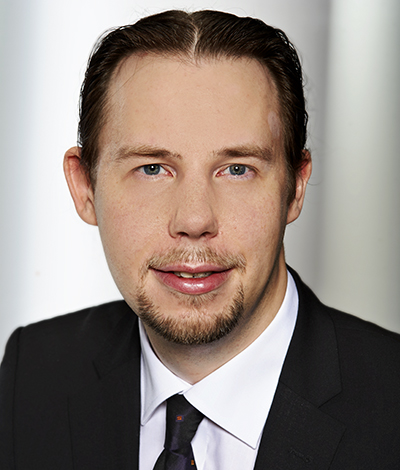
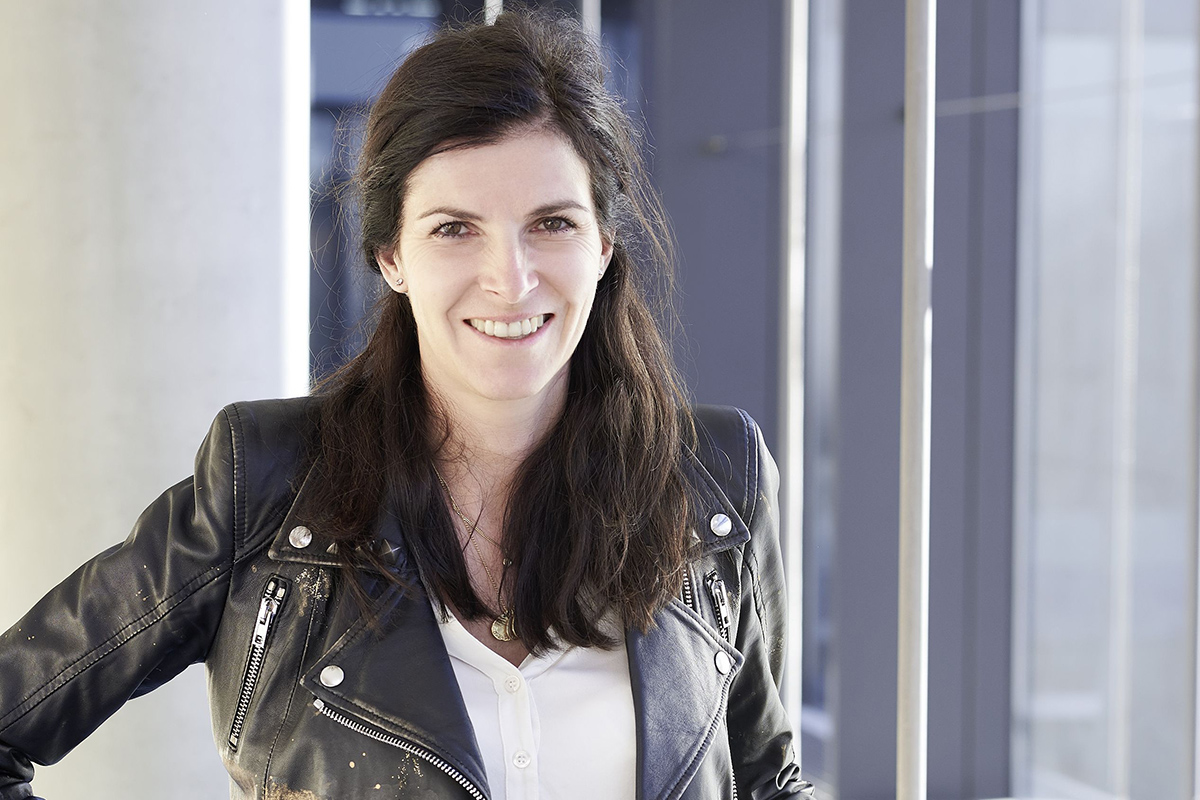
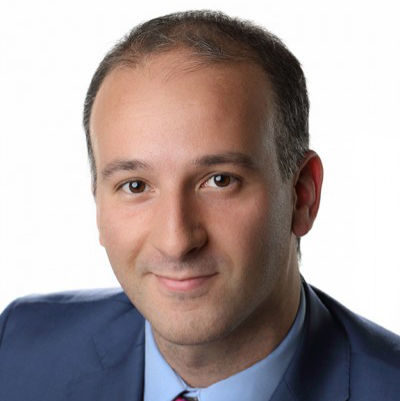
Gerd Bruder is an Associate Professor at the University of Central Florida , affiliated with the Department of Computer Science . He previously held positions as a Research Associate Professor at UCF's Institute for Simulation and Training (2016-2022), Post-Doc at University of Hamburg (2014-2016), and Post-Doc at University of Würzburg (2011-2014). Habilitation : Computer Science, University of Hamburg (2017) Ph.D. : Computer Science, University of Münster (2011) M.Sc. : Computer Science (minor in Mathematics), University of Münster (2009) Research Interests : Gerd Bruder's work focuses on Extended Reality (XR) systems, spanning Virtual Reality (VR) , Augmented Reality (AR) , and Mixed Reality (MR) . Key areas include human factors , digital twins , 3D user interfaces , and perceptual modeling , with applications in healthcare, military operations, architecture, and smart environments. Recent Publications highlight innovations in XR locomotion , trust calibration with autonomous agents, spatial cognition , and haptic-visual integration . His 2025 articles address task-switching efficiency in XR and collaborative mixed reality design. Scientific Awards : Best Paper at ACM VRST 2023 2021 TechConnect Innovation Award Best Demo at ACM SUI 2021 Multiple Best Paper Awards (2016-2023) Best Poster & Demo Awards (2015-2020) Patents include systems for medical simulation , smart environment interruption management , and adaptive AR interfaces . His work bridges academic research and practical applications across VR, AR, and MR domains.
Prof. Dr. Evi Hartmann holds the Chair of Business Administration, especially Supply Chain Management at Friedrich-Alexander University Erlangen-Nuremberg (FAU) within the Department of Business, Economics, and Social Sciences. She is actively involved in multiple research focus areas including sustainability, energy markets and energy system analysis, and insurance and risk. Her academic leadership extends across interdisciplinary collaborations with engineering, mathematics, and industry partners. Dr. Hartmann studied industrial engineering at the University of Karlsruhe (TH), received her doctorate in 2002 from the Institute of Technology and Management at the Technical University of Berlin, and completed her habilitation in business administration in 2008. Prior to her academic career, she worked as a consultant at AT Kearney from 1998 to 2005, followed by a junior professorship for 'Purchasing and Supply Management' at the Supply Chain Management Institute at the European Business School. Her research program focuses on supply chain management, purchasing, and strategic foresight, with particular emphasis on application-oriented approaches that bridge theory and practice. Current research trajectories include supply chain resilience in crisis situations (including pandemic response), digital transformation through Industry 4.0 technologies, sustainable and low-carbon supply chains, and the integration of strategic foresight methodologies in logistics decision-making. Her work frequently employs Delphi studies, bibliometric analyses, and multi-tier case studies to examine complex supply chain phenomena. Analysis of her recent publications reveals a strong trend toward interdisciplinary research that combines supply chain management with digital transformation, sustainability, and crisis response. Her work increasingly examines the intersection of technology adoption (particularly Industry 4.0), organizational culture, and supply chain resilience across multiple industries including automotive, food, and maritime logistics. Prof. Hartmann is recognized as the author of two academic bestsellers in her field, though specific awards are not detailed in available materials. Her research has been published in top-tier journals including IEEE Transactions on Engineering Management, International Journal of Production Research, and Journal of Cleaner Production. Her research program demonstrates extensive industry collaboration, with numerous projects involving real-world implementations and close partnerships with companies. She leads research initiatives examining the practical implications of digital transformation, sustainability challenges, and resilience strategies in supply chain operations. Current projects include studies on digital ecosystems, physical internet applications, and the future of freight forwarding technologies. Prof. Hartmann participates in several research networks including the Energy Campus Nuremberg (EnCN) and collaborates with the Department of Mathematics on gas networks and markets research. She is also involved with the Nuremberg Energy Region (Energieregion Nürnberg eV) and contributes to interdisciplinary research centers focused on sustainable development and digital transformation in supply chains.
Warut Suksompong is an Assistant Professor in the School of Computing at the National University of Singapore (NUS), where he holds the NUS Presidential Young Professorship. Previously, he was a postdoctoral researcher at the University of Oxford, hosted by Edith Elkind, and completed his PhD at Stanford University under Tim Roughgarden. He holds bachelor's and master's degrees from MIT. His research focuses on algorithmic game theory, computational social choice, mechanism design, and interdisciplinary problems at the intersection of computer science, economics, mathematics, and operations research. He is particularly known for contributions to fair division, including envy-freeness, proportionality, and maximin fairness in both divisible and indivisible resource allocation contexts. Key awards include the IJCAI 2021 Distinguished Paper Award for work on dividing land with geometric constraints and the WINE 2021 Best Student Paper Award for research on funding public projects via the Nash product rule. His work bridges theoretical foundations with practical applications, addressing challenges such as connectivity constraints, budget allocation, and social choice mechanisms. He has authored over 100 publications in top conferences and journals, including SIAM Journal on Discrete Mathematics, Artificial Intelligence, and Games and Economic Behavior. His research has been supported by grants from NUS and international collaborations.
Michael Muehlebach leads the independent Learning and Dynamical Systems research group at the Max Planck Institute for Intelligent Systems in Tuebingen, Germany. His interdisciplinary work bridges machine learning, dynamical systems theory, and control engineering to develop algorithms for cyber-physical systems with theoretical guarantees and practical implementations. Dr. Muehlebach received his B.Sc. and M.Sc. in Mechanical Engineering from ETH Zurich in 2010 and 2013, specializing in robotics and control systems. He completed his Ph.D. at ETH's Institute for Dynamic Systems and Control under Prof. R. D'Andrea in 2018, followed by postdoctoral research with Prof. Michael I. Jordan at UC Berkeley. His research focuses on constrained optimization, reinforcement learning, and control theory with applications in robotics. He pioneered approaches that express constraints in terms of velocities rather than positions, enabling more efficient optimization algorithms. His work spans theoretical foundations to physical implementations, including the One-Wheel Cubli balancing robot and electromagnetic navigation systems. Recent publications reveal a strong trend toward physics-informed machine learning, particularly for robotics applications requiring real-time performance and safety guarantees. Dr. Muehlebach has received numerous prestigious awards: Outstanding D-MAVT Bachelor Award Willi-Studer prize for best Master's degree ETH Medal and HILTI prize for doctoral thesis Branco Weiss Fellowship (2018) Emmy Noether Fellowship (2020) Amazon Fellowship (2024) He actively mentors doctoral researchers including Hao Ma, Melis Ilayda Bal, and Onno Eberhard, with research supported by multiple grants. His group maintains strong collaborations with Bernhard Schölkopf's Empirical Inference group at the Max Planck Institute. The Learning and Dynamical Systems group develops innovative hardware and software platforms, including Floaty (a wind-harnessing flying robot), advanced electromagnetic navigation systems, and data-efficient learning methods for robotic table tennis. Their approach combines rigorous theoretical analysis with practical validation on physical systems, emphasizing the integration of known physical structure into machine learning algorithms to improve sample efficiency and ensure generalization.
Dr. Emilio Ferrara is a Professor of Computer Science & Communication at the University of Southern California, holding appointments in the Viterbi School of Engineering, Annenberg School for Communication and Journalism, and Keck School of Medicine. He serves as Associate Director of Applied Data Science at USC, Research Team Leader at the USC Information Sciences Institute, and Principal Investigator at the USC/ISI Machine Intelligence and Data Science (MINDS) group. His educational background includes a PhD in Machine Learning and BSc & MSc in Computer Science. Ferrara's research focuses on the intersection of artificial intelligence and computational social science, specifically using AI to model and predict human behavior in techno-social systems. His work spans social networks, machine learning, and network science with applications to understanding communication dynamics in digital environments. Ferrara has published over 150 articles in prestigious venues including Proceedings of the National Academy of Sciences, Communications of the ACM, and Physical Review Letters. His research has been widely featured in major news outlets and examines topics ranging from social media manipulation to AI ethics and online behavior. His scientific achievements have been recognized with numerous awards: 2019 Viterbi Scientific Award 2018 DARPA Director's Fellowship 2016 DARPA Young Faculty Award 2016 Complex Systems Society Junior Scientific Award 2015 IBM Watson Big Data Influencer Ferrara's research is supported by major funding agencies including DARPA, IARPA, Air Force, and Office of Naval Research. He leads the HUMANS LAB (Humans & Machines + Networks & Social Systems) which has trained numerous PhD students who have gone on to successful careers in academia and industry. His work on social bots, election integrity, and AI ethics continues to shape understanding of digital social dynamics.
Dr.-Ing. Tobias Fiebig is a Senior Researcher at the Max Planck Institute for Informatics (Internet Architecture department) since April 2022. He previously served as a permanent Assistant Professor at TU Delft's Faculty of Technology, Policy and Management from 2017-2022. His work combines network measurement with human factors to improve security practices, focusing on email protocols, DNS infrastructure, and academic cloud migration. PhD in Computer Science from TU Berlin (2017) MSc in System and Network Engineering from University of Amsterdam (2013) BSc in Cognitive Science from University of Osnabrück (2012) His research spans Internet security (DNS, IPv6, email), academic freedom in cloud contexts, and human-centered security challenges. Recent work analyzes MTA-STS deployment, DNS sampling biases, and university cloud migration privacy implications. He has presented at top conferences including USENIX Security , IEEE Symposium on Security and Privacy , and ACM CCS . Teaching roles include lecturing Data Networks (2023-24) and On the Practice of System and Network Engineering (2024), with prior module management in cyber security analytics and sustainable system operations.
Tanja Eisner is a Professor at the University of Leipzig , affiliated with the Institute of Mathematics. Her work bridges functional analysis and operator theory with dynamical systems and ergodic theory . Research Interests : Functional analysis and operator theory Dynamical systems and ergodic theory Applications to number theory and additive combinatorics Recent Publications (15 most recent): Her articles focus on ergodic theorems, stability of operators, and connections between dynamics and number theory, with keywords spanning Mathematics , Operator Theory , Dynamical Systems , and Harmonic Analysis . Notable subfields include multiple recurrence , nilsystems , automatic sequences , and Wiener's lemma . Teaching & Collaboration : Organized miniworkshops on operator-theoretic aspects of ergodic theory in Leipzig, Wuppertal, Kiel, Feldkirch, and Tübingen Co-authored books with Bálint Farkas, Markus Haase, and Rainer Nagel Co-organized seminars like the Internet Seminar on Ergodic Theorems
Prof. Dr. Armido Studer is a Full Professor of Organic Chemistry at the Institute of Organic Chemistry, Faculty of Mathematics and Natural Sciences, University of Münster (WWU Münster), Germany. He has been serving as a Full Professor (W3) since November 2009, following his appointment as a Full Professor (C4) in 2004. Studer also serves as the Spokesman of the International Research Training Group IRTG 2678 'Functional π-Systems: Activation, Interaction and Application (pi-Sys)' since 2021 and previously led the Collaborative Research Center SFB 858 'Synergetic Effects in Chemistry - From Additivity towards Cooperativity' from 2010 to 2021. Studer received his education at ETH Zürich, where he completed his diploma thesis and doctoral studies under Prof. Dr. D. Seebach. He conducted postdoctoral research at the University of Pittsburgh with Prof. Dr. D. P. Curran before returning to ETH Zürich for his habilitation. His academic career includes positions as Associate Professor at Philipps-Universität Marburg (2000-2004) and subsequent professorships at WWU Münster. Professor Studer's research focuses on radical chemistry, particularly in the development of new synthetic methods using radical intermediates. His work spans free radical chemistry, electron catalysis, and the application of nitroxides in organic synthesis. Recent research directions include 'Radical Chemistry with the Hydrogen Atom Through Water Activation (H-dot)' and 'The Electron as a Catalyst: e-cat', both funded by ERC Advanced Grants. His group has made significant contributions to C-H functionalization, skeletal editing of heterocycles, and cooperative catalysis involving photoredox and N-heterocyclic carbene systems. The research has applications in pharmaceutical chemistry, materials science, and sustainable chemical synthesis. Studer's publication record shows a strong focus on heterocyclic chemistry, radical reactions, and catalytic methodologies. His recent work demonstrates expertise in meta-selective functionalization of heteroarenes, skeletal editing techniques, and the development of novel radical cascade reactions. The group has published extensively in high-impact journals including Nature, Science, JACS, and Angewandte Chemie. Adolf-von-Baeyer-Denkmünze (2025) Arthur C. Cope Late Career Scholars Award of the American Chemical Society (2024) ERC Advanced Grants (2024, 2016) Multiple Highly Cited Researcher designations (2017-2022) Elected member of multiple academies (European Academy of Sciences, Academia Europaea, German National Academy of Sciences Leopoldina) Pedler Award of the Royal Society of Chemistry (2019) Professor Studer has mentored over 100 PhD students and postdoctoral researchers who have gone on to successful careers in academia and industry worldwide. His research is supported by significant grants including multiple ERC Advanced Grants and funding from the German Research Council (DFG) for collaborative research centers. The Studer Group maintains numerous international collaborations, particularly with institutions in Japan, China, and the United States, reflecting his global impact in organic chemistry. The Studer Group operates state-of-the-art laboratories at the University of Münster, equipped for advanced organic synthesis, photochemistry, and materials characterization. The group is known for its collaborative culture and has been featured in numerous group photos documenting its evolution since the early 2000s, first at Philipps-Universität Marburg and then at WWU Münster.
Atreyi Kankanhalli is a Professor at the National University of Singapore, specializing in Information Systems with a focus on knowledge management, healthcare IT, and digital innovation. Their research spans over three decades, with prolific contributions in top journals like MIS Quarterly, Journal of AIS, and Information & Management. They have co-authored over 150 papers addressing topics such as crowdsourcing, online communities, and the impact of AI on scholarly practices. Notable work includes studies on user adherence to health apps, innovation in public sector data utilization, and the ethical challenges of generative AI in peer review. Kankanhalli has also led research on global virtual teams and digital technologies' role in social justice, reflecting a commitment to both technical and societal dimensions of information systems. Education & Background: While specific degree details are not provided, their extensive publication history and academic roles imply advanced qualifications in Information Systems or related fields. They have collaborated with global researchers across institutions like NUS, University of Illinois, and Singapore Management University. Research Themes: Core areas include digital health interventions (e.g., fitness app adherence), organizational innovation via open data and crowdsourcing, and the socio-technical challenges of AI in academia. Their work often bridges theoretical frameworks with practical applications, such as healthcare decision support systems and policy-driven technology adoption. Impact & Influence: As an editorial board member and frequent conference contributor (e.g., ICIS, PACIS), Kankanhalli shapes the field's research agenda. Their recent focus on generative AI's implications highlights proactive engagement with emerging technologies' ethical and methodological challenges.
Prof. Dr. Michael Gröschel is a Professor of Business Informatics at the Faculty of Computer Science, Mannheim University of Technology. His expertise spans Business Process Management (BPMN, Process Mining), Digital Transformation, and innovative Business Models. He teaches courses on BPM, project management, and e-business, often collaborating with industry clients through student projects. As a consultant, he specializes in BPMN training and IT-driven business strategy. His work emphasizes practical applications of IT tools like RPA and low-code platforms. Recent publications focus on RPA bot performance evaluation, AI in automotive trade, and business model-IT alignment. Prof. Gröschel’s research bridges academic insights with real-world challenges, particularly in leveraging technology for business innovation. He has authored books and articles on business intelligence tools, mobile business strategies, and digital customer care. His consulting services include executive coaching for academic career advancement and enterprise IT management best practices. Office: Building A, Room 007c | Phone: +49 621 292-6764 | Professional website available for further engagement opportunities.
Prof. Dr. Amelie Hagelauer holds a professorship in Micro- and Nanosystem Technology at the TUM School of Computation, Information and Technology, Technical University of Munich. Her work focuses on advanced electronics and systems integration across quantum computing hardware, resistive memory technologies, and high-frequency RF systems. She has contributed to innovations in superconducting qubit readout architectures, multi-level RRAM designs, and 3D-integrated CMOS-compatible quantum devices. Research interests span quantum hardware design, nanoelectronic devices, RF front-end systems, and emerging memory technologies. Her work emphasizes practical implementation challenges such as low-power operation, high-voltage handling in RF switches, and wafer-scale fabrication processes. Recent projects include D-band radar systems, energy-efficient 60 GHz transceivers, and antenna tuning solutions for 5G applications. Publications from 2023-2025 showcase advancements in resistive switching device characterization, mitigation of TLS losses in superconducting qubits, and reconfigurable AI accelerators using RRAM-based digital twins. Her work bridges theoretical device physics with practical integrated circuit design, addressing scalability and reliability in next-gen electronics. Awards and grants: None explicitly listed in provided texts. Active collaborations include EU-funded projects on quantum computing platforms and TUM's Electronic Photonic Integration initiatives. Leads research teams in microsystem technology with emphasis on cross-disciplinary approaches combining CMOS processes, MEMS, and quantum engineering.
Leo Schwinn is a Lecturer at the Technical University of Munich (TUM) within the Department of Computer Science (I26), working in the Data Analytics and Machine Learning group supervised by Prof. Stephan Günnemann at the TUM School of Computation, Information and Technology. His research focuses on robust machine learning with particular emphasis on data-efficient learning and robustness vulnerabilities of Large Language Models (LLMs). Dr. Schwinn's research interests span multiple critical areas in contemporary machine learning including: Robustness against adversarial attacks in LLMs Embedding space vulnerabilities and defenses Model unlearning and privacy preservation Efficient training methodologies for large models Time-series forecasting with probabilistic frameworks Graph-based machine learning approaches His work bridges theoretical understanding with practical security implications of modern AI systems. Analysis of his recent publications (2023-2025) reveals a strong focus on LLM security, with multiple papers accepted at premier conferences including ICML, CVPR, ICLR, and NeurIPS. His research demonstrates consistent innovation in identifying novel attack vectors while developing practical defense mechanisms, particularly through embedding space manipulation techniques. The work shows increasing sophistication in handling both theoretical aspects of model robustness and practical deployment concerns. His notable scientific achievements include: Receiving the ATE dissertation price for his PhD work at FAU Securing an oral presentation at ICLR 2025 Organizing the ICLR BlogPost Track Becoming a member of ELLIS (European Laboratory for Learning and Intelligent Systems) Dr. Schwinn has served as review process chair for the 2024 Conference on Lifelong Learning Agents (CoLLAs) and actively collaborates with researchers at Mila Quebec AI Institute. His research group at TUM focuses on addressing fundamental challenges in machine learning robustness, particularly as they apply to real-world deployment scenarios where security and reliability are paramount. He maintains active GitHub repositories related to LLM security research, including circuit-breakers-eval and LLM_Embedding_Attack, demonstrating his commitment to open science and reproducible research in the field of AI security.
Dieter Braun is a Professor in the Faculty of Physics at Ludwig Maximilian University of Munich (LMU), leading the Functional NanoSystems research group. He serves as speaker of the CRC 235 Emergence of Life and coordinates the Molecular Origins component of the Origins Cluster. Dr. Braun holds an ERC Synergy Grant (starting April 2025), leads the CRC 392 Molecular Evolution (starting April 2024), and is a Fellow in the Max Planck School Matter to Life (since October 2023). His research focuses on understanding the physical mechanisms that could have led to the emergence of Darwinian evolution from prebiotic molecules on early Earth. Braun's laboratory investigates non-equilibrium settings, particularly asymmetrically heated open cracks in rocks, which create intricate wet-dry cycles, temperature gradients, and fluidic effects that could drive molecular evolution. His work bridges physics, chemistry, and biology to explore how dead molecules might combine through physical forces into autonomous mechanisms of evolution. Analysis of Braun's recent publications reveals a strong focus on thermal gradients and non-equilibrium physics in prebiotic environments. His research demonstrates how heat flows can concentrate molecules, drive polymerization, create pH gradients, and enable non-enzymatic replication of nucleic acids. The publications span high-impact journals including Nature, Nature Physics, and Nature Chemistry, showing interdisciplinary work connecting physics, chemistry, geology, and biology in the context of life's origins. Klung-Wilhelmy Weberbank Price (2011) Technology Transfer Price of the DPG (with LMU and NanoTemper) Deutscher Innovationspreis (2012) Step Award (2012) Dr. Braun has successfully mentored numerous PhD students, including Stefan Duhr and Philipp Baaske who founded the award-winning startup NanoTemper Technologies. His research is supported by multiple prestigious grants including ERC Starting, Advanced, and Synergy Grants, as well as funding from the Simons Collaboration on the Origins of Life. His laboratory collaborates extensively with other researchers across disciplines and institutions, particularly with Hannes Mutschler in the new ERC Synergy project. The Braun laboratory operates within the CRC 235 Emergence of Life and the Origins Cluster at LMU Munich, with strong connections to the Max Planck Society through the Max Planck School Matter to Life. The research group maintains active collaborations with geochemists, biophysicists, and molecular biologists to create comprehensive experimental models of prebiotic environments.
Björn Brandenburg is a researcher at the Max Planck Institute for Software Systems (MPI-SWS) in Kaiserslautern, Germany. His work focuses on real-time systems, scheduling algorithms, and operating system design, with a particular emphasis on predictable resource allocation and performance guarantees in multiprocessor and cyber-physical environments. His research interests include real-time response-time analysis (e.g., PROSA ), locking protocols for multiprocessor systems, side-channel mitigation in cloud environments, and the verification of real-time scheduling policies. He has contributed to foundational studies on deadline failure probabilities, self-suspending tasks, and predictable real-time Linux implementations. Scientific awards include recognition for outstanding papers on TimerShield (2017) Offline Equivalence (2017) . His work intersects with practical systems like LITMUSRT and ROS 2, aiming to bridge theoretical guarantees with real-world applications in safety-critical and distributed real-time systems.
Anastasia Ailamaki is a Professor at the Swiss Federal Institute of Technology in Lausanne (EPFL), renowned for her work in database systems and data management . Her research focuses on optimizing query processing for modern hardware, particularly GPUs and heterogeneous systems, and advancing cloud data analytics with serverless architectures like PixelDB . She has co-authored influential frameworks for adaptive query optimization , hardware-conscious database engines , and model-relational data management . Key research areas: GPU acceleration , HTAP , query approximation , spatial data processing , and cloud-native databases . Recent work emphasizes cross-task optimizations in distributed environments, efficient sampling , and context-aware joins integrating vector embeddings. In 2023, she contributed to adaptive recursive query optimization and speculative K-means clustering, while 2024 publications addressed proportional caching (HPCache) and model-relational systems . Her collaborations span institutions such as MIT, Microsoft, and ETH Zurich, with publications in top venues like SIGMOD , VLDB , and ICDE .