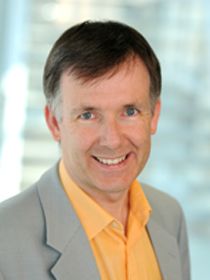
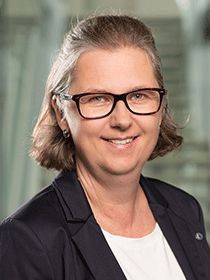
Johannes Höller is a researcher at the University for Continuing Education Krems, affiliated with the Research Lab Sustainable Cultural Heritage. His work focuses on integrating advanced sensor technologies and digital documentation methods for cultural heritage preservation. Email: johannes.hoeller@donau-uni.ac.at Office Location: Campus Krems, Trakt UD, 1st Floor, 1.17 His research interests span Cultural Heritage , Digital Documentation , and Sustainable Preservation , leveraging multi-sensor systems and robotic technologies for archaeological monitoring. He contributes to projects like the Robotic Operated Multi-Sensor System for Digital Documentation and Monitoring of Cultural Heritage , funded by Austrian federal ministries until 2025.
Dr. Thilo Sauter holds a tenured position as Associate Professor for Automation Technology at Vienna University of Technology (VUT) and is affiliated with Danube University Krems, where he leads the Center for Distributed Systems and Sensor Networks. He has been a pivotal figure in industrial automation research for over two decades, with expertise in smart sensors, real-time systems, and cybersecurity in automation networks. His academic credentials include a Dipl.-Ing. and Doctorate in Electrical Engineering from VUT. Education: Dipl.-Ing. in Electrical Engineering (1992), Vienna University of Technology Doctorate in Electrical Engineering (1999), Vienna University of Technology Research Interests: Dr. Sauter focuses on advancing secure and efficient automation systems, including real-time communication, sensor integration, and cybersecurity for industrial environments. His work bridges theoretical frameworks with practical applications in energy systems, IoT security, and industrial IoT (IIoT). Recent projects emphasize energy transition challenges, such as optimizing e-car charging and enhancing HVAC systems with machine learning. Key Projects: Leading the Community Flexibility in Regional and Local Energy Systems project (2019–2023), addressing energy grid optimization. Principal Investigator for Decision Making and Optimization for Distributed Energy Management (2022–2024), focusing on smart energy systems. Co-developed the Attack Resilience for IoT-Based Sensor Devices in Home Automation initiative (2019–2023). Publications and Awards: With over 300 publications, Dr. Sauter has authored influential works on industrial cybersecurity, sensor systems, and automation networks. His 2014 IEEE Fellow distinction recognizes contributions to synchronization and security in automation networks. He serves as Past Editor-in-Chief of the IEEE Industrial Electronics Magazine and holds leadership roles in IEEE and Austrian professional associations. Grants and Collaborations: His research is supported by grants from FFG (Austrian Research Promotion Agency), FWF (Austrian Science Fund), and industry partners. Projects often combine academic rigor with industry collaboration, such as fiber-optic sensor integration in process furnaces and blockchain-based energy community management. Labs and Teams: He oversees interdisciplinary teams at the Center for Distributed Systems and Sensor Networks, focusing on hardware-software co-design, embedded systems security, and smart energy solutions. His lab infrastructure supports advanced prototyping and testing of sensor networks and IoT devices.
Mag. Dr. Ingeborg Zeller is the Deputy Head and Scientific Staff member at the Department for Security Studies of the University for Continuing Education Krems. Her work focuses on interdisciplinary research in risk management, artificial intelligence, and cybersecurity, with a particular emphasis on autonomous systems and operational safety in transportation. Research Projects: Zeller has contributed to multiple FFG-funded projects, including semi-autonomous chemical detection systems, mobile multi-sensor networks for rail safety, and AI-based misinformation detection. She also co-developed training standards for security personnel and CBRN city sensor networks. Research Interests: Her expertise spans AI applications in risk assessment, cybersecurity threats in autonomous systems, transportation safety protocols, and sensor technology integration. She collaborates on projects addressing regulatory challenges in automated systems and data science innovation. Professional Contributions: As Deputy Head, she oversees academic and operational aspects of the department. Her research bridges technical innovation with societal impact, emphasizing practical solutions for security and safety challenges in modern infrastructure and autonomous technologies.
Johannes Schönböck is a Professor at the University of Applied Sciences Hagenberg, affiliated with the Research Center Hagenberg. He leads the Assistive Technology Lab and contributes to the Center of Excellence for Smart Production. His research focuses on Model-Driven Engineering, AI-driven systems, operational technology monitoring, and volunteer management platforms. He has coordinated projects like the COMET-funded AI-driven knowledge database for plastics production and the KIRAS-supported CIvolunteer initiative targeting critical infrastructure resilience. Key projects include: KI-gestützte Wissensdatenbank (2024-2027): AI integration for industrial knowledge digitization CIvolunteer (2023-2025): Volunteer-powered critical infrastructure systems HYCOS (2022-2026): Hybrid collaboration spaces for automated analysis Research interests span collaborative systems, smart production, and data-driven approaches. Recent work emphasizes goal-oriented volunteering platforms and semantic frameworks for OT monitoring. His publications address pattern mining in control systems and digital shadow techniques for industrial cybersecurity. He has served as Principal Investigator (PI) or Co-Investigator (CoI) in 9 funded projects since 2014, collaborating with institutions like FWF and COIN. His work bridges theoretical models with practical implementations in smart factories and emergency response systems.
Holger Gröning is a Professor at Wels University of Applied Sciences, affiliated with the Production and Operations Management Department within the Center of Excellence for Smart Production. His work focuses on integrating machine learning into industrial processes, particularly in additive manufacturing and process optimization. Research Interests: Machine Learning Algorithms (100%), Process Optimization (100%), Virtual Sensor Technology (50%), Heterogeneous Data Streams (50%) His recent publications explore data stream merging in additive manufacturing and process optimization for laser metal deposition using machine learning. Supervised 7 academic works without named advisees listed. Active in smart production systems research with collaborations in industrial automation fields.
Christoph Hochenauer is a Professor at FH Wels Research Center, specializing in advanced energy systems and materials engineering. His research focuses on micro-tubular solid oxide fuel cells (MT-SOFC), computational fluid dynamics (CFD), and high-temperature engineering applications. He has contributed to projects like 'Nachhaltige Prozessoptimierung durch Einsatz von Sauerstoff' (2012), exploring sustainable process optimization using oxygen. Key research interests include thermal processing of composites, polymer matrix systems, and fuel cell degradation mechanisms. He has collaborated internationally on topics such as infrared heating for thermoplastic composites and nitrogen oxide emissions in gas burners. His work has been published in journals like International Journal of Hydrogen Energy , International Polymer Processing , and Fuel Cells . He actively participates in peer-review activities and conferences, contributing to the advancement of materials and energy systems research.
Christof Lanzerstorfer is a Professor at the Department of Environmental Technology, University of Applied Sciences Wels. His research focuses on material science, environmental engineering, and recycling technologies. He leads projects like the K1-MET Environmental Technology initiative (2008–2015), addressing gas cleaning and recycling in the iron industry. His work spans dust management, heavy metal analysis, and biofilter systems for odor control. With an h-index of 13 and over 1000 citations, his contributions include studies on additive manufacturing powders, wall friction reduction, and airborne particle analysis. Education & Projects: Leads K1-MET project on environmental technology and recycling. Research Interests: Dust and fly ash management. Recycling via air classification. Flowability and powder properties. Odor control in waste treatment. Grants & Labs: Collaborates on environmental engineering projects and contributes to the Research Center Wels. Active in editorial roles, such as the Carpathian Journal of Earth and Environmental Sciences.
Douglas Vaught is a Researcher at the MA Research Center Wels, affiliated with the University of Applied Sciences Wels. His academic work bridges industrial materials engineering and environmental sustainability, with institutional email verification confirming active faculty status. His research focuses on: Materials Engineering : Specializing in induction hardening/tempering of cold work tool steels (X153CrMoV12), temperature effects on tribological systems, and polypropylene melt behavior. Sustainability Science : Developing food waste prevention strategies for hospitality/restaurant industries with regional emphasis on Upper Austria. Publication trends (2009-2017) reveal a strategic pivot from metallurgical process optimization toward circular economy solutions in food systems. Early work addresses industrial challenges in steel treatment and polymer processing, while later research tackles economic and operational waste management barriers in service sectors.
Erik Pitzer is a Professor at FH Hagenberg, part of the Research Center Hagenberg. He leads the Josef Ressel Center for Heuristic Optimization and has contributed to projects like SMART UNLOAD (2021-2022) focusing on unloading bay optimization and BIOBOOST (2012-2014) addressing biofuel production via biomass. His work spans heuristic algorithms, simulation-based optimization, and fitness landscape analysis. Research interests include developing metaheuristics for complex optimization problems, distributed modeling frameworks, and dynamic problem adaptation. Notable contributions include Composable Evolutionary Computation (2025) and middleware for distributed systems (2024). Key Projects : SMART UNLOAD (Operational Excellence), BIOBOOST (Bioenergy Production), Josef Ressel Center (Heuristic Optimization) Advising : Supervised 4 works (names withheld) Labs : Josef Ressel-Zentrum für Heuristische Optimierung
Lukas Buchner is a Researcher at the Center of Excellence for Smart Production, Smart Automation and Robotics, University of Applied Sciences Upper Austria (FH OÖ), Wels Campus. He holds a Dipl. Ing. and BSc engineering degree with active research contributions in industrial robotics. His educational background includes: Bachelor of Science (BSc) Diplom-Ingenieur (Dipl. Ing.) in Engineering Buchner specializes in human-robot collaboration systems, focusing on path planning algorithms that integrate human kinematics for safer industrial workflows. His work bridges mobile robotics and edge computing, particularly through multipath networking solutions for seamless robot roaming in production environments. Current research emphasizes trustworthiness in human-robot teams via trajectory optimization and real-time workflow modeling. No scientific awards are documented in the provided information. As Co-Investigator, Buchner contributes to two major projects: VRoboCoop (2024-2028): IBW/EFRE-funded research on trustful human-robot collaboration through kinematics-integrated path planning B&R Smart Factory 2020 (2017-2019): Development of machine communication protocols for smart production systems His grant activities focus on industrial automation applications with European regional development funding. He operates within the VRoboCoop research team at Research Center Wels, collaborating with robotics experts like Roland F. Froschauer and Karin Nachbagauer to advance smart factory technologies through practical human-robot integration solutions.
Raimund Edlinger is a research-focused academic at the University of Applied Sciences Upper Austria, Wels campus, affiliated with the Research Center Wels. He leads the Center of Excellence for Automotive/Mobility and Smart Production, with specialized focus areas in Digital Transformation, Rail Automation, Telematics, and Smart Automation and Robotics. His interdisciplinary work bridges engineering and practical robotics applications across diverse environments. Edlinger's research centers on advancing robotics for real-world challenges, particularly in GNSS-denied scenarios and hazardous environments. His expertise spans autonomous navigation, sensor fusion (LiDAR, thermal imaging, tactile systems), and human-robot interaction, with significant contributions to rescue robotics, underground mapping, and space analog missions. Recent work emphasizes digital twin applications for Mars simulations and tactile terrain assessment to enhance robot mobility in complex terrains. Analysis of his publication trends reveals a strategic shift toward multi-sensor integration for reliability in adverse conditions (e.g., smoke, narrow tunnels, Mars analogs). His 2022-2025 output shows concentrated effort in practical deployment challenges: casualty evacuation systems, nuclear disaster response, and cost-effective sensing solutions, reflecting strong industry and emergency response collaboration. His competitive robotics achievements include: 1st place EnRicH 2021 (Manipulation category) Multiple RoboCup podium finishes (2015-2022) in Rescue League and Best-in-Class Manipulation German Open championship recognitions across five consecutive years Edlinger directs significant research initiatives including the active MOBES project (Mobile Erdstall Scanner, 2025-2026), MARK Racing Team, and Autility platform development, funded by Austria's Climate and Energy Fund and ICT programs. He supervises student research while contributing to national robotics strategy through activities like ÖBFV Führungsseminar workshops on digitalization. His work is operationalized through the RRT-Roboto-Racing Team and specialized labs within Research Center Wels, featuring underground structure simulators, Mars analog testbeds, and sensor calibration facilities for extreme environments. Current projects integrate 5G communication and AI-driven manipulation for next-generation rescue systems.
Herbert Jodlbauer is a Professor at the Department of Production and Operations Management at the University of Applied Sciences Steyr. He leads the Research Center Steyr Center of Excellence for Smart Production and focuses on Production Systems, Digitalization, and Business Model Innovation. His work integrates analytical methods with practical applications in supply chain optimization and value chain efficiency. Key research interests include production planning, service level analysis, lead time optimization, and decision-making frameworks. He has pioneered projects such as the Josef Ressel Centre for Data-Driven Business Model Innovation and the X-PRO project on cross-virtuality analytics in production environments. His contributions span over 149 publications and 9 active research projects. Notable achievements include the 2023 Innovation Management Best Paper Award and leadership roles in collaborative initiatives like the Advanced Analytics for Production (ADAPT) program. He actively engages in academic activities, including invited talks at FH Science Day 2008 and peer-review for logistics management journals. Current research emphasizes data-driven decision-making, customer-driven production systems, and sustainability in supply chains. His work often bridges theoretical models with real-world industrial applications, particularly in manufacturing and service industries.
Christoph Eisl is a Professor at the Department of Accounting, Controlling and Financial Management at Steyr University of Applied Sciences. His research focuses on sustainability reporting, financial management systems, and innovative visualization techniques in business analytics. He actively contributes to interdisciplinary projects such as BF-Smart Visualization 4.0 and Wahrnehmungsoptimiertes Reporting - EyeTracking , exploring perceptual anomalies in financial communication and dashboard design. He has authored foundational textbooks on financial management and contributed to over 98 research outputs since 2007. Key areas of expertise include management control systems, corporate governance, and the integration of artificial intelligence in financial decision-making. Prof. Eisl is engaged in academic activities such as journal peer-review for the Journal of Applied Accounting Research and consultancies on digitalization in accounting. His work bridges theoretical frameworks with practical applications, emphasizing sustainable development and modern pedagogical strategies in online education.
Franz Staberhofer is a Professor at the LOGISTIKUM Center of Excellence Logistics within Steyr University of Applied Sciences. His work focuses on integrating advanced technologies and systemic approaches into logistics and supply chain management. Staberhofer's research spans Supply Chain Management , Complex Systems Perspective , and Logistics Infrastructure . He explores how regional logistics systems impact economic outcomes and how emerging technologies like IoT can optimize supply chains. Recent publications highlight his interest in Internet of Things , Regional GDP , and Systemic Risk Analysis , reflecting trends in leveraging data-driven solutions for logistics challenges. His work often bridges theoretical insights with practical applications in Austria. He actively collaborates with institutions and co-authors, participating in projects like Agilität in der Lieferkette and presenting at symposia such as the Academic Research Symposium and OR News conferences.
Anna Maschek serves as a Researcher at the Research Center Hagenberg, University of Applied Sciences Hagenberg, Austria, operating within the ICT strength area of Information and Communication Technology. Her academic profile emphasizes practical AI applications across diverse safety-critical domains. Her research spans Natural Language Processing, Artificial Intelligence, Sports Accident Analysis, Biodiversity Monitoring, and Computer Vision. Key contributions include developing NLP frameworks for automated sports accident report evaluation and computer vision systems for sport climbing analysis, demonstrating consistent innovation at the technology-safety interface. Publication trends reveal a concentrated focus on adapting cutting-edge AI techniques—particularly GPT-3 and pose estimation—to enhance sports and leisure safety protocols. Her 2023-2025 works collectively establish a research trajectory centered on real-time hazard identification and preventive systems through automated data interpretation. Active research engagements include the BAMBI biodiversity monitoring project (2022-2025) utilizing UAV technology, Sports Accident Analysis (2022), Intelligent Decision Engine for software architecture (2025), and AI photo studio for product visualization (2025-2026), with primary collaborations involving Andreas Stöckl and David Schedl.