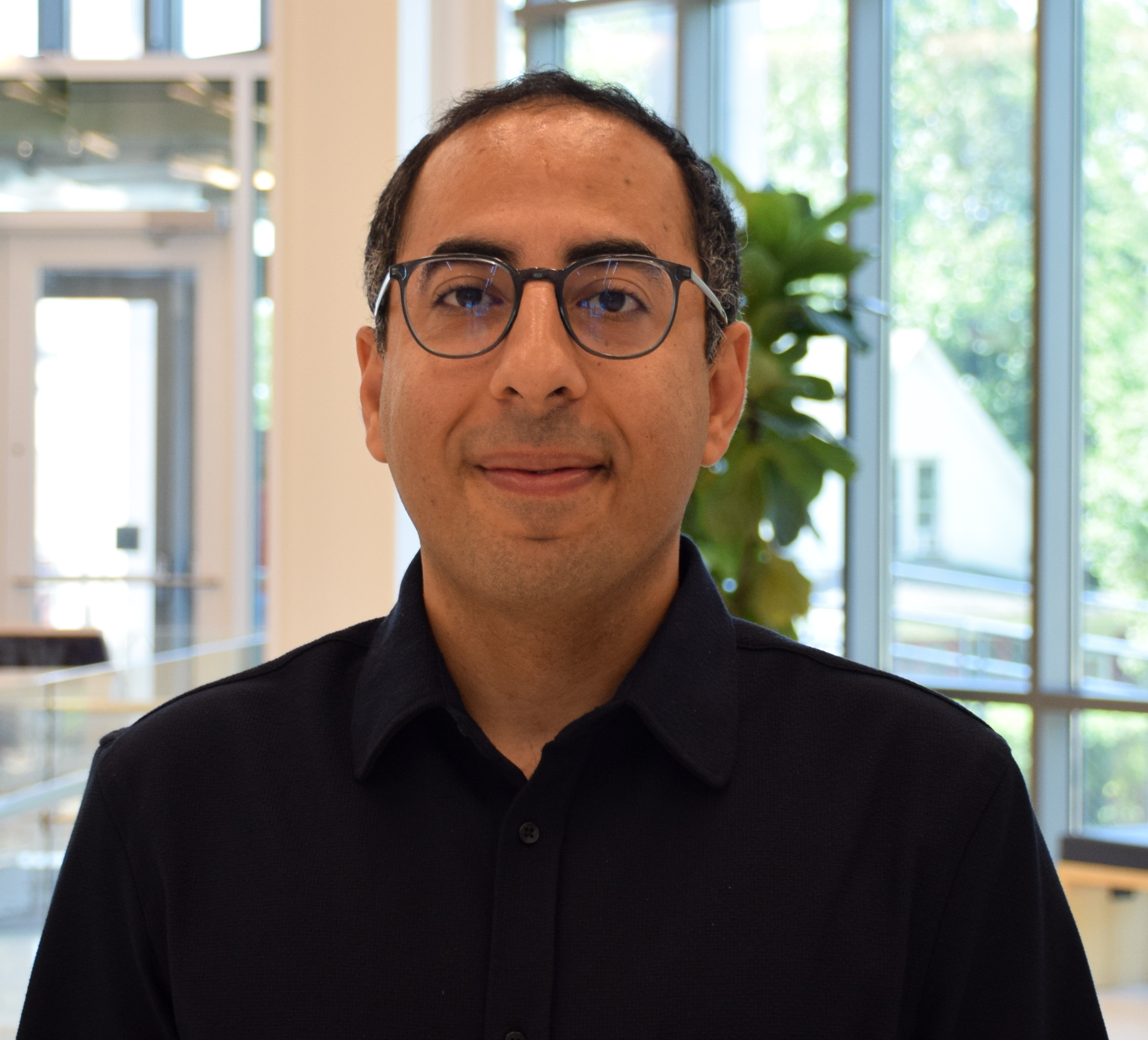
Mame Bigué GNINGUE is an Associate Professor in Supply Chain Management at EM Normandie since 2011. She holds a PhD in Management Science (2011) from the University of Le Havre-Normandie, focusing on security risk management in global cargo transportation. Her research emphasizes supply chain resilience, risk assessment frameworks, and sustainability in logistics operations. She teaches subjects including Logistics, Supply Chain Management, and Risk Management. Her academic work spans port performance measurement systems, stakeholder theory applications, and digital transformation impacts on supply chain vulnerability. Key contributions include integrating FMEA and HACCP methodologies for cargo security and developing expert systems for container transport security. She actively participates in international conferences such as LOGISTIQUA, ICBME, and IEEE GOL, addressing topics like Industry 4.0 challenges and humanitarian supply chain practices. No scientific awards are explicitly mentioned in the text. Her professional experience includes roles in industrial operations management prior to her academic career. Research focuses on bridging theoretical risk models with practical industry applications, particularly in multinational logistics contexts.
Agostino Capponi is a Professor of Industrial Engineering and Operations Research at Columbia University, affiliated with Columbia Engineering and the Data Science Institute (DSI). He holds academic fellowships at the Luohan Academy (Alibaba Group) and the Fintech@Cornell Center. His research focuses on systemic risk, financial technology, blockchain economics, and machine learning applications in finance. He has authored a best-selling book on machine learning in financial markets and received prestigious awards including the NSF CAREER Award and the JP Morgan AI Faculty Research Award. Education: Master's and PhD in Computer Science and Applied & Computational Mathematics from Caltech (2006-2009). Professional roles include Editor of Management Science , co-editor of Mathematics and Financial Economics , and leadership positions in the Bachelier Finance Society and INFORMS Finance Section. His research has been funded by NSF, DARPA, J.P. Morgan, Ethereum Foundation, and others. Research interests span blockchain governance, decentralized finance protocols, and systemic risk mitigation in financial networks. Notable contributions include work on liquidity risk, crypto-economic systems, and causal inference in financial modeling. Media coverage includes American Banker, Vox, and Chicago Booth Review. He holds a patent in military network tracking and served as a visiting scholar at the Federal Reserve Bank of New York.
Dr. Shuya Wei is an Assistant Professor in the Department of Chemical and Biological Engineering at the University of New Mexico (UNM). She holds a Ph.D. in Chemical Engineering from Cornell University (2017) and a B.Eng. in Bioengineering from Nanyang Technological University (2013). Her research focuses on advancing electrochemical energy storage technologies, including next-generation batteries for energy and environmental applications. Key areas include developing high-energy batteries using earth-abundant materials, carbon capture through electrochemical processes, and nanomaterials design. Education: Ph.D., Chemical Engineering, Cornell University, 2017 B.Eng., Bioengineering, Nanyang Technological University, 2013 Research Interests: Electrochemical fundamentals and interfaces Rechargeable batteries (e.g., Li-CO₂, Al-CO₂, iron batteries) Carbon capture and conversion via electrochemical systems Design of nanocomposites and biomaterials for energy storage Notable Awards: Materials Research Society (MRS) Graduate Student Silver Award (2017) UNM Women in STEM Awards (2022) NASA MPLAN Prize (2024) NSF EPSCoR Track 2 Funding (2021) Advising & Grants: Advises graduate students (e.g., Chris Fetrow, Jianda Wang) and postdocs (e.g., Raju Vadthya). Secured grants including NSF awards for electrochemical methane conversion and carbon dioxide management. Lab Activities: The Wei Lab at UNM emphasizes interdisciplinary research, with projects like developing low-cost chemical waste batteries and optimizing porous zinc anodes. Recent achievements include breakthroughs in aluminum-CO₂ batteries and gel polymer electrolytes for sodium-sulfur systems.
Professor Rita Henderson is a Professor in the School of Chemical Engineering at UNSW and Deputy Dean (Societal Impact & Translation) at UNSW Engineering. Her research focuses on water quality and treatment, algal biotechnology, and sustainable engineering solutions. She leads the Algal and Organic Matter (AOM) Lab, collaborating closely with the Australian water industry to address challenges in algal blooms, membrane fouling, and cyanobacteria management. She serves as Editor for Water Research and AWWA Water Science , and chairs UNSW’s Sustainable Development Goal (SDG) Steering Committee. Education: PhD in Water Sciences (Cranfield University, 2008), MSc in Water Pollution Control Technology (2004), and MChem in Environmental Chemistry (University of Edinburgh, 2002). Her work integrates advanced analytical techniques, machine learning, and innovative separation methods to improve water treatment efficiency. Research interests include organic matter characterization, membrane technology optimization, and real-time monitoring of cyanobacterial blooms. Her contributions span algal harvesting via PosiDAF flotation systems, disinfection by-product formation, and sustainable wastewater pond technologies. She actively promotes equity, diversity, and inclusion in engineering education. Grants and collaborations highlight her industry partnerships, particularly in developing scalable solutions for water security. Her lab’s innovations aim to bridge gaps between research and practical applications, ensuring robust water treatment strategies for global challenges.
Mohammad Hajiabadi is an Assistant Professor at the University of Waterloo's Department of Computer Science. His research focuses on theoretical cryptography, including cryptographic protocols, functional encryption, and secure communication. He holds a PhD in Computer Science from the University of Victoria (2016), a Master of Science from the same institution (2011), and a Bachelor of Science from Sharif University of Technology (2009). His research explores foundational aspects of cryptography, such as cryptographic assumptions, algorithmic lower bounds, and privacy-preserving techniques. Notable areas include registration-based encryption, secret sharing schemes, and the black-box complexity of cryptographic primitives. His work often intersects with theoretical computer science, addressing challenges in secure computation and efficient protocol design. Dr. Hajiabadi's publications span topics like trapdoor functions, oblivious transfer, and private set intersection, demonstrating a commitment to advancing both the theory and practical applications of cryptography. He has secured collaborative research funding, including a National Science Foundation grant for expanding oblivious transfer tools. His contributions to academic grants and collaborative projects highlight his role in shaping modern cryptographic frameworks.
Ilana Feldman is a Professor of Anthropology, History, and International Affairs at George Washington University, and former Vice Dean of the Elliott School of International Affairs. Her research focuses on Palestinian experiences of displacement, citizenship, and humanitarianism, with a regional specialization in the Middle East. She holds a Ph.D. from the University of Michigan. Key works include Governing Gaza (2008), Police Encounters (2015), and Life Lived in Relief (2018), which examine bureaucracy, security, and refugee politics. She has been recognized with the 2017 GW Distinguished Scholar Award for her contributions to anthropological scholarship. Her teaching spans courses on human rights, Middle Eastern anthropology, and security studies. She co-edited In the Name of Humanity (2010), exploring the intersections of threat and care in governance. Her research bridges historical and contemporary analyses of colonial legacies, state formation, and the lived realities of Palestinian refugees in camps and diasporas. Recent publications address humanitarian law, decolonial feminist praxis, and global academic freedom struggles. Her work critiques international humanitarian frameworks while advocating for nuanced understandings of Palestinian agency and resistance. She actively engages public anthropology, linking academic research to contemporary political debates about occupation, displacement, and solidarity movements.
Professor Klaus McDonald-Maier is a full Professor in the School of Computer Science and Electronic Engineering (CSEE) at the University of Essex , where he leads the Embedded and Intelligent Systems (EIS) Research Laboratory and heads the Intelligent Embedded Systems and Environments Research Group . He is also Director of Impact , Visiting Professor at the University of Kent, and Visiting Research Affiliate at NASA Jet Propulsion Laboratory, California Institute of Technology. Education PhD in High-Performance Parallel Neural Network Architectures, Friedrich-Schiller-University Jena (Germany, 1999) Electronic Engineering studies, University of Ulm (Germany) Electronic Engineering studies, Cardiff University (Wales) Electronic Engineering studies, École Supérieur de Chimie Physique Électronique de Lyon (CPE-Lyon) (France) Research Interests Professor McDonald-Maier’s research integrates embedded systems , System-on-Chip (SoC) architectures , and AI-driven robotics . He pioneers visual place recognition techniques that remain robust under severe appearance and viewpoint changes, develops cybersecurity frameworks based on ICMetrics for autonomous vehicles and IoT, and designs approximate real-time computing solutions for energy-constrained multicore and FPGA platforms. His work on radiation-tolerant systems supports space and nuclear applications, while his bio-inspired algorithms enable lightweight, neuromorphic perception on resource-limited robots. Publication Trends Between 2022 and 2025 his output converges on FPGA-accelerated AI , secure edge intelligence , visual navigation for autonomous systems , and healthcare analytics . He repeatedly couples rigorous algorithmic innovation with practical hardware deployment, yielding energy-efficient, real-time systems validated in domains ranging from autonomous driving to post-stroke rehabilitation. Scientific Awards & Recognition Best Paper Award – IEEE Transactions on Sustainable Computing (2024) Best Paper Award – IEEE/ACM DATE (2024) Best Paper Award – IEEE Systems Journal (2022) Best Paper Award – IEEE Sensors Journal (2021) Best Paper Award – IEEE Access (2020) Research Grants & Industrial Collaboration He has secured major funding from EPSRC , EU Horizon 2020 , Innovate UK , and industry partners. Current projects span trustworthy autonomy, radiation-hardened edge AI, and AI-enhanced rehabilitation technologies. He is Chief Scientist of UltraSoC Technologies Ltd and CEO of Metrarc Ltd , commercialising University research in semiconductor debug and cybersecurity respectively. Laboratory & Team Leadership As Director of the Embedded and Intelligent Systems Laboratory (EIS Lab) , he oversees a multidisciplinary team of researchers and PhD students, providing state-of-the-art FPGA, robotics, and embedded-systems facilities. The lab collaborates closely with NASA JPL, UK Atomic Energy Authority, and leading semiconductor firms to translate fundamental research into high-impact industrial solutions.
Kailiang Wu is an Associate Professor at the Department of Mathematics, Southern University of Science and Technology (SUSTech), and holds concurrent roles at the Shenzhen International Center for Mathematics and National Center for Applied Mathematics Shenzhen. His research bridges Machine Learning and Computational Fluid Dynamics , focusing on High-Order Numerical Methods for Hyperbolic Conservation Laws and Relativistic Astrophysics . Education: Ph.D. in Mathematics (Peking University, 2016), B.Sc. in Mathematics and Statistics (Huazhong University of Science and Technology, 2011) His work develops Structure-Preserving Schemes for multidimensional PDEs, including Oscillation-Eliminating Discontinuous Galerkin (OEDG) and Geometric Quasilinearization (GQL) frameworks. These methods ensure positivity , divergence-free , and bound-preservation in simulations of relativistic flows and MHD systems. Recent publications emphasize Deep Learning applications in operator learning (e.g., DUE framework) and Data-Driven Modeling of unknown PDEs. His group has produced 20+ peer-reviewed articles in top journals (Math. Comp., SIAM J. Numer. Anal., JCP) since 2014. Honors: SUSTech President's Research Award (2025) World's Top 2% Scientist (2024) NSFC Major Program (2023, 0.7M CNY) Shenzhen Distinguished Young Scholar (2023, 4M CNY) National Excellent Young Scholar Program (2020, 2M CNY) Zhong Jiaqing Mathematics Award (2019) He advises 10+ graduate students and postdocs, with alumni securing academic positions at Sun Yat-sen University and HKUST. His lab collaborates on relativistic hydrodynamics , traffic models , and uncertainty quantification , supported by competitive funding.
Dr. Matt Bonney is a Lecturer in Space Engineering at Swansea University, affiliated with the School of Aerospace, Civil, Electrical and Mechanical Engineering. He holds a position in the Department of Aerospace Engineering and is actively involved in postgraduate supervision. His research focuses on digital twin technology, nonlinear structural dynamics, mechanical joint modeling, seismic reliability, and uncertainty quantification, with recent emphasis on digital twin security and thermo-mechanical coupling in assembled structures. Dr. Bonney's expertise spans multi-physics joint modeling and multi-disciplinary development of digital twins, with international collaborations. He teaches modules such as 'Advanced Space Systems' (EG-M334) and 'Aerospace Systems' (EGA220), emphasizing space system design, orbital mechanics, and cyber-physical security. His research highlights include the development of a Python Flask-based digital twin operational platform, contextualization of information in digital twin processes, and experimental studies on frictional interfaces. His work on uncertainty quantification and seismic reliability has applications in nuclear reactor systems and civil engineering structures. Dr. Bonney currently supervises a PhD student focusing on nonlinearities in thermal-mechanical joints. His research outputs include over 30 peer-reviewed publications, with contributions to journals like Mechanical Systems and Signal Processing and Data-Centric Engineering .
Professor Ralph Holz is a leading researcher in computer networks and security at the University of Münster, with a part-time affiliation at the University of Twente. His work focuses on empirical analysis of internet security technologies, policy implications, and interdisciplinary collaboration. PhD: Technical University of Munich Undergraduate/Postgraduate: Eberhard Karls University, Tübingen Research interests span global-scale internet measurement , security technology evaluation , and policy-driven cybersecurity solutions , with recent publications on LDAP vulnerabilities, TLS 1.3 deployment, and BGP hijacking. Teaching includes Empirical Security Analysis (MSc), Operating Systems (BSc), and seminars on internet measurement tools. Collaborations involve institutions across Germany, Netherlands, and Australia. Current team: PhD students: Gerrit Seifert, Nils Kempen, Gustavo Luvizotto, Bulut Ulukapi, Shyam Krishna Khadka, Matteo Liberato, Sousan Tarahomi, Niousha Nazemi Administrative support: Clara Wigger Contact: ralph.holz@uni-muenster.de | Einsteinstr. 62, Münster, Germany
Dr. Grzegorz Gil is a Lecturer at the Department of International Security , Maria Curie-Skłodowska University in Lublin , Faculty of Political Science and Journalism. Holds a PhD in Political Science (2010) and MA in International Relations (2005) from UMCS. Research focuses on state failure , post-conflict recovery , and international security with regional expertise on Africa , Middle East , and Pacific states . Teaches courses on: International relations Humanitarian operations Australian foreign policy Economic diplomacy Publications (over 15 works) analyze state collapse (Somalia, Yemen, Colombia), military interventions , and regional integration (EU-ASEAN relations). Currently serves as expert for Team Europe Direct (2023–present) and juror in Academic Polish Oxford Debating Championships .
Paul R. Genssler is a Dr.-Ing. researcher at the Chair of AI Processor Design (AI-Pro) within the Technical University of Munich (TUM), actively advancing hardware solutions for artificial intelligence under Prof. Hussam Amrouch. His work bridges computer engineering and emerging technologies, focusing on overcoming fundamental limitations in conventional computing architectures through brain-inspired paradigms. His research spans critical domains in next-generation computing: Hyperdimensional Computing for robust pattern recognition and bioinformatics applications Neuromorphic and In-Memory Computing architectures for energy efficiency Reliability engineering for emerging memory technologies (FeFET, etc.) Quantum computing support systems including cryogenic embedded electronics Machine learning-driven transistor aging prediction and mitigation Analysis of his 15 most recent publications (2023-2024) reveals a dominant trend toward hyperdimensional computing as a unifying framework for addressing reliability challenges in emerging technologies. His work consistently integrates in-memory computing techniques to bypass von Neumann bottlenecks while targeting real-world applications like genome matching and unsupervised learning. A significant portion focuses on error-resilient implementations for unreliable nanoscale devices, demonstrating exceptional cross-stack expertise from transistor physics to algorithm design. As a core member of TUM's AI Processor Design group affiliated with the Munich Institute of Robotics and Machine Intelligence (MIRMI), Genssler collaborates extensively on projects spanning cryogenic quantum control systems, FPGA-based AI resilience, and monolithic 3D integration. The team operates at the intersection of semiconductor physics, computer architecture, and machine learning, with strong industry connections evident through publications at DATE, ASP-DAC, and ICCAD.
Rowena Hill is a Professor of Psychology at Nottingham Trent University's School of Social Sciences, specializing in disaster psychology and emergency response systems. She holds key roles including ESRC Policy Fellow for Climate Change, Honorary Research Lead for the Fire Fighters Charity, and Chair of the National Fire Chiefs Council's Academic Collaboration Group. Her work bridges academic research with policy, focusing on resilience strategies for emergency responders, community risk management, and mental health support systems. Education: Not explicitly stated in provided texts Her research emphasizes psychological health in emergency contexts, including pandemic response, climate adaptation, and familial impacts of frontline work. She has led over 60 evidence-based reports for UK pandemic policy during her 2020–21 secondment to the C19 National Foresight Group. Key interests include humanitarian assistance frameworks, public risk communication, and organizational resilience in critical sectors. Recent publications analyze firefighter wellbeing, police resilience training, and extreme weather preparedness. Notable achievements include establishing evaluation frameworks for fire service interventions and advising national security inquiries. Awards: Fellow of the British Psychological Society, Fellow of the Higher Education Academy Dr. Hill collaborates with governmental bodies and emergency services, contributing to policy development through evidence synthesis. Her work addresses systemic challenges in emergency service collaboration, climate change adaptation, and psychological support structures for responders and affected communities. She leads the NTU Emergency Services Research Unit, focusing on operational learning and health strategies for emergency personnel. Current projects explore long-term resilience in post-pandemic recovery and climate-related disaster preparedness.
Dr. Scott L. Nykl is a Professor in the Department of Computer Science at the Air Force Institute of Technology (AFIT), part of the Graduate School of Engineering & Management. He is a leading researcher in computer vision, real-time 3D graphics, and autonomous aerial systems, with a focus on automated aerial refueling and navigation in GPS-denied environments. Education: Ph.D. in Computer Science, Ohio University (2008–2013), Summa Cum Laude, GPA: 4.0/4.0 M.S. in Computer Science, Ohio University (2011–2012), Summa Cum Laude, GPA: 4.0/4.0 B.S. in Software Engineering, University of Wisconsin–Platteville (2002–2006), Summa Cum Laude, GPA: 3.94/4.0 Dr. Nykl's research interests include computer vision, sensor fusion, interactive virtual worlds, and real-time 3D graphics, with applications in aerospace and defense. His work bridges simulation and real-world deployment, particularly in autonomous aerial refueling using stereo and monocular vision. He has pioneered techniques in pose estimation, occlusion mitigation, and sim-to-real transfer learning. His recent publications and projects show a strong trend toward robust, vision-based navigation systems for unmanned and manned aircraft, with emphasis on reliability, accuracy, and real-time performance. His work frequently appears in IEEE, AIAA, and ION venues, reflecting its high technical and operational relevance. Scientific Awards and Recognitions: 2024 Harold Brown Award – Highest U.S. Air Force scientific honor 2024 General Bernard A. Schreiver Award 2025 AETC Airmen of the Year Multiple Air Force Outstanding Scientist/Engineer Awards (2017–2023) Best Paper Award, ACM SIGGRAPH i3D 2013 Forbes' The Greatest Young Inventors in America (2012) NSF GK-12 Fellow (2006) Dr. Nykl has advised numerous graduate students and collaborated extensively on projects involving automated aerial refueling, 3D reconstruction, and cyber education. He has secured significant research funding, including a $100,000 Ohio Third Frontier grant. His work has led to multiple patents and technology transfers. He leads research integrating virtual worlds, digital twins, and augmented reality for both research and pedagogy. Laboratories and Research Teams: His work is conducted within AFIT’s research ecosystem, involving collaborations with the Air Force Research Laboratory (AFRL), Boeing, and academic partners. He leads projects under the Aerial Refueling Systems Advisory Group (ARSAG) and presents regularly at ION, AIAA, and IEEE conferences.
Mohsen Heidari is an Assistant Professor in the Department of Computer Science at Indiana University, Bloomington. He is affiliated with the IU Quantum Science and Engineering Center (QSEc) and the NSF Center for Science of Information (CSoI). He previously held positions as a Visiting Assistant Professor at Purdue University and as a Postdoctoral Research Associate at CSoI. Ph.D. in Electrical Engineering (2019) and M.Sc. in Applied Mathematics (2017) from the University of Michigan His research focuses span quantum computing, theoretical machine learning, and information theory. Key themes include: Quantum algorithm design and sample complexity Fourier-based learning frameworks Quantum-classical duality in learning problems Information-theoretic approaches to biological systems Article trends show a strong emphasis on quantum-classical learning intersections (6/15 papers), Fourier analysis applications (5/15), and information-theoretic foundations (12/15). Notable venues include NeurIPS, IEEE Transactions, and ISIT. He directs research involving: Quantum Neural Network development Quantum measurement simulation Quantum data compression techniques Quantum algorithm implementation constraints