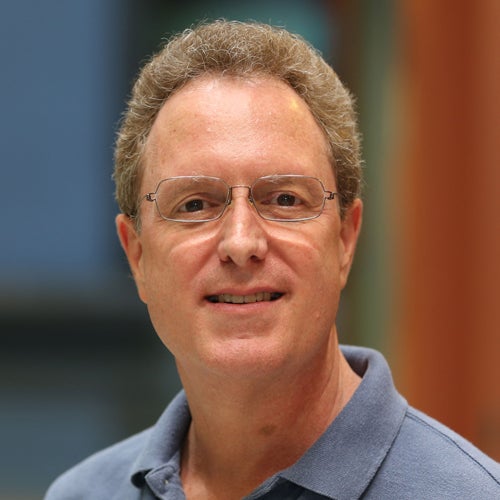
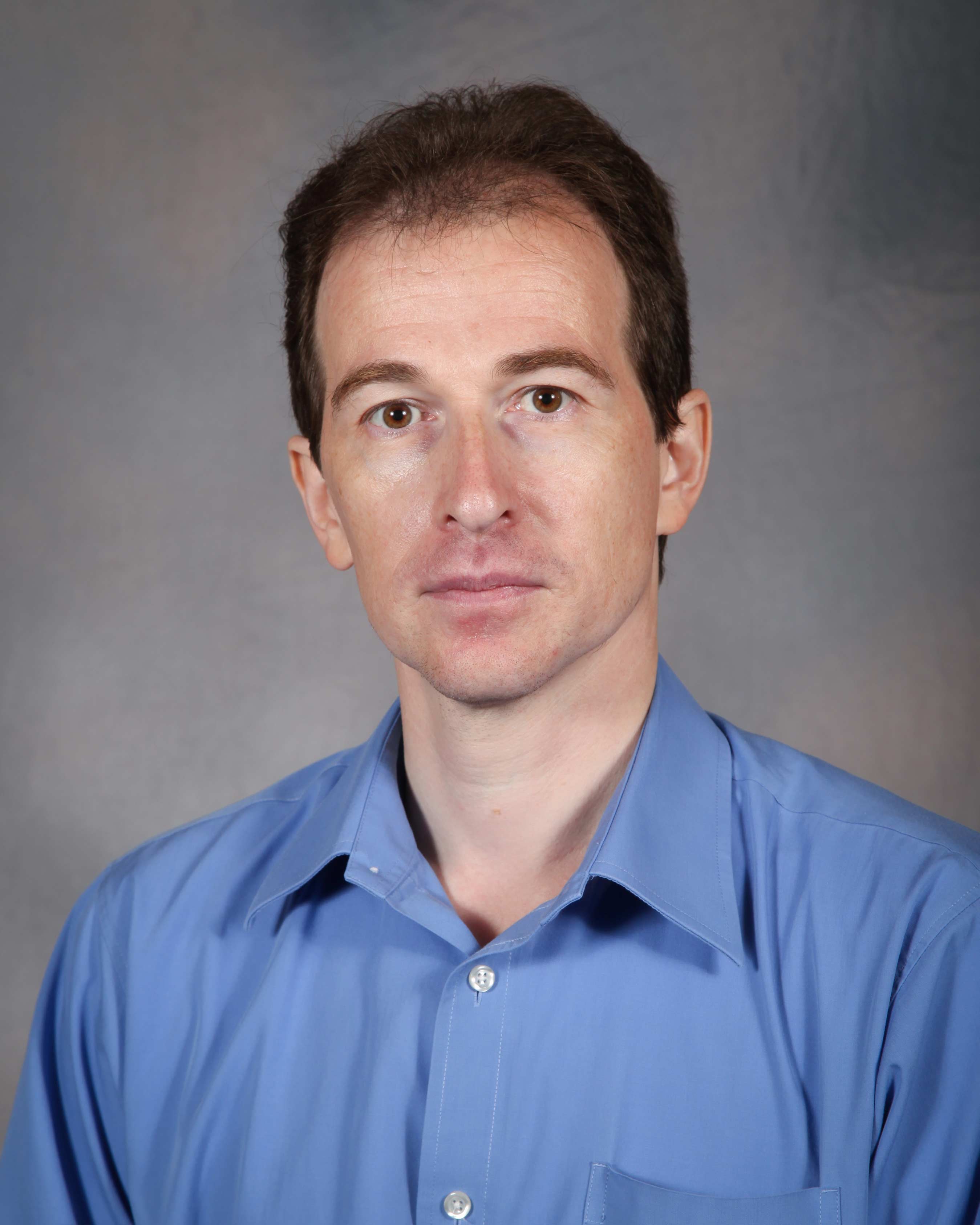
David B. Johnson is a tenured full Professor of Computer Science and Electrical and Computer Engineering at Rice University. He leads the Monarch research group, focusing on mobile networking architectures. Previously, he served as an Associate Professor at Carnegie Mellon University (1992–2000). His research emphasizes network protocols, distributed systems, and operating systems, with notable contributions to Mobile IP standards and wireless ad hoc networks. He holds a PhD, MS, and BA from Rice University (1990, 1985, 1982). Education: PhD in Computer Science, Rice University (1990) MS in Computer Science, Rice University (1985) BA in Computer Science and Mathematical Sciences, Rice University (1982) Research Interests: Johnson's work centers on adaptive wireless/mobile networking protocols, including Mobile IP, multihop wireless systems, and security protocols. His Dynamic Source Routing (DSR) protocol for ad hoc networks is an IETF standard. He has been deeply involved in IETF standards development for over 15 years, particularly in Mobile IP and MANET working groups. Awards & Leadership: ACM SIGMOBILE Chair (2005–2009), Treasurer (1997–2005) Conference leadership roles: General Chair for IEEE MASS 2012, COMSNETS 2011, and others Editorial roles: IEEE Pervasive Computing (Founding Board), Ad Hoc Networks, and more Labs & Teams: Monarch Group at Rice University, previously at Carnegie Mellon, develops next-generation mobile networking architectures.
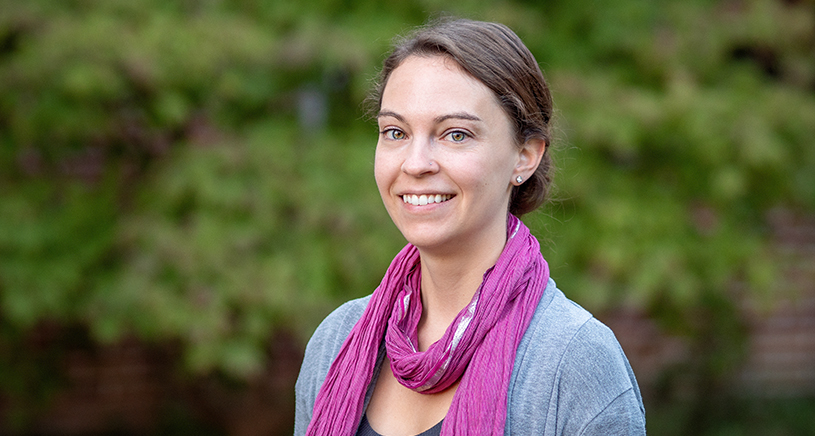
Dr. Somayeh Allahyari is an Assistant Professor in Operations and Supply Chain Management at the Birmingham Business School, University of Birmingham. She holds a PhD in Industrial Engineering (2021) and has academic qualifications including an MSc (2013), BSc (2011), and a Diploma in Mathematics and Physics (2006). Her research focuses on Operations Research methodologies applied to Logistics, Network Design, and Supply Chain Management. Key interests include Optimization, Heuristics, Decision Support Systems, and Business Analytics. She has led industry projects such as the Drone Medical Logistics project for the Solent Future Transport Zone Programme, exploring multi-modal logistics solutions. Teaching responsibilities include modules on Supply Chain Management (UG), Operations Management (MSc), and Business Analytics (MSc Singapore). She actively supervises PhD candidates in areas like Logistics, Blockchain Technology, and Digital Transformation. Her publications appear in top journals like Transportation Research Part E and European Journal of Operational Research , with conference contributions at INFORMS Transportation Science. She serves as a peer reviewer for major journals and conferences in her field.
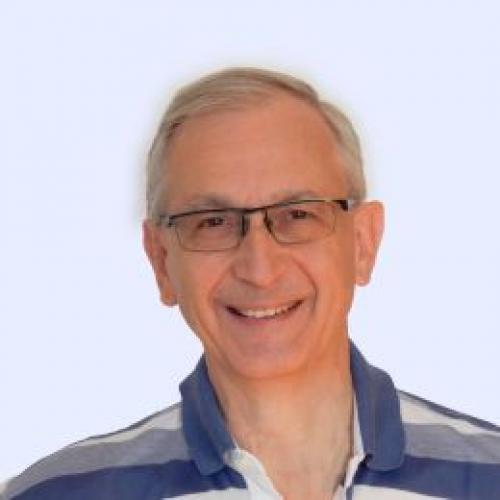
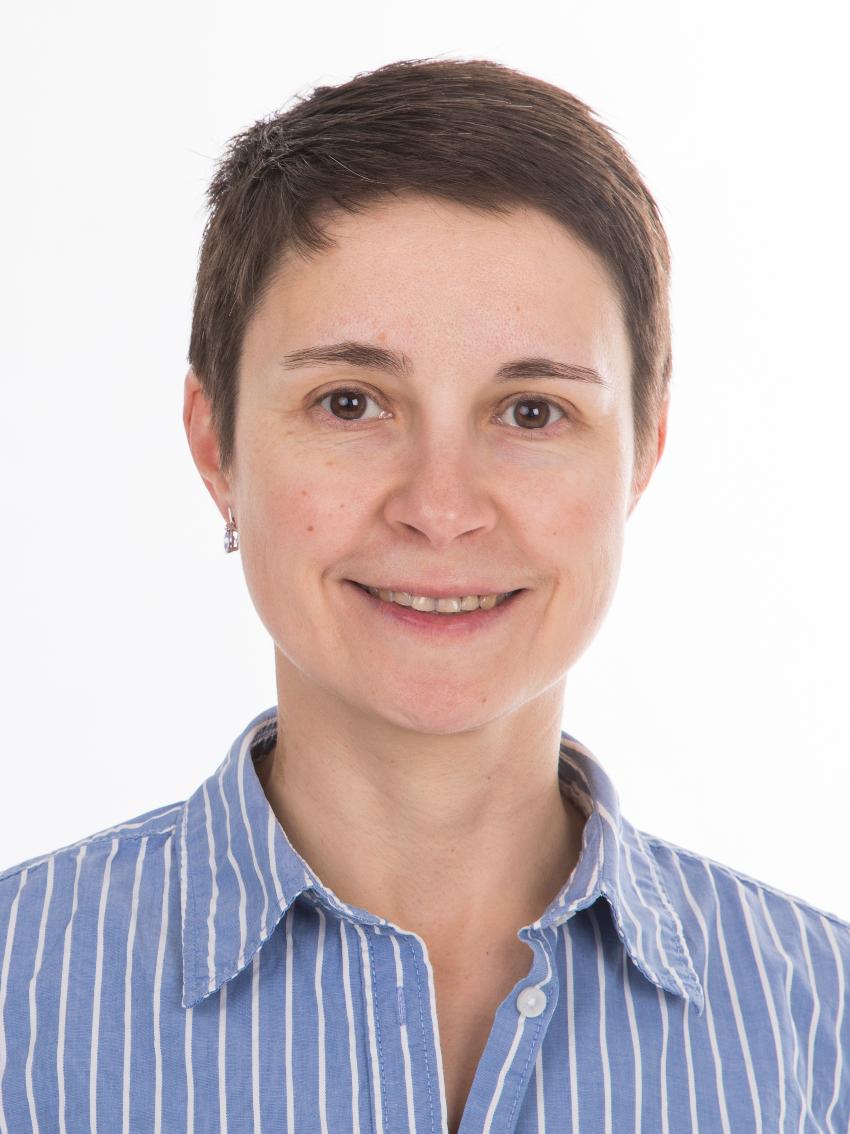
Dr. Lilianna Wojtynek is a Lecturer at the Department of Logistics, Faculty of Production Engineering and Logistics, Opole University of Technology. Her academic career focuses on logistics, production engineering, and industrial safety. Current Position: Lecturer in Logistics Department: Logistics School: Faculty of Production Engineering and Logistics University: Opole University of Technology Research interests span logistics systems, quality management, and transportation safety. Key themes include: Lean methodologies (5S, supply chain optimization) Industry 4.0 applications in logistics Risk analysis in transportation and logistics Production process planning and decision modeling Articles trends emphasize industrial safety, logistics efficiency, and technology integration in transportation. Notable subfields include dynamic forklift testing, BRT systems, and hazardous material storage.
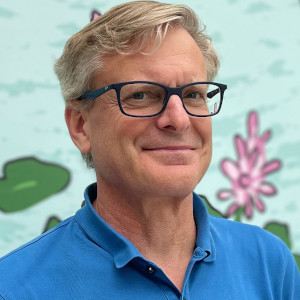
Daehyeok Kim is an Assistant Professor in the Department of Computer Science at The University of Texas at Austin, where he co-leads the UT Networked Systems Research Group and participates in the Wireless Networking and Communications Group and 6G@UT. He serves as co-PI for the LDOS NSF Expeditions in Computing project, a major initiative rethinking operating systems through AI. His educational background includes a Ph.D. in Computer Science from Carnegie Mellon University under advisors Vyas Sekar and Srinivasan Seshan, where his dissertation introduced abstractions for elastic in-network computing. He also earned B.S. and M.S. degrees in Computer Science and Engineering from POSTECH, South Korea, followed by research scientist work at KAIST prior to his Ph.D. Kim's research centers on hardware-software co-design for cloud and edge data centers, targeting speed, efficiency, and resilience. Key projects include resource management for programmable infrastructure, robust cellular network design, end-to-end network transport frameworks, and learning-directed operating systems. His work bridges computer networks, operating systems, distributed systems, and 5G/6G technologies, with emphasis on virtualized radio access networks (vRAN) and edge computing challenges. Analysis of his recent publications reveals a dominant focus on enhancing 5G/6G infrastructure reliability—particularly in virtualized RANs—through innovations in failover mechanisms, integrity protection, and latency-sensitive resource allocation. His research consistently addresses critical industry pain points like sub-second availability requirements, fronthaul security vulnerabilities, and end-to-end service-level objective (SLO) guarantees for mobile-edge applications. Notable scientific awards include: NSF CAREER Award (2025) for advancing cloud hardware efficiency Microsoft Research PhD Fellowship (2019) Bronze Award at Samsung HumanTech Paper Awards (2018) Qualcomm Innovation Awards (2016) His grant portfolio features leadership in the $10M+ LDOS NSF Expeditions project and the NSF CAREER award, both driving transformative work in AI-integrated operating systems and resilient network infrastructure. These projects demonstrate strong industry-academia collaboration with Microsoft Research, wireless vendors, and cloud providers. Kim co-leads the UT Networked Systems Research Group, which operates within the Wireless Networking and Communications Group and 6G@UT consortium. These labs maintain a 5G/6G testbed for Open RAN validation and focus on solving real-world problems in cellular infrastructure, edge computing, and network security through close partnerships with industry leaders.
Daniele Caviglia serves as Full Professor in the Department of Naval, Electrical, Electronic and Telecommunications Engineering at the University of Genoa, Italy. He holds the position of Coordinator for the Master's Degree in Electronic Engineering and teaches advanced courses including Radio Frequency Electronics, Electronic Devices, and Electronic Systems for Telecommunication across both Bachelor's and Master's programs. His research program focuses on ultra-low-power electronics for biomedical and environmental applications, with three primary thrusts: (1) nW-scale circuit design for bio-signal processing and neural interfaces, (2) advanced beamforming techniques in medical ultrasound imaging, and (3) energy harvesting systems for autonomous environmental monitoring. His group has pioneered inverter-based OTAs achieving sub-10nW operation and developed novel genetic algorithm-optimized apodization methods for plane-wave ultrasound imaging. Recent publications (2024-2025) reveal strong thematic continuity with increasing emphasis on practical implementations - particularly sea wave energy harvesters for environmental buoys and satellite microwave link systems for rainfall monitoring in urban settings. The work consistently bridges fundamental circuit innovation with real-world medical and environmental applications, maintaining high impact in IEEE and Elsevier journals.
Matthew J. Marinella serves as an Associate Professor in the School of Electrical, Computer and Energy Engineering at Arizona State University, where his research bridges semiconductor device physics and next-generation computing architectures. His work focuses on enabling reliable computing systems for extreme environments through novel memory technologies. His academic foundation includes: Ph.D. in Electrical Engineering, Arizona State University (2008) Marinella's research centers on nonvolatile memory devices (particularly ECRAM and SONOS technologies), neuromorphic computing systems, and radiation effects characterization. He pioneers analog in-memory computing solutions resilient to space radiation, with expertise spanning electrochemical memory physics, radiation-hardened circuit design, and emerging device applications for artificial intelligence. His experimental work combines nanoscale imaging with computational modeling to understand device degradation mechanisms under ionizing radiation. Analysis of his 2023-2025 publications reveals a dominant focus on radiation-tolerant neuromorphic systems, with 70% of recent work addressing radiation effects on emerging memories. Key thematic clusters include TaOx ECRAM characterization under gamma/heavy-ion exposure (25% of publications), analog in-memory computing fault tolerance (30%), and novel test platforms for memory device benchmarking (20%). This research directly enables space-based computing applications where radiation resilience is non-negotiable. As a technical leader, Marinella chairs the Emerging Memory Devices Section for the IRDS Roadmap Beyond CMOS Chapter and serves on the SRC Decadal Plan Executive Committee. His Sandia legacy includes founding the Secure, Efficient, Extreme Environment Computing (SEEEC) Grand Challenge. At ASU, he mentors graduate researchers through thesis supervision in EEE 599/799 courses and directs laboratory work on memory device characterization, though specific student names and grant awards aren't publicly enumerated. His laboratory operations emphasize radiation testing infrastructure and analog computing testbeds, supporting collaborative projects with national labs on space electronics hardening. Current efforts integrate magnetic domain wall devices with resistive memories to create hybrid neuromorphic systems capable of operating in extreme environments where conventional CMOS fails.
Priya L. Donti is an Assistant Professor at MIT's Department of Electrical Engineering and Computer Science (EECS) and Laboratory for Information and Decision Systems (LIDS). She co-founded and chairs Climate Change AI , a global nonprofit focusing on climate-AI intersections. Education: Ph.D. in Computer Science & Engineering & Public Policy, Carnegie Mellon University (advised by Zico Kolter and Inês Azevedo) Undergraduate in Computer Science & Math, Harvey Mudd College Research Focus: Machine learning for high-renewables power grids, incorporating physics and constraints into deep learning. Key areas include robust optimization, control systems, and climate-AI alignment. Article Trends: 2024-2022 works emphasize climate mitigation through AI (keywords: environmental science, AI ethics, policy modeling), while 2019-2021 studies focus on grid stability (power engineering, optimization) and hybrid AI-logic systems (symbolic reasoning, constraint handling). Scientific Recognition: MIT Technology Review 35 Innovators Under 35 (2021) Vox Future Perfect 50 (2023) Schmidt Sciences AI2050 Early Career Fellowship ACM SIGEnergy Doctoral Dissertation Award (2022) Best paper/poster awards at ACM e-Energy 2021 and PECI 2019 Her group at MIT develops physics-informed ML for power grids, with funding from NSF, DOE, and Center for Climate and Energy Decision Making. She actively advises prospective students through MIT EECS applications.
Margaret Garcia is an Associate Professor at the School of Sustainable Engineering and the Built Environment , Arizona State University (ASU). She is affiliated with multiple research centers, including the Center for Behavior, Institutions and the Environment (CBIE) , Central Arizona-Phoenix Long Term Ecological Research , Earth Systems Science for the Anthropocene , Water Institute , and Global Futures Scientists and Scholars . Education: Ph.D., Civil and Environmental Engineering, Tufts University (2017) M.S., Civil and Environmental Engineering, University of California-Los Angeles B.S., Civil and Environmental Engineering and B.A., International Studies, Lafayette College (2004) Her research focuses on the sustainability and resilience of urban water systems , using systems analysis to study feedbacks in coupled human-hydrological systems . Key themes include reservoir operations , adaptive infrastructure , water policy , and real-time flood monitoring . Recent work explores equity in water management , institutional dynamics , and green infrastructure optimization . Her 15 most recent publications span topics in socio-hydrology , water policy analysis , climate change adaptation , and urban flood modeling , with applications to the Western Water Network , Colorado River Basin , and transboundary regions like Ambos Nogales. Collaborative projects include NSF-funded initiatives on adaptive reservoir operations , cross-scale interactions , and community-based flood awareness . Scientific Awards: NSF CAREER Grant 1942370 (2020) She mentors students in Ph.D. programs (e.g., Ashish Shrestha , Behshad Mohajer ) and Master’s programs (e.g., Dillon Nys , Krista Lawless ). Her teaching includes graduate courses on research, reading, and thesis advising, alongside undergraduate hydrology classes.
Paul Leadley is a Professor at the University of Paris-Saclay, France, where he directs the Population and Community Ecology group within the Ecology, Society and Evolution Laboratory (IDEES). His research focuses on global change impacts on terrestrial ecosystems, biodiversity, and ecosystem functioning through field experiments and mathematical modeling. His educational background includes a B.S. in Science from Pennsylvania State University (1981), an M.S. in Botany from North Carolina State University (1985), and a Ph.D. in Ecology from San Diego State University and UC Davis (1993). Prior to his professorship, he worked as a research technician at San Diego State University, Smithsonian Environmental Research Center, and New Mexico State University, followed by post-doctoral research at the University of Basel. Leadley investigates climate change and rising CO2 impacts on plant diversity, biodiversity-ecosystem functioning relationships, and nutrient competition between plants and soil microorganisms. His experimental work centers on California and temperate grasslands, examining fire, temperature, CO2, nitrogen deposition, and precipitation interactions. He develops multi-scale models from rhizosphere nutrient fluxes to regional climate change projections, collaborating with institutions like INRA, Stanford University, and Northern Arizona University. His research integrates field experiments with mathematical modeling to quantify uncertainties in global change projections. His recent publications (2008-2012) reveal consistent themes: climate change impacts on biodiversity via species distribution modeling, interactive effects of multiple global change drivers on soil nitrogen cycling, and development of biodiversity scenarios for policy. Key methodological approaches include multi-model comparisons, experimental manipulations of grassland ecosystems, and trait-based biodiversity assessments. Scientific Awards: No specific awards listed in the provided text. Leadley has directed five Ph.D. students: Alexandra Gastine, Romain Barnard, Xavier Raynaud, Audrey Niboyet, and Sandrine Fontaine. He has secured major research grants including QDiv (770 k€, 2005-2009), SCION (470 k€, 2010-2012), and HumboldtCES (450 k€, 2010-2012). Current projects focus on biodiversity modeling (MOBILIS), biome boundary shifts, and climate change impacts on forests. He participates in international assessment processes including IPBES and IPCC. He leads the Population and Community Ecology team at IDEES Laboratory, comprising approximately 30 researchers, engineers, technicians, and graduate students. The team operates experimental sites in California grasslands and collaborates with national networks including FRB, AllEnvi, and GIS Climat, Environnement, Société. Current initiatives include eco-evolutionary approaches to climate change impacts and development of adaptive forest management strategies.
Santiago Torres-Arias is an Assistant Professor at Purdue University, affiliated with the Elmore Family School of Electrical and Computer Engineering . His research spans computer systems security , software supply chain security , and applied cryptography . Campus: West Lafayette, Indianapolis Office: BHEE 324B Contact: santiagotorres@purdue.edu , +1 765-496-6610 Research Interests: Computer systems security Software supply chain security Distributed systems security Applied cryptography Password storage mechanisms Publication Trends: His recent work focuses on software supply chain security , including code signing , provenance mechanisms , and IoT vulnerabilities . Key projects address Sigstore , DevSecOps , and zero-trust dependencies . Scientific Awards: Advising & Grants: No student details provided No grant information listed
Professor Pavel V. Tsvetkov is a faculty member at Texas A&M University , holding the rank of Professor of Nuclear Engineering and serving as the Director of the Graduate Program in Nuclear Engineering . He is also an Affiliated Faculty member of the Multidisciplinary Engineering program . His office is located in the AIEN M205B building, and he can be contacted at tsvetkov@tamu.edu . Educational Background: Ph.D. in Nuclear Engineering, Texas A&M University (2002) M.S. in Theoretical & Experimental Reactor Physics, Moscow State Engineering Physics Institute (1995) Research Interests: Professor Tsvetkov's research spans a wide range of advanced nuclear engineering topics. His primary focus includes system analysis and optimization methods , complex engineered systems , and symbiotic nuclear energy systems . He is deeply involved in waste minimization and sustainability , particularly through the development of high-temperature gas-cooled reactors (HTGRs) and molten salt reactors (MSRs) . His work also explores direct nuclear energy conversion systems and the integration of AI and deep learning into nuclear reactor control and monitoring systems. Research Trends in Publications: Over the past few years, Professor Tsvetkov has published extensively on the application of machine learning and deep learning in nuclear engineering. His recent works focus on autonomous reactor control , reactor dynamics simulation , and remote monitoring systems using satellite data and AI. He has also contributed to the design and analysis of microreactors for space applications and molten salt reactor dynamics . Scientific Awards: George Armistead, Jr ’23 Faculty Excellence Teaching Award Advising and Grants: As Director of the Graduate Program in Nuclear Engineering, Professor Tsvetkov plays a key role in mentoring and advising graduate students. While specific student names are not listed, his leadership in the program and extensive research output suggest active involvement in student research and training. Labs and Teams: Professor Tsvetkov is associated with the Nuclear Power Engineering group at Texas A&M University, contributing to both academic and applied research in nuclear systems design and safety.
Dr. Erica C Jansen serves as Assistant Professor in the Department of Nutritional Sciences at the University of Michigan School of Public Health and holds a secondary appointment as Research Assistant Professor in Neurology. Her work bridges nutritional epidemiology and sleep science, focusing on lifespan health impacts with specialized attention to adolescent and women's health outcomes. Her educational foundation includes: PhD in Epidemiology, University of Michigan School of Public Health (2016) MPH in Epidemiology, University of Michigan School of Public Health (2014) BS in Biology, Hope College (2012) Dr. Jansen's research program centers on bidirectional sleep-nutrition interactions and their cardiometabolic consequences. Key pillars include: Early-life nutritional environments and puberty timing Objective sleep metrics (duration, timing, quality) and cardiometabolic risk Epigenetic mechanisms in sleep-diet-health pathways Toxicant exposures through dietary sources Life-stage specific analyses (adolescence, pregnancy, midlife) She primarily leverages the ELEMENT cohort—a 25+ year Mexican birth cohort—and complementary datasets like NHANES and BioCycle. Analysis of her 2021-2025 publications reveals consistent methodological approaches: Integration of actigraphy for objective sleep measurement Dietary pattern analysis over single-nutrient approaches Epigenome-wide assessments of circadian genes Focus on health disparities through socioeconomic and environmental lenses Strong emphasis on Mexican and US minority populations Her work increasingly incorporates machine learning for sleep data analysis and examines policy-relevant questions like food expenditure patterns. Current funding includes: NHLBI K01 grant (K01HL151673) examining sleep-cardiometabolic links in adolescents Gilmore Grant and MNORC Pilot funding for circadian gene methylation studies in pregnancy and midlife Dr. Jansen actively mentors through: NUTR703: Guiding MS students in thesis development and scientific communication PUBHLTH417: Teaching undergraduates to investigate sleep-nutrition interplay through hands-on research Her collaborative network spans Michigan Medicine, environmental health scientists, and international cohorts studying developmental origins of health. Her research team operates within the ELEMENT study infrastructure and partners with clinical departments to translate findings into public health interventions targeting sleep hygiene and dietary patterns for cardiometabolic risk reduction.
Professor Jana Zaumseil is a distinguished academic at Heidelberg University, holding the position of Professor for Applied Physical Chemistry at the Faculty of Chemistry and Earth Sciences since 2014. She also maintains a co-opted position with the Faculty of Physics and Astronomy since 2016. Currently serving as Executive Director of the Institute for Physical Chemistry and Spokesperson for the DFG Research Training Group GRK 2948, she leads the Zaumseil research group (also known as the Nanomaterials for Optoelectronics group) at Heidelberg University's Institute for Physical Chemistry. Her educational background includes a PhD in Physics from the University of Cambridge (2003-2007) with a Gates Cambridge Trust Scholarship, and a Diplom (equivalent to M.Sc.) in Chemistry from the University of Leipzig (1997-2022). Prior to her position at Heidelberg, she served as Professor for Nanoelectronics at Friedrich-Alexander-Universität Erlangen-Nürnberg (2009-2014), and completed postdoctoral work at Argonne National Laboratory (2007-2009) following an internship at Bell Laboratories (2002-2003). Zaumseil's research program focuses on the optical and electronic properties of carbon-based nanomaterials, particularly single-walled carbon nanotubes (SWCNTs) and organic semiconductors. Her group specializes in processing, functionalization, characterization and application of these unconventional semiconductors for optoelectronic devices and sensors. They investigate charge transport and light-matter interaction using a wide range of experimental techniques including synthesis, optical spectroscopy, atomic force microscopy, device fabrication, and electrical/optical device characterization. Their work bridges fundamental understanding with potential applications in sensing, imaging, circuits, and energy conversion. Analysis of her recent publications reveals a strong trend toward defect engineering in carbon nanotubes, particularly creating and optimizing luminescent sp 3 defects for near-infrared applications. Her research increasingly integrates fundamental studies of charge transport with practical device applications, especially in neuromorphic computing, biosensors, and thermoelectrics. The interdisciplinary nature of her work is evident in the combination of chemistry, physics, and materials science approaches across her publication record. Dan Maydan Prize for Nanoscience and Nanotechnology (2024) Jahrespreis der Universität Heidelberg (2023) ERC Consolidator Grant (2019) ERC Starting Grant (2012) Alfried-Krupp-Award for Young University Professors (2010) Professor Zaumseil has secured substantial research funding including multiple ERC grants and leads several major collaborative projects such as the ERC Advanced Grant SCALE-NT, Collaborative Research Center SFB 1249, Cluster of Excellence 3D Matter Made to Order, and Research Training Group GRK 2948. She has mentored numerous doctoral and master's students, with her group recently receiving recognition including a Student Poster Presentation Award for Niklas Herrmann. As Dean of the Faculty of Chemistry and Earth Science (2019-2021) and current Vice Dean (2021-), she has played significant leadership roles within the university structure. The Zaumseil research group operates within Heidelberg University's Institute for Physical Chemistry, utilizing advanced facilities for nanomaterial synthesis, optical spectroscopy, and device characterization. The group participates in several major collaborative initiatives including the Cluster of Excellence 3D Matter Made to Order and the Collaborative Research Center SFB 1249, reflecting its integration within Heidelberg's broader research ecosystem focused on molecular systems and materials science.
Maria Sydnes serves as an Associate Professor in the Department of Technology and Security at UiT The Arctic University of Norway, Tromsø. Her academic work focuses on emergency management and organizational resilience within high-risk Arctic environments, with particular emphasis on maritime safety and cross-border crisis coordination between Norway and Russia. Her research interests span interorganizational coordination during emergencies, organizational learning for resilience building, and practical applications of lean production principles in crisis contexts. She investigates Arctic-specific challenges including avalanche response in Longyearbyen, oil spill management in polar waters, and integration of unorganized volunteers into formal emergency systems, consistently addressing the intersection of climate change impacts and security vulnerabilities. Analysis of her publication record reveals a strong trend toward interdisciplinary solutions for Arctic safety, with recurring themes of Norwegian-Russian cooperation, maritime risk assessment, and adaptive governance structures. Her work bridges theoretical frameworks with real-world case studies—from Svalbard waters to the Barents Sea—demonstrating practical approaches to disaster risk reduction in extreme environments. Dr. Sydnes actively participates in multiple research initiatives including the Climate Change Adaptation and Secure Societies groups. Her current projects encompass Co-producing knowledge about risk and safety of maritime activities around Svalbard SPRICE (spray icing modelling for maritime decision support) GLOBSEC (North-South security partnerships) NoCoU (civil security for Norwegian communities) Beredt! (risk-based governance for climate-driven natural hazards) highlighting her commitment to scalable, community-focused security solutions in vulnerable Arctic regions.
Lianne Lefsrud serves as Associate Professor and Risk, Innovation, and Sustainability Chair (RISC) in the Department of Chemical and Materials Engineering at the University of Alberta's Faculty of Engineering. Her interdisciplinary research bridges engineering, social sciences, and policy to transform risk management practices across energy, mining, construction, and railroading industries, directly influencing regulations, building codes, and industry operations for sustainable development. Her academic credentials include: BSc in Civil Engineering (Cooperative Program), University of Alberta (1994) MSc in Interdisciplinary Civil & Environmental Engineering and Sociology, University of Alberta (1996) PhD in Strategic Management and Organization, Alberta School of Business (2014) Dr. Lefsrud's research centers on risk management frameworks for sustainability challenges. She examines hazard identification, social license to operate, and technology adoption drivers in high-hazard industries, with emphasis on prospective risk assessment (e.g., hydrogen infrastructure design) and retrospective analysis (e.g., microplastic pollution impacts). Her work integrates circular economy principles into energy systems while addressing unintended consequences across UN Sustainable Development Goals. Recent publications (2024-2025) demonstrate heavy focus on machine learning applications for rail and construction safety, hydrogen infrastructure risk analysis, and science denial mitigation. Key patterns show cross-industry adaptation of AI for incident prediction, regulatory gap analysis for emerging energy systems, and socio-technical approaches to reconcile sustainability goals with operational realities. Scientific recognition includes: Erb Post-Doctoral Fellowship (University of Michigan) Dow Sustainability Research Fellowship (Ross School of Business) Dr. Lefsrud mentors graduate students through industry-integrated projects like her Sustainable Design course where teams generated patents and city solutions. Her research secures Alberta Innovates funding with 1:4 industrial-to-federal matching, collaborating with Suncor, Transport Canada, and Canadian Standards Association. Grants target practical implementations including railcar inspection systems and hydrogen safety protocols. She co-founded Insight Risk Systems and leads the Lefsrud Lab, prioritizing inclusive teams with under-represented groups (women, Indigenous, LGBTQ2S+, neurodiverse) to tackle 'wicked problems' in sustainability. The lab leverages interdisciplinary partnerships across engineering, computer science, psychology, and environmental sociology for real-world risk management solutions.