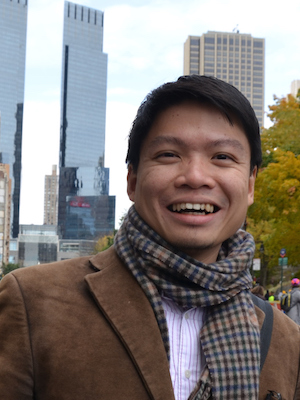
Indranil Bose is a Distinguished Professor and Head of the Area of Excellence in AI, Data Science, and Business at NEOMA Business School, with a Ph.D. in Management from Purdue University. He specializes in business analytics, big data, and digital transformation, leveraging expertise from prior roles at IIM Calcutta, University of Hong Kong, University of Florida, and UT Arlington. Education: Ph.D. in Management (Purdue University, 1997) M.S. (Purdue University) M.S. (University of Iowa) B.Tech (IIT Kharagpur) Research Focus: His work spans predictive analytics, social media impact on business, innovation management, cybersecurity, fintech, and AI ethics. Key themes include consumer behavior in digital ecosystems, AI-driven decision systems, and ethical implications of emerging technologies. Publication Trends: Recent articles emphasize AI ethics, digital misinformation, and predictive modeling in finance/healthcare, reflecting a focus on societal impacts of technology. Methodologies include deep learning, sentiment analysis, and causal inference. Awards & Recognition: Winner, EFMD 2017 Case Competition Ranked 29th globally for Information Systems research productivity (2005–2014) Editorial Leadership: Senior Editor for Decision Support Systems and Pacific Asia Journal of the AIS ; Associate Editor for Information & Management , Journal of the AIS , and Communications of the AIS .
Professor Christine Currie is a Professor of Operational Research within the School of Mathematical Sciences at the University of Southampton. She is a Fellow of the Alan Turing Institute and previously served as Director of the Centre for Operational Research, Management Science and Information Systems (CORMSIS). Her research is primarily funded by EPSRC and spans healthcare, disaster relief, and pricing optimisation. Research Interests: Simulation Optimisation Healthcare Management Decision Making Under Uncertainty Disaster Relief Logistics Optimal Pricing and Revenue Management Her recent work focuses on real-time simulation for emergency departments, infectious disease modelling, patient flow optimisation, food relief procurement in Indonesia, and robust pricing models in transportation and leisure sectors. The trend in her publications shows a strong emphasis on applied operational research with societal impact, particularly in digital twin integration and stochastic optimisation under uncertainty. Scientific Awards: Companion of Operational Research (2024) Professor Currie actively supervises PhD students and has secured multiple research grants, primarily from EPSRC. She has led projects such as 'Dial-a-Ride', 'CREST-OR', and 'Designing a resilient food supply network for natural disasters in West Java, Indonesia'. She also collaborates with external organisations and has supervised student projects with industry partners. Leadership and Editorial Roles: Editor-in-Chief, Journal of Simulation (2015–2024) Member, Editorial Board, Royal Society Open Science (2021–present) Co-chair, OR63 National Operational Research Conference (2021) Member, Operational Research Society Research Panel She is actively involved in the operational research community and leads interdisciplinary research teams including the Operational Research group, Institute for Life Sciences, CORMSIS, and the Centre for Healthcare Analytics.
Aravind Machiry is an Assistant Professor at Purdue University's Electrical and Computer Engineering Department and a founding member of the Purdue Systems and Software Security (PurS3) Lab . His research focuses on system security, particularly vulnerability detection, prevention, and secure system development using static/dynamic program analysis, fuzzing, type systems, and machine learning. Designing practical solutions for software and embedded system security Recipient of NSF CAREER and Amazon Research awards Active participant in SPLASH 2025 as OOPSLA Review Committee member His recent work includes automated vulnerability detection in embedded software, spatial memory safety enhancements, and security analysis of GitHub workflows. He has received recognition for his research through multiple distinguished paper awards and industry funding. Selected scientific awards include NSF CAREER Award (2024) Amazon Research Award (2022) Test of Time Award at FSE 2023 for DynoDroid Distinguished Paper Award at OOPSLA 2022 for 3c Qualcomm Innovation Fellowship (2025) His research team has developed frameworks like ARGUS for taint analysis of CI/CD workflows and FuzzUEr for UEFI interface fuzzing, discovering hundreds of critical vulnerabilities in open-source projects and thousands of command injection flaws in GitHub repositories.
Dr. Hui Lu is an Assistant Professor in the Department of Computer Science and Engineering at The University of Texas at Arlington (UTA), where he has been serving since September 2023. Prior to joining UTA, he was an Assistant Professor at SUNY Binghamton from 2017 to 2023. His academic journey includes a Ph.D. in Computer Science from Purdue University (2017), and Master’s and Bachelor’s degrees in Electronic Engineering from Shanghai Jiao Tong University. Ph.D., Computer Science, Purdue University, 2017 M.S., Electronic Engineering, Shanghai Jiao Tong University, 2009 B.S., Electronic Engineering, Shanghai Jiao Tong University, 2006 Dr. Lu's research centers on systems software with a focus on operating systems, virtualization, cloud computing, file and storage systems, and computer networks. His work emphasizes performance optimization and security in cloud-native environments. He has collaborated with leading industrial research labs including HPE Labs, IBM Research, Microsoft Research, AT&T Labs, and NEC Labs. His recent publications span top-tier venues such as OSDI, SOSP, USENIX ATC, and VLDB. The article trends reflect a strong emphasis on secure container technologies, memory tiering, packet processing optimization in virtualized networks, and efficient cloud storage systems. His work increasingly integrates hardware-aware optimizations and lightweight security mechanisms. NSF CAREER Award (2023) UT System Rising STARs Award (2023) Summer Faculty Fellowship, Air Force Research Lab (2019) Dr. Lu has successfully advised multiple Ph.D. students, including Jiaxin Lei, who is now an Assistant Professor at Kean University. His research is supported by major grants from the National Science Foundation (NSF) and the Air Force Research Lab (AFRL), focusing on secure containers, non-volatile memory management, and cloud-native virtualization. He has served as Principal Investigator (PI) on multiple funded projects, demonstrating strong leadership in research and innovation. He is actively involved in teaching core courses such as Operating Systems and advanced topics in systems and architecture. He mentors a growing group of Ph.D. students and welcomes motivated individuals to join his research group.
Sherif Khattab is a Teaching Assistant Professor in the Department of Computer Science at the University of Pittsburgh's School of Computing and Information. With a Ph.D. in Computer Science from the University of Pittsburgh (2008), he brings extensive expertise in cybersecurity systems with applications across cloud computing, Internet of Things, electronic voting, and Big Data security. His research focuses on the systems aspects of cybersecurity, maintaining an h-index of 16 (Google Scholar) and 10 (Scopus) with over 60 publications. Khattab has successfully supervised more than 15 graduate students throughout his academic career. Prior to his position at Pitt, he served as an Associate Professor at Cairo University's Department of Computer Science, Faculty of Computers and Information. Professor Khattab teaches numerous undergraduate and graduate courses, with particular emphasis on hands-on ethical hacking and security education. His current teaching portfolio includes Algorithms and Data Structures (CS 0445) and Network Security (CS 1653), with extensive experience teaching operating systems, formal methods, and computer networks across multiple semesters. His research publications reveal consistent focus on practical security solutions for emerging technologies, with recent work addressing IoT security frameworks, blockchain-based voting systems, and cloud security challenges. The publication trend shows increasing emphasis on practical implementation aspects alongside theoretical security models. With industry experience from internships at Google Inc., Ericsson Data Networks, and Bosch Research, Khattab bridges academic research with real-world security challenges. His educational background includes a Bachelor's in Computer Engineering from Cairo University (1998) and both M.Sc. and Ph.D. in Computer Science from the University of Pittsburgh (2004 and 2008).
Luis Sentis is a Professor in the Department of Aerospace Engineering and Engineering Mechanics at The University of Texas at Austin and holds the Frank and Kay Reese Endowed Professorship in Engineering . He leads the Human Centered Robotics Laboratory, focusing on control systems, human-robot interaction, and exoskeleton robotics. His affiliations include UT Austin's Good Systems initiative and Apptronik Systems as an innovation advisor. Ph.D. , Electrical Engineering, Stanford University B.S. , Telecommunications and Electronics Engineering, Polytechnic University of Catalonia His research spans humanoid robotics , agile manipulation , autonomous systems , and human-robot teaming . Recent work emphasizes FAIR datasets , EEG monitoring , and collision detection for legged robots, with applications in industrial automation and ethical AI. Scientific awards include the NASA Elite Team Award and La Caixa Foundation Fellowship . Funding sources include DARPA , NSF , NASA , and ONR .
Dr. F. Jerry Reen serves as a Senior Lecturer and Principal Investigator in the School of Microbiology at University College Cork (UCC), Ireland. With over two decades of academic experience since joining UCC's Department of Microbiology in 2002, he has established himself as a leading researcher in microbial communication systems and host-pathogen interactions. His research group operates within the BIOMERIT Research Centre, and he maintains active collaborations across multiple institutions in Ireland and internationally. Dr. Reen earned his BSc in Biochemistry at the National University of Ireland Galway (NUIG), followed by a PhD in the Molecular GlycoBiotechnology Group at NUIG, supported by an Enterprise Ireland Scholarship and an NUI Teaching Fellowship. His academic journey includes a postdoctoral position in the lab of Dr. E. Fidelma Boyd at UCC, during which he was a visiting scientist at the Sidney Kimmel Cancer Center in San Diego and received an IRCSET Postdoctoral Fellowship for bacteriophage-host interactions research. Dr. Reen's research focuses on deciphering communication systems underpinning polymicrobial-host interactions for human and ecosystem health, with particular emphasis on small molecule signaling in microbial communities. His work bridges fundamental microbiology with translational applications, targeting antimicrobial resistance through chemico-biological therapeutics and developing sustainable pharmaceutical production methods using marine biocatalysts. His research has evolved from early work on Vibrio species to current investigations of Pseudomonas aeruginosa signaling systems, bile acid interactions in cystic fibrosis, and marine enzyme applications in green chemistry. His laboratory's publication record demonstrates consistent productivity with over 80 peer-reviewed papers (h-index 26), spanning from foundational studies on LysR-type transcriptional regulators to recent innovations in virtual reality educational tools. The research trajectory reveals an expanding scope from molecular microbiology to systems-level understanding of microbial communities, with increasing emphasis on sustainable solutions for the pharmaceutical industry. Bronze LEAF Award (2022) - Green Campus University College Cork The Disciplinary Excellence in Learning, Teaching and Assessment (DELTA) Award (2021) - National Forum for the Enhancement of Teaching and Learning Purdy-Lucey UCC Life Sciences Invention of the Year 2015 (2016) Best Poster Exhibition (2012) - Royal Irish Academy National Researcher of the Year, Silver Medal (2011) - Roche BioSciences Researcher of the Year, Gold Medal (2011) - Roche Dr. Reen has successfully secured significant research funding from multiple sources including Science Foundation Ireland (SFI), Health Research Board (HRB), Enterprise Ireland, and Irish Research Council. His current projects include 'BioBloc' enhanced Contact LEns solutioNS (BBCLENS), HEACOVID19, SSPC3 Pharm5, and investigations into novel macrolides for cystic fibrosis management. He has mentored numerous graduate students, including Stephanie Flynn (PhD, 2019), Noelle McCarthy (PhD, 2009), and David Woods (MSc, 2008), with two doctoral students currently completing their research. His educational innovations, particularly student-partnered virtual reality simulations, have transformed how challenging molecular concepts are taught. Dr. Reen leads an interdisciplinary research group that combines microbiology, chemistry, bioinformatics, and education technology. His team collaborates with internal UCC colleagues including Dr. Gerard McGlacken and Prof. Anita Maguire, as well as external partners from institutions like the University of Warwick, Medical University of Graz, and University de Porto. The laboratory maintains strong connections with clinical researchers studying cystic fibrosis and has developed novel approaches for detecting bacterial signaling molecules using boron-doped diamond electrodes.
Edwin Romeijn holds the Jill Stewart Archer Family Chair and Professor position in the H. Milton Stewart School of Industrial and Systems Engineering at Georgia Institute of Technology. He served as School Chair from 2015-2024, overseeing the nation's top-ranked industrial engineering program. Previously, he held faculty positions at the University of Michigan, University of Florida, and Erasmus University Rotterdam, and served as Program Director at the National Science Foundation. Education: Ph.D. in Operations Research (1992), Erasmus University Rotterdam M.S. in Econometrics (1988), Erasmus University Rotterdam Romeijn's research centers on optimization theory and applications , with dual focus areas in radiation therapy treatment planning and supply chain management . His radiation therapy work develops algorithms for cancer treatment planning and clinic scheduling, while his supply chain research addresses integrated optimization of production, inventory, and transportation under demand flexibility, resource constraints, perishability, and uncertainty. His methodologies bridge theoretical operations research with real-world healthcare and logistics systems. His publication portfolio demonstrates consistent contributions to optimization methods across diverse application domains, with recent work spanning healthcare systems, renewable energy, sports analytics, and unconventional logistics. The research exhibits strong methodological continuity in stochastic programming, network optimization, and decision-making under uncertainty. Scientific Awards: Fellow of IISE and INFORMS (2017) Richard C. Wilson Faculty Scholar (2012-2013) Multiple best paper awards in industrial engineering conferences Pierskalla Best Paper Award (2003) Young Investigator’s Award at ICCR (2004) Romeijn has advised numerous graduate students and secured significant research funding through NSF and other agencies. His leadership extends to program direction at NSF and chairing Georgia Tech's Industrial and Systems Engineering school. He maintains active collaborations with healthcare institutions and manufacturing enterprises, translating theoretical advances into practical solutions for radiation oncology and supply chain resilience.
Dr. Assela Pathirana is a Professor at the IHE Delft Institute for Water Education, specializing in water infrastructure asset management (WIAM), climate resilience of Small Island Developing States (SIDS), and sustainable urban water systems. His work bridges academia, policy, and practice, focusing on digitalization, data-driven decision-making, and nature-based solutions. Key roles include Chief Technical Advisor for the Maldives’ water systems and leadership of a MOOC on SIDS climate adaptation. He holds a BSc (First Class Honours) from the University of Peradeniya and advanced degrees from the University of Tokyo, specializing in hydrology and water resources engineering. Education: Bachelor of Science in Civil Engineering (First Class Honours), University of Peradeniya, Sri Lanka Master’s and Doctoral Degrees in Civil Engineering (Hydrology and Water Resources), University of Tokyo, Japan Research Interests: Dr. Pathirana’s work emphasizes climate resilience, SIDS adaptation, urban flood risk management, and sustainable infrastructure. He develops decision-support tools for flood forecasting, evaluates land-use changes in Jakarta, and promotes equity in water rationing systems. His interdisciplinary approach integrates hydrological modeling, open-source software development, and policy analysis. Advising & Capacity Building: He leads training-of-trainers programs and capacity-building initiatives, enhancing postgraduate education in technical disciplines. His efforts focus on didactics and pedagogy, ensuring graduates gain both theoretical knowledge and practical expertise. Key Projects: Developed the WIAM curriculum at IHE Delft MOOC on SIDS climate adaptation and water security Consultancy for the Maldives’ Ministry of Environment and UNDP Labs & Collaborations: Engages in cross-disciplinary teams addressing urban water challenges, including sponge cities in China and flexible adaptation planning in Melbourne and Pune. His work with UNESCO-ICHARM and UNU underscores global water security and disaster risk reduction.
Lawrence M. Wein is the Jeffrey S. Skoll Professor of Management Science at Stanford University's Graduate School of Business, where he also serves as Senior Associate Dean of Academic Affairs. He holds a PhD in Operations Research from Stanford (1988) and has taught operations management at MIT (1988–2002) and Stanford since 2003. His research spans operations management, public health, and homeland security, with notable contributions to HIV therapy optimization, bioterror response logistics, and forensic science innovations. His academic roles include Senior Fellow at Stanford’s Center for International Security and Cooperation, and editorial leadership as Editor-in-Chief of Operations Research (2000–2005). Notable awards include the Kimball Medal, Lanchester Prize, and membership in the National Academy of Engineering. Research interests emphasize applying operations research to real-world challenges, such as optimizing radiation detection systems, analyzing sexual assault kit backlogs, and improving ballistic imaging techniques. His work bridges theoretical models with practical policy, impacting areas like healthcare, counterterrorism, and criminal justice. Key contributions include developing the workload regulating release policy in semiconductor manufacturing, influencing U.S. smallpox vaccination strategy, and advancing mathematical models for cancer treatment and pandemic influenza control. His recent focus includes forensic genetic genealogy and crime-solving technologies. Grants and collaborations span industries, governments, and academic institutions, reflecting interdisciplinary impact. His teaching includes courses on operations management, stochastic networks, and homeland security applications.
Maria Sharmina is a Professor in Energy and Sustainability at The University of Manchester’s School of Engineering, affiliated with the Tyndall Centre for Climate Change Research and Policy@Manchester. She holds roles including Co-Director of Policy@Manchester, UKRI Digital Security & Resilience Theme advisor, and Sustainable Robotics Committee member at BSI. Her work focuses on low-carbon business models, circular economy, and climate policy, with leadership in projects like the £6M UKRI BuildZero programme. Education: PhD in the Tyndall Centre, background in economics and statistics. She advises governments (e.g., UK Government Office for Science, BEIS) and has served on University Senate and Departmental Research Leadership roles. Research Interests: Energy systems transformation, food-energy-water nexus, emission scenarios, and policy design. She emphasizes sustainable innovation, net-zero housing, and plastics circularity. Key projects include analyzing hydrogen’s role in decarbonization, SME compliance with plastics policies, and financing smart local energy systems. Awards: 2024 Social Responsibility Medal and Making A Difference Award for contributions to social/environmental impact via entrepreneurship. Her work bridges academia and policy, with outputs including 79 research publications and 16 projects. Grants/Consultancy: Principal Investigator on BuildZero (UKRI £6M), funded studies on community energy finance, and consultancy with Oxfam, Manchester City Council, and the Co-operative Group. Labs/Teams: Lead researcher at Tyndall Manchester, collaborates across disciplines (e.g., Digital Futures Institute) to address sustainability challenges through systemic approaches.
Samir Elhedhli is a Professor in the Department of Management Sciences at the University of Waterloo, within the Faculty of Engineering. His research focuses on Large-scale Optimization, Logistics, Supply Chain Design, Healthcare Operations, Airline Scheduling, and Data Analytics. He has held grants from NSERC, CFI, OCE, and MITACS, collaborating with industries in aircraft manufacturing, airline scheduling, and warehouse management. Education: PhD in Management Science, McGill University (2001) Master's in Industrial Engineering, Bilkent University (1996) Bachelor's in Industrial Engineering, Bilkent University (1994) Research Interests: Data Analytics & Data Science Large-scale Optimization (Interior-point methods, decomposition, column generation) Supply-chain Analytics (Logistics, warehousing, routing, scheduling) Environmental Sustainability in Supply Chains Key Awards: CORS Service Award (2013) University of Waterloo Distinguished and Outstanding Performance Awards (2005–2019) Grants & Advising: Active grants from NSERC, CFI, OCE, and MITACS Currently accepting graduate student applications Administration & Service: Chair, Department of Management Sciences (2014–2018) President, Canadian Operational Research Society (2011–2012) Co-Editor-in-Chief, INFOR Journal (2014–present) Labs & Teams: Leads the WanOpt research group focused on optimization methodologies and applications.
Hans Klein is an Associate Professor and Director of Undergraduate Studies at the Jimmy and Rosalynn Carter School of Public Policy, part of the Ivan Allen College of Liberal Arts at Georgia Institute of Technology. His research focuses on institutions and policy processes related to large technical systems like the Internet and surface transportation. He has held visiting roles at Princeton University, the Hertie School of Governance, and the Paris School of Mines. Education: Ph.D. in Political Science, MIT (1996) M.S. in Technology and Policy, MIT (1993) B.S. in Electrical Engineering & Computer Science, Princeton University (1983) Research Interests: Internet governance, globalization, and democratic accountability mechanisms Media institutions, digital persuasion, and propaganda Intelligent transportation systems (ITS) policy and institutional design Urban transit policy, including the Atlanta Beltline project Social construction of technology and policy frameworks Professional Experience: Prior roles as software developer, international marketer, and policy analyst Service on advisory committees for ICANN, the Transportation Research Board, and Atlanta’s Telecommunications Policy Advisory Committee Presentations on information warfare and political warfare at institutions like the US Special Operations University Advising & Grants: Contributed to policy design for ICANN, ITS national programs, and the Atlanta Beltline Recipient of DAAD and Chateaubriand fellowships for international academic collaborations Labs & Teams: Active in interdisciplinary policy teams focused on transportation infrastructure, digital governance, and media ethics.
Professor Zoheir Sabeur is Professor of Data Science and Artificial Intelligence at Bournemouth University (2019–present) and Head of the Processes and Behaviour Understanding (PRO_BU) Research Group. He concurrently serves as Visiting Professor of Data Science at Colorado School of Mines (2017–present) and held the position of Science Director at the IT Innovation Centre, University of Southampton (2009–2019). Over three decades he has led more than 30 large-scale projects as Principal Investigator, securing over £12 million of funding from the European Commission, UKRI, DSTL, NERC, EPSRC and industry. Education PhD in Theoretical Physics, University of Glasgow (1990) MSc in Theoretical Physics, University of Glasgow (1986) BSc First-Class Honours in Physics and Applied Mathematics, Université d'Oran (1984) Advanced Leadership Programme, Ashridge Business School (2011) Research Interests Professor Sabeur’s research focuses on the fundamental theory and application of data science and artificial intelligence to understand complex human, natural and industrial processes and behaviours. His work spans multi-modal sensing, big-data analytics and machine-learning algorithms that extract actionable knowledge from large heterogeneous datasets. Application domains include: Healthcare: AI-driven diagnostics and prognostics for chronic diseases such as COPD, asthma and cancers through omics and phenotypic data integration. Environmental & Climate: Earth-observation analytics for wildlife migration and climate-change impact assessment using satellite data and global grid systems. Maritime & Cyber-Physical Security: Real-time risk assessment for shipping in extreme environments, smart-city safety and critical-infrastructure protection using computer vision and sensor fusion. Recent research has produced novel AI classifiers that analyse lung-auscultation audio signals to grade COPD severity, as well as digital-twin frameworks for detecting malicious behaviour in urban spaces. Scientific Awards & Recognition Fellow of the British Computer Society (FBCS) Fellow of the Institute of Marine Engineering, Science & Technology (FIMarEST) Chartered Engineer (CEng) and Chartered Physicist (CPhys) Multiple ORS Awards (1987, 1988, 1989) Grants & Doctoral Supervision Professor Sabeur has secured and led more than 40 funded projects since 1996, including recent grants such as INSIGHT (NIHR, 2024) and S4AllCities (H2020, 2020). He currently supervises three ongoing PhD students at Bournemouth University and has successfully graduated three others, covering topics from computational hydrodynamics to AI-based respiratory-disease analytics. He welcomes enquiries from prospective postgraduate researchers interested in data science, AI and interdisciplinary applications under schemes such as UKRI and Horizon Europe.
Novi Quadrianto is a Professor of Machine Learning at the School of Engineering and Informatics, University of Sussex, where he joined as a Lecturer in February 2014. He is currently a Principal Investigator on three active EU grants: BayesianGDPR (ERC), TANGO (EU Horizon RIA), and Act.AI (ERC Proof of Concept). He also holds an Adjunct Professor position in Data Science at Monash University, Indonesia, and serves as Strategic Lab co-Leader of the BCAM Severo Ochoa Strategic Lab on Trustworthy Machine Learning in Bilbao, Spain. His educational background includes a PhD in Machine Learning from the Australian National University (2012) and a BEng in Electrical and Electronics Engineering from Nanyang Technological University, Singapore. During his PhD, he conducted research at multiple international institutions including HIIT-Finland, Yahoo! Research-US, University of Alberta-Canada, Fraunhofer IAIS-Germany, and IST Austria. From 2012-2014, he was a Newton International Fellow of the Royal Society at the University of Cambridge. Professor Quadrianto directs the Predictive Analytics Lab (PAL) since 2017, which focuses on "Responsible AI" research developing AI models that embed fairness, accountability, transparency, and trustworthiness. His research spans algorithmic fairness, federated learning, and computer vision, with applications in sustainable development, healthcare, and finance. His work has been funded by prestigious organizations including the European Research Council, EPSRC, and HM Treasury. His publications reveal a strong focus on addressing challenges in AI fairness, robustness, and privacy, particularly in dynamic environments and heterogeneous data settings. Recent work explores performative prediction, diversity-driven learning, and efficient vision transformer inference, demonstrating his leadership in cutting-edge machine learning research. European Research Council ERC Proof of Concept Grant (2023) Guarantor Researcher for BCAM Severo Ochoa Excellence Accreditation (2023) European Lab for Learning and Intelligent Systems (ELLIS) Scholar/Fellow (2020) European Research Council ERC Starting Grant (2019) Newton International Fellowship (2012) Microsoft Research Asia Fellowship (2009) Professor Quadrianto currently supervises six PhD students and five postdoctoral researchers. He has served as Action Editor for Transactions on Machine Learning Research since 2022 and as Associate Editor for IEEE Transactions on Pattern Analysis and Machine Intelligence since 2016. He has also been an Area Chair for major conferences including NeurIPS, ICML, and AAAI. His PAL laboratory hosts a team of 15 members focused on inter-disciplinary AI research with domain experts across various sectors. The PAL Lab operates three innovation strands: AI for Sustainable Development (supporting UN SDGs), AI for Healthcare (transforming health outcomes), and AI for Finance (personalized loan decision-making). The lab also leads initiatives in Diversity & Inclusion in AI and offers Pro-Bono Office Hours to organizations seeking guidance on machine learning aspects.