Hugo Jose Herrera de Leon is a Research Fellow at the Department of Geography, University of Bergen. His work focuses on socio-ecological resilience, system dynamics modeling, and policy planning for climate change adaptation. He is affiliated with the System Dynamics research group and has presented at major international conferences like the European Conference on Operational Research and the International System Dynamics Conference. His research explores bioeconomy transitions in Norwegian agriculture, resilience in farming systems, and participatory policy design. He has been funded by the Research Council of Norway (2021-2025) for projects investigating sustainable transitions in rural systems. Notable contributions include developing frameworks for assessing resilience through hybrid simulations and collaborative modeling approaches. Publications span topics like microworld simulations for policymaking, organizational impacts of group model-building, and system dynamics applications in food security. His doctoral thesis (2018) addressed public policy strategies for enhancing resilience in socio-ecological systems under climate change.
Dr. Jimeng Sun is a Health Innovation Professor at the Siebel School of Computing and Data Science and Carle Illinois College of Medicine at the University of Illinois Urbana-Champaign. Co-founder of Keiji AI , he leads groundbreaking research at the intersection of artificial intelligence and healthcare, actively deploying clinical AI systems and developing frameworks like PyHealth and Therapeutics Data Commons . His research spans four major areas: Clinical AI Systems : Developing interpretable models (e.g., RETAIN) for patient similarity, temporal event prediction, medication recommendation, and clinical outcome forecasting Drug Discovery : Creating molecular optimization frameworks, drug-target interaction models, and AI-driven platforms Clinical Trials : Pioneering patient-trial matching, outcome prediction, and optimization frameworks using deep learning and graph neural networks Biosignal Analysis : Advancing sleep staging, seizure classification, and automated EEG/Cardiac monitoring systems With over 500 top-tier publications (including in Nature , NEJM AI , and leading AI conferences) and an h-index of 99, his work has been recognized with the Top 100 AI Leaders in Drug Discovery and Advanced Healthcare award. He maintains active collaborations with institutions like Massachusetts General Hospital , Medidata Solutions , and OSF Healthcare . His recent publications reveal a strong focus on: Reinforcement learning applications in medical data analysis Large language model adaptation for clinical tasks Knowledge graph integration with AI systems Synthetic data generation for healthcare Multi-modal learning in clinical contexts Explainable AI for medical applications Dr. Sun's lab ( Sunlab ) emphasizes practical impact over theoretical work, actively collaborating with hospitals and healthtech companies. He welcomes contributions from clinicians, researchers, and industry partners through initiatives like his AI for Health webinar series .
Susan Fino is a Professor at the College of Liberal Arts and Sciences, Wayne State University. Her research focuses on public law, American constitutional law, administrative law, and the role of state supreme courts. She holds a B.A. from Johns Hopkins University, an M.A. and Ph.D. from Rutgers University. She has received the President's Award for Excellence in Teaching. Her courses include American Government (PS1010) and Constitutional Law (PS5110/PS5120), taught across multiple terms from 2023 to 2025. Dr. Fino's research explores judicial federalism, state constitutional frameworks, and legal interpretations of rights. Her work analyzes topics like church-state relations, taxation provisions in state constitutions, and assisted suicide debates. She has written extensively on state supreme court dynamics, including landmark cases and institutional performance metrics. Her scholarship bridges legal theory with practical governance challenges at both state and federal levels. Her publications span over three decades, addressing evolving legal landscapes such as the Rehnquist Court’s federalism approach and technological impacts on criminal sentencing. She consistently engages with issues at the intersection of law, politics, and societal values.
Wendy Ju is an Associate Professor of Information Science at Cornell Tech, with appointments in the Cornell Ann S. Bowers College of Computing and Information Science, the Jacobs Technion-Cornell Institute, and the Technion-Israel Institute of Technology. Previously, she served as executive director of interaction design research at Stanford University's Center for Design Research and as an associate professor of interaction design at the California College of the Arts. Her work bridges human-computer interaction, design, and robotics with a focus on how interactive devices can communicate with people without interrupting them. PhD in Mechanical Engineering from Stanford University Master's degree in Media Arts and Sciences from MIT Professor Ju's research centers on implicit interactions, human-robot collaboration, and automotive interfaces. She investigates how people interact with automated systems in natural contexts, develops methods for early-stage prototyping of autonomous technologies, and examines the social implications of robotics in urban environments. Her work spans from theoretical frameworks to practical applications, with particular emphasis on designing systems that integrate seamlessly into human activities without demanding constant attention. Her recent publications reveal a strong trajectory toward understanding human-robot interaction in public urban spaces, with increasing focus on robot navigation in city streets, the social implications of autonomous vehicles, and the integration of generative AI in design processes. Her work consistently bridges theoretical HCI frameworks with practical applications in transportation, urban design, and everyday robotics. Inducted into the ACM SIGCHI Academy (2025) Multiple Honorable Mention Awards at ACM CHI and DIS conferences Best Paper Award at Multimodal Technologies and Interaction (2023) Best Student Paper Award at IEEE Intelligent Vehicles Symposium (2017) Best Demonstration Award at HRI (2017) Professor Ju actively mentors numerous PhD and master's students, many of whom have become leading researchers in HCI and robotics. Her research has been supported by significant grants from NSF and industry partners, enabling extensive field studies of human-robot interaction in real-world settings. She has pioneered methodologies for studying autonomous vehicle interactions through both simulated and naturalistic driving environments. Her work with the Jacobs Technion-Cornell Institute supports interdisciplinary research at the intersection of computing, design, and urban technology. She has established research partnerships with transportation authorities, automotive companies, and urban planning organizations to study how emerging technologies can enhance urban mobility while respecting human needs and social contexts.
Panos Ipeirotis is a Professor at the Leonard N. Stern School of Business at New York University, affiliated with the Department of Technology, Operations, and Statistics. He also serves as the George A. Kellner Faculty Fellow and is associated with the Center for Data Science and Computer Science departments at NYU. PhD in Computer Science (Columbia University, 2004) MSc in Computer Science (Columbia University, 2001) BSc in Computer Engineering & Informatics (University of Patras, 1999) His research spans crowdsourcing, machine learning, human-AI collaboration, online labor markets, and social media analytics. He pioneered human-machine loop systems that combine human and machine intelligence to achieve superior outcomes. His work has applications in data quality assurance, visual media search (e.g., Google Project Glass), and economic valuation of user-generated content. Recent publications focus on algorithmic fairness in hiring systems, occupational segregation analysis, and theoretical advancements in crowdsourcing consensus mechanisms. Earlier work includes foundational studies on data quality in crowdsourcing platforms, economic impacts of product reviews, and query optimization for text-centric tasks. 2015 Lagrange Prize in Complex Systems NSF CAREER Award SIGKDD Test of Time Award (2020) Multiple Best Paper awards (WWW 2011, KDD 2008, SIGMOD 2006) He has received significant grants, including a $1.5 million Google Research Grant (2013) for integrating crowdsourcing with machine learning algorithms. His work bridges computer science, economics, and social psychology, with implications for policy-making and business strategy.
Sarah Billington is the UPS Foundation Professor of Civil and Environmental Engineering at Stanford University and a Senior Fellow at the Woods Institute for the Environment. Her research program focuses on sustainable building design, human wellbeing, and ethical supply chain practices. Education: PhD, University of Texas at Austin, Structural Engineering (1997) MSE, University of Texas at Austin, Structural Engineering (1994) BSE, Princeton University, Civil Engineering & Operations Research (1990) Her lab employs interdisciplinary methods to study how built environments impact human physical, psychological, and social wellbeing. Current projects include developing tools to quantify nature exposure in buildings, exploring affordable housing's role in wellbeing, and using AI to assess forced labor risks in material supply chains. While no longer active in this area, her group previously pioneered research on sustainable construction materials like bio-based composites and ductile cement-based composites. Her recent publications address topics such as nature integration in architecture, workplace design optimization, and health impacts of building materials. The Billington Lab at Stanford fosters collaborative team science, welcoming partnerships to advance occupant-centric engineering solutions.
Paul Gölz is an Assistant Professor at Cornell University's School of Operations Research and Information Engineering (ORIE), with affiliations in Computer Science. His research focuses on computational social choice, algorithmic fairness, and AI ethics, addressing topics like democratic innovation, fair resource allocation, and AI systems for diverse users. Education: Undergraduate studies at Saarland University (Germany), PhD in Computer Science from Carnegie Mellon University, followed by postdoctoral research at Harvard University, UC Berkeley, and the Simons Laufer Mathematical Sciences Institute. His work has been recognized with awards including the JPMorgan Chase AI Research Fellowship (2021) and honorable mentions for prestigious dissertation awards (Dantzig and ACM SIGecom). Research Highlights : Developed Panelot, a tool for selecting citizens' assemblies using state-of-the-art algorithms. His work on fair refugee resettlement and apportionment methods has been featured in Operations Research and Nature . Recent projects include AI alignment distortion analysis and generative social choice mechanisms. Teaching : Teaches Optimized Democracy (Spring 2025) and Mathematical Programming (Fall 2024). Supervises PhD students in ORIE, focusing on interdisciplinary applications of optimization and social choice. Awards & Grants : Received a $40K Structural Democracy Fellowship (Crankstart) and an OpenAI grant for Democratic Inputs to AI. Active in policy briefs (e.g., mini-public selection strategies). Labs/Tools : Co-developed Panelot.org , a nonprofit platform for fair citizen assembly selection. Active in open-source tool development for social choice applications.
Minseok Ryu is an Assistant Professor at the School of Computing and Augmented Intelligence, Arizona State University (ASU). He holds a Ph.D. in Industrial & Operations Engineering from the University of Michigan (2020). Prior to ASU, he was a postdoctoral appointee at Argonne National Laboratory’s Mathematics and Computer Science Division. His research focuses on optimization methodologies for decentralized and stochastic decision-making distributed algorithms for machine learning and operations research applications in healthcare systems and energy grids Teaching responsibilities include courses on applied deterministic operations research (IEE 574), optimization (IEE 622), and research practicums (IEE 792). His work emphasizes computational challenges in decision-making under uncertainty, with recent projects addressing nurse staffing optimization, federated learning frameworks (e.g., APPFL/APPFLX), and resilient power grid systems. He has no recorded academic awards but actively contributes to open-source software and cross-disciplinary research collaborations. Research interests bridge theory and practice, targeting social goods through optimization techniques like distributionally robust optimization, federated learning, and heuristic algorithms for energy and healthcare systems.
Shanique Brown serves as Assistant Professor of Management at the Zicklin School of Business, City University of New York (CUNY), where she investigates cognitive processes impacting organizational team dynamics and decision-making. Her research bridges industrial-organizational psychology with practical applications in extreme environments. Her academic foundation includes: Ph.D. in Industrial-Organizational Psychology from DePaul University M.A. in Industrial-Organizational Psychology from Southern Illinois University, Edwardsville B.Sc. in Psychology from the University of the West Indies Dr. Brown's research centers on decision-making mechanisms and team cognition within organizational contexts, with specialized focus on extreme environments like space missions. She examines how cognitive styles, working memory, and team composition influence performance in isolated, confined, and high-stakes settings. Her work integrates psychological theory with actionable frameworks for optimizing team effectiveness across virtual and physical workspaces. Analysis of her publication history reveals evolving expertise in team science, particularly regarding virtual team leadership, polycultural organizations, and NASA-relevant analog research. Recent work emphasizes selection-optimization-compensation models for team performance and psychosocial factors in extreme environments, demonstrating consistent contribution to organizational psychology literature. Her scientific recognition includes: Editorial Fellowship from Group Dynamics (2022) Wayne State University Faculty Accessibility Fellowship (2022) Teaching Innovation Development Excellence Award (2020) Faculty Teaching Award (2020) University Research Grant (2019) Robert A. Daugherty Memorial Award (2011) Dr. Brown actively collaborates on NASA-funded research through the Human Research Program, developing crew composition models for long-duration space missions. She serves on Baruch College's PhD Admissions and Interdisciplinary Business Major committees while maintaining leadership roles in the Society of Industrial-Organizational Psychology, including Task Force Chair and Conference Committee positions. Her grant work focuses on translating team dynamics research into operational frameworks for extreme environments. She leads interdisciplinary collaborations with NASA researchers and international scholars on projects including virtual escape room studies for team performance assessment and CREWS (Crew Recommender for Effective Work in Space) development, demonstrating commitment to solving real-world team challenges in high-consequence settings.
Prof. Srdjan Capkun is a Full Professor in the Department of Computer Science at ETH Zurich and Director of the Zurich Information Security and Privacy Center (ZISC). He holds a Dipl.Ing. from the University of Split (1998) and a Ph.D. from EPFL (2004). His research focuses on system and network security, including wireless security (e.g., secure positioning), trusted computing, blockchain technologies, and privacy-preserving systems. He co-founded 3db Access (acquired by Infineon) and Sound-Proof, addressing secure distance measurement and authentication. Notable achievements include an ERC Consolidator Grant (2016), ACM Fellowship, and IEEE Fellowship. Education: Dipl.Ing., Electrical Engineering / Computer Science, University of Split, 1998 Ph.D., Communication Systems, EPFL, 2004 Research Interests: Wireless security (e.g., UWB, GNSS, cellular) Trusted execution environments (TEEs) Blockchain and cryptocurrency systems Privacy-preserving technologies Awards & Grants: ERC Consolidator Grant (2016) ACM Fellow and IEEE Fellow Leadership of ZISC Advising & Labs: Leads the System Security Group at ETH Zurich Guided postdoctoral researchers and graduate students in security and privacy Companies: 3db Access (secure distance measurement) Futurae (online authentication)
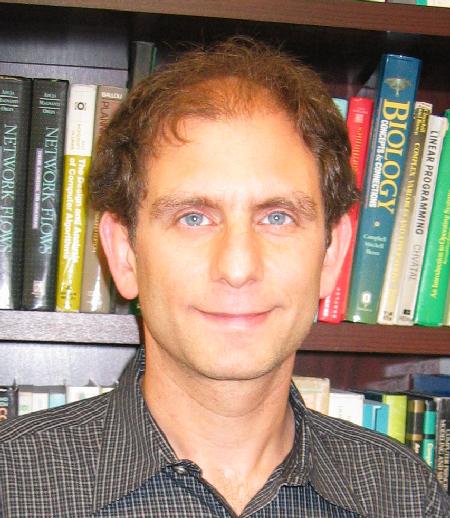
Clifford Stein is a Professor of Industrial Engineering and Operations Research (IEOR) and Computer Science at Columbia University, and Associate Director for Research at the Data Science Institute. He holds a Ph.D. (1992), M.S. (1989), and B.S.E. (1987) from MIT and Princeton University, respectively. His research focuses on algorithms, combinatorial optimization, operations research, scheduling, and computational biology. A co-author of the best-selling textbook Introduction to Algorithms , Stein has published widely in top venues and holds prestigious awards like ACM Fellow and NSF Career Award. His work includes foundational contributions to minimum cut algorithms, scheduling theory, and network optimization, supported by NSF and Sloan Foundation grants. Stein has advised over 40 graduate and undergraduate students, many now in academia and industry.
Hadi Meidani is a Clinical Associate Professor at the Carle Illinois College of Medicine , specifically within the Department of Biomedical and Translational Sciences at the University of Illinois at Urbana-Champaign . He teaches courses in Civil and Environmental Engineering, including topics like Systems Engineering & Economics , Machine Learning in CEE , and Uncertainty Quantification . Ph.D., Civil Engineering, University of Southern California (2012) M.S., Electrical Engineering, University of Southern California (2012) M.S., Structural Engineering, Sharif University of Technology (2005) B.S., Civil Engineering, K.N. Toosi University of Technology (2002) Dr. Meidani's research focuses on uncertainty quantification , scientific machine learning , and optimization under uncertainty for engineering systems. His work spans stochastic multiscale analysis , physics-informed machine learning , and model reduction techniques. His recent publications emphasize machine learning for infrastructure systems , graph neural networks , physics-informed models , and traffic assignment . Key trends include deep learning , multi-fidelity modeling , and neural operator transformers applied to metamaterial design , seismic reliability , and autonomous freight delivery .
Aishwarya Agrawal is an Assistant Professor at Université de Montréal in the Department of Computer Science and Operations Research (DIRO), affiliated with Mila – Quebec Institute of Artificial Intelligence and a Canada CIFAR AI Chair. She also serves as a research scientist at Google DeepMind, spending one day weekly there. Education: B.E. in Electrical Engineering (IIT Gandhinagar, 2014), Ph.D. in Computer Science (Georgia Tech, 2019). Her research focuses on multimodal learning , deep learning , natural language processing , and computer vision , particularly in developing AI systems that 'see' and 'communicate' effectively. Grants & Awards: Canada CIFAR AI Chair, 2020 Sigma Xi Best PhD Thesis Award, NVIDIA Fellowship (2018–2019), and multiple fellowships from Google and Facebook. She leads projects like Advancing Multimodal Vision-Language Learning (CRSNG-funded) and StarDoc: Document Structure Extraction (MITACS). Research Contributions: Pioneered benchmarks like CulturalVQA and UI-Vision , and frameworks such as PROGRESS for efficient VLM training. Her work emphasizes cross-modal alignment, robust evaluation, and cultural understanding in AI systems. Labs/Teams: Active in Mila’s core academic group and collaborates with Google DeepMind on multimodal and vision-language research. Supervises a dynamic team of PhD and master’s students in Montreal.
Brendan Russo serves as an Associate Professor in the Department of Civil Engineering, Construction Management, and Environmental Engineering at Northern Arizona University, where he conducts influential research in transportation safety and traffic engineering. His work focuses on improving safety outcomes for vulnerable road users through rigorous analysis of crash data, traffic operations, and emerging mobility technologies, with significant contributions to Arizona-specific transportation challenges and national safety practices. Russo's research program centers on bicycle and pedestrian safety, crash severity analysis, and the integration of autonomous systems into transportation networks. He employs advanced methodologies including spatial analysis, statistical modeling (e.g., random parameters bivariate probit models), and observational studies to investigate traffic stress levels, intersection safety, and the impacts of infrastructure treatments. His work consistently bridges theoretical transportation engineering with practical applications for safer community design. Analysis of Russo's recent publications reveals a strong emphasis on emerging transportation technologies and their safety implications, particularly regarding autonomous delivery robots and vehicle-pedestrian interactions, while maintaining core focus on traditional safety concerns like bicycle crash frequency and severity. His research demonstrates increasing integration of spatiotemporal analysis and scenario-based testing methodologies, with a clear geographic concentration on Arizona metropolitan regions that provides valuable localized insights applicable to broader transportation contexts. No scientific awards were mentioned in the provided text. No specific information about advising responsibilities or grant funding was provided in the text, though his extensive publication record and dataset contributions indicate active research leadership. Russo collaborates within a robust research network centered on transportation safety, frequently partnering with colleagues including Gehrke, Smaglik, and Holliday on projects involving field data collection, bicycle infrastructure evaluation, and safety performance metrics. His work leverages both observational studies and simulation approaches to develop data-driven guidance for transportation practitioners, with particular attention to Arizona's unique transportation environment and metropolitan planning challenges.
Prof. Dr. Jörg E. Drewes is a Full Professor and Chair at the Research Institute for Urban Water Management, Technical University of Munich (TUM), Germany. He also serves as Academic Program Director for Environmental Engineering at TUM and is a co-founder of Waterloop Solutions GmbH. His work spans advanced water treatment technologies, wastewater reuse, and environmental health surveillance. Affiliations : TUM, Colorado School of Mines, King Abdullah University of Science and Technology, UNSW Water Research Centre Research focuses on advanced oxidation processes , membrane fouling mitigation , micropollutant removal , and wastewater epidemiology for public health. His team develops integrated systems for water-energy-food nexus applications and graphene oxide-based treatment solutions. Recent publications address PFAS remediation , UVC-LED pre-treatment for biofouling control, and GIS-based wastewater surveillance models . Awards include the Bayerische Staatsmedaille (2023) and William Dunbar Medal (2022). 2023 : Bayerische Staatsmedaille 2022 : William Dunbar Medal 2018 : IWA Fellow He leads the Nexus@TUM initiative and contributes to EU water resilience strategies. Collaborations include projects in Germany, China, India, and Spain, focusing on climate-resilient water systems and resource recovery .