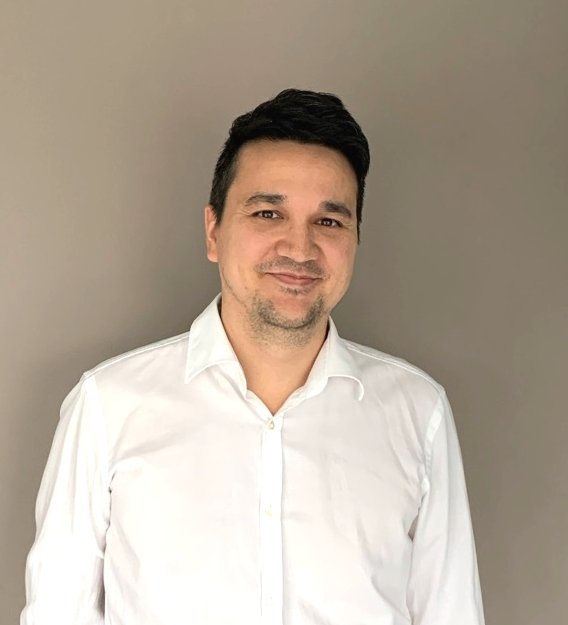
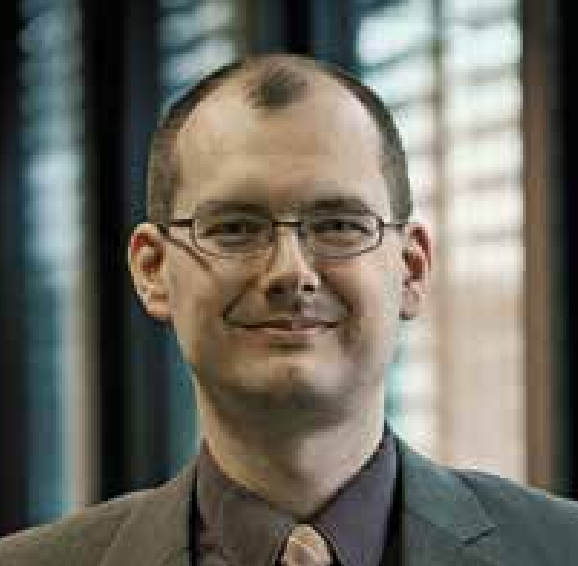
John M. Stubbs is a Professor of Chemistry at the University of New England, located at Peter and Cecile Morgane Hall 014 on the Biddeford Campus. He specializes in applying computational methods to chemical problems, with a focus on DNA hybridization mechanisms for sensor arrays and supercritical fluid-based separation techniques. His technical expertise includes GNU/Linux operating systems and FORTRAN programming for chemical simulations. Education: Details of his educational background are listed under credentials but not explicitly provided in the text. Research Interests: Dr. Stubbs' work bridges computational tools and experimental chemistry. He investigates DNA surface interactions to advance biosensor technology and explores supercritical fluids for enhanced chemical purification. He actively develops computational frameworks using open-source software, emphasizing Linux environments and FORTRAN algorithms in chemical modeling. Grants & Advising: No specific grants or student advisement records are mentioned in the text. Labs/Teams: No specific laboratory or collaborative team affiliations are disclosed.
Laurent Poirrier is an adjunct professor in Computer Science at Bocconi University, Italy, and previously worked in the Combinatorics and Optimization department at the University of Waterloo, Canada. His research focuses on mathematical optimization, cutting plane theory, and algorithm design, with applications in integer programming and vehicle routing. He has developed open-source tools like hperf (Linux perf trace visualizer) and ben (batch job scheduler). His publications span topics from polyhedral theory for integer programs to computational methods for stable matching. Notably, he co-created Gemvid, an open-source rodent motion detection system. Current teaching includes Software Engineering courses (2024, 2023) and Computer Science (2023). Recent work involves fuzzing optimization software with tools like AFL++. The trend of his research highlights intersections between computational mathematics and practical algorithm development, emphasizing numerical stability and efficient problem-solving frameworks. His contributions to optimization theory and software reflect a dual focus on theoretical rigor and real-world implementation challenges.
Prof. Christian Forler is a Professor of Operating Systems at Berlin University of Applied Sciences, Department of Computer Science and Media. He specializes in IT security, cryptography, and operating systems with a focus on GNU/Linux. His research includes password hashing (e.g., Catena), authenticated encryption (e.g., POET/POEx), and cryptographic protocol design. He actively participates in international competitions like the Password Hashing Competition and CAESAR. He teaches courses on operating systems, algorithms, and network security. Education: Not explicitly listed but inferred through research contributions. Research interests span IT security fundamentals, including cryptographic primitives, memory-hard functions, and secure communication protocols. His work emphasizes practical implementations and robustness against attacks. He contributes to open-source libraries like libstring and maintains a lab affiliation with the Pervasive Systems Engineering (PSE) Lab. Publications focus on authenticated encryption schemes, password security, and cryptographic algorithm analysis. He has authored over 20 papers in leading conferences and journals since 2008. Awards: None explicitly mentioned. Advising involves guiding students in thesis topics related to his research areas. Teaching includes programming courses in C and Java, with a focus on real-time systems and security. Labs/Teams: Member of the PSE Lab, contributing to applied systems engineering research.
Francesco Tommasi is an Associate Professor at the Department of Innovation Engineering, University of Salento, where he teaches Operating Systems, System and Network Programming, and System Security courses for both undergraduate and graduate Computer Engineering programs. His academic affiliation spans multiple departments within the School of Engineering, focusing on the intersection of computer science, networking, and security. His current research interests center on computer security, with specific focus on authentication systems, web security, and mobile security. His past research includes Quality of Service for computer networks, IP mobility, satellite internetworking, and satellite distance learning technologies. Tommasi has made significant contributions to the field of cybersecurity, particularly in identifying and analyzing novel attack vectors including Browser-in-the-Middle attacks and MobileApp-in-the-Middle attacks. His recent publications (2021-2025) demonstrate a strong focus on cybersecurity challenges, particularly authentication vulnerabilities, web security threats, and mobile security issues. The research shows progression from fundamental network security concepts to more sophisticated attack methodologies targeting modern authentication systems and mobile platforms. His work bridges theoretical security concepts with practical attack demonstrations, contributing significantly to the understanding of security vulnerabilities in contemporary systems. Co-author of the first Internet Proposed Standard signed by an Italian university (RFC 2961) Co-author of attack #701 included in the CAPEC database of dangerous cyber attacks Scientific director of the Laboratory for Internetworking and Interoperability between Systems (LIIS) Co-scientific director of the Cybersecurity Research Lab Responsible for the Unisalento node of the CINI Cybersecurity National Lab Tommasi has directed numerous research projects funded by MIUR, European Space Agency, and regional authorities, including satellite distance learning initiatives, cybersecurity projects, and technology transfer initiatives. He created the Salento Satellite Campus and has been instrumental in developing satellite-based educational infrastructure. His laboratory work focuses on practical security testing and developing defensive mechanisms against emerging cyber threats. He leads the Laboratory for Internetworking and Interoperability between Systems (LIIS) and co-directs the Cybersecurity Research Lab, which focuses on practical security testing, vulnerability analysis, and developing defensive security mechanisms. These labs collaborate with national and international partners on cutting-edge cybersecurity research and implementation projects.