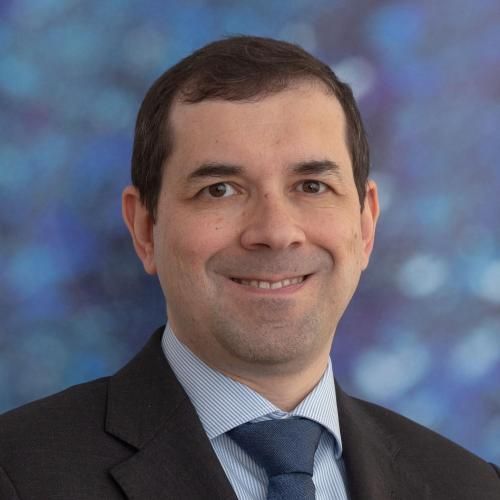
Dr. Jorge Juan Gil Nobajas is a Professor of Control Engineering and Robotics at Tecnun (School of Engineering, University of Navarra). His research focuses on robot control, haptic interfaces, and biomedical robotics, with a particular emphasis on stability analysis, haptic rendering algorithms, and mechatronic systems for medical and industrial applications. Research Interests: Robot control systems, haptic interface design, stability analysis in virtual environments, biomedical device development (e.g., bone drilling tools, allergy diagnostic systems), and mechatronic solutions for aerospace and rehabilitation. Publications: His work spans robotics, mechatronics, and biomedical engineering, with recent studies on collaborative haptic robots, automated disassembly of e-waste, and gravity compensation in rehabilitation systems. Patents: He holds international patents for haptic systems in surgical assistance and automated allergy testing.
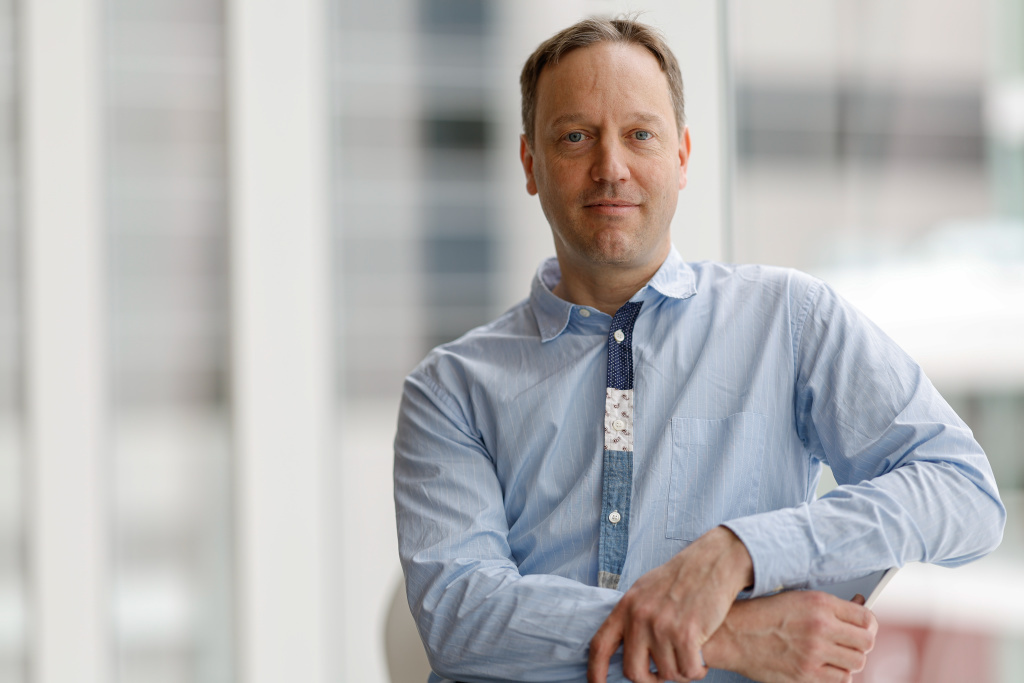
François Blanchard is a Professor in the Department of Electrical Engineering at École de technologie supérieure (ÉTS) in Montreal, Quebec. He leads the Canada Research Chair in Spatiotemporal Encryption of Terahertz Light Assisted by Computational Method and is affiliated with multiple research laboratories including LACIME (Communications and Microelectronic Integration Laboratory) and TeraÉTS Laboratory. His research focuses on advancing terahertz technology through innovative detection, imaging, and signal processing techniques. Dr. Blanchard's research interests span across terahertz science and technology, with emphasis on optoelectronics, THz spectroscopy and imaging, metamaterials, material characterization, laser technology, optical metrology, and quantum engineering. His work integrates theoretical modeling with experimental development to push the boundaries of terahertz applications in various fields including security, materials science, and communications. He has developed novel approaches combining active microelectronics with terahertz wave generation and detection through nonlinear effects, along with advanced signal processing techniques. His research program aims to achieve detection sensitivity down to the single THz photon level at room temperature, develop real-time THz detection systems with integrated spatiotemporal coding, advance multispectral THz imaging using frequency selective surfaces, explore nonlinear modeling of THz systems using chaos theory, and integrate artificial intelligence for enhanced system performance. A cornerstone of his approach involves lithium niobate photonic platforms enabling scalable, efficient, and room-temperature operation. Scientific Awards: Canada Research Chair in Spatiotemporal Encryption of Terahertz Light Assisted by Computational Method Dr. Blanchard actively supervises numerous graduate students across various research projects. His students work on topics including quality control of printed electronics using terahertz radiation, development of novel metrology methods for time domain THz spectroscopy systems, photonics solutions for THz systems based on ytterbium laser technologies, terahertz imaging systems, active terahertz metasurfaces, and deep learning enabled computer vision for terahertz radiation detection. He has secured significant research funding to advance quantum detection of terahertz light and develop applied research in quantum sciences. He leads several research teams operating within specialized laboratories including LACIME, which focuses on six areas of expertise from functional materials to communication protocols. His TeraÉTS Laboratory specializes in terahertz technology development, and his Canada Research Chair team combines innovative ideas in active microelectronics with terahertz wave generation and detection.
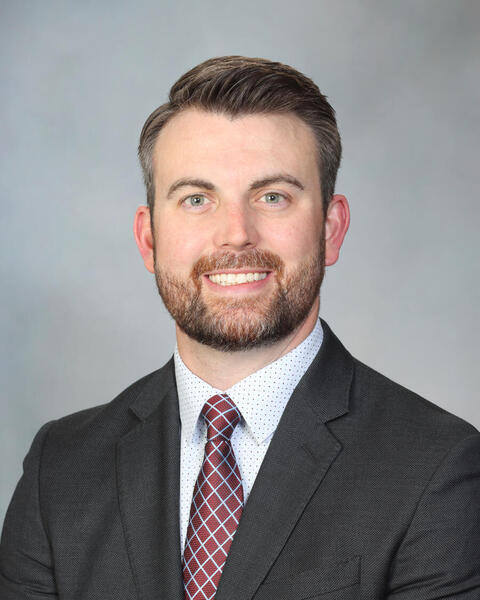
Charles R. Sims III, M.D., is an Assistant Professor in the Department of Anesthesiology and Perioperative Medicine at Mayo Clinic in Rochester, Minnesota. He holds multiple leadership roles including Chair of Quality, Vice Chair for Safety and Quality in Anesthesiology, and Vice Chair of the Surgical Quality Subcommittee. Board-certified in anesthesiology and critical care medicine, he specializes in anesthesia for thoracic, orthopedic, spine, plastic, and transplant surgeries. Dr. Sims completed his medical education at the University of Mississippi Medical Center (M.D. 2012), followed by an anesthesiology residency (2016) and a critical care fellowship at Mayo Clinic (2017). His research focuses on: Enhanced Recovery After Surgery (ERAS) pathway development Goal-directed therapy algorithms for complex surgeries Quality improvement in anesthesia and healthcare systems Team recovery strategies post-crisis Simulation-based medical education His publications demonstrate strong emphasis on surgical quality improvement, anesthesia techniques, and educational methodologies, with recent work exploring ERAS protocols, competency assessment frameworks, and innovative simulation training approaches. Significant honors include: ASA-SEA Distinguished Educator in Anesthesiology (2022) Mayo Clinic Distinguished Educator Award (2020, dual recognition from faculty and residents) Teacher of the Year, Mayo Fellows Association (2020) Outstanding Quality Improvement Project Award (2025) Dr. Sims leads numerous institutional committees including the Enterprise Safety and Quality Committee and serves on national groups like the ASA Committee on Cardiovascular and Thoracic Anesthesia. His work emphasizes data-driven process improvement in perioperative care.
Cathy Cheatham is an Instructional Associate Professor at the Conrad N. Hilton College of Global Hospitality Leadership, University of Houston, where she has taught since 2013 while concurrently serving as Hotel Manager at Hilton University of Houston. She advises the Hotel and Lodging Association of Greater Houston – UH Student Chapter and sits on the University’s Admissions Appeal Committee. Her academic credentials include: B.S. in Hotel and Restaurant Management (1989), Conrad N. Hilton College of Global Hospitality Leadership, University of Houston M.S. in Hospitality Management (2016), Conrad N. Hilton College of Global Hospitality Leadership, University of Houston Certifications: CHIA, CHE Cheatham’s research integrates 25+ years of industry expertise in customer service optimization, lodging operations, and revenue management with hands-on technology implementation experience. Her work bridges academic theory and practical applications in hotel management systems, guest experience design, and operational workflows across global properties. Her accolades include: 2020 Distinguished Faculty/Staff Award at the Hilton College 2006 Distinguished Alumnus by the Hilton College Alumni Association As an educator, she directs undergraduate and graduate instruction in Hotel Operations, Rooms & Housekeeping Management, and Advanced Lodging Management while leveraging her consulting background with Cyntergy Corporation on technology rollouts at international properties like Sandy Lane Resort in Barbados.
María José Yepes Temiño is an Associate Clinical Professor at the Faculty of Medicine of the University of Navarra since 2008 and a Specialist in Anesthesia and Resuscitation at the University of Navarra Clinic in Pamplona. Her clinical expertise spans surgical anesthesia, intensive care, anesthesia outside the operating room, and specialized consultation services. Her educational background includes: Medical Degree from Complutense University of Madrid (1999) Specialization in Anesthesiology, Resuscitation and Pain Therapy from Hospital Universitario de la Princesa (2005) PhD in Medicine from the University of Navarra (2016) European Diploma in Anaesthesiology and Intensive Care (EDAIC) (2007) Advanced Trauma Life Support Certification (2011) Dr. Yepes Temiño's research centers on pulmonary complications in lung resection surgery and postoperative pain management in thoracic procedures. She developed a predictive scale for postoperative pulmonary complications and actively collaborates in the European Network Clinical Trial of the European Society of Anesthesiology. Her clinical interests emphasize thoracic surgery anesthesia, and she contributes to the Malignant Hyperthermia working group of the Spanish Society of Anesthesia. Her scientific recognition includes: Scholarship from the European Society of Anaesthesiology for liver transplant anesthesia training at St James University Hospital (2008) As an academic leader, she serves as an examiner for the European Diploma in Anaesthesia and Intensive Care (EDAIC) and previously held a Vocal Member position on the Teaching Commission of the University of Navarra Clinic (2007-2012). She represents Spain on the European Society of Anaesthesiology Council (2008-2011) and maintains active membership in both the European and Spanish Societies of Anesthesiology and Resuscitation.
Kindracki Jan is a full-time Professor at the Division of Aircraft Engines , Faculty of Power and Aeronautical Engineering , Warsaw University of Technology . His office is located in room 306b, and he can be contacted at Jan.Kindracki@pw.edu.pl . Research Leadership: Chair of Educational Team for Space Technology Projects at PAN, Editor for "Journal of Power Technologies" Teaching: Courses on Aerospace Propulsion, Celestial Mechanics, and Experimental Techniques Research activities focus on Aerospace Propulsion and Combustion Physics , particularly: Rotating Detonation Engines (RDE) Cold Gas/Resistojet Propulsion Hybrid Propellant Combustion Spacecraft Robotics Microgravity Simulation Computational Modeling of Detonation Scientific Achievements include: Multiple Rector's Awards (2007-2019) PECS ESA Project Participation NCN Sonata Grant Leadership NCBiR Project Leadership (2016-2019) Awards span team and individual recognitions, including the Professor Zygmunt Szlachta Award and Best Paper Award at ISHPMIE 2012. Academic Leadership involves organizing international conferences like the Development Trends in Space Propulsion Systems series and mentoring over 138 engineering students and 77 interim projects as of 2020.
Anja Harder is a Researcher at the Institute of Political Science and Sociology , affiliated with the Faculty of Human Sciences at the University of Würzburg. She works under the Professorship for Special Sociology and Qualitative Methods of Empirical Social Research , contributing to academic advising, modularized study program coordination, and student services like credit transfers and ERASMUS+ support. Address: Wittelsbacherplatz 1, 97074 Würzburg, Germany (Room 02.112) Contact: Phone +49 (0)931 / 31 84820 | anja.harder@uni-wuerzburg.de Office Hours: Regular sessions (e.g., Wednesdays 11:00–13:00) and special appointments via Zoom or in-person, with strict guidelines for documentation and scheduling. Research Focus Her work emphasizes qualitative methods in empirical social research , sociology , and social science sustainability studies , aligned with the Institute’s divisions. She also engages with didactics of social education and business/employment studies , supporting curriculum design and student advising processes. Academic Roles and Contributions Anja Harder coordinates modularized study programs, manages credit transfer applications, and facilitates academic advising for degree programs like Political and Social Studies (PSS) , Political and Social Sciences (PSSc) , and the Master’s in Social Science Sustainability Studies (SowiNa) . She enforces institutional policies such as BAföG eligibility and standards of academic conduct . Institute Affiliations She operates within the Institute of Political Science and Sociology, which includes divisions like: Special Sociology and Qualitative Methods of Empirical Social Research Social Science Sustainability Studies Didactics of Business and Employment Studies
Paul Fikes serves as an Assistant Professor of Practice in the Department of Kinesiology and Sport Management at Texas Tech University, teaching sport management courses with office hours in room 153 during Fall 2025. Education: Doctor of Education (Ed.D.) His expertise spans practical applications in sports business operations, emphasizing leadership development and strategic planning for athletic organizations. Research focuses on bridging theoretical frameworks with industry practices in sports marketing, event coordination, and administrative systems within collegiate and professional sports environments.
Julian Kalinowski is a researcher at the University of Hamburg's Department of Computer Science within the Faculty of Mathematics, Informatics, and Natural Sciences (MIN). His work focuses on distributed systems, blockchain technology, and middleware integration for mobile environments. Key projects include Jadex BDI Agent System and the cadeia initiative for distributed code execution in information markets. PhD candidate in Computer Science Email: kalinowski@informatik.uni-hamburg.de Room F510, Office hours by appointment Research interests span decentralized information markets, blockchain compliance (e.g., GDPR), and mobile middleware optimization. His 2015 best paper award at MATES conference highlights contributions to agent platform customization. Publications from 2012-2020 reveal trends in blockchain applications, smart grid optimization, and IoT security. Supervised 9 student theses covering decentralized billing, smart home systems, and localization technologies. Key awards: Best Paper Award (MATES-2015).
Denis Vladimirovich Kapulin is an Associate Professor at the School of Space and Information Technologies, Siberian Federal University, holding the academic title of доцент (Associate Professor) with a Candidate of Technical Sciences degree in technical sciences. His work spans multiple departments related to radio-electronic systems and space instrumentation, with an office located at Kirensky street, 26B, building № 17 (F), room 2-20a. He serves as Acting Director of a research unit focused on space instrumentation and navigation systems. Dr. Kapulin's research interests center around space instrumentation, satellite navigation systems, radio-electronic equipment design, and production optimization. His work bridges theoretical research with practical applications, particularly in developing miniature band-pass microwave filters, angular satellite navigation equipment, and automated production planning systems. He has made significant contributions to both aerospace engineering and manufacturing optimization fields, with numerous patents reflecting his practical approach to solving engineering challenges. His publication trends show consistent research output with 15+ publications annually, demonstrating expertise across multiple domains including satellite navigation, production planning, and radio-electronic equipment design. Recent work focuses on digital transformation in manufacturing, augmented reality applications for predictive maintenance, and optimization of small-batch production systems. Scientific Awards and Recognition: Laureate of the award for young talents of the head of Krasnoyarsk city for achievements in scientific and educational activities Laureate of the award from JSC AKC "International Financial Club" for contributions to space instrumentation science Expert in the scientific and technical field of FSBSI NII RINKTSE Member of the expert council of the Krasnoyarsk regional innovation and technology business incubator Dr. Kapulin has secured multiple significant research grants from the Russian Ministry of Education and Science, including projects on high-tech production of miniature band-pass filters (2017-2019), development of highly selective microwave filters (2017-2019), creation of angular satellite navigation equipment (2016-2017), and architecture development for System-on-Chip navigation receivers (2015-2017). His collaborative research involves extensive work with colleagues like Oleg Drozd and Polina Russkikh across multiple laboratories focused on radio-electronic systems and space technologies. The research team he participates in maintains strong connections with industry partners in the aerospace and radio-electronic sectors, facilitating technology transfer from academic research to practical applications. Current projects focus on digital transformation of manufacturing processes, advanced satellite navigation systems, and optimization of production planning for small-batch manufacturing environments.
Donald Likosky is a Research Professor of Cardiac Surgery at the University of Michigan Medical School , where he serves as Section Head of Health Services Quality and Research . He is affiliated with multiple institutions including the Samuel and Jean Frankel Cardiovascular Center , MExperts-Opioid Research Institute , Precision Health Initiative , and Institute for Healthcare Policy and Innovation . Research Interests: Determinants of disparities in cardiovascular disease care Technical and non-technical factors affecting surgical outcomes Value-based improvements in surgical care delivery Clinical registry development for cardiovascular quality assessment Administrative data analysis to identify practice variability Postoperative acute kidney injury prevention Recent Publications focus on surgical leadership evaluation, LVAD infection management, heart transplant strategies, and quality improvement in congenital perfusion practices. Available to Mentor
Durga Prasad Bavirisetti is an Associate Professor (Universitetslektor) at the University of Gävle, Sweden, specializing in computer vision and machine learning. His research spans geospatial information science, image fusion, and autonomous driving systems, with a strong focus on applying deep learning to real-world problems in energy, healthcare, and transportation. His educational background includes: PhD in Signal and Image Processing from VIT University, India (2016) Postdoctoral research at Shanghai Jiao Tong University Bavirisetti's research interests center on advancing computer vision through deep learning, particularly in multi-sensor image fusion (infrared-visible, MRI-CT), autonomous vehicle perception in challenging conditions (e.g., Nordic winters), and applications in renewable energy forecasting and medical diagnostics. His work bridges theoretical innovation with practical deployment, as evidenced by industry collaborations with Alibaba and SINTEF. Analysis of his recent publications reveals a strong trend toward multi-modal deep learning architectures, with increasing focus on autonomous systems and healthcare applications. His 2023-2025 output shows expansion into dysarthria detection, cyberbullying monitoring, and photovoltaic forecasting, demonstrating interdisciplinary reach while maintaining core expertise in image processing. No scientific awards were mentioned in the provided sources. While specific grant details are not provided, Bavirisetti's research demonstrates significant industry and international collaboration, including positions at Alibaba Group Innovation Center, SINTEF Industries, and visiting roles at UBC Okanagan and the University of Warsaw. His advising activities are not explicitly detailed, but his extensive publication record suggests active mentorship of students and junior researchers. He is part of collaborative research teams including the mobility department at SINTEF Industries (focusing on machine vision for autonomous driving) and works with researchers like Gabriel Kiss at NTNU on projects involving surgical environments and autonomous vehicle perception. His work often integrates expertise from computer science, electrical engineering, and medical fields.
Mathias Cehlin is an Associate Professor and University Lecturer at the University of Gävle, specializing in energy systems research with a particular focus on building ventilation, energy efficiency, and sustainable construction. His work spans multiple aspects of built environment engineering, with publications covering ventilation systems, sustainable building materials, and climate change adaptation strategies for buildings. Dr. Cehlin's research interests encompass Building Ventilation , Energy Efficiency , Indoor Climate , Sustainable Construction , Timber Engineering , and Urban Climate . His work demonstrates a strong emphasis on practical applications of engineering principles to improve building performance while reducing environmental impacts. Recent research has increasingly focused on climate change adaptation in building design, sustainable construction materials (particularly cross-laminated timber), and advanced ventilation systems. Analysis of Dr. Cehlin's recent publications reveals a clear trend toward sustainable building solutions in the face of climate change. His work spans both fundamental research on ventilation systems and practical applications of sustainable materials in construction. The strong emphasis on cross-laminated timber research indicates growing interest in sustainable alternatives to traditional building materials, while his ventilation studies address critical challenges in maintaining indoor environmental quality with minimal energy consumption. Dr. Cehlin has established extensive collaborative networks across multiple institutions, with frequent co-authorship patterns indicating strong research teams focused on building performance and sustainable construction. His research portfolio demonstrates significant contributions to the fields of building engineering and sustainable construction, with practical implications for building design, operation, and materials selection in the context of climate change mitigation and adaptation.
Bahram Moshfegh is Professor of Energy Engineering at the University of Gävle, holding positions in the Department of Energy Systems within the School of Engineering and Technology. He concurrently serves as Chairman of the Division of Energy Systems at Linköping University since 2001 and previously held leadership roles including Deputy Vice-Chancellor for Research (2015–2017) and Dean of Education and Research (2000–2014) at the University of Gävle. His research spans energy systems with emphasis on industrial cooling technology , building energy efficiency , and renewable energy integration . Notable specializations include jet impingement cooling for metallurgical processes, confluent jet ventilation systems for large spaces, and energy renovation methodologies for historic buildings. His work bridges theoretical modeling with industrial applications through collaborations with AstraZeneca, Volvo, Scania, and steel manufacturers. Recent publications (2022-2025) reveal a strong focus on advanced cooling techniques for industrial materials processing, AI-enhanced energy management in data centers, and sustainable building technologies including greenhouse climate control and direct air capture integration. His research increasingly incorporates machine learning for thermal system optimization while maintaining core expertise in fluid dynamics and heat transfer. Award Highlights: World Renewable Energy Pioneers’ Award 2014 for outstanding renewable energy contributions Recognition in Royal Swedish Academy of Engineering Sciences IVA's 100 List 2020 for sustainable competitiveness research Moshfegh has supervised 22 doctoral and licentiate students including Hans Jonsson, Mathias Cehlin, and Mohammad Jahedi, with several establishing successful ventures like Thermalsol and Nordic Energy Audit AB. His research is supported by over 150 MSEK in grants from Swedish Energy Agency, FORMAS, VR, and Vinnova, with total project leadership exceeding 300 MSEK. Current projects focus on techno-economic assessment of heritage building renovations and advanced cooling technologies for metallurgical applications. He leads the Research School Resource Efficient Energy System in Built Environment (REESBE) and maintains active industry partnerships across 30+ companies while serving on editorial boards including Frontiers in Mechanical Engineering.
Nurcan ER is a Lecturer in the Department of Medical Services and Techniques at Sanko University, specializing in Operating Room Services education. Her work focuses on training healthcare professionals in critical areas such as surgical procedures, emergency care, and operating room management. Research interests include: Medical education methodologies Operating room protocols and efficiency Emergency trauma response techniques Healthcare team training systems