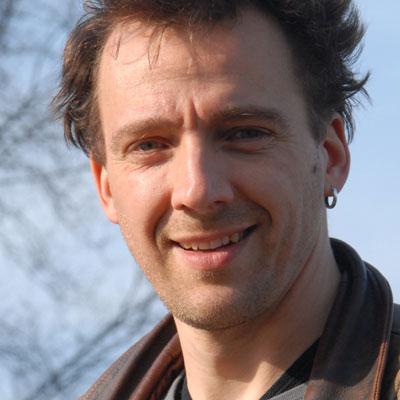
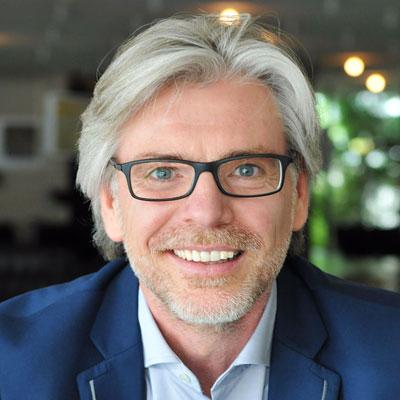
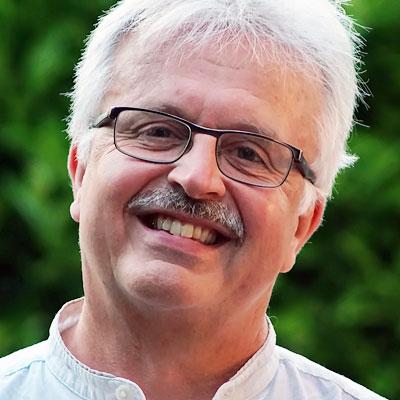
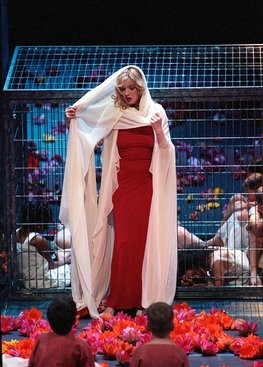
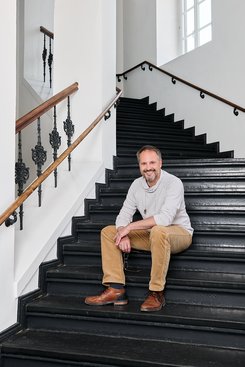
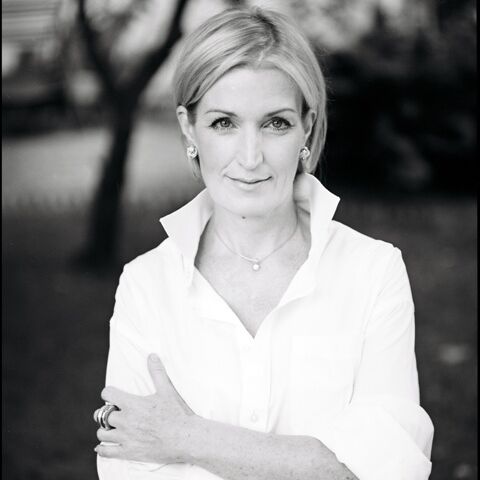
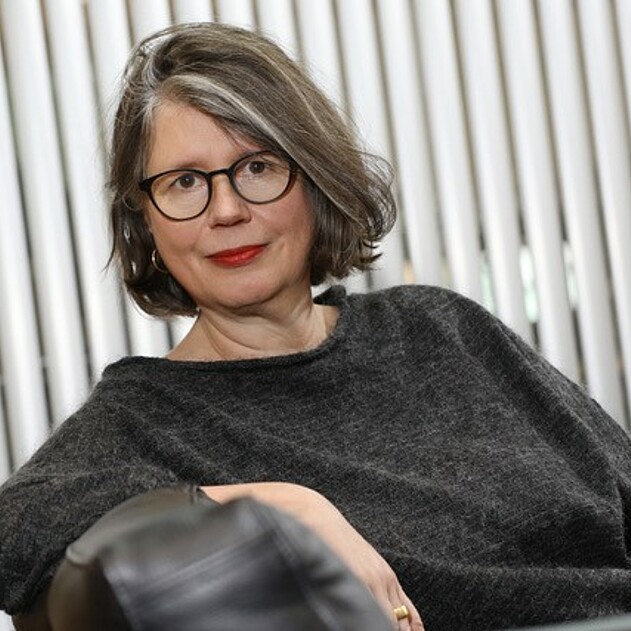
Albrecht Pöhl is a lecturer at the University of Music Würzburg (HfM Würzburg) within the Department of Singing. His academic work focuses on vocal performance and pedagogy, aligning with the university's mission to advance artistic and educational excellence in music. He is part of the teaching faculty for singing, operatic school, and song interpretation, contributing to both bachelor's and master's programs. His consultation hours are available by appointment, indicating active engagement with students.
Wang Jie, an Adjunct Assistant Professor of Composition at the Conservatory of Music under the School of Visual, Media and Performing Arts at Queens College, is a prominent contemporary composer blending Chinese and Western classical traditions. Her works span operas, chamber music, solo pieces, and electronic compositions, often inspired by ancient poetry, cultural identity, and theatrical innovation. Primary Affiliation : Queens College, City University of New York Academic Role : Adjunct Assistant Professor in Composition Research Areas : Cross-cultural composition, operatic storytelling, chamber ensemble dynamics, electronic music integration Wang's compositions explore themes like: Chinese-Western fusion through traditional instruments (pipa, zodiac myths) Emotional narratives in operatic forms ( FLOWN , Farewell My Concubine ) Poetic inspirations (Emily Dickinson, Arthur Waley translations) Experimental techniques in Echo, Echo, Echo and Blame the Obituary Her recent works include Blame the Obituary (2023) for narrator and quintet, The Name That Never Dies (2022) for choir, and Thirteen Ways to Fly With a Blackbird (2019) for solo guitar. Awards highlight her recognition in new music circles, including the Koussevitzky Prize and Underwood Commission . Wang actively participates in performances, often as a keyboardist in her own works (e.g., From the Other Sky premiere at Carnegie Hall). She is a member of ASCAP and the Random Access Music composers collective.
Prof. Friedemann Röhlig is a renowned opera singer and professor of vocal studies at the University of Music Karlsruhe. Born in Leipzig, he holds degrees in piano, harp, and conducting from the Felix Mendelssohn Bartholdy University of Music and Theatre. His vocal training included study under Christa-Maria Ziese, Julia Hamari, and Carl Davis, alongside masterclasses with Rudolf Piernay and Artur Korn. Primary affiliations: Bavarian State Opera, Hamburg State Opera, Paris Opéra, San Francisco Opera Key roles: Sarastro (Mozart's Magic Flute), Banco (Verdi's Macbeth), Gurnemanz (Wagner's Parsifal) His artistic practice spans opera, concert performances (Bach's passions, Brahms' German Requiem), and lied cycles by Schubert. He collaborates with conductors like Kirill Petrenko and Kurt Masur, and has performed at Bayreuth, Salzburg, and Bregenz festivals. Awards: 2000 ARD International Music Competition prize Teaching activities include masterclasses globally and professorship at Karlsruhe conservatory, focusing on vocal technique and repertoire development.
Alois Seidlmeier is a Professor of Conducting at the Opera School of the University of Music Karlsruhe. He also serves as Chief Conductor and Musical Director of the Heilbronn Symphony Orchestra since 2017. Born in 1967 in Landsberg am Lech, Bavaria, he received early training in piano, voice, trombone, and organ. His academic journey included studies in church music in Regensburg and conducting at the Würzburg University of Music under Günther Wich and others. His professional career spans roles such as Ballet and Solo Coach (Mainfranken Theater, 1996–2000), Musical Director (2000–2002), and Deputy General Music Director/Principal Conductor at Mannheim National Theatre (2010–present). His repertoire encompasses over 70 operatic works and 150 symphonic pieces, collaborating with renowned artists like René Pape and Jonas Kaufmann. Research interests focus on opera direction, orchestral conducting techniques, and the integration of historical performance practices into modern stage productions. His guest engagements have taken him to major international stages, reflecting his expertise in both classical and contemporary repertoire.
Prof. Christian Elsner is a German tenor and professor of voice at Karlsruhe University of Music (since 2017) and Würzburg University of Music (since 2006). He is celebrated for his versatility in operatic heldentenor roles (e.g., Wagner's Siegmund and Parsifal) and lied recitals, collaborating with renowned pianists like Hartmut Höll and conductors such as Simon Rattle. A winner of the ARD Munich Competition, his discography includes iconic works like Schubert's Winterreise and Beethoven's Missa Solemnis. Beyond performance, he authored children's books like Lennie and the Magic Flute . Education: Studied singing with Prof. Martin Gründler in Frankfurt Coached by Dietrich Fischer-Dieskau (Berlin) and Neil Semer (New York) Research Focus: Specializes in German Romantic lied repertoire, Wagnerian vocal technique, and historical performance practices. Explores interdisciplinary connections between vocal pedagogy and literature through his children's books. Key Collaborations: Performed at major venues: Berliner Philharmonie, Carnegie Hall, Teatro alla Scala Recorded with orchestras including Berlin Philharmonic and Vienna State Opera Awards: ARD International Music Competition Munich (Winner) Teaching: Combines solo career with vocal pedagogy, emphasizing technical precision and artistic expression. Founded voice department curricula at both institutions.
Sigmar Steddin is a Professor of Accompaniment and Director of Studies at the Institute for Music Theater, University of Music Karlsruhe since 2001. His career spans roles as rehearsal coach, conductor, and accompanist across renowned theaters including Zurich Opera House, Deutsche Oper am Rhein, and Kassel State Theater. He has collaborated with notable conductors like Alberto Zedda and Ádám Fischer, and led major operas by Verdi, Donizetti, and Mozart. Education: Studied conducting under Räto Tschupp, Martin Schmitt, and Erich Wächter, and piano with Werner Genuit at the University of Music Karlsruhe. Research interests focus on music theater ensemble dynamics, operatic performance techniques, and historical performance practices. Extensive international experience includes collaborations in Switzerland, Italy, Cyprus, and Turkey through masterclasses with Hilde Zadek, Brigitte Fassbaender, and others. No scientific awards or grant information provided in sources.
Dr. Lorenz Luyken is a Research Associate and Lecturer in Historical Musicology at the Hanover University of Music, Drama and Media. He serves as the spokesperson for the Music Education program (Diploma) and has held roles in academic governance, including membership in the University Senate since 2005. His research focuses on 19th- and 20th-century composers like Jean Sibelius, Bedřich Smetana, and Leoš Janáček, with expertise in music pedagogy and historical reception studies. Dr. Luyken holds advanced degrees in musicology, pedagogy, and clarinet performance from the Cologne University of Music and the University of Cologne. His career includes freelance orchestral work, music school teaching, and academic lecturing since 1998. He has authored monographs, peer-reviewed articles, CD booklets, and encyclopedia entries, emphasizing compositional analysis and cultural contexts. His research interests span compositional techniques, national identity in music, and music education methodologies. Notable works include studies on Sibelius’s late symphonic forms and Berlioz’s Symphonie Fantastique for pedagogical application. He also engages with interdisciplinary topics like music and medicine, as seen in analyses of composers’ health conditions influencing their works.
Alexandra von der Weth is a Professor of Singing at the University of the Arts Bremen, currently substituting Prof. Maria Kowollik in the Faculty of Music. She also serves as a lecturer in the Faculty of Humanities at the Friedrich-Wilhelm University of Bonn. A renowned soprano, she has performed major roles in operas globally, including at the Metropolitan Opera New York and Wiener Staatsoper. Specializing in both classical and contemporary repertoire, she focuses on works by composers like Beat Furrer and John Cage, and champions female composers through her concert series Die Frau in der Musik/Komponistinnen . Her artistic career spans iconic roles (Violetta in La Traviata , Lulu in Berg’s opera) and avant-garde works. Supported by the NRW Ministry of Culture since 2016, her initiatives highlight underrepresented female composers such as Clara Schumann and Kaija Saariaho. Recent events include staged concerts exploring operatic heroines and 100th-anniversary tributes to Puccini. Research/Teaching: Vocal pedagogy, contemporary music interpretation, gender studies in music. Upcoming Projects: 2025 concerts featuring students and interdisciplinary collaborations.
Prof. Ansgar Weigner is a Professor in the Department of Szenische Gestaltung at the University of the Arts Bremen. His work focuses on stage design and operatic projects, integrating interdisciplinary approaches to performance arts. He currently teaches core courses like Szenische Darstellung (Grundkurs) and oversees operatic productions. Recent activities include organizing major events such as the Fête de la Musique 2025 open day and a Kick-Off production concert at the University Gallery (July 17, 2025). These events highlight his commitment to public engagement and collaborative artistic ventures. No scientific awards or grants are explicitly mentioned in the provided texts. His professional narrative emphasizes teaching, operatic project leadership, and institutional event coordination.
Jens Schmiedeke is a tenor and vocal pedagogue affiliated with the German National Theatre Weimar (DNT) since 2003 and holds a teaching position for singing at the Franz Liszt Academy of Music in Weimar. He completed studies in singing, vocal pedagogy, and dance, including a diploma from Saarbrücken and Würzburg universities. His performances span diverse roles in operas (e.g., Lancelot , Cabaret , My Fair Lady ), musicals, and choral works. He specializes in interdisciplinary performance, blending singing with dance, acting, and historical performance practices. Additionally, he teaches Jin Shin Jyutsu—a practice harmonizing energy in performers—to enhance vocal technique and stress management. Education includes a state examination in music and primary education (Nuremberg), vocal studies under notable mentors like Hermann Max and Gudrun Bär, and dance training at Tanzwerkstatt Würzburg. He has performed globally in over 40 operatic and musical roles, highlighted by his work in Ludger Vollmer’s The Circle and Paul Dessau’s Lancelot . His teaching focuses on holistic artist development, integrating physical, emotional, and technical aspects of performance. Upcoming engagements include My Fair Lady at DNT Weimar (2024–2025) and Jin Shin Jyutsu courses for performers. He resides in Weimar and maintains active involvement in both performance and pedagogy.
Prof. Fionnuala McCarthy is a renowned soprano and Professor of Singing at the Rostock University of Music and Theatre since October 2013. Born in Ireland and raised in South Africa, she studied cello, singing, and piano at the University of Johannesburg and the University of Music in Detmold. Major lyric soprano roles (Suor Angelica, Juliette, Manon, etc.) at prestigious venues like Komische Oper Berlin, Deutsche Oper Berlin, Vienna State Opera. CD recordings: Brahms' Requiem (2009), Stravinsky's Les Noces (2011), Vaughan Williams' Merciless Beauty (2011), and Richard Strauss's Four Last Songs at Ruhr Festival (2010). Participated in Wagner's Ring of the Nibelung at Bayreuth Festival (2006–2008), with a CD release in 2009. Her artistic career spans engagements in Mannheim, Düsseldorf, Berlin, Geneva, Vienna, Brussels, and Antwerp, with festival appearances at Schwetzingen, Hamburg Opera Week, Festival de Radio France et Montpellier, and Schönbrunn Palace Festival.
Professor Dörte Schmidt holds a chair in Musicology at the Berlin University of the Arts since 2006. Her academic career includes visiting professorships at Stuttgart University of Music (2000–2006) and habilitation from Ruhr University Bochum (1997). She has held leadership roles including presidency of the Society for Music Research (2017–2021), membership in the German Music Council Presidium (2013–present), and directorship of the Bernd Alois Zimmermann Complete Edition (2016–present). Her research focuses on post-war music culture, exile studies, and interdisciplinary arts relationships. She has authored/co-edited over 30 books and 60+ articles across musicology, cultural history, and digital humanities. Central projects include the NFDI4Culture consortium (2021–present) and research on 20th century musical modernism. Education: Studied Viola Performance, Musicology, German Studies, and Philosophy in Hanover, Berlin, and Freiburg (doctorate 1992 under Hermann Danuser). Habilitation in Bochum (1997) with a study on Lully and Gluck's operatic parody traditions. Research interests span musical theatre, post-war creative processes, and the intersections between music and other art forms. Her work analyzes how 20th century composers navigated cultural transitions post-WWII, particularly through the lens of exile returnees and institutional reforms. She pioneered studies on the LaSalle Quartet's role in disseminating modernist music and the textual practices of composers like Elliott Carter and Bernd Alois Zimmermann. Publications highlight transnational musical exchanges, such as Italian influences on German composers and Korean art song developments. Her recent work focuses on digital infrastructure for cultural heritage (NFDI4Culture) and data diplomacy in musicology. Awards include DAAD scholarships and the Alfried Krupp Senior Fellowship (2020–2021). Awards and grants include Paul Sacher Foundation support, DFG habilitation funding, and leadership in Berlin-Brandenburg Academy initiatives. She chairs the 'Academicization of the Arts' project and advises on national cultural policy through the German Cultural Council's digitalization committee.
Professor Ivana Rentsch is Director of the Graduate School at the Cluster of Excellence ‘Understanding Written Artefacts’ and Professor of Historical Musicology at the University of Hamburg’s Faculty of Humanities. Her research focuses on music and music theater from the 17th to 20th centuries, with particular expertise in operatic practices, ethnomusicology, and cultural heritage preservation. Her research interests span handwritten layers of operatic practices, digital musicology, and spiritual intermediality in early modern Protestant drama. She employs ethnographic and historical methods to examine music’s role in cultural transmission. Professor Rentsch serves on editorial boards for Musiktheorie and Wagnerspectrum and holds advisory positions at the State Institute for Music Research Berlin and the Bohuslav Martinů Complete Edition project.
Prof. Dr. Joachim Grage is a Professor of North Germanic Philology (Modern Literature and Cultural Studies) at the Albert-Ludwigs-Universität Freiburg since 2008. He previously held positions as a Junior Professor and Director at the Scandinavian Seminar in Göttingen (2002-2008). His office hours during semester breaks are in August and September, with appointments also available. Studied German, Chemistry, and Scandinavian Philology at Göttingen (1988-1999) Doctorate in Scandinavian and German Philology (1999) Academic leadership roles: Dean of Studies (2013-2017), Dean of Philological Faculty (2016-2019), and elected Senate member (since 2019) His research focuses on Scandinavian literature and cultural history , particularly intermediality between literature and music, heroism in Nordic texts, and biographical practices. He explores 17th-18th century maritime symbolism, 19th-century philological research, modernist literary practices, and contemporary cultural conflicts in crime fiction. His 2019-2020 work examines postheroic narratives around the Utøya massacre and intercultural heroism in Klabund's Chinese-inspired stories. Grage has published extensively on topics like Kierkegaard's musical aesthetics , Andersen-Wagner interplay , and multilingualism in historical Scandinavian texts . His editorial work includes co-editing volumes on literary practices around 1900 and knowledge geographies in 19th-century Nordic research. Scientific Awards: Danish State Scholarship (1992/93) Internal Senior Fellow at FRIAS (2011-2012) Joint Fellowship at FRIAS and USIAS (2013-2015) Administrative Roles: Director of Göttingen's Scandinavian Seminar (2004-2006) Liaison Lecturer for the German Academic Scholarship Foundation (since 2013) Delegate of the Philosophical Faculty Day (since 2019)
Marek Rzepka serves as Professor of Voice at Hanover University of Music, Drama and Media (HMTMH), continuing a distinguished academic career spanning Dresden Conservatory (1998-2001), Leipzig Conservatory (2001-2009), Krakow Conservatory (2009), and Bremen Conservatory (2015-2016). His pedagogical approach integrates decades of international performance experience across major European festivals and venues. Rzepka's research and artistic focus centers on vocal technique development across musical eras, with specialized expertise in: Baroque and Classical repertoire performance practice Operatic role preparation and interpretation Sacred choral-orchestral works German Lieder and art song Contemporary vocal literature Notable recognitions include: First Prize - Kolberg Festival (1989) Grammy Nomination - Conradi's Ariadne (2006) Gramophone Award - Bach's Cantata BWV 12 (2010) His students regularly achieve professional success in international opera houses, benefiting from his active performing career that informs pedagogical methods. Current artistic engagements maintain connections with leading European orchestras and festivals.