Prof. Dr. Beatriz Roldan Cuenya is a Professor and Group Leader at the Fritz Haber Institute of the Max Planck Society, where she directs the Department of Interface Science. She holds a European Research Council Consolidator Grant and is a Fellow of the Max Planck Society. Her research integrates surface science, catalysis, and nanomaterials, with a focus on understanding dynamic surface transformations during chemical reactions using advanced operando techniques. Her work spans electrocatalysis (CO₂ reduction), thermal catalysis (CO₂ hydrogenation), and nanoparticle design. Key themes include: Correlating nanoscale structure with catalytic activity/selectivity Developing size/shape-controlled catalysts Probing reaction mechanisms via real-time microscopy/spectroscopy Her recent publications (2021-2025) predominantly explore CO₂ conversion strategies, bimetallic catalysts, and operando characterization methods. Trends show emphasis on sustainable chemistry and energy applications. Notable scientific awards: AVS Fellow of the Society Award (2021) ISE-Elsevier Prize for Experimental Electrochemistry (2021) Academia Europaea Membership (2020) ERC Consolidator Award (2016) Max Planck Society Fellowship (2016) She leads a well-equipped research group investigating catalyst design and reaction dynamics. The lab leverages synchrotron facilities and in-house instrumentation for fundamental studies.
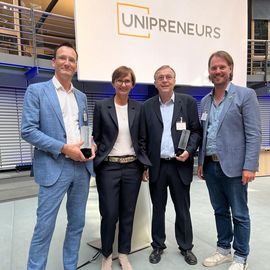
Prof. Dr. Reinhard Schomäcker is a Professor at the Technical University of Berlin's Institute of Chemistry and a Group Leader at UniSysCat. His research bridges catalysis, reaction engineering, and sustainable chemistry, with applications in CO₂ utilization, photocatalytic hydrogen production, and hydrocarbon conversion. He leads the Reaction Engineering Group, focusing on catalyst design and process optimization. Research Interests: His work spans heterogeneous catalysis, kinetic studies, membrane reactors, and techno-economic assessments. Key areas include: Development of tandem catalytic systems for CO₂ hydrogenation Photocatalytic hydrogen evolution using advanced materials Design of nanocatalysts for industrial processes Awards & Recognition: Innovation Award of German Gas Industry (2016) UNIPRENEURS Award for entrepreneurial contributions (2023) Lab & Resources: He directs the Reaction Engineering Group ( www.reaction-engineering.tu-berlin.de ), which collaborates extensively within UniSysCat. The lab specializes in operando catalyst characterization and reactor design.
Dr. Corneliu GHICA is a Scientific Researcher I and Head of the Laboratory of Atomic Structures and Defects in Advanced Materials (LASDAM) at the National Institute of Materials Physics. His work focuses on advanced materials characterization using atomic-resolution electron microscopy techniques and development of functional materials for applications in sensors, electronics, and energy technologies. Dr. GHICA's educational background includes: PhD in Physics (2001): 'Study of thin films deposited by laser ablation: manganites with colossal magnetoresistance effect' from University of Bucharest and Louis Pasteur University of Strasbourg PhD in Physics (1995): Optical engineering, optical spectroscopy and laser technologies from University of Bucharest BSc Physics (1994): Optical engineering, optical spectroscopy and laser technologies from University of Bucharest His research expertise centers on in-depth microstructural characterization of advanced materials using aberration-corrected transmission electron microscopy. He specializes in quantitative HRTEM analysis of strain fields associated with defects and interfaces, and structure-properties correlation in thin films and nanostructured materials. His work spans ferroelectric materials, gas sensors, and electronic devices, with emphasis on atomic-resolution techniques like HRTEM, STEM, EDS, and EELS. Dr. GHICA's recent publications reveal a strong focus on functional oxide materials, particularly zirconia-based systems for electronic applications, and development of advanced gas sensors. His research combines experimental characterization with theoretical modeling, demonstrating expertise in both materials synthesis and advanced characterization techniques. The work shows increasing international collaboration across Europe with applications spanning energy conversion, environmental monitoring, and electronic devices. Dr. GHICA has led multiple significant research projects: Nanoscaled ferroelectric (pseudo)-binary oxide thin film supercapacitors (NanOx4Estor) - M-ERA.NET project (2022-2024) Interplay structure-functionality in nanostructured materials for gas sensors - Mobility project (2019-2020) From 2D to 3D+ nanoscale characterization of advanced functional materials - PCE project (2017-2019) Atomically resolved structure and interface phenomena in nano-scale modulated smart materials - PCE project (2013-2015) Laser processing of defects induced in silicon by RF plasma hydrogenation - PCE project (2007-2010) As Head of LASDAM, Dr. GHICA leads a team focused on atomic-scale materials characterization using advanced electron microscopy techniques. The laboratory specializes in TEM specimen preparation, thin film deposition by PVD, PLD and sol-gel, and in-situ/operando experiments to study material behavior under real operating conditions. His expertise in electron microscopy makes him a valuable resource for the broader scientific community.