Christian Kübel is a Professor for In Situ Electron Microscopy at the Technical University Darmstadt and serves as Deputy Head of the Karlsruhe Nano Micro Facility at Karlsruhe Institute of Technology (KIT). He leads the Electron Microscopy Research Unit at KIT and is a Principal Investigator at the Helmholtz Institute Ulm. Education : PhD in Chemistry, University of Michigan (1999) Diploma in Chemistry, Johannes-Gutenberg University Mainz (1995) Research Interests : Christian Kübel specializes in advanced electron microscopy techniques for materials characterization. His work focuses on Energy Storage (batteries), Catalysis , Quantum Materials , Glasses , Nanocomposites , and Magnetic Materials . His methodological expertise includes In Situ Electron Microscopy , 4D-STEM , Electron Tomography , and Correlative Characterization . Scientific Awards : Feodor Lynen Postdoctoral Fellow (1999-2000) Fonds der Chemischen Industrie (FCI) Scholarship (1996-1998) German Academic Exchange Service (DAAD) Scholarship (1993-1994) Leadership Roles : Spokesperson, Helmholtz Imaging Platform (2019-) Spokesperson, KIT Center Materials-Structure-Function (2019-) Board Member, Deutsche Gesellschaft für Elektronenmikroskopie (2020-) Member, DIN Norming Committee Materials Testing (2017-2021)
Prof. Dr. Matthias Bauer is a Full Professor of Inorganic Chemistry of Sustainable Processes at the University of Paderborn, where he has led his research group since 2017. Affiliated with the Faculty of Science and Department of Chemistry, he specializes in developing functional materials for sustainable chemical processes with a focus on base metals as reactive components. His research integrates synthesis, characterization, and mechanistic studies to design improved catalysts for sustainable applications. His academic background includes: Chemistry studies at Stuttgart, Berlin and Edinburgh (1998-2003) Diploma thesis with Prof. Dr. Bertagnolli (University of Stuttgart, 2003) Doctorate with Prof. Dr. Bertagnolli (University of Stuttgart, 2004-2008) Postdoc at European Synchrotron Radiation Facility (2009) Head of 'Modern spectroscopic methods' division at KIT (2010-2011) Carl-Zeiss assistant professor at TU Kaiserslautern (2011-2013) Associate Professor at University of Paderborn (2013-2017) Prof. Bauer's research centers on sustainable inorganic chemistry, particularly replacing precious metals with abundant elements like iron and cobalt. His group develops photoactive metal complexes for catalytic applications and energy conversion, specializing in X-ray spectroscopic methods (XAS, XES, HERFD-XANES, CtC-XES, VtC-XES) to study materials under operando conditions. Current projects include noble metal-free catalysts for CO oxidation and CO2 methanation, as well as thermochemical hydrogen storage using iron-based mixed oxides. His laboratory has developed custom experimental setups including heatable capillary systems and gas flow cells for in-situ investigations. His recent publications (2020-2025) demonstrate a strong focus on sustainable catalysis using base metals, particularly iron and cobalt complexes. His work bridges inorganic chemistry, materials science, and spectroscopy, with significant emphasis on X-ray techniques for characterizing catalysts under working conditions. Key themes include photoactive complexes, ligand design for controlling excited states, and development of noble metal-free alternatives for industrial catalytic processes. His collaborative approach is evident through numerous co-authorships across multiple institutions including synchrotron facilities worldwide. Professional recognition includes: Member of peer review panels for beamtime at DIAMOND (UK) and CHESS (US) since 2021 Member of the DFG Review Board: Physical Chemistry of Solids and Surfaces since 2020 Founding member of the 'Center for Sustainable Systems Design' (CSSD) in 2019 Dean of Research for the Faculty of Science (2018-2024) Prof. Bauer actively mentors students and researchers, with several PhD candidates and postdocs in his group including Athul Krishna (cobalt complexes), Jakob Steube (iron complexes), and Nils (Kekulé scholarship holder). His research is supported by access to major facilities including MAX IV in Sweden, DESY, XFEL, Diamond, and ESRF. He has successfully secured beamtime for advanced X-ray studies and maintains strong collaborations with groups specializing in photophysics (Lochbrunner), computational chemistry (Kühne, Meyer), and catalysis. His technical developments focus on advancing photon-in/photon-out spectroscopy methods for sustainable chemistry applications.
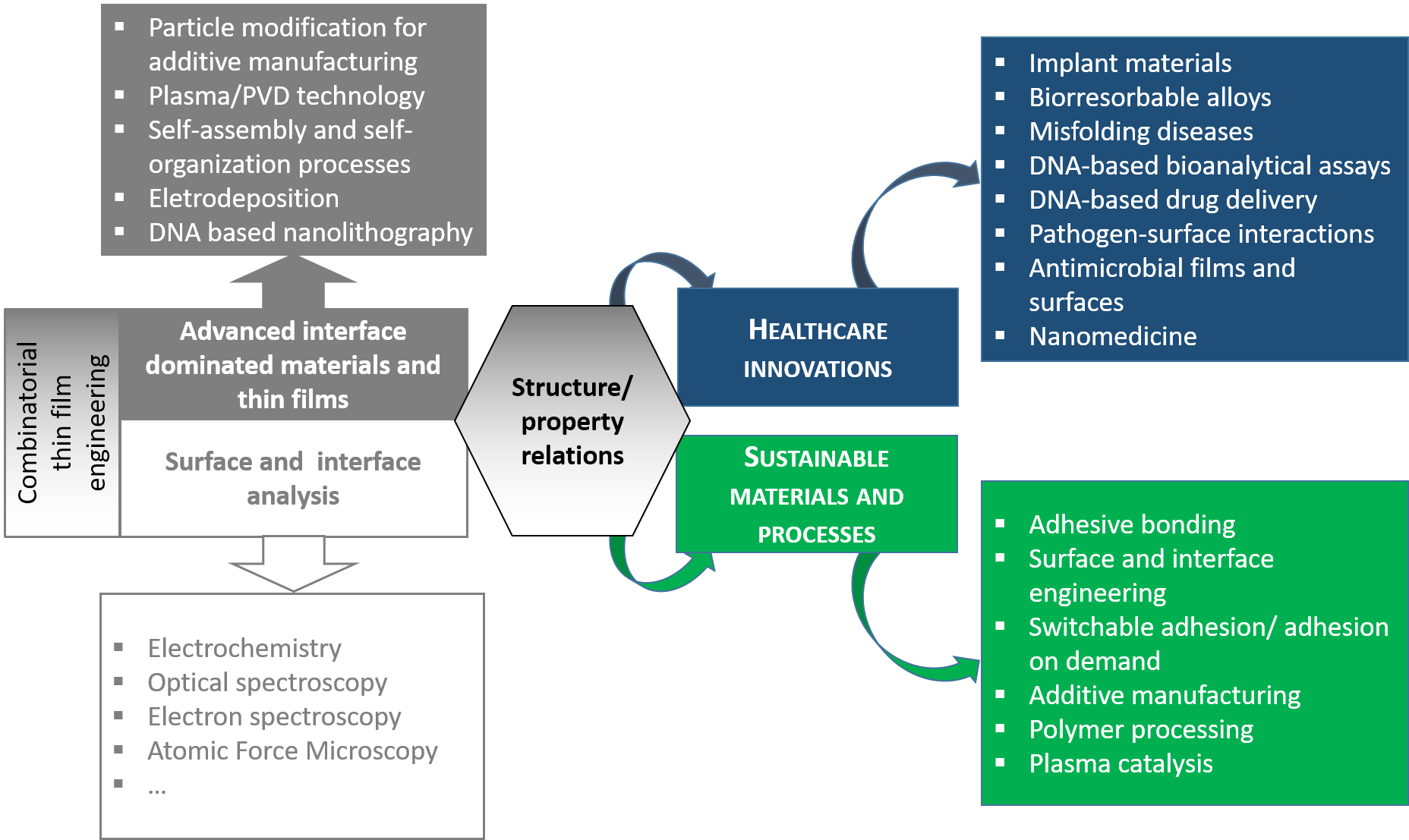
Prof. Dr.-Ing. Guido Grundmeier is a Full Professor (W3) and Chair of Technical and Macromolecular Chemistry at Paderborn University . His research focuses on advanced materials and sustainable interfacial engineering, with expertise in surface and interface spectroscopy , plasma chemistry , and nanobiomaterials . Research Groups: Adhesion and Corrosion Science, Advanced Surface and Interface Spectroscopy, Nanobiomaterials Key Areas: Polymer/metal interfaces, nanostructured surfaces, DNA nanotechnology, antimicrobial therapies His work combines in situ and operando techniques like ambient pressure XPS and FTIR spectroscopy to study molecular adhesion, interface electrochemistry, and plasma-based thin film deposition. Recent projects include INTRAPOL (2023-2025) for polymer-inorganic hybrid materials and the long-term SFB TR87 (2010-2022) on high-power plasma coatings. Laboratory Facilities include the PIA-NAP system for combined XPS/IRRAS analysis under near-ambient conditions, atomic force microscopy, ellipsometry, and plasma deposition techniques like PE-CVD and HiPIMS sputtering . He contributes to Master's programs in Chemistry and Materials Science, supervising Bachelor's and Master's theses on topics like thin film growth and interface characterization.
Loic JOLY is a Research Engineer at the Institute of Physics and Chemistry of Materials Strasbourg (IPCMS) within the Université de Strasbourg. His work focuses on molecular magnetism, magnetic nanostructures, and spintronic materials, with expertise in X-ray magnetic spectroscopy and surface interactions. PhD in Physics (IPCMS, Université de Strasbourg, 2006) Postdoctoral experience at Swiss Light Source (2006-2008) Current research explores magnetic nanostructured objects, spintronic engines, and electric field modulation of magnetic properties. Recent publications span topics like thermally driven molecular spintronics, chemisorption of single-molecule magnets, and advanced characterization techniques using synchrotron radiation. His 15 most recent articles (2018-2024) demonstrate interdisciplinary work bridging condensed matter physics, materials science, and molecular electronics, with technical emphases on X-ray spectroscopy, nanocluster magnetism, and spinterface engineering.
Dr. Christian Lenser is a researcher at Forschungszentrum Jülich GmbH, affiliated with the Institute of Energy Materials and Devices (IMD) and the Materials Synthesis and Manufacturing Processes (IMD-2) department. His work focuses on high-temperature fuel and electrolysis cells, particularly material development for oxygen ion conductors. He has contributed extensively to the understanding of solid oxide cell (SOC) materials, including degradation mechanisms and advanced fabrication techniques. Institution: Forschungszentrum Jülich GmbH Department: Materials Synthesis and Manufacturing Processes (IMD-2) Research interests include: Solid Oxide Fuel and Electrolysis Cells (SOFCs/SOECs) High-Temperature Ceramic Materials Electro-Chemo-Mechanical Coupling Metal Exsolution and Nanoparticle Engineering Interdiffusion in Multi-Layer Electrolytes Coating Technologies for Fuel Cell Components Recent publications highlight trends in: Developing durable coatings for interconnects Modeling oxygen chemical potential distribution Understanding microstructural degradation Advancing rapid sintering and screen-printing techniques Investigating bio-syngas-induced degradation Optimizing phase stability in perovskite electrodes
Sven Jovanovic is a postdoctoral researcher at the Research Center Jülich GmbH , affiliated with the Institute of Energy Technologies under the Fundamentals of Electrochemistry (IET-1). He specializes in NMR spectroscopy , Raman spectroscopy , and in operando techniques , focusing on energy materials and processes . Education : Studied chemistry at RWTH Aachen University, specializing in spectroscopy and catalysis. PhD in Electrochemistry from Forschungszentrum Jülich (IET-1/IEK-9), supervised by Prof. Josef Granwehr and Dr. Peter Jakes. Research Interests : Developed an in operando NMR setup to study CO 2 reduction in aqueous media, analyzing electrolyte chemistry during electrolysis. Conducted Raman microscopy on degradation of silver gas diffusion electrodes in CO 2 electrolysis cells. Currently investigates ionomers and catalysts for PEM/AEM water electrolysis, utilizing MAS/PFG NMR for battery electrolytes and redox materials. Key Research Trends : His recent publications highlight NMR and Raman applications in energy materials, with a focus on in operando analysis of CO 2 reduction, fuel cell/electrolyzer degradation, and solid-state/polymer electrolytes. Techniques include chemical shift-resolved magnetic resonance , X-ray tomography , and MRI for pH/ion profiling. Labs & Teams : Works at Forschungszentrum Jülich's IET-1 (Fundamentals of Electrochemistry), contributing to sustainable energy technology projects.
Dr. Roland Schierholz is a Team Leader for Microscopy at the Research Center Jülich GmbH , Germany, within the Institute of Energy Technologies (IET-1, Fundamentals of Electrochemistry) . He specializes in Materials Science, Transmission Electron Microscopy (TEM), Crystallography, and Solid-State Electrolytes , driving cutting-edge research in energy storage and nanoscale materials characterization. Research Focus: Advanced electron microscopy techniques (TEM, STEM-EELS) for probing nanoscale phenomena in energy materials. Solid-state electrolytes and their interfaces with electrodes in lithium-metal batteries. Defect chemistry and crystallography of ferroelectric and piezoelectric ceramics (e.g., PZT, KNN). Electrocatalysis for oxygen evolution reactions using transition-metal oxides. Microstructural engineering via ball milling and thermal processing to enhance material performance. Publications Trend: His 2024–2025 works emphasize 3D carbon architectures for lithium deposition , garnet electrolyte interfaces , and operando TEM studies of battery degradation. Earlier work (2014) delved into piezoelectric domain structures and helium porosity in silicon coatings , showcasing a long-standing expertise in correlating microstructure with functional properties. Collaborations & Labs: Dr. Schierholz operates the microscopy suite at IET-1, leveraging state-of-the-art TEM facilities for interdisciplinary projects with electrochemists and materials scientists across Jülich’s Helmholtz institutes.
Prof. Dr. Malte Behrens leads the Solid-State Chemistry and Catalysis research group at the Institute of Inorganic Chemistry , Christian-Albrechts-University of Kiel. His work focuses on developing nanomaterials for sustainable energy conversion processes, particularly in hydrogenation catalysis, ammonia decomposition, oxidation catalysis, and electrocatalysis. Major Projects : Priority Programme SPP-2080, AmmoRef (TransHyDE network), CRC/TRR 247 (liquid-phase oxidation), H2Giga (electrocatalytic H2 production) Research Emphasis : Structure-property relationships, operando characterization, CO2 reduction, and green hydrogen technologies The group investigates dynamic behavior of catalysts under operating conditions, collaborates with institutions like the Max Planck Institute for Coal Research, and contributes to chemistry education initiatives including the Baltic Sea Teaching Network Catalysis . Team members include Dr. Nicole Pienack , Dr. Sharif Najafi , and former advisees Shilong Chen and Jihao Wang .
Prof. Johannes T. Margraf is a Professor and Chair of Physical Chemistry V: Theory and Machine Learning at the University of Bayreuth. His research group specializes in applying machine learning to chemical phenomena, including predicting properties of molecules and materials, understanding complex reaction networks, and developing data-efficient models that incorporate physical principles like size-extensivity and accurate descriptions of long-range interactions. The group also focuses on electronic structure theory, particularly bridging wavefunction and density functional methods. Margraf's research interests center on machine learning applications in chemistry and materials science, including non-local machine learning-based density functional theory, chemical reaction network analysis, and the development of physics-informed ML models. His work aims to achieve accurate chemical simulations at unprecedented scales for materials discovery and optimization. Analysis of recent publications shows a strong focus on machine learning potentials for materials simulation, density functional theory advancements, catalytic reaction networks, and computational spectroscopy. His research consistently integrates machine learning with fundamental physics principles to solve challenging problems in computational chemistry and materials science. Margraf leads a research team including postdoctoral researchers (Dr. Maciej Baradyn, Dr. Hyunwook Jung, Dr. Karlo Sovi´c) and PhD students (Nils Gönnheimer, David Greten, Konstantin Jakob, Sachin Rangaswamy, Robert Strothmann, Martin Vondrák). The group actively organizes scientific workshops and collaborates with institutions like the Fritz Haber Institute in Berlin.
Prof. Dr. Dorota Koziej is a leading researcher in nanostructure and solid-state physics at the Institute for Nanostructure and Solid State Physics , University of Hamburg. Her work bridges materials synthesis, advanced X-ray characterization, and energy applications. As head of the Hybrid Nanostructures Research Group , she focuses on in situ studies of nanomaterials. University: University of Hamburg Department: Department of Physics Lab: Institute for Nanostructure and Solid State Physics (Building 600, Room 3.17) Contact: +49 40 42838-1619 | dorota.koziej@uni-hamburg.de Her research explores nanochemistry , solid-state materials , and energy conversion mechanisms through X-ray spectroscopy , ptychography , and scattering . She develops photocatalysts and metal oxides for hydrogen production and gas sensing . Recent publications highlight in situ X-ray studies on nanoparticle formation , supercrystal synthesis , and electronic structure characterization of semiconductors. Her group combines synchrotron methods with computational modeling for real-time reaction insights. She organizes international conferences on nanomaterials and has delivered invited talks globally. Her team collaborates across materials science , chemistry , and engineering disciplines.
Prof. Jennifer Strunk holds the W3 professorship for Industrial Chemistry and Heterogeneous Catalysis at the Technical University of Munich (TUM), within the TUM School of Natural Sciences. She was appointed to this position in 2023 after serving as a W2 professor at the Leibniz Institute for Catalysis at the University of Rostock (2017-2023). Her research group focuses on using renewable energy sources for the heterogeneously catalyzed activation of small molecules such as CO 2 , H 2 O, N 2 , and short-chain alcohols. Her research interests center on sustainable chemical processes, with particular emphasis on photocatalysis, electrocatalysis, and thermal catalysis. She applies a diverse toolbox of operando spectroscopy to identify active sites under reaction conditions, aiming to establish structure-function relationships. Her work explores various energy input methods including light in photocatalysis, renewable electricity in electrocatalysis, and novel heat sources in thermal catalysis, or combinations thereof. Her fingerprint in research prominently features titanium dioxide, rutile surfaces, carbon dioxide conversion, and photocatalytic processes. Prof. Strunk's recent publications (2023-2025) demonstrate strong activity in semiconductor photocatalysis, heterojunction systems for environmental applications, green synthesis of nanomaterials, and fundamental studies of light-induced surface processes. Her work shows a clear trajectory toward addressing global sustainability challenges through innovative catalytic solutions for carbon dioxide utilization and renewable energy conversion. Scientific Awards: Lecturer Award of the Chemical Industry Fund (2017) Jochen Block Prize of the German Society for Catalysis (2014) Appointment as a member of the Global Young Faculty of the Mercator Research Center Ruhr (2011-2013) Acquisition of a BMBF junior research group (~1.2 million euros) (2010) Doctoral scholarship from the Heinrich Böll Foundation (2007-2008) Prof. Strunk received her diploma (2004) and doctorate (2008) in technical chemistry from Ruhr University Bochum. Following a postdoctoral stay at UC Berkeley (2008-2010), she became a junior research group leader at Ruhr University Bochum (2010-2014), then an independent group leader at the Max Planck Institute for Chemical Energy Conversion (2014-2016), before her appointment at TUM. Her research contributes significantly to UN Sustainable Development Goals related to affordable and clean energy, industry innovation, and climate action.
Max Lemme is a Professor at the Institute of Microelectronics (AMICA) within the College of Engineering at RWTH Aachen University. His research focuses on Materials Science & Engineering , particularly on advanced 2D materials and semiconductor devices for applications in flexible electronics, photonics, and neuromorphic computing. Key affiliations: Chair of Electronic Components, Institute of Microelectronics (AMICA) Research areas: Graphene and TMD integration, memristors, photonic devices, and 2D heterostructures Notable projects: NeuroSys (memristor crossbar architectures), MOSTFLEX (flexible electronics), AEOLUS (mid-IR spectroscopy) Recent work demonstrates expertise in atomic layer deposition, resistive switching mechanisms, and low-loss waveguide design. Publications highlight innovations in plasmonics , CMOS integration , and energy-efficient sensors . Active in transdisciplinary initiatives addressing technological, economic, and environmental aspects of neuromorphic hardware. Publications trends (2023–2025) emphasize 2D materials for neuromorphic computing, mid-IR photonics , and flexible semiconductor devices . Research spans from fundamental defect analysis in 2D transistors to wafer-scale fabrication techniques for industrial applications.
Ulrike Krewer is a Professor in the Department of Electrical Engineering and Information Technology (ETIT) at the Karlsruhe Institute of Technology (KIT). Her research focuses on electrochemical energy conversion and storage systems, particularly in the areas of lithium-ion batteries, solid-state batteries, and electrochemical reaction engineering. She leads the Applied Materials - Electrochemical Technologies (IAM-ET) research group, contributing to advancements in battery safety, degradation mechanisms, and novel materials. Her work integrates experimental methods with advanced modeling techniques to address challenges in energy storage and conversion technologies. Key research interests include: Electrochemical characterization of battery materials Nonlinear frequency response analysis for battery diagnostics Electrode design optimization for high-energy density systems Thermal and electrochemical stability of electrolytes Development of sustainable energy storage solutions Recent publications highlight her contributions to understanding lithium plating dynamics, SEI formation mechanisms, and thermal abuse conditions in batteries. Her studies on electrochemical CO 2 reduction and ammonia synthesis underscore her interdisciplinary approach to sustainable energy technologies. Laboratory affiliations include the KIT Department of Electrical Engineering and Information Technology and the Environmental Research Center (FZU), where she collaborates on projects addressing environmental and energy challenges. No awards or grants are explicitly listed in the provided materials.
Ioannis Zegkinoglou is a Professor of Experimental Physics at Esslingen University of Applied Sciences, where he also serves as Deputy Founding Director for Orientation and Undergraduate Studies and Head of the Scanning Electron Microscopy (SEM) Laboratory. He holds a doctoral degree (Dr. rer. nat.) from the University of Stuttgart and a Diplom in Physics from the National and Kapodistrian University of Athens. His research focuses on catalysis, materials science, and surface chemistry, particularly in energy conversion materials and nanoparticle catalysts. He has held senior roles at institutions like the Ruhr University Bochum (Senior Lecturer, Habilitation), Lawrence Berkeley National Laboratory, and the Max Planck Institute for Solid State Research. **Research Interests:** - Design and characterization of catalysts for CO 2 reduction and methanol synthesis. - Surface and interface analysis using X-ray spectroscopy (XPS, XAS, NRIXS). - Nanoparticle dynamics under reaction conditions (operando studies). - Electronic and structural properties of transition metal oxides. **Key Contributions:** - Developed plasma-activated copper catalysts for CO 2 electroreduction to hydrocarbons. - Investigated segregation phenomena in bimetallic nanoparticles (e.g., CuNi, PdCu) during catalytic reactions. - Advanced operando X-ray techniques to study dynamic material behavior under working conditions. **Lab & Collaborations:** - Leads the SEM Laboratory at Esslingen University, enabling nanoscale material characterization. - Collaborates with institutions such as Argonne National Laboratory (XAFS studies) and Brookhaven National Laboratory (in-situ catalysis).
Prof. Dirk Uwe Sauer is a Universitätsprofessor (University Professor) at RWTH Aachen University, leading the Chair of Electrochemical Energy Conversion and Storage Systems Technology. His research focuses on advancing energy storage technologies, particularly lithium-ion and next-generation batteries, with emphasis on safety, degradation mechanisms, and grid integration. He specializes in electrochemical systems, thermal management, and data-driven diagnostics for large-scale battery applications. His work includes field data analysis of home storage systems, automotive battery systems, and marine propulsion systems. He collaborates on projects like the M5BAT large-scale battery storage system and explores emerging technologies such as sodium-ion batteries and tabless cell designs. Sauer also addresses broader energy challenges, including renewable energy integration, hydrogen potential, and nuclear fusion viability. Key research themes include battery aging models, cost optimization, and failure mode analysis. His team develops novel diagnostic tools like fiber optic sensors for thermal monitoring and ultrasound imaging for electrochemical processes. He actively publishes datasets and benchmarks algorithms for battery management systems. Awards and recognitions are not explicitly listed in the provided texts, but his contributions are highlighted through extensive peer-reviewed publications and industry partnerships. Sauer’s group is based at the Institute for Sustainable Energy Systems (ISEA) in Aachen, with laboratory facilities for advanced battery testing and modeling.