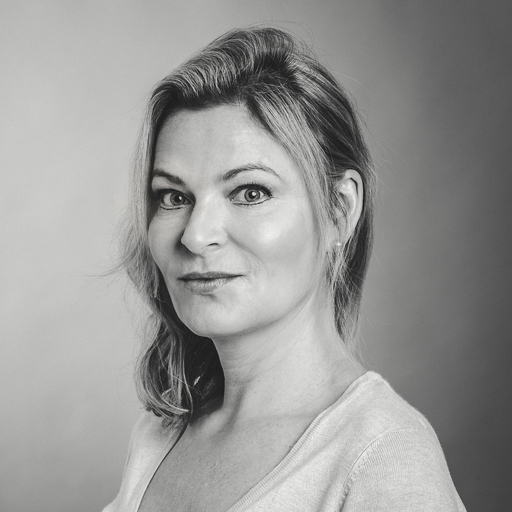
Nanette Nielsen is a Professor at the Department of Musicology, University of Oslo (UiO), and a core member of the RITMO Center for Interdisciplinary Research on Rhythm, Time, and Movement. She has been affiliated with UiO since 2015, following academic roles at the University of Nottingham (2009–2015) and the University of East Anglia (2005–2009). Education: BA in Musicology and Philosophy, University of Copenhagen MMUS and PhD, Royal Holloway, University of London Her research bridges music and philosophy, focusing on ethics, aesthetics, and phenomenology in 20th- and 21st-century contexts. She explores film music, rhythm and temporality in musical experience, popular music, Scandinavian music, and opera/music criticism during the Weimar Republic. Recent publications reflect an interdisciplinary lens combining 4E/4A cognition (Embodied, Embedded, Enacted, Extended + Affect, Agency, Affordance, Autonomy) with music phenomenology. Key themes include audience engagement, dynamic listening, and music as a cognitive scaffold. Scientific Awards: 2014 Jerome Roche Prize for her article on Ernst Krenek's Jonny spielt auf She leads research projects such as Bodies in Concert and contributes to groups like Engagement and Absorption and Nordic Sounds: Critical Music Research Group .
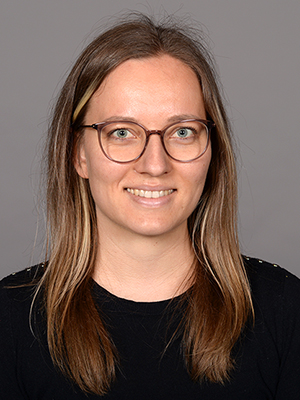
Dr. Gabrielle Ferreira is a Doctoral Research Fellow in the Department of Media and Communication at the University of Oslo (UiO), affiliated with the Faculty of Humanities. Her research explores audience reception of transnational media, particularly focusing on Turkish TV dramas in Spain, Brazil, and Latin America. She investigates how non-local media content coexists with regional programming and shapes cultural proximities through reception processes. Dr. Ferreira holds a Master's degree (2019-2021) and a Bachelor's degree (2014-2018) in Communication from the Federal University of Paraná in Brazil. Her academic background underscores strong foundations in communication studies, complementing her current interdisciplinary research on media globalization and cultural flows. Her research interests emphasize understanding audiences' engagement with transnational media, including the role of fan communities in popularizing non-local content. She examines themes such as the coexistence of Turkish dramas with local television in Brazil, the dynamics of media contra-flows, and how audiences' perceptions of foreign media reflect broader cultural and social trends. Dr. Ferreira’s publications analyze the reception of Turkish TV series in Brazil, addressing their cultural impact and the evolving landscape of global media consumption. Her work bridges media studies with sociology, offering insights into how media globalization is reshaping cultural identities and audience behaviors in Latin America and beyond. No scientific awards or grants are explicitly mentioned in the text. As a doctoral researcher, she is not listed as having advisees. Her research contributes to debates on transnational media studies and the societal implications of global entertainment content.
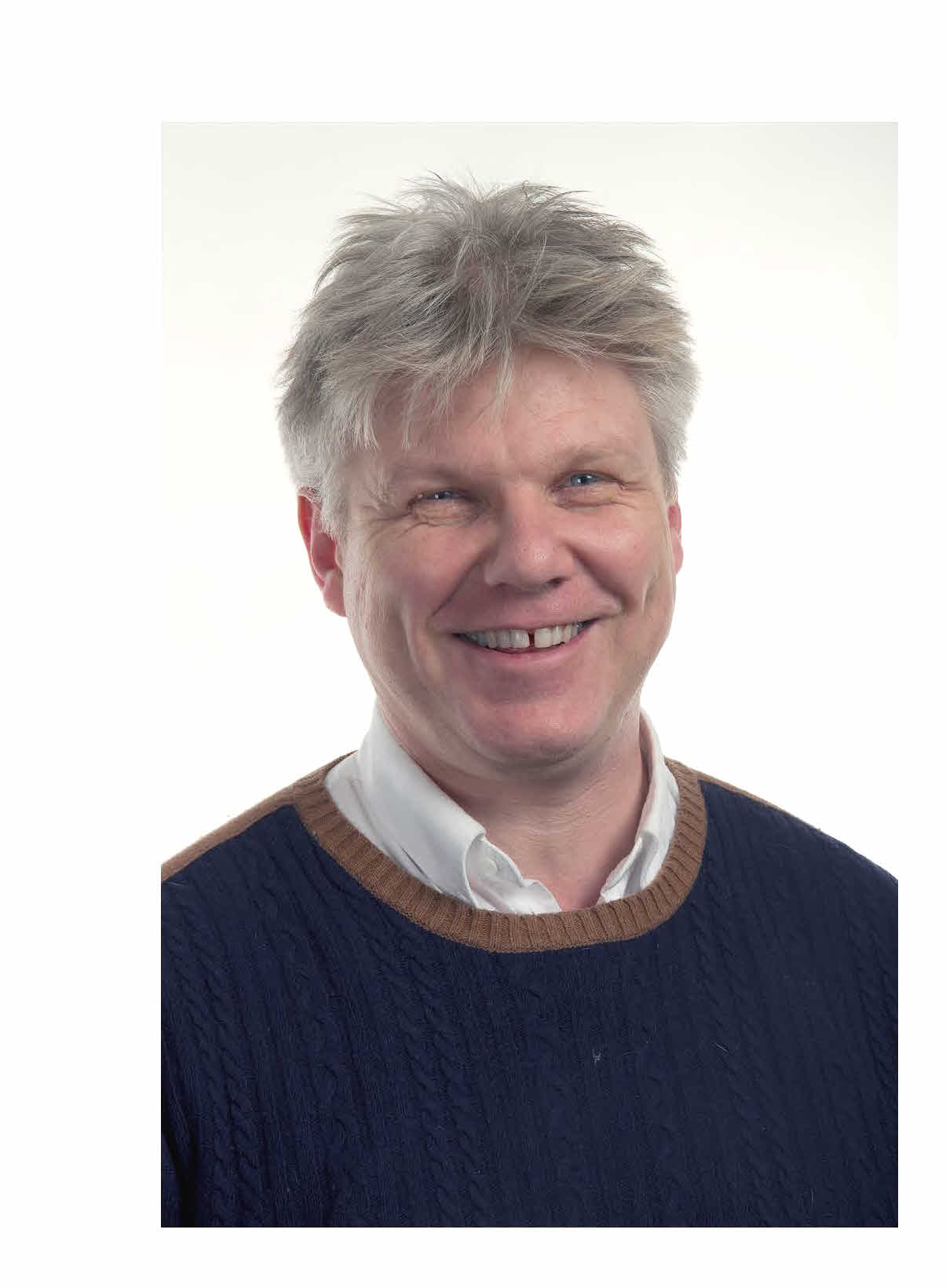
Professor Daniel Rettenwander is a Full Professor at the Department of Materials Science and Engineering, Norwegian University of Science and Technology (NTNU), leading the Battery Materials Team within FACET. He also directs the Christian Doppler Laboratory for Solid-state Batteries and serves as Principle Scientist at the Center for Transport Technologies (Battery Technologies) at AIT Austrian Institute of Technology. His research focuses on advanced solid-state battery materials, particularly solid-state electrolytes and cathode materials for next-generation electric vehicle batteries. Key research interests include the development of high-performance solid electrolytes, interface engineering in batteries, and overcoming challenges in solid-state battery design such as dendrite formation and interfacial degradation. His work bridges fundamental materials science with applied electrochemical engineering, addressing critical barriers to commercializing solid-state batteries. Notable achievements include over 75 peer-reviewed publications, numerous awards including the Emerging Investigator awards (Chem. Comm., Journal of Physics: Energy), and leadership in major EU and national grants. His team’s work has been highlighted in media outlets like Gemini and Krone.at, emphasizing breakthroughs in battery materials science. Funding includes projects like OPERA (HORIZON-CL5-2022), SOLIMEC (M-ERA.NET), and CDG-supported initiatives. He supervises a dynamic team of PhD candidates and postdocs, advancing interdisciplinary research at the intersection of materials chemistry and energy storage technologies.
Anna Elisabet Einarsson is a Dean at the Academy of Opera , part of the Oslo National Academy of the Arts . She holds degrees in organ, conducting, baroque interpretation from the Malmö Academy of Music and specialized opera training from the Oslo National Academy of Opera. As an active opera and concert singer since her 2000 debut, she has premiered contemporary works, received accolades like the Royal Norwegian Academy of Music Award, and been nominated for a US Grammy. Education in organ, conducting, and baroque interpretation Opera singer with international acclaim Focus on sustainable careers in the arts Research on collective creative processes and accessibility Her research explores intersections between opera, societal challenges, and gender diversity, with recent publications addressing cultural policy and non-binary representation. She has collaborated on academic lectures and workshops, emphasizing career development and risk management in creative teams. Scientific awards include: Royal Norwegian Academy of Music Award US Grammy nomination Her work bridges artistic practice with pedagogical innovation, contributing to Norway’s performing arts discourse through leadership and scholarship.
Mirjana Plath is a Research Fellow at the Department of Musicology, University of Oslo. Her work focuses on the transfer of operettas to Stockholm during the 1930s-1940s, particularly analyzing the role of actor and cabaret artist Max Hansen. She holds a Master’s in Musicology from the University of Vienna and has conducted research at institutions including the University of Alberta and Freie Universität Berlin. Education: Bachelor of Arts in Art History, Media Studies, and Musicology (Universities of Marburg and Oslo) Master’s in Musicology (University of Vienna) Her research interests include operetta studies, cultural politics, and the intersection of music with historical and political contexts. She has collaborated with major European music festivals and institutions such as the Vienna Volksoper and Schott Music.
Harald Eikaas is a Norwegian conductor and academic leader currently serving as Dean of the Faculty of Performing Arts at the University of Stavanger. His career spans conducting, music education, and artistic production, with notable collaborations including the Bergen Philharmonic Orchestra and Ålesund Symfoniorkester. Positions: Dean, Conductor, Music Educator Institution: University of Stavanger (Faculty of Performing Arts) Specialties: Church music, orchestral performance, educational concert programming Research and Artistic Focus centers on conducting practices, church music education, and symphonic outreach for youth audiences. His work emphasizes interdisciplinary collaboration and cultural preservation through performances like Henry Purcell's opera Dido & Aeneas and liturgical concerts in Volda kyrkje. Publications and Performances highlight his diverse roles: from directing educational concerts for grades 4-6 to producing contemporary compositions by Luca Francesconi. His projects often blend classical repertoire with modern interpretations, such as Haydn's Skapelsen and NRK broadcasts of symphonic arrangements. Collaborations include partnerships with artists like Stefan Östresjö and institutions like the Swedish Navy Music Corps, demonstrating his commitment to bridging academic and performance-based music traditions.
Tom Brökel is Professor in Regional Innovation at the University of Stavanger Business School, Norway, and is associated with the Center of Regional and Innovation Economics at the University of Bremen, Germany. He is affiliated with the UiS School of Business and Law, specifically within the Department of Innovation, Management and Marketing. His research and teaching focus on innovation, economic geography, and network analysis. His research interests include: Geography of Innovation Regional Innovation Systems Technological and Skill Complexity Social Network Analysis R&D and Innovation Policy Renewable Energy and Sustainability Transitions Smart Specialization Strategies News Media as Big Data for Regional Science Tom Brökel's recent publications reveal a strong thematic focus on the interplay between technological complexity, regional economic growth, and innovation policy. His work frequently employs network and spatial analysis to study regional diversification, co-patenting dynamics, and the diffusion of innovation. He has developed novel methodologies using news media and press releases as data sources to assess regional economic sentiment and innovation visibility. His scientific contributions have been published in high-impact journals such as Research Policy , Technovation , Regional Studies , and Journal of Economic Geography . He actively collaborates with scholars across Europe, particularly on topics related to smart specialization, regional transformation, and green transitions. Notable scientific contributions include: Analysis of urban scaling of innovation across global cities Long-term evolution of technological complexity and its impact on economic growth Role of relatedness in regional job creation Impact of R&D subsidies on technological diversification Use of media narratives to understand public perceptions of wind energy Brökel regularly presents at international conferences such as RSA, ERSA, and Geography of Innovation. He is involved in research dissemination, policy advising (e.g., for Rogaland County), and public engagement. He has no listed PhD students in the provided text, but he supervises research projects and collaborates widely. He is not part-time, not retired, and currently active in both research and teaching.
Angela Rieck is a Senior Lecturer in Early Childhood Education at the Department of Education, ICT and Learning at Østfold University College, Norway. She holds a Master's degree in Early Childhood Education (2017) and a Bachelor's degree in Drama and Theatre Communication (2014), both from Oslo and Akershus University College. Her academic interests focus on children’s play, aesthetic experiences, and learning processes, particularly for children aged 0-3 years. Rieck has extensive practical experience, including 21 years in kindergarten roles such as educational leader and drama educator. Her research emphasizes toddler science (småbarnsvitenskap), exploring how aesthetic and sensory experiences shape early learning. She co-leads the Regional Arrangements for Competence Development (REKOMP) project, promoting partnerships between kindergartens and higher education institutions. Rieck teaches courses like Children’s Development, Play and Learning and Bachelor Thesis in the Early Childhood Education program. Rieck’s publications span academic articles and book chapters on topics such as bodily interactions in early childhood, pedagogical documentation ethics, and aesthetic learning processes. She actively contributes to podcast discussions on aesthetics and play. Her work bridges theoretical frameworks with practical pedagogical innovations, emphasizing interdisciplinary approaches to early childhood education.
Wencke Ophaug is an Associate Professor Emerita at the University of Oslo's Faculty of Humanities, Department of Linguistics and Scandinavian Studies. Her research focuses on phonetics, particularly singing phonetics and German language studies. She has contributed extensively to understanding vowel articulation, consonant realization, and IPA transcription challenges in classical singing across German, Scandinavian, and Finnish languages. Ophaug is affiliated with the research group 'Phonetics Fanatics' and has been involved in projects like the Telemann Project. Her work bridges linguistics and musicology, addressing practical vocal performance issues and historical phonological developments. Key research interests include the interplay between speech and singing phonetics, vowel modification in classical singing, and cross-linguistic challenges in vocal performance. She has authored/co-authored articles on topics like laterals in singing, Scandinavian IPA transcription, and German rhotacism in vocal contexts. Her career spans over four decades, with contributions to academic reviews and pedagogical approaches in foreign language pronunciation.
Martin Wåhlberg is a Professor of Comparative Literature at the Norwegian University of Science and Technology (NTNU), located in the Department of Language and Literature under the Faculty of Humanities. He holds a Master’s from Sorbonne Université, training in historical music performance from the Conservatoire Supérieur de Paris, and a PhD jointly from NTNU and Sorbonne Université. He has held visiting positions at the University of Oxford and Università di Pisa. His research focuses on 18th-century French literature, music, and anthropology, with a particular emphasis on opéra-comique and its socio-political contexts during the French Revolution. He co-leads the Classical Ages Research Group at NTNU and leads the 'Revolutionary opéra-comique' project funded by the Research Council of Norway. His work bridges literary analysis, musicology, and cultural history, with notable contributions including La Scène de musique dans le roman du XVIIIe siècle (2015) and Opplysningens sorte får (2011). Wåhlberg’s research has been recognized with awards such as the Prix jeune chercheur (2009) for his anthropological study of Enlightenment hospitality myths and the Young Researcher Prize from the Royal Norwegian Society of Science and Letters (2011). His music performance initiatives, including CD recordings like Le Roman des Lumières (2013) and Raoul Barbe Bleue (2018), have garnered international acclaim, including CHOC Classica and BBC Music Magazine recognitions. He has spearheaded international networks like the Favart network for opéra-comique studies and collaborates with Sorbonne Université on a Parisian opéra-comique performance database. His interdisciplinary work intersects literary studies, musicology, and cultural history, reflecting a commitment to both scholarly rigor and public cultural engagement.
Bettina Smith is a Professor of Singing at the Faculty of Performing Arts, University of Stavanger, Norway. She is affiliated with the Department of Classical Music and is recognized as a leading mezzo-soprano and educator in classical vocal performance. Her career integrates high-level artistic performance with academic research and pedagogy. Her educational background includes studies at the Bergen Conservatory of Music, the Royal Conservatory of Music in The Hague (under Elly Ameling and Wout Oosterkamp), and advanced training at the Internationales Opernstudio des Opernhaus Zürich. Bettina Smith’s research and artistic interests center on classical singing, French mélodie, Baroque vocal music, and the works of women composers. She is deeply committed to performance practice and music education, particularly through historical and gender-informed lenses. Her work emphasizes the recovery and performance of neglected female voices in classical music. Her recent publications and artistic outputs reflect a strong thematic focus on women in music, especially through the ERASMUS+ project "Voices of Women" (VOW). These works span masterclasses, concerts, conference presentations, and educational initiatives that explore art song, early music, and gender equity in classical music. The publications demonstrate a consistent engagement with historical research, artistic performance, and pedagogical innovation. Edwin Ruud Stipend Herbert von Karajan Music Legacy Prizewinner in the Françesco Viñas competition (2001) Special prize by Dalton Baldwin for outstanding lieder-singing Bettina Smith has advised and mentored numerous students through masterclasses at institutions such as the Norwegian Academy of Music, Stord Haugesund University College, and the Scottish National Opera. She has led significant educational initiatives, including the "Write a Science Opera" (WASO) program and the ERASMUS+ project "Voices of Women," which involves international collaboration, curriculum development, and public outreach. She has received grants and institutional support for these projects, enabling cross-border artistic and educational activities. She is a core member of the "Voices of Women" research and performance team, collaborating with scholars and artists like Lise Karin Meling, Arnulf Christian Mattes, and Friederike Wildschütz. This team organizes concerts, conferences, and training activities focused on rediscovering and performing works by women composers. The group operates within the Grieg Research School and engages in European academic networks.
Benedikte Sofie Ribe is an Assistant Professor (50% position) at the Department of Classical Music and Music Education, University of Agder. Her primary role involves vocal pedagogy and fostering artistic autonomy in students. She holds degrees from the University of Agder, Franz Liszt Academy of Music (Budapest), and Barratt Due, and has trained under renowned vocalists like Leah Frey Rabine. Her artistic career spans operatic performances (e.g., Tosca, Carmen) and collaborations with composers like Helge Iberg on contemporary works. Ribe actively engages in interdisciplinary projects, including the chamber opera Det Lille Livet and the performance Sceneinflammation , emphasizing experiential learning for students. Research & Collaborations Her work bridges classical and contemporary music, focusing on vocal technique, artistic development, and performance psychology. Collaborations include projects with the Oslo Academy of Arts and the Norwegian Academy of Music. Notable publications (2022–2025) explore topics like opera history, AI in music preparation, and artistic self-agency. Awards: Amalienborg Prize, Kristiansand Cultural Prize for Young Artists, and Young Talents Soloist Prize Key Projects: Development of Det Lille Livet with Helge Iberg; Sceneinflammation performance series Grants: Supported by UiA and external arts partnerships Labs/Teams: Leads singing pedagogy initiatives and contributes to UiA’s performance-based research clusters.
Maria Medby Tollefsen is a Senior Lecturer in Aural Education at the Conservatory of Music, UiT The Arctic University of Norway. She also serves as Course Leader in Audiology and Audiology Didactics, and is affiliated with the Master's program in Aural Education at Conservatorio Arrigo Boito, Parma. Her teaching includes Listening and Hearing for Bachelor's students in Music Performance, and Personal Skills and Aural Methodology for Master's students. Her research focuses on: National development projects for entrance exams in higher music education Digital learning resources and methodology for aural skills Collaborative projects like Notenett (UiT/UiB) and MusEd European network of Aural Education Pedagogues Recent article trends show expertise in tonal/non-tonal music theory, rhythm education, and digital curriculum development. She has created educational websites mariamedbytollefsen.com and Musicificum.no , focusing on aural methodology and music literacy.
Cordula Hacke is a Professor of Chamber Music and Collaborative Piano at the University of Agder's Department of Classical Music and Music Pedagogy. She holds international acclaim as a pianist, chamber music partner, and musical director for theater productions. Her career spans collaborations with leading orchestras, including the New York Philharmonic and Boston Symphony Orchestra, and extensive work in contemporary and 19th/20th century repertoires. Her research includes editorial work on composers like Debussy and Laparra, and she has pioneered projects like the Trio Art Nouveau (2016) focusing on Fin de Siècle music. She regularly teaches at institutions such as the Salzburg Summer Academy and served as jury chair for the International Kuhlau Competition (2006-2023). Notable productions include directing Spatz und Engel (touring Europe 2021/2023) and founding the Wiesbaden Art Nouveau Music Competition (2022). Her discography features transcriptions of Crumb’s Vox Balaenae and collaborations with artists like Jeanne Baxtresser. Recent activities include leading workshops at Villa Musica (2023) and co-presenting Norway’s classical music programs at Western University, Canada (2023).
Prof. Thea Selliaas Thorsen is a Professor of Classical Studies specializing in Greek and Latin literature and their receptions. She holds a PhD from the University of Bergen and has held research positions at Cambridge, Paris IV-Sorbonne, and the University of Oxford. Her affiliations include NTNU's Department of Historical and Classical Studies in Trondheim, where she leads the 'Classical Ages' research group. Her work bridges classical philology with modern interdisciplinary approaches, including feminist theory, ancient rhetoric, and digital humanities. Education: M.A. (University of Oslo), PhD (University of Bergen) Research Stays: Vatican Library, University of Cambridge, Scuola Normale Superiore di Pisa Principal Investigator: 'The Heterosexual Tradition of Homoerotic Poetics' (2015-2020) Her research focuses on classical texts' reception in later periods, with key contributions on Ovid's Heroides, Sappho's Roman receptions, and ancient prose dynamics. She has authored/co-edited major volumes like Roman Receptions of Sappho (2019) and Dynamic of Ancient Prose (2018). Her 2024 translation of Ovid's Metamorphoses earned the Norsk kritikerlags Prize. Outreach activities include founding the Kanon translation series, promoting classical education in schools, and curating the SPOR literature festival. She frequently appears in media (NRK P2, Morgenbladet) as a public intellectual. Her supervision spans classical poetry and translation projects. Current research explores ancient rhetoric's neural systems and female authority in antiquity.