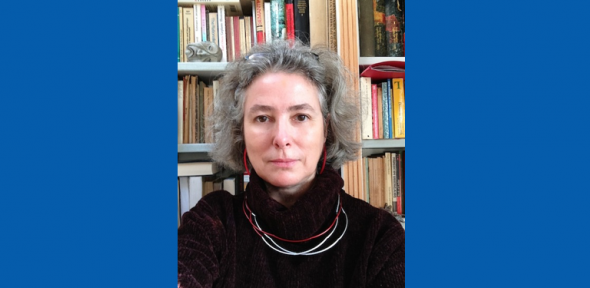
Dr Marion Kant is a Lecturer in the Department of German at the University of Cambridge's Faculty of Modern and Medieval Languages and Linguistics. Her work bridges musicology and dance history, focusing on body politics, the history and aesthetics of performance (theatre, opera, dance, ballet), German-Jewish relations, Nazi ideology, and anti-fascist exile. Her research explores the intersection of physical culture, nationalism, and avant-garde arts. She is currently editing a six-volume Cultural History of Dance for Bloomsbury, examining German nationalism and movement concepts from the 19th and 20th centuries. Her publications span German physical cultures, nationalist ideologies, and the role of dance in exile communities. Key Research Themes: Body aesthetics, German-Jewish assimilation, Nazi cultural policies, avant-garde movements, and transnational exile networks. Notable Projects: Analysis of Nazi-era dance policies, documentation of anti-fascist artists in Los Angeles, and historical studies of German physical cultures.
Melissa McCormick, Andrew W. Mellon Professor of Japanese Art and Culture at Harvard University, holds a Ph.D. in Japanese Art History from Princeton University (2000) and a B.A. in art history and Japanese from the University of Michigan (1990). She has taught at Columbia University as the Atsumi Assistant Professor of Japanese Art (2000-05) and at Harvard since 2005, where she was promoted to Professor with tenure in 2009. She has held visiting professorships at the University of Zurich and Universidade Estadual de Campinas, Brazil. Education : University of Michigan (B.A.), Princeton University (Ph.D.), Gakushūin University (1996-98) Affiliations : Harvard Art Museums, Metropolitan Museum of Art, NHK Documentaries, Getty Foundation Her research explores the interplay of text and image in Japanese art, focusing on emaki (narrative scrolls), The Tale of Genji , and Buddhist themes. Her 2018 monograph The Tale of Genji: A Visual Companion and 2009 book Tosa Mitsunobu and the Small Scroll in Medieval Japan established new frameworks for analyzing scroll format and narrative. Current projects examine Buddhist nun-artist Ōtagaki Rengetsu and bridal manuscript traditions. Selected articles highlight her work on Hakubyō (ink-line painting), medieval Genji genealogies, and the poetics of chigo (novice) tales. She has contributed to exhibitions at the Metropolitan Museum of Art and Dartmouth College’s Hood Museum. Scientific Awards : Mellon Fellowship in the Humanities (1990) At Harvard, McCormick teaches courses ranging from introductory surveys ( Arts of Japan ) to advanced seminars on gender, tea culture, and museum research. She co-curated the 2019 Tale of Genji exhibition at the Met, which received critical acclaim, and developed an edX course with over 20,000 enrollments. Her consultancy work extends to opera and dance companies, including Japan Society and Asia Society of Texas.
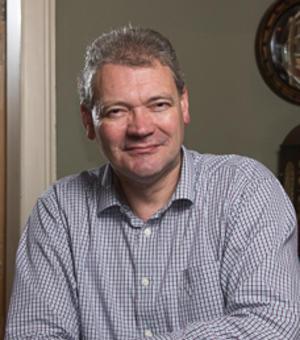
Professor Michael Burden is a Fellow in Music at New College, University of Oxford, and Professor of Opera Studies. His research focuses on the history of the London stage (1660–1860), emphasizing opera staging techniques, dance performance, and Henry Purcell’s music. A former Duff Cooper Literary Prize judge, he has directed Oxford’s New Chamber Opera and co-founded the Oxford Dance Symposium. Education: BA/MA from University of Adelaide; PhD from University of Edinburgh. Leadership: Past President of the British Society for 18th-century Studies, Visitor of the Ashmolean Museum, and RISM Trustee. His publications include studies on Shakespearean adaptation in opera, dance iconography, and libretto interventions. He co-edits the complete Stradella and John Eccles editions and leads the ongoing London Stage Project 1800–1900 , aiming to document 19th-century theatre calendars. Collaborative work includes the Oxford-Princeton grant on historical performance practices in London and New York. Scientific awards include his role as a Duff Cooper Prize judge, though no personal honors are listed. His teaching spans music history from Medieval to 21st-century, with specializations in opera historiography and analysis.
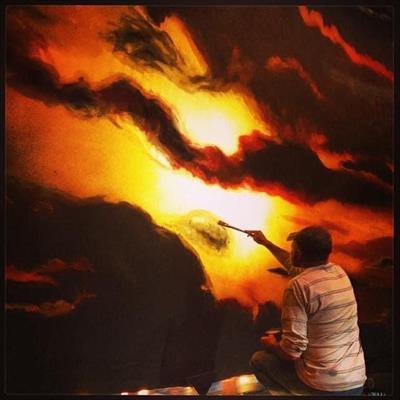
Ted Simpson is a Distinguished Senior Lecturer in the Department of Theatre, Dance, and Performance Studies at Tufts University. He holds an MFA in Set and Lighting Design from Brandeis University. His professional career spans over 100 theatre productions across the northeast, including work at the George Street Playhouse, Arena Stage, and Broadway-related projects. He has also served as a resident designer at the Brevard Music Center and contributed to the Late Show With David Letterman and Paper Mill Playhouse. Education: MFA in Set and Lighting Design, Brandeis University, United States Research and Practice: Simpson specializes in set and lighting design for theatre, opera, and musicals. His work emphasizes technical precision and artistic innovation, with notable projects in New York, New England, and North Carolina. He has also contributed extensively as a scenic artist, painting scenery and backdrops for major institutions. Awards and Recognition: No scientific awards listed, but his body of work reflects significant industry recognition. Advising and Grants: No formal advising or grant details provided in the text. Labs and Teams: Active collaborations with theatre companies and design teams across multiple states, though specific lab affiliations are not mentioned.
Andrew Cooper-James is a Senior Lecturer in Creative Film, TV & Digital Media Production at the University of Northampton, School of Arts. With over 30 years of experience as an independent filmmaker, he specializes in production design, performance, and sound design across film, television, and live art. He has been teaching for 17 years and holds a Fellowship from the Higher Education Academy. Research Interests: His creative and academic work focuses on interdisciplinary practices, particularly in screendance, collaborative art, and digital media. He explores the integration of performance, sound, and visual storytelling in both educational and artistic contexts. Publications and Conferences: Andrew has published in the International Screendance Journal and presented at GLAD and NAHEMI conferences. His recent work reflects trends in experiential learning, community engagement, and the fusion of live art with moving image. Fellowship from the Higher Education Academy Teaching and Creative Practice: He leads hands-on modules including Final Major Project, Sound for Screen, and Community Impact. His artistic projects have been supported by major institutions such as Arts Council England, The Royal Opera House, and The South Bank Centre. He mentors students in creative production and emphasizes practical, student-led learning. Labs and Creative Teams: While no formal lab is mentioned, Andrew collaborates with interdisciplinary teams in live art and film, often working with dancers, composers, and visual artists on hybrid projects supported by national and international arts organizations.
Royal Holloway, University of LondonUnited Kingdom
Ashley Thorpe is a Senior Lecturer in the Department of Drama, Theatre and Dance at Royal Holloway, University of London. He co-founded the Noh Training Project UK and is a core member of Theatre Nohgaku, with collaborations in Paris and Japan. Research Interests His work spans Chinese xiqu (especially jinju ), Japanese nō in global contexts, and material practices like ceramics and photography . He explores intercultural performance frameworks and feminist interpretations through experimental art forms. Recent Creative Outputs Encyclopaedia of Jingju (2026, in press) Portrayals of China in British Political Playwriting (2026, in preparation) English-language nō play Emily (2019) Interdisciplinary ceramic projects (2025) Intercultural performances in Japan and the UK (2025) Collaborative and Institutional Engagement Thorpe leads workshops and international projects funded by the Daiwa Anglo-Japanese Foundation and Great Britain Sasakawa Foundation . He serves as Advisor to the Center for Research and Translation of Chinese Opera (2021–present) and has held visiting professorships in China. Methodological and Thematic Focus His practice-based research integrates performance history , anthropological analysis , and material experimentation across theatre, photography, and pottery. Projects emphasize relational ontologies and demon meta-noh play as tools for cultural and artistic innovation.
Catherine Mayes is an Associate Professor of Musicology at the University of Utah's School of Music, where she has taught since 2012 (promoted to Associate Professor in 2019). Previously, she held positions at Ithaca College, Cornell University, and the University of Notre Dame. Her academic journey includes a PhD from Cornell University, a BMus from McGill University, and an ARCT from the Royal Conservatory of Music. Her research centers on eighteenth- and nineteenth-century European music with groundbreaking work on Viennese engagement with Eastern Europe. Key interests include exoticism, nationalism, music-gender-class intersections, cross-cultural musical experiences, Hungarian Romani music, and historical dance. She examines how music functioned as both social practice and commodity, shaping identities and cultural boundaries through gendered and classed lenses. Mayes' publications reveal consistent exploration of music's role in cross-cultural encounters, particularly how Eastern European musical elements were commodified and transformed in Western contexts. Her work bridges historical musicology with cultural studies, emphasizing the social construction of musical meaning and the ideological frameworks behind national style concepts. She has received significant recognition: Westrup Prize from Music & Letters (2015) for her article on Eastern European national music University of Utah College of Fine Arts Faculty Excellence Award in Teaching (2018) Virgil C. Aldrich Internal Faculty Fellowship (2018) Research funding includes American Musicological Society subventions (2024), U.S. Department of Education grants, and university fellowships. As an educator, she mentors master's students and teaches courses ranging from Music History Survey to specialized seminars on exoticism and national identity. Her professional service includes leadership roles in the Society for Eighteenth-Century Music and American Musicological Society.
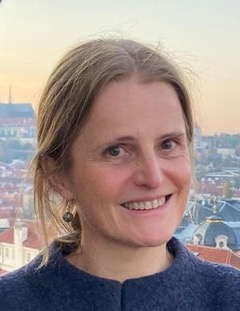
Professor Wiebke Thormählen is Director of Research and Strategic Lead for Research, Research Degrees and Knowledge Exchange at the Royal Northern College of Music (RNCM). As a historian and violinist, she explores music as a social and cultural activity at the intersection of domestic and public music-making, with particular interest in arrangements of large-scale works for small-scale performance, domestic devotional music, and audience engagement with opera across historical periods. Her research spans three historical moments: music moving between home and public spaces around 1800; institutionalization of professional music engagement around 1900; and contemporary use of sound in museum and heritage contexts. She draws on methodologies from the history of emotions, medical history, material history, and practice-based research. Professor Thormählen's scholarly work reveals significant trends across musicology, heritage studies, and education. Her publications demonstrate a consistent focus on the relationship between music, space, and identity formation, with particular emphasis on how musical practices shape and are shaped by social contexts. Her recent work increasingly intersects with digital humanities through projects like the 'Domestic Dance in Georgian Britain' database. Co-investigator on AHRC-funded project 'Music, Home and Heritage: Sounding the Domestic in Georgian Britain' (2017-2022) Steering Group Member, Sound Heritage Network (University of Southampton) Steering Group Member, Music, Medicine and History Network Core Member, Digital Humanities and Sensory Heritage Network (TORCH, Oxford University) As an educator, Professor Thormählen supervises PhD students in Sound Heritage, Eighteenth-Century Studies, and social history of the conservatoire. She has received research funding from the Arts and Humanities Research Council, Wellcome Trust, and Austrian Academic Exchange Service. Her extensive performance experience with period instrument ensembles in the US, Netherlands, and UK informs her research and teaching approach, which emphasizes tangible properties of musical materials and their interactive potential.
Christoph Strehl is a Professor of Singing at the Mozarteum University in Salzburg, specializing in vocal studies and opera training since 2013. A renowned tenor, he has performed internationally with major opera houses and orchestras, collaborating with conductors like Claudio Abbado and directors including Claus Guth. His career spans key roles in Mozart operas (Don Ottavio in Don Giovanni , Tamino in The Magic Flute ), Beethoven's Fidelio , and Schubert's Fierabras . He has recorded extensively for labels like Deutsche Grammophon and EMI, with notable albums including Die Zauberflöte (2007) and Das Paradies und die Peri (2008). His teaching emphasizes creative process integration and vocal technique, supported by masterclasses with luminaries such as Axel Bauni and Norman Shetler. Education: Studied at Folkwang University (Essen) with Soto Papulkas and privately with Silvana Bazzoni-Bartoli in Zurich. Professional milestones include a 9-year tenure at Zurich Opera House (2002-2011) and Salzburg Festival debuts in 2003 and 2019. Active in recitals with pianists like Helmut Deutsch and Pauliina Tukiainen.
Eftychia Papanikolaou is an Associate Professor of Musicology and Musicology Coordinator at Bowling Green State University (BGSU) within the College of Musical Arts. She holds a B.A. in English Philology from the University of Athens, Music Theory degrees from the National Conservatory of Athens, and M.A. and Ph.D. in Historical Musicology from Boston University. Her research focuses on the interplay between music, religion, politics, and choreomusical analysis in 19th-century music, as well as contemporary ballet and film/TV soundtracks. Dr. Papanikolaou has authored/co-edited books including Sacred and Secular Intersections in Music of the Long Nineteenth Century (Lexington, 2022) and a forthcoming monograph on choreomusical perspectives in contemporary ballet. She has presented at international conferences, contributed hundreds of program/liner notes, and delivered pre-concert talks for institutions like the Toledo Opera and Toledo Symphony Orchestra. Her academic service includes roles such as AMS Council Member, Program Committee Chair for the American Musicological Society (AMS), and Executive Secretary of the Society for Christian Scholarship in Music. Teaching roles include courses on Western Art Music, Opera Literature, and Graduate Seminars on Beethoven and Exoticism. Education: B.A. English Philology (University of Athens) Music Theory (National Conservatory of Athens) M.A./Ph.D. Historical Musicology (Boston University) Awards: NEH Summer Seminar Fellowship (Opera Studies) BGSU’s Distinguished Thesis Award (2023) Technology Innovations Course Grant (Ohio Learning Network) Advising/Grants: Supervised graduate theses recognized at BGSU, secured teaching innovation grants focusing on digital humanities. Labs/Teams: Active in interdisciplinary collaborations with dance scholars and film institutions.
Dr. Melanie Fritsch is a Junior Professor at Heinrich-Heine-Universität Düsseldorf since October 2020, specializing in Media Cultural Studies with a focus on Game Studies and related fields. Her career spans roles as a PR & Communications Manager in the gaming industry, lecturer at Humboldt-Universität zu Berlin, and research assistant at Universität Bayreuth and Leipzig. Education: Theaterwissenschaft, Musikwissenschaft, and Neuere Deutsche Literatur at Freie Universität Berlin, Humboldt-Universität zu Berlin, and Sapienza Università di Roma (2000–2008) Doctorate: 2018 at Universität Bayreuth with dissertation 'Performing Bytes. Musikperformances der Computerspielkultur' Current Research: Ludomusicology, performance theory, fan studies, environmental narratives in games Melanie’s research bridges game studies, digital humanities, and musicology, emphasizing games as performative cultural practices. Her work explores intersections of music and gameplay, fan engagement dynamics, and liveness in digital spaces. Key publication trends include: Game music analysis (e.g., 'The Cambridge Companion to Video Game Music') Performance theory in gaming ('Live Performance Games') Environmental narratives in virtual worlds Historical game music studies (1980s Japanese game music) Interdisciplinary methodologies combining musicology and game design She has contributed to major conferences and symposia, including keynote presentations at Universidad de Chile and Kunstuniversität Graz. Her editorial work includes co-editing the peer-reviewed series 'Studies in Game Sound and Music'.
Daniel Egan is a Senior Lecturer and Coordinator of the Shen Curriculum for Musical Theater at Yale University, where he teaches courses on musical theater history and the work of Stephen Sondheim. He also serves as Academic Coordinator for Road Scholar in New York City, designing arts-focused programs in collaboration with institutions like the Metropolitan Opera and Lincoln Center. Education: BM summa cum laude from St. Olaf College, MA from Eastman School of Music, MPhil from Yale Performance Career: Decade-long singer at New York City Opera, hundreds of performances in concerts, operas, and theater venues across the tri-state area Leadership: Board member of Rhinebeck Writers Retreat and Brearley School Program Development: Designed week-long seminars for Road Scholar with Metropolitan Opera and Lincoln Center His expertise bridges music theory, theater practice, and arts education, with a focus on musical theater history and interdisciplinary performance studies. Egan has also contributed to outreach programs like the Metropolitan Opera HD Live in the Schools initiative and the National Alliance of Musical Theater.
Anne Piéjus is a Researcher at the French National Centre for Scientific Research (CNRS) , affiliated with the Institute of Music Research (IReMus) in Paris. A specialist in Early Modern Music , her multidisciplinary work bridges literature, performing arts, history, and intellectual history, with a focus on digital humanities and enriched music editions. Founded the "Mercure galant" program for text-music-image editions Active in scholarly societies and leads the European seminar "Building Relationships in a changing world" Member of the executive committee of the "Concepts et langages" Doctoral School (500 students) Her research spans music-theater intersections , sung poetry , digital music archives , and sacred music in Renaissance Rome . Key projects include critical editions of Racine's works and studies on Jesuit school spectacles. Recent publications highlight 16th-17th century European music , music censorship , and digital resource integration . Awards include dual 2015 honors from the Institut de France, Prix des Muses (2001), and CNRS grants. Thorlet Prize (2015) Alfred Verdaguer Prize (2015) Prime d'Encadrement de Recherche (2016, renewed 2020) Piéjus supervises graduate trainees, curates exhibitions, and contributes to musicological societies. Her work emphasizes digital humanities and interdisciplinary methodologies to connect historical music resources.
Pierre Longuenesse is a Lecturer in Performing Arts at Paris III Sorbonne Nouvelle University, affiliated with the Texts and Cultures Research Center (EA4028). His work bridges theatre studies, music, and interdisciplinary performance practices. Université d’Artois: Teaching (Licence/Master) and HDR accreditation (2017) Université Paris III: Accreditation to Supervise Research (2017) Research Themes focus on: W.B. Yeats’s theatrical innovations (speech-voice-image dynamics) Mutations of 20th-century European drama Theatre-music-dance interrelationships Transdisciplinary stage practices Medieval revival in modern theatre Recent Publications explore musical dramaturgy, spectral voices, and text-stage transformations. He co-edits the "Corps et voix" series at Artois Presses Université. Academic Service includes: Directing over 20 Master’s theses since 2010 Editorial roles in conference proceedings Peer-review expertise for journals Theatrical Practice : Artistic director of Compagnie du Samovar and Festival des Arts du Pont d’Oye , with stagings in France, Belgium, and India. His creative adaptations span Diderot, Yeats, and Villon.
Ben Houge is a Professor in the Electronic Production and Design (EPD) department at Berklee College of Music, where he has been teaching music technology since 2011. He also serves as a Senior Audio Lead at Bungie and previously held key audio roles at Sierra and Ubisoft. His work spans academia, game audio, digital art, and immersive multisensory experiences. Bachelor of Arts in Music, St. Olaf College (1996) Houge’s research and artistic practice focus on the intersection of music, technology, and sensory experience. He is best known for his food operas —multisensory dining events that use real-time, interactive soundtracks delivered via mobile devices. These projects apply video game audio techniques to everyday experiences, exploring cross-modal correspondences between taste and sound. His work often involves algorithmic composition, audience participation, and interdisciplinary collaboration with chefs, scientists, and musicians. His recent creative output includes large-scale installations and performances such as Night Rain , On the Sensations of Beer , and Mugaritz XX , which blend real-time audio, mobile technology, and cultural narratives. His publications and performances reflect a strong trend in interactive music systems , site-specific sound design , and audience-engaged art , often drawing from historical, poetic, and scientific sources. Selected awards and recognitions include: Faculty-Led Innovations in Education (FLY) Grant (2019) Berklee Newbury Comics Faculty Fellowship (2017) Knight Foundation Grant (2015) Artist Residency at MIT (2011) Shortlist, Guggenheim YouTube Play Biennial (2010) Stranger Genius Award (2004) Houge lectures widely at institutions such as MIT, Harvard, and the Shanghai Conservatory, and at major conferences including GDC, ICMC, and TEDx. He has advised and mentored students through academic and project-based learning, particularly in the areas of audio programming and interactive media. His work has been supported by grants from the Knight Foundation and Berklee, enabling large-scale public and collaborative art projects. He is actively involved in the global digital art and game audio communities, with exhibitions and performances across North America, Europe, and Asia. He has led initiatives such as the Vox Festival and the launch of Berklee’s master’s program in Valencia, Spain. His labs and creative teams often involve collaborations with ensembles like Zeitgeist, institutions like the Boston Symphony Orchestra, and research groups such as Oxford’s Crossmodal Research Laboratory.