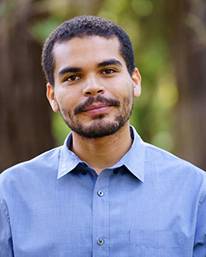
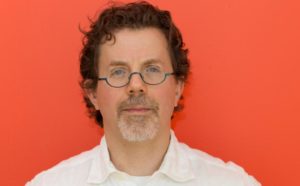
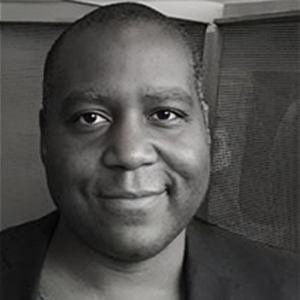
Christopher Castro serves as an Assistant Professor of Composition at Chapman University's College of Performing Arts. A composer and double bassist from Brooklyn, New York, he combines academic rigor with avant-garde experimentation. Ph.D. in Composition and Theory from University of California, Davis Bachelor of Music from Juilliard School (Double Bass & Composition) His research bridges Western Art Music traditions with contemporary innovations , creating works that merge: Johannes Ockeghem's polyphonic complexity John Coltrane's spiritual intensity Modernist structural experimentation Historical reconstruction techniques Jazz-classical hybrid forms Interdisciplinary performance formats Recent compositions demonstrate trends in flexible instrumentation , text-music relationships , and genre synthesis . His output spans chamber works, orchestral pieces, and vocal compositions with equal mastery. Scientific recognition includes: 2023 Fromm Music Foundation Commission (Harvard University) Chamber Music America's 2021 Classical Commissioning Award As a new music advocate , Castro collaborates with ensembles like: Left Coast Chamber Ensemble (artistic advisory board) New Mexico Contemporary Ensemble Los Angeles Philharmonic's Upbeat Live series Lyris Quartet and Sharon Harms
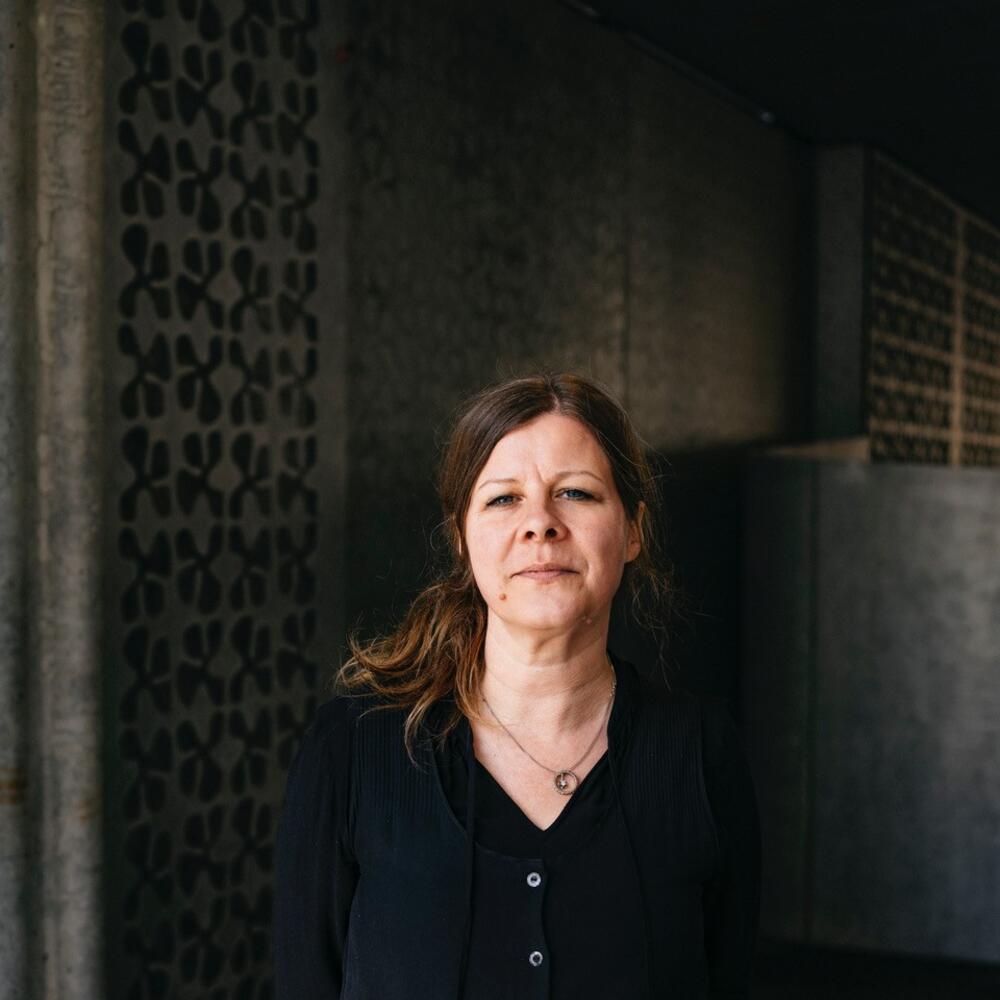
Claudia Lehmann is a University Professor of Film Art & Visual Communication at the Institute for Open Arts, Department of Scenography at Mozarteum University Salzburg. She has been a professor at Mozarteum University since 2019 and previously served as a visiting professor at the Berlin Weissensee Art Academy. As a faculty member, she contributes to the Institute management, teaches as a Teacher, and serves on the Curricular Commission. Dr. Lehmann holds a doctorate in physics (Dr. rer. nat.) with her dissertation "GAUGE COVARIANT MULTISCALE ANALYSIS OF COMPLEX SYSTEMS" published through DESY-Publications in 2004. Her academic journey reflects a unique interdisciplinary trajectory from scientific research to artistic practice. Claudia Lehmann's research interests center around the intersection of art and science, with particular focus on perception, reality, and systemic phenomena. Her work spans documentaries, feature films, music videos, art videos, installations, and performances, constantly searching for new forms and formats. She develops visual concepts, video stage sets, and unique live video performances, often in collaboration with Nicolas Stemann. Through her work, she explores diverse possibilities for new structures, especially in the form of artistic collaboration. Her recent artistic output shows a consistent trend toward interdisciplinary work that blends theater, film, and digital media. Lehmann frequently collaborates with Nicolas Stemann and Konrad Hempel, creating innovative performances that integrate video technology with traditional stagecraft. Her work often addresses social and political themes while experimenting with form and presentation. The Institute for Experimental Affairs (IXA), which she co-founded with Konrad Hempel, serves as a platform for exploring the interfaces between science and art through various projects and research initiatives. Dr. Lehmann has received several prestigious awards for her work: Samsung Smartfilm Award 2013 Shocking Shorts Award 2007 Nomination for German Documentary Film Music Prize 2013 Nomination for Studio Hamburg Young Talent Prize for Best Screenplay As an educator and researcher, Lehmann has developed numerous collaborative projects and performances that have been featured at major international festivals including the Berlin International Film Festival, Leipzig Documentary Film Festival, and various theater festivals. Her work with IXA represents a significant research initiative at the intersection of science and art. Lehmann co-founded the Institute for Experimental Affairs (IXA) with visual artist and composer Konrad Hempel. Through IXA, she conducts research and realizes projects at the interfaces between science and art. Her collaborative work spans theater productions, film projects, and interactive installations that have been presented at venues including the Schauspielhaus Zürich, Münchner Kammerspiele, Opéra Comique Paris, and various international festivals.
S. Louisa Wei is a Professor of Cinematic Art at the School of Creative Media, City University of Hong Kong, where she has taught since 2001. With a PhD in Film Studies from the University of Alberta and an MA in Comparative Literature from Carleton University, she has taught over 4,000 students in both theoretical and production courses including Documentary 1, Documentary 2, Visual Storytelling, Visualizing Literature, and Chinese Cinema. Her educational background includes: PhD in Film Studies, University of Alberta, Canada MA in Comparative Literature, Carleton University, Canada Wei's research focuses on Sinophone cinema with particular emphasis on women filmmakers across historical periods, Chinese film history, and documentary practice. Her work often explores the intersections of gender, politics, and cultural identity in Chinese cinema, with special attention to neglected historical figures and transnational connections. She approaches film history through both scholarly research and documentary filmmaking, creating a unique methodology that bridges academic and creative practices. Her research has significantly contributed to recovering the histories of early Chinese women filmmakers and documenting politically sensitive historical narratives in Chinese literary and film history. Her recent scholarly and creative output shows a consistent focus on biographical documentary work centered on Chinese intellectuals and artists, women's contributions to cinema history, and politically significant moments in Chinese cultural history. Her publications and films often work in dialogue with each other, with documentary projects frequently informing scholarly books and vice versa, creating a rich interdisciplinary approach to her subject matter. Her notable awards include: Hong Kong Book Award 2017 for Esther Eng: Ocean-crossing Film and Women Pioneers Distinguished Publishing Prize in the Literature and Fiction Category of The First Hong Kong Biennial Publishing Prize for Wang Shiwei: A Reform in Thinking As an educator, Wei has advised hundreds of student projects, many of which have won awards in international and local film festivals. She is not currently accepting PhD students but has been instrumental in mentoring emerging filmmakers through her teaching. Her documentary work has gained international recognition from both academic circles and film festivals, attracting media attention from Hollywood trade magazines to major newspapers in Hong Kong and mainland China. She has served as a professional jury member for the Hong Kong Film Awards and became a member of the Hong Kong Director's Guild in 2018. While she doesn't appear to lead a formal research lab, her work involves extensive collaboration with historians, archivists, and fellow filmmakers across multiple countries, creating an informal network of scholars and practitioners focused on recovering marginalized histories in Chinese cinema and literature.
Theodora Varvarigou is a Professor in the Department of Electrical and Computer Engineering at the National Technical University of Athens (NTUA). She holds a B.Eng. from NTUA and M.Eng. and Ph.D. degrees from Stanford University. Her career includes research at AT&T Bell Labs and roles at the Technical University of Crete. From 2008-2012, she served as director of NTUA's 'Technoeconomic Systems' postgraduate program. Her research focuses on Cloud Computing, Multimedia Content Processing, Social Networking Technologies, and emerging areas like blockchain, edge computing, and cybersecurity. She has published over 200 papers and led numerous European research projects, emphasizing scalable systems, data management, and smart infrastructure applications. Her work spans technical innovations such as intrusion detection systems, edge resource optimization, and blockchain-based solutions for IoT, healthcare, and smart cities. Recent publications highlight advancements in AI-driven resource allocation, privacy-preserving blockchain designs, and predictive analytics for edge computing environments. Professor Varvarigou has contributed to interdisciplinary initiatives, including cohort data harmonization in biomedical research and social media analytics for urban planning. Her teaching includes courses on digital systems, network programming, and fault-tolerant systems.
Sylwia Janiak-Kobylińska is a Polish conductor, educator, and artistic leader currently serving as the Dean of the Faculty of Conducting, Composition, and Music Theory at the Stanisław Moniuszko Academy of Music in Gdańsk. She is President of the SAJ Foundation Supporting Young Artists, founder of the Baltic Philharmonic Orchestra of the Youth, and an active participant in international music competitions and festivals. Her work spans symphonic and opera conducting, artistic direction of multidisciplinary projects, and pedagogical leadership. Her research interests focus on Orchestral Conducting Contemporary Music Interpretation Artistic Education for Youth Symphonic and Opera Collaboration Cultural Management in Music Interdisciplinary Art Projects Her recent artistic projects, such as the inUnity. Contemporary Music from Gdańsk album and the Homage to Szymborska concert series, highlight collaborations between classical and jazz composers, youth orchestras, and interdisciplinary teams. These works emphasize themes of unity, cultural heritage, and innovation in music education. Scientific awards and recognitions include Meritorious for Polish Culture badge (2023) Antoni Wit Award at the G. Fitelberg Conducting Competition Multiple Rector’s Awards at the Academy of Music in Gdańsk Pomeranian Artistic Award in 'Artistic Hope' category As an educator, she leads orchestral workshops, mentors students across multiple faculties, and pioneered the 4C’s in Music Art program (Creativity, Collaboration, Critical Thinking, Communication). Her leadership in the SAJ Foundation and Baltic Philharmonic Orchestra of the Youth has fostered over 1000 young musicians since 2011.
Dr. hab. Eugenia Rozlach is a Professor at the Department of Vocal Studies, Faculty of Vocal and Acting, Fryderyk Chopin University of Music. A renowned opera singer, she specializes in Rossini’s music and 19th–20th-century Polish vocal lyrics, with a career spanning performances at the Warsaw Chamber Opera and international theaters (Paris, Madrid, Montpellier). Her recent roles include the Nanny in Tchaikovsky’s Eugene Onegin , Stara Buryjowska in Janacek’s Jenufa , and Mrs. Quickly in Verdi’s Falstaff . Graduate: Fryderyk Chopin Academy of Music, Warsaw Rozlach actively contributes to academic research on Polish vocal music, conducting workshops like On the Wings of Songs and organizing conferences such as the International Scientific Conference Polish Song . She has premiered contemporary works, including Marta Ptaszyńska’s Sonnets to Orpheus and Aleksandra Garbal’s opera Polonica rustica . Her chamber music collaborations include performances with pianists Tatiana Szebanowa, Maciej Paderewski, and Jerzy Godziszewski. Scientific Awards: Silver Cross of Merit (2005) Second-degree Rector’s award (2009) Rozlach has led masterclasses at the Chopin-Górecki Festival and the Keimyung-Fryderyk Chopin University of Music program (South Korea). She contributed to the UMFC research committee’s commemorative edition of Ignacy Jan Paderewski’s manuscripts and serves on the editorial team of Musica Intellectualis .
Agustín Zaballos Diego is an Assistant Professor in the Department of Computer Engineering at University Ramon Llull (URL), Barcelona, Spain, since 1999. He serves as Research Coordinator in the Department of Engineering at La Salle Campus Barcelona and leads the R&D Networking and Security Area since 2002. His academic background includes a PhD in Data Networks and Internet Technologies (2012), an International MBA (2014), and an M.S. in Electronic Engineering (2000). University: University Ramon Llull (URL) Department: Department of Computer Engineering Research Group: GRITS Research Focus: Real-time QoS-aware routing protocols in Smart Grids, Ubiquitous Sensor Networks, and IoT communications. His work bridges telecommunications, computer science, and energy systems through projects like OPERA (FP6), INTEGRIS (FP7), and FINESCE (FP7). Publication Trends: Recent articles highlight advancements in HF communications for Antarctic research, hybrid genetic algorithms for traffic engineering, IPv6 testing, and Industry 4.0-related networking solutions. Keywords span Smart Grids, IoT, Sensor Networks, and QoS optimization. Collaborative Projects: Key initiatives include the Antarctica Project , ATHIKA (ICT in healthcare), ENVISERA (environmental sensor networks), HOTSUP (online teaching innovation), PLANET4 (AI/ML in industry), and XIoT (IoT scalability challenges).
Dmitri Tymoczko is a Professor of Music at Princeton University, where he has taught composition and theory since 2002. His work bridges the gap between academic music theory and contemporary composition, creating a unique interdisciplinary approach that has earned him recognition as a leading figure in modern music scholarship and creation. Tymoczko's research interests focus on the geometric modeling of musical structures, polystylistic composition that draws from genres spanning Renaissance to rock, and the mathematical foundations of tonality. His theoretical work explores how harmonic structures can be represented geometrically, revealing fundamental patterns that connect diverse musical traditions. He approaches composition as 'a logical deduction from absurd premises,' blending rigorous structural thinking with playful musical exploration. His scholarly publications and compositions reveal a consistent interest in the intersection of mathematical precision and expressive freedom. The articles demonstrate expertise across music theory, composition, and the cognitive aspects of musical perception, with recurring themes of geometric modeling, tonal structure, and genre hybridization. His work often challenges traditional boundaries between academic and popular music forms. Guggenheim fellowship Rhodes Scholarship Leonard Bernstein fellowship from Tanglewood Fellowship from the Radcliffe Institute for Advanced Study Block lectureship from the Society for Industrial and Applied Mathematics First music-theory article published in Science magazine Tymoczko maintains an active performance career alongside his academic work, with his compositions performed by leading ensembles including the Brentano Quartet, Newspeak, and Roomful of Teeth. His teaching integrates theoretical insights with practical composition, fostering a generation of musicians who understand music's structural foundations while embracing creative freedom. He has developed innovative tools like the musical programming language 'arca' to explore new compositional possibilities.
Keith Obadike is a Professor in the Department of Art at Cornell University's College of Architecture, Art, and Planning (AAP), where he also serves as Director of Undergraduate Studies. He is an acclaimed interdisciplinary artist and composer, known for his collaborative work with Mendi Obadike, which spans sound art, digital media, public installations, performance, and internet-based projects. His artistic and academic work critically engages with technology, race, history, and identity. Obadike earned a B.A. in Visual Art from North Carolina Central University and an M.F.A. in Sound Design from Yale University. Prior to joining Cornell, he taught at William Paterson University and held visiting positions at Princeton University, Columbia University, Northwestern University, and the Art Institute of Chicago. His research and creative practice focus on sound art, digital media, public art, performance, and collaborative practice , with strong interdisciplinary connections to Afrofuturism, data sonification, and social justice. He explores how sound and technology mediate racial identity, memory, and liberation, notably through the concept of acousmatic blackness , which he and Mendi developed to describe the racial perception of sound when its source is unseen. Obadike’s selected works include large-scale public sound installations such as Blues Speaker (for James Baldwin) , Free/Phase , Compass Song (Times Square Arts), and GuideStar (Space Needle, Seattle). His projects often use data sonification, archival research, and mythic storytelling, blending historical inquiry with futuristic vision. Notable series include the Opera-Masquerades , Americana Suites , and Numbers Station works, which transform databases of violence into sonic experiences. His honors include: Rockefeller New Media Arts Fellowship (2004) Louis Comfort Tiffany Biennial Award (2015) New York Foundation for the Arts Fellowship in Fiction New Music USA Creator Development Fund (2022) Obadike has received commissions and support from institutions such as the Vera List Center, Harlem Stage, Times Square Arts, the American Composers Orchestra, and the Cornell Mui Ho Center for Cities. He has exhibited and performed at The New Museum, The Whitney Museum of American Art, MoMA, and The Studio Museum in Harlem. His writings and publications include contributions to Studies into Darkness (2022), and artist books such as Four Electric Ghosts and Big House / Disclosure (both 2014). He has also released albums like Crosstalk (2008) and created internet artworks such as Blackness for Sale (2001) and The Interaction of Coloreds (2002), which are foundational in new media and critical race art. While specific advisees are not listed, his role as Director of Undergraduate Studies and Professor indicates active mentorship. His work is deeply collaborative, often co-created with Mendi Obadike, and supported by interdisciplinary teams and institutions.
Dr. Sam Ferguson is a Senior Lecturer at the School of Computer Science, University of Technology Sydney (UTS), with a multidisciplinary background in music performance, cognitive science, and psycho-acoustics. His research explores the intersection of sound, music, and human experience through creative coding, machine learning, and interactive systems. Key Research Areas: Sound and Music Computing, Human-Computer Interaction, Creative Coding, Cognitive Science, Installation Art, and Acoustics. Current Projects: ARC Linkage project on creative coding and multiplicitous media; industry collaborations on IoT-based audiovisual systems. Recent Publications: Focus on spatial audio complexity, gestural interaction with networked sound, music emotion recognition frameworks, and robotic performance through genre-based cultural platforms. Leadership Roles: Director of Teaching & Learning Engagement; former Deputy Head of School (Teaching and Learning); active in ACM Creativity and Cognition Steering Committee. Teaching: Courses like Digital Media Studio , Prototyping Physical Interaction , and Data Processing using R within UTS's interdisciplinary Software Development Studio.
Dr. John Severn is a Research Fellow at Macquarie University's Department of International Studies: Languages and Cultures. His career spans academia, law, and translation, with a focus on theatre internationalization, Shakespearean adaptation, and community engagement. Education: PhD in Theatre Studies and English, University of New South Wales MA(Hons) in Shakespeare and Theatre, University of Birmingham LLB(Hons) in Law and French, University of Edinburgh Postgraduate Diploma in Legal Practice, University of Edinburgh BA(Hons) in Theatre Studies and Opera Studies, University of Manchester/Rose Bruford College CertHE in Scottish Gaelic language and culture, University of the Highlands and Islands His research explores theatre and internationalization through opera, musicals, and Shakespearean adaptation. He investigates how performing arts foster inclusive/exclusive communities and addresses barriers to participation. His work intersects European cultural history, arts policy, and transnational practices. Recent publications highlight trends in Shakespearean operatic adaptation, Australian theatre censorship, and decolonial processes in performance. His co-edited works include The Routledge Companion to Theatre and Internationalization and Theatre and Internationalization: Perspectives from Australia, Germany, and Beyond . Dr. Severn collaborates with institutions like the University of Sydney, University of New South Wales, and the Goethe-Institut Australia. He founded the research cluster 'Staging Migration in Berlin' and co-organizes international conferences on theatre internationalization.
Tatjana Marković is an Austrian Academy of Sciences researcher and Adjunct Professor at the University of Music and Performing Arts Vienna, where she leads the FWF project on music historiography at the Habsburg Monarchy's southern borders (1750–1914). As editor of TheMA journal and chair of the IMS Study Group Music and Cultural Studies, she specializes in reconstructing pluricultural musical life along the Austro-Ottoman frontier. Adjunct Professor, University of Music and Performing Arts Vienna Head, FWF Discourses on Music project Editor, TheMA – Theatre, Music, Arts Chair, IMS Study Group Music and Cultural Studies Her research intertwines musicology with cultural studies, focusing on Southeast European musical traditions and their representation in Habsburg and Ottoman contexts. Key areas include diplomatic music exchanges, military border cultural dynamics, and gendered perspectives in regional music history. Recent publications address microregional musical networks, operatic diplomacy, and 19th-century battlefield commemorations through music. She contributes to international conferences on Balkan musicology and Austro-Ottoman cultural interactions, with editorial roles in multiple academic series.
Prof. Nicola Jürgensen is a distinguished German clarinetist and Professor of Clarinet at Faculty 1 of Folkwang University of the Arts in Essen, Germany. She also serves as Dean of Faculty 1 and is a Confidential Lecturer for the German Academic Scholarship Foundation. Her career seamlessly integrates performance, education, and artistic leadership. She is the Artistic Director of WDR 3 Campus Concerts and a board member of the Folkwang University Foundation. Professor of Clarinet, Folkwang University of the Arts (2018–present) Dean, Faculty 1 Artistic Director, WDR 3 Campus Concerts Board of Directors, Folkwang University Foundation Principal Clarinet (former), WDR Symphony Orchestra Cologne (2001–2018) Regular coach, German National Youth Orchestra (2020–present) Nicola Jürgensen's research and artistic interests center on clarinet performance, chamber music, and contemporary repertoire. She is deeply committed to historical performance practice, evidenced by her recordings on basset clarinet, and to expanding the global reach of classical music through international masterclasses and festivals. Her work bridges traditional European repertoire and modern experimental works, including performances in avant-garde operatic productions. She has collaborated with leading orchestras and ensembles worldwide, from Berlin and Leipzig to New York, Bangkok, and Auckland. Her recent artistic output reveals a strong focus on rediscovered works (e.g., Wilms' concerto), contemporary compositions (e.g., Kancheli, Zwilich), and cross-cultural collaborations (e.g., German Masters Music Festival in Thailand). She emphasizes pedagogical innovation and performance excellence, mentoring students who now hold principal roles in Germany’s top orchestras. Her recordings and performances consistently highlight expressive depth, technical mastery, and scholarly engagement with historical instruments and arrangements. Scientific and Artistic Awards: Mozart Prize, Wiesbaden Mozart Society German Music Competition Soloists' Prize (1999) Germany Radio Promotion Prize (2002) Nicola Jürgensen has been instrumental in guiding numerous students into prestigious orchestral positions and leads the ensemble 'Folkwang Clarinets' with her students. She holds multiple leadership roles in academic and artistic institutions and continues to perform as a guest principal clarinetist with major orchestras like the Mahler Chamber Orchestra and NDR Elbphilharmonie Orchestra. Her involvement in grants and funding appears indirect through institutional roles and festival organization. She is actively involved with several artistic initiatives, including the 'Spannungen' festival, WDR 3 Campus Concerts, and international masterclass programs. Her ensemble collaborations and educational outreach reflect a sustained commitment to excellence, innovation, and accessibility in classical music.
Richard Boulanger is a Professor in the Electronic Production and Design (EPD) department at Berklee College of Music, where he contributes significantly to music technology education and innovation. His work bridges performance, composition, and technological exploration. His research and expertise focus on music technology , electronic music , and music synthesis , particularly through tools like Csound. He advocates for technology as a means to uncover and express a musician’s inner voice, integrating historical traditions with contemporary and future-facing practices. Richard Boulanger is internationally recognized as a lecturer, author, performer, and consultant. He edited The Csound Book (MIT Press, 1999), a seminal work in computer music. His career includes performances with prestigious ensembles such as the La Jolla Symphony Orchestra, San Diego Opera Orchestra, and Boston Symphony Orchestra. Scientific Awards: Fulbright Scholar Recipient of numerous awards, honors, and grants As an educator, he teaches courses in music technology and supports students in exploring their musical identities through technological tools. He is affiliated with the Professional Writing and Music Technology programs at Berklee.
Wing Chung Ng is Professor and Department Chair in the History Department at the University of Texas at San Antonio (UTSA), within the College of Liberal and Fine Arts. A cultural and social historian specializing in Chinese migration and traditional Chinese opera, he teaches courses on Chinese and Japanese history as well as the Chinese diaspora. Dr. Ng's research focuses on Modern China, East Asia, and Migration History, with particular expertise in Chinese diaspora communities and Cantonese opera preservation. His scholarly work examines how Chinese communities maintain cultural identity while adapting to new environments across the Pacific, analyzing the interplay between traditional cultural practices and modern social transformations. His publication record reveals a consistent scholarly trajectory examining Chinese cultural transmission across borders. Recent works include analyses of Kunqu opera in the 21st century and historical soundscapes of Sino-Western encounters, building on his foundational research on Cantonese opera and Chinese communities in North America. His interdisciplinary approach spans cultural history, migration studies, and Asian American studies. Dr. Ng has received significant scholarly recognition: Fulbright Scholar (2012) from the United States Department of State Faculty Research Award (2004) from the National Endowment for the Humanities National Humanities Center Fellow (1996) His research has been supported by substantial grants including $5,000 for 'Connecting Worlds: Master Wong Toa's Trans-Pacific Life and Career 1914-2015' (2020-2021) and $40,000 for 'Local Theater, Transnational Arena: A New Social History of Cantonese Opera, 1860-1945' (2004-2005). He was previously a Commonwealth Scholar at UBC and has received support from the Chiang Ching-kuo Foundation and NEH. Most recently, he served as a Fulbright Scholar at Hong Kong Baptist University. Currently, Dr. Ng is working on a centennial biography of Master Wong Toa (1914-2015) to study his life and music across early 20th century South China, Cold War Hong Kong, post-exclusion era Chinatown Vancouver, multicultural Canada, and the age of China's rise.