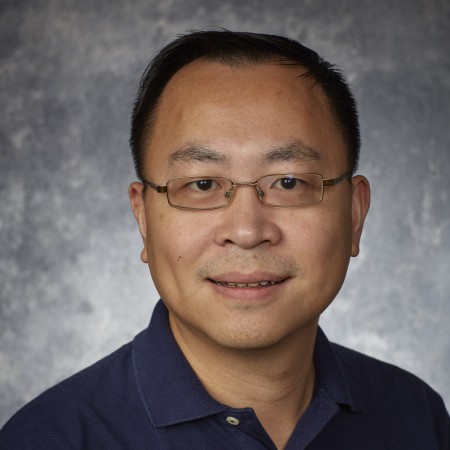
Dr. Barbara Henning is an Assistant Professor for the history of Islam in the Eastern Mediterranean at the Johannes Gutenberg University Mainz since 2020. Her research focuses on Ottoman-Kurdish history, identity and memory politics, and the history of knowledge in imperial contexts. PhD in Bamberg (2016) on the Ottoman-Kurdish Bedirhani family DFG priority program Transottomanica member (2018-2020) Worked at the Federal Foreign Office in Berlin Current TRACEED Project on education history in Northern Iraq Research Interests span Ottoman imperial elites, 19th-century Arab provinces, and social demarcation processes, with a focus on prophetic descendants. Her work bridges historical analysis and contemporary memory studies. Publications include the 2021 open-access article Knowledge on the Move in a Transottoman Perspective , which explores cross-imperial knowledge networks. Awards & Grants : DFG priority program Transottomanica Doctoral scholarship at Graduate School for Near and Middle Eastern Studies, University of Washington (2012/13) She teaches courses on Quellensprachen islamische Geschichte and leads international workshops like Transottoman Expertise (2023). Contact via bahennin@uni-mainz.de for office hours via MS Teams.
Caterina Urban is a Research Scientist (Chargé de Recherche) at INRIA and École Normale Supérieure (ENS) in Paris, France. She is a member of the INRIA research team ANTIQUE (ANalyse StaTIQUE), where she focuses on formal methods and static analysis. Prior to her current position, she was a postdoctoral researcher at the Chair of Programming Methodology, led by Peter Müller at ETH Zurich. Dr. Urban holds a PhD in Computer Science (2015) from École Normale Supérieure, Paris, where she worked under the joint supervision of Radhia Cousot and Antoine Miné. She also earned a Master's degree (2011) and Bachelor's degree (2009) in Computer Science, both with full marks and honors (summa cum laude) from the Università degli Studi di Udine, Italy. Her research interests span the whole spectrum of formal methods with a focus on developing rigorous methods and tools to enhance the reliability of computer software, particularly data science applications. Her main area of expertise is static analysis based on abstract interpretation. Dr. Urban is currently engaged in several research projects including Lyra (focusing on data science software), Libra (fairness certification for neural networks), and SAIF (addressing safety concerns in machine learning-based systems). Dr. Urban's recent publications demonstrate her expertise in applying abstract interpretation to diverse areas including machine learning, data science, program verification, and security. Her work bridges theoretical foundations with practical applications, particularly in ensuring the reliability and trustworthiness of increasingly critical data science and machine learning systems. She has received recognition for her work through invitations to serve on program committees for major conferences including OOPSLA 2026, PLDI 2026, and CAV 2026. She is also the general chair of iFM 2025 in Paris. Dr. Urban actively mentors the next generation of researchers, supervising PhD students and postdoctoral researchers. She teaches courses on abstract interpretation and its applications at the Master Parisien de Recherche en Informatique (MPRI) and various international summer schools. She has developed several open-source software tools including Lyra (a static analyzer for data science applications), Libra (for fairness certification of neural networks), and Typpete (SMT-based static type inference for Python).
René Jr Landry is a full Professor in the Department of Electrical Engineering at École de technologie supérieure (ETS), Université du Québec, specializing in Global Navigation Satellite Systems (GNSS), avionics, and wireless communication technologies. His academic journey includes a B.Ing. from Polytechnique Montréal, M.Sc. from University of Surrey (UK), and Ph.D. from SupAréo in Toulouse. He maintains active research leadership through two key laboratories: LASSENA (Laboratory of Space Technologies, Embedded Systems, Navigation and Avionics) and LACIME (Communications and Microelectronic Integration Laboratory). His research spans critical aerospace navigation domains including GNSS signal processing, inertial navigation systems, software-defined radio for avionics, radio frequency interference mitigation, and indoor positioning technologies. Landry's work addresses real-world challenges in satellite navigation robustness, precision positioning in urban/denied environments, and next-generation avionic system security. His current projects focus on blockchain-enhanced IoT security, AI-driven GNSS disruption analysis, and adaptive RF front-ends for multi-band avionics applications. Analysis of his recent publications reveals strong emphasis on resilient positioning systems through multi-constellation integration (particularly Iridium-NEXT), blockchain applications for navigation security, and explainable AI techniques for GNSS signal quality assessment. His work increasingly bridges traditional navigation engineering with cutting-edge security and machine learning paradigms. 2014 Prix d'excellence du c.a. pour les services à la collectivité Landry has supervised over 100 graduate students across doctoral, master's, and research projects since 2005, with current supervision extending through Summer 2025. His research funding supports multiple industry partnerships focused on avionics certification, software-defined radio implementations, and next-generation navigation systems. The LASSENA laboratory under his leadership develops certified avionic products from open-source SDR platforms and advances multi-sensor fusion techniques for challenging navigation environments. His research infrastructure includes specialized facilities for GNSS signal simulation, avionics hardware testing, and multi-sensor integration. Current work emphasizes flight-tested validation of RF front-end technologies, blockchain-secured navigation data, and real-time interference mitigation systems for aviation applications.
Professor Marie Griffiths is a distinguished academic and expert in digital transformation at Salford Business School, University of Salford. She holds the position of Professor of Digital Technologies in Organizations and serves as EDI Lead for Research (2023–present). Her academic career includes significant leadership roles such as PGR Director at Salford Business School (2019–2023) and Head of the Digital Business Research Centre. She previously served as President of the UK Academy for Information Systems (UKAIS) after her tenure as Vice President. Dr. Griffiths earned her PhD in Business Information Systems, establishing the foundation for her expertise in digital transformation. Her research spans multiple critical areas including digital transformation, information systems, gender and IT, AI and disruptive technologies, digital society, privacy and surveillance studies, family surveillance, productivity technologies, and digital education. Her work consistently bridges academic theory with practical business applications, focusing on how organizations respond to digital disruptions and how workforces adapt to emerging technologies. Her recent publications reveal a strong focus on strategic digital transformation, digital maturity assessment, and the intersection of technology with social impact. The 2025 second edition of her book 'Strategic Digital Transformation – A Results-Driven Approach' represents a significant contribution to the field. Her research increasingly addresses the gender dimensions of digital transformation, as evidenced by her 2024 work on closing the REF Gender Inequality Gap. She also explores the practical applications of digital technologies in specific sectors including government organizations, healthcare (particularly nursing), and financial technology. Vice-Chancellor's Distinguished Teacher Awards (multiple) Professor Griffiths has supervised 14 PhD completions and currently oversees doctoral candidates researching fintech, digital transformation, and sustainability. She established the PGR International Women's Network to support female researchers. Her grant leadership includes 11 Knowledge Transfer Partnerships (KTPs) with organizations like Manchester Chamber of Commerce, OPAL, and Hydro-X, securing significant funding from Innovate UK. She has also contributed to policy development through work with the British Standards Institute Steering Group for Digital Maturity. As Head of the Digital Business Research Centre, Professor Griffiths leads a team focused on practical digital transformation research with strong industry connections. Her approach emphasizes people-centric transformation, ensuring that people remain at the heart of any change. The centre's work spans multiple sectors including government, healthcare, finance, and small and medium enterprises, with a particular focus on developing practical tools like digital transformation canvases for different organizational contexts.
Molly Maleckar is a Research Professor at the Computational Physiology Department of Simula Research Laboratory , Oslo, Norway. Her work bridges computational modeling, cardiac electrophysiology, and biomedical applications, with a focus on arrhythmia mechanisms, fibrosis modeling, and machine learning integration in cardiac risk prediction. Research Interests include: Computational Cardiology Ion Channel Dynamics Machine Learning in Medicine Excitable Tissue Modeling Cardiac Fibrosis Analysis Biomedical Simulation Scientific Contributions span 15+ publications (2018-2024) addressing atrial fibrillation, calcium handling, and AI-driven ECG analysis. Key collaborative projects involve patient-specific ventricular modeling and educational initiatives like the Simula Summer School in Computational Physiology .
Dr. Su Ryon Shin is an Assistant Professor in the Division of Engineering in Medicine at Harvard Medical School and Brigham and Women's Hospital (BWH) in Cambridge, MA. She leads an active research laboratory focused on bioengineering, tissue engineering, and regenerative medicine, with particular expertise in 3D bioprinting, biomaterials, and organ-on-a-chip technology. Her research interests span biohybrid robotics, decellularized extracellular matrix, stem cell-based tissue engineering, and volumetric muscle regeneration . Dr. Shin's work integrates advanced biomaterials with cellular systems to create innovative solutions for tissue regeneration and disease modeling. She has pioneered approaches using human stem cell-derived materials for volumetric tissue regeneration and developed biohybrid neuromuscular robots powered by living cardiac muscle cells. Her publication record demonstrates consistent productivity with over 180 publications, including numerous first/senior author papers in high-impact journals like Science Robotics, Advanced Materials, and Nature Reviews Bioengineering . Her work shows a clear progression from fundamental biomaterials development to increasingly complex tissue engineering applications and translational research. Dr. Shin has received significant recognition including being named a 2025 BWH Health & Technology Innovation Awardee , Highly Cited Researcher 2024 by Web of Science, and multiple Stepping Strong Innovator Awards (2015, 2018, 2020). Her research has been featured in Nature Reviews Bioengineering for breakthrough work on biohybrid robots. She actively mentors students and postdocs, with former lab members accepted to prestigious programs like MIT's PhD program in Chemical Engineering. Her collaborative approach is evident through numerous interdisciplinary projects with researchers across Harvard Medical School, BWH, and international institutions.
Steven Andrew Culpepper is a Professor of Statistics at the University of Illinois at Urbana-Champaign, holding additional appointments as Professor in the Beckman Institute for Advanced Science and Technology, Psychology, and Educational Psychology. He specializes in quantitative methods for social sciences, focusing on psychometric models, latent class analysis, and statistical computing. Education: PhD, Educational Psychology, University of Minnesota, 2006 BS, Economics, Bowling Green State University, 2001 Research interests include advanced statistical methodologies such as latent class models, high-stakes testing analysis, and applications of Bayesian computing in education and organizational research. His work emphasizes improving large-scale assessment systems through innovative modeling approaches. His publications consistently address latent structure modeling, cognitive diagnosis frameworks, and methodological advancements in educational and behavioral statistics. While no scientific awards are explicitly listed, his contributions to psychometric theory and statistical software development are notable. Steven has grants and consulting projects related to statistical methodologies but specific grant details are not provided in the texts. He has no listed advisees/PhD students in the provided information. He collaborates across disciplines through affiliations with the Beckman Institute and maintains active software development projects, including R packages like 'rrum' and 'pathmodelfit'.
David Hsu is Provost's Chair Professor in the Department of Computer Science at the National University of Singapore (NUS) School of Computing, where he founded and directs the NUS Artificial Intelligence Laboratory (NUSAIL) and leads the Smart Systems Institute. His academic leadership includes chairing major conferences such as Robotics: Science & Systems (2015) and IEEE ICRA (2016), alongside editorial roles in IEEE Transactions on Robotics and the Journal of Artificial Intelligence Research. He earned a B.Sc. in Computer Science & Mathematics from the University of British Columbia and a Ph.D. in Computer Science from Stanford University. His research spans robotics, AI, and computational biology, with recent focus on robot planning under uncertainty and human-robot collaboration. Current work integrates machine learning with decision-theoretic planning to enable robust human-robot co-existence in unstructured environments. Analysis of his 2023-2025 publications reveals dominant trends in deformable object manipulation (e.g., clothes handling via semantic keypoints), open-world navigation using scene graphs, and LLM-driven multi-agent reasoning for complex tasks. Key innovations include perspective-aware visual grounding for human-centric interaction and functional object arrangement through compositional generative models, reflecting a strong emphasis on real-world applicability. His scientific contributions have earned prestigious recognition: IJCAI-JAIR Best Paper Prize (2022) for foundational AI research Robotics: Science & Systems Test of Time Award (2021) IEEE Fellowship (2018) for contributions to robotic planning RSS Best Systems Paper Award (2017) RoboCup Best Paper Award at IROS (2015) Humanitarian Robotics Award at ICRA (2015) As director of the Adaptive Computing Laboratory, Hsu drives research on fundamental computational frameworks for human-robot interaction. The lab's work on uncertainty-aware decision-making has secured significant research funding through grants from Singapore's National Research Foundation and industry partnerships with robotics firms. While specific student names aren't publicized, his leadership in the NUSAIL indicates extensive mentorship of doctoral candidates in AI and robotics.
Michela Bertolotto is a Professor in the School of Computer Science at University College Dublin (UCD). Her research focuses on spatio-temporal data modeling, GIScience, and applications of geospatial technologies in fields like urban planning and health informatics. She leads a research group and has supervised 19 PhD and 8 MSc students. Her work includes innovations in LiDAR-based flood risk visualization, semantic web quality assurance, and open-source spatial data analysis. Bertolotto has held roles including College Lecturer at UCD (2000–2006) and postdoctoral research positions at the University of Maine and University of Genoa. Education: BSc and PhD in Computer Science from the University of Genoa (1993, 1998). Professional achievements include over 100 publications, 24 grants (e.g., Science Foundation Ireland-funded Urban ARK project), and editorial roles at journals like the International Journal of Geographical Information Science. Awards include the UCD President's Research Award (2001) and NATO Postdoc Fellowship (1998–1999). Research interests span map personalization, volunteered geographic information (VGI), and geospatial data quality. Her lab develops tools like the LAMSkyCam (low-cost sky imaging system) and dynamic flood risk viewers. She chairs international conferences and serves on program committees for GIScience events.
Christopher Conway serves as Associate Professor of Psychology at Fordham University's College of Arts and Sciences, where he directs the Bronx Personality (B-PER) Lab. His research investigates borderline personality disorder, anxiety, depression, and distress tolerance using experience sampling methods and longitudinal designs. The lab examines personality development across key transitions such as romantic breakups and financial strain. 2007 BS in Psychology and Spanish, Duke University 2009 MA in Clinical Psychology, University of California, Los Angeles 2013 PhD in Clinical Psychology, University of California, Los Angeles Conway's work centers on distress tolerance as a protective factor against self-injurious behaviors, momentary personality processes using ecological assessment, and the HiTOP consortium 's dimensional classification of psychopathology. His lab develops quantitative models linking personality dimensions to clinical outcomes, with emphasis on how stressors trigger symptom changes. Recent publications reveal neuroticism's specific association with broadband internalizing symptoms rather than narrowband anxiety or anhedonia. His publications demonstrate consistent focus on transdiagnostic mechanisms and dimensional classification systems . Key trends include validating the HiTOP framework across cultures, examining distress tolerance in substance use contexts across four continents, and developing within-person models of self-injury using registered report methodology. Professional affiliations include: Society for Research on Psychopathology Association for Psychological Science Association for Behavioral and Cognitive Therapies Association for Research in Personality Conway advises multiple graduate students in the B-PER Lab and leads several active studies including MOMENT (Measuring Our Momentary Emotions and Negative Thoughts), DENEM (Daily Experiences of Negative Emotions), and READI (Responses to Emotions And Daily Interactions). His lab participates in the multinational Cross-cultural Addictive Behaviors Study examining distress tolerance across seven countries. All research materials follow open science principles through his OSF repository. The B-PER Lab maintains active research programs examining personality development through: 3-year longitudinal Multiyear Adult Personality Project (MAPP) Cross-cultural Addictive Behaviors Study (CABS) Daily emotion regulation projects using smartphone-based assessments
Xiaohu Guo is a Professor of Computer Science at the University of Texas at Dallas specializing in computer graphics, computer vision, and geometric modeling. His research develops algorithms for 3D/4D reconstruction, virtual reality, medical imaging, and physics-based simulations. Professor Guo has received significant recognition including a Best Paper Award at SIGGRAPH (2023) and an NSF CAREER Award (2012). His current research focuses on dynamic human capture, deformable models, and medical image computation. Education: PhD, Stony Brook University MS, Stony Brook University BS, University of Science and Technology of China Research Funding: Recently secured a $500,000 NSF grant for developing open-source 4D reconstruction frameworks for real-time dynamic human capture (2021). Editorial Roles: Serves on editorial boards of Graphical Models , Computer Animation and Virtual Worlds , and IEEE Transactions on Visualization and Computer Graphics .
Professor George Siemens is a leading academic in the field of learning analytics and AI-driven education, serving as Professor and Director of the Centre for Change and Complexity in Learning at UniSA Education Futures, University of South Australia. His work focuses on advancing educational practices through data analytics, artificial intelligence, and understanding online learning dynamics. His research spans MOOCs, social and emotional learning analytics, and the ethical integration of AI in education. Notable contributions include the development of frameworks like the MOOC Replication Framework (MORF) and the DAIR infrastructure for educational AI research. Key publications include studies on student agency in AI environments, practicum effectiveness in teacher education, and synthetic data fairness in learning analytics. He collaborates internationally, with affiliations previously including the University of Texas Arlington. As a Research Degree Supervisor, he guides students in transformative educational technology research. His work emphasizes actionable intelligence for educators and scalable solutions for lifelong learning in the digital age.
Jeanna Matthews is a Full Professor of Computer Science at Clarkson University and an affiliate at Data and Society. She holds a PhD from UC Berkeley (1999) and teaches courses ranging from operating systems to cybersecurity. Her research focuses on algorithmic transparency, AI ethics, and societal impacts of automated systems. Matthews is a prominent ACM leader, serving on multiple committees including the Technology Policy Subcommittee on AI Accountability. She has pioneered work on forensic software analysis in criminal justice systems and delivered DEF CON presentations on virtualization security and adversarial testing. Awards include ACM Distinguished Speaker and Fulbright Specialist roles. Her work emphasizes open-source tools and critical thinking in education, extending to global service learning programs in the Dominican Republic and Brazil. Education: PhD in Computer Science (UC Berkeley, 1999), B.S. in Math/Computer Science (Ohio State, 1994), B.A. in Spanish (SUNY Potsdam, 2016). Research Interests: Cybersecurity vulnerabilities, algorithmic accountability frameworks, automated decision systems in justice contexts, and ethical AI design. Recent projects include investigating bias in DNA forensic software through a Brown Institute grant and analyzing political polarization on social platforms. Awards & Recognition: ACM Distinguished Speaker (2018-present) Fulbright Specialist (2018-present) 2018-2019 Brown Institute Magic Grant ACM SIGOPS Chair (2011-2015) ACM Special Interest Group Governing Board Chair (2016-2018) Teaching & Outreach: Designed courses integrating open-source tools and critical inquiry, including abroad programs in Mexico, Brazil, and the Dominican Republic. Advocates for lifelong learning strategies and questioning underlying assumptions in computing systems. Key Projects: Forensic Software Accountability: Examining discrepancies in DNA analysis tools Algorithmic Transparency: Frameworks for auditing automated systems Cybersecurity Education: Adversarial testing methodologies for justice software
Suining He is an Assistant Professor at the University of Connecticut (UConn)'s School of Computing, leading the Ubiquitous and Urban Computing Lab since 2019. Previously, he was a postdoctoral research fellow at the University of Michigan's Real-Time Computing Lab (2016–2019). He holds a Ph.D. in Computer Science from the Hong Kong University of Science and Technology (2016) and a B.Eng. in Mechanical Design from Huazhong University of Science and Technology (2012). His research focuses on Cyber-Physical Systems (CPS), Smart & Connected Communities, Human-Centered Computing, and Urban Computing Cyberinfrastructure, with emphasis on mobility, equity, and AI-driven solutions. He has received prestigious awards including the NSF CAREER Award (2023), Google Research Scholar Program Award (2021), and recognition as a Stanford Top 2% Scientist (2020–2024). His work spans interdisciplinary grants from NSF, USDA, Google, NVIDIA, and industry partners. Recent publications explore autonomous driving simulation, equity-aware mobility prediction, and urban crowd activity modeling. Teaching excellence is reflected in his 2020 UConn Provost Award. He advises on reinforcement learning, CPS, and mobile computing, with openings for 2025/2026 PhD students. His lab collaborates on socially-conscious AI, privacy-preserving learning, and location-based services with industrial impact.
Simon Shibli is Professor of Sport Management and Head of the Sport Industry Research Centre (SIRC) at Sheffield Hallam University. A Chartered Management Accountant (CIMA), his research examines finance and economics in sport, including elite sport performance, economic impact of major events, and sport participation analysis. He directs SIRC, a £1m business unit, and has authored textbooks on sport economics and facility management. Current projects include evaluations for Sport England, UK Sport, and international comparisons of elite sport systems. Key contributions: National Benchmarking Service for Sport England Economic impact studies for The Open Golf Championship International comparative analysis of elite sport policies (SPLISS)