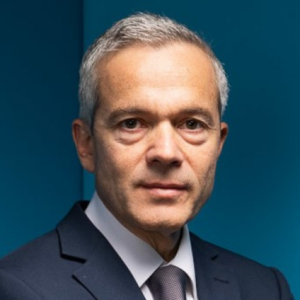
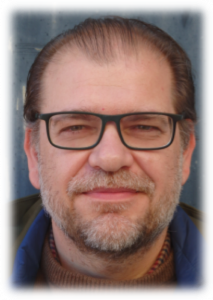
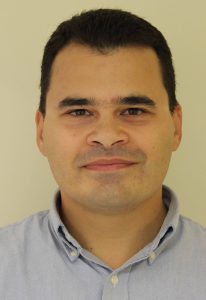
Professor Diomidis Spinellis is a renowned academic in Software Technology at Athens University of Economics and Business (AUEB). He specializes in software engineering practices, code quality, AI ethics, and system architecture. His work bridges theoretical advancements with practical applications in industry, emphasizing reproducibility and empirical methods. Recipient of the IEEE Computer Society's prestigious 'Distinguished Contributor Recognition,' Spinellis is the sole Greek scientist to achieve this honor. His research spans software evolution, security, and open-source ecosystems, with a focus on methodologies like refactoring, static analysis, and debugging strategies. Key research interests include AI-generated content detection, modular data analytics, and incident management systems. His studies often leverage large-scale datasets (e.g., Unix evolution, Linux supercomputing analysis) to uncover patterns in software behavior and development practices. Publications frequently address emerging technologies' societal impacts, such as energy-efficient computing and ethical AI deployment. He advocates for reproducible research through tools like the Alexandria3k framework and contributes to open-source initiatives.
Mara Nikolaidou is a Professor in the Department of Informatics and Telematics at Harokopio University of Athens since 2007 and has served as the university's Rector since 2016. She represents Greek universities in the European University Association (EUA) for 2023-2024. Her research focuses on distributed systems, system modeling, and responsible computing, with a strong emphasis on IoT, cloud/edge computing, and cyber-physical systems. She leads projects funded by national, EU, and international agencies, exploring topics like autonomous systems, ethical requirements in design, and human-in-the-loop systems. Her educational background includes roles as a computer engineer and IT consultant before academia. She is a member of IEEE (SMC Society and Systems Council) and participates in the Object Management Group (OMG) working groups for SysML and responsible computing. She organizes international conferences in software and systems engineering. Research interests span distributed systems, IoT, and ethical computing. Recent work investigates cost analysis in cloud markets, human-AI collaboration, and smart city technologies. Over 200 publications highlight her contributions to model-based systems engineering, including SysML extensions for cost/QoS analysis and frameworks for autonomous fog nodes. Grants and projects include EU-funded initiatives on smart farming, cloud brokerage, and organizational interoperability. Her lab focuses on autonomous systems and context-aware middleware. She advises on e-Government compliance frameworks and collaborates with industry partners on IoT management platforms.
John Paparrizos is an Assistant Professor of Computer Science and Engineering at The Ohio State University's College of Engineering, where he directs The DATUM Lab (Data Analytics, Understanding, Mining, and Management Lab). He maintains an adjunct affiliation with the School of Informatics at Aristotle University of Thessaloniki. His research spans databases, data science, machine learning, and artificial intelligence , with focus areas including: Time-series analysis (clustering, anomaly detection) Scalable data mining for structured/unstructured data Adaptive algorithms for resource-constrained environments Foundational technologies for data-intensive applications His work addresses real-world challenges across relational, time-series, multimedia, text, graph, web, and IoT data domains. Notable recognition includes: 2025 ACM SIGMOD Test-of-Time Award for k-Shape time-series clustering 2023 IEEE TCDE Rising Star Award ACM SIGMOD Research Highlight Award NetApp Faculty Award His research has been featured in New York Times (front page), Washington Post , Forbes , and adopted by Fortune 500 companies (Exelon, Nokia) and the European Space Agency. He actively serves on program committees for premier conferences including ACM SIGMOD, VLDB, IEEE ICDE, ACM SIGKDD, and NeurIPS. His open-source tools have exceeded 100,000 downloads and are integrated into academic curricula at Brown, Columbia, Purdue, and University of Chicago.
Ioannis Stamelos is a Professor of Software Engineering at the School of Informatics, Aristotle University of Thessaloniki (since 2015, research/teaching staff since 1997). He serves as Director of the Postgraduate Master Course in Interactive Hardware & Software Technologies. Major Research Areas: Open Source Software, Software Effort/Quality Estimation, Agile Methods, Enterprise Information Systems Key Projects: Deep Blue/AUTH Research Hub (2018-2022), BlockAdemic (blockchain-based micro-credentials), European Commission Open Source Policy Studies Research Trends from recent publications include: Process mining in library information systems Reusability metrics for software assets Bayesian networks in software project management Impact of design patterns on gaming software defects Technical debt assessment via structural metrics Blockchain applications in supply chain management Scientific Awards: Best Paper Award at IEEE DEST’09 Best Student Paper Award at ICSR 2012 Best Paper Award at QUATIC2012 Education & Leadership: PhD in Computer Science (1988), Diploma in Electrical Engineering (1983). Led numerous EU-funded projects (IST, ERASMUS, FP7) and national initiatives (ΓΓΕΤ, ΕΠΕΑΕΚ). Supervised PhD/MSc students in software reuse, OSS quality, and agile practices.
Anargyros Tsadimas serves as a Teaching Associate and member of the Department of Informatics & Telematics at Harokopio University in Athens, Greece. He joined the university in 2004 as a research associate and currently holds a position in teaching laboratory staff. His academic background includes a BSc in Applied Informatics from the University of Macedonia (2002) and an MSc in Advanced Information Systems from the National and Kapodistrian University of Athens (2005). He earned his PhD in Information Systems from Harokopio University, focusing on model-based design of enterprise systems using SysML. His research interests span modeling and simulation of systems, distributed systems, enterprise information systems engineering, and cyber-physical systems. He has contributed over 25 publications in international conferences and journals, including work on SysML extensions for cost analysis, hybrid simulation platforms, and human-centric design of cyber-physical systems. Tsadimas has participated in EU and Greek government-funded R&D projects, with practical experience in startups as a Software Engineer, DevOps, and Technology Advisor. His recent research emphasizes integrating human factors into system design frameworks, exploring cloud pricing policies, and advancing simulation methodologies for complex systems. Notable contributions include developing declarative approaches for executable SysML models and applying systems engineering to transportation infrastructure challenges. No scientific awards are explicitly mentioned in the provided materials. His professional engagement includes advising on systems design projects and collaborating on interdisciplinary initiatives combining technical and human-centric perspectives.
Panagiotis Hadjidoukas is an Associate Professor and Head of the Laboratory for Computing at the Computer Engineering and Informatics Department, University of Patras, within the School of Engineering. His work focuses on high-performance computing systems and parallel programming models. His research spans parallel and distributed computing , runtime support for parallel programming models , and automation of AI/ML workloads . Key contributions include developing the torc runtime system for task parallelism and pioneering work in extreme-scale scientific simulations. His interests bridge theoretical computer science with practical applications in scientific computing and AI acceleration. Notable achievements include the ACM Gordon Bell Prize Winner (2013) for 11 PFLOP/s cloud cavitation simulations and Finalist (2015) for in-silico lab-on-a-chip microfluidics. His software tools ( torc_lite , torcpy ) enable efficient parallelism across diverse architectures. Doctor of Philosophy (2003), University of Patras Master of Science (2001), University of Patras Diploma in Computer Engineering (1998), University of Patras As Head of the Laboratory for Computing, he leads infrastructure development while maintaining active research collaborations with IBM Research and ETH Zurich. His teaching portfolio includes graduate courses on high-performance computing for data sciences and parallel processing principles.
Dimitrios Apostolopoulos serves as Assistant Professor at the School of Electrical and Computer Engineering, National Technical University of Athens (NTUA), within the Division of Information Transmission Systems and Material Technology. His academic foundation was built at NTUA where he earned both Diploma (2004) and Ph.D. (2009) degrees, followed by an MBA from Hellenic Open University. His educational qualifications include: Diploma in Electrical and Computer Engineering, NTUA (2004) Ph.D. in Electrical and Computer Engineering, NTUA (2009) MBA, Hellenic Open University Prof. Apostolopoulos specializes in optical communication systems, optical wireless technologies, and converged optical-wireless networks, with particular expertise in photonic integrated circuits for telecom/datacom/sensing applications and optical computing for AI. His research directly addresses next-generation network challenges through photonic innovation, bridging theoretical frameworks with practical engineering solutions for 5G/B5G/6G systems. Analysis of his 2024-2025 publications reveals dominant themes in 6G hybrid transport architectures (fiber/FSO/mmWave), silicon photonics for aerospace environmental sensing, and integrated optical components for Lidar/gas detection systems. This work demonstrates consistent progression from fundamental photonic research to real-world deployment scenarios. His scientific recognition includes: Dimitris N. Chorafas Foundation Award (2009) for doctoral contributions to all-optical broadband communications Prof. Apostolopoulos actively leads over 15 European/national research projects while serving on technical committees for ECOC, IEEE GLOBECOM, and N&N conferences. As co-chair of EuCNC/6G Summit's Wireless/Optical/Satellite Networks track, he shapes next-gen network standards. His teaching portfolio spans undergraduate telecommunications courses from circuit analysis to optical network design. He maintains active collaboration within photonic research teams through projects like Int5Gent and Int5gent, focusing on integrated solutions for communications infrastructure and sensing applications across aerospace and environmental monitoring domains.
Michael D. Bond is a Professor in the Department of Computer Science & Engineering at Ohio State University's College of Engineering. He leads the Programming Languages and Software Systems (PLaSS) Research Group, which focuses on designing program analyses and software and hardware systems that enhance computing reliability, scalability, and security. His academic service includes general chair for PLDI 2027, program committee membership for multiple top conferences, and committee roles in SIGPLAN Research Highlights (2024-2027). Professor Bond's research spans programming languages, systems, and security, with particular expertise in memory management, concurrency, hardware transactional memory, information flow control, and predictive race detection. His work bridges theoretical foundations with practical implementations, as evidenced by numerous open-source projects accompanying his publications. The PLaSS group has made significant contributions to understanding and improving memory models, developing efficient garbage collection techniques for modern architectures, and creating novel approaches to secure programming in languages like Rust. Analysis of his recent publications reveals a clear trajectory toward addressing security and reliability challenges in modern computing systems, particularly through language-based approaches. His work increasingly focuses on Rust programming language security mechanisms, memory disaggregation for datacenters, and advanced techniques for detecting and preventing concurrency bugs. The research demonstrates strong continuity in exploring memory models and concurrency while adapting to emerging hardware trends and security challenges. Outstanding Teaching Award, Department of Computer Science and Engineering, Ohio State University (2018) Lumley Research Award, College of Engineering, Ohio State University (2016) OOPSLA 2015 Distinguished Paper and Artifact Awards NSF CAREER Award ACM SIGPLAN Outstanding Doctoral Dissertation Award Intel PhD Fellowship Professor Bond actively mentors several PhD students including Chujun Geng, Vincent Beardsley, Chris Xiong, Victor Chen, and Noah Charlton, with external co-advisee Zixian Cai at Australian National University. His research is currently supported by multiple NSF grants including SaTC-2348754 (2024-2027), CyberCorps-2336531 (2024-2029), and CSR-2106117 (2021-2025), reflecting sustained funding for his work in information flow control, security, and systems research. The PLaSS Research Group maintains a strong presence in both academic and industrial communities, with graduated PhD students securing positions at major technology companies like Google, Amazon Web Services, and Huawei, as well as academic positions at institutions like UIUC and IIT Kanpur. The group's work combines theoretical rigor with practical implementation, consistently producing open-source artifacts that enable reproducibility and further research in the systems and programming languages community.
Christos Liaskos is an Assistant Professor at the Department of Computer Science and Engineering, University of Ioannina (UoI), Greece. He is also a researcher at the Foundation for Research and Technology-Hellas (FORTH). His expertise spans computer networks, wireless communication systems, and nanotechnology, with a focus on reconfigurable intelligent surfaces (RIS), metasurfaces, and their applications in 6G, IoT, and autonomous systems. He holds a PhD in Computer Networking from Aristotle University of Thessaloniki (AUTH) and has published extensively in IEEE venues. Education: Diploma in Electrical and Computer Engineering (AUTH, 2004) MSc in Medical Informatics (AUTH Medical School, 2008) PhD in Computer Networking (AUTH Informatics Department, 2014) Research Interests: Programmable wireless environments using software-defined metasurfaces RIS-assisted architectures for 5G/6G networks IoT and UAV communication systems Energy-efficient trajectory design for drones Beam steering and wavefront control in mmWave systems His recent work explores applications like RIS-based autonomous driving, optical wireless positioning, and fault-tolerant routing in metasurface networks. He contributes to open-source simulation frameworks (e.g., Cooperis) and collaborates on EU projects like VISORSURF, advancing the Internet-of-Materials concept.
Dr. Eleftherios Doitsidis is an Associate Professor at the School of Production Engineering & Management of the Technical University of Crete (TUC) and a member of the Intelligent Systems & Robotics Laboratory. Previously, he served as faculty at the Department of Electronic Engineering at Hellenic Mediterranean University. His expertise spans multirobot systems, autonomous vehicle control, and computational intelligence. He holds a robust record of EU and national research project involvement. Research Interests: Specializes in multirobot team coordination, autonomous navigation systems for UAVs/AUVs, control systems design, and computational intelligence applications. Recent work focuses on energy-efficient path-planning for swarms, educational robotics frameworks like HYDRA, and digital twin integration in autonomous systems. Publications Trends: His 150+ publications address cutting-edge topics including: Autonomous vehicle control architectures Modular robotics for STEM education Optimization algorithms for multirobot systems Energy efficiency in manufacturing systems Advising & Projects: Lead researcher on numerous funded projects involving UAV/AUV missions, swarm robotics, and educational technology. Active in collaborative research with institutions like the University of South Florida. Labs & Groups: Leads the Intelligent Systems & Robotics Lab at TUC, developing advanced robotic platforms and educational tools. Maintains an open-access research portal at doitsidis.tuc.gr .
Lefteris Doitsidis is an Associate Professor at the School of Production Engineering and Management, Technical University of Crete. He holds a PhD in Production and Management Engineering from the same institution (2008), with prior academic positions at the Department of Electronics, Hellenic Mediterranean University. His professional journey includes visiting scholar roles at the University of South Florida, USA. Research focuses on robotic systems, including autonomous navigation of UAVs/AUVs, multirobot teams, computational intelligence, and educational robotics. He leads the Intelligent Systems and Robotics Laboratory, developing tools like HYDRA for STEM education and frameworks for industry 4.0 applications such as bin-picking and precision agriculture. His work integrates control systems optimization, energy efficiency in manufacturing, and digital twin technologies. Over 65 publications span journals, conferences, and books, emphasizing practical implementations like ROS-based autonomous vehicle testbeds and energy management systems for electric vehicles. Key contributions include UAV path planning algorithms, swarm robotics coordination, and sensor fusion techniques. Current research trends emphasize sustainability in manufacturing, educational robotics platforms, and autonomous systems validation through advanced algorithms like Deep Deterministic Policy Gradient.
Michael Eichberg is a Professor at Technische Universität Darmstadt, Germany, where his work centers on software engineering, static analysis, programming languages, and secure software development tools. He is the principal architect of the OPAL framework for Java bytecode analysis and has an extensive publication record spanning PLDI, ICSE, ESEC/FSE, ISSTA, ASE, FSE, SOAP, and other premier venues. Research Interests: Static program analysis and its scalability to real-world code bases Software security, particularly cryptographic API misuse and Android app repackaging detection Concurrent and parallel programming models, including deterministic concurrency in Scala Software architecture conformance, drift and erosion detection, and rule reuse Development of open extensible tools and frameworks (OPAL, LectureDoc, QScope, Sextant, XIRC, IRC) Publication Trends: His recent work (2015-2022) demonstrates a strong focus on empirical evaluation of static analysis techniques, modular composition of analyses, and security-related program understanding. Key themes include unsoundness in call graph construction, purity and immutability analyses, parallelization of static analyses, and large-scale studies of cryptographic API misuse. Tools & Frameworks: OPAL – A flexible Java bytecode analysis and manipulation framework (core developer until 2019) LectureDoc 2 – Web-based lecture material authoring and presentation system QScope – Open extensible metrics framework for modern software projects Sextant – Eclipse-integrated software exploration tool XIRC/IRC – Frameworks for enforcing system-wide properties and architectural constraints
Professor Gizopoulos Dimitris is a faculty member at the Department of Informatics and Telecommunications, National and Kapodistrian University of Athens. His research focuses on advanced topics in computer architecture, reliability engineering, and hardware security. With a strong emphasis on fault tolerance and computational integrity, his work addresses critical challenges in modern computing systems such as silent data corruptions, GPU reliability, and RISC-V cloud ecosystems. Key research interests include microarchitecture-level analysis, cross-layer system reliability assessment, and energy-efficient computing. His contributions span fault propagation modeling, hardware-software co-design for resilience, and innovative approaches to detecting silent errors in CPUs and GPUs. He actively participates in large-scale projects like NEUROPULS and Vitamin-V, advancing secure neuromorphic architectures and open-source cloud infrastructure. Recent publications highlight trends in silent data corruption quantification, GPU vulnerability analysis, and energy-efficient RISC-V designs. His work bridges theoretical models with practical implementations, emphasizing real-world validation through frameworks like gem5 and fault injection experiments. Despite no listed advisees or grants in current records, his research collaborations and project leadership position him at the forefront of next-generation computing reliability. Labs and teams associated with his work include the Vitamin-V virtual environment development team and the NEUROPULS consortium for secure neuromorphic accelerators. These initiatives reflect his commitment to advancing both theoretical and applied aspects of dependable computing systems.
Karakostas Vasileios is an Assistant Professor at the Department of Informatics and Telecommunications of the National and Kapodistrian University of Athens. His research focuses on computer architecture, cloud computing, and energy-efficient hardware systems. He specializes in areas such as RISC-V processors, virtual memory systems, and hardware security. Vasileios leads projects like NEUROPULS (neuromorphic secure accelerators) and Vitamin-V (RISC-V-based cloud infrastructure validation). His work emphasizes resilience analysis, performance optimization, and trustworthy development frameworks. Education and employment details are not explicitly provided in the source text, but his extensive publication record since 2011 demonstrates continuous academic engagement. Key research trends include: Memory systems optimization (e.g., TLB hierarchies, elastic translations) GPU and SoC fault tolerance analysis Cloud resource management (ACTiCLOUD, DAPHNE runtime) Open-source hardware validation (Vitamin-V project) Notable contributions include the Gem5-marvel simulator for heterogeneous architectures and BypassD for SSD access acceleration. His work bridges theoretical computer architecture with practical cloud and embedded system applications.
Georgios Petropoulos is an Assistant Professor of Geoinformatics at the Department of Geography, Harokopio University of Athens, Greece, where he has been teaching since 2020. His expertise spans Earth Observation technology, Geographic Information Systems, and remote sensing applications for environmental monitoring and geohazard assessment. He has previously held academic positions at Aberystwyth University in the UK and has been involved in numerous research projects related to land surface process modeling and remote sensing. His educational background includes: PhD in Earth Observation Modelling from King's College London, University of London (2008) MSc in Remote Sensing from the intercollegiate program between University College London, King's College London, and Imperial College (2002) BSc in Natural Resources Development & Agricultural Engineering from the Agricultural University of Athens (1999) Dr. Petropoulos specializes in the application of Earth Observation technology for understanding land surface interactions and feedback processes. His research focuses on utilizing remote sensing synergistically with land surface process models to derive key state variables of the Earth's energy balance and water budget. He has extensive experience in using advanced remote sensing technology for land use/cover mapping, vegetation properties retrieval, and geohazard assessment including floods, wildfires, and frost events. His work also involves developing open-source software tools for Earth Observation and implementing comprehensive benchmarking approaches for remote sensing algorithms. Dr. Petropoulos has received numerous prestigious awards and fellowships throughout his career, including: Marie Curie Individual Fellowship (2017) Senior Fellow of the UK Higher Education Academy (2015) Marie Curie Reintegration Grant (2013) European Space Agency fellowship (2010) Excellent Associate Editor Award for journal Environmental Modelling & Software (2021) Best conference poster award at the Asian Conference on Remote Sensing (2018) As an educator, Dr. Petropoulos has taught undergraduate and postgraduate courses in cartography, geoinformatics, remote sensing, and GIS at multiple institutions including Harokopio University, Aberystwyth University, and the Agricultural University of Athens. He has secured competitive research funding from various sources including the European Commission, ESA, and national research councils. His editorial work includes serving as an editor for Elsevier's Book series in "Earth Observation" and as an editorial board member for several international journals. Dr. Petropoulos is actively involved in international research collaborations and has contributed to numerous scientific committees and working groups related to Earth Observation standards and validation approaches. His current research continues to advance methodologies for soil moisture retrieval, land surface temperature estimation, and environmental monitoring using multi-sensor remote sensing approaches.