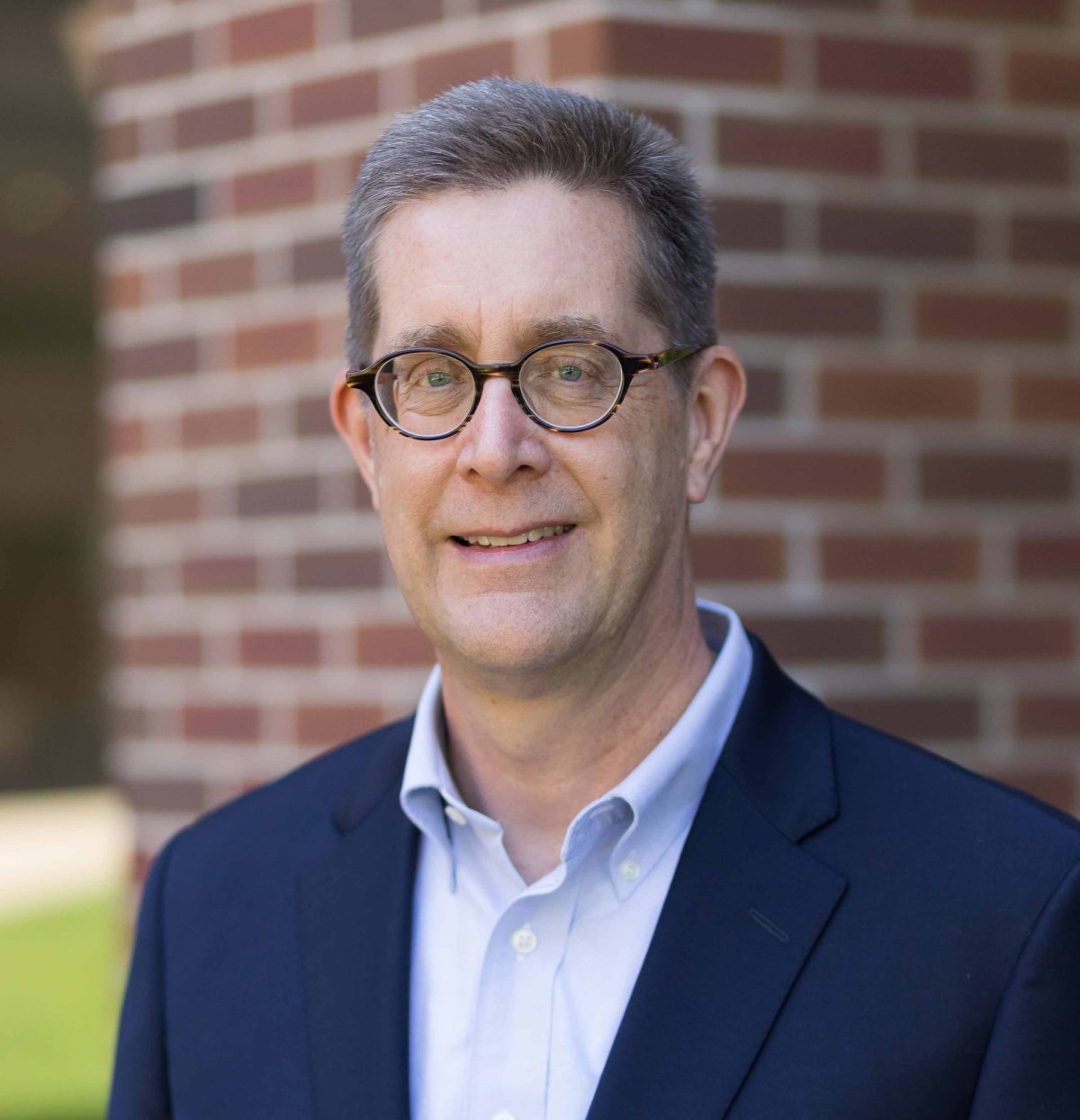
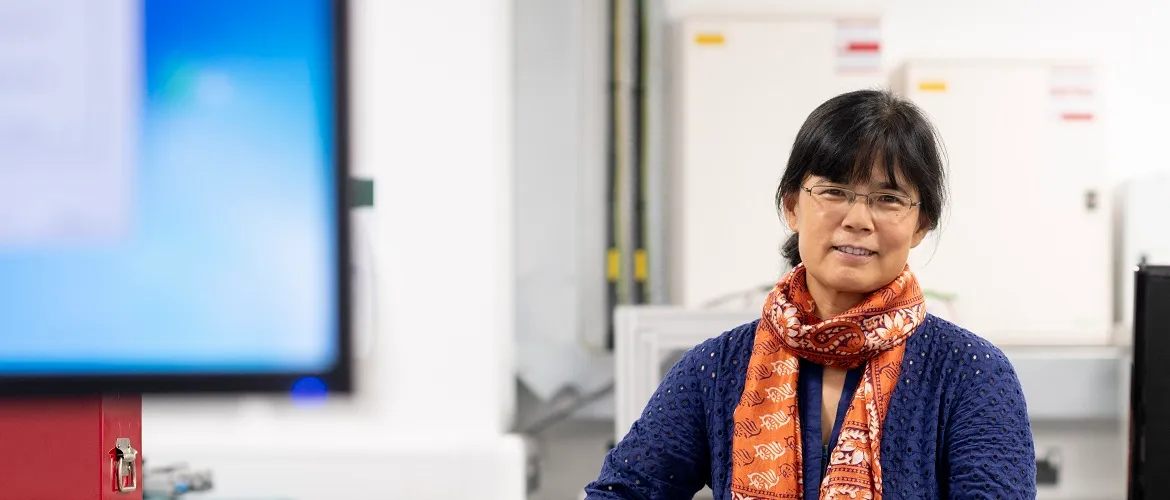
Jeff Derby is a Professor at the University of Minnesota within the College of Science and Engineering , affiliated with the Department of Chemical Engineering and Materials Science . He leads the Derby Group , focusing on computational modeling of materials processing. His research integrates transport phenomena , phase change , and reaction dynamics to advance crystalline material growth techniques. Contact: derby@umn.edu | 612/625-8881 | 239 Amundson Hall, 421 Washington Avenue SE, Minneapolis, MN 55455 Research Interests span nonlinear phenomena in crystal growth , microstructure evolution , defect formation , and high-pressure growth processes for semiconductors (e.g., II-VI crystals), silicon, sapphire, and diamond substrates. His group develops open-source computational tools to model incompressible fluid dynamics , heat/mass transfer , and radiation heat transfer . Scientific Awards : Distinguished McKnight University Professor Labs & Collaborations : The Derby Group collaborates with experimental teams to validate simulations and optimize materials processing across applications in semiconductors , photovoltaics , and optical systems .
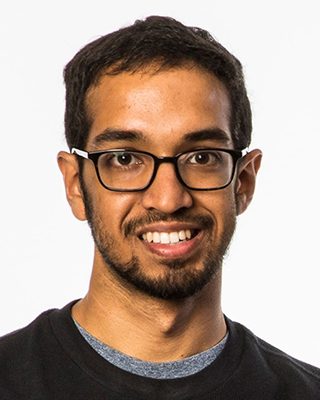
Amruta Nori-Sarma is an Assistant Professor of Environmental Health and Population Sciences at Harvard T.H. Chan School of Public Health. She serves as Deputy Director of the Center for Climate Health and the Global Environment (C-CHANGE) and co-leads the CAFE Research Coordinating Center (RCC) under the NIH Climate Change and Health Initiative, a collaboration with Boston University School of Public Health. PhD in Environmental Health from Yale University School of the Environment (2019) MPH in Environmental Health from Columbia University Mailman School of Public Health (2012) BSE in Civil and Environmental Engineering from Princeton University (2008) As an environmental epidemiologist, Dr. Nori-Sarma investigates climate change-linked environmental exposures and their health impacts, particularly focusing on: Mental health effects of extreme weather events using large health claims datasets Air pollution and heatwave mortality in India Policy evaluation for mitigating climate-related health risks Heatwave impacts on emergency department visits in the US Optimal placement of cooling centers for vulnerable populations Wildfire exposure effects on cancer care delivery Her recent work trends include: Interdisciplinary climate-health modeling PM2.5 spatiotemporal analysis in India Climate risk for marginalized communities Healthcare system resilience during disasters Policy-driven climate adaptation strategies Dr. Nori-Sarma leads initiatives to amplify diverse climate-health research communities through NIH's CAFE RCC and Harvard's C-CHANGE. Her methodological contributions include open-source spatial analysis tools for resource access evaluation.
Liane Colonna is an Assistant Professor in Law and Information Technology at the Department of Law, Stockholm University , where she investigates ethical and legal challenges arising from AI-driven practices in higher education. She also engages in methodologically oriented research at the intersection of AI and Law, contributing to the Wallenberg AI, Autonomous Systems and Software Program – Humanities and Society. Additionally, Liane serves as the director of the Swedish Law and Informatics Research Institute (IRI) and is a member of the New York Bar since 2008. Primary Affiliation: Department of Law, Stockholm University Institute Leadership: Director, Swedish Law and Informatics Research Institute (IRI) Professional Status: Member of the New York Bar Research Interests: Ethical and legal challenges of AI in higher education Methodological approaches in AI and Law Data protection and privacy by design Regulatory frameworks for AI and emerging technologies Privacy implications of lifelogging and health IoT International data governance and surveillance law Publications demonstrate expertise in AI regulation, GDPR compliance, and privacy-preserving technologies, particularly for assisted living and educational contexts. Her work bridges technical implementation with legal accountability, emphasizing human oversight and ethical design.
Vikram Iyer is an Assistant Professor at the Paul G. Allen School of Computer Science and Engineering and holds an Adjunct Appointment in Mechanical Engineering at the University of Washington. He co-directs the CS for Environment Initiative , focusing on interdisciplinary solutions that bridge computing, biology, and physical systems for environmental sustainability. Education : Ph.D. in Electrical & Computer Engineering (University of Washington), B.S. in Electrical Engineering and Computer Sciences (UC Berkeley) Research Interests revolve around bio-inspired wireless systems , environmentally sustainable electronics , and miniaturized autonomous robotics . His work includes: Biodegradable circuit boards Battery-free wireless sensors Insect-scale vision systems Wind-dispersed environmental monitors AI tools for sustainable design Article Trends highlight contributions to green hardware , energy-autonomous robotics , and environmental sensing networks , often integrating machine learning with physical world interaction . Awards include: NSF CAREER Award SIGMOBILE Dissertation Award Marconi Society Paul Baran Young Scholar Best Paper Awards (SIGCOMM 2016, Sensys 2018) Google/Amazon Research Awards Students advised include Kyle Johnson (NSF Fellow), Vicente Arroyos (GEM Fellow), and Qiuyue Xue (co-advised with Shwetak Patel). His lab collaborates with the Networks & Mobile Systems Lab and Urban Innovation Initiative .
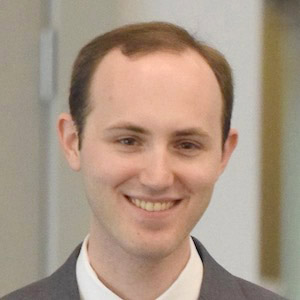
Daniel Fremont is an Associate Professor of Computer Science and Engineering at the University of California, Santa Cruz, where he conducts research at the intersection of formal methods and autonomous systems. His work focuses on developing mathematical techniques to improve the reliability of software, hardware, and cyber-physical systems through precise specification, formal verification, automatic synthesis, and principled testing approaches. Dr. Fremont's research interests center on applications of logic in computer science, particularly using automated reasoning to enhance system reliability. His work spans formal methods for cyber-physical systems (CPS), especially autonomous systems that incorporate machine learning. Key research areas include algorithmic improvisation for creating systems with controlled randomness, probabilistic programming through the Scenic language for environment modeling, and formal verification techniques applicable to safety-critical autonomous systems. His group has successfully applied these methods to autonomous vehicles, aircraft systems, and robotics, with significant contributions to both theoretical foundations and practical implementations. The publication record reveals a strong trajectory from theoretical foundations of control improvisation toward practical applications in autonomous systems verification. Early work established the theoretical framework of control improvisation, while recent publications focus on applying these techniques to real-world challenges in autonomous driving, aircraft systems, and AI-based autonomy. A consistent theme across his research is the integration of formal methods with machine learning to address the verification challenges posed by complex, learning-based systems operating in uncertain environments. Best Paper Award at IoTDI 2016 for 'Control Improvisation with Probabilistic Temporal Specifications' Dr. Fremont leads a research group focused on formal methods for autonomous systems, with significant contributions to the development of tools like Scenic (a probabilistic programming language for scenario specification) and VerifAI (a toolkit for formal design and analysis of AI-based systems). His work bridges theoretical computer science with practical engineering challenges in safety-critical autonomous systems, receiving funding from various sources supporting research at the intersection of formal methods and artificial intelligence. The group's approach combines theoretical algorithm development with practical implementation and testing, often collaborating with industry partners working on autonomous vehicle technology. The research group maintains active development of several open-source tools, including the Scenic language for scenario specification and VerifAI for formal analysis of AI systems. They have demonstrated applications across multiple domains including autonomous vehicles, aircraft systems, and robotics, with particular emphasis on simulation-based testing and verification approaches that can provide formal guarantees about system behavior.
Dr. Andres Guadamuz is a Reader in Intellectual Property Law at the University of Sussex, affiliated with the School of Law, Politics and Sociology. He serves as Editor in Chief of the Journal of World Intellectual Property . His research focuses on intersections of law and technology, including artificial intelligence and copyright, open licensing, cryptocurrencies, smart contracts, and blockchain. He has authored over 40 articles, book chapters, and two books, alongside regular blog posts on technology regulation. Research Interests: Artificial Intelligence and Copyright Blockchain Technology and IP Cryptocurrency Regulation Open Source Licensing Internet Governance Data Mining Legal Frameworks Publication Trends: His recent work addresses AI's impact on copyright law, NFTs, and legal challenges in smart contracts. He critically explores EU AI legislation, liability frameworks for AI inputs/outputs, and NFT authenticity issues. Teaching: Teaches courses on Digital Intellectual Property Law, Internet Law, and Information Technology IP Law, including developing the specialized LLM in IT and Intellectual Property Law. Grants/Advising: Supervises PhD/postgraduate students in his research areas. His work is widely cited in legal, academic, and policy circles, with over 100 Mendeley readers for key papers.
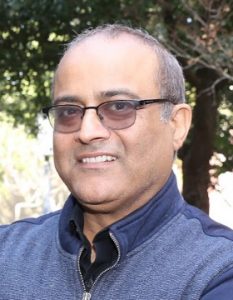
Sharad Mehrotra is a Distinguished Professor at the University of California, Irvine (UCI), leading the Center for Emergency Response Technologies (CERT) and directing the NSF-funded RESCUE project. He previously served at the University of Illinois, Urbana-Champaign, and holds a Ph.D. from the University of Texas at Austin (1993). His research focuses on data management, IoT systems, privacy-preserving technologies, and smart spaces, with contributions to frameworks like TIPPERS and MARS. Education: Ph.D., Computer Science, University of Texas at Austin, 1993 Research Interests: His work bridges database systems, security, and IoT, emphasizing privacy in smart environments. Notable projects include sentient space technologies for disaster response, cryptographic methods for encrypted data queries, and semantic IoT integration. Recent efforts address privacy in multi-owner data systems and resilient community water infrastructure. Awards & Recognition: ACM Fellow (2024) SIGMOD Best Paper (2001), DASFAA Best Paper (2004) NAVWAR Innovation Award (2021) Outstanding Graduate Mentor (2005) Grants & Leadership: As RESCUE PI, he managed $12.5M NSF funding, developing crisis-response software deployed by emergency agencies. Collaborations include the Cal-IT2 institute (UCSD/UCI) and the US Navy’s TIPPERS platform. He co-leads initiatives like the NSF Civic Innovation Challenge for disaster resilience in aging communities. Labs & Teams: Directs UCI’s Information Systems Group and CERT, fostering interdisciplinary research with 60+ members. His teams produce open-source tools (e.g., SEMIoTIC, PrivacySphere) and engage in global partnerships via Fulbright Visiting Scholar programs.
Joaquin Vanschoren is an Associate Professor of Machine Learning at Eindhoven University of Technology (TU/e), affiliated with the Faculty of Mathematics and Computer Science. He leads the Automated Machine Learning group and serves as Education Director for the Data Science program. His research focuses on democratizing AI, algorithm selection, and open science platforms like OpenML. He has received awards including the Dutch Data Prize and Amazon Research Award. Education: PhD in Engineering (KU Leuven, Belgium), MSc in Computer Science (KU Leuven). Research visits included IBM, Amazon Research, and universities globally. Research Interests: Machine Learning, Automated ML, Meta-learning, AI Safety, Data-centric AI. He co-founded OpenML and chairs MLCommons' AI Safety working group. Key Projects: NeurIPS Datasets and Benchmarks track, MLCommons initiatives, OpenML platform. Supervised 78 research works and authored 200+ papers. Awards: Dutch Data Prize (2016), Amazon Research Award (2019), Microsoft Azure Research Awards (2016–2017). Labs/Teams: OpenML open source team, MLCommons collaborations, Automated Machine Learning group at TU/e.
Cristian E.W. Hesselman is a Full Professor at the University of Twente’s Department of Computer Science, specializing in the Design and Analysis of Communication Systems. His research focuses on cybersecurity, network security, and distributed systems, particularly in areas like DDoS mitigation, quantum-safe cryptography, and critical infrastructure protection. He has contributed to over 50 peer-reviewed publications since 1999 and actively collaborates internationally on security-related projects. Research interests include securing network protocols (e.g., DNSSEC, NTP), evaluating infrastructure vulnerabilities, and developing collaborative defense strategies against cyber threats. His work aligns with UN Sustainable Development Goals related to resilient infrastructure and innovation. Recent research highlights include studies on DDoS-resilient digital societies, NTP pool analysis, and quantum-safe cryptography testbeds. He has presented at conferences such as ANRW 2024 and delivered keynotes on middleware for secure media streaming. Dr. Hesselman has supervised 2 academic works and participates in activities like the Cyber Security Next Generation Workshop.
Domniki Asimaki is a Professor of Mechanical and Civil Engineering at the California Institute of Technology (Caltech), part of the Division of Engineering and Applied Science. Her research focuses on geotechnical engineering, computational mechanics, and structural dynamics, with an emphasis on understanding ground motion effects on natural and engineered systems such as dams, tunnels, and urban infrastructure. She holds a Dipl. from the National Technical University of Athens (1998), an M.S. (2000) and Ph.D. (2004) from MIT, joining Caltech in 2014. Key research interests include soil dynamics, wave propagation, regional ground deformation, and soil-foundation-structure interaction. She has pioneered data-driven approaches to integrate numerical simulations with field observations for resilient infrastructure design. Notable achievements include developing the open-source Seismo-VLAB software for seismic analysis and receiving prestigious awards like the Bodossaki Award of Scientific Excellence and the Geotechnical Earthquake Engineering Award. Her work addresses seismic hazards at urban and regional scales, with recent studies on the 2023 Türkiye earthquake, the 2019 Ridgecrest earthquake, and Kathmandu Basin dynamics. She leads initiatives to enhance ground motion prediction, landslide hazard assessment, and infrastructure resilience through advanced modeling and AI-driven methods. Education: Dipl., National Technical University of Athens, 1998 M.S., Massachusetts Institute of Technology, 2000 Ph.D., Massachusetts Institute of Technology, 2004 Awards: Bodossaki Award of Scientific Excellence Geotechnical Earthquake Engineering Award Labs/Teams: Leads research groups focusing on seismic hazard modeling, open-source software development, and geotechnical data assimilation techniques.
Ed Pickering is a Senior Lecturer in Metallurgy and Materials Engineering at the University of Manchester. He has held roles since 2015, advancing to Reader in 2023. His affiliations include the Henry Royce Institute (Research Area Lead for Advanced Metals Processing), the Advanced Metallics System CDT and Fusion CDT Management Boards, and industrial technical advisory panels. Ed’s work bridges academic and industrial collaboration with Rolls-Royce, UKAEA, Airbus, EDF, and Sheffield Forgemasters. Ed completed his undergraduate studies (2011) and PhD (2014) in Materials Science at the University of Cambridge, followed by a Research Associate role in Cambridge’s Rolls-Royce UTC. His academic trajectory includes: Senior Lecturer (2019–present) Reader (2023–present) Ed’s research focuses on phase transformations, microstructural characterization, and alloy development for nuclear (fission/fusion) and aerospace applications. Key themes include optimizing processing routes to enhance material properties while minimizing waste and environmental impact. His studies frequently address steel, high-entropy alloys, and novel refractory alloys, emphasizing their service performance under extreme conditions. His scientific contributions span structural integrity assessment of welded joints, machine learning applications in metallurgy, and material flow uncertainties in forging. He has also advanced heat treatment optimization for reactor steels and explored cobalt-free hardfacing alloys. Frank Fitzgerald Medal (2017) Grunfeld Memorial Medal (2021) In advising and grants, Ed leads the Materials Performance Centre (MPC) and co-leads the NEWAM project on wire-additive manufacturing. He supervises research across these initiatives and collaborates with over 30 PGR students in interdisciplinary teams. His work also involves managing technical facilities like the Advanced Metal Processing platform. Ed’s laboratory affiliations include the MPC and WAAM-based Engineering and Process Metallurgy groups, where he explores sustainable materials solutions for energy and aerospace industries.
William F. Speier is an Associate Professor in the Department of Radiological Sciences at the University of California, Los Angeles (UCLA) School of Medicine . His work spans Medical Informatics , Biomedical Engineering , and Neurology , focusing on applying Artificial Intelligence and Deep Learning to medical imaging and patient monitoring systems. Speier's research emphasizes improving diagnostics for Thyroid Cancer via multimodal ultrasound and molecular testing, advancing Brain-Computer Interfaces (BCIs) for ALS patients, and optimizing Heart Failure remote monitoring through biometric data analysis. He leads the NIH-funded project Predicting Clinically Significant Thyroid Cancer using Ultrasound (R21EB030691), integrating AI into clinical workflows. His recent publications highlight trends in High-Frequency Oscillations for epilepsy, Gleason Grading in prostate cancer, and Language Models for BCI communication. Collaborations with co-authors like Corey Arnold and Hiroki Nariai underscore his interdisciplinary approach. Speier's work also addresses Diagnostic Imaging , Neural Signal Processing , and Health Technology accessibility. Grants and clinical trial integrations further demonstrate his commitment to translating AI into practical healthcare solutions. His methodologies include 3D ConvNets , Federated Learning , and Active Learning frameworks for histopathology and radiology.
David Schlipf is a Professor at the Fachbereich Energy and Life Science, Hochschule Flensburg, leading the Wind Energy Technology Institute. His expertise spans lidar-assisted control systems, floating offshore wind turbines, and aeroelastic modeling. He actively collaborates with international initiatives like IEA Wind Task 32 and contributes to projects such as the 'Lidar Knowledge Europe (LIKE)' network. His research focuses on enhancing wind turbine efficiency through advanced control strategies and sensor technology integration. He has been instrumental in developing the TorqTwin open-source framework for multibody modeling and has published extensively on topics including wind field reconstruction, load mitigation, and floating platform dynamics. His work bridges academic research with industrial applications, emphasizing practical solutions for offshore wind energy challenges. Notable projects include the evaluation of lidar-assisted control performance, optimization of floating turbine designs, and contributions to wind energy education's role in climate resilience. His research outputs span over 200 publications, highlighting his global impact in advancing renewable energy systems.
Professor Jihong Wang is a faculty member at the University of Warwick's School of Engineering, where she has held the position since January 2011. She previously served as a Professor of Control and Electrical Power at the University of Birmingham and held academic roles at the University of Liverpool from 1998 to 2007. As the Head of the Power and Control Systems Research Laboratory, her research focuses on power system modeling and control, energy storage integration, and energy-efficient actuators. Her work has led to over 100 journal publications and several industry collaborations, including a smart voltage controller and a clean pneumatic UPS. She led the EPSRC-funded IMAGES project, developing an open-source software tool for energy storage systems. Professor Wang actively contributes to energy storage initiatives, including co-leading the Supergen Energy Storage Hub and the Joint UK-India Clean Energy Centre (JUICE). Her funded projects span compressed air energy storage (CAES), grid-tied photovoltaic inverters, and net-zero engineering innovation. She advises on energy policy and has pioneered innovations in thermal storage, grid decarbonization, and renewable energy integration. Her research bridges academic rigor and practical applications, addressing critical challenges in sustainable energy systems. Her professional engagement includes roles like Deputy Director of the Supergen Energy Storage Network+ and collaborations with global institutions. Her work emphasizes interdisciplinary approaches to energy challenges, combining control systems, thermal engineering, and policy analysis. Professor Wang’s contributions have been recognized through best paper awards and leadership in major energy storage consortia.
Dr. Tarek Alskaif is an Associate Professor of Energy Informatics at Wageningen University & Research, specializing in the intersection of information technology and energy systems. He leads research on smart energy systems, focusing on electricity markets, distributed energy resources, and AI-driven solutions. His work integrates modeling, optimization, and big data analytics to advance the sustainable energy transition. Education: PhD in Energy Informatics (2012–2016, Cum Laude) from Universitat Politècnica de Catalunya, Spain. Postdoc at Utrecht University’s Copernicus Institute (2016–2020). Current roles include coordinating the BSc Data Science Minor and teaching Python and Big Data courses. Research interests emphasize leveraging digitalization for energy systems, including smart grids, electric mobility, and battery storage. Notable projects include HighLO Energy Markets (EU-funded, using particle physics and AI for market transparency) and MESSM (coordinated via TKI Urban Energy). He also leads the AI ELSA Lab (NWO-funded). Editorial roles include Associate Editor for IEEE Transactions on Smart Grid and IEEE Power Engineering Letters . Member of IEEE, the Netherlands Institute for Research on ICT (4TU.NIRICT), and the Technical Program Committee for IEEE SmartGridComm and PSCC 2026. Has supervised over 50 students (MSc/BSc) and 7 PhDs. Projects address challenges like grid congestion, EV charging optimization, and decentralized energy trading. His work bridges academic research with industry collaborations, including partnerships with CERN and ACER.