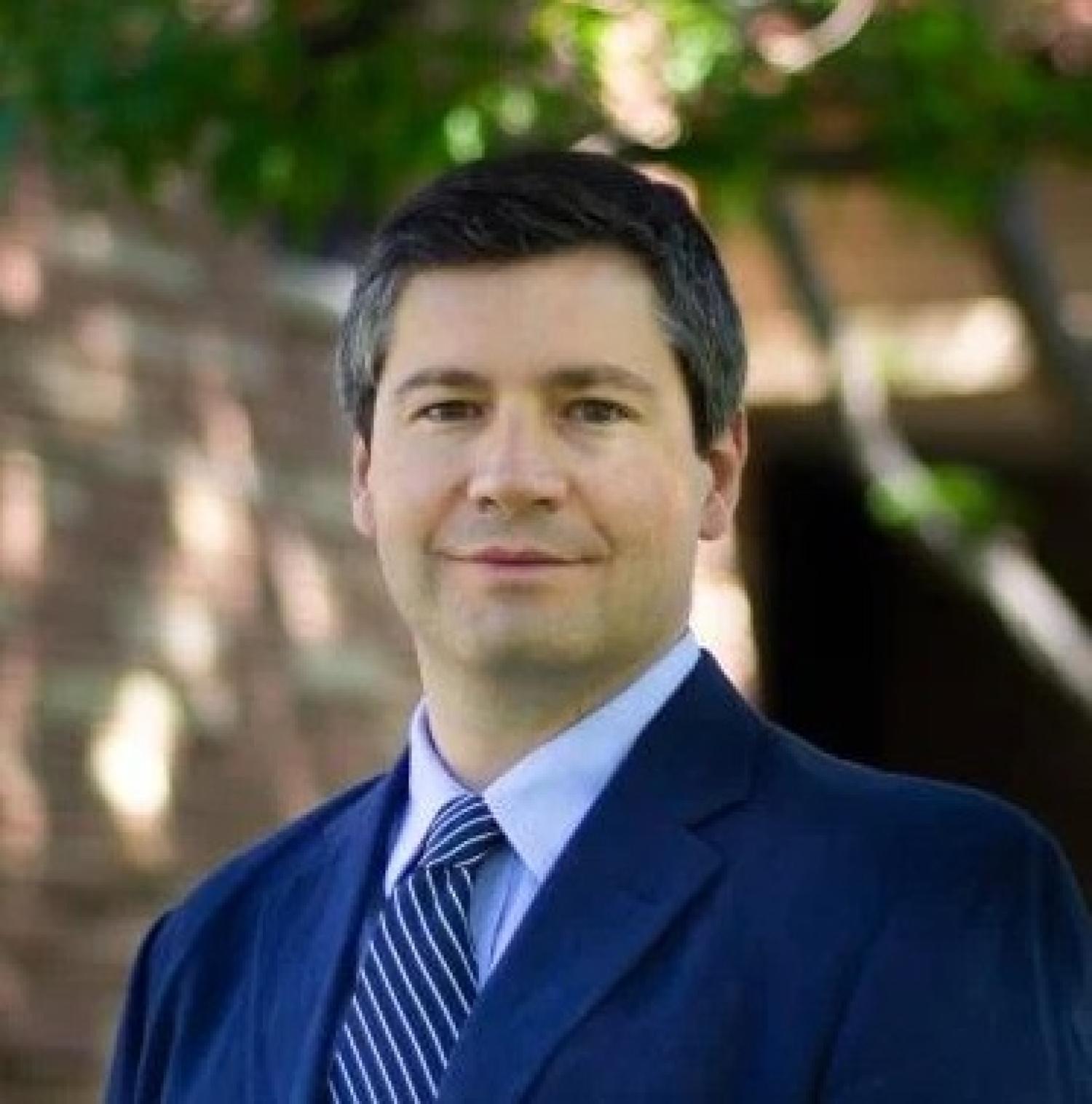
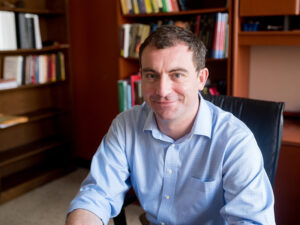
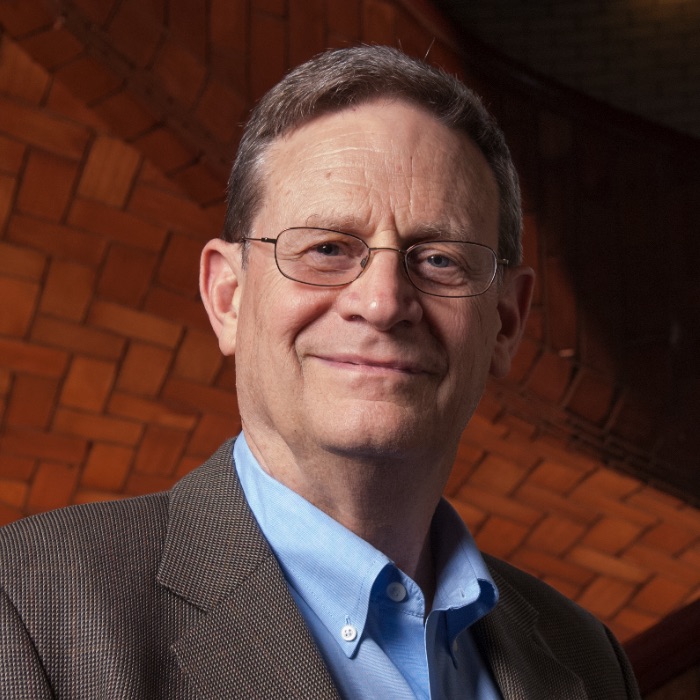
Dr. Guillermo Amador is an Assistant Professor in the Experimental Zoology department at Wageningen University & Research. His research focuses on understanding how animals interact with complex environments through locomotion, adhesion, and fluid dynamics. He investigates biological systems like insects, plants, and marine organisms to inspire bio-engineered solutions for robotics, microfluidics, and material science. Amador received his PhD in Mechanical Engineering from Georgia Institute of Technology (USA), followed by postdoctoral research at the Max Planck Institute for Intelligent Systems (Germany) and a Marie Sklodowska-Curie fellowship at TU Delft (Netherlands). His expertise spans biophysics, biomaterials, and biomechanics, with a focus on self-cleaning mechanisms and bioadhesion. He collaborates with the 4TU consortium on Dutch Soft Robotics to develop bio-inspired designs. His work bridges fundamental biology with engineering applications, emphasizing interdisciplinary approaches to solve challenges in robotics and environmental science. Amador teaches courses including Biomimetics and Functional Zoology , integrating his research into education. His research highlights include studies on cuttlefish suction cups, stick insect adhesion, and pollen transport mechanisms in pollinators.
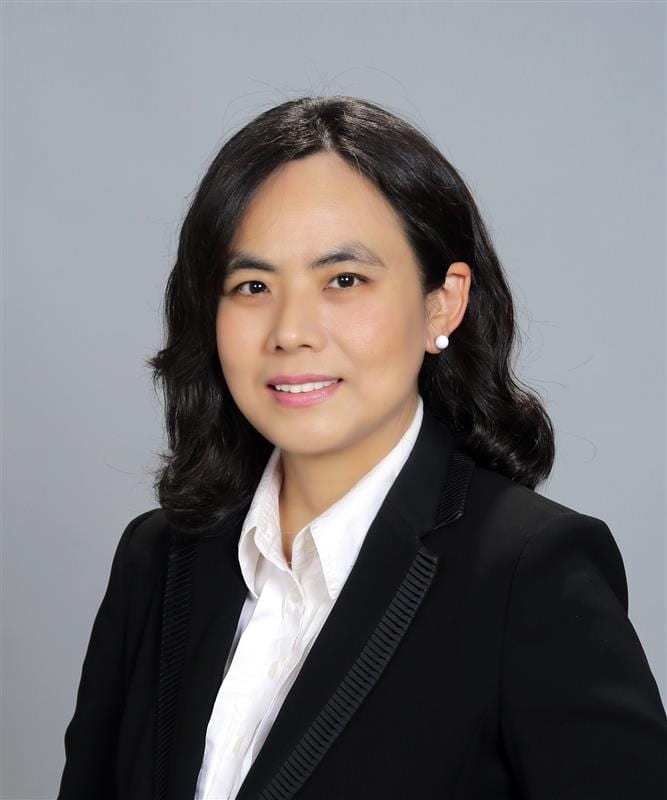
Hyesoon Kim is a Professor at the Georgia Institute of Technology , affiliated with the College of Computing and leading the HPArch research group . She co-directs the Center for Research into Novel Computing Hierarchies (CRNCH) . Her research focuses on Computer Architecture , GPU , Compilers and Runtime Systems , and Hardware Security , particularly for heterogeneous systems. Contact : hyesoon@cc.gatech.edu Location : 266 Ferst Drive, KACB 2344, Atlanta, GA Research Trends Her recent work spans RISC-V extensions for security, CUDA optimization on softcore GPUs, memory safety techniques, and energy-efficient deep learning architectures. Articles emphasize heterogeneous computing , GPU performance scaling, and IoT -oriented neural network methods. Open Source Projects She leads development of Macsim (heterogeneous architecture simulator) and Vortex (open-source GPU platform).
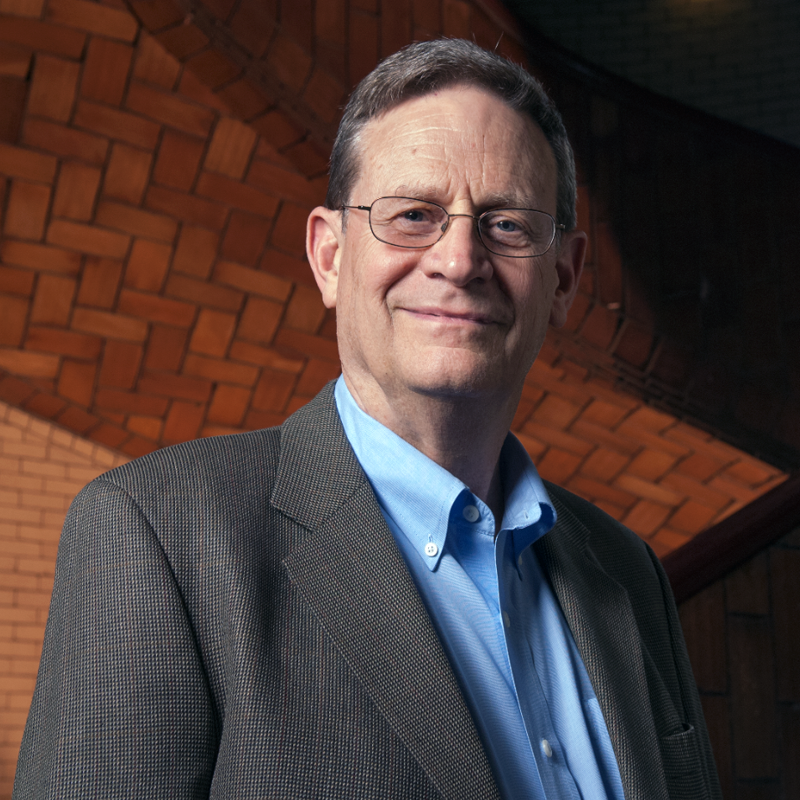
Prof. Dr. Thomas Brinkhoff is Chair of the Institute Board and Chair of Geoinformatics at Oldenburg University of Applied Sciences. He leads the Institute for Applied Photogrammetry and Geoinformatics (IAPG) and contributes to institutions like the Association for the Promotion of Geoinformatics in Northern Germany (GiN e.V.) and the Oldenburg Research and Development Institute for Computer Science (OFFIS e.V.). Education: Diploma in Computer Science (Informatik), Universität Bremen (1990) Doctorate in Computer Science (Dr. rer. nat.), Ludwig Maximilian University of Munich (1994) Brinkhoff's research spans geodatabase systems, spatiotemporal data processing, geosensor analytics, and location-based services. His work addresses Volunteered Geographic Information (VGI), web-based geospatial visualization, and mobile data integration, with applications in traffic management and forensic science. Recent projects include ProSaDi (Digital Provenance and Collection Research) and contributions to the Laboratory for optical 3D metrology . He has served on program committees for ACM SIGSPATIAL (2002-2019), AGILE conferences (2010-2025), and editorial boards of journals like GeoInformatica and TGIS. Notable Lectures: 2024: Forensic applications of tachograph data 2023: Geoinformatics in homicide investigations 2022: Spatiotemporal analysis for sustainability projects 2015: Open geodata standards at FOSSGIS 2014: Mobile sensor data processing
Dr. Oana Cocarascu is a Senior Lecturer in Artificial Intelligence at the Department of Informatics, Faculty of Natural, Mathematical & Engineering Sciences, King's College London. She holds a PhD and MEng in Computing (Artificial Intelligence) from Imperial College London and conducts applied research focusing on how artificial intelligence can be deployed to support real-world applications, with machine learning and natural language processing as core components of her work. Her research interests span argument mining, explainable AI, machine learning, natural language processing, and symbolic reasoning. She is particularly focused on developing AI systems that can provide transparent, accountable, and ethical decision-making processes. Her work addresses critical challenges in bias mitigation, fairness metrics, fact verification systems, and argumentation-based explanations for complex AI decisions. Analysis of her recent publications (2023-2025) reveals a strong focus on fairness in AI systems, with particular attention to individual fairness metrics and nuanced evaluation frameworks. She has made significant contributions to fact verification systems, especially in multimodal contexts involving charts and tabular data. Her work increasingly integrates argumentation theory with natural language processing to create explainable AI systems that can justify their decisions through structured reasoning. Dr. Cocarascu leads an EPSRC-funded project titled 'A framework for evaluating and explaining the robustness of NLP models' (2024-2027) and is actively involved in the Natural Language Processing Group at KCL. Her research fingerprint shows strong activity in argumentation (100%), decision-making (74%), artificial intelligence (50%), explainable AI (39%), and bias mitigation (35%). She has contributed to numerous high-impact publications in top venues including ACL, EMNLP, AAAI, and the Journal of Artificial Intelligence Research, with a particular focus on making AI systems more transparent, accountable, and aligned with human values. Her work intersects with UN Sustainable Development Goals, particularly those related to reducing inequality and building resilient infrastructure.
Robert MacCurdy is an Assistant Professor at the Department of Mechanical Engineering, University of Colorado Boulder . He leads the Matter Assembly Computation Lab (MACLab) focused on automating robot design and fabrication. His research bridges computational design and advanced manufacturing to create "robots that walk out of the printer." The lab develops tools like OpenVCAD , an open-source volumetric multi-material geometry compiler.
Yochai Benkler is the Berkman Professor of Entrepreneurial Legal Studies at Harvard Law School and faculty co-director of the Berkman Klein Center for Internet and Society at Harvard University. He specializes in Law and Political Economy, Technology Law and Policy, Communications Law, and Access to Knowledge. His work bridges academia and activism, focusing on the intersection of technology, collaboration, and societal structures. Benkler's research emphasizes decentralized collaboration, information commons, and the impact of technology on democracy. He has advised governments and international organizations on innovation policy and telecommunications. His notable works include The Wealth of Networks (2006), which explores social production in the digital age, and Reconstructing Class Analysis (2024), co-authored with Talha Syed, which rethinks class dynamics within capitalism. He has received numerous awards, including the Oxford Internet Institute Lifetime Achievement Award (2012), Ford Foundation Visionaries Award (2011), and Electronic Frontier Foundation Pioneer Award (2007). His work is publicly accessible at benkler.org . Benkler serves on the boards of the Open Society Foundations and the Freedombox Foundation. His research spans law, political economy, and technology, addressing issues like fake news, network propaganda, and the role of the internet in governance.
Granger Morgan is the Hamerschlag University Professor of Engineering at Carnegie Mellon University, holding joint appointments in the Department of Electrical and Computer Engineering, the Department of Engineering and Public Policy, and the H. John Heinz III College. His research focuses on science, technology, and public policy, particularly energy systems, climate change, risk analysis, and regulatory frameworks. He co-directs the NSF Center for Climate and Energy Decision Making and the Electricity Industry Center. Education: Ph.D., Applied Physics and Information Science, University of California, San Diego (1969) M.S., Astronomy and Space Science, Cornell University (1965) B.A., Physics, Harvard College (1963) Research Interests: Energy decarbonization and electric power resilience Climate change mitigation and adaptation strategies Risk assessment and policy analysis Hydrogen and nuclear energy systems Global technology adoption dynamics Awards and Affiliations: FAS Public Service Award (2016) Member, National Academy of Sciences Fellow, AAAS, IEEE, and Society for Risk Analysis National Academies Report Review Committee Co-Chair Advisory roles at DOE, PNNL, and international energy councils Advisory and Grants: Leadership in national studies on electric grid resilience and hydrogen infrastructure Recipient of NSF and industry-funded research grants Guidance on global energy policy and regulatory frameworks Labs and Teams: NSF Center for Climate and Energy Decision Making (co-director) Carnegie Mellon Electricity Industry Center Interdisciplinary energy policy research groups
Michael J. Aziz is the Gene and Tracy Sykes Professor of Materials and Energy Technologies at Harvard University's John A. Paulson School of Engineering and Applied Sciences (SEAS). He serves as Area Chair for Materials Science and Mechanical Engineering and is a Faculty Associate at the Harvard University Center for the Environment. His research focuses on electrochemical engineering for energy and environmental applications, including redox flow batteries, carbon capture, and sustainable energy technologies. Aziz leads the Aziz Group, which develops grid-scale energy storage solutions and innovative methods for CO₂ removal. He holds equity in Quino Energy, a startup commercializing his battery research, and serves as Chief Scientist and Board Member. His work bridges fundamental materials science with practical engineering, emphasizing ClimateTech solutions. Key contributions include aqueous organic redox flow batteries, quinone-based carbon capture systems, and wearable energy storage devices. Education & Affiliations: Affiliated with SEAS since joining Harvard, his academic roles include coordinating the Graduate Consortium for Energy and Environment (2009–2018). His lab (Materials Science Group) is located at McKay 504, with administrative support from Sabrina Azinheira. Research Interests: Aziz's group investigates electrochemical energy storage, CO₂ capture via electrochemical systems, and novel materials for sustainable technologies. They employ advanced techniques like operando electrochemical fluorescence microscopy to study porous electrode dynamics and battery degradation mechanisms. Their work emphasizes scalability and real-world applicability, such as grid-scale battery infrastructure and decarbonization strategies. Recent Trends in Publications: Aziz's recent work emphasizes carbon capture innovations (e.g., acid-base concentration swing methods), hydrogen storage under ambient conditions, and electrochemical synthesis of industrial chemicals like hydrogen peroxide. His group also develops open-source tools like RFBzero for battery modeling and explores bioinspired materials (e.g., self-gelling hydrogel batteries). Awards & Recognition: While no personal awards are explicitly listed in the text, his team members (e.g., Dawei Xi) have received accolades such as the 2025 Carbon Future Young Investigator Award. Aziz's contributions have been recognized through industry partnerships and startup ventures. Advising & Industry Impact: Aziz advises PhD students focusing on electrochemical systems (e.g., Jordan Sosa, Tommy George). His industry engagement includes licensing intellectual property to Quino Energy, which achieved a manufacturing milestone in 2024 for grid-scale battery systems. His research bridges academia and industry, addressing climate challenges through technological innovation. Labs & Teams: The Aziz Group includes interdisciplinary researchers from electrochemistry, chemical engineering, and materials science. Collaborators include institutions like MIT and industry partners. Current projects target next-gen batteries, CO₂ removal systems, and scalable energy storage solutions.
Michael Baldea is an Associate Professor in the Department of Chemical Engineering at the University of Texas at Austin . He holds a Ph.D. in Chemical Engineering from the University of Minnesota (2006), with prior degrees from 'Babeş-Bolyai' University in Romania (M.Sc. 2001, Diploma 2000). His research group develops theoretical and computational methods for Process and Energy Systems Engineering , focusing on integrated decision-making, performance optimization, and process intensification with industrial validation. Education: Ph.D., Chemical Engineering, University of Minnesota (2006) M.Sc., Interface Process Engineering, 'Babeş-Bolyai' University (2001) Diploma, Chemical Engineering, 'Babeş-Bolyai' University (2000) Research Thrusts: Integrated decision-making in chemical/energy supply chains Process performance monitoring and optimization Process integration and intensification Key applications include grid-responsive chemical plants, intensified distillation/column designs, and renewable energy integration for building systems. Scientific Awards: Frank A. Liddell, Jr. Fellowship NSF CAREER Award (2015-2020) Moncrief Grand Challenges Faculty Award (2014) AIChE Outstanding Young Researcher Award (2017) Implementation : His group has translated research into commercial tools through partnerships with industrial test beds and is working to integrate methods into commercial simulators. They explore predictive approaches for building energy management and strategic capital investment analysis in next-generation energy systems.
Swiss Federal Institute of Technology in LausanneSwitzerland
Babak Falsafi is a Full Professor at the School of Computer and Communication Sciences (IC) at EPFL, leading the Parallel Systems Architecture Laboratory (PARSA). He is a renowned expert in computer architecture, datacenter systems, and cloud-native server design. His research focuses on post-Moore era computing, emphasizing heterogeneous architectures, energy efficiency, and scalable IT infrastructure. Falsafi is the founder of EcoCloud, an EC-sponsored industrial-academic consortium investigating sustainable information technology. He holds ACM and IEEE fellowships, a Sloan Research Fellowship, and has contributed to major projects like Optimus Prime (data transformation acceleration), AstriFlash (flash-based online service systems), and Midgard (virtual memory re-design). His work spans hardware-software co-design, memory systems, and security. Falsafi advises numerous PhD students and collaborates with industry partners such as Google and Cavium. Key achievements include pioneering scalable multiprocessor architectures, snoop filters in IBM BlueGene, and spatial memory streaming in ARM cores. His lab develops open-source tools like QFlex for server simulation. He frequently presents at top conferences (HPCA, ISCA, MICRO) and chairs workshops on post-Moore infrastructure. Teaching roles include leading courses in computer architecture and parallel systems across multiple EPFL departments (SIN, EDIC, SSC, SMA). His work addresses datacenter challenges like the 'data tax' and mitigating latency through specialized accelerators.
Anna Gottard is an Associate Professor of Statistics at the University of Florence, where she leads the Department of Statistics, Computer Science, and Applications. She directs the Florence Center for Data Science (FDS) and participates in the Technical Scientific Committee of the Tuscan Center for Big Data, Data Science, and AI (CBDAI). Her research focuses on multivariate statistical models, particularly graphical models, and extends to statistical machine learning, fair models, and directional data analysis. She is an Associate Editor for the Journal of the Royal Statistical Society Series A (JRSSA) and Statistical Methods & Applications (SMA). Her recent work includes Bayesian approaches for mixed graphical models, uncertainty-aware classification trees, and methodological advancements in latent uncertainty models. Her contributions span theoretical developments and applied research in interdisciplinary areas like biostatistics and sustainability. Her research interests emphasize bridging statistical theory with practical applications, including fairness in machine learning, interpretable models, and tree-based methodologies. She has actively contributed to open-source software, notably the Mix3Trees R package for mixed-effect tree models. Her work addresses challenges in variable selection, graphical model inference, and ethical AI practices. Current projects explore Bayesian frameworks for complex data structures and methodological improvements in graphical model interpretability. Anna has advised on interdisciplinary collaborations, such as studies on GDPR compliance in biobanking and epidemiological modeling of the SARS-CoV-2 pandemic in Tuscany. She collaborates with institutions like the CBDAI to advance data science applications in regional policy and healthcare. Her research trajectory reflects a commitment to both foundational statistical theory and real-world problem-solving across diverse domains.
Lina Bertling Tjernberg is a Professor at the Department of Electrical Engineering, KTH Royal Institute of Technology, and Deputy Head of the School of Electrical Engineering and Computer Science (EECS) with responsibility for research conditions and impact. She served as Director of KTH's Energy Platform during 2018-2024 and holds memberships in IVA (Swedish Royal Academy of Engineering Sciences) and the IEEE Power & Energy Society. Research Focus: Applying mathematics (statistics, optimization, life cycle assessment) to enhance reliability and predictive maintenance in electric power systems, with emphasis on future electricity grids integrating microgrids, battery storage, HVDC, nuclear/pumped/hydro/wind/solar power, hydrogen, and electrified transport. Collaborations: Engaged with Comillas Pontifical University (Madrid), Addis Ababa University, Norwegian University of Science and Technology (NTNU), and IEA Wind. Key Research Trends: Recent articles highlight advancements in microgrid control (2025), SMR nuclear energy integration (2025), AI-driven asset management (2024), hydrogen sector coupling (2024), and renewable forecasting techniques (2024). Awards: 2021 Power Woman of the Year 2022 Energy Power List (Sweden’s top 20 energy influencers) Leadership Roles: Swedish Electromobility Center (SEC) board Chair of Swedish Electrical Standards (SEK Svensk Elstandard) Member, IEEE PES ISGT Europe steering committee
M. Granger Morgan is the Hamerschlag University Professor of Engineering at Carnegie Mellon University , with appointments in the Department of Engineering and Public Policy , Department of Electrical and Computer Engineering , and H. John Heinz III College . He co-directs the NSF Center for Climate and Energy Decision Making and the Electricity Industry Center at CMU. Education: Ph.D., Applied Physics and Information Science, University of California, San Diego (1969) M.S., Astronomy and Space Science, Cornell University (1965) B.A., Physics, Harvard College (1963) His research spans science, technology, and public policy with focus areas in energy systems , climate change mitigation , electric grid resilience , and uncertainty characterization in policy analysis . Recent publications analyze hydrogen market barriers , carbon sequestration timelines , and interdependent energy infrastructure risks . Scientific leadership includes: Member, National Academy of Sciences Member, American Academy of Arts and Sciences Co-chair, NAS Report Review Committee Board member, International Risk Governance Council Foundation Advisory Board, E.ON Energy Research Center, RWTH Aachen DOE Electricity Advisory Committee member Former EPA Science Advisory Board Chair Fellow of AAAS, IEEE, and Society for Risk Analysis Contact: Office 5220 Wean Hall, Phone 412-268-2672, Email granger.morgan@andrew.cmu.edu
Javier Alonso-Mora is a Professor in the Department of Mechanical Engineering at Delft University of Technology, specializing in Learning & Autonomous Control. His research focuses on autonomous systems, robotics, motion planning, and transportation logistics, with applications in mobile manipulation, dynamic environments, and urban mobility. He leads key projects such as INTERACT (Intuitive Interaction for Robots among Humans) and ACT (Perceptive Acting Under Uncertainty), exploring human-robot interaction, autonomous vehicles, and healthcare robotics. Notable achievements include an ERC Starting Grant (2022) and a Veni Grant (2017). His work addresses challenges in robot navigation, control systems, and fleet optimization, with contributions to both theoretical advancements and practical implementations. Projects like TRiLOGy focus on sustainable water transportation, while HARMONY advances assistive robotics in healthcare. Alonso-Mora’s research leverages geometric fabrics for motion planning, probabilistic modeling for dynamic environments, and multi-agent coordination. He collaborates internationally and contributes to open-source frameworks for robotics. His recent publications emphasize safety-aware control, instance-aware semantic mapping, and adaptive systems for cluttered environments.
Charles Rahal is an Associate Professor in Data Science and Informatics at the University of Oxford, with additional affiliations as an Associate Member of Nuffield College and Researcher at the Gradel Institute, New College. He serves as a Co-Investigator at the ESRC Centre for Care and sits on the Steering Group of Reproducible Research Oxford. His academic career includes previous roles as a Senior Departmental Research Lecturer at the Leverhulme Centre for Demographic Science and a British Academy Postdoctoral Fellow. Dr. Rahal completed his PhD in 2016 and has established himself as a prominent social science methodologist and applied social data scientist with expertise in high-dimensional econometrics. His research spans multiple domains, focusing particularly on unique Big Data origination processes and their relationship to social inequality, mobility, and stratification. He is deeply engaged in machine learning methods, civic technology, spatial and time series econometrics, model uncertainty, and scientometrics. His recent publications reveal a strong trend toward computational social science, with significant contributions to understanding prediction limits, pandemic impacts, healthcare systems, and environmental sustainability. The articles demonstrate his interdisciplinary approach, bridging traditional social science with cutting-edge computational methods, particularly in the analysis of large-scale datasets and development of novel metrics like the InterModel Vigorish for model comparison. Dr. Rahal is actively involved in teaching and mentoring, co-convening courses in Demographic Analysis, Life Course Research, and the Oxford Partner site of the Summer Institute in Computational Social Sciences. He has developed workshops on machine learning, command line interfaces, and LaTeX, reflecting his commitment to methodological training in social science. He leads the Metrics and Models lab and maintains several open-source projects including the GWAS Diversity Monitor and RobustiPy. His editorial roles include Associate Editor-in-Chief at the Journal of Social Computing and Associate Editor at ACM Transactions on Social Computing, highlighting his influence in shaping computational social science methodology.