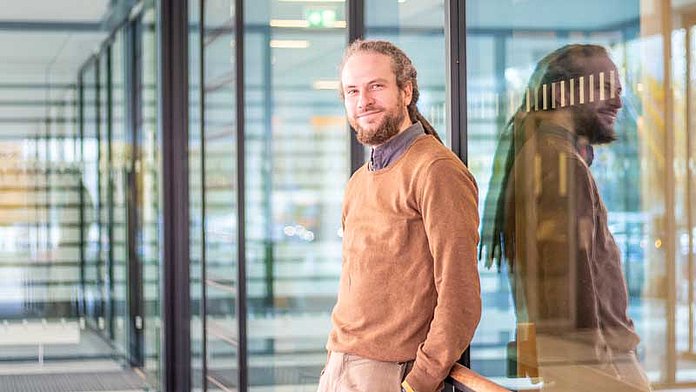
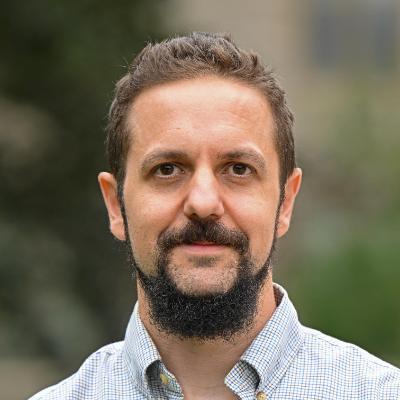
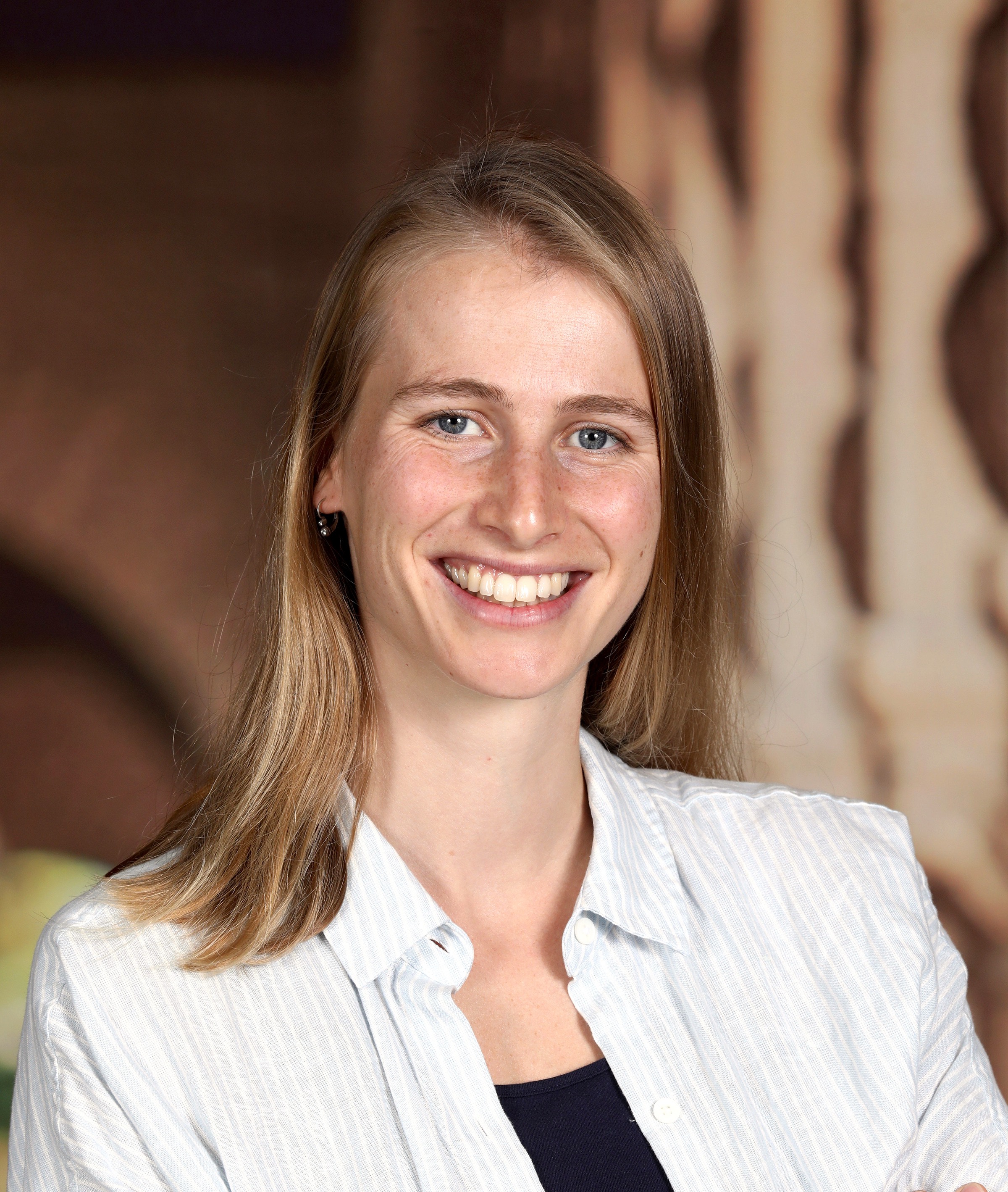
Dr. Robert Haase is a Lecturer and Training Coordinator at the Center for Scalable Data Analytics and Artificial Intelligence (ScaDS.AI) under Leipzig University , with prior leadership roles at the DFG Cluster of Excellence 'Physics of Life' at TU Dresden . He specializes in Bioimage Analysis , GPU-Accelerated Image Processing , and Large Language Models (LLMs) for life sciences. His research focuses on democratizing bioimage analysis through open-source tools like CLIJ , clesperanto , and bia-bob , aiming to bridge microscopy with data science . Recent projects explore LLM-driven code generation for image analysis and interactive workflow design in platforms like napari . He leads initiatives such as the NFDI4BioImage consortium for research data management in Germany and GloBIAS , a global society for bioimage analysts. Funded by organizations including the Chan Zuckerberg Initiative (CZI) and DFG , his work emphasizes reproducibility , open science , and interdisciplinary collaboration in bioimaging. As an educator, he conducts training programs like "Large Language Models for Bioimage Analysis" and "Collaborative Working with Git" , and contributes to workshops at institutions such as EMBO , Institut Pasteur , and ScaDS.AI Summer Schools .
Dr. Sridhar Chimalakonda serves as Associate Professor and Head of the Department of Computer Science & Engineering at the Indian Institute of Technology Tirupati, with an adjunct appointment as Associate Professor at the University of Waterloo. His academic leadership spans software engineering research and educational innovation. His educational qualifications include: Ph.D. from International Institute of Information Technology Hyderabad, India MS by Research from International Institute of Information Technology Hyderabad, India Research expertise encompasses: Software Engineering : Empirical studies, quality assurance, reuse methodologies, product lines, architecture, ontologies, and gamification Educational Technologies : Instructional design optimization, personalized learning systems, and VR/AR applications for educational storytelling and laboratories Human Computer Interaction : User-centered design in educational and software development contexts Publication analysis (2021-2024) reveals a strategic evolution from foundational software engineering research toward integrated educational applications, particularly in gamified machine learning education for K-12 audiences and sustainable software practices. His work demonstrates consistent methodological rigor in empirical studies while expanding into cross-disciplinary educational technology innovation.
Klaus Böhm serves as a Professor at Mainz University of Applied Sciences within the School of Engineering, affiliated with the i3mainz institute (Institute for Spatial Information and Surveying Technology). His research bridges geospatial technologies with artificial intelligence, focusing on practical applications in urban planning, healthcare, and educational environments through projects like BAM (Big Data Analytics) and TOPML (Machine Learning). His primary research domains include geospatial explainable AI (GeoXAI), mixed reality decision support systems, and health informatics applications. He pioneers methods for visualizing uncertainty in AI models, developing geoparsing techniques using LLMs, and creating spatial navigation frameworks for VR environments. His work consistently addresses real-world challenges in elderly mobility, smart city infrastructure, and medical education through spatial analytics. Analysis of his 2022-2025 publications reveals three dominant trends: (1) Integration of XAI with geospatial data for transparent decision-making in urban planning, (2) Development of mixed reality tools for STEM education and dermatology training, and (3) Spatio-temporal correlation analysis for smart city applications like parking optimization and public transport accessibility. His methodology emphasizes interactive visualization of complex spatial relationships and uncertainty quantification. Dr. Böhm leads multiple funded research initiatives including AIMR (AI-based decision support in mixed reality), RAFVINIERT (spatial intelligence for senior care), and FlexGeo (geo-service integration). These projects demonstrate sustained grant acquisition capability across EU and national funding programs, typically involving interdisciplinary teams from computer science, urban planning, and healthcare sectors. As a core member of the i3mainz research institute, he contributes to Germany's geospatial technology ecosystem through collaborative projects with municipal authorities and healthcare providers. The institute's work focuses on translating academic research into operational tools for spatial data infrastructure, particularly in environmental monitoring and public service optimization contexts.
Timothy Becker serves as the John D. MacArthur Assistant Professor of Computer Science at Connecticut College, where he joined in 2023. His research focuses on transforming complex datasets into functional instruments through advanced computational techniques. His academic background includes: B.M. in Music Production from The Hartt School of Music B.S. in Computer Science from the University of Hartford Ph.D. in Computer Science and Engineering from the University of Connecticut Becker specializes in genomics applications but maintains active interdisciplinary collaborations in ecology and transportation. His core methodology integrates deep learning, generative modeling, and data visualization to develop open-source software tools. He emphasizes practical implementations for real-world data analysis and creates interactive tutorials to foster persistent student learning. His publication record from 2018-2025 reveals consistent contributions to bioinformatics and environmental data science, particularly in structural variation analysis and river connectivity modeling. Key trends include developing neural network frameworks for genomic data integration and creating visualization methods for multi-omic datasets. Becker actively seeks undergraduate research collaborators, encouraging students with domain-specific data or research questions to initiate projects. His interdisciplinary approach connects computer science with life sciences and environmental studies through numerous cross-institutional partnerships.
Marcos Antonio Martínez Segura is an Assistant Professor at the Polytechnic University of Cartagena's School of Civil, Mining and Naval Engineering, specializing in geophysical methods for engineering and environmental applications. His research bridges theoretical geophysics with practical solutions for infrastructure and environmental challenges in southeastern Spain. His primary research interests include Geophysics, Engineering Geology, and Geotechnical Engineering, with specific expertise in Electrical Resistivity Tomography (ERT), Multichannel Analysis of Surface Waves (MASW), Ground-Penetrating Radar (GPR), and UAV photogrammetry. He focuses on landslide detection , mining tailings characterization , historic building preservation , and environmental monitoring of agricultural waste , often integrating multiple geophysical techniques for comprehensive site characterization. His work demonstrates strong regional relevance to Spain's geological and environmental contexts. Analysis of his recent publications (2023-2025) reveals a dominant trend toward Python-based software development for geophysical data processing, particularly for ERT applications in hazard detection. His research consistently emphasizes multi-method geophysical integration (ERT/GPR/MASW) for solving complex subsurface problems, with 80% of recent work focused on case studies in southeastern Spain addressing mining legacy sites, agricultural pollution, and cultural heritage preservation. Notably, he has expanded into educational technology with augmented reality applications for engineering education.
Elena Safiulina is an Associate Professor at the Centre for Sciences, TTK University of Applied Sciences, and a Visiting Lecturer at Estonian Entrepreneurship University of Applied Sciences. Her academic journey includes a PhD in Mathematics (2013) and an MSc in Educational Technology (2024), both focused on innovative pedagogical approaches. Research Interests: Her work bridges mathematics education with technology, specializing in: AI-driven learning platforms and OER quality assessment E-learning optimization using automated assessment systems Geometry applications in engineering education Preventing AI-assisted cheating through pedagogical design Publication Trends: Recent works (2022-2025) demonstrate strong focus on: AI integration in STEM education Development of multilingual mathematical resources Innovative assessment methods for engineering mathematics Systematic analysis of edtech challenges in higher education Supervision & Projects: Supervised MSc candidate Anna Šeletski (2024) and contributed to 6 EU-funded projects including Erasmus+ initiatives like Gate2Math (OER development) and PRODIMOD (business process education). Secured €369,000+ in research funding.
Dr. Huaming Chen is a Senior Lecturer in the School of Electrical and Computer Engineering at The University of Sydney, Australia. His work focuses on trustworthy machine learning systems, software engineering, and software security. With numerous publications in top-tier conferences and journals, Dr. Chen has established himself as a significant contributor to the fields of AI security and software engineering. Dr. Chen's primary research interests lie at the intersection of software engineering and artificial intelligence, with a strong emphasis on trustworthy AI systems. His work spans several key areas including: Software Security for AI-enabled systems Trustworthy and Responsible AI development Computational biology applications Industrial 4.0 implementations Federated learning and privacy-preserving techniques Large language model verification and uncertainty analysis His research addresses critical challenges in ensuring AI systems are secure, reliable, and ethically sound. Dr. Chen's recent publications demonstrate a strong trend toward addressing security and trustworthiness challenges in AI systems. His work spans multiple domains including software security (particularly for AI systems), trustworthy AI development, and applications in computational biology. A significant portion of his recent work focuses on large language models, examining their vulnerabilities, verification methods, and uncertainty analysis. He also maintains active research in federated learning, adversarial machine learning, and software security techniques. Dr. Chen has received several notable awards and recognitions: 2020 IEEE CIS Student Grant for IEEE WORLD CONGRESS ON COMPUTATIONAL INTELLIGENCE (WCCI) 2017 Student and Early Career Travel Fellowship for The 16th International Conference on Bioinformatics (InCoB 2017) 2017 Student Travel Award for 2017 IEEE World Congress on Services Dr. Chen actively supervises multiple research students working on cutting-edge projects related to trustworthy AI and software security. His current students are exploring topics ranging from blockchain-based governance frameworks to open-source AI security and digital twin platforms. He also serves in numerous committee roles at top conferences including area chair for ACM MM, and PC member for ACM CCS, IJCAI, KDD, and many others. His service as a Guest Editor for journals like Computers & Security and as a Grant Reviewer for UKRI demonstrates his standing in the research community. Dr. Chen organizes workshops focused on Trustworthy and Responsible AI, reflecting his commitment to advancing the field. His research group appears to focus on practical applications of AI security techniques, with projects spanning multiple domains including healthcare, finance, and industrial systems. He maintains active collaborations with researchers across multiple institutions, as evidenced by his co-authorship on diverse publications.
Alicia García-Holgado is an Associate Professor in the Department of Computer Science and Automation at the University of Salamanca. She is a member of the GRIAL Research Group, where she leads the "Social Responsibility and Inclusion" research line, and also affiliated with the Salamanca Biomedical Research Institute and the University Institute of Educational Sciences. Her educational background includes a Degree in Computer Sciences (2011), M.Sc. in Intelligent Systems (2013), and a PhD in Education in the Knowledge Society (2018, Cum Laude), all from the University of Salamanca. Dr. García-Holgado's research focuses on developing technological ecosystems for knowledge and learning management in diverse contexts, with particular emphasis on promoting diversity and inclusion in STEM fields. She has organized numerous international activities aimed at reducing the gender gap in STEM, including the "Women Researchers' Breakfast at the University of Salamanca," which received the Gutenberg Award for scientific dissemination in 2020. Her work bridges computer science, education, and social responsibility, with practical applications in academic, professional, and public administration contexts. Her publication record shows a strong focus on educational technology, knowledge management systems, and informal learning recognition, with over 170 international publications in scientific journals and conferences. Her research spans multiple disciplines including computer science, education, and human-computer interaction, with applications in academic, professional, and public administration contexts. Gutenberg Award for scientific dissemination 2020 by CoxmoCaixa Dr. García-Holgado has participated in over 50 research projects including MIH, VALS, WYRED (H2020), and W-STEM. She currently coordinates the Erasmus+ SPADATAS project focused on security and privacy in academic data management. She serves on the Negotiating Committee of the II Equality Plan of the University of Salamanca and is active in several professional organizations including IEEE, ACM, and AMIT. She is Associate Editor of the IEEE Revista Iberoamericana de Tecnologías del Aprendizaje and the Revista Facultad de Ingeniería. As a member of the GRIAL Research Group, she contributes to the group's work on interactive systems for learning, educational technologies, and strategic knowledge management, while leading the "Social Responsibility and Inclusion" research line that focuses on gender equity in STEM fields.
Dora Demszky is an Assistant Professor in Education Data Science at Stanford University's Graduate School of Education, with a courtesy appointment in Computer Science. She leads the EduNLP Lab, where she develops natural language processing tools to support equitable, student-centered instruction through analyzing educational discourse including student-teacher interactions, student group work, and textbooks. PhD in Linguistics from Stanford University (advised by Dan Jurafsky) BA summa cum laude in Linguistics with a minor in Computer Science from Princeton University Co-founder of Tarisznya Alapítvány (Knapsack Foundation), a nonprofit supporting underprivileged children in Hungary Dr. Demszky's research combines natural language processing, linguistics, and practitioner input to develop interpretable and scalable education measures. Her work focuses on creating tools that analyze classroom discourse to identify features of high-quality instruction and provide actionable feedback to educators. She has particular expertise in developing AI-powered systems that help teachers improve questioning quality, analyze textbook representation, measure dialect features, and scaffold curricula to meet diverse student needs. Her approach emphasizes the importance of human connections in teaching and learning, using technology to enhance rather than replace these critical interactions. Analysis of Dr. Demszky's recent publications reveals a strong trend toward practical applications of NLP in real educational settings, with increasing emphasis on randomized controlled trials to validate effectiveness. Her work spans multiple educational contexts from K-12 classrooms to higher education, with growing attention to equity considerations in AI-powered educational tools. Recent publications show expansion into mathematical education, speaker diarization for noisy classrooms, and open-source tools for the broader research community. MathemaTikZ dataset received the inaugural best dataset prize at Learning at Scale NCTE classroom transcript dataset received the best IEDMS Publicly Available Educational Dataset Prize Selected as a Leading Woman in AI at the ASU GSV AIR Show Dr. Demszky has secured significant research funding including grants from the Gates Foundation, NSF RAPID program, and Stanford HAI. Her work with teachers extends beyond research through initiatives like the Practitioner Voices Summit, which brought together 60 teachers from 22 states to inform AI research related to classrooms. She actively collaborates with educators to ensure her tools address real classroom needs while maintaining a focus on socially responsible edtech development. At Stanford, Dr. Demszky leads the EduNLP Lab, which operates at the intersection of education, computer science, and linguistics. The lab follows a three-pronged approach: gathering evidence through data science using NLP models, developing algorithms through co-design with domain experts, and piloting solutions that practitioners can use in real educational settings. Current projects include M-Powering Teachers, which provides automated feedback to educators, and tools for adapting mathematics curricula to support students with diverse learning needs.