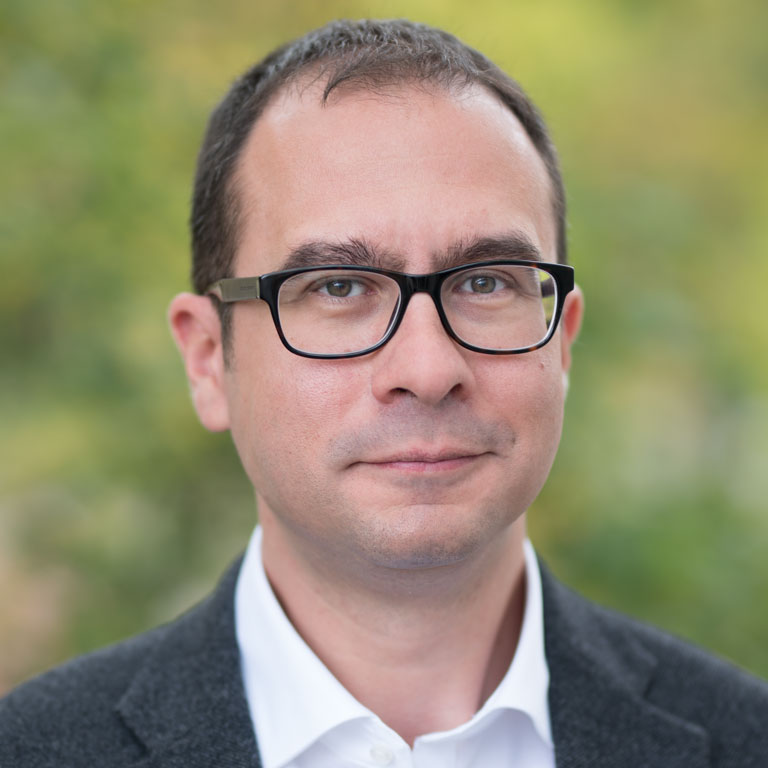
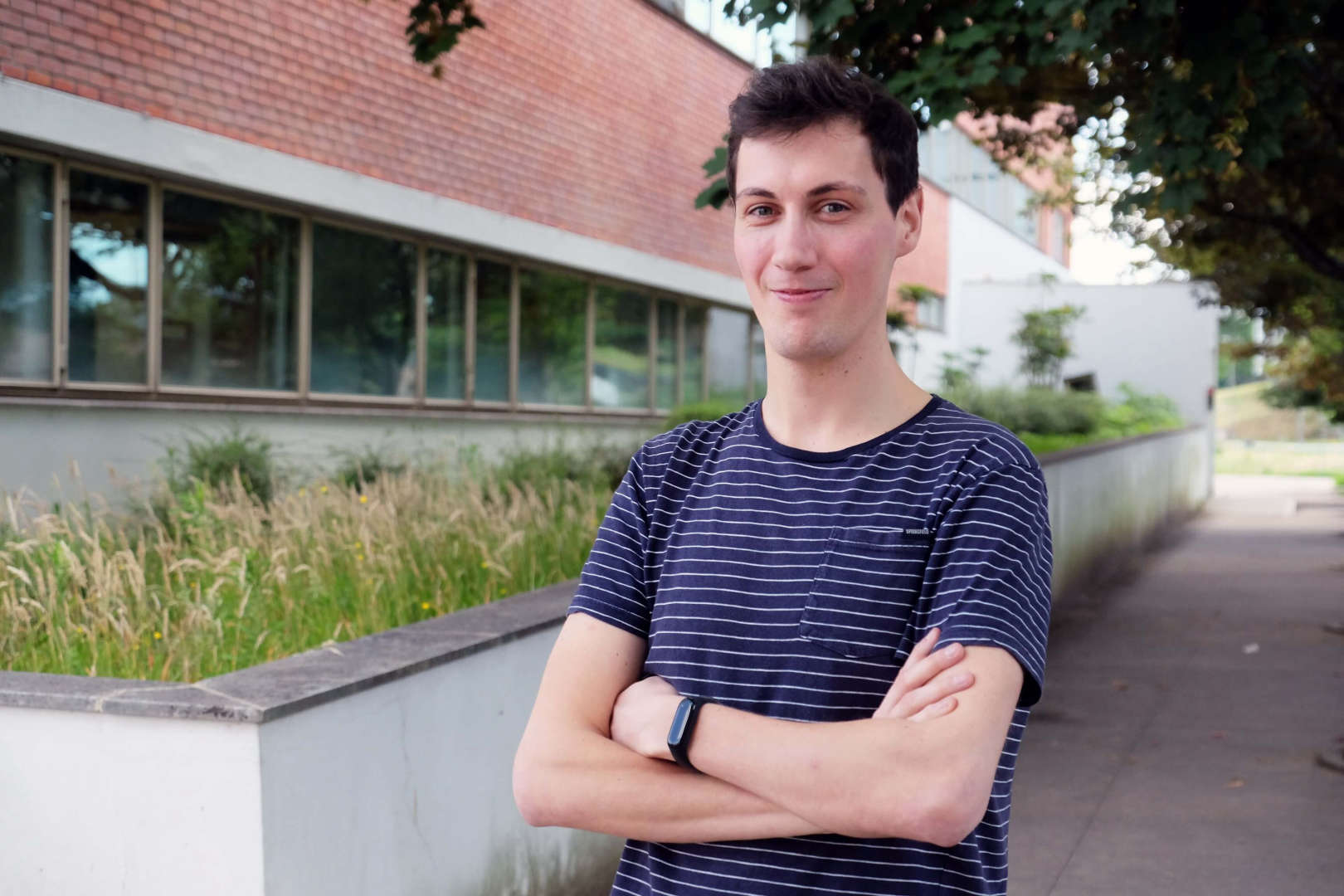
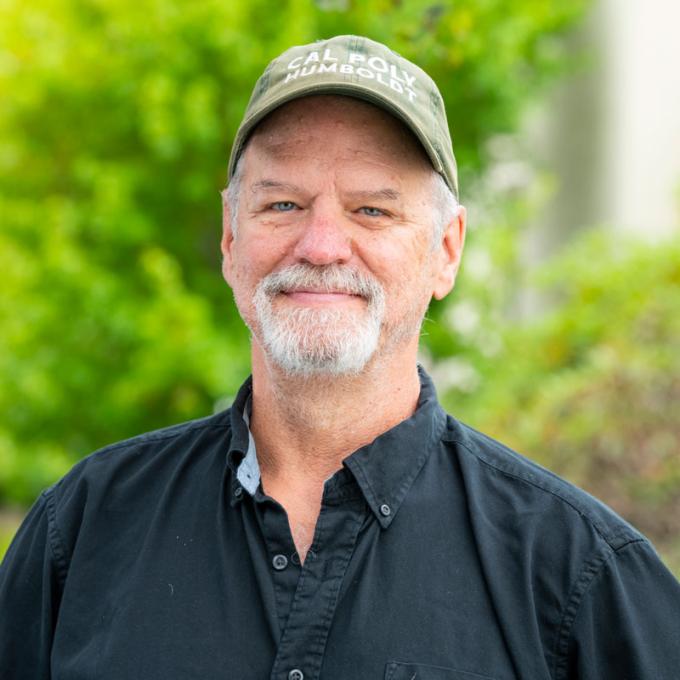
Prof. Dr. Kristian Förster holds the Chair of Climate Change Hydrology at the Weihenstephan-Triesdorf University of Applied Sciences , Department of Landscape Architecture, Institute of Ecology and Landscape. With a background in hydrology and extensive experience in academic research, he specializes in hydrological extremes , climate change adaptation , and nature-based solutions for water management. Education: TU Dresden (2006), TU Braunschweig (2013) Research Focus: Urban hydrology, alpine hydroclimatology, and climate change impacts on water systems His recent publications analyze: Glacier sensitivity under CMIP6 projections Urban flood mitigation in sub-Saharan Africa Hydrological scaling models for green roofs Scenario-neutral approaches for climate impact assessment Meteorological time series disaggregation tools
Jeffrey L. May is an Associate Professor in the Department of Computer Information Systems and Business Analytics at James Madison University’s College of Business. His research interests span Agile methodologies, systems thinking, requirements gathering, semiotics, psychology in computing, and computer programming education. He holds a Ph.D. and M.S. in Information Systems from Virginia Commonwealth University, an M.S. in Environmental Engineering from Virginia Tech, and a B.S. in Mechanical Engineering from Wright State University. Dr. May’s work emphasizes experiential learning in project management and integrating Scrum frameworks into classroom settings. His recent publications explore topics like ERP systems planning and open-source software entrepreneurship. He has received multiple awards, including the COB Teaching and Learning Scholarship Award and Deans Impact Awards, along with grants supporting his research. He is a Certified Scrum Product Owner (CSPO) and Certified Scrum Master (CSM).
Mark Isken is an Associate Professor of Management Information Systems at Oakland University's School of Business Administration. He holds a Ph.D. in Industrial & Operations Engineering from the University of Michigan. His research focuses on simulation and optimization modeling of healthcare systems, business analytics, ecological/environmental analytics, and open source software development. He has published extensively in journals like Annals of Operations Research, IEEE Transactions on Systems, Man and Cybernetics, and Health Care Management Science. Teaching specialties include business analytics, statistics, information systems, and healthcare operations management. He develops open educational resources and maintains a personal website with teaching materials. Notable awards include the 2020 OU Teaching Excellence Award and the 2016 Order of the Plume. Before academia, he worked as an operations researcher at William Beaumont Hospital and Henry Ford Health System. His software contributions include the 'hillmaker' Python package for occupancy analysis and SimPy-based healthcare simulation models. Active in open source communities, he maintains repositories on GitHub for projects like healthcare workflow modeling and environmental data analysis. Engaged in collaborative research with organizations like the CELLDEX Consortium and the University of Michigan's ecology programs.
Arif Ali Khan is an Associate Professor (Tenure Track) and Docent (Adjunct Professor) in the M3S Unit of Empirical Software Engineering at the University of Oulu, Finland. He holds a PhD in Software Engineering from City University of Hong Kong and has previously served at the University of Jyväskylä, Finland, and Nanjing University of Aeronautics and Astronautics, China. His expertise spans Quantum Software Engineering , DevOps , Microservices Architecture , and AI Ethics . Education: Bachelor of Science in Software Engineering, University of Science and Technology, Bannu, Pakistan MSc in Information Technology, Universiti Teknologi PETRONAS, Malaysia PhD in Software Engineering, City University of Hong Kong Research Interests: Khan focuses on advancing empirical software engineering practices in quantum computing, global software development, and ethical AI integration. Key areas include quantum software architecture, agile methodologies for quantum projects, and decision-making frameworks for DevOps and microservices systems. Projects: CLASSİ|Q⟩: Bridging Classical and Quantum Programming – Developing translation frameworks for hybrid systems SeQuSoS M3S – Securing quantum software stacks Labs/Teams: Member of the M3S Empirical Software Engineering Research Unit, focusing on evidence-based methodologies and industry collaboration.
Bogdan Negoita is an Associate Professor in the Department of Information Technology at HEC Montréal, affiliated with the Information Systems Research Group (GReSI). He holds the Professorship of Research in Development and Use of Information Technologies. His academic journey includes a Ph.D. in Management (McGill University), an MBA in Information Systems (McGill University), and a B.Sc. Honours in Computing and Computer Electronics (Wilfrid Laurier University). His research focuses on collective and individual IT use patterns, distributed IT promotion strategies, free software development processes, and legitimation of technology services. Recent studies explore topics like IT addiction recovery mechanisms, distributed IT championing theories, and entrepreneurial dynamics in FOSS ecosystems. Over the past five years, he has advised 39 students on master’s theses and supervised projects, covering data warehousing, risk management tools, and organizational IT implementations. Teaching responsibilities include courses on Business Intelligence, AI fundamentals, and IT acceptance theories. His publications span top journals like Information Systems Research and Journal of Information Technology, with a focus on digital privacy perceptions, technology adoption processes, and community governance structures.
Carlos Serrão is a Professor at Iscte-Iul in the Sciences and Information Technology Department, specializing in Information Security. He holds a PhD from Universitat Politécnica de Catalunya and coordinates the Software Systems Engineering (SSE) Group while being an integrated researcher at ISTAR-IUL. His expertise spans cybersecurity, IoT security, blockchain applications, and automated vulnerability detection. He teaches courses related to information security and has contributed to interdisciplinary research in healthcare cybersecurity and digital procurement models. **Education**: Bachelor's: Informatics and Corporate Management (Iscte-Iul) Master's: Information System Management (specializing in Information Security) PhD: Computational Architecture and Distributed Systems (Universitat Politécnica de Catalunya) **Research Interests**: Focuses on automated security systems, blockchain-based solutions for privacy, IoT security frameworks, and leveraging machine learning for threat detection. His work emphasizes practical applications in healthcare, mobile ecosystems, and enterprise digital transformation. **Publications Trends**: His recent articles highlight advancements in automated vulnerability detection platforms (web/android), blockchain for data integrity, and IoT security through user-centric models. He also explores cybersecurity education's role in interdisciplinary sectors like healthcare and construction. **Labs/Teams**: Coordinates the SSE Group and contributes to ISTAR-IUL, focusing on applied research in software engineering and cybersecurity. Active in developing tools for secure mobile development and enterprise cloud migration assessments.
Rogério António Pontes serves as an External Research Collaborator at INESC TEC's High-Assurance Software Centre (HASLab) since July 2014, contributing to cutting-edge research in computer security and data privacy. His work bridges academic innovation with industry-relevant solutions for secure data systems. He completed his Master's thesis on "Linear Algebra Approach to OLAP systems" and is currently pursuing his PhD through the MAP-i Doctoral programme, focusing on data privacy challenges in collaboration with the European SafeCloud-eu project. His educational trajectory demonstrates a clear progression from theoretical foundations to applied security research. Pontes' research centers on practical implementations of privacy-preserving technologies across distributed environments. His expertise spans cryptographic protocols for secure computation, oblivious database operations, and multi-cloud storage architectures. He addresses critical gaps in data security by developing systems that maintain confidentiality without sacrificing performance, with particular emphasis on real-world deployability in cloud and distributed infrastructures. His publication record reveals a consistent trajectory toward increasingly sophisticated secure system designs. Early work established foundations in secure file systems (SafeFS, 2017) and multi-cloud databases (d'Artagnan, 2019), evolving toward optimized oblivious search (CODBS, 2021) and general-purpose secure CRDTs (2023). This progression demonstrates mastery in combining cryptographic theory with systems engineering to solve concrete privacy challenges. As an integral member of HASLab at INESC TEC, Pontes collaborates within a high-assurance software research ecosystem focused on developing verifiable security solutions. His work directly impacts how sensitive data is processed in untrusted environments, contributing to Portugal's growing reputation in cybersecurity research through both theoretical contributions and open-source implementations.
Girija Krishnaswamy is a Sessional Academic at the Peter Faber Business School within the Faculty of Law and Business. Her research focuses on the intersection of technology and governance, particularly in developing regions. She explores themes such as e-Government, knowledge management in non-profits, and the role of open-source software in education. Her work emphasizes pragmatic solutions for rural development through technology, including studies on telecentres in India and user-friendly e-government portals in Australia. She has also analyzed high-technology clusters in Bangalore and their global competitiveness. Recent publications highlight her contributions to educational technology, such as the IT@School Project in Kerala, and the integration of information systems for public service efficiency. Her research bridges theoretical frameworks with real-world implementation challenges in both developed and developing economies.
Dr. Zhilei Qiao is an Assistant Professor of Information Systems at the Collat School of Business, University of Alabama at Birmingham (UAB). He holds a Ph.D. in Business Information Technology from Virginia Tech and has over seven years of IT industry experience with global companies like Infosys and DNV. His research focuses on social media analytics, text mining, and product innovation, with applications in healthcare, education, and mobile technology. Dr. Qiao has been recognized with awards such as the Best Research Paper Award at the 2020 Pre-ICIS Workshop SIGDSA and the Best Research Paper Runner-Up Award at the 2015 Business Analytics Congress. His work spans analyzing user-generated content to improve product innovation, examining AI’s impact on education, and studying cybersecurity risks in IoT devices. He has published in journals like the Journal of Management Information Systems and Journal of Computational and Graphical Statistics , and presented at conferences such as HICSS and AOM. Dr. Qiao teaches courses in business analytics, data science, and programming, including Introduction to Business Intelligence and Advanced Business Analytics . Professional activities include editorial roles for journals like Electronic Commerce Research and Applications and service on conference committees for events like AMCIS and CSWIM. His research interests also extend to entrepreneurship, mobile analytics, and the ethical implications of AI in education and healthcare.
Malcolm Whitworth is an Associate Professor in Engineering Geomorphology and Natural Hazards at the University of Portsmouth , within the School of the Environment and Life Sciences . His career bridges academic research with extensive commercial applications in natural hazard assessment and terrain evaluation. Specializes in GIS and remote sensing Develops VR applications for geoscience Focuses on infrastructure risk management Research Interests include global natural hazard modeling, landslide susceptibility analysis in mountainous regions, and innovative use of Unmanned Aerial Vehicles and Virtual Reality for hazard visualization. His recent work has concentrated on Niger Delta environmental risks and immersive educational technologies. Article Trends show a strong focus on subsurface hazard modeling , VR applications , and environmental risk assessment . Key subfields include oil spill impact analysis , coastal contamination , and 3D geological education . Teaching integrates real-world case studies, particularly using immersive technologies to enhance fieldwork training. He supervises MSc and PhD students in geomorphology and remote sensing projects across multiple continents. Labs & Collaborations include the Institute of the Earth and Environment and international partnerships in Tajikistan, China, and Greece. His projects span disaster risk reduction along the Pamir Mountain roads and Niger Delta environmental monitoring.
Robert Sutor is an Adjunct Associate Professor in the Department of Computer Science and Engineering at the University at Buffalo, within the School of Engineering and Applied Sciences. He holds a PhD in Mathematics from Princeton University (1992), an MA from Princeton (1983), and an AB from Harvard University (1980). PhD: Mathematics, Princeton University, 1992 MA: Mathematics, Princeton University, 1983 AB: Mathematics, Harvard University, 1980 His research focuses on quantum computing, mathematical markup languages (e.g., MathML), web standards (e.g., DOM), and computer algebra systems like AXIOM. Notable contributions include foundational work on MathML, the Document Object Model (DOM), and AXIOM compiler design. He has also explored privacy in big data and the intersection of quantum computing with societal impact. His publications span over three decades, with key works on: Quantum computing theory and applications Mathematical content representation standards (MathML) Web infrastructure standards (DOM) Compiler design for algebraic systems Dr. Sutor has been deeply involved in standards development through initiatives like the World Wide Web Consortium (W3C) and WS-I. His work bridges theoretical mathematics and practical software engineering, emphasizing interoperability and accessibility.
Emilio Ruzo Sanmartin is a Professor at the Department of Business Organization and Marketing, Universidade de Santiago de Compostela. He actively collaborates with the Interuniversity Research Center for Economics and Business for Society (ECOBAS) and leads the research group POSMARK (Persons, Organizations, Sustainable Marketing). His work focuses on sustainable practices, supply chain dynamics, and technology governance in higher education. PhD in Economics (2002) from Universidade de Santiago de Compostela Research Interests: His research spans Green Human Resource Management , Supply Chain Integration , and Corporate Sustainability , with a focus on behavioral drivers for environmental practices and technology-enabled organizational change. He has authored over 15 recent studies analyzing: Managerial dynamics in sustainable hotel operations IT integration in supply chains Employee pro-environmental behavior Cross-cultural sustainability adoption Projects: He contributes to the UNIVERSITIC series analyzing ICT governance in Spanish universities and leads research on international marketing strategies and organizational change.
Jim Graham is a Professor of Geospatial Science in the Department of Environmental Science and Management at Cal Poly Humboldt. His research uses spatial data and software to analyze human impacts on earth systems and model future scenarios. He teaches introductory to advanced GIS courses including programming and modeling, using both ArcGIS and open-source software. His research focuses on habitat suitability modeling and spatial analysis for natural resource management. Graham has supervised numerous graduate students working on projects involving satellite-based phenology analysis, kelp forest monitoring, habitat modeling for fish species, and tsunami evacuation mapping.
Dr. Dimitris Kavroudakis is an Associate Professor of Geographical Analysis at the University of the Aegean , Department of Geography, Mytilene, Greece. He holds a PhD in Geography (Sheffield, UK), an MSc in GIS (Leeds, UK), and a BSc in Geography (University of the Aegean), with prior studies in Computer Information Systems (American College of Greece). His research spans advanced spatial analysis, agent-based modeling, network analysis, and GIS development, with a focus on smart cities, environmental monitoring, and socioeconomic inequality mapping. Academic Background PhD in Geography, University of Sheffield, UK MSc in GIS, University of Leeds, UK BSc in Geography, University of the Aegean, Greece Diploma in Computer Information Systems, American College of Greece His research integrates spatial data mining , spatial optimization , and agent-based modeling to address challenges in urban planning, environmental monitoring, and public health. Notable projects include CRISTINA (spatial analysis of pandemic spread), SDEM (smart environmental monitoring devices in public buildings), and LIFE TERRACESCAPE (restoration of Mediterranean landscapes). He employs open-source tools (e.g., QGIS, R) and hardware (Raspberry-PI) to advance sustainable solutions. Dr. Kavroudakis has contributed to 15 recent publications covering topics such as virtual reality in geoeducation, multiscale environmental monitoring, and precision pest management. His work emphasizes methodological innovation in spatial statistics, network analysis, and IoT data integration for smart city applications. Recent Projects CRISTINA : Spatial modeling of global pandemic dynamics SDEM : IoT-based environmental monitoring in public buildings LIFE TERRACESCAPE : Landscape restoration using geospatial methods SDG Indicators : Municipal contributions to UN Sustainable Development Goals Smart City Ecosystems : Cloud-based urban planning tools Geospatial Big Data : Novel analytics for environmental and social datasets He provides consultancy services in geographical information systems, spatial modeling, and smart city development. His expertise includes policy development, project evaluation, and training workshops for professionals in GIS and remote sensing. He also develops open-source software, including R libraries ( goal ) and QGIS plugins for spatial analysis and UAV mission planning.
Alessandro Capra is a Full Professor at the University of Modena and Reggio Emilia's Department of Engineering 'Enzo Ferrari'. His research focuses on geomatics, photogrammetry, structural monitoring, and BIM/GIS applications. He leads courses in applied geomatics, BIM, and GIS for Civil and Environmental Engineering programs. Key research areas include coral reef monitoring via underwater photogrammetry, Antarctic geodynamics using GNSS networks, and cultural heritage preservation through 3D laser scanning. Capra's work integrates geodetic, remote sensing, and machine learning techniques to address environmental challenges and structural safety. Notable projects include coral bleaching impact analyses using AI, Antarctic crustal motion studies, and BIM modeling of historic structures like Modena's Cathedral and Ghirlandina Tower. His interdisciplinary approach bridges civil engineering, environmental science, and cultural heritage conservation. He has authored over 50 publications since 2010, with recent focus on marine bioconstructors, UAV-based quarry topography, and machine learning for crack detection. Teaching responsibilities include topography and advanced geomatics modules, emphasizing practical skills in BIM software and geospatial data analysis.