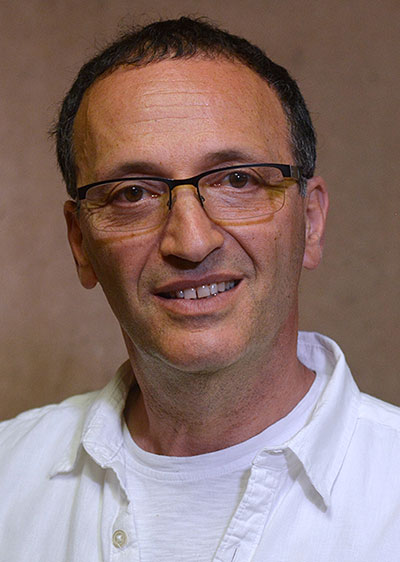
Alex X. Liu is a Professor in the Department of Computer Science & Engineering at Michigan State University (2016-2022), currently serving as Chief Information Security Officer and President of Midea Software Engineering Institute. His academic career includes roles as Associate Professor (2012-2016) and Assistant Professor (2006-2012) at the same institution. He holds a Ph.D. and M.S. in Computer Science from The University of Texas at Austin, and a B.S. in Computer Science from Jilin University, China. Education Ph.D. in Computer Science (UT Austin, 2006) M.S. in Computer Science (UT Austin, 2002) B.S. in Computer Science (Jilin University, 1996) Liu's research focuses on Dependable computing , Networking algorithms , Cloud computing , Mobile computing , Privacy computing , and Computer/network security . His work spans secure systems, network protocols, and resource optimization in distributed environments. Recent publications address quantum neural networks , microservices autoscaling , RFID tag recognition , network traffic classification , and hybrid physical-layer authentication , demonstrating expertise at the intersection of AI and network security. Key trends include deep learning applications for cloud systems and robust security protocols. Scientific Awards IET Fellow (2021) IEEE Fellow (2019) ACM Distinguished Scientist (2019) Withrow Distinguished Scholar Awards (Senior 2019, Junior 2011) NSF CAREER Award (2009) IEEE & IFIP William C. Carter Award (2004)
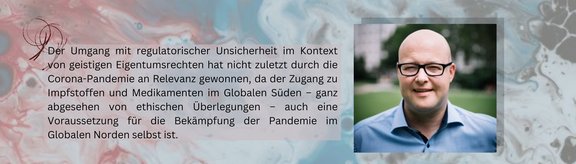
Leonhard Dobusch is a full Professor of Business Administration with a focus on Organization at the University of Innsbruck's Faculty of Business and Management, specifically within the Institute for Organisation and Learning. He has held this position since February 2016, after serving as a Junior Professor at Freie Universität Berlin from 2012-2016. Professor Dobusch maintains active international collaborations with researchers at institutions including ETH Zurich, University of Oxford, University of Zurich, and University of Duisburg-Essen. University of Innsbruck: Professor of Business Administration (since 2016) Freie Universität Berlin: Junior Professor of Management (2012-2016) Freie Universität Berlin: Postdoc at Chair for Inter-Organizational Cooperation (2009-2012) Stanford Law School: Research Fellow at Center for Internet & Society (2008) Max Planck Institute for Social Research: Postdoc Fellow (2008-2009) Professor Dobusch's research centers on three interconnected areas that challenge conventional organizational thinking. His work on organizational openness examines how principles like open source software, open science, and open innovation manifest in practice, revealing how formal openness often leads to unintended exclusion. His second research stream investigates alternatives to intellectual property rights in regulatory uncertain environments, particularly in pharmaceutical innovation where he studies approaches to vaccine development beyond traditional patent systems. Thirdly, he develops the concept of 'organisationality' to redefine how we understand organization in increasingly fluid social systems. His research has significant implications for companies, public administrations, and scientific institutions navigating the challenges of openness, regulatory uncertainty, and new organizational forms in the digital age. Professor Dobusch's publication record demonstrates consistent high-impact contributions to organizational studies, with articles appearing in top journals including Organization Studies, Journal of Management Studies, and Long Range Planning. His work shows a clear trajectory from studying open source software adoption in city administrations (his doctoral research) to broader questions about organizational forms, openness, and intellectual property in complex systems. 2025: Best Reviewer Award of the Journal Organization Theory 2025: Prof of the Year Award in Rhetoric and Didactics 2022: Best Paper Award of the Strategy Practice Interest Group 2020: Ideas Worth Teaching Award by Aspen Institute for 'Organizing in Times of Crisis' 2020: LehrePlus!-Preis der Universität Innsbruck 2016: LehrePlus!-Preis for 'Open Organizations and Organizing Openness' course Professor Dobusch actively integrates his research into teaching, exemplified by his award-winning wiki-based course 'Open Organizations and Organizing Openness' and the collaborative online course series 'Organizing in Times of Crisis', which received international recognition. He currently leads a three-year DFG/FWF-funded research project 'Organising Creativity under Regulatory Uncertainty: Alternative Approaches to Intellectual Property' with Professor Sigrid Quack. Within professional networks, he serves as Chair of the Executive Board of the Interest Group 'Strategizing Activities and Practices' at the Academy of Management and regularly leads sub-themes at the European Group of Organization Studies Colloquium on Organizational Openness. Professor Dobusch contributes to several research communities through his blogs 'osconjunction.net' and 'governancexborders.com', and participates in the Momentum-Kongress that connects academic research with social and political practice. His work bridges theoretical innovation with practical relevance, particularly in how organizations can navigate the tensions between openness and closure, formal regulation and creative adaptation.
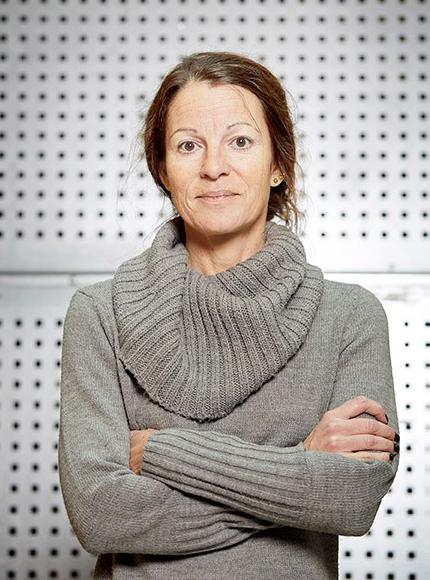
**Pernilla Wittung Stafshede** is a Full Professor with Tenure and Head of the Chemical Biology division at Chalmers University of Technology (Gothenburg, Sweden). She previously held professorships at Umeå University (Sweden) and Rice University (USA). Her research focuses on protein folding, metalloproteins, biophysical methods, and applications to diseases like cancer and Parkinson’s. She leads the Wittung-Stafshede Lab , part of Chalmers’ Chemical Biology infrastructure. **Research Interests**: Protein folding mechanisms, metal transfer proteins, spectroscopic techniques, amyloid formation, and biophysical studies of macromolecules. Her work bridges fundamental biochemistry with disease mechanisms, leveraging advanced experimental and computational methods. **Awards**: Notable honors include the Arrhenius Medal (2016), membership in the Swedish Royal Academy of Sciences (2016), and sustained Wallenberg Scholar funding (2010–2022). She is recognized for pioneering contributions to chemical biology. **Key Contributions**: Her lab’s work spans protein dynamics, metallomics, and disease-related protein misfolding. Recent publications highlight systems biology approaches to yeast metabolism and drought stress responses in plants.
Johanna Ullrich is a Professor at the University of Vienna's Faculty of Computer Science and a Key Researcher at SBA Research in Vienna. She leads the Research Group Communication Technologies and serves as Head of the Networks and Critical Infrastructures Security Group at SBA Research. Her academic journey includes positions as Principal Investigator & Manager of Third Party Funded Projects at the University of Vienna and Post-Doctoral Researcher at the Christian Doppler Laboratory for Security and Quality Improvement in the Production System Lifecycle. Her educational background includes a PhD sub auspiciis praesidentis in Computer Science from TU Wien (2013-2016), an MSc in Automation Engineering from TU Wien (2010-2013), and a BSc in Electrical Engineering from TU Wien (2007-2010). She also holds a Venia Docendi for Computer Engineering from the University of Vienna. Ullrich's research focuses on the intersection of computer science and classical engineering, with particular emphasis on network security, IPv6 measurement experiments, and critical infrastructure protection. Her groundbreaking work demonstrated vulnerabilities in the IPv6 Privacy Extension that led to modifications in major client operating systems, protecting millions of users. She is renowned for her research on cyber-physical attacks against power grids, showing how coordinated load attacks can destabilize electrical infrastructure. Her work spans both theoretical security frameworks and practical implementations with significant real-world impact. Her publication record reveals a consistent trajectory from fundamental network security research toward increasingly complex interdisciplinary investigations at the boundary of computer science and physical infrastructure. Recent work emphasizes AI/ML applications for network security, power grid resilience, and socio-technical approaches to cybersecurity. Her research demonstrates a progression from protocol-level security (IPv6) to system-level security (cloud, IoT) and now to infrastructure-level security (power grids, critical national infrastructure). 2nd in the Faculty of Computer Science's Best-of-the-Best Ranking 2024 Category Third Party Funding Nomination for the Hedy Lamarr Prize 2019 and 2020 Scholarship of Excellence 2018 Research Prize of the Dr. Maria Schaumayer Foundation 2018 Promotio Sub Auspiciis Praesidentis 2017 Diploma Thesis Award of the City of Vienna 2013 Ullrich actively contributes to the academic community through extensive grant acquisition and service. She has secured numerous research projects including SPyCoDe (Semantic and Cryptographic Foundations of Security and Privacy by Compositional Design), DynAISEC (Adaptive AI/ML for Dynamic Cybersecurity Systems), and Q-Crit (Quantum-Safe Critical Infrastructure for Austria). Her leadership extends to committee roles including Program Committee Member of IEEE Symposium on Security and Privacy (S&P) 2024 and Technical Program Chair of Network Traffic Measurement and Analysis Conference (TMA) 2023. At SBA Research, she leads the Networks and Critical Infrastructures Security Group, which investigates security challenges at the intersection of digital networks and physical infrastructure. The group conducts both theoretical research on security frameworks and practical measurements of real-world systems. Their work combines network measurement techniques with power systems engineering to develop comprehensive security approaches for critical infrastructure.
Donatella Sciuto is a Full Professor of Computer Science and Engineering at Politecnico di Milano, serving as Executive Vice Rector overseeing research strategies. She holds a PhD from the University of Colorado, Boulder and an MBA from Bocconi University. Her research focuses on embedded systems design, low-power electronics, and cyber-physical systems, with contributions to smart cities and ICT infrastructure. Education: Bachelor's in Electronic Engineering, Politecnico di Milano (1984) PhD in Electrical and Computer Engineering, University of Colorado, Boulder MBA, SDA Bocconi School of Management Research Interests: Embedded systems, multiprocessor architectures, hardware/software co-design, power-efficient computing, and building automation via IoT technologies. She leads the Embedded Systems Design research group at Politecnico di Milano and coordinates EU-funded projects in smart cities and reconfigurable systems. Awards: IBM Women Leaders in AI (2021) IEEE Fellow (2011) EDAA Fellow (2010) Outstanding Contribution Award, IEEE Computer Society (2009) Professional Roles: Board Member: Bank of Italy, Istituto Italiano di Tecnologia, STM, Avio Former President, IEEE Council of Electronic Design Automation (2011-2013) Executive Committee Member, Design Automation and Test in Europe (DATE) conference Labs/Teams: Leads the Embedded Systems Design and Design Methodologies group at Politecnico di Milano, collaborating with CEFRIEL on executive education programs in embedded systems and IoT.
Stephan Schlögl is a Full Professor at MCI - The Entrepreneurial School in Austria, leading research and teaching in Human-Computer Interaction (HCI), Artificial Intelligence (AI), and Information Systems. He holds editorial roles at journals like the Springer Discover Artificial Intelligence Journal and MDPI Multimodal Technologies and Interaction Journal. His work spans over two decades, with key roles including Postdoctoral Research Fellow at Télécom ParisTech (2012–2013) and PhD Researcher at Trinity College Dublin (2008–2012). Schlögl’s research focuses on HCI, AI-driven conversational systems, and assistive technologies for aging populations. Education includes a PhD in Computer Science from Trinity College Dublin, an MSc in Human-Computer Interaction from University College London, and a Mag.(FH) in Applied Informatics & Management from MCI. His teaching spans Software Engineering, Business Intelligence, and Research Methods. Research interests emphasize natural language interfaces, AI ethics, and technology’s societal impact. Notable projects include the EU-funded EMPATHIC initiative (2017–2021), developing an empathic virtual coach for elderly care, and the CRYSTAL project (2024–present) on conversational systems for emotional support. Schlögl has supervised numerous theses on AI applications, chatbots, and UX design. He co-organized major conferences like CUI (Conversational User Interfaces) and received awards for best papers in AI-HCI and CHIRA. His work bridges academia and industry, addressing challenges in AI adoption, digital well-being, and ethical technology design.
Prof. Wen Dongsheng is the Chair Professor and Head of the Institute of Thermodynamics at Technical University of Munich (Germany). He holds adjunct professorships at the University of Leeds (UK) and Beihang University (China). His research focuses on multiscale heat transfer mechanisms in nanomaterials, with applications in energy and aerospace engineering. Key areas include solar energy systems, nanofuel combustion, and nanoparticle interactions with electromagnetic radiation. Education: BEng in Aeronautics (Beihang University), MSc in Thermophysics (Tsinghua University), DPhil in Engineering Science (University of Oxford). Research Interests: Heat production/transport/storage, multiscale experimentation/simulation, nanomaterial-based energy solutions. Specific applications include solar energy optimization, nanomedicine, and oil/gas engineering innovations via nanoparticle-driven technologies. Editorial Roles: Editor-in-Chief of Advance in Aerodynamics , Associate Editor of Applied Thermal Engineering . Awards include Fellowships from the Royal Society of Chemistry and Energy Institute, and the MIC-Particuology Award. Publications: Over 350 referred papers, 20 patents, with an H-index of 65. Research emphasizes cross-disciplinary applications of nanotechnology in energy systems and aerospace.
Dr. Christian Büsel is a researcher at the Department of General Psychology I, Institute of Psychology, University of Innsbruck . His work focuses on visual attention mechanisms, including top-down and bottom-up processing, and their relationships with working memory. Email: Christian.Buesel@uibk.ac.at Research Interests: Visual attention, visual search, and the interplay between working memory and intentional visual attention. He employs behavioral experiments, meta-analyses, and mobile eye tracking to study suppression of irrelevant stimuli and contingent capture effects. Methodological Contributions: A key developer of the open-source Experimenters' Tools project, which provides resources for psychological research, including visual angle calculations, color conversions, power analyses, and diffusion modeling. His textbook on empirical-experimental methods is available via Springer. Articles Trends: Recent publications emphasize attentional control, feature-based suppression, and cross-modal cognitive processes (e.g., music reading and auditory discrimination). Technical contributions highlight mobile experimentation frameworks and OpenSesame-based methodologies.
Andreas Riedl is an Assistant Professor at the Department of Geography and Regional Research, University of Vienna, where he serves as Head of the Hyperglobe Research Group and Vice-Director of Studies for Geography. His work bridges cartographic heritage with cutting-edge geospatial technology, focusing on spherical display systems for global data visualization. His educational background includes a Doctorate in Geography/Cartography from the University of Vienna (1987-1992) and an Industrial Engineering degree from HTL-Hollabrunn (1979-1985). Career milestones include research at Simon Fraser University (1995-1996) and software development at ITC Enschede (1996). Riedl's research centers on Hyperglobes —interactive 1.2-meter spherical displays that visualize weather patterns, continental drift, and climate change through dual 4K projection. His group operates these systems for public education, serving schools and museums with free demonstrations of geophysical phenomena, flora/fauna distributions, and extraterrestrial topics. Complementing this, he advances GIS applications in urban planning, 3D visualization, and multimedia geocommunication. Analysis of his 15 most recent publications reveals dual research trajectories: (1) Environmental hydrology studies quantifying dew/fog water inputs in grasslands using isotope tracing and micro-lysimeters, and (2) Media studies examining migration coverage, journalistic roles, and gender representation in news. Both strands emphasize data visualization's role in public understanding of complex systems. As an educator, Riedl supervises Master's theses on GIS implementation, 3D city modeling, and geovisualization. His students explore topics including e-charging infrastructure planning, infographic-style maps, and AR navigation systems, reflecting his commitment to applied spatial analysis. The Hyperglobe Research Group provides critical infrastructure for these projects through its spherical display technology and public engagement initiatives.
Dr. Martin Loidl is a researcher in Geoinformatics at the University of Salzburg's Department of Geoinformatics - Z_GIS, part of the Faculty of Digital and Analytical Sciences. His work focuses on GIS applications in mobility, urban planning, and cartography. Key projects include developing tools like NetAScore for assessing bikeability and walkability, and frameworks for analyzing transportation networks. He has authored over 75 publications, with recent work emphasizing spatial analysis for sustainable urban mobility. His research integrates agent-based modeling, spatial data science, and real-world transportation challenges. Education: Dr., MSc in Geoinformatics. Key Projects: GISMO Study on active commuting, Bike Sharing System Planning, Digital Twins for Urban Sustainability. Research Interests: GIS and mobility optimization, cartography, agent-based simulations, and spatial data science for urban planning. His contributions include software tools like NetAScore and frameworks for bicycle infrastructure analysis. Grants & Awards: Secured funding from various research initiatives; part of interdisciplinary teams addressing urban mobility challenges. Labs/Teams: Mobility Lab | UNIGIS, collaborating on projects like the Bicycle Observatory and spatial network analysis.
Ruth Breu is a Full Professor and Dean of the Faculty of Mathematics, Computer Science and Physics at the Universität Innsbruck, where she also leads the Quality Engineering research group. She has been a key figure in the Department of Computer Science since 2002 and served as its Head from 2013 to 2024. Her academic journey began with a PhD summa cum laude from the University of Passau in 1991, followed by a habilitation at the Technical University of Munich in 1999. Her research interests include: Quality Engineering Model and Security Engineering Requirements and Software Development Processes Enterprise Architecture Management Threat Intelligence and Digital Twins Her recent publications reflect a strong focus on model-based systems, automated programming assessment, security engineering, and digital twins in construction and energy systems. She frequently collaborates with researchers such as Michael Felderer, Clemens Sauerwein, and Philipp Zech, contributing to advancements in software testing, threat intelligence sharing, and cyber-physical systems. Notable awards include her PhD awarded summa cum laude. She has also been actively involved in national research governance, serving on the board of the Austrian Science Fund (FWF) from 2011 to 2020. She co-founded Txture GmbH in 2017 and holds advisory roles at Universität Passau and FH OST. Ruth Breu advises several students and leads a vibrant research group. Her leadership extends to organizing workshops and contributing to major conferences in software engineering and enterprise modeling. She is deeply engaged in both academic and applied research, bridging theory and practice in IT quality and security.
Stefan Rass is a Professor at the Institute of Networks and Security within the Faculty of Engineering & Natural Sciences at Johannes Kepler University Linz (JKU), where he leads the LIT Secure and Correct Systems Lab. As Principal Investigator for FFG-funded projects including reSilienz (digital supply chain resilience, 2023–2025) and ITPUK (AI signature verification, 2022–2024), he bridges theoretical game theory with practical cybersecurity solutions for critical infrastructures and robotics systems. His research spans game-theoretic security models (patrolling games, defense-in-depth strategies), quantum cryptography (QKD network architectures), and cyber deception frameworks like Honeyquest for measuring honeypot effectiveness. Recent work addresses robotics security benchmarking (RobotPerf), cryptographic instruction chaining for control flow protection, and risk assessment methodologies for interdependent infrastructures. His mathematical decision-making approach integrates bounded rationality and stochastic modeling to solve real-world security challenges. Professor Rass actively shapes the field through program committee roles (ARES 2023), peer reviews, and invited talks on security transparency. His current projects focus on cost-benefit-aware monitoring for cyber-physical systems and quantum key distribution standardization, reflecting Austria’s strategic priorities in digital resilience. The LIT Secure and Correct Systems Lab under his direction develops foundational theories while deploying tools for industrial applications, particularly in critical infrastructure protection and secure robotics workflows.
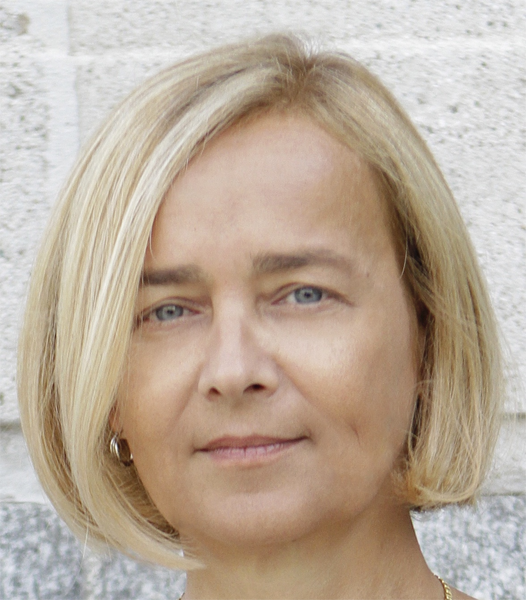
Corinna Brungs is a Senior Scientist at the University of Vienna , affiliated with the Faculty of Life Sciences and the Department of Pharmaceutical Sciences (Division of Pharmacognosy). Her research focuses on applying cutting-edge mass spectrometry techniques for natural product identification, biomarker discovery, and untargeted metabolomics workflows. Developing open mass spectral libraries Advancing data processing strategies Specializing in tattoo pigment and metabolite analysis Research Highlights: Brungs bridges phytochemistry and computational metabolomics through method development in mass spectrometry. Her work includes creating standardized protocols for: Tattoo pigment identification In-source fragmentation analysis Non-targeted drug exposure profiling Integration of mobility-resolved spectrometry Scientific Awards: 2025 Early Career Prize (Metabolomics Society) 2025 Early Career Travel Award (Metabolomics Society) 2022 Czech Academy of Sciences Fellowship Publications (2022-2025) demonstrate leadership in: MALDI-TIMS-MS2 bioimaging MZmine 3 software development Metabolomics data reproducibility Mass spectral library matching
Jürgen Cito is an Associate Professor in the Department of Software Engineering at the Faculty of Informatics, TU Wien, where he leads research in probabilistic programming, security, and configuration management. His work is supported by major grants from the Austrian Science Fund (FWF), European Commission, and Meta Platforms, Inc., with active projects spanning 2022-2027. His research focuses on the intersection of software engineering and machine learning, particularly in static analysis of probabilistic programs, AI-driven penetration testing, and infrastructure security. Key contributions include identifying secret exposure in configuration files, grammar inference for ad hoc parsers, and performance prediction from source code, often combining empirical studies with tool development. Analysis of his 15 most recent publications (2020-2024) reveals three dominant trends: (1) Security vulnerabilities in configuration management systems, especially secret leakage in dotfiles; (2) Application of large language models to offensive security testing; and (3) Machine learning techniques for performance prediction and AutoML optimization in software contexts. Cito has supervised 22 Master's students on cutting-edge topics including AI security, infrastructure as code, and program analysis. His current research portfolio includes: Types4Strings (FWF, 2024-2027): Type systems for string processing Cloud Open Source Research Mobility Network (EU, 2023-2026): Open-source cloud infrastructure Software Assistants for Probabilistic Programming (Meta, 2022-2026): AI tools for probabilistic code He is embedded in TU Wien's Institute of Software Technology and Interactive Systems (E194), collaborating on cross-institutional projects focused on software security and developer tooling, with particular emphasis on empirical validation of security practices and configuration management systems.
Alexandru Nicolau is a Distinguished Professor and Chair of the Department of Computer Science at the University of California, Irvine (USA), where he has worked since 1992. He previously held positions as Associate Professor (1988–1992) and Assistant Professor (1984–1988) at UC Irvine and Cornell University, respectively. Education : B.A., Brandeis University (1980) MS (1981), Ph.D. (1984), Yale University Research Interests : A leading expert in parallelizing compilers , high-performance computing , and software-hardware co-design , Nicolau pioneered foundational techniques like Percolation Scheduling and Optimal Loop Parallelization . His work enables efficient exploitation of instruction-level parallelism in general-purpose programs, with applications in embedded systems , matrix algorithms , and GPU-based neural networks . He has also contributed to Electronic Design Automation (EDA) and lightweight synchronization protocols . Scientific Awards : IEEE Fellow (2014) ACM SIGPLAN Most Influential Paper (PLDI 20 years) EDAA/IEEE/ACM DATE Most Influential Paper (10 years) ACM ICS Most Influential Paper (25 years) 4 Best Paper awards (VLSI design 2003, ISHPC 2005, CASES 2008, IJCNN 2009) Advising & Grants : He has mentored notable scholars now at Stanford, McGill, and Google, and secured over $20M in funding from NSF , DARPA , and industry leaders like IBM and Intel . His professional service includes chairing ACM ICS’09 and PPOPP’13, and serving on steering committees for LCPC and ICS. Labs & Collaborations : His techniques have been adopted by IBM Watson, Siemens Munich, Fujitsu Labs Japan, and the open-source GCC compiler.