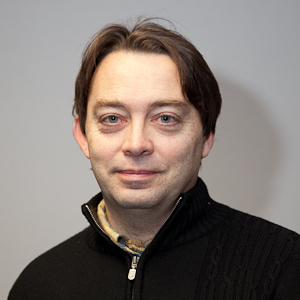
Tanguy Risset is Professor in the Telecommunication Department at Insa-Lyon, specializing in embedded systems, compilation, and software-defined radio. As head of Inria's Socrate project, he coordinates research on cognitive radio networks integrating signal processing, communications, and computer science. His research develops FPGA-based solutions for real-time audio processing and wireless systems, emphasizing compilation techniques for hardware acceleration. Recent publications focus on low-latency audio transmission, spatial sound implementation, and open-source toolchains for FPGA audio DSP.
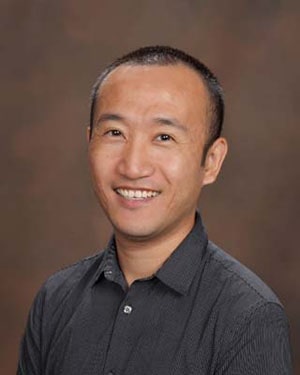
Dr. Xiaokun Yang is an Associate Professor of Computer Engineering in the College of Science and Engineering at the University of Houston-Clear Lake. With extensive industry experience at AMD and CEC, his research bridges hardware design and AI acceleration. Research focuses on FPGA acceleration for AI/ML, hardware/software co-design, and IoT system architectures. Publications demonstrate innovations in neural network accelerators, hardware-efficient AI, secure SoC design, and edge computing solutions. Recent work explores ReRAM-based accelerators, blockchain-secured hardware, and federated learning systems. Awards include Best Ph.D Forum Paper at ISVLSI 2014. Education includes a Ph.D. in Electrical and Computer Engineering from Florida International University (2016) and dual M.S. degrees from FIU and Beihang University. Courses taught include Advanced Digital Systems Design, Electronics, and Senior Project. Current research projects investigate FPGA-based AI acceleration and IoT architectures.
Carl D. Laird is the John E. Swearingen Professor and Department Head of Chemical Engineering at Carnegie Mellon University. He leads an internationally recognized research program in process systems engineering, known for high-performance computing techniques in large-scale nonlinear optimization, parallel scientific computing, and open-source software development. Education: Ph.D. in Chemical Engineering, Carnegie Mellon University (2006) B.S. in Chemical Engineering, University of Alberta (2000) Research Focus: His work solves problems in non-traditional domains including public health, homeland security, critical infrastructure, and energy systems through advanced optimization methodologies. Current research integrates machine learning with optimization for improved decision-making in complex systems. Publication Trends: Recent work focuses on mathematical optimization frameworks, decomposition methods for large-scale problems, integration of machine learning surrogates, and applications in energy systems and chemical manufacturing. Research demonstrates consistent innovation in computational methods for engineering challenges. Awards and Honors: Steven J. Fenves Award for Systems Research INFORMS Computing Society Prize CAST Division Outstanding Young Researcher Award NSF CAREER Award Montague Center Teaching Excellence Award Wilkinson Prize for Numerical Software (for IPOPT development) Leadership and Funding: As director of the Center for Advanced Process Decision-Making, he oversees collaborative research with industry partners. His research has been supported by NSF, DOE, and industrial consortia.
Dr. Ander Biguri is a Researcher at the Cambridge Image Analysis (CIA) group within the Faculty of Mathematics at the University of Cambridge. His primary research focuses on tomographic reconstruction techniques, particularly in cone-beam computed tomography (CBCT), and the integration of machine learning into medical imaging workflows. He is the main developer and maintainer of the TIGRE toolbox, an open-source software for iterative CT reconstruction. Key research areas include source-detector trajectory optimization for improved imaging quality, low-dose CT reconstruction, metal artifact reduction, and dynamic PET imaging. His work emphasizes practical applications in clinical and industrial tomography, with contributions to both algorithm development and hardware optimization. Biguri collaborates on projects such as AdvanCT (EURAMET) and has published extensively on topics like motion correction in PET/CT, GPU-based iterative reconstruction, and the design of imaging systems for radiation therapy.
Alan Wagner is an Associate Professor in the Department of Computer Science at the University of British Columbia (UBC), where he has held tenure since 1987. He is a member of the Institute for Computational Intelligence and Cognitive Systems (ICICS). With over 35 years of experience, his research focuses on parallel and distributed computing, high-performance computing (HPC), and message-passing systems (particularly MPI). His work emphasizes latency reduction, scalability, and middleware development using protocols like SCTP and TCP. Education: Ph.D. in Computer Science, University of Toronto (1987) M.Sc. in Computer Science, University of Alberta (1983) B.Sc. (Honors) in Mathematics, Dalhousie University (1977) Research interests include parallel algorithms, distributed systems, and applications in computational finance and data analytics. He has contributed to open-source projects like FG-MPI (a fine-grain MPI implementation) and SCTP-based MPI middleware, enhancing MPI's performance on commodity networks. His work has been supported by grants such as the NSERC I2I Grant (2008) and CFI Leaders Opportunity Fund (2009). He has advised over 20 M.Sc. students and 2 Ph.D. students. His teaching includes courses on parallel algorithms (CPSC 521) and computer networking (CPSC 317). He currently chairs UBC's Computer Science Graduate Admissions Committee.
Dr Timothy D. Craggs is a Senior Lecturer in Biological Chemistry at the University of Sheffield's School of Mathematical and Physical Sciences. He holds a MSci from the University of Cambridge (2002) and a PhD from Cambridge (2007). His career includes a Lindemann Fellowship at Yale University (2010), followed by senior postdoc roles at Oxford and Bristol. He joined Sheffield in 2016 as a Lecturer in Chemical Biology. His research focuses on single-molecule spectroscopy, particularly using FRET techniques to study biomolecular processes. Key areas include DNA replication/repair mechanisms, protein dynamics, and structural biology. The Craggs Lab develops innovative tools like the open-source smfBox platform, enhancing precision in distance measurements (sub-3 nm) and enabling FRET-driven structural studies. Teaching activities span undergraduate and postgraduate levels, including modules on biopolymers, biomaterials, and interdisciplinary biology-chemistry topics. His work bridges fundamental research with applied challenges such as diagnostic methods for infectious diseases (e.g., Buruli ulcer detection) and structural studies of aberrant DNA diseases. Collaborative efforts include multi-laboratory benchmarking of FRET accuracy and contributions to open-source scientific instrumentation. Current projects emphasize real-time observation of biomolecular interactions and the development of advanced microscopy techniques.
Andrea Portaluri is a Ph.D. candidate in Computer Engineering (37th cycle, 2021-2024) at Politecnico di Torino's Department of Control and Computer Engineering (DAUIN). He also serves as an external lecturer and teaching collaborator for the course 'Operating Systems' in the 2024/25 academic year. His research focuses on radiation-hardened FPGA design, real-time embedded systems reliability, and fault tolerance in software-hardware co-design. Research interests include radiation effects on electronics, FPGA-based acceleration, real-time operating systems (RTOS), and mitigation techniques for soft errors in embedded systems. He collaborates with researchers like Luca Sterpone, Sarah Azimi, and Corrado De Sio on projects addressing reliability in space and safety-critical applications. His recent publications analyze radiation-induced errors in FPGAs, GPU-enhanced CAD tools for radiation-hardened designs, and multi-core neural network accelerators. Work trends emphasize improving embedded system reliability through hardware-software co-design, domain isolation, and fault-tolerant architectures. Portaluri actively participates in international conferences, presenting at venues like ACM Computing Frontiers, IEEE IOLTS, and IEEE Parallel and Distributed Computing. He has contributed to over 15 peer-reviewed articles and conference proceedings since 2021, focusing on radiation-hardening techniques and embedded system resilience.
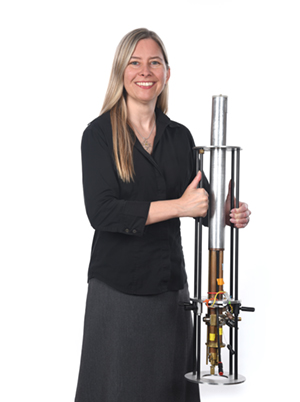
Rachel Martin is a Professor in the Department of Chemistry at the University of California, Irvine (UCI). Her research focuses on analytical chemical biology , physical chemistry , and chemical physics , with a particular emphasis on protein structure, stability, and dynamics. She investigates molecular chaperones, lens crystallins, and extremophilic enzymes, often employing NMR spectroscopy and computational modeling. Dr. Martin's work integrates biophysical chemistry with instrumentation development, such as NMR probe fabrication and automated testing systems. She also explores educational innovations, including specifications grading in chemical biology courses. Her research has implications for understanding protein aggregation in aging, cold adaptation mechanisms, and enzyme function in extreme environments. Recent projects include studying deamidation effects on γ-crystallins, radiation resistance in lens proteins, and collaborative efforts in protein crystallization and structure determination. Her lab leverages open-source tools and maker methodologies for experimental instrumentation.
Sabrina M. Neuman is an Assistant Professor of Computer Science at Boston University, specializing in computer architecture design informed by domain-specific insights, particularly for robotics applications. She holds a PhD in Electrical Engineering and Computer Science from MIT and was a postdoctoral NSF Computing Innovation Fellow at Harvard University. Her research focuses on closing computational gaps in robotics through domain-specific accelerators, leveraging robot morphology for hardware design. She has received honors including the 2021 EECS Rising Star and the Boston University Innovation Career Development Professorship (2023-2026). Education: PhD in Electrical Engineering and Computer Science, MIT M.Eng. in Electrical Engineering and Computer Science, MIT S.B. in Electrical Engineering and Computer Science, MIT Research Interests: Her work emphasizes domain-specific computing for robotics, including automated hardware design flows, FPGA/ASIC acceleration for motion planning, and scalable accelerator deployment across robot platforms. She develops methodologies like Robomorphic Computing, which translates robot morphology into customized hardware accelerators, achieving significant speedups in critical robotics kernels. Awards & Recognition: 2021 EECS Rising Star IEEE Micro Top Picks Honorable Mentions (2022, 2023) 2023-2026 Boston University Innovation Career Development Professorship Grants & Contributions: Developed RobotPerf, an open-source benchmarking suite for robotics computing systems Worked on Grid (GPU-accelerated rigid body dynamics) and RobotCore (ROS 2 hardware acceleration) Labs & Teams: While no specific lab name is mentioned, her work integrates closely with Boston University's robotics and computer architecture groups, emphasizing open collaboration with industry and academia.
Benedetta Piantella is an Industry Associate Professor at the NYU Tandon School of Engineering, affiliated with the Integrated Design & Media Program (IDM). She holds a dual role as an educator and humanitarian technologist, with over two decades of experience in international development, STEM education, and sustainable technology design. Her work focuses on participatory design methodologies to address global challenges in resource equity, climate resilience, and community-driven innovation. Education & Experience: Former Technologist in Residence at Cornell Tech (Connected Experiences Lab, Social Technologies Lab) Technology Architect at Columbia University’s Earth Institute and Quadracci Sustainable Engineering Lab Founder of two R&D companies focused on sustainable solutions for global problems Research Interests: Benedetta’s work bridges technology and society through projects like the Solar Protocol initiative, which explores energy-positive internet infrastructure, and the Low Power Lab’s development of off-grid systems. She emphasizes participatory design, user-centered approaches, and open-source collaboration to create resilient networks and IoT solutions for underserved communities. Key Contributions: Her research addresses equitable access to life-sustaining resources through solar microgrids, real-time monitoring systems, and distributed infrastructure. Recent projects include deploying 24/7 water kiosks in Africa and developing decentralized energy networks for disaster resilience. Labs & Affiliations: Center for Urban Science + Progress (CUSP) Low Power Lab Partnerships with UNICEF, UN, and Millennium Villages Project
Prof. Jelmer Borst is an Associate Professor in Computational Cognitive Neuroscience at the University of Groningen's Faculty of Science and Engineering, affiliated with the Artificial Intelligence department within the Bernoulli Institute. His research focuses on integrating computational models with neuroimaging data to understand cognitive processes like multitasking, working memory, and decision-making. He advises three PhD candidates and collaborates internationally on projects involving EEG/fMRI analysis and cognitive modeling frameworks such as ACT-R and Nengo. Research Interests: Neuroimaging analysis methods, cognitive bottlenecks in multitasking, memory retrieval localization, and adaptive learning systems. Key Projects: Developed the PREDICTOR tool for semi-automated driving response timing, and advanced models linking symbolic process stages to brain activity via MEG/EEG. Recent work includes large-scale evaluations of adaptive learning systems and interventions to mitigate mind-wandering in driving scenarios. He has received the Allen Newell Best Student-led Paper Award (2021) for contributions to cold-start adaptive learning research. His research group maintains active collaborations on datasets involving working memory, decision-making, and cognitive architecture validation through neuroimaging experiments. He also contributes to open-source tools for cognitive modeling and neuroimaging analysis.
Luis Gerhorst is a Researcher at the Department of Computer Science 4 (Distributed Systems and Operating Systems) at Friedrich-Alexander-Universität Erlangen-Nürnberg. He focuses on systems software, embedded systems, energy-efficient computing, and security mitigations against transient execution attacks like Spectre. His work spans kernel-level optimizations, carbon-aware cloud systems, and embedded system resilience. Education: Completed Bachelor's and Master's theses in system software at FAU, focusing on system-call aggregation and Linux kernel interrupt handling. Research Interests: His primary areas include operating systems, distributed systems, and energy-aware resource management. Notable contributions include the AnyCall system-call aggregation framework and VeriFence , a Spectre defense mechanism for BPF programs. He also explores carbon footprint modeling in cloud environments through projects like carbond . Publications: Recent work addresses energy-efficient embedded systems (vNV-Heap), power-failure resilient network stacks (PfIP), and reverse-engineering Wi-Fi drivers for energy analysis. His research often bridges hardware-software co-design and environmental sustainability. Grants/Advising: Supervised over 10+ theses on topics like carbon-aware timers, BPF sandboxing, and Rust-based alternatives to BPF. Active in open-source projects like Linux kernel contributions and GitHub repositories for systems research. Labs/Teams: Member of Lehrstuhl für Informatik 4, collaborating on projects related to system software and embedded systems resilience. Maintains active GitLab/ GitHub repositories for research tools and prototypes.
Professor Daniel Lohmann leads the Systems Research and Architecture (SRA) group at Leibniz Universität Hannover since 2017, following his role as Associate Professor (Privatdozent) at Friedrich-Alexander-Universität Erlangen-Nürnberg (2009–2016). His work focuses on configurable system software, emphasizing embedded systems, real-time systems, and dependable architectures. Key projects include danceOS (dependability in embedded OS), Sloth (minimal-effort kernels), and AspectC++ (aspect-oriented C++ extension). His research is funded by DFG and addresses challenges in variability management, fault tolerance, and real-time scheduling. Research interests span operating systems design, software product lines, generative programming, and aspect-oriented development. Notable contributions include the CiAO OS family and the Sloth RTOS, leveraging aspect-oriented techniques for flexibility and efficiency. His work on configuration analysis (e.g., static variability in Linux) and fault mitigation (e.g., AN-Codes for soft errors) highlights his expertise in system reliability and optimization. Publications emphasize real-time systems, embedded software, and software engineering, with awards including the Best Paper Award at SPLC 2010 and an Outstanding Paper at RTAS 2017. He supervises theses on system software tailoring, fault tolerance, and industrial software ecosystems. His groups collaborate on invasive computing (SFB/TRR 89) and hardware-aware OS design.
Scott Mitchell is a Lecturer in the School of Design at RMIT University's City Campus in Australia. His academic work bridges design theory and practice with a focus on critical and radical approaches to design that examine how objects become sites of social and public action. Mitchell's research spans Design Practice and Management, Visual Arts and Crafts, Creative Arts and Writing, Art Theory and Criticism, Architecture, and Digital Media. His work explores the intersection of design with social contexts, particularly through divergent consumer practices such as hacking and modding. His interdisciplinary approach combines critical design theory with electronic and interaction design practices to examine how designed objects function as sites of social engagement and public action. His publication record from 2014-2025 reveals an evolving research trajectory from foundational explorations of maker culture and material agency to contemporary investigations of energy-conscious design for smart homes and digital twins. A consistent theme across his work is the examination of the relationship between design, materiality, and social contexts, with recent publications focusing on interactive materials, wearable technology, and logo aesthetics. Scott Mitchell is actively engaged in research supervision, being open to Masters Research and PhD student supervision. His current supervisor projects include investigations into logo aesthetics, energy-conscious design for digital twin-driven smart homes, and interactive materials, reflecting his commitment to advancing design theory through practical application.
Ramon Farré is a Professor of Physiology at the University of Barcelona's School of Medicine and Head of the Research Group at the August Pi i Sunyer Biomedical Research Institute (IDIBAPS). His work focuses on respiratory disease pathophysiology at cellular and systemic levels, as well as biomedical technology development. He leads research in lung microbiome analysis, extracellular matrix hydrogel therapies, and diagnostic device innovation. Key research interests include: Respiratory disease mechanisms (e.g., bronchiectasis, COPD) Biomedical engineering applications in lung recovery Open-source medical diagnostic tools Cellular biomechanics and extracellular matrix interactions He has authored over 90 publications and serves as Associate Editor for Frontiers in Network Physiology . His recent work emphasizes translational research combining clinical insights with bioengineering solutions.