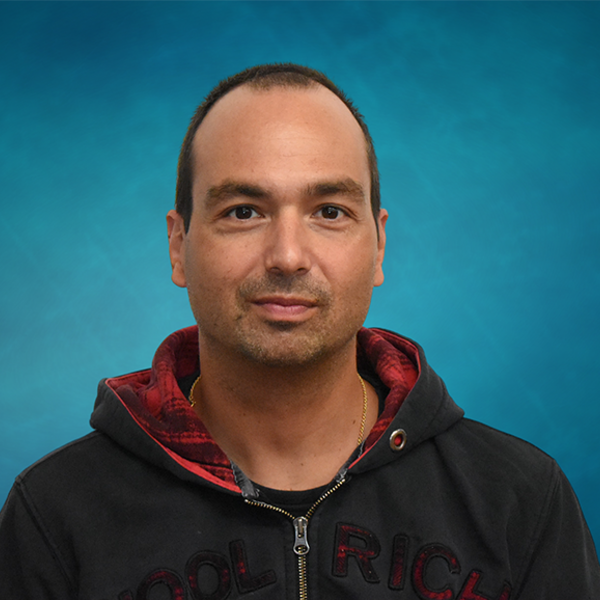
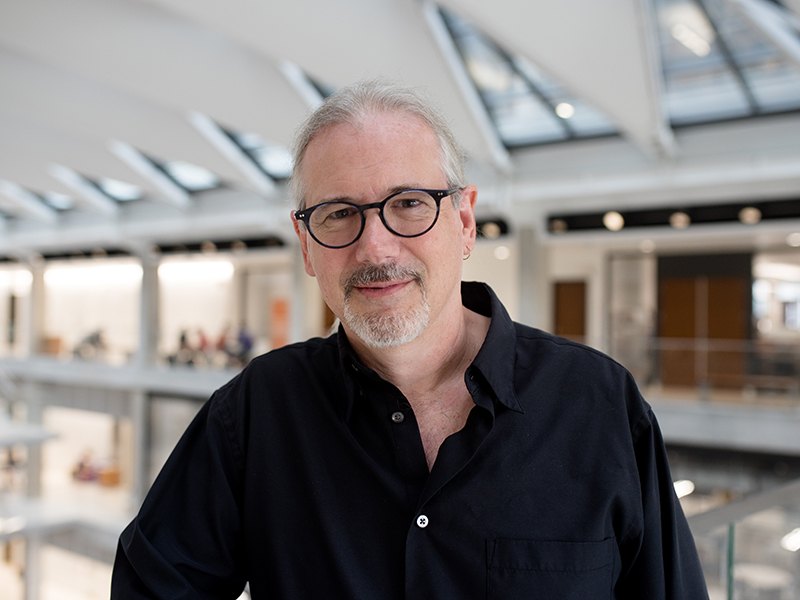
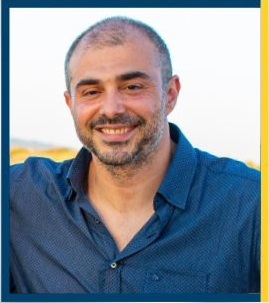
Anton Akusok is a Part-time Lecturer in the Big Data Analytics Master's program at Arcada University of Applied Sciences. He holds a BSc in IT from Moscow (2011), MSc in ML and Data from Aalto University (2014), and a DSc in ML from the University of Iowa, USA (2016). His research focuses on Extreme Learning Machines (ELM), hardware acceleration for ML on mobile devices, and real-time geospatial predictions. He has developed libraries like HPELM and Scikit-ELM, and created the HaSuRiski app for acid sulfate soil prediction in Finland. Research Interests: ELM applications in environmental modeling, federated learning security, mobile edge computing, and geospatial visualization. Key projects include real-time mapping apps with iOS integration and open-source ML tools. Publications (2021-2024) highlight work on federated learning privacy, acid sulfate soil detection, signature verification, and distributed ELM algorithms.
Giorgio Scorzelli is a researcher at the University of Utah, serving as Director of Software Development for the Center for Extreme Data Management, Analysis, and Visualization (CEDMAV) and the National Science Data Fabric (NSDF) . He specializes in extreme data management, scientific visualization, and computational topology, with a focus on scalable solutions for climate science, materials science, and neuroscience datasets. His work emphasizes democratizing data access through platforms like OpenVisus , enabling efficient analysis of petascale and exascale data. Key contributions include orchestrating cyberinfrastructure, optimizing parallel I/O, and developing real-time visualization systems for heterogeneous resources. Notable scientific contributions include the NSF Grant #2127548 for NSDF development . His projects integrate cloud computing, geo-distributed storage, and FAIR digital objects to lower barriers to data democratization. Giorgio's research spans multi-resolution algorithms , computational topology , and 3D geometric modeling , with applications in infrastructure security, archaeological reconstruction, and biomedical imaging. His work bridges abstract mathematical frameworks (e.g., Boolean algebras, chain complexes) with practical software solutions.
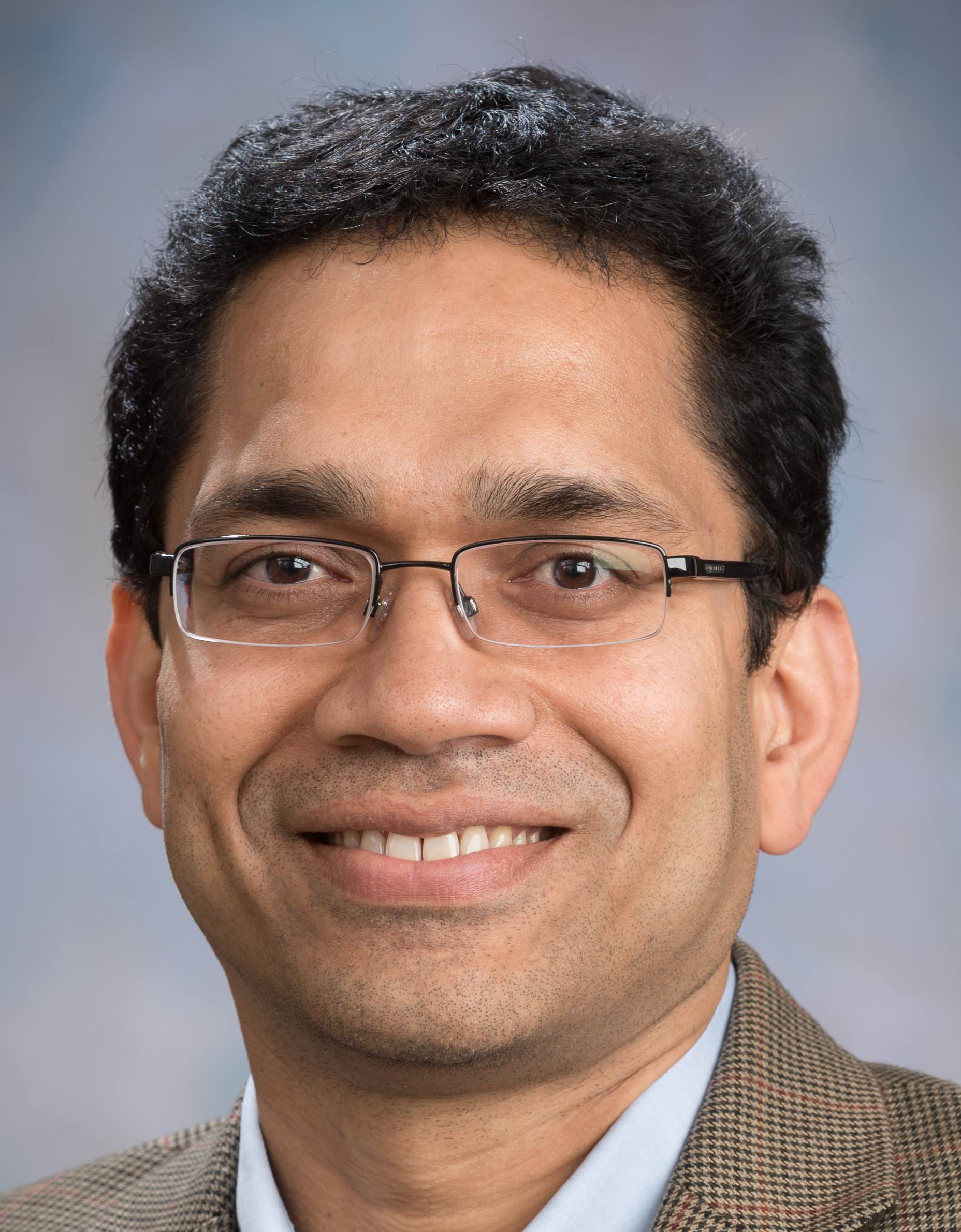
Christian Blouin is a Professor and Associate Dean, Academic in the Faculty of Computer Science at Dalhousie University. His interdisciplinary research bridges computer science and molecular biology, with a strong focus on bioinformatics and computational biophysics. Education: Ph.D. in Computer Science, Dalhousie University (2001) B.Sc. in Computer Science, Université Laval (1997) His research interests lie at the intersection of algorithms, phylogenetics, protein evolution, and molecular modeling. He develops computational methods to analyze protein structure evolution, multiple sequence alignments, and phylogenetic tree reconstruction. His work integrates high-performance computing and statistical mechanics to model biophysical properties of proteins, particularly in conformational dynamics and electrostatic interactions. The most recent publications reveal a consistent trend in developing algorithmic solutions for biological problems—especially in text mining for biological events, phylogenetic distance computation, and 3D mapping of evolutionary data. His work emphasizes automation, accuracy, and scalability in bioinformatics pipelines. Scientific Awards and Honors: TULA Fellow Dr. Blouin has secured significant research funding from NSERC, the TULA Foundation, and the CFI. His research group has contributed to tools like GenGIS for geospatial genomics and libcov for bioinformatics programming. He has advised students such as Haibin Liu and Vlado Keselj, who have co-authored key publications in text mining and phylogenetics. His lab integrates algorithm development with biological validation, aiming to bridge computational innovation with real-world biological insights.
Reza Zadeh is a Computational Mathematics professor at Stanford University's School of Engineering and Founder & CEO of Matroid . He previously served as a Technical Advisory Board member for Databricks and leads the Spark Tutorial at Stanford. Research Interests: Specializing in Machine Learning and Distributed Computing , his work bridges theoretical mathematics with practical implementations in big data systems. Key focus areas include Optimization of Apache Spark 3D Convolutional Neural Networks Discrete Mathematics and Graph Theory Medical Imaging Applications Academic Contributions: His publications reveal trends across multiple disciplines: Adapting machine learning for medical diagnostics (2019-2022) Advancing distributed computing frameworks (2014-2016) Developing mathematical foundations for social networks (2009-2013) Creating scalable optimization algorithms (2014-2016) Scientific Awards: Best Paper Award runner-up at KDD 2016 Academic Leadership: He has taught SMACC Consulting and designed courses including CME 323: Distributed Algorithms and Optimization (2015-2024) and CME 305: Discrete Mathematics and Algorithms (2010-2017). His lectures cover graph theory, approximation algorithms, and spectral sparsification. Labs & Teams: Organized Spark Summit workshops and leads Scaled Machine Learning Conference . Collaborates with Stanford's ICME computational consulting services.
Meta Berghauser Pont is a Professor of Urban Morphology and Urban Planning at Chalmers University of Technology. She leads the Spatial Morphology Group (SMoG), focusing on quantitative analysis of urban form, space syntax, and design theory. Key research themes: urban density, sustainable cities, social-ecological systems, pedestrian movement modeling Authored the 2023 book Spacematrix: Space, Density and Urban Form , redefining density metrics Her work bridges analytical urban morphology with practical urban planning applications, particularly in noise/air quality management, transport infrastructure, and digital twin city modeling. She manages pedagogical development for architecture programs at Chalmers. Active projects include: Digital Twin Cities Centre (EU/VINNOVA) Sustainable Urban Form (Formas) Green Infrastructure Integration (Mistra Urban Futures) Multi-scale Climate Proofing (VINNOVA) Urban Design Calculator (Naturvårdsverket) Her lab develops open-source tools like the Place Syntax Tool (PST) for morphological analysis of cities.
Professor Andreas Baas is a leading academic in aeolian geomorphology, holding a Professorship at King's College London's Department of Geography within the School of Global Affairs. His research focuses on dune dynamics on Earth and Mars, aeolian sand transport, and climate change impacts. He earned BSc/MSc from the University of Amsterdam and a PhD from the University of Southern California, supported by an NSF Research Award. Previously, he was an Adjunct Professor at California State University San Bernardino. Research interests include desert dune hazards, microplastics transport, and Martian dune bedforms. He has published 40+ peer-reviewed articles, 10+ book chapters, and his work has been cited over 3,500 times. His grants include funding from the Leverhulme Trust, Nuffield Foundation, and UK NERC. He supervises PhD students on topics like barchan swarms and Mars dune dynamics. His lab work includes developing tools like PyShoreVolume for shoreline change analysis. He is an associate editor for Earth Surface Dynamics and a member of the NERC Peer-Review College.
David Agis Cherta is an academic affiliated with the Universitat Politècnica de Catalunya (UPC), specifically the Escola Tècnica Superior d'Enginyeria Industrial de Barcelona (ETSEIB) and the Departament d'Estadística i Investigació Operativa . He leads research in the CoDAlab - Control, Dades i Intel·ligència Artificial group and the WinTurCoM - Wind Turbine Condition Monitoring subgroup. His work spans structural health monitoring, wind energy systems, environmental health, and statistical modeling. Agis has published extensively in journals such as Sensors , Environmental Health Perspectives , and Methods in Ecology and Evolution . Education & Research Focus : His doctoral thesis (2019) explored vibration-based structural health monitoring using piezoelectric transducers. Key areas include machine learning applications for fault detection in wind turbines, statistical methodologies for environmental data analysis, and interdisciplinary research at the intersection of engineering and public health. Awards & Projects : Received the EACS Early Career Award in Structural Control & Health Monitoring (2020) . Active in competitive research projects, including EU-funded initiatives on wind turbine condition monitoring and environmental pollution studies. Collaborates internationally, with projects focusing on digital twins, predictive maintenance, and data-driven applications in civil engineering. Public Engagement : His research bridges technical innovation and societal impact, addressing issues like air quality effects of public transport strikes and long-term health impacts of urban pollution. He contributes to open-source tools like the Good R package for count data analysis.
Andreas Riedl is an Assistant Professor at the Department of Geography and Regional Research, University of Vienna, where he serves as Head of the Hyperglobe Research Group and Vice-Director of Studies for Geography. His work bridges cartographic heritage with cutting-edge geospatial technology, focusing on spherical display systems for global data visualization. His educational background includes a Doctorate in Geography/Cartography from the University of Vienna (1987-1992) and an Industrial Engineering degree from HTL-Hollabrunn (1979-1985). Career milestones include research at Simon Fraser University (1995-1996) and software development at ITC Enschede (1996). Riedl's research centers on Hyperglobes —interactive 1.2-meter spherical displays that visualize weather patterns, continental drift, and climate change through dual 4K projection. His group operates these systems for public education, serving schools and museums with free demonstrations of geophysical phenomena, flora/fauna distributions, and extraterrestrial topics. Complementing this, he advances GIS applications in urban planning, 3D visualization, and multimedia geocommunication. Analysis of his 15 most recent publications reveals dual research trajectories: (1) Environmental hydrology studies quantifying dew/fog water inputs in grasslands using isotope tracing and micro-lysimeters, and (2) Media studies examining migration coverage, journalistic roles, and gender representation in news. Both strands emphasize data visualization's role in public understanding of complex systems. As an educator, Riedl supervises Master's theses on GIS implementation, 3D city modeling, and geovisualization. His students explore topics including e-charging infrastructure planning, infographic-style maps, and AR navigation systems, reflecting his commitment to applied spatial analysis. The Hyperglobe Research Group provides critical infrastructure for these projects through its spherical display technology and public engagement initiatives.
Ben Hodges is a Professor in the Civil, Architectural and Environmental Engineering (CAEE) Department at the University of Texas at Austin, holding the Marion E. Forsman Centennial Professorship in Engineering. He specializes in environmental and water resources engineering, with a focus on computational fluid dynamics (CFD), urban stormwater drainage modeling, and river dynamics. His research bridges hydraulics, geospatial analysis, and environmental fluid mechanics, addressing challenges like flood modeling, water distribution systems, and supersaturated dissolved gas management. Education: Ph.D., Civil Engineering, Stanford University (1997) M.S., Mechanical Engineering, George Washington University (1991) B.S., Marine Engineering/Nautical Science, U.S. Merchant Marine Academy (1984) Research Interests: Development of computational models (e.g., SPRNT, Frehd, SUNTANS) Oil spill transport modeling, saltwater intrusion, and continental river networks High-performance parallel algorithms and hydraulic simulation tools His work emphasizes practical applications, such as designing stormwater systems and predicting environmental impacts like oil spill trajectories. He collaborates on projects with organizations like IBM Research Austin and the U.S. EPA, contributing to tools like the SWMM5+ and PTSNet simulators. Hodges advises a dynamic graduate research group (JETlab) and maintains active involvement in academic conferences and international collaborations.
Luca Di Gaspero is an Associate Professor of Information Technology at the University of Udine, specializing in metaheuristic optimization techniques. His research enhances combinatorial optimization through hybridization of algorithms for scheduling, routing, and industrial applications. Research spans artificial intelligence in optimization, scheduling algorithms for manufacturing/healthcare, and metaheuristic framework development. Recent publications focus on LLMs in optimization, parallel batch scheduling, and energy-efficient manufacturing. Key Contributions: Developed EasyLocal++ framework for local search algorithms Advanced multi-neighborhood simulated annealing techniques Applied metaheuristics to healthcare logistics and emergency services
Shrideep Pallickara is a Professor in the Department of Computer Science at Colorado State University, where he also directs the Center for eXascale Spatial Data Analytics and Computing (XSD) . His research is funded by the National Science Foundation, Department of Homeland Security, Environmental Protection Agency, Department of Agriculture, and the UK's e-Science program. Research Interests: His research lies at the intersection of machine learning and large-scale systems, focusing on: Spatiotemporal data management and analytics Extreme-scale storage systems Stream processing for IoT and cyber-physical systems Deep learning over petabyte-scale, high-dimensional datasets Model construction for forecasting natural and urban phenomena His work addresses challenges in computational tractability, resource utilization, and convergence in distributed environments. Systems developed in his lab are deployed in domains such as urban sustainability, agriculture, epidemiology, environmental monitoring, healthcare, and defense. Research Trends in Publications: His recent publications demonstrate a strong focus on scalable analytics for geospatial and environmental data. Key themes include deep learning for soil moisture and salinity prediction, efficient visualization of massive satellite datasets, spatiotemporal search and summarization, and model performance profiling across spatial domains. The work integrates scientific domain knowledge with machine learning and systems innovation. Scientific Awards: NSF CAREER Award Board of Governors Award for Excellence in Undergraduate Teaching OLIE Award N. Preston Davis Award Monfort Professorship Best Paper Award at IEEE/ACM CCGrid 2019 Best Paper Award at BDCAT 2023 Best Paper Award at IEEE Cluster 2012 Best Student Paper Award at IEEE CloudCom 2010 Shortlisted for ACM DEBS-2015 Grand Challenge Award One of the Six Best Papers at ACM/IEEE GRID 2005 Advising and Grants: He advises numerous graduate students, many of whom are co-authors on his publications. His research is supported by major grants from NSF, DHS, EPA, USDA, and UK e-Science, enabling the development of open-source systems such as Granules, NaradaBrokering, Galileo, Funnel, and Spindle. Labs and Teams: He leads the XSD Center, which develops and maintains large-scale open-source software systems involving over 2500 classes and a million lines of code. These systems are used in academic, commercial, and defense applications.
Prof. Dr. Hanna Meyer is a Professor of Remote Sensing and Spatial Modeling at the Institute of Landscape Ecology, University of Münster (WWU). She leads the Remote Sensing and Spatial Modeling Group and is actively involved in teaching and research in geospatial data science, machine learning, and environmental monitoring. Her work is supported by multiple national and international funding bodies including the DFG, EU Horizon Europe, and internal university grants. B.Sc. Geography, Philipps University Marburg (2007–2010) M.Sc. Environmental Geography, Philipps University Marburg (2010–2013) Ph.D., Philipps University Marburg (2014–2018) Her research focuses on machine learning methods for spatial data, optical remote sensing, environmental monitoring, and spatio-temporal modeling. She develops and applies advanced statistical and machine learning techniques to satellite and drone-based data for mapping ecological variables, land cover, and environmental change. Her work emphasizes methodological rigor, model transferability, and uncertainty quantification in spatial predictions. The recent publications reflect a strong trend in developing and validating machine learning models for environmental mapping, with applications in soil science, peatland hydrology, forest ecology, and polar climatology. She contributes both to theoretical advancements in spatial model validation and to practical software tools in R for geospatial analysis. She has secured competitive research funding for projects such as PRISM, Carbon4D, Uebersat, and BEyond, focusing on spatial pattern recognition, carbon modeling, AI model transferability, and biodiversity prediction. She teaches courses on remote sensing, spatial data analysis with R, and environmental modeling, and supervises students and early-career researchers. She collaborates widely with researchers across institutions and leads a dynamic research group including postdoctoral researchers and students. Her open-source contributions, particularly R packages like CAST and uavRst, support reproducible research in geospatial machine learning.
Nikos Giatrakos is an Assistant Professor at the School of Electronic & Computer Engineering, Technical University of Crete, and a core member of the Software Technology and Network Applications Lab (SoftNet) . His work bridges Big Data systems, IoT, and advanced analytics, with a focus on real-time processing and scalable architectures. Previously, he served as a postdoctoral researcher at the same laboratory. Education PhD in Computer Science, University of Piraeus (2012) Postgraduate Diploma in Information Systems, Athens University of Economics and Business (2008) BSc in Computer Science, University of Piraeus (2006) Research Focus : Nikos specializes in software architectures for Big Data streaming, including Distributed Big Data Processing , Federated Machine Learning , Cloud-to-Edge Data Management , and Approximate Query Processing . His work has also advanced Complex Event Processing and Outlier Detection in decentralized environments. Scientific Contributions : His research has led to the DAG* workflow optimizer for IoT, the SuBiTO framework for real-time neural learning, and the INFORE approach for cross-platform analytics. He received the Best System Demonstration Award at ACM CIKM 2020 for INforE. Academic Leadership : Nikos teaches Object-Oriented Programming, Data Science, and Distributed Systems. He has supervised numerous European and national grants as Principal Investigator and served on program committees for top-tier conferences like SIGMOD, VLDB, and DEBS.
Dr. Amr Omar is a researcher at the University of New South Wales , affiliated with the School of Mechanical and Manufacturing Engineering and Department of Chemical Engineering. His work focuses on integrating renewable energy systems—particularly solar thermal technology—with advanced water treatment processes to address global sustainability challenges. PhD in Solar Thermal Systems & Desalination (UNSW, 2017-2020) Postdoctoral Researcher (UNSW Chemical Engineering, 2020-2023) Omar specializes in decarbonizing water processes through solar-driven membrane distillation , multi-effect distillation , and hydrogen production cooling systems . His research bridges laboratory innovation with real-world applications, targeting United Nations' SDG6 (Clean Water) and SDG7 (Affordable Clean Energy). Recent publications emphasize techno-economic modeling of hybrid solar-desalination systems, machine learning applications for water filtration optimization, and geospatial analyses of global desalination site feasibility. Key projects include developing hollow fiber vacuum membrane distillation modules and improving flocculant strength assessment for water catchment monitoring. Scientific Recognition : 2022 Malcolm Chaikin Prize for Research Excellence 2020 UNSW Postgraduate Council Research Student Award 2020 3MT Competition Winner (School of Mechanical & Manufacturing Engineering) 2017 Australian Postgraduate Award Scholarship Omar actively supervises PhD and Master’s projects related to solar-driven water treatment and green hydrogen development. He serves as a journal reviewer and conference panel member, advocating for nanobubble technologies in agricultural irrigation systems.
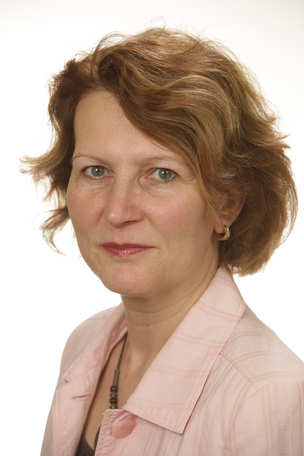
Prof. Petra Sauer is a Professor of Computer Science and currently serves as Dean of the Department of Computer Science and Media at BHT Berlin. She leads research in database systems, geospatial technologies, and educational data analytics. Her work bridges academic research with practical applications in facility management, urban logistics, and e-learning platforms. Key projects include DiSEA (education analytics), ExCELL (mobility data integration), and BIM-FM (building lifecycle management). Research interests focus on: Database design & schema evolution Semantic web applications Geodatabase implementations Learning analytics in MOODLE environments Notable awards include the Tiburtius Prize (Gold 2008 for Marc-Florian Wendland's thesis, Bronze 2009 for Marco Blankenburg's thesis). Active supervision spans over 15 advisees across data science, database security, and semantic integration topics. Current courses include 'Database Systems' for Media Informatics students. Key projects: DiSEA: Moodle-based learning analytics framework ExCELL: Real-time traffic forecasting platform mVIZ: Open data visualization guidelines BIM-FM: Semantic integration of building models