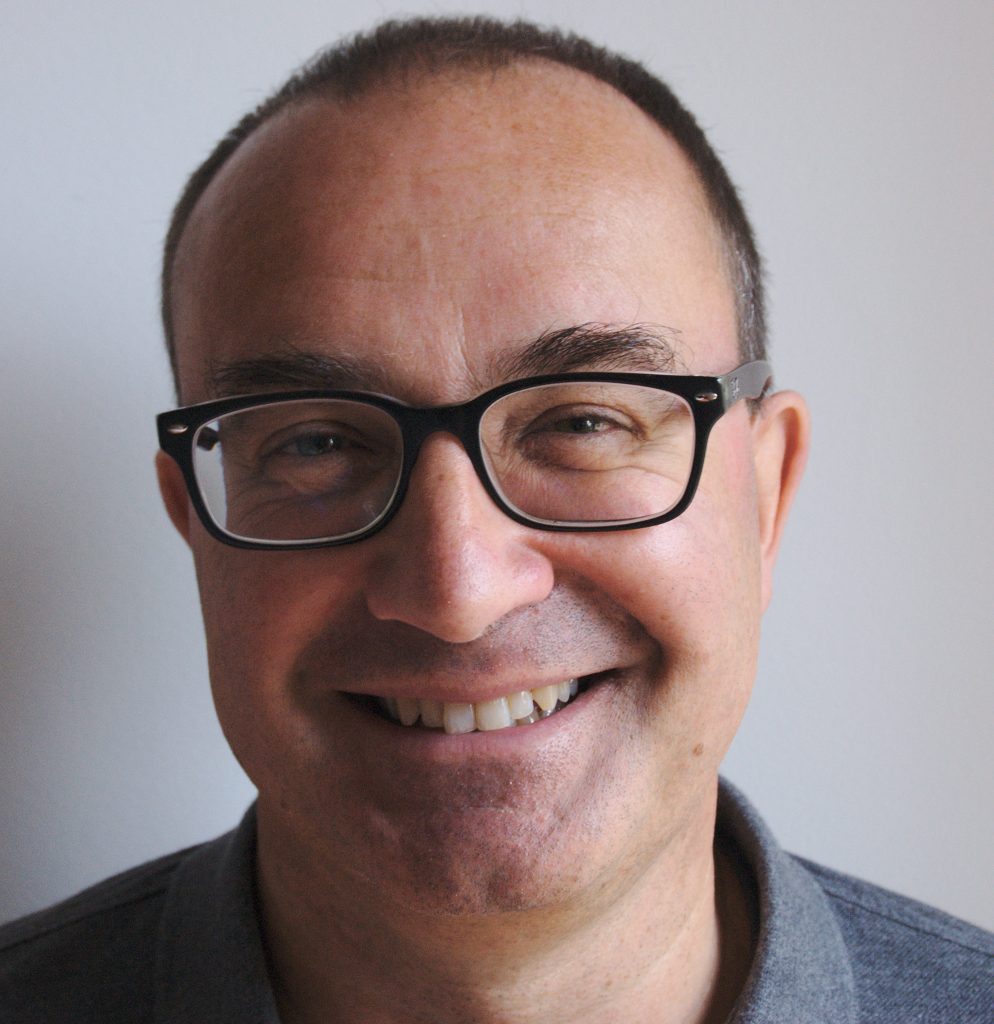
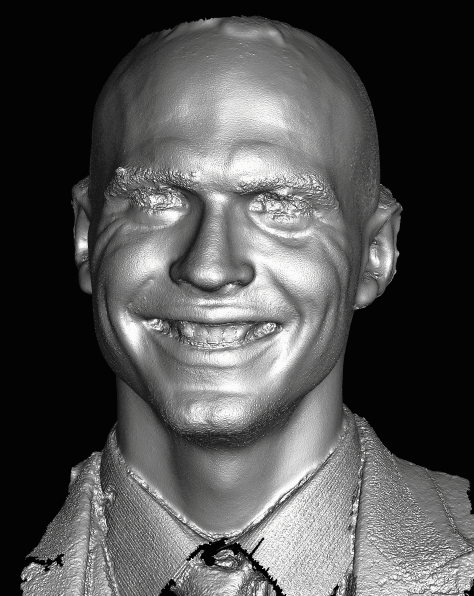
Barbara Caputo is a Full Professor at Politecnico di Torino, leading the VANDAL Laboratory and directing the AI@PoliTo Interdepartmental Lab. She holds a double affiliation with the Italian Institute of Technology (IIT) and has held roles at Idiap-EPFL and Sapienza University. Her research focuses on AI, computer vision, domain adaptation, and federated learning. She contributes to national AI policy, including the Italian Strategy on AI and the National PhD on AI for Industry 4.0. She is an ERC Laureate and ELLIS Fellow, co-founding ELLIS society. Her work spans visual place recognition, action recognition, and cross-domain learning. Education: PhD in Computer Science from KTH Royal Institute of Technology (2005). Major roles include Rector’s Advisor on AI at PoliTo, Board Member of ELLIS, and coordinator of the AI & Industry 4.0 vertical in the National PhD program. Awards include ERC Laureate (2017), ELLIS Fellow (2019), and Inspiring Fifty Italy (2018). Her research emphasizes federated learning, domain adaptation, and AI ethics. Recent articles explore domain generalization, resource-efficient federated models, and AI-environment interactions. She collaborates with institutions like MUR, CNR, and the European Commission on AI policy and tech initiatives.
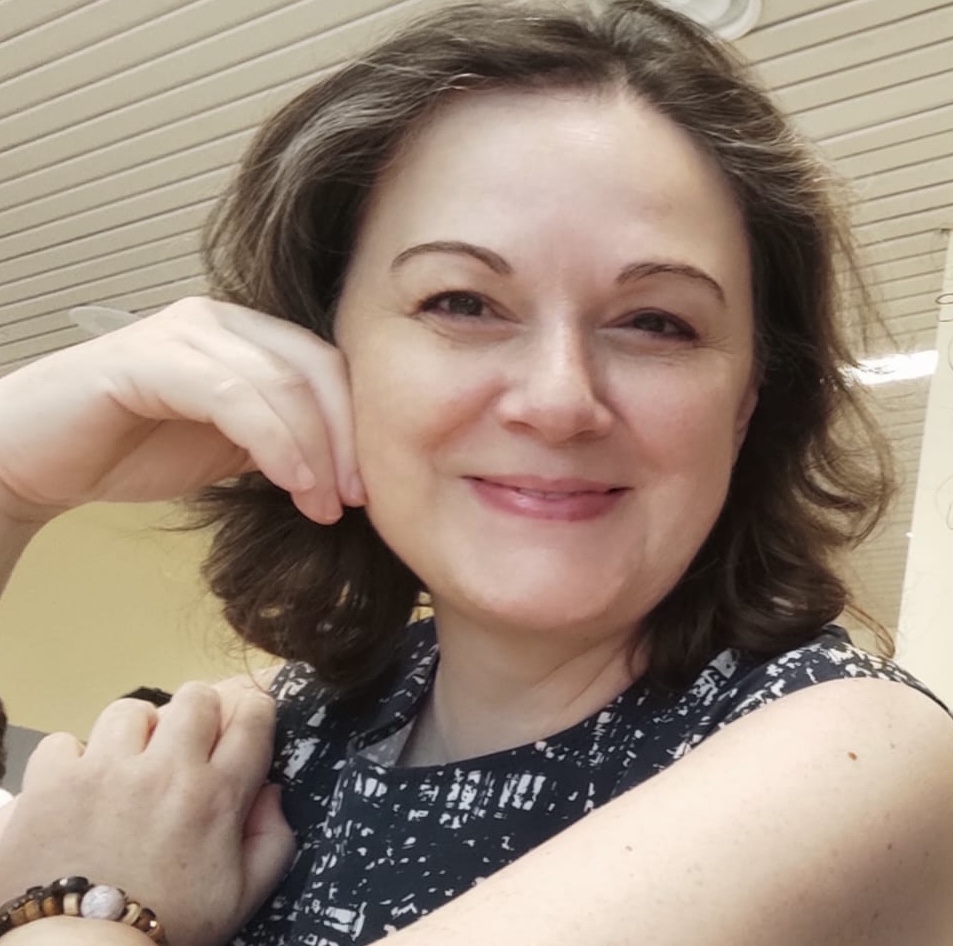
Michele Zorzi is a Professor of Telecommunications at the School of Engineering, University of Padova, Italy, where he has held a faculty position since 2003. He leads the SIGNET (Signal processing and Networking) Research Group, focusing on cutting-edge wireless networking challenges including mmWave communications and underwater networks. His extensive publication record exceeds 600 papers in top-tier journals and conferences, reflecting significant contributions to the field through both theoretical and experimental work. He received his Laurea Degree (1990) and Ph.D. (1994) in Electrical Engineering from the University of Padova. Prior academic appointments include Politecnico di Milano (1993-1996), University of California San Diego (1995-1998), and University of Ferrara (1998-2003), where he progressed from Associate Professor to full Professor. His educational trajectory demonstrates deep roots in Italian academia with international exposure. Professor Zorzi's research spans wireless communications and networking, with current emphases on mmWave networking for vehicular systems, underwater acoustic/optical communications, non-terrestrial networks, and AI-driven networking solutions. His group conducts experimental validations including at-sea trials for underwater systems and testbeds for vehicular networks. Key projects include PRATA for predictive QoS in autonomous driving and IoT-based environmental monitoring of the Venice Lagoon, demonstrating practical applications of theoretical work. Analysis of his 2022-2025 publications reveals strong trends in applying artificial intelligence to networking challenges across diverse environments. There is significant emphasis on vehicular networks (predictive QoS, teleoperated driving), underwater systems (acoustic/optical communications, AUV swarms), and satellite networks (Starlink integration, NTN security). Experimental validation in real-world scenarios like the Venice Lagoon monitoring project and underwater sea trials characterizes his applied research approach. His scientific accolades include: IEEE Fellow (2007) IEEE Communications Society Best Tutorial Paper Award (2008, 2019) Stephen O. Rice Best Paper Award (2018) Multiple best paper awards at IEEE conferences (2005-2020) As principal investigator for numerous European and US research projects plus 20+ industry-funded initiatives, Professor Zorzi has mentored over 35 PhD students and post-docs. Graduates now hold prominent positions at institutions including Stanford, UCSD, CTTC, and Huawei. His SIGNET group maintains active international collaborations and contributes to open-source networking tools via GitHub, demonstrating commitment to community engagement. The SIGNET Research Group, housed within the Department of Information Engineering, operates specialized experimental facilities for mmWave and underwater communications. Current initiatives include AI-based predictive QoS frameworks for vehicular networks, underwater optical communication systems using ultraviolet light, and large-scale IoT deployments for environmental monitoring. The group's GitHub presence indicates strong open-science practices, while recent sea trials confirm hands-on experimental capabilities beyond theoretical work.
Anna Gottard is an Associate Professor of Statistics at the University of Florence, where she leads the Department of Statistics, Computer Science, and Applications. She directs the Florence Center for Data Science (FDS) and participates in the Technical Scientific Committee of the Tuscan Center for Big Data, Data Science, and AI (CBDAI). Her research focuses on multivariate statistical models, particularly graphical models, and extends to statistical machine learning, fair models, and directional data analysis. She is an Associate Editor for the Journal of the Royal Statistical Society Series A (JRSSA) and Statistical Methods & Applications (SMA). Her recent work includes Bayesian approaches for mixed graphical models, uncertainty-aware classification trees, and methodological advancements in latent uncertainty models. Her contributions span theoretical developments and applied research in interdisciplinary areas like biostatistics and sustainability. Her research interests emphasize bridging statistical theory with practical applications, including fairness in machine learning, interpretable models, and tree-based methodologies. She has actively contributed to open-source software, notably the Mix3Trees R package for mixed-effect tree models. Her work addresses challenges in variable selection, graphical model inference, and ethical AI practices. Current projects explore Bayesian frameworks for complex data structures and methodological improvements in graphical model interpretability. Anna has advised on interdisciplinary collaborations, such as studies on GDPR compliance in biobanking and epidemiological modeling of the SARS-CoV-2 pandemic in Tuscany. She collaborates with institutions like the CBDAI to advance data science applications in regional policy and healthcare. Her research trajectory reflects a commitment to both foundational statistical theory and real-world problem-solving across diverse domains.
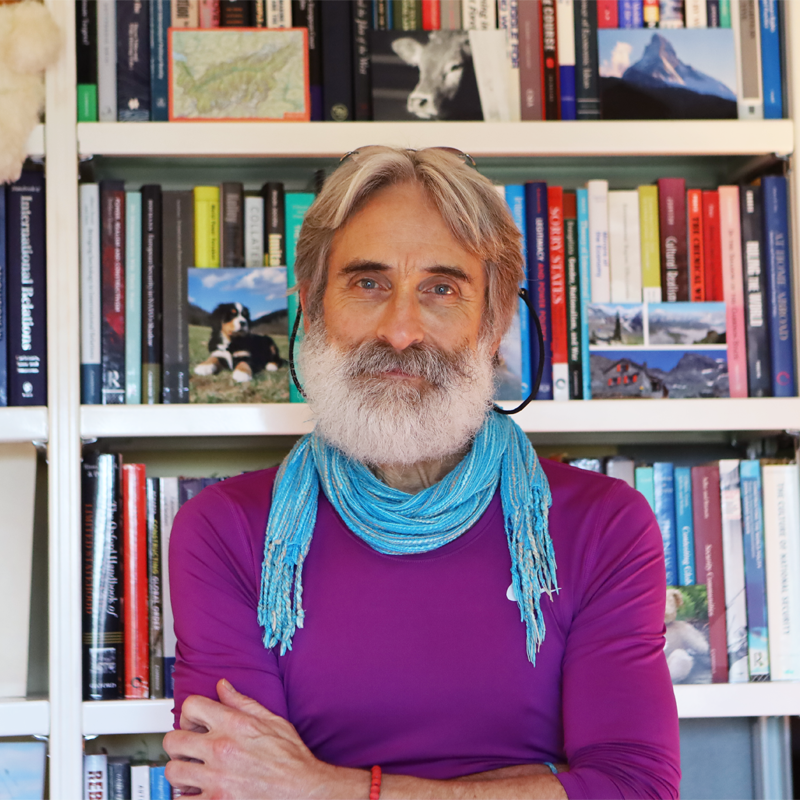
Jeffrey T. Checkel is a Full-time Professor in the Department of Political and Social Sciences at the European University Institute (EUI). He joined EUI in 2020 and previously held positions at Simon Fraser University, the University of Pittsburgh, and the University of Oslo. He earned his PhD in Political Science from MIT and a first degree in Applied Physics from Cornell University. His research focuses on international relations theory, qualitative methods, and identity formation. Key areas include constructivism, international institutions, civil war dynamics, and processual methods. He teaches courses on IR theory, qualitative methods, and philosophies of social science. Checkel's recent work explores 'Institutions at Bay? Regional Integration and Identity,' analyzing how regional organizations shape identity through local and national dynamics. He is Co-Editor-in-Chief of QMMR: Qualitative and Multi-Method Research and President of the APSA Qualitative and Multi-Method Research Organized Section. Education: PhD in Political Science (MIT), B.S. in Applied Physics (Cornell University) Research Interests: Identity formation, process tracing, constructivism, international institutions, civil war, qualitative methodologies. He advises numerous PhD students and post-doctoral fellows, leading working groups on IR theory and qualitative fieldwork. His publications span over 99 works, with a focus on bridging theoretical and methodological divides in social science.
Giorgio Grisetti is a Full Professor at Sapienza University of Rome within the Department of Systems and Computer Science, maintaining active research roles in the RoCoCo lab at Sapienza since November 2010 and the Autonomous Intelligent Systems Lab at Freiburg University where he previously served as a Post Doc under Wolfram Burgard starting in 2006. His educational background includes a M.Sc. in Computer Engineering from the University of Rome (2001) and a Ph.D. from Sapienza University of Rome's Intelligent Systems Lab (2006), supervised by Daniele Nardi. His doctoral thesis focused on SLAM using Rao-Blackwellized particle filters. Dr. Grisetti's research centers on mobile robotics with emphasis on robust solutions for autonomous navigation systems. His work spans theoretical and practical advancements in Simultaneous Localization and Mapping (SLAM), robot localization, path planning, and sensor fusion, particularly leveraging LiDAR and multi-sensor configurations. Recent publications demonstrate strong focus on optimization techniques, sensor calibration, and real-time performance for autonomous systems operating in complex environments. His publication trends reveal deep specialization in LiDAR-based SLAM (7 of 15 recent articles), bundle adjustment methods (4 articles), and sensor calibration/perception (3 articles), with consistent contributions to top robotics venues like IEEE Robotics and Automation Letters and ICRA. Key recognitions include: Nomination for the best IROS paper award (2010) Open Source achievement award from Willow Garage (2010) Best paper award at the International Conference and Exhibition on Unmanned Areal Vehicles (2010) Best Paper award at ICRA 2009 (2009) His research is conducted through the RoCoCo lab at Sapienza University of Rome and the Autonomous Intelligent Systems Lab at Freiburg University, focusing on developing foundational algorithms for mobile robot autonomy. Current projects emphasize robust perception systems, optimization frameworks for sensor fusion, and practical implementations for real-world navigation challenges.
Dino Pedreschi is a Full Professor of Computer Science at the University of Pisa, affiliated with the Department of Computer Science (DI-UNIPI). He co-leads the Pisa KDD Lab, a joint research initiative between the University of Pisa and the Italian National Research Council’s Institute of Information Science and Technology, one of the earliest labs focused on data mining and knowledge discovery. His research spans Big Data Analytics , Social Network Analysis , Human Mobility Analysis , Privacy-by-Design , Explainable AI (XAI) , and ethical data mining . He is a pioneer in privacy-preserving data mining and has contributed significantly to understanding societal impacts of AI and big data. Recent publications highlight trends in explainable AI , fairness-aware data mining , urban mobility modeling , and socio-economic nowcasting , reflecting a strong interdisciplinary focus combining computer science, social science, and policy. Notable scientific awards include: Google Research Award on Privacy (2009) University of Pisa Ordine del Cherubino (2017) Pedreschi has played leadership roles in major conferences such as ECML/PKDD (Co-Chair 2004), ICDM (Vice-Chair 2005), and ICDE (Vice-Chair 2014). He founded the Business Informatics MSc program at the University of Pisa to train interdisciplinary data scientists. He has been a visiting scientist at the University of Texas at Austin, CWI Amsterdam, UCLA, and the Barabási Lab at Northeastern University. He actively contributes to European research initiatives including SoBigData++, FAIR, and TAILOR, and has advised on AI policy, including testimony before the Italian Parliament on AI and labor markets. He is a key member of the Pisa KDD Lab, a leading research group in data science and AI ethics, fostering collaboration between academia and public institutions.
Cristina Dondi serves as a Full Professor in the Department of Modern Literature and Culture at Sapienza University of Rome's Faculty of Arts and Philosophy. Her academic work centers on the history of the book with specialized expertise in incunabula (15th-century printed books), early book trade networks, and digital humanities methodologies. She teaches the "History of the Book" course for Global Humanities students, delivering lectures in person at Rome's Faculty of Arts and Philosophy during the 2024-2025 academic year. Her research spans material evidence of early printed books, Venetian printing practices, Dante's textual circulation, and library transformations during religious secularization. She pioneers digital approaches through projects like 15cBOOKTRADE and CERL, developing visualization tools for historical book movement data and collaborative digital infrastructures. Her work bridges traditional book history with computational analysis, emphasizing how physical artifacts reveal cultural and commercial networks. Analysis of her 2021-2023 publications shows consistent integration of digital tools with historical scholarship, particularly regarding Italian incunabula circulation and MEI database applications. She frequently examines Venetian commercial practices, Dante's reception, and collaborative digital resource creation, demonstrating how visual analytics transforms understanding of pre-modern book economies. Scientific Awards: No specific awards were documented in the provided sources. Professor Dondi leads significant research initiatives including the 15cBOOKTRADE project and Consortium of European Research Libraries (CERL) collaborations, which involve multi-institutional teams developing digital ecosystems for book historical research. These projects generate scholarly publications, digital tools, and educational resources while securing substantial research funding for infrastructure development and international conferences. She actively shapes the CERL digital ecosystem and 15cBOOKTRADE project framework, fostering interdisciplinary collaboration between historians, librarians, and computer scientists. Her current work focuses on expanding Material Evidence in Incunabula (MEI) applications and creating open-access platforms for analyzing early print culture across European collections.
Aldo Gangemi is a Full Professor in the Department of Philosophy at the University of Bologna, specializing in Informatics (INFO-01/A). His research integrates Semantic Technologies, Natural Language Processing, Data Science, and Cognitive Science to address challenges in knowledge representation, ontology engineering, and cultural heritage informatics. He co-founded the STLab at ISTC-CNR and DHARC at the University of Bologna, and is on leave from Sorbonne Paris Nord University (Computer Science Lab - LIPN). Scientific roles include serving as area chair for Web Semantics , editorial board member for Semantic Web and Applied Ontology , and conference chairs for major events like WWW2015 and ESWC2018. He has led European projects such as GALEN, WonderWeb, NeOn, and MARIO, and developed software tools like FRED, Aemoo, and Framester. Research interests focus on semantic technologies, knowledge patterns, and applications in humanities, medicine, law, and fisheries. Over 250 peer-reviewed publications span these areas, with emphasis on ontology-based knowledge integration, multimodal reasoning, and ethical AI. His work bridges cognitive science and technological innovation, particularly in virtual reality's societal applications and cultural heritage preservation. Notable contributions include the PRIVAFRAME knowledge graph for sensitive data, the ImageSchemaNet ontology for embodied cognition, and the Sandra neuro-symbolic reasoner. His interdisciplinary approach addresses challenges in AI ethics, creative systems, and citizen-driven data curation.
Roberto Navigli serves as an Associate Professor in the Department of Computer Science at Sapienza University of Rome, conducting pioneering research in Natural Language Processing. He holds editorial leadership positions including Associate Editor of the Artificial Intelligence Journal and membership on the Journal of Natural Language Engineering editorial board. His research program centers on multilingual semantic technologies, with foundational contributions to word sense disambiguation, ontology learning from unstructured text, and large-scale knowledge acquisition systems. Navigli's work bridges theoretical linguistics with practical applications in relation extraction and open information extraction, emphasizing cross-lingual capabilities and resource scalability. Publication analysis reveals a sustained focus on semantic resource development, evolving from early WordNet extensions (2003) to contemporary open knowledge extraction frameworks (2015). This trajectory demonstrates consistent innovation in transforming unstructured text into structured knowledge representations for multilingual applications. Major scientific recognition includes: Marco Cadoli 2007 AI*IA Prize for best doctoral thesis in AI Marco Somalvico 2013 AI*IA Prize for best young AI researcher ERC Starting Grant (2011-2016) for multilingual word sense disambiguation Google Focused Research Award on Natural Language Understanding Navigli directs significant research initiatives funded by competitive grants, including his ERC project and Google collaboration, while providing academic leadership through area chair roles at ACL, WWW, and *SEM conferences. His service as senior program committee member for IJCAI and editorial board positions underscores substantial community impact.
Paola Cristofori is an Associate Professor in the Department of Physical, Computer and Mathematical Sciences at the University of Modena and Reggio Emilia. Her research focuses on Algebraic Topology, Differential Geometry, and Manifold Theory, with contributions to PL topology, 4-manifolds, and combinatorial structures like crystallization theory. She teaches courses in Geometry, Linear Algebra, and Algebraic Topology for undergraduate and graduate programs in Mathematics, Civil Engineering, and Strategic Sciences. Her work emphasizes topological invariants, combinatorial methods in manifold classification, and applications of colored graphs. Key areas include trisections of 4-manifolds, Kirby diagrams, and G-degree theory. She collaborates extensively on projects involving geometric topology and computational topology tools. Dr. Cristofori’s teaching spans foundational topics in linear algebra, Euclidean geometry, and advanced algebraic topology, emphasizing rigorous proofs and practical applications. Her research is published in top journals and includes over 40 articles, reflecting her deep engagement with low-dimensional topology and geometric structures.
Sara Vinco is an Associate Professor at the Department of Control and Computer Engineering (DAUIN), Politecnico di Torino, Italy. She specializes in battery simulation, digital twins, and energy-efficient design automation for heterogeneous embedded systems, aligning with Industrial and Information Engineering (Area 0009) and ERC sectors including Computer Architecture and Machine Learning . Her research focuses on advancing cyber-physical systems through simulation frameworks like SystemC-AMS, enabling holistic modeling of analog, digital, and thermal domains. Key projects include data-driven digital twins for EV batteries and low-area digital circuits in industrial/medical applications, supported by commercial contracts such as C-based virtual prototyping. Her recent publications (2022-2023) emphasize machine learning for battery SOH/SOC estimation , energy monitoring in production lines , and multi-domain fault modeling . These works span journals like IEEE Transactions and conferences including DATE and ISLPED. Awarded the FFABR 2017 grant and IEEE FDL Best Paper Award 2011 , she also chairs editorial boards for IEEE Transactions on CAD and DATE Conference. She supervises PhD students Giovanni Pollo (Digital Circuits) and Khaled Alamin (EV Battery Twins), reflecting her leadership in smart systems design.
Eleonora Vacca is a PhD student and Research Fellow in the Department of Automatic Control and Computer Science (DAUIN) at the Polytechnic University of Turin. She holds a B.S. in Electronic Engineering from the University of Palermo (2018) and an M.S. in Electronic Engineering-Embedded Systems from Politecnico di Torino (2021). Her research focuses on digital hardware design, reliability engineering, reconfigurable devices, and AI applications in aerospace and safety-critical systems. She is a member of the Aerospace and Safety Computing Lab and the CAD - Electronic CAD & Reliability Group (DAUIN). Her work addresses challenges such as radiation effects mitigation in space missions, fault-tolerant AI accelerators, and real-time anomaly detection in satellite telemetry. She has contributed to projects like the RAMSES CubeSat-1 Development (2025-2026), funded by commercial contracts. In 2024, she won the Best Student Paper Award at the NEWCAS Conference for her research on radiation effects in space missions. Vacca collaborates on teaching, including assisting in the course 'Electronic Calculators' for Computer Engineering students. Her recent publications explore AI resilience in RISC-V ecosystems, radiation environment analysis for space missions, and gesture recognition systems for smart cities. She actively contributes to conferences such as the ACM International Conference on Computing Frontiers and the IEEE International Smart Cities Conference.
Paolo Landoni is a Full Professor at the Department of Management and Production Engineering (DIGEP) within the College of Management and Production Engineering at Politecnico di Torino. His research focuses on entrepreneurship, business model innovation, business incubators/accelerators, sustainability, and social impact startups. He serves as Scientific Director/Responsible for numerous EU-funded and commercial research projects including SEED2SCALE, ESSENTIAL, and Open Sustainable Innovation. Key research areas: Entrepreneurship, Business Model Innovation, Incubators, Sustainability Supervises PhD students in topics spanning sustainable procurement, social startups, and innovation ecosystems Recipient of EU Horizon 2020 and MSCA funding Active in teaching courses on Entrepreneurship since 2019/20 His recent publications analyze sustainable public procurement, financial sustainability in microfinance, blockchain for social good, and incubator effectiveness. He collaborates with institutions like the LINKS Foundation and consults for corporate innovation projects.
Seth Frey is an Associate Professor in the Department of Communication at the University of California, Davis, with affiliate status at Indiana University's Ostrom Workshop and as Research Director at Metagov. His research focuses on computational social science approaches to understanding self-governance in complex social systems, particularly through the lens of online communities as model institutions. Education: Ph.D. in Cognitive Science and Informatics (complex systems), Indiana University, 2013 B.A. in Cognitive Science, UC Berkeley, 2004 Research Interests: Frey specializes in computational approaches to institutional analysis and the cognitive science of strategic behavior . His work examines how communities design governance systems to overcome collective action problems, with emphasis on: Emergent institutional structures in digital commons Policy-as-data through NLP and institutional grammar frameworks Cognitive mechanisms underlying cooperative behavior Design principles for participatory change in online platforms His methodology integrates large-scale data analysis, web-based experiments, and computational modeling across diverse contexts including Minecraft, Reddit, and professional sports ecosystems. Publication Trends: Recent publications (2023-2025) demonstrate a cohesive trajectory toward computational institutional analysis, with increasing focus on NLP-driven policy analysis (e.g., NLP4Gov), decentralized governance architectures (DAOs, multi-level platform governance), and the cognitive foundations of collective action. His work consistently bridges theoretical institutional analysis with practical applications in digital community design, showing particular growth in translating Ostrom's design principles into computational frameworks. Awards: Honorable Mention Award for Best Paper at ACM CSCW 2019 Advising and Grants: Frey mentors students interested in data science applications at the intersection of communication, cognition, and complex systems, emphasizing resourcefulness and intellectual curiosity. His research has secured substantial funding from: National Science Foundation (NSF) NASA Ford Foundation Google Open Source Foundation He actively encourages aspiring graduate students with strong self-directed research skills to explore computational approaches to social phenomena. Labs and Teams: He leads the Computational Communication Lab at UC Davis and co-directs the Institutional Grammar Research Initiative. Through Metagov, he develops the 'Governance API' framework for modular community governance. His past affiliations include Disney Research (Walt Disney Imagineering) where he applied complexity science to theme park systems, and the New England Complex Systems Institute (NECSI). Current collaborations span Ethereum governance, Minecraft server ecosystems, and Colorado's cannabis monitoring infrastructure.
Begüm Demir is a Professor and Head of the Remote Sensing Image Analysis (RSiM) Group at the Faculty of Electrical Engineering and Computer Science, Technische Universität Berlin. Her research focuses on scalable machine learning methods for remote sensing and Earth observation data analysis. Previously, she held positions at the University of Trento, where she was promoted to Associate Professor in 2017 and received an ERC Starting Grant for her BigEarth project. Key research interests include: Deep learning for satellite image analysis Big data processing in geosciences Earth observation data democratization Noise-robust machine learning models Recent projects highlight collaboration with Huawei in wireless communication-EO integration and leadership in initiatives like Agora-EO and TreeSatAI . Awards include the 2018 IEEE GRSS Early Career Award. Grants include funding from the German Research Foundation (DFG) and Federal Ministry of Education and Research (BMBF). Active in editorial roles for IEEE Geoscience and Remote Sensing Letters, and guest editorships in leading journals. Publicly accessible datasets like BigEarthNet and code repositories enhance her contributions to open science.