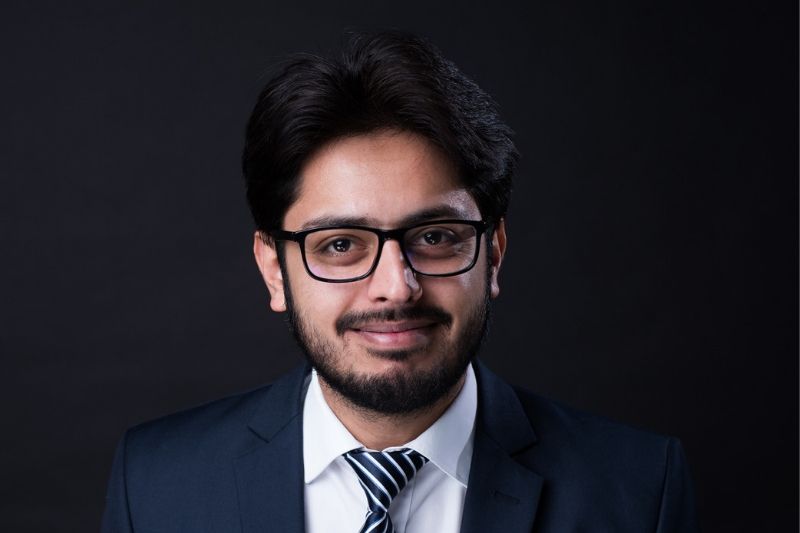
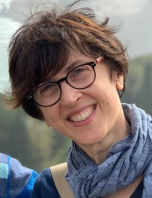
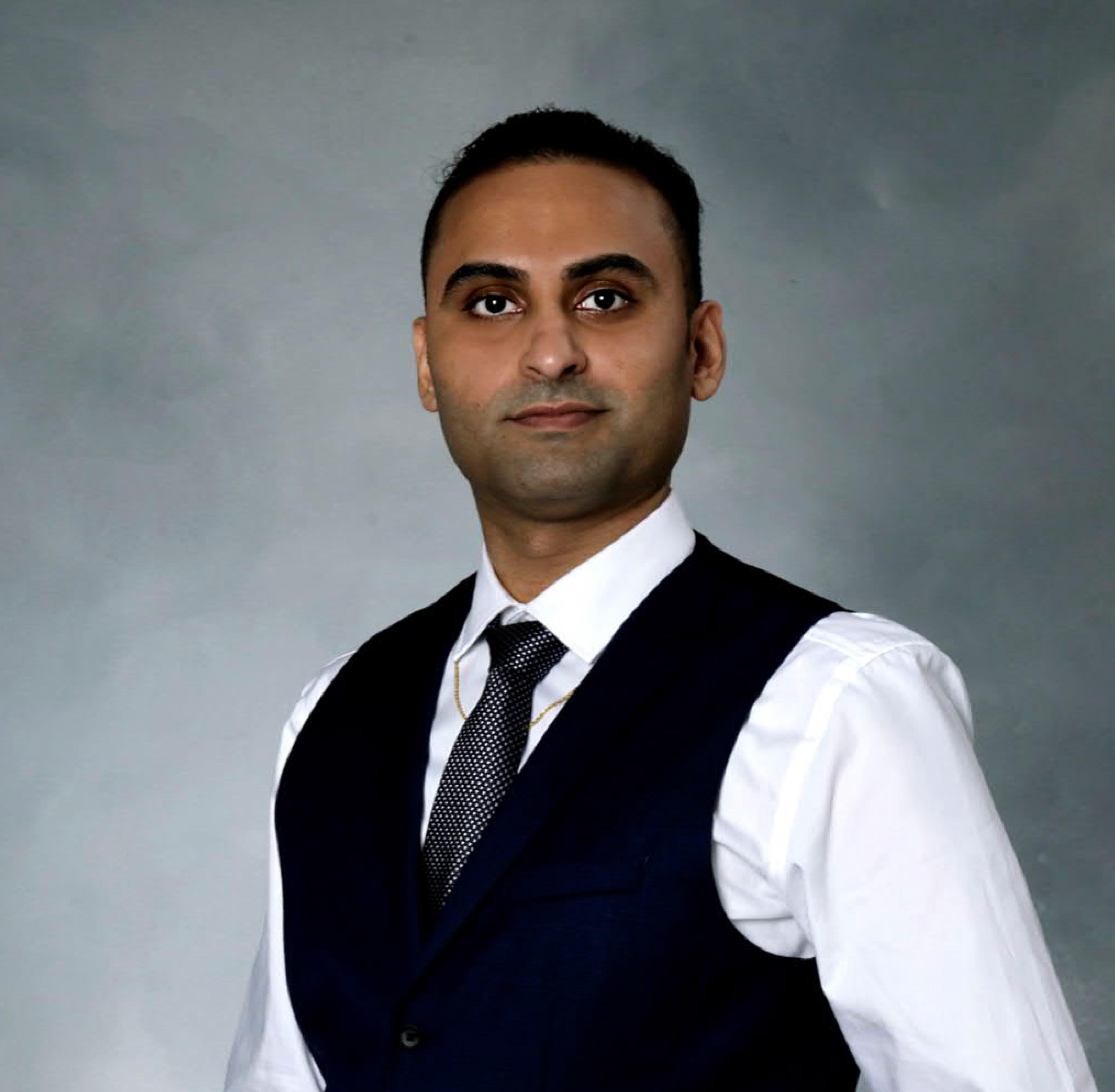
Dr. Muhammad Ali Babar Abbasi is an Associate Professor (Reader) at the Centre for Wireless Innovation (CWI) within the School of Electronics, Electrical Engineering and Computer Science at Queen's University Belfast. He holds a PhD from Frederick University under the Erasmus Mundus Doctoral Scholarship and has held roles including Postdoctoral Research Fellow, Lecturer, and Senior Lecturer. His research focuses on microwave/millimeter-wave antennas, metamaterials, beamformers, and AI-driven electromagnetics. He has supervised numerous PhD students and leads/co-leads multiple research projects with grants totaling over £1.66 million. Education: PhD (Frederick University), M.S. (NUST SEECS), B.S. (COMSATS-UI). Awards include the 2019 Mobile World Scholar Challenge Grand Prize and IEEE/AP-S Young Professional Ambassadorship. He teaches courses like High-Frequency Systems Technique and Communications (Electromagnetics and Antennas). Current funded PhD topics include advanced beamforming hardware and active polarization antennas. Key projects include the Future Communications Hub (HASC), EME Hub, and REASON (Open Networks). Awards highlight his contributions to 5G beamforming and security, with media recognition as a top 100 global 5G influencer.
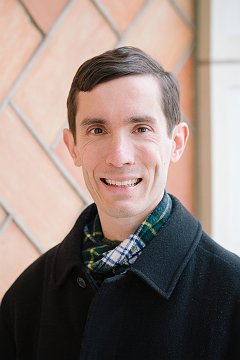
Constantino Reyes-Aldasoro is a Senior Lecturer in Biomedical Image Analysis at the Department of Computer Science, School of Mathematics, Computer Science and Engineering, City, University of London. His research focuses on the analysis, interpretation, and visualization of biomedical data, particularly in the context of cancer, inflammation, and neurodegenerative diseases. PhD in Computer Science – University of Warwick (2004) MSc in Electrical Engineering – Imperial College London (1994) Bachelor’s in Mechanical and Electrical Engineering – Universidad Nacional Autónoma de México (1993) His research spans image analysis, machine learning, and computational modeling applied to biomedical imaging, with emphasis on electron microscopy, histopathology, and radiology. He has developed algorithms for cell segmentation, vessel tracing, and tumor microenvironment analysis, contributing significantly to open-source tools in the field. His recent publications show a strong trend toward integrating deep learning with traditional image analysis, especially in cancer diagnostics and Alzheimer’s disease assessment. He has also explored topological data analysis and persistent homology for evaluating dataset consistency in colorectal cancer research. Senior Member, IEEE Member Level 1, Sistema Nacional de Investigadores CONACYT (Mexico) He has supervised multiple PhD students in areas such as HeLa cell analysis, coronary plaque detection, and Alzheimer’s imaging. He has secured grants from the Leverhulme Trust, Australian Research Council, and Cancer Research UK. He is an academic editor for journals including PLOS ONE and Journal of Imaging , and has chaired conferences like MIUA and BMVA. He is part of the giCentre research group at City, and actively promotes interdisciplinary collaboration in AI for healthcare.
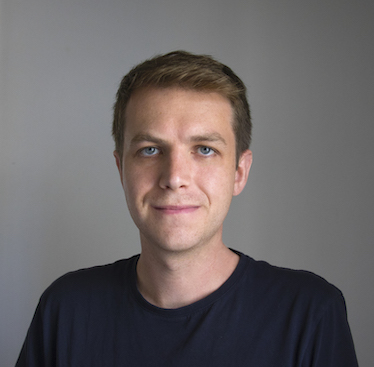
Alex Gabriel is an Associate Professor at the University of Lorraine, affiliated with the National School of Engineering in Systems and Innovation (ENSGSI) and the Research Team on Innovative Processes (ERPI). His work bridges the gap between engineering and digital innovation, with a focus on developing tools for creativity and innovation processes. His research interests span across several cutting-edge domains including Artificial Intelligence, Extended Reality, Knowledge Engineering, and Innovation Processes. Gabriel's work particularly emphasizes the application of AI technologies (ontology, machine learning, neural networks) to enhance creativity support systems and innovation management. His expertise extends to the design of embedded electronic systems, development of data processing programs, and deployment of web services for laboratory tools. Recent publication trends show a strong focus on XR technologies, with numerous papers on virtual reality applications in education, design, and healthcare. His work demonstrates a consistent trajectory from foundational research on creativity support systems toward practical applications of immersive technologies in professional training and educational contexts. Gabriel has been particularly active in developing authoring tools for XR content, with multiple related publications in 2024-2025. As a researcher and educator, Gabriel has been instrumental in developing the HELP XR platform, which includes both web and VR components for creating educational content. His work connects theoretical research with practical applications, particularly in engineering education and professional training contexts. His collaborative approach is evident in his numerous multi-author publications spanning multiple institutions and disciplines, reflecting his engagement with interdisciplinary research communities focused on innovation processes and digital transformation.
Bryan Parno is a Professor at Carnegie Mellon University, holding the Kavčić-Moura Chair in Electrical and Computer Engineering and Computer Science. His work bridges theoretical and practical aspects of secure systems verification, focusing on formal methods to ensure rigorous security guarantees. Research Areas: Secure systems, formal verification, cryptography, concurrency, distributed systems Key Contributions: Development of Verus, Leaf, IronFleet, and FastVer2 for verified secure systems Awards: Jay Lepreau Best Paper (OSDI 2025), IEEE Cybersecurity Award for Practice (2024), Distinguished Artifact Award (SOSP 2024) His recent publications demonstrate a focus on scalable formal verification across diverse domains, including Rust programming, WebAssembly sandboxing, and cryptographic protocols. Tools like Verus and OwlC enable provably correct implementations with performance optimizations. Scientific recognition includes: ACM Doctoral Dissertation Award (2011) IEEE Golden Core Recognition (2023) Forbes 30-Under-30 (2011) Sloan Research Fellowship (2018) Multiple best paper awards at USENIX Security, CAV, and IEEE S&P Parno advises PhD students in secure systems and contributes to critical infrastructure projects like Project Everest. His lab develops open-source tools for verified cryptography and systems programming.
Michael Oppermann is a researcher, data visualization developer, and co-founder of Viaduct, currently affiliated with the Austrian Institute of Technology (AIT) . His work integrates visualization, machine learning, and human-centered design to create interactive tools for data exploration and communication. He holds a PhD in Computer Science from the University of British Columbia (2021), where he collaborated with Tamara Munzner's InfoVis Group, and a Master of Business Informatics from the University of Vienna (2017). Expertise in interactive visualization, mixed-methods research, and web development Previously served as a visiting research fellow at Harvard University's Visual Computing Group Industry experience at Tableau Software and Virtual Identity as a data science consultant His research spans human-data interaction, haptics, and spatiotemporal data analysis. Publications include top venues like CHI , IEEE VIS , and EuroVis . He has contributed to projects such as VizSnippets , Haptipedia , and Bike Sharing Atlas . Awards include the Accenture Campus Innovation Challenge first place in Austria (2016) and recognition in the NaturTalente High Potential Program (2016). Michael also has extensive teaching experience, having restructured large undergraduate courses and served as a teaching assistant for human-computer interaction and visualization topics.
Prof. Dr.-Ing. Thomas Leich holds the Volkswagen Financial Services Endowed Professorship for Business Informatics, specifically Requirements Engineering, at Harz University of Applied Sciences. He is affiliated with the Faculty of Automation and Information, focusing on software variability and configurable systems. University: Harz University of Applied Sciences School: Faculty of Automation and Information Academic Rank: Professor Research Interests span software product line engineering, IT security, Industry 4.0, and feature-oriented programming. His work bridges academic innovation with industrial applications, particularly in secure and scalable systems for automotive and enterprise contexts. Recent Publications emphasize security in configurable systems, empirical software engineering studies, and automotive platform management. Articles often involve collaborations with teams at Otto von Guericke University and international institutions. Scientific Awards include the Hugo Junkers Research Award (2013), the Wissenschaftspreis der Wernigeröder Stadtwerkestiftung (2017), and the 2012 Faculty Research Award from the University of Magdeburg. Supervision of over 20 theses since 2008, spanning topics in ERP security, program comprehension, and embedded systems. He leads the EXPLANT project, funded by DFG, and contributes to FeatureIDE , an extensible framework for feature-oriented development.
Dr. Aaron Greenville is a Senior Lecturer in Spatial Agricultural and Environmental Sciences at the School of Life and Environmental Sciences, University of Sydney. He leads the Ecosystem Dynamics Lab and holds memberships in the Sydney Environment Institute, Sydney Institute of Agriculture, and the Charles Perkins Centre. His interdisciplinary work bridges ecology, environmental science, and technological innovation to address critical environmental challenges facing Australia and the global community. Aaron's research program centers on three interconnected themes: ecosystem responses to climate change, species interactions (particularly competition and predation), and technology applications for ecological monitoring. His climate change research investigates non-linear species responses to environmental shifts with special attention to fire regime alterations. In species interaction studies, he examines how climate modifies competitive and predatory dynamics across spatial and temporal scales. His technology-focused work pioneers the use of open-source hardware (Raspberry Pi and Arduino platforms) to develop reproducible environmental monitoring systems. Recent publications reveal a strong emphasis on post-megafire ecosystem recovery, climate change impacts on biodiversity, and innovative technological approaches to ecological monitoring. His work increasingly integrates large-scale, interdisciplinary methodologies combining field observations with advanced statistical and computational techniques. There's a clear trajectory toward addressing the ecological consequences of Australia's 2019-2020 megafires and developing practical conservation solutions. Scientific recognition includes: Threatened Species Recovery Hub Cat Team finalist in the 2020 Eureka Awards Australian Mammal Society President's Early Researcher Award (2019) Ecological Society of Australia Members' Service Prize (2018) Lyne Award from the Australian Mammal Society (2013) As an academic advisor, Aaron has mentored numerous honors students on projects spanning wildlife monitoring technologies, fire ecology, and conservation applications. His teaching portfolio includes core ecology units (BIOL3007, BIOL3009), Environmental GIS (ENVX3001, which he coordinates), and specialized statistical workshops for ecological research. Major research funding includes ARC grants and partnerships with government agencies investigating biodiversity responses to environmental change. The Ecosystem Dynamics Lab employs a holistic approach to ecosystem function, integrating vertebrate, invertebrate, and plant studies. The lab is recognized for developing open-source technological solutions for ecological monitoring, creating custom environmental sensors with reproducible workflows. Current projects include the ARC DARE Training Centre, DigiFarm (digitally enabled agricultural ecosystems), and research on pasture resilience to extreme drought events.
Mario Berta is a Professor of Physics at the Institute for Quantum Information, RWTH Aachen University. He also holds an honorary Visiting Reader position at the Department of Computing, Imperial College London and has previously worked as a Senior Research Scientist at AWS Center for Quantum Computing and a Postdoctoral Researcher at IQIM Caltech. His research focuses on Quantum communication theory Theoretical quantum cryptography Theory of quantum algorithms with recent publications spanning quantum error correction, computational complexity, and quantum simulation techniques. The group actively collaborates on mathematical foundations of quantum information and algorithm development. Current funding sources include European Research Council (ERC) Matter and Light for Quantum Computing (ML4Q) Bundesministerium für Bildung und Forschung (BMBF) RWTH Exploratory Research Space (ERS) EPSRC The group organized the 2025 Workshop on Mathematics of Quantum Information at RWTH Aachen and contributed multiple talks to international conferences including Beyond IID 13 and QIP 2025. Open positions available include senior postdocs, PhD students, and postdocs focused on quantum information mathematics and algorithm theory.
Carmela Galdi is an Associate Professor at the Department of Engineering, University of Sannio, Italy. Her research focuses on telecommunications engineering, with a strong emphasis on remote sensing technologies, radar/satellite signal processing, and environmental monitoring applications. Key research areas include: Advanced CFAR detection techniques for radar systems GNSS-R (Global Navigation Satellite System Reflectometry) for land and ocean altimetry Wind speed retrieval algorithms using satellite data Speckle reduction in SAR (Synthetic Aperture Radar) imagery Multi-spectral thermal anomaly detection Development of MATISSE, a meteorological aviation support system Her publications span from 1996 to 2024, showing sustained expertise in radar signal processing, satellite communication systems, and environmental data analysis. While no formal scientific awards are documented in the provided materials, her collaborative work with institutions like CIRA (Italian Aerospace Research Centre) and multiple international projects indicates significant professional impact. Recent work includes comparative studies of CYGNSS and Sentinel-1 wind speed products for tropical cyclone monitoring, and the development of adaptive mobility systems for smart transportation. She has contributed to GNSS-R coherent signal focusing techniques to enhance spatial resolution, and has co-authored foundational studies on multidimensional signal detection in Gaussian clutter environments. Her research frequently intersects with: Climate science applications Digital communication systems Geospatial data analysis Environmental hazard detection Advanced mathematical modeling Signal processing for aviation safety
Jo Van Bulck is an Assistant Professor in the Department of Computer Science at KU Leuven's Faculty of Engineering Science, where he leads research in the Distributed and Secure Software (DistriNet) lab. His work focuses on security at the hardware-software boundary, particularly examining trusted execution environments and microarchitectural side-channel vulnerabilities. Dr. Van Bulck completed his Master's thesis on 'Secure Resource Sharing for Embedded Protected Module Architectures' at KU Leuven in 2015, receiving both the VASCO and BELCLIV thesis awards. He earned his PhD in 2020 with the dissertation 'Microarchitectural Side-Channel Attacks for Privileged Software Adversaries,' which received multiple prestigious awards including the ACM SIGSAC Doctoral Dissertation Award, ERCIM STM PhD Award, and FWO/IBM Innovation Award. His research primarily investigates vulnerabilities in trusted execution environments like Intel SGX, with seminal work on attacks such as Foreshadow, LVI, and ZombieLoad. His publications consistently appear in top security venues including IEEE S&P, USENIX Security, and ACM CCS. His research group has made significant contributions to understanding memory isolation failures, interrupt handling vulnerabilities, and developing principled approaches to validate enclave security properties. Dr. Van Bulck's work has profoundly impacted both academia and industry, with multiple CVE assignments for discovered vulnerabilities and direct influence on hardware and software security practices. His recent research focuses on extending security principles to low-end microcontrollers and developing automated validation frameworks for trusted execution environments. ACM SIGSAC Doctoral Dissertation Award (2021) FWO/IBM Innovation Award (2021) ERCIM WG STM Best Ph.D. Thesis Award (2021) Best Paper with Artifacts Award (SysTEX 2025) Distinguished Paper Award (EuroS&P 2025) Cybersecurity Artifacts Competition and Impact Award (ACSAC 2023) Dr. Van Bulck advises multiple PhD students including Márton Bognár (completed 2025) and Fritz Alder (completed 2023), and regularly supervises numerous master's theses. He leads several major research projects including 'Cross-Layer Systems Security for Trusted Execution Environments' (2025-2029) and 'Trustworthy Execution Environments for Secure Computing' (2024-2029). His research has been supported by competitive funding from KU Leuven and collaborative industry partnerships. As a member of the Council of the Faculty of Engineering Science, Dr. Van Bulck actively contributes to academic governance. He maintains the DistriNet research group's focus on practical security research with real-world impact, evidenced by numerous open-source contributions including the influential SGX-Step framework. His work bridges theoretical security principles with practical implementation challenges in modern computing systems.
Edith Tretschk is a Research Scientist at Meta Reality Labs Research in the San Francisco Bay Area. She completed her Ph.D. in Computer Science at Saarland University and Max Planck Institute for Informatics (2018-2023), advised by Christian Theobalt . Her work bridges computer graphics , computer vision , and machine learning , with a focus on 3D reconstruction and quantum computing applications. Education Ph.D. in Computer Science (2018-2023), Max Planck Institute for Informatics & Saarland University M.Sc. in Computer Science (2017-2023), Graduate School of Computer Science, Saarland University B.Sc. in Computer Science (2014-2017), Saarland University Research Focus Her research explores 3D reconstruction of dynamic scenes, neural rendering , and quantum computing for vision tasks. Recent work includes time-consistent scene flow (SceNeRFlow), quantum auto-encoders (3D-QAE), and physics-driven template matching (φ-SfT). Article Trends Her publications span 3D vision , quantum algorithms , and neural scene modeling . Key themes include non-rigid deformation, quantum-hybrid approaches, and physics-based reconstruction. Scientific Recognition Bachelor Award (2017) for top CS graduates Deutschlandstipendium scholarship (2015-2017) NeurIPS Top Reviewer (2022) Additional Contributions She has delivered invited talks at World Labs, Meta, Nvidia, and Epic Games. Active as a reviewer for CVPR, ECCV, ICCV, and NeurIPS, she has also contributed to open-source projects and datasets.
Deming Chen is the Abel Bliss Professor of Engineering at the University of Illinois at Urbana-Champaign, holding appointments in the Electrical and Computer Engineering Department within the Grainger College of Engineering. He serves as a research professor in the Coordinated Science Laboratory and an affiliate professor in the Computer Science department. Additionally, he is the Director of the AMD-Xilinx Center of Excellence and the Co-Director of the IBM-Illinois Discovery Accelerator Institute. Dr. Chen earned his B.S. in Computer Science from the University of Pittsburgh in 1995, followed by his M.S. and Ph.D. in Computer Science from UCLA in 2001 and 2005, respectively. After working as a software engineer during two periods (1995-1999 and 2001-2002), he joined the University of Illinois at Urbana-Champaign in 2005 and became a full professor in 2015. His research spans reconfigurable computing, AI hardware acceleration, high-level synthesis, cloud computing, and hardware security. Dr. Chen's work has significant industry impact, with open-source solutions like Medusa being integrated into NVIDIA's TensorRT-LLM, improving LLM execution speed by 1.9-3.6x. His research group pursues system-level and high-level design automation, machine learning and cognitive computing, hybrid cloud systems, hardware/software co-design, and FPGA and GPU computing. His recent publications show a strong trend toward AI acceleration and large language model optimization, with projects like SnapKV and Medusa addressing critical challenges in LLM efficiency. His work consistently bridges theoretical innovation with practical implementation, as evidenced by numerous open-source projects that have been adopted by industry. IEEE Fellow (2019) Abel Bliss Professor of Engineering (2020-present) Google Faculty Award (2020) IBM Faculty Award (2014, 2015) NSF CAREER Award (2008) Ten Best Paper Awards TCFPGA Hall-of-Fame paper award DAC International System Design Contest wins (2017, 2019) Dr. Chen has served as PI/Co-PI on over 40 research grants from US Federal agencies and industry partners. He has led numerous open-source projects including FCUDA, DNNBuilder, SkyNet, ScaleHLS, and Medusa, many of which have been adopted by industry. As Editor-in-Chief of ACM TRETS (2019-2025), he increased the journal's impact factor by 3.8x. He actively mentors students and has been recognized as an excellent teacher by UIUC students in 2008 and 2017. His research group operates at the intersection of hardware and AI, with projects spanning from low-level hardware design to high-level AI applications. The AMD-Xilinx Center of Excellence and IBM-Illinois Discovery Accelerator Institute provide substantial infrastructure for his team's research in hybrid cloud systems and AI acceleration.
Jan Sher Akmal is an Assistant Professor at the Department of Energy and Mechanical Engineering, Aalto University. His research focuses on additive manufacturing (AM), digital manufacturing, and integrating artificial intelligence into metal AM processes. He actively contributes to advancements in 3D/4D printing, self-sensing materials, and industrial AM adoption strategies. Current affiliation: Aalto University Department: Energy and Mechanical Engineering Email: jan.akmal@aalto.fi Research Interests Jan's work spans Additive Manufacturing , Materials Science , and Digital Transformation . Key areas include defect detection using AI, 4D printing of smart materials, exposure measurement systems, and legal/strategic aspects of AM adoption. His research often intersects mechanical engineering with industrial applications, emphasizing sustainability and cost efficiency. Scientific Awards Doctoral dissertation award, Finnish Production Planning and Control Society (2022-2023) Aalto Doctoral Incentive Scholarship (2023) Labs & Teams Member of the Materials to Products research group at Aalto University, collaborating on interdisciplinary projects involving AM process optimization and functional material development.
Beibei Shu serves as an Associate Professor in the Department of Industrial Technology at UiT The Arctic University of Norway, Narvik campus. Her academic position places her within the university's engineering research ecosystem focused on advanced manufacturing technologies. Dr. Shu's research spans multiple dimensions of Industrial 4.0, with particular emphasis on industrial robotics , digital twin technology , and human-robot collaboration . Her expertise extends to virtual reality applications in manufacturing, network communication protocols, computer vision (OpenCV), and hardware circuit design. She possesses substantial technical proficiency in C/C++, Python, and JavaScript programming languages, alongside practical experience with PCB design, microcontrollers, and PLC systems. Analysis of her publication record from 2016-2024 reveals a consistent research trajectory focused on enhancing manufacturing agility through digital technologies. Her work demonstrates increasing sophistication in digital twin implementations, with recent publications addressing Industry 5.0 transition challenges for SMEs and self-reconfigurable manufacturing systems. The research shows strong interdisciplinary connections between robotics, virtual reality, and network security in industrial contexts. Dr. Shu actively contributes to academic instruction as course manager for postgraduate programs including INE-3611 Digital Twin (since 2018) and the upcoming INE-3610 CIM (from 2025). She participates in the TRINITY project focused on developing data acquisition systems for industrial robot digital twins, with research goals targeting improved human-robot interaction and manufacturing flexibility through novel programming architectures. She is a member of the ArcLog research group specializing in Intelligent Manufacturing and Logistics, operating from Campus Narvik (Room D2160). Her collaborative research network includes international partners across Europe, with frequent co-authorship patterns indicating strong institutional connections with researchers like Halldor Arnarson, Bjørn Solvang, and Gabor Sziebig.
Dr. L.B. Snoek serves as an Assistant Professor in the Bioinformatics group within the Faculty of Science at Utrecht University. His research bridges computational biology with experimental approaches to understand genetic and phenotypic variation across different organisms. He leads the systems genetics and network biology lab, focusing on high-throughput techniques like RNA-sequencing to analyze complex biological interactions. Dr. Snoek obtained his Bachelor's degree in Biochemistry/Biotechnology from Enschede University College in 2000, followed by a Master's in Plant Biotechnology/Genetics from Wageningen University in 2002. He completed his PhD at Utrecht University in 2009, with subsequent research positions at Wageningen University, NIOO, and his current role at Utrecht University where he became Assistant Professor in 2020. His research interests center on genetical genomics and systems genetics, particularly studying natural variation in transcript abundance in organisms like Caenorhabditis elegans and Arabidopsis . He investigates how gene regulatory networks can be constructed using Recombinant Inbred Lines and Introgression Lines, with applications to agriculturally important traits and human disease models. His work on network biology focuses on integrating multi-level biological measurements to understand complex interactions from gene to ecosystem levels. Analysis of his recent publications reveals a strong focus on quantitative trait loci mapping, expression QTL analysis, and the impact of environmental factors on gene expression. His work spans plant biology (particularly lettuce, rice, and tomato), nematode genetics, and microbiome interactions, demonstrating an interdisciplinary approach that combines computational methods with experimental validation. Recent projects show increasing integration of machine learning and big data approaches to tackle complex biological questions. Dr. Snoek is actively involved in teaching, contributing to programs including Bioinformatics and Biocomplexity, Molecular and Cellular Life Sciences, and teaching courses on Python and R for life sciences. He currently serves as Principal Investigator for the LettuceKnow project, a TTW Perspective Grant focused on establishing lettuce as a model crop through quantitative genetics approaches. His lab maintains collaborations across multiple institutions, including ongoing work with NIOO-KNAW on ecosystem studies and Wageningen University on nematode research.