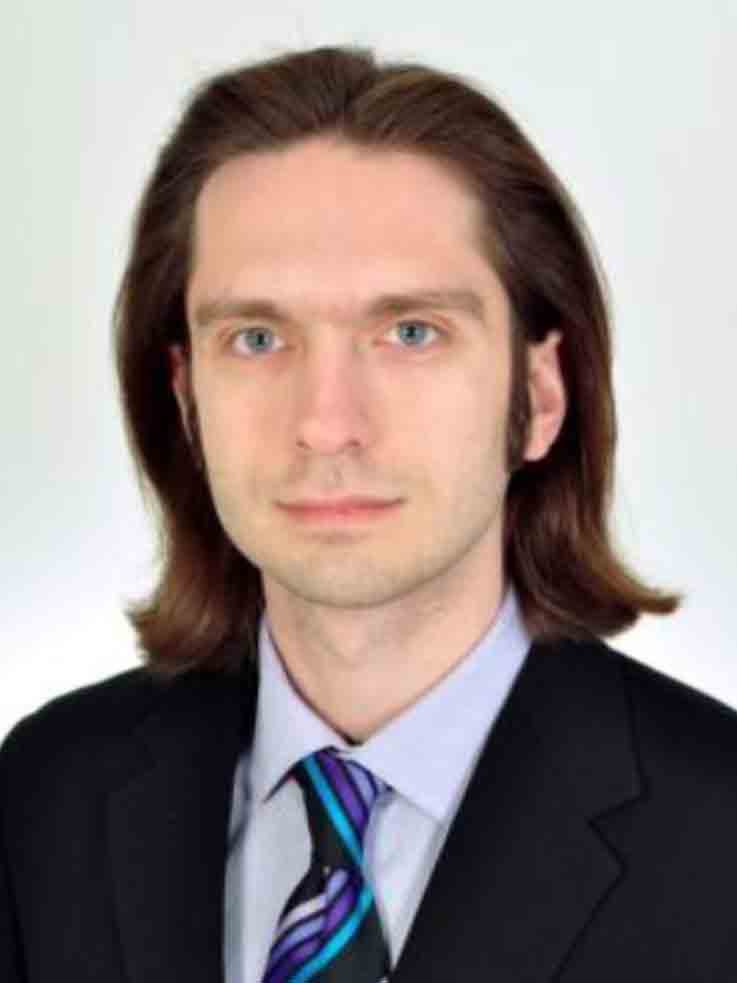
Dr. Wibowo Hardjawana is a Senior Lecturer in Telecommunications Engineering at the School of Electrical & Computer Engineering , University of Sydney. He holds a PhD from the University of Sydney and serves as an ARC DECRA Research Fellow. His research focuses on wireless network softwarisation, enabling programmable radio interfaces to address traffic elasticity in 5G/6G systems. Education : PhD (University of Sydney) Grants : ARC DP210100744 (2021), ARC DECRA DE140101114 (2014) His work spans 5G/6G network architectures , machine learning for wireless systems , and open radio interfaces . Key contributions include graph representation learning for interference management, Bayesian neural network detectors for OTFS modulation, and NOMA decoding techniques . Recent publications analyze ultra-reliable low-latency communications , UAV-enabled networks , and stochastic geometry in wireless systems . He has collaborated with institutions in China, Indonesia, and UAE, and engaged with industry partners like Telstra and Ausgrid.
Dr. Fatemeh Golpayegani is an Assistant Professor at the School of Computer Science, University College Dublin. She leads the Multi-agent Systems and Sustainable Solutions lab (MAS3.ucd.ie) and has secured over €1.5M in research grants. Her academic roles include BSc Stage 4 Coordinator and Chair of Women@CS (2012–2023). She holds a PhD from Trinity College Dublin (2018) and professional qualifications in university teaching from UCD. Education: PhD in Computer Science, Trinity College Dublin (2018) Professional Diploma in University Teaching & Learning, University College Dublin (2024) Professional Certificate in University Teaching & Learning, University College Dublin (2023) Research Interests: Focuses on multi-agent systems, sustainability, intelligent transport systems, autonomous decision-making, and edge computing. Her work integrates reinforcement learning, ontology-based models, and adaptive systems to address challenges in smart cities, energy grids, and infrastructure monitoring. Grants & Projects: Principal Investigator for the EU-funded RE-ROUTE project (€multi-million, 2023–2026) on intelligent transport networks. Co-Principal Investigator for the Augmented CCAM project on connected/cooperative autonomous mobility. Funded investigator in SFI centres (I-Form, CONNECT, Biorbic). Awards & Recognition: Researcher of the Year Award (2022) Member of Young Academy of Ireland (2023) Teaching & Mentoring: Coordinates modules in algorithms, Java programming, and operating systems. Supervises PhD students in SFI centres and mentors postdoctoral researchers. Active in promoting EDI as Chair of d-real doctoral training centre. Labs & Collaborations: Leads the MAS3 lab, collaborating on projects like CAPTAIN CARBON (sustainable transport gamification) and ontology-enhanced traffic signal control systems.
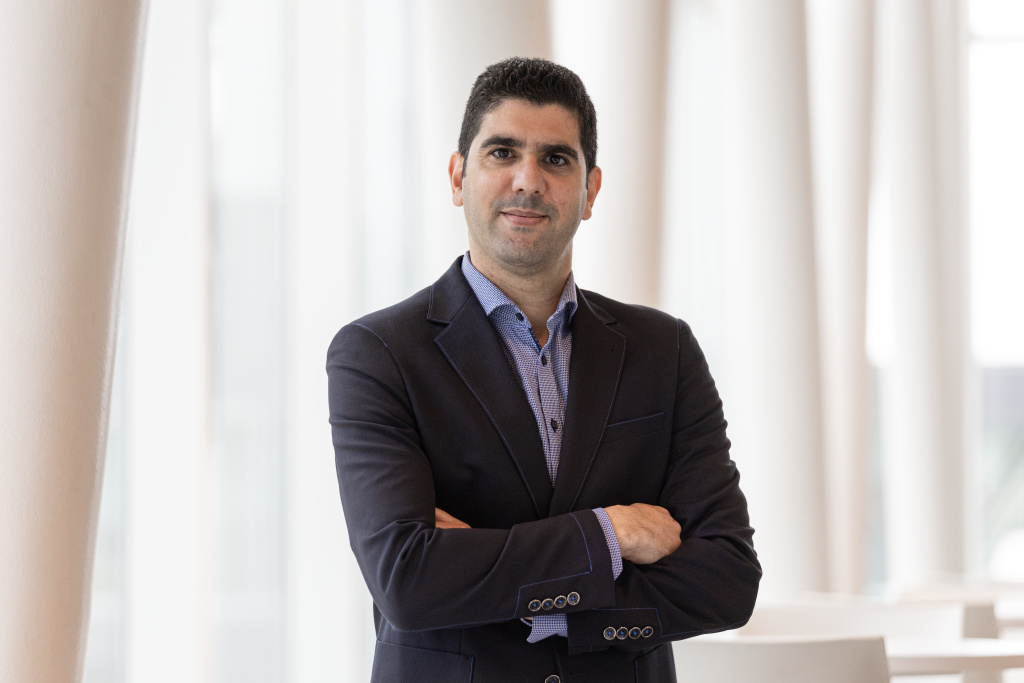
Dr. Dimitrios Koutsonikolas is an Associate Professor in the Electrical and Computer Engineering Department at Northeastern University, leading the WiNS Lab. Previously, he held a tenured position at the University at Buffalo. His research focuses on experimental wireless networking and mobile computing, particularly millimeter-wave systems, 5G/6G networks, energy-efficient protocols, and high-bandwidth applications like VR/AR. He has published over 80 papers in top venues (e.g., MobiCom, INFOCOM), received NSF CAREER and IEEE awards, and led major grants including an NSF-funded $3M project for an open 5G/6G testbed. His lab explores cutting-edge technologies like O-RAN, beam management, and edge computing for latency-critical applications. Education: PhD in Electrical and Computer Engineering from Purdue University (2010). Research Interests: Experimental validation of wireless protocols, mmWave networking, latency-optimized edge computing, and cross-layer design. Current projects include TARGET (5G/6G latency solutions) and the X5G testbed for open spectrum utilization. Recent Trends in Articles: Focus on 5G deployment maturity, mmWave beam management, and 6G-ready technologies like autonomous space networks. Work bridges theoretical contributions with practical implementations, leveraging testbeds for real-world validation. Awards: Notable honors include IEEE Region 1 Innovation (2019), NSF CAREER (2016), and multiple best paper awards at MobiCom, WCNC, and Globecom. Recognized for both research and teaching excellence. Grants & Labs: Principal investigator on NSF grants ($3M+), leading collaborations with IMDEA Networks and industry partners. WiNS Lab develops open-source tools for 5G testing and explores sub-THz channels. Advises over 15 students, many advancing to top tech firms (e.g., Apple, HP Labs).
Paul Fischer is a Professor at the University of Illinois, holding dual appointments in the Siebel School of Computing and Data Science and the Mechanical Science and Engineering department. His research focuses on advanced numerical methods for fluid dynamics, particularly leveraging spectral element techniques and high-performance computing. He is a core contributor to the Nek5000/NekRS computational frameworks. Recent work emphasizes turbulence modeling, exascale CFD simulations, and multiphase flow dynamics in complex systems like pebble bed reactors. His research interests span spectral methods, large eddy simulation (LES), direct numerical simulation (DNS), and parallel computing architectures. Key projects include developing scalable algorithms for Reynolds-averaged Navier-Stokes (RANS) models and exploring non-conforming domain decomposition approaches for reacting flows. His contributions bridge computational methodology and engineering applications, with a focus on exascale-ready solutions. Publications from 2024-2025 highlight advancements in energy-efficient CFD simulations, turbulence transition mechanisms in granular media, and reduced order modeling for turbulent flows. Collaborations involve cross-disciplinary teams focusing on combustion, fluid-structure interaction, and high-fidelity flow analysis. He maintains active involvement in computational fluid dynamics communities and contributes to open-source software tools critical for industrial and academic research. Current efforts prioritize scalability, accuracy, and adaptability in numerical methods for next-generation supercomputing platforms.
Dr. Wenjuan Yu is a Lecturer at the School of Computing and Communications (SCC), InfoLab21, Lancaster University, UK. She holds a PhD in Communication Systems from Lancaster University and has held prior roles, including Research Fellow at the 5G Innovation Centre (5GIC), University of Surrey (2018–2020), and part-time Research Officer at the University of Essex (2017–2018). She is a Fellow of the Higher Education Academy and a Senior Member of IEEE. Her research focuses on communication systems, with emphasis on radio resource management, mMTC, low-latency communications, B5G/6G, MEC, and machine learning. She actively contributes to IEEE conferences as a Technical Program Committee (TPC) member and holds editorial roles, including Executive Editor for Transactions on Emerging Telecommunications Technologies (2019–2022). Current teaching includes CNSCC141 Professionalism in Practice and CNSCC365 Advanced Networking . Dr. Yu supervises PhD students in EE/CS, particularly welcoming applicants from China via CSC scholarships. Her projects include DSI-funded initiatives on sustainable AI-driven resource allocation for 6G and Smart Multi-RAT Traffic Steering for V2X systems. She leads research groups in Security Lancaster (Networks, Systems, Distributed Systems).
Waël Jaafar is a Professor in the Department of Software Engineering and IT at École de technologie supérieure (ETS), a constituent school of the Université du Québec system in Montreal, Canada. His research spans multiple critical domains in modern communications and computing infrastructure, with a particular focus on next-generation wireless networks and intelligent systems. Dr. Jaafar holds a B.Eng. from Sup'Com Tunisie, and both M.Sc.A. and Ph.D. degrees from Polytechnique Montréal. His academic background provides a strong foundation for his interdisciplinary research that bridges theoretical concepts with practical engineering solutions. His research interests center around wireless communications systems, with particular emphasis on 5G/6G networks, UAV communications, space telecommunications, and machine learning applications for networking. He has developed significant expertise in federated learning techniques for distributed networks, cybersecurity applications for next-generation mobile systems, and edge computing architectures. His work frequently explores the intersection of communication theory, artificial intelligence, and network security, with applications ranging from industrial IoT to public safety communications. Analysis of his recent publications reveals a strong trend toward integrating artificial intelligence with wireless networking infrastructure, particularly focusing on UAV-assisted communications, federated learning approaches for distributed networks, and security enhancements for 5G/6G systems. His research demonstrates increasing emphasis on practical implementation challenges including energy efficiency, communication overhead reduction, and reliability in non-ideal network conditions. As an academic supervisor, Dr. Jaafar actively mentors numerous graduate students across various projects. He currently supervises doctoral candidates working on blockchain-enhanced security for 5G networks, green network slice orchestration, and federated learning approaches for Open RAN architecture. His master's students are engaged in diverse topics including LiDAR-based power line monitoring, multimodal behavioral authentication, and 5G/6G security using AI techniques. Dr. Jaafar is affiliated with two prominent research laboratories at ETS: LASI (Computer System Architecture Research Laboratory) and LACIME (Communications and Microelectronic Integration Laboratory). At LASI, he contributes to research in AI-based systems engineering, resource orchestration in edge/cloud environments, and intelligent network design. Through LACIME, he engages with broader communications research spanning from microelectronic components to complex communication systems, with particular focus on wireless networks and signal processing applications.
Mahdi Boloursaz Mashhadi is a Lecturer in Communications and AI at the Institute for Communication Systems (ICS), part of the School of Computer Science and Electronic Engineering at the University of Surrey, UK. He is a Surrey AI Fellow and an IEEE Senior Member, with a focus on advancing AI-driven wireless communication systems. He holds B.S., M.S., and Ph.D. degrees in mobile telecommunications from Sharif University of Technology, Tehran, Iran. Prior to joining Surrey, he served as a postdoctoral research associate at Imperial College London’s Intelligent Systems and Networks (ISN) Research Group (2019–2021). His research interests span AI/ML integration with wireless systems, including semantic communications, federated learning, generative AI for telecom, and beamforming optimization in massive MIMO architectures. He also explores edge computing, distributed deep learning frameworks, and energy-efficient communication designs using reconfigurable intelligent surfaces (RIS). Mahdi has been recognized with the IEEE EWDTS Best Paper Award and IEEE ComSoc Exemplary Reviewer Awards (2021–2022). He leads the UKTIN/DSIT 12M£ national project TUDOR and collaborates with industry on cutting-edge 5G/6G innovations. He has contributed to the ITU’s AI/ML in 5G challenge as a panel judge and serves as an editor for Springer’s Wireless Personal Communications Journal. His roles include advising on government/industry projects and advancing interdisciplinary research at the 5G/6G Innovation Centre. He emphasizes practical implementations of AI in telecommunications, aiming to bridge theoretical advancements with real-world applications.
Stefan Katzenbeisser is a Professor at the Chair of Computer Engineering, University of Passau, focusing on cybersecurity in embedded systems, critical infrastructures, and technical data protection. He serves as spokesperson for the Bavarian-funded research cluster ForDaySec and contributes to the DFG Review Board for Security and Dependability. Research areas: Automotive cybersecurity, railway security, hardware-based security (PUFs), post-quantum cryptography Key projects: RESURREC (autonomous vehicle security), FINESSE (secure transportation sensors), 6G-RIC (future mobile networks) His work spans both theoretical and applied cybersecurity, with collaborations in industry and interdisciplinary fields. Recent publications highlight innovations in secure mobility and critical infrastructure protection.
Falko Dressler is a Full Professor and Chair for Telecommunication Networks at the School of Electrical Engineering and Computer Science, Technische Universität Berlin. He holds a Ph.D. and M.Sc. in Computer Science from Friedrich-Alexander University of Erlangen-Nuremberg (1998-2003). His research focuses on next-generation wireless systems , distributed machine learning , edge computing , and applications in Internet of Things (IoT) , cyber-physical systems , and internet of bio-nano-things . Editorial roles: IEEE Trans. on Mobile Computing, Elsevier Computer Communications, IEEE/ACM Trans. on Networking Conference leadership: IEEE INFOCOM, ACM MobiSys, IEEE VNC Textbooks: Self-Organization in Sensor and Actor Networks (Wiley), Vehicular Networking (Cambridge) Recent publications highlight trends in Edge Computing Resilience and 6G Network Architecture , with a strong emphasis on Molecular Communication , Terahertz Band Synchronization , and Federated Learning in vehicular environments. Scientific contributions include multiple IEEE Fellow , ACM Fellow , and VDE ITG Prize 2023 recognitions. Advisory and professional activities include membership in the German National Academy of Science and Engineering (acatech), IEEE COMSOC Conference Council, and ACM SIGMOBILE Executive Committee. His work spans cooperative driving, ultra-low power sensor networks, and security in nano-communication systems.
Konstantinos Nikitopoulos is a Professor at the University of Surrey , UK, specializing in Wireless Communications and Signal Processing . His research focuses on MIMO Systems , Open-RAN , and Non-Linear Processing for next-generation wireless networks. His recent work explores Analogue Processing for Tbps Wireless Systems and Neuromorphic Computing in MU-MIMO detection. He has developed frameworks like MIMO-SoftiPHY and SACCESS for software-based radio acceleration and power-efficient network design. Key Publications : Power-Efficient RIC, NL-COMM, NeuroMIMO Collaborators : Rahim Tafazolli, George Katsaros, Marcin Filo His research impacts 6G Network Development through innovations in Beamforming , Channel Estimation , and Software-Defined Radios .
Adlen Ksentini is a Professor at EURECOM, a leading graduate school and research center in Sophia Antipolis, France, specializing in digital science and communication systems. His extensive research focuses on next-generation mobile networks (5G/6G), network management, and the integration of artificial intelligence with telecommunications infrastructure. Dr. Ksentini actively contributes to major EU research initiatives including 6G-BRICKS and AC3, serving as a key researcher and project leader in the development of future network architectures. Dr. Ksentini's research interests center around network slicing, intent-based networking, edge computing, and the application of machine learning to network management problems. His work bridges theoretical advancements with practical implementations in 5G/6G systems, with particular emphasis on zero-touch network management, energy efficiency optimization, quality of service assurance, and the integration of large language models with network operations. His research has significantly contributed to the development of O-RAN (Open Radio Access Network) frameworks and the evolution of network automation. His recent publication trends reveal a strategic shift toward AI-native network architectures, with increasing focus on integrating large language models (LLMs) with network management systems. His work demonstrates a clear progression from traditional network management approaches to more autonomous, AI-powered systems capable of intent-based configuration, self-optimization, and predictive maintenance. The publications show strong emphasis on practical implementations within the 6G research ecosystem, addressing critical challenges in network slicing, resource allocation, and energy efficiency. As a research supervisor, Dr. Ksentini mentors several PhD students including Abdelkader Mekrache, Karim Boutiba, Bouziane Brik, and Houda Hafi, who frequently appear as co-authors on his publications. His research is primarily funded through major EU research projects such as 6G-BRICKS (Building Reusable Testbed Infrastructures for Cloud-to-Device Breakthrough Technologies) and AC3 (which focuses on Cloud Edge Continuum). Dr. Ksentini is actively involved with the 6G-BRICKS project consortium and the AC3 project team, where he contributes to developing next-generation network architectures that integrate communication, computing, and sensing capabilities. His work within these projects focuses on creating reusable testbed infrastructures and addressing security and trust management challenges in the cloud-edge continuum.
Naveen Naik Sapavath is an Assistant Teaching Professor at Northeastern University's Electrical and Computer Engineering department. He holds a PhD from Howard University and a Master's from the Indian Institute of Science (IISc). His research focuses on next-generation cellular systems including O-RAN security, AI/ML-driven wireless optimization, and low-latency communications. He is affiliated with Northeastern's Institute for the Wireless Internet of Things. Education: PhD in Electrical and Computer Engineering, Howard University Master of Engineering in Electrical Engineering, Indian Institute of Science Research Interests: Dr. Sapavath explores cutting-edge areas such as 5G/Next-G networks, cybersecurity in wireless systems, and applying game theory to resource allocation. His work bridges theoretical advancements with practical implementations in AI-driven network architectures. Awards: IEEE CSCloud 2021 Best Student Paper Award Multiple NSF Student Travel Grants Professional Experience: Previously served as Postdoctoral Researcher at UC Davis, Researcher at George Mason University's Next G Lab, and Technical Project Manager at Iowa State University for the NSF-funded ARA project. Serves as reviewer for IEEE journals including Transactions on Cognitive Communications and Networking. Labs/Initiatives: Active contributor to Northeastern's Institute for the Wireless Internet of Things and NSF PAWR program through the ARA project.
Jun Yan is an Associate Professor and Concordia University Research Chair in Artificial Intelligence in Cyber Security and Resilience at the Concordia Institute for Information Systems Engineering (Concordia University). His research focuses on cybersecurity, smart grid systems, and AI-driven solutions for energy and communication networks. He supervises graduate students in programs such as Information Systems Security (MASc), Computer Science (MCompSc), and Information and Systems Engineering (PhD). Research Highlights : Cybersecurity of distributed energy systems, AI penetration testing frameworks, and resilient transactive energy markets. Awards : Holds a prestigious university research chair in AI-driven cybersecurity. His work integrates machine learning with domain-specific challenges in smart grids, IoT security, and multi-agent systems. Notable contributions include frameworks for detecting adversarial attacks on power systems, optimizing renewable energy integration, and developing AI tools for penetration testing. His articles reflect a strong emphasis on interdisciplinary solutions blending cybersecurity, energy systems, and advanced computing. Yan’s research also addresses policy and infrastructure challenges in sustainable energy systems, including waste management policy analysis and optimal configuration of hybrid renewable systems. He has pioneered open-source co-simulation platforms like PEMT-CoSim and Quantum-Sim for secure energy trading and quantum communication in grids. He actively engages in grant-funded projects and advises on both academic and applied aspects of cybersecurity and intelligent systems.
Jetmir Haxhibeqiri is a Postdoctoral Researcher at Ghent University 's Faculty of Engineering and Architecture , Department of Information Technology. His work focuses on Time-Sensitive Networking (TSN) over wireless systems, WiFi optimization, and Industrial IoT solutions. Key projects: IMEC Postdoctoral Fellowship Collaborations: Jeroen Hoebeke (UGent), Ingrid Moerman (UGent), Xianjun Jiao (UGent) Research Interests : Wireless network coordination, SDN integration for heterogeneous networks, low-latency communication, and machine learning applications in network optimization. Specialized in WiFi-LPWAN coexistence , In-Band Network Telemetry , and Cross-Technology Synchronization . Recent Publications : 2025 work on Wi-Fi-UWB synchronization, 2024 studies on coordinated spatial reuse in WiFi 7, and 2022 research on hardware-efficient PTP clock synchronization. Contributions span from theoretical models to practical implementations in industrial environments. Technical Expertise : Network densification strategies, interference management, and performance evaluation of large-scale wireless deployments. Developed simulation frameworks for LoRaWAN and WiFi TSN, with a focus on ns-3 validation. Education : PhD in Industrial Wireless Communication (2019, Ghent University).
Elif Ak is a Researcher at Istanbul Technical University's Department of Computer Engineering, College of Engineering. Her work focuses on cutting-edge network technologies and digital twin systems. Current research in 6G communication frameworks Active in AI-enabled network management Digital twin methodology specialist Her research interests span Digital Twin , 6G Networks , and Machine Learning applications in telecommunications. Recent publications highlight advancements in backbone network security , UWB localization , and semantic communication systems. Key publication trends show 7 Scopus citations with 33 Mendeley readers, featuring collaborations with international experts in IEEE Transactions and Communications Magazine . Research outputs (21 total) demonstrate consistent annual contributions since 2019.